Polo-necked John McGuirk, who fronts illiberal website Gript, is a serial liar and promoter of hatred, and an occasional racist
![]()
![]()
by Village
Polo-necked John McGuirk, who fronts illiberal website Gript, is a serial liar and promoter of hatred, and an occasional racist
![]()
by admin
Detective Sergeant who made protected disclosure about under-regulated phone-tracing and then served time for harassment of DPP official, claims multiple breaches of her human rights and “systemic institutional failure”, in complaint recently rejected by European Court of Human Rights
![]()
by admin
London extradition hearing was the last stand of either Wikileaks founder or Western Intelligence Imperialism, and awaits January decision By Caroline Hurley Queensland-born Julian Assange (49) founded Wikileaks in 2006. Four years later it published several huge and devastating leaks provided by US Army intelligence analyst Chelsea Manning, including: the Afghanistan war logs, the Iraq war logs and Cablegate. Wikileaks notably published 250,000 redacted documents and footage of US troops in an Apache Helicopter gleefully shooting dead what turned out to be two Reuters employees and Iraqi civilians fleeing in Baghdad (Collateral Murder video). Evidence of torture of Guantanamo Bay detainees also created shockwaves, as did revelations of Hilary Clinton’s entanglement with Wall Street and military regimes.The model of public-interest publishing pioneered by Wikileaks, which facilitated anonymous submission of classified material and organised collaborative reporting across jurisdictions, is now widely practised in mainstream media. The threatened indictment of Assange, symbol of press freedom, puts all investigative journalism on trial.Critics of Wikileaks’ releases included Julia Gillard, then Australian Prime Minister, who said they were illegal, and the then US Vice-President, Joe Biden, who significantly called Assange a terrorist. In 2017 then-CIA director Mike Pompeo declared that Wikileaks was a “hostile intelligence service” aided by Russia.AccoladesOn the other hand, Julian Assange was named Time Magazine Person of the Year in 2010, and then awarded the Martha Gelhorn Prize in England and the Walkley, an Australian Pulitzer Prize equivalent. However, the US Justice Department embarked on a mission to criminalise him and his associates. Swedish Rape Allegations As Assange kept slipping through his pursuers’ fingers, new jeopardy swooped in 2011 from Sweden where, surviving largely without a fixed address, Assange had been spending much of his time. He was recalled there for questioning about two women’s accusations of sexual assault. He agreed to travel from his temporary UK base to answer the charges on condition the Swedish government promised not to extradite him onwards to America. Assange Seeks Asylum Refused these terms, and after exhausting British legal options, in 2012 Assange sought asylum at the Ecuadorian embassy in London.In 2016, the UN Working Group on Arbitrary Detention upheld Assange’s plea as eligible, supported by various statements including one signed by 500 high-profile figures from more than 60 countries. Nothing changed. His house-arrest-like limbo lasted until 11 April 2019 when he was handed over to police.On 20 February 2019, the International Monetary Fund had given Ecuador a $4.2 billion financial package subject to Washington’s approval. Within days, Wikileaks’ prize source, Chelsea Manning, was subpoenaed to inform on Assange, and punished for non-co-operation by a month in almost total solitary confinement, during which time Ecuadorian president Moreno, formerly a fan, came out against Wikileaks.With Assange firmly in the clutches of Anglo-American law enforcement, the Swedish sexual assault charges were finally dropped. Assange Jailed After the police arrest, Assange appeared at Westminster Magistrates’ Court. The District Judge remanded him to Belmarsh maximum security prison until 2 May 2019, when another Judge at Southwark Crown Court sentenced him to fifty weeks in jail for violating his 2012 bail conditions.Handled like a violent criminal, Assange was held in an isolation cell and denied virtually all contact with other prisoners, visitors and his legal representation. Reports of his deteriorating mental and physical health spread. US Indictment The US government launched a criminal investigation into WikiLeaks and is now seeking Assange’s extradition from the UK. He faces one charge of conspiracy and 17 charges of espionage.On 11 April 2019, the US District Court for the Eastern District of Virginia unsealed a 2018 indictment charging Assange with conspiring to commit computer intrusions by assisting Chelsea Manning with breaking a US-government password. Having, under extradition rules, only a 60-day window from the date of Assange’s arrest in London to add more charges, the US Department of Justice unveiled a further seventeen criminal charges against Assange on 23 May 2019, alleging he contravened the Espionage Act of 1917 by publishing the names of classified sources and conspired with and assisted Manning in obtaining access to classified information. The eighteen charges mean a potential cumulative 175 years in prison on conviction.The US-UK extradition treaty cited in the demand that Assange be handed over explicitly forbids political extraditions – and the US government itself had designated him a political actor in 2010.Human Rights Watch and others condemned the move as a regulatory weapon of mass destruction aimed at journalists, whistle-blowers and other truth-tellers. Pariah Assange remains a controversial figure, due mainly to allegations about his temperament and conduct, to the sexual assault allegations and to his alleged support for Donald Trump during the 2016 US Presidential Election when WikiLeaks released documents from the Democratic National Committee (DNC) showing that it favoured Hillary Clinton and had tried to subvert Bernie Sanders. In 2018, Special Counsel Robert Mueller charged twelve Russian intelligence officers with computer hacking and working with WikiLeaks and other organisations to disseminate the documents but Assange said that the Russian government was not the source of the DNC documents. In 2019 CNN reported that Assange had used the Ecuadorian embassy to meddle in the 2016 election.Perhaps partly because of this record, the media internationally went cold on Julian Assange. The BBC’s website covered the hearings in just four – unquestioning – pieces. The Logistics of the Hearing The extradition hearing began at Woolwich Crown Court on 24 February 2020 but was largely adjourned until 7 September. Consortium News and Courage Foundation supplied coverage daily; Counterpunch and Defend Wikileaks did frequently. Even The Guardian engaged though not enough to impress demonstrators outside its offices or signatories of a petition complaining it profited from publishing his leaks yet did not cover the extradition hearing every day one of many leading news outlets, including the Bureau of Investigative Journalism that had extensively exploited Wikileaks files.Reporters Without Borders (RSF) was the only NGO permitted court access. A crowd of hundreds gathered outside the Old Bailey as the case began – speakers included Wikileaks’ Editor Kristinn Hrafnsson, journalist
![]()
by admin
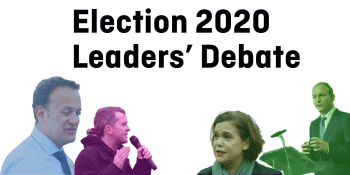
Fine Gael leader Leo Varadkar has come to be known as a leaker. The hashtag #leotheleak has trended on Twitter on several occasions after Varadkar was accused of publishing things he shouldn’t. That Leo leaks however hasn’t yet been proven—or become a political liability for the tánaiste. That may change with evidence from a healthcare whistleblower that Varadkar, while taoiseach, leaked a confidential document to a personal associate.
![]()
See below : The Press Ombudsman has upheld part of a complaint that Village magazine breached the Code of Practice of the Press Council of Ireland. The complaint was made under Principle 1 (Truth and Accuracy) of the Code of Practice. Other parts of the complaint are not upheld. Among the issues that have delayed the restoration of power-sharing government in the North is the failure of the DUP and the British government to honour previously-made agreements to deal with what are known as legacy issues. These include a promise to establish some form of historic truth commission to investigate the role of the British state and its security forces in the killing of hundreds of people during the conflict. A documentary film, ‘No Stone Unturned’, examines the deaths of six Catholic men in the Heights bar in Loughinisland, County Down, in June 1994, just three months before the first IRA ceasefire in August 1994. The men were shot dead while watching the Republic of Ireland play Italy in the World Cup on 18 June, when two masked loyalists walked into the bar and one fired indiscriminately at the customers and staff. Those murders were the subject of a 2016 report by the Police Ombudsman of Northern Ireland which found, following an earlier whitewash by the same office, evidence of Royal Ulster Constabulary (RUC) collusion in the protection of Loyalist paramilitary informants, who may have carried out the murders. While he found no evidence that the police knew in advance about the murder plot, the Ombudsman was heavily critical of how the RUC Special Branch handled informers, and failed robustly to disrupt the activities of UVF paramilitaries operating in south Down and to share intelligence with detectives investigating this UVF gang. He claimed there was a “hear no evil, see no evil, speak no evil” approach. The 160-page report by Dr Michael Maguire also found police informants at the most senior levels within loyalist paramilitary organisations were involved in the importation of guns and ammunition. In the film, made by Oscar-winning director, Alex Gibney, three loyalists who were involved in the attack are identified, while it is claimed that the automatic rifle used was among a large consignment imported into the North with the knowledge of the RUC Special Branch and MI5 in the late 1980s. One of those named, Ronald Hawthorn, and his wife Hilary, were among those arrested following the massacre, but have never been charged, while another loyalist, Gorman McMullen, is named in the documentary as the getaway driver. A second attacker is also named and is believed to have left the North in the late 1990s and re-settled in England. The film claims that Hilary Hawthorn identified the gang members, including her husband, in two calls she made to an anonymous police phone line in the wake of the killings, and in an unsigned letter sent to a former SDLP councillor. Her voice was recognised by police officers with whom Hilary Hawthorn worked in an RUC station, while in the anonymous letter she also claimed to have been involved in the planning of the attack. Ronald Hawthorn was arrested and questioned in August 1994, just weeks after the atrocity, while his wife was detained a year later. Neither was ever charged in connection with the killings. The documentary explains that Ronald Hawthorn was only named as ‘Person A’ by the Police Ombudsman, Dr Michael Maguire, who did not disclose the names of the three suspects, in a detailed and shocking report published in 2016. Another confidential and unpublished report prepared by Office of the Police Ombudsman of Northern Ireland (PONI) identified the suspects by name. It was subsequently sent anonymously by post to journalist Barry McCaffrey, who has spent years researching the Loughlinisland killings and who helped to make ‘No Stone Unturned’. The PSNI is currently investigating the leaking of this confidential document to McCaffrey. The published PONI report by Dr Maguire sets out how the killings were carried out by the UVF which directed its members in Down and Antrim to organise attacks on nationalists following the killing of three of its members on the Shankill Road by the INLA in early June 1994. The Ombudsman concluded that there was collusion in the Loughinisland killings involving unnamed members of the RUC. He found that the VZ58 rifle used in the attack and subsequently used in a wide range of loyalist murders was part of a consignment imported from South Africa by police and MI5 informant, Brian Nelson, in late 1987 or early 1988. Maguire wrote: “My conclusion is that the initial investigation into the murders at Loughinisland was characterised in too many instances by incompetence, indifference and neglect. This despite the assertions by the police that no stone would be left unturned to find the killers. My review of the police investigation has revealed significant failures in relation to the handling of suspects, exhibits, forensic strategy, crime scene management, house to house enquiries and investigative maintenance. The failure to conduct early intelligence-led arrests was particularly significant and seriously undermined the investigation into those responsible for the murders”. During the attack, Maguire said, “one of the masked men crouched down, shouted ‘Fenian Bastards’ and opened fire indiscriminately with an automatic assault rifle. Both men then fled the scene in a waiting Triumph Acclaim car driven by an accomplice. The car was driven in the direction of Annacloy and found the next morning abandoned in a field on the Listooder Road between Crossgar and Ballynahinch. The car was destroyed while in possession of the police in 1995”. The Ombudsman recorded how the families of the victims complained at the time that the vehicle should have been retained for potential future examination, especially in light of advances in forensic science. They state that police “wilfully destroyed” this exhibit, which they viewed as “wholly unsatisfactory and unreasonable”. Dr Maguire said: “In addition, investigative opportunities were undermined by the way in which information relating to those involved in the
![]()
by Enda Leahy
Whistleblower says key witnesses and evidence omitted from Banking Inquiry and prepares for a public battle.
![]()
Posted in:
by Village
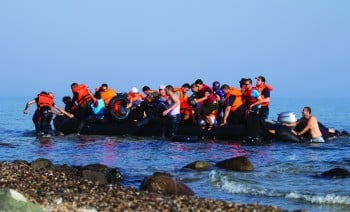
When Ibrahim Al Sabe reached Eftalou beach, on the legend-suffused island of Lesbos in Greece, he was soaking wet, but indescribably happy to be alive. The engine of the rubber dinghy, carrying 45 Syrian refugees, had stopped working five times during the four-mile journey. The boat started to fill with water and almost went under. Panic erupted, many children were crying. “I saw my death in the middle of the sea”, says Al Sabe, who doesn’t swim well. Five days earlier Al Sabe, 16, had left his hometown Idlib in Syria. Life had become dangerous due to the civil war, and his high school had been closed. The family sent their eldest son off alone. With four small children, they could not possibly have taken the perilous journey together. With the help of his iPhone navigator and advice from Facebook groups where Syrian refugees share co-ordinates and experiences from their path to Europe, he made it to Izmir, where he paid $1,200 for the Mediterranean crossing. I met Al Sabe right after his arrival, after midnight. Our group of volunteers had spotted the boat and directed the arrivals to a nearby bus station, where they could spend the night and were given food, water, dry clothes and sleeping bags. Babies were given nappies and hot water bottles to keep them warm after the rough journey. In the morning a Médecins Sans Frontières’ bus took the refugees to the registration centre in Mytiline, 70 kilometres away. The volunteers set off to help another boat that had just arrived. Lesbos, an island of c86,000 inhabitants, is struggling under the heavy weight of refugees. Over 93,000 of the 160,000 refugees that have arrived in Greece in 2015, have travelled through Lesbos. According to the UNHCR, 82% of them are from Syria, 14% from Afghanistan and 3% from Iraq. Amidst the ongoing economic and humanitarian crisis, Greece remains ill-equipped to provide an adequate emergency response or co-ordination. The Moria reception centre, fitted out for 700, was overcrowded throughout the summer, often with over 1,000 inhabitants inside, and another 1,000 camping outside. Conditions are poor with soiled mattresses and overflowing toilets. In the Kara Tepe make shift camp, designed for 1,000 but sometimes accommodating as many as 3,500 refugees, the toilet hygiene is equally appalling, and tents are surrounded by dirt-water and litter. Diarrhoea epidemics are commonplace. No doctors were available until late July and on some days the municipality has not been able to provide food. With their downsized public sector, the Greek authorities cannot handle the administrative processes efficiently, sometimes forcing the refugees to wait for 10 to15 days for the papers that allow them to move legally through Greece. Human rights organisations such as Amnesty International have repeatedly expressed their concern about the humanitarian situation on Lesbos, calling for EU financial and logistical support, more staff in reception units, more police and coast guards, and improved conditions in reception facilities. In the absence of a co-ordinated emergency response, local volunteers, NGO activists and tourists on Lesbos and other Greek islands are trying to do what governments and international organisations should be doing. A group of local Greeks called ”The Village of All Together” maintains a refugee camp for asylum seekers waiting for family reunification. An expat-led group in the Molyvos area is alert day and night, spotting new arrivals. Locals and tourists are transporting the refugees; and volunteers are cleaning the camps. The Greek Minister for Migration, Thassia Christodoulopoulou, recently told the Guardian that without the contributions of NGOs, volunteers, and communities, Greece would not have been able to manage the situation. The EU’s €474m new funding programme for Greece is expected to alleviate the situation. The European refugee challenge requires reforming both policy and ideology all over Europe. It necessitates upgrading the capacity for handling the asylum applications, expanding the reception facilities, increasing the capacity for rescue operations and security control, as well as reforming in housing, education and employment policies. Moreover, it requires acceptance of our responsibility as Europeans to help the people fleeing conflict and persecution, by offering them equal opportunities as members of our societies. In Greece, the victory of the left wing Syriza in February signalled a shift towards a more welcoming refugee policy. Rather than prioritising immigration as a question of security, its ideology emphasises that refugees are victims of wars and deserve a place in society. The new government closed down the Amygdaleza detention centre and issued its residents permits to grant them a minimum of 6 months stay in Greece during which their refugee status is to be assessed – recognising that detention should only be exercised in extremely rare situations. It is now improving reception infrastructure in many locations. The government recently amended the citizenship law, allowing second generation migrants to claim the Greek nationality irrespective of the legal status of their parents. Those staying legally in Greece can now also claim Greek nationality after completing Greek grammar school, or if they graduated from a Greek university and have completed their secondary education. Moreover, the University of Aegean was recently permitted to enrol Syrian refugees. Not for nothing is Greece the cradle of civilisation. Most of the refugees on Lesbos are heading for Sweden or Germany. Currently, Sweden receives the highest amount of asylum applications per capita (8.4 per 1,000 inhabitants) while Germany is the most popular in absolute terms (32.4% applications of the EU total). What Europe needs is a real common asylum policy, that fulfils its obligation to provide international protection, while balancing the burden sharing and reception capacity of the EU countries in a fair way. We are only now – after a dead toddler was wrenchingly captured on film – seeing progress. the EU is to take 160,000 refugees with Ireland taking 4,000 under the irish Refugee Protection Programme including 600 already committed to under the proposed EU Relocation programme and 520 now being resettled under an existing programme. Mind you, if Ireland accepted the same number of
![]()
Posted in:
by Village
In the Sticks: Loss of habitat and food threatens a one-time harbinger of Spring – Shirley Clerkin
![]()
Posted in:
by Village
The media, politicians, the IFA and the CAP promote beef rather than plant foods, to the detriment of health, the environment and the poor – Frank Armstrong

![]()
by Village
The old Irish Times website was much better than the new one – Frank Schnittger
![]()
by Village
We’re still watching it, but everything else has changed – Richard Callanan
![]()
Posted in:
by Village
The great magazine survivor divides commentators – Gerard Cunningham
![]()
Posted in:
by Village
Investigative journalism in the North is ill-served on-air and in print – Anton McCabe
![]()
Posted in:
by Village
Bunker Roy explains his solar-engineering college and castigates the vested-interest aid industry – Samuel McManus
![]()
Posted in:
by Village
Revolting plastic ocean morass covers an area twice the size of the USA – John Gibbons
![]()
by Village
The media must challenge power and the state, and resist interference and regulation – Harry Browne
![]()
by Village
We’ve become used to the idea that a society based on loans is normal and sustainable – Paul Ferguson
![]()
by admin
The anti-nuclear festivals at Carnsore Point, 1978-1981, were recalled at a lively and political event called ‘Memory of a Free Festival’ at the Projects Arts Centre in central Dublin which will now tour nationwide for a year By Caroline Hurley The launch event of ‘Memory of A Free Festival’ was held at the Project Arts Centre, on 21 March 2026.‘Memory of a Free Festival’ is a project conceived by Ormston House Cultural Resource Centre, Limerick, in response to the series of Carnsore Point anti-nuclear festivals that took place in Wexford between 1978 and 1981. Organised by a coalition of groups, the festivals were attended a generation ago by tens of thousands of people unhappy about government proposals to build Ireland’s first nuclear power plant. The free festivals laid on music, theatre, food, lectures, workshops and exhibitions. They are testimony to citizen creativity and democratic activism, for which formal recognition is long overdue. ‘Nearly fifty years later, this commemorative touring project features contributions from contemporary artists and original organisers, among others’ Nearly fifty years later, this commemorative touring project features contributions from contemporary artists and original organisers, among others. It will run in various formats and venues for one year, until March 2027, starting with the recent event at the Project Theatre. Fresh Promotion of Nuclear Energy With Europe importing half the energy it uses and prices rising, worsened by AI data centre demand and fossil fuelled wars, pressure for solutions is intense. Voices for nuclear power are growing louder and now count European leaders who, at the Nuclear Energy Summit in Paris on 10 March 2026, backed expansion of nuclear energy, purportedly for greater independence and affordability. the progress made by solar, wind and other far safer, cheaper and faster renewable energy is compelling, especially if the budgets available to nuclear were provided for renewables to develop at the same scale In August 2024, more than 600 civil society groups across the globe working on climate action launched a declaration in Brussels, Belgium, stating that nuclear power expansion is not a solution to the climate crisis, because it is too dangerous, too expensive, and too slow. This definitive position is in line with esteemed international climate solutions organisation, Project Drawdown, which cautions against relying on nuclear power compared to other solutions: “At Project Drawdown, we consider Nuclear Power a ‘regrets’ solution. It has potential to avoid emissions, but carries many concerns as well”. Other arguments against nuclear energy include that it creates public health hazards from radiation and accidents, that it erects obvious military targets in a fractious and sometimes nihilistic world, that there are no safe solutions for nuclear waste after 80 years of its manufacture, and that in contrast, the progress made by solar, wind and other far safer, cheaper and faster renewable energy is compelling, especially if the budgets available to nuclear were provided for renewables to develop at the same scale. See – https://innatenonviolence.org/wp/2024/02/01/nuclear-power-is-a-regrets-industry-some-facts/ As of February 4, 2026 when the latest assessment was made, the time shown by the Doomsday Clock, initiated in 1947 by the Bulletin of the Atomic Scientists, is 85 seconds to midnight; the closest humanity has ever been to symbolic catastrophe. The Bulletin evaluates nuclear-weapons risks, climate change, disruptive technologies like AI and bioweapons, cyber threats, and the state of global governance in evaluating existential precariousness. On 15 March 2026, responding to international events, the British Energy Secretary outlined a package of measures to go “further and faster” in the pursuit of national energy security. The emphasis is on renewables. Top of the list, notably, is support for measures up to recently viewed by state bodies as guerrilla eccentricities suspected of interrupting grid centralisation e.g. making available in the UK for the first time, ‘plug-in solar’, low-cost solar panels available to buy on the high street, to put on balconies or outdoor spaces. Unfortunately, the UK government also naively lists nuclear as an essential green energy, even as built plants remain hazardous for centuries Unfortunately, the UK government also naively lists nuclear as an essential green energy, even as built plants remain hazardous for centuries, with no known effective method to store radioactive waste. Seeing the potential for renewable energies, Nicola Tesla and others had long dreamed, and contributed to the development, of safe free electricity for all; sources of inexhaustible, clean energy. Monopolistic entities and their lobbying arms have repeatedly sabotaged such movements, despite evidence of accumulated harms from fossil fuels and nuclear materials. Several bodies such as Laka and the International Centre for Multi-Generational Legacies of Trauma, track the full list of nuclear and radiation incidents which are reported by national nuclear regulatory agencies to the International Atomic Energy Agency since 1990. They are not negligible. And not counted are many similar accidents before 1990., such as Windscale, Chernobyl, Three Mile Island, and problematic storage sites like Handford. We’re all hot now, already. The European Union recently published advice on which types of defence investments fit its sustainable-finance framework, labelled green or ESG (environment, social, governance). It includes atomic bombs, depleted uranium and white phosphorus On 30 December 2025, the European Union published a Commission Notice to advise on which types of defence investments fit its sustainable-finance framework, labelled green or ESG (environment, social, governance). Lucky investors can now include atomic bombs, depleted uranium and white phosphorus in this category. To claim this Orwellian reclassification measure was taken for climate objectives rather than to boost defence spending, surely fooled few, and roused significant if as yet ineffectual condemnation. What it does show is the accelerating high-level momentum to divert finance into the most destructive artifacts ever made rather than on meaningful social and nature regeneration. These were the themes that drew so many festival goers to protest at Carnsore Point all those years ago. Launch Event at Project Arts Centre Padraig Moore, manager of Ormston House, introduced the touring exhibition, which, after launching at Project Arts Centre, would open at Ormston House on 17 April before moving to
![]()
by admin
World leaders turned toadies as Trump dismantles international law and pollutes the discourse, without concerted opposition.
![]()
by admin
Six months ago Zack Polanski was a lively London Assembly member known mainly for his theatre background and a tabloid humiliation involving “hypnoboobs”.
![]()
Posted in:
by admin
By February 2026, the idea that Donald Trump represents an endlessly renewable force of disruption moved from hard to stomach to hard to sustain.
![]()
by admin
As the government prepares to jettison the triple lock, clear thinking could make Ireland a power for peace
![]()
by admin
A new way of reading ‘Ulysses’ may be found, which will harmonise all its symbols and references to external reality
![]()
by admin
In an age of limitless distractions, adulthood is now just one lifestyle option among
![]()
Posted in:
by admin
Lessons for those who are too civilised for tormented times from Stefan Zweig, friend of Joyce, technology sceptic and the greatest storyteller of the last 100 years
![]()