Posted in:
He could truly remember his Dad
They hadn’t spoken in months and before that when they spoke it was hard, bitter
Posted in:
by admin
They hadn’t spoken in months and before that when they spoke it was hard, bitter
Posted in:
by admin
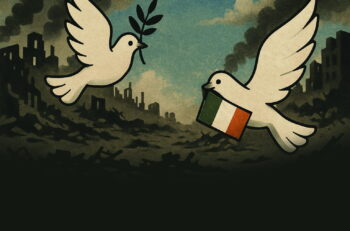
Trump – and Biden – are culturally Irish
by admin
The Comprehensive Economic and Trade Agreement – implemented in an EU/Canada trade deal – introduces a bilateral Investment Court System and will transform it into a Multilateral Investment Tribunal. By Anna Jermak Introduction Given that foreign investments significantly contribute to a country’s economic prosperity, States have been trying to attract foreign investors by offering them a favourable investment environment. Through proliferating bilateral investment treaties (BITs) and treaties with investment protection – safeguarding foreign investors against unfair or discriminatory treatment by a host State – an international system governing the investor-State relationship was created. The Investor-State Dispute Settlement (ISDS) is at its heart a mechanism for foreign investors to sue a host State for breaches of their rights. Traditionally, the proceedings took the form of arbitration before ad hoc tribunals. However, due to the shortcomings of the ISDS system, the voices calling for its reform have been heard more and more loudly. The EU’s reform proposal – implemented in the Comprehensive Economic and Trade Agreement (CETA) – is so far the most promising one. It introduces a bilateral Investment Court System (ICS) and commits to ultimately transform it into a Multilateral Investment Tribunal. Why reform at all? The current ISDS system’s adaptability to international reality, and its implementation of global legitimacy standards, have been widely questioned for want of reliability, predictability, transparency, and consistency. The fact the arbitration proceedings do not constitute precedents for later proceedings to rely on, and their decentralisation – that is, the formation of arbitration tribunals ad hoc, separately for each dispute – make it close to impossible for decided cases and interpretations to be consistent. Such legal uncertainty inevitably leads to decreased trust from the parties in the institution of investment arbitration, as the majority’s ‘correct’ interpretation of law or facts is so uncertain. In conjunction with the colossal costs that arbitration proceedings entail, the parties may be overwhelmed by the risk. Economically weak countries pay the highest price for its unpredictability. Another factor that contributes to low levels of confidence in ISDS has been the absence of an appeal mechanism that would ensure coherent interpretation and application of the law. Widely present in national legal systems (appeal courts) as well as in WTO dispute settlement (the Appellate Body), the review mechanisms serve to not only allow for uniformity of court and tribunal decisions but also to reassure the parties that the decision held is legitimate and must be respected. Without the parties’ confidence, the ISDS is on the verge of collapsing. Lastly, the fact that disputing parties themselves appoint the arbitrators who resolve their conflict undermines confidence not just in the ISDS system but also in the arbitrators’ independence and impartiality. The parties are certainly inclined to nominate an arbitrator who they believe will decide in their favour. And although arbitrators are expected to followthe soft-law International Bar Association (IBA) Guidelines on Conflicts of Interest in International Arbitration which require their impartiality and independence, they may still be biased on a conscious or subconscious level. Thus, even a mere suspicion of an arbitrator’s bias is unsustainable – as Paulsson rightly noticed: an unfavourable decision is unlikely to be accepted as legitimate if it is perceived to be the product of arbitrariness or bias. Jan Paulsson, ‘Moral Hazard in International Dispute Resolution’ (2010) 25 ICSID Review – Foreign Investment Law Journal 340. How is CETA’s mechanism different? The enshrinement of the ICS in EU trade and investment treaties – such as the EU-Vietnam Free Trade Agreement, the EU-Singapore Free Trade Agreement, and CETA – appears to be the answer to these criticisms. Despite neither of the ICS provisions in these agreements being operative, the mere act of replacement of the ISDS system has aroused so much controversy that it led the Court of Justice of the EU to confirm CETA’s ICS’s compatibility with EU law. For the purpose of critiqueing the EU’s ICS proposals, the focus will here be on CETA’s investment provisions. CETA was signed in 2016, following eight years of negotiations. Its emphasis on the removal of trade barriers between the EU and Canada did not stop it from putting in place remarkable provisions on international investment protection and dispute settlement. Art. 8.27 of CETA establishes a permanent Tribunal for the resolution of investment claims. It is to be composed of fifteen highly qualified and (as stated in Art. 8.30) fully independent members coming from the EU, Canada, and third countries. Pursuant to Art. 8.28, an Appellate Tribunal, reviewing the first instance Tribunal’s awards, has come into existence. The language allowing it to “uphold, modify or reverse” an award resembles the wording referring to the Appellate Body’s competences in the WTO’s Dispute Settlement Understanding. Under Art. 8.29, the contracting parties pledge to pursue, in collaboration with other trading partners, the establishment of a multilateral investment tribunal and a separate appeal body. Upon their creation, the ICS (together with bilateral investment courts established pursuant to the EU’s other free trade agreements) will be replaced by the new single multilateral dispute-settlement mechanism. Any country willing to accept the rules underlying its functioning will be welcome to join it. Pros and cons This two-tier system is a move away from the traditional ISDS framework to permanent, transparent, impartial, and independent Tribunals inspired by the principles of public judicial systems in the EU and its Member States and Canada, as well as international courts such as the International Court of Justice and the European Court of Human Rights. Council of the EU, Joint Interpretative Instrument on the Comprehensive Economic and Trade Agreement (CETA) between Canada and the European Union and its MemberStates 27 October 2016, 13541/16. Indeed, the permanency of the investment Tribunal under the ICS stands in opposition to the ad hoc character of regular arbitration tribunals, providing more consistency and predictability and therefore a more stable investment dispute settlement system overall. The fact that the Tribunal’s members are designated in advance eliminates the danger of biases and conduces to trust. The requirements of absolute independence
by admin
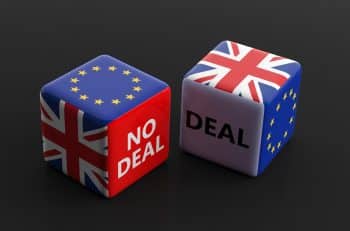
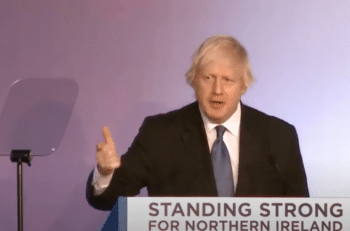
The UK will probably apply lower environmental and social standards, and in exchange will have EU tariffs applied to its goods and restrictions on freedom of movement to the EU. By Michael Smith Britain formally left the EU on 31 January, and is now in a transition perioduntil the end of the year. Boris Johnson’s shot-to-his-ownfoot deal crashes the UK out of both single market and customs union, unless there had been deal with the EU by the end of June 2020; and poses the possibility, which I have long here predicted, that the UK will reduce standards particularly on labour and the environment. Inept Theresa May’s luckless deal kept Britain in the single market and the customs union until at least 1 July, 2020, extendable only by mutual agreement. However, her Northern Ireland ‘backstop’, which restricted the whole UK to avoid opening differences between Britain and Northern Ireland has been replaced, in Boris Johnson’s deal, with a frontstop meaning he crashes the UK out of both single market and customs union, unless there are deals with the EU reinstating them by the end of this year.Talks, however, are deadlocked. The two sides have taken polar positions on fisheries, governance and competition. And in what was an, apparently unwitting, big concession then, by accepting a customs border Northern Ireland will now remain aligned tothe EU’s Custom Union, but will be in the United Kingdom’s custom territory, allowing Northern Ireland to avail of future non-EU trade deals. In practice, this means that if goods are sent from Britain to Northern Ireland, no tariffs apply. If goods are sent from Britain through NorthernIreland to Ireland, tariffs will apply, but they will be collected at ports and airports – effectively putting a customs border along the Irish Sea betweenGreat Britain and Northern Ireland, something that was thought to be a bridge too far. Annex 4 of the Theresa May Protocol – which contained references to EU laws that would apply to the whole of UK in what were called “level playing field” commitments to limit the UK’s capacity to gain what it would see as an unfair advantage by lowering standards – have now been removed. The level-playing-field provisions were in the areas of taxation, environmental protection, labour standards, state aid and competition. They had been subject to a legally-binding agreement in the Withdrawal Agreement – it’s now stated in the Political Declaration – with only non-binding commitments. Britain can reduce these standards and negotiate new trade agreements with blocs outside the EU, notably the US. It can remove protectionsagainst chlorinated chicken, open up the National Health Service to commercialisation and competition and remove habitats protectionand Environmental Impact statement requirements. This is what Johnson and his mates always wanted to do though they fudged the issue like practised fraudsters. If the UK reduces standards the EU will have to decide whether it wishes to do a big trade deal with it or whether it wants to protect its own standardsby imposing proportionately heavy tariffs and restrictions on freedoms of movement. My guess is the EU will be reluctant to impose tariffs and restrict movement and will indulge some insidious reductions in standards, particularly those that won’t register at a border: some standards are evident from inspection of a good (chlorinated chicken); others aren’t (parental leave in the workplace). We can look forward to Tory Britain reducing labour, environmental and other standards, and to Northern Ireland specialisingin attracting jobs on the basis of such low standards. It would certainly tie in with the DUP’s ethos; and there is not much evidence that any party in the North cares much for environmental niceties. Unfortunately the reality is that if the UK loses the EU baseline standards regulation will fall to Parliament. We know from the zeal with which the Tories undermined EU social standards and their excitement at “unleashing” new entrepreneurial zeal, that they are looking forward to deregulation. And any change in standards, even an ostensibly neutral one, opens up the possibility of lack of clarity and regulatory gaps. To compete in attracting inward investment, especially with a Janus-like Northern Ireland benefiting from the best of both worlds, Ireland willitself feel obliged to reduce its own standards. And in addition to the disbenefits of reduced trade with the neighbours, and the Coronavirus slump that is why Brexit is a disaster for us, all. Under the withdrawal treaty, the two sides could have chosen before the end of June 2020 to extend the transition for up to two years. Failing that, any extension now needs a fresh treaty and the approval of all 27 national and some regional parliaments. Brinkmanship failed. Statecraft died. Turmoil awaits.
by admin
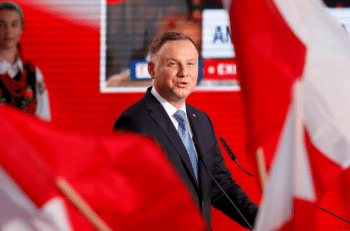
An emigrée contrasts Poland’s reversion to hatred of LGBT+ with Ireland’s recent liberalisation. By Sara Chudzik. I was twelve when I first moved to Ireland in 2007. Ever since then with every passing year I would count how many years it is that I’ve lived in Poland and how many in Ireland. Now the Irish half is becoming top-heavy and I’ve lost count of the years. Yet, for the past few days I’ve felt more Polish than ever. On 6 August 2020 Andrzej Duda was sworn in for his second term as the President of the Republic of Poland, having narrowly defeated the liberal mayor of Warsaw, Rafał Trzaskowski, who in 2019 promised to provide greater support to the city’s gay community, including offering some anti-discrimination and anti-bullying education in schools. Duda had claimed the mayor’s gesture constituted the “sexualisation of children” and the destruction of the family. Duda’s wish and promise it is to make Poland an LGBTQ+ free zone and to stop the spread of LGBTQ+ ‘ideology’. Since the election activists have taken to the streets to peacefully protest the extension of Duda’s conservative regime. Rainbow flags have begun to appear around monuments and statues around cities. Margot, a transgender activist, was violently arrested for stealing a registration plate from a van belonging to an anti-LGBT+ Fundacja Pro, an organisation responsible for spreading pseudo-scientific facts such as that homosexuality is on par with paedophilia. Margot was detained and taken to a man’s prison yesterday. Since then 48 more activists have been detained; in many cases with no immediate information about their whereabouts. Back in 2015 when Ireland became the first country to legalise gay marriage in a popular vote, I did not vote because I couldn’t. Despite living in this country for years and being educated here, I was still not a citizen. Technically, I did qualify. Practically, I never had the money to buy an Irish passport. I have never voted in Irish elections and could not take part in either the 2015 marriage equality or the 2018 choice referendums. Living in a country in which you don’t vote makes you feel like an observer or a lurker rather than an active participant of society. I feel deep regret at the fact that I wasn’t part of these monumental and historic changes in Ireland. This entire time I’ve been a remote Polish citizen and when my parents reminded me of my right to vote in the upcoming election, knowing about Duda’s hatred-fuelled ideologies, I was excited at being able to exercise my right to vote. I wanted to take part in stopping Duda from continuing to a second term. When that didn’t happen, I felt useless. I’ve already heard of LGBTQ+ people being targeted by the police and about the violence that erupted at pride marches in June. Then Duda got re-elected and I was in Ireland, not knowing how to take action. In the past few days, the situation has gone from bad to worse, as more peaceful demonstrations followed that were violently interrupted by the police. People gathered in their hundreds around Warsaw and other major cities in Poland. I saw brutal videos and images and read about the arrests of activists from the safety of my phone screen. For years I have considered Ireland my primary home but now I wish I was in Poland to be part of the fight — a wish that only those from a safe distance could make. I watched and wondered — what about Ireland? The Polish are the biggest minority group here. There must be people out there angered by this. Eventually I came across a social media group which listed cities in Poland and around the world where peaceful protests and demonstrations were to take place. After scrolling through the comments, I saw a user ask about Dublin. Later I found an event which was to take place this Sunday. I felt like I should make a poster for that purpose as I didn’t have any flags with me. I took out whatever materials I could find in my room in order to draw a Polish flag with the outline of the country with rainbow colours. Months ago, I bought some make-up and an eyeshadow palette that had red in it. Whatever could I use that for? Today that came in handy. Sometime later I found myself outside the GPO amongst dozens of both Irish and Polish people with LGBTQ+ flags and signs showing both solidarity and expressing the need for action. We stayed there for an hour as passers-by took interest and some stopped to learn more about the situation. The GPO was the appropriate place for this as the sight of Ireland’s fight against oppression. And we weren’t standing there alone. Behind us were two stands with food for the homeless, one set up by the Sikh community, the other by a group of nuns. At the end, men with turbans offered us some rice and curry. This wasn’t an uprising – it was only a small crowd, mostly young adults, but we all knew that being able to stand there uninterrupted and safe was a privilege that is not given to people like us in Poland. Some older demonstrators who came from different parts of Poland remembered the protests from years ago. They said not much has changed. The goal right now is to raise awareness. People in Ireland need to know what is going on — we have been here and lived here for many years now and are part of this country — help us to protect people from where we came from. We aren’t in Poland but there are a number of things that we can do from here. You can donate to various organisations in Poland at https://lgbtqpl.carrd.co The goal of the activists at the GPO on Sunday is for there to be consequences for the Polish government. The EU as well as governments outside of Poland have the power to prevent the spread
by admin
The Conservative Party’s view of the role of the judiciary in politics won’t work in Northern Ireland. By Christopher Stanley. This piece looks at the dangers for Northern Ireland of ‘Cummings-Type’ tampering with the British Constitutional settement. For readers of Village Magazine it is offered as a supplement to my recent post, Contempt in the Rose Garden, on the travels and travails of British Prime Minister Boris Johnson’s eminence grise Dominic Cummings. it is written in response to a paper by Richard Elkins: “Protecting the Constitution: How and why Parliament should limit judicial power” (Policy Exchange Protecting the Constitution, 2 December 2019) which focuses too much on Britain. In general for Britain read England. This distinction has become particularly acute during the current pandemic crisis. The UK’s devolved administrations reacted in different ways to the control of Covid-19. This post is offered as a warning to those elsewhere – in Dublin for example – who may be curious about the recent proposals from London to reform the unwritten constitution and to review how Executive authority-power is exercised. It is a view from that ‘Narrow Ground’ described by Sir Walter Scott in 1825. “I never saw a richer country, or, to speak my mind, a finer people; the worst of them is the bitter and envenomed dislike which they have to each other. Their factions have been so long envenomed, and they have such narrow ground to do their battle in, that they are like people fighting with daggers in a hogshead”. The narrow ground in Northern Ireland is unfortunate but forced on it. [I] Conservative Manifesto The problem originated with the Conservative Manifesto published before the recent General Election in the UK which stated: “After Brexit we also need to look at the broader aspects of our constitution: the relationship between the Government, Parliament and the courts; the functioning of the Royal Prerogative; the role of the House of Lords; and access to justice for ordinary people”. “We will update the Human Rights Act and administrative law to ensure that there is a proper balance between the rights of individuals, our vital National Security and effective government. We will ensure that judicial review is available to protect the rights of the individuals against an overbearing state while ensuring that it is not abused to conduct politics by another means or to create needless delays” (Conservative Manifesto 2019 page 48). The Queen’s Speech 1, which gives sovereign expression to the Conservative Party Manifesto and therefore a democratic mandate to govern, states: “My Government will take steps to protect the integrity of democracy and the electoral system in the United Kingdom”. In the accompanying Background Briefing Notes, the Cabinet Office expatiates on this statement: “Examine the broader aspects of the constitution in depth and develop proposals to restore trust in our institutions and in how our democracy operates. Careful consideration is needed on the composition and focus of the Commission” Queen’s Speech 2. In 2020 Manifesto Commitments are unusually important. This is because many of them are likely to find their way into the Queen’s Speech and from there into action. The current UK government has a majority in Parliament of 80 seats. This constitutes what Lord Hailsham described in 1976 as an Elective Dictatorship. Julian Petley recently commented: “At a time when the powers of Parliament are under severe threat from government, it might not seem an opportune moment to recall Hailsham’s lecture, but the crucial point to bear in mind is that his phrase refers to the fact that Parliament’s legislative programme is determined by the government, whose bills virtually always pass in the Commons thanks to the majoritarian, first-past-the-post electoral system and the imposition by the whips of party discipline on the governing party’s majority. Thus there is a strong tendency towards executive dominance, and this is compounded by the constitutional inability of the Lords ultimately to block government initiatives. We are closer than ever to Hailsham’s Elective Dictatorship” (30 September 2019). [ii] The mood is majoritarian Policy Exchange is ‘the UK’s leading think-tank’. Richard Elkins is Head of the Policy Exchange Judicial Power Project and Professor of Law and Constitutional Government in the University of Oxford. His paper ‘Protecting the Constitution: How and why Parliament should limit judicial power’ has a foreword by former Conservative Home Secretary and Leader of the Oppositon Lord [Michael] Howard of Lympne CH QC in which he offers his own insight into the British constitution by way of a question: “Who should make the law by which we are ruled? Should it be elected, accountable politicians, answerable to their constituents and vulnerable to summary dismissal at elections or by unaccountable, unelected judges, who cannot be removed?”. This is a politician’s question in that it points to the questioner’s own answer. Lord Howard then posits a further ‘drain’ on democracy as he sees because not only is law apparently being made by judges, but these judges are applying and making the law from the perspective of the European Court of Human Rights (ECtHR) at Strasbourg through judgments which apply the European Convention on Human Rights (ECHR) and its abstract jurisprudence (obviously infected by pernicious Continental legal systems) as opposed to the pragmatic Common Law. [iii] That majoritarianism pays little attention to Ireland Fog in Channel – Continent Cut Off. Irish Sea nowhere to be seen. Policy Exchange is a (Neo-Conservative) Think-Tank. It is part of The Stockholm Network(‘The Stockholm-Network.org is the leading pan-European think tank and market oriented network’). Policy Exchange therefore articulates and promulgates an ideological position which underscores a political mandate. Who Funds You? The English constitutional settlement is an unwritten set of conventions, principles and practices forming an ideological construct balancing competing interests. As a constitution that is unwritten, save for the Bill of Rights 1688, there are both implicit and explicit consitutional conventions – for example the contested sovereignty of Parliament. Note: most European countries are republics, the UK is a monarchy. While European states have citizens, the UK has subjects. The UK’s constitutional ‘strength’, as commentators such as Dicey noted, is that the system is flexible and can accommodate change. This
by admin
Named one of Time’s ‘100 Most Influential People’ in both 2004 and 2015, Irish-American Samantha Power served as US President Obama’s human rights advisor for four years and a further four as US UN Ambassador. She is famed for her achievements but also for her conscience. By Caroline Hurley. Samantha Power was born in 1970 to Dubliner Jim Power, a musical dentist and Vera Delaney, a multi-talented sportswoman and medical doctor from Cork, both dividing studies between London and Dublin. She was brought up in Dublin, living in Castleknock and attending Mount Anville school, sadly spending too much time downstairs in Hartigan’s pub while her father drank his health away upstairs. Her mother’s specialities took her to Kuwait in 1977 to set up the first kidney-transplant and dialysis unit. Power retained strong memories of visiting. An affair between Vera and her boss Eddie Bourke inspired their plan to emigrate to America. Vera sued Jim, whose alcoholism was worsening, for child custody. The judge’s comment opens the book: “what right has this woman to be so educated?” With no divorce and less than 10% of married women working, Vera’s confrontation of the Irish system for her rights was exceptional, and paid off. The new family resettled quickly in Pittsburgh, Pennsylvania, and never looked back. As a young adult, Power heard how her father’s decomposed remains were found in her childhood bed. Therapy in response to severe anxiety symptoms centred on this relationship. She suffers demobilising anxiety attacks and back pain: “lungers” is the term used by a former boyfriend who witnessed her struggling to breathe. Pathos aside, Power’s depiction of Irishness veers towards caricature, perhaps because although well-disposed she invests so much in the damage her father seems to have precipitated. She went to school in Atlanta, Georgia, obtained a BA in Yale and a JD law degree in Harvard. A trip around Europe in 1990 broadened young Samantha’s horizons, as did a stint as administrative assistant to Mort Abramowitz, highly-respected President of the Carnegie Endowment for International Peace think tank. Abramowitz’s opinion columns, friendships and diplomatic efforts for the former Yugoslavia momentously drew Power away from a possible career in sports journalism and into the escalating ethnic conflict between Bosnian Serbs and non-Serbs. She became a war reporter there. On her own initiative, she drafted a chronology of events titled ‘Breakdown In The Balkans’. The hundred copies she self-printed quickly ran out due to the ‘hugely useful’ content, as American leaders struggled to comprehend and top officials resigned in protest at US inertia. Feistily forging a news pass at the Foreign Policy desk, Power toured the Balkans in August 1993, relying on UN papers and protection at checkpoints, meeting many tortured bereaved refugees and making new journalist friends. Back in Washington, US News published her eye-witness account. She returned to Zagreb, proceeding to Sarajevo, Srebrenica and beyond. Hazardously chronicling survivors’ experiences for nearly two years, demand grew for her reportage. She blames herself for not personally preventing the 1995 murder of some 8,000 Bosnian Muslim men and boys in Srebrenica: I was the correspondent in Munich while the bodies burned in Dachau. … I had power and I failed to use it. The book makes it clear that Samantha held herself to the highest standards, at this stage. To her indignation, loopholes in UN approval of the no-fly zone patrolled by US and NATO aircraft allowed slaughters to continue. Throughout her career, Power has repeatedly banged her head against such internal UN dysfunction, especially the veto system pitting the five permanent members at cross-purposes. A theme developed here too, of Russia’s reflex denials, accusations of fake news and weaponising social media, ploys aped by Russian allies. By now Samantha Power was being noticed, and she impressed. Declining a job from Richard Holbrooke who had brokered the Dayton peace accords on Yugoslavia in 1995, she decided to study law with a view to prosecuting human rights abuses. Three years later she became the Founding Executive Director of the Carr Center for Human Rights Policy at the Harvard Kennedy School. In 2001 she wrote a piece in the Atlantic featuring exclusive interviews with scores of those in the US administration who had dealt with atrocities in Rwanda. It outlined countless missed opportunities to mitigate a genocide. Researching exhaustively, complemented by some human rights and teaching work, she grabbed a book deal. ‘A Problem From Hell: America and the Age of Genocide’ was published in 2002. Blending activism and diplomacy, she stressed the importance of recognising war’s human consequences and considering every non-military solution first, stopping short of embracing non-aggression and a global security system without war (see WorldBeyondWar.org/alternative). In the end she wonders why American leaders who vow “never again” repeatedly fail to halt genocides. It is an appealing message from the pen of a talented, and idealistic, future leader. And being Samantha Power, she won a Pulitzer for it. She went on to cover the 2004 massacres from Darfur, Sudan. Power’s first and latest books covers – “A Problem from Hell” and “The Education of an Idealist” As early as 2005 diplomat Peter Galbraith connected Power to then-Senator Obama’s team and in 2008 she moved onto his campaign group as he vied with Hillary Clinton for the Democratic nomination. In March 2008 she suggested, irritatingly for her boss but as it turned out accurately, that Obama would not be in a position to withdraw as quickly as he was promising in his campaign he would, from Iraq. A major hiccough a few days later was an interview about the campaign with The Scotsman, where she proclaimed: We fucked up in Ohio. In Ohio, they are obsessed and Hillary is going to town on it, because she knows Ohio’s the only place they can win. She is a monster, too—that is off the record—she is stooping to anything … if you are poor and she is telling you some story about how Obama is going to take your job away, maybe it will be more effective. The amount of deceit she has put forward is