• Posted in:

    Dáil and its legal reform is pro-lawyer

    The circumstances of the demise of former Minister for Justice, Alan Shatter, diverted attention from the risk of the thwarting of his reforms of the legal profession. Infamously many ministers, and their – often informal – advisers, are lawyers. Indicative of the problem is that at the last reading of the proposed reform bill, it was clear that both Fianna Fáil and Sinn Féin, the principal opposition contributors on the bill, had nothing to contribute beyond what they had been fed by the representative bodies of the legal profession, the Law Society and Bar Council. The only person who seemed concerned by this was, ironically, the ex-Minister himself, a high-flying solicitor. Under successor minister, Frances Fitzgerald, the substance of his proposals remain intact. So far. To the detriment of all but the most pampered senior lawyers, they do not go far enough anyway. When the bar is accused of privilege and anticompetitive practices, the defence is often proffered that the fact that so many barristers are struggling and even leaving the profession proves lack of privilege and anticompetitive practices. This defence is incorrect. On the contrary, in a profession, the relative suffering of the incoming juniors is indicative of anti-competitive practices, not of their absence: both the general public and those less established in a profession pay for the profession’s obstruction of competition. Ireland shares with the UK the distinction of maintaining the highest legal costs in Europe, and a similar system of practices, including separate functions for barrister and solicitor, the real pressure to hire three lawyers in the higher courts, the much-questioned institution of Senior Counsel, and a system of legal-cost adjudication (formerly called ‘taxation’) in which the question of whether a lawyer has overcharged you is decided in a process which seems designed to punish you severely for challenging the lawyer’s bill.   Obstacles to barrister right of establishment and to price competition Two key obstacles to barrister competition are restrictions on advertising, particularly of fees, and prohibition of direct access to barristers by clients (approach must be done through a solicitor). These obstacles have a powerful twofold economic effect in favour of established barristers: first, they obstruct new entrants from establishing themselves, getting market share and competing with the incumbents; second, they inhibit what economists call price competition: the system inhibits the client’s ‘shopping around’ for the best-value barrister for their needs, and haggling for fees, and thus bringing normal market forces to bear for lower fees. These two obstacles are of the Bar Council’s own making and it vehemently resists their repeal, desite the issuance of an infringement ‘formal notice’ by the EU Commission in November 2013. Theoretically the solicitor can do this ‘shopping around’ for the client. But there are three major problems with this. Firstly, the solicitor is not necessarily going to take this ‘shopping’ seriously enough as her own money is not on the line. Secondly, as this shopping takes the solicitor’s time, the solicitor can bill for it; if she does not, she is not incentivised to work thoroughly on it. Thirdly, there can be a fee-splitting practice where solicitor and barrister, while having actually billed the client distinctly, aggregate their actual received fees and split them. Fee-splitting is a form of kickback to the solicitor on the barrister’s fees, and actually puts price competition in reverse by perversely incentivising the solicitor to use a more expensive barrister. The barrister’s code of practice is totally silent on any such kickbacks; it does not prohibit them or even require that the client be notified of them, indeed it does not mention them at all.   Investigation by the Irish Competition Authority The Irish Competition Authority investigated the Irish legal profession and in a final report published in 2006, concluded that the legal profession was “in need of serious reform”, and “permeated with unnecessary and disproportionate restrictions on competition”. It set a target date of 2008 for the implementation of its many recommendations. As of 2014, the most important recommendations have not been implemented.   Troika pressure and glacial government response The Irish government was under pressure from the Troika to reform the legal system and to do something about excessive legal fees. The first draft of the Legal Services Bill was published in 2011, already three years after the Competition Authority’s target date for implemented reforms. Since then, the draft bill has sat on the shelf for a further three years. In November 2013, the European Commission initiated an infringement procedure against Ireland (reference NIF 2013/2192) for continuing to allow the Bar Council to maintain the restrictions it has on advertising. The first draft of the bill had many problematic provisions, some of which have removed or improved in the new draft of the bill.   Key obstacles to barrister competition not removed The draft seems to be pretending that it is implementing direct access to barristers, with a heading ‘code not to prevent direct access to barrister’. When you look closely, it is only implementing direct access in ‘non-contentious’ cases, that is, about 2% of barristers’ work. The bill does not mandate effective freedom of advertising for barristers at all.   Flagrantly unjust legal cost adjudication regime The current draft of the Bill codifies and slightly modifies an existing 18th-century practice of financially flogging those who challenge lawyer’s bills: if you challenge your own lawyer’s bill and she is found to have overcharged by anything less than 15%, you have to pay an 8% ‘stamp duty’ on that bill and, additionally, the costs of the hearing. An even worse current practice is left unmentioned and unchanged by the Bill: you have to pay the stamp duty of 8%, regardless of whether or how much you have been overcharged, when you challenge the bill of a lawyer who is not your own (which happens only when you have to pay the costs of the other side). This system is in flagrant violation of natural justice, equality before the law, and arguably

    Loading

    Read more

  • Posted in:

    Hardiman: Brilliant Libertarian With Some Deep-Rooted Prejudices

    In recent weeks much ink has been dispensed and many moving tributes have been made to the late great Adrian Hardiman. The obituaries and commentary have been universally laudatory both personally and professionally. Certainly he was a great and unique human being. An unquenchable light has been dimmed and a degree of joy and colour sadly taken from the world. He was also a man of the utmost personal integrity, which is not to say that his principles were always right. As someone who got to know him very well over the last few years in particular and as someone who had several public and indeed private disagreements with aspects of his philosophy, I believe I am in a reasonably good position to provide a more nuanced assessment of his curate’s egg ideology: sometimes very right indeed sometimes perverse and utterly wrong. It must be stressed at the outset that to be in his company was a privilege. He was not a narrow technical lawyer or indeed very much I think interested in the discipline of law save as a mechanism for doing what he thought was right and was more comfortable discussing history or literature, particularly Joyce. In this respect we were kindred spirits and we would frequently talk about the loss of learning from our culture, the absence of a historical intelligence among the younger generation and the increasingly technocratic, proceduralist and mechanical lawyering caste and how it often does great damage, acting without moral purpose. He was a tremendous raconteur: a storyteller and a weaver of tales in the traditional Irish sense and a man of the utmost sociability with a pronounced ability to talk to almost anybody about almost anything. His intellect was dazzling and he was inordinately proud particular in public debate of showing it off to full effect. Sometimes this made him a target for unfair criticism. I had often heard captious criticism that he was merely the orator grand or a caricature Falstaffian rhetorician but that was utterly wrong and a great disservice to the man who ultimately was a superb scholar. His eagerly awaited work on Joyce should tame many cynics. Moreover, quite unlike his other judicial colleagues his judgments brim with wit and erudition and mosaic together many different fields of knowledge. He was relentlessly curious. Those who trivialised his intellectual abilities were often themselves either narrow technocratic lawyers or people of the conservative orthodox Catholic social right who vehemently disagreed with aspects of his libertarian views. Many disapproved also of his edgy and exotic libertarian lifestyle and used it as a pretext to intellectually criticise him. Hardiman was no fuddy duddy, no mother superior, no blueshirt, no moral conservative. As I discovered to my own advantage he was not a man inclined to judge people at face value, and gave many a second chance. He never took intellectual disagreement for personal rebuke. He was also a man of heightened perception and intuition and very free and helpful in advice he provided. After we completed a directions hearing in the Gilligan litigation with respect to the Proceeds of Crime Act 1996 he came up to me. It was our first substantive professional encounter as I had only recently started practising in Dublin. He was bemused I had secured the brief and gave me a card from Louis Copeland tailors noting that although I was fortunate to secure this brief with the “awful polyester suit” (it was no such thing) I was wearing, I would in all likelihood secure no others. He could of course be far too candid as col- leagues and friends who were the victim of his public declamations would attest. In a lecture he gave to my class to The Kings Inns on his judgment upholding Portmarnock golf club’s discrimination against women members he regaled the assembled multitude with a digression on whether a lesbian rugby team would be compelled to accept him as a member. Apart from the late Christopher Hitchens he was the most politically incorrect person I have ever met and in this respect also we were kindred spirits as the suppression of speech and the sanitisation of our discourse is under constant threat from the thought police. In private he was softly spoken and solicitous of the welfare of anyone whose company he shared. After he had curtailed and limited a somewhat dull talk I gave at a Presumption of Innocence conference in DIT by guillotining it mercilessly he very solicitously and politely approached my UK Innocence colleague Michael Naughton and me and entreated us to join him. “I know a quiet little place (he was increas- ingly fond of quiet places perhaps due to the enormous scrutiny upon him)”, he whispered. When we adjourned he remembered that I drink red wine and my colleague a Guinness drinker before promptly ordering three straight whiskeys, for himself! The initial and overarching starting point of his judicial philosophy is that Adrian Hardiman was an arch libertarian and a neoliberal before that term was properly invented. In this he was consistent. First, he was an economic liberal and free-marketer who believed in limited governmental intervention in the market. This attitude dictated his perspective on social and economic rights with which he fundamentally disagreed Coupled with a faith in the political process, perhaps drawn from his dalliances with electoral politics, it fostered his belief that courts have no business deriving social and economic rights or intervening in government decisions on resource allocation. As I will make clearer this perspective is utterly short-sighted and contributes untold damage to our social fabric. Hardiman laboured with undue deference to the theatre of political debate. It was honed during his student debating days but the clubby and optimistic earnestness of the L and H society bespoke little of the characteristic mismanagement and parochialism of our political class. The deference was a significant error of judgment. The upside of libertarianism (a tangential egalitarianism) mandated that if someone was victimised by the machinery

    Loading

    Read more

  • Posted in:

    Profile: Treasury Holdings and Johnny Ronan

    The Treasury boys are back.  Without Treasury. Great.  Richard Barrett is reported to be deploying two billion euro of investment in property and Johnny Ronan has paid Nama back and is back in business all  over town.  He’s even found time to make reference to Nazi slogans in pinpointing the injustice done to him by Nama and to get the Banking Inquiry to pull its criticism of him, lest he perhaps injunct it from publishing. The Irish Times misreported in September 2015 (and has still not corrected the error) that Treasury had “exited Nama” but in fact Treasury went bankrupt owing €2.7bn, €1.7bn to Nama alone.  This suggests they cost the country around €7oom. Johnny Ronan may have bought out his personal loans but Treasury benefited from the socialised capitalism for market losers that is the bankruptcy regime.  No swaggering market icon, Treasury. Treasury  – Johnny Ronan and Richard Barrett, inspired awe and respect in financial, political and media circles but I have had reason to be circumspect, myself, over the years. Johnny is an accountant whose father was a wealthy pig farmer in Tipperary and whose cousin is Vita Cortex’s Jack Ronan. Richard comes from a family of Ballina millers. They were at school together in Castleknock College. Treasury once had little Dublin at their feet. I first met Richard and Johnny in the mid-nineties when they were developing the Hilton (subsequently Westin) Hotel on Dublin’s College Green. I was opposing their plan for the biggest destruction of listed buildings in Dublin since the 1960s. After they got their permission from An Bord Pleanála, an academic advised us that they should clearly have carried out an Environmental Impact Assessment (EIA) because of the significant “nature, size and location” of the ‘project’. We decided the scheme was unsustainable and uncivilised, Treasury’s attitude cocky and the planning authorities’ flouting of the law on EIA outrageous – so we would attack their scheme in the courts. Treasury, it was said, were vicious, and were involved in twenty-six other sets of litigation around town. An Taisce, which I had been representing, didn’t want the risk of a devastating legal-costs order, we didn’t want the inevitable PR storm to blow away vulnerable individuals and we didn’t want personal legal liability for costs, so we formed a company. We had little time so we got a pre-formed ‘shelf’ company, the chivalric-sounding, “Lancefort’. After 47 appearances in the High-Court and six days in the Supreme Court, Lancefort lost its case on the primary ground that, although it was okay to litigate through a company that had not even existed at the time of the Bord Pleanála decision which it was challenging, the protagonists in the company, primarily I, should have raised the need for an EIA before An Bord Pleanála. The chief justice Ronan Keane seemed to imply I had known of the point at the time, even though I did not, and there was no evidence to that effect. Usually the Supreme Court is very careful not to invent or infer false facts. Furthermore European law clearly states it is the obligation of the authorities to conduct the EIA. The Lancefort decision is generally, by academics and practitioners, accepted as wrongly-decided. Since that time – 1997 – EIA (and its plan-focused counterpart (SEA)) has taken off as a tool for residents and environmentalists in assessing the impact of what is being imposed on them – if only because it often requires photomontages of the proposed schene and an indication that the developer fully considered the alternatives. During the campaign we were assailed by Treasury and their PR team – and I guess since Johnny Ronan reckoned we cost them 6m Euro, we were fair game. Irish Times environment correspondent, Frank McDonald, is sometimes one of the most acute and courageous commentators on these matters. But he was close to Richard Barrett – as well as to some of us in the campaigning sector, and he wrote several damaging reports including pieces misrepresenting our European Law stance in a way that was likely to annoy Irish judges, mis-stating the numbers of listed/historic buildings on the site and giving extraordinary coverage to the supporters of the scheme – including a fawning profile of the ‘conservation’ architect who was writing off the value of some of the buildings to the benefit of Treasury, in an interview under the headline “Keeper of the Past”. When we lost the case Frank McDonald in the Irish Times quoted Richard Barrett saying “his [ie my] house is gone” and that “I” faced legal costs of £1m. In fact we were always going to escape the costs of the case because the company was a separate vehicle from its directors, which at various stages included, apart from me, heritage activists Garret Kelly, Ian Lumley, Tony Lowes and in the end my gamey brother. Nonetheless Lancefort finished up comprehensively liquidated. Treasury later boasted that “certain opponents of ours have underestimated our ability to cause legal havoc to their detriment”. Probably true. At one stage when the publicity was bad and the case looked fragile, we had discussions with Johnny Ronan about settling our case and it appears some of our lawyers got further with instructions we gave them than we had understood. We were then skewered by Matt Cooper in the Sunday Tribune and Cliodhna Ó’Donoghue, editor of the property section of the Irish Independent, in aggressive but not entirely unfair features that made it sound like we were seeking money for ourselves rather than building-conservation causes (which we were not). We had discussed a wide range of possible resolutions ‘without prejudice’ and got nowhere close to agreeing any of them. It emerged a little later that Cliodhna Ó’Donoghue was the beneficiary of a glittering Italian trip paid for by Treasury in 1998, an extravaganza involving a Pavarotti performance I seem to recall. I was invited by current affairs magazine, Magill, to write about all this for a new ‘rant’ column it was

    Loading

    Read more

  • Posted in:

    Barristers’ Code allows them to act despite conflicts of interest.

    By Michael Smith. I remember 25 years ago attending a lecture on ethics for barristers in the King’s Inns (motto Nolumus Mutari 1541 – ‘we don’t want to be changed 1541’). An eminent (though aren’t they all?) senior counsel and ‘bencher’ (don’t ask!) was batting for the Bar Council. A student asked why a second-level teacher could not practise at the bar when a third-level teacher could. “Oh, That’s easy”, senior counsel intoned. “That’s because it’s always been the way”. That issue has now been fudged. The 2004 Code of Conduct for Barristers provides that: “Barristers are excluded from occupations which conflict with the duties contained in the Code of Conduct”. Forfend the devil-by-day, burger-flipper-after-dark apocalypse. And the Code also recognises conflicts of interest. Though not for barristers: “3.2 (a) If a Barrister forms the view that a conflict of interest has arisen between a client and the solicitor who has instructed the Barrister on behalf of that client, the Barrister must provide advice for the client stating the nature of the Barrister’s concerns and recommending that the client instruct a different solicitor”. This is code for: solicitors are the junior profession and it is important that our learned friends have the Code-mandated right to draw attention to any deviance especially a conflict of interest. Why, such a conflict might draw opprobrium on the solicitor’s counsel! Naturally it’s necessary then for the Code to spell out what a conflict of interest could involve: “For the purposes of these rules cases involving a ‘conflict of interest’ include but are not limited to: (i) 
any case where, by reason of any act or omission of a Barrister’s instructing Solicitor, in the view of the Barrister, the Barrister’s client may have suffered or may potentially suffer any loss, damage or detriment; and (ii) 
any case where, to the knowledge of a Barrister, the Barrister’s instructing solicitor has failed, within an appropriate period, to comply with the instructions of his client, whether or not those instructions conform with any advice of the Barrister”. So, a definition of conflict of interest, in a Code for Barristers, that focuses on conflicts of interest for solicitors. But surely there’s a provision elsewhere dealing with a situation where a learned friend takes a brief for a new client and then discovers that he’s already representing someone else who wants precisely the opposite of what the new client wants? I wrote to the Bar Council asking: “Can you please advise me whether the Bar Council code of conduct precludes a barrister taking a case where he or she has a conflict of interest and, if not, why not. Does the absence of such a provision reflect on the integrity or intelligence of the profession?”. The Director of the Bar Council, Ciara Murphy replied promptly: “Your query was referred to the professional practices committee which deals with such matters. Please find below the section of the Code of Conduct relating to conflict of interest. 2.14 Having regard to the anticipated length and complexity of a case and having regard to their other professional commitments and the provisions of this Code of Conduct Barristers are bound to accept instructions in any case in the field in which they profess to practice (having regard to their experience and seniority) subject to the Payment of a proper professional fee. A Barrister may be justified in refusing to accept instructions where a conflict of interest arises or is likely to arise or where they possess relevant or confidential information or where there are other special circumstances. It is important to appreciate that conflict of interest covers numerous potential issues and situations and many questions of degree. It can therefore require that difficult judgments be made. It is extremely unwise to generalise on the subject or to come to conclusions about particular cases without full information and careful and objective analysis. This committee advises barristers on such matters on a regular basis, often following a query or objection from a particular party or witness, but can only do so with all relevant information”. Fine. A Barrister may refuse a brief where s/he has a conflict of interest. But it is not required. Any lawyer will tell you this is providing for a right when what is required is a duty. In 2015 self-regulated barristers allow themselves to accept instructions where they have a conflict of interest. The rule should be: “A Barrister must not take a case where s/he has a conflict of interest in circumstances where it would a) be improper or b) be prejudicial, unless all clients give informed consent”. The equivalent ‘handbook’ for barristers and England and Wales outlines the standard as you would expect: “C21 – You must not accept instructions to act in a particular matter if: There is a conflict of interest between the prospective client and one or more of your former or existing clients in respect of the particular matter unless all of the clients who have an interest in the particular matter give their informed consent to your acting in such circumstances; or…”. Subsequently, as an afterthought, a further email arrived from the Bar Council’s Press Officer, Jeanne McDonagh. It cited other provisions but of course could not cite any reference to a preclusion on acting ‘where s/he has a conflict of interest in circumstances where it would a) be improper or b) be prejudicial, unless all clients give informed consent”. She cited the following: “3.11 Barristers ought not to accept instructions if they would be embarrassed in the discharge of their duties because they have previously advised on or drawn pleadings for another client on the same matter or appeared for another person who is or was connected with the same matter, or assisted another Barrister in the discharge of such duties, as envisaged by paragraph 7.6, or they are in possession of material information entrusted to them by another client and it would be prejudicial to that client’s interests or there is any other

    Loading

    Read more

  • Posted in:

    July 2012 Editorial – calling for an end to impunity for white-collar criminals

        Democracy depends on justice.  Justice must be dispensed evenly.  This democracy is subverted by the flagrancy and impunity of white-collar crime – crime committed by the upper social classes, a type of crime that has ultimately ravaged this country.  At every level the criminal system has been set up to ensure maintenance of the status quo, and certainly not to challenge the privileges of the wealthiest or most powerful in society.  There is some sign that progressive legislation is being introduced but the culture in the    criminal justice system  and particularly among the prosecuting authorities     has allowed white collar crime to fester and grow – from widespread tax evasion to deception on a gigantic scale causing the loss of billions.   Regulators raided the offices of the Anglo Irish Bank in February 2009. Three years on, the investigation continues. This is far from the first time that the State has launched a lengthy investigation into white-collar crime. The investigation into Merchant Banking’s failure to comply with financial regulations in the 1980s lasted for six years before it was determined that the case could not be prosecuted. Criminal investigations of planning corruption in the 1980s were abortive.   In 2011 High Court Judge Peter Kelly refused an application from the gardai and the Office of the Director of Corporate Enforcement (ODCE) for a six-month extension to their joint inquiry into Anglo Irish Bank.”Will it [the inquiry] ever end?” he thundered, occasioning privately-expressed outrage from the beleaguered gardai, the Director of Public Prosecutions (DPP) and the ODCE. Three separate investigations are ongoing into Anglo after its spectacular collapse likely to cost the country around €25bn. It appears that the refusal of ten witnesses to co-operate with the ODCE is one of the principal reasons why the Anglo investigation rolls on interminably. Last year the ODCE  submitted five extensive investigation files on Anglo to the DPP. In the first quarter of 2012, it  sent another three large investigation files to the DPP. The ODCE now regards the investigative phase of its Anglo Irish Bank investigations as almost complete. Yet no charges have been referred against Seán Ftzpatrick, David Drumm or Michael Fingleton. It is entirely a matter for the DPP to determine if, and to what extent, any of the extensive investigation files which she has received from the ODCE and the Garda Bureau of Fraud Investigation warrant prosecution.     The biggest problem seems to be  the mentality of civil servants in the prosecuting authorities who do not see the urgency of the imperative to prosecute those who have riven our country with their greedy corruptions. There is evidence that the judiciary, led by some of the Tribunal judges and Judge Kelly, but also the likes of Judge Griffin in the Circuit Court who recently sentenced Councillor Forsey for corruption, understand the significance of advancing these prosecutions, but the ODCE, DPP, Central Bank and the Fraud Squad are timorous, and deferential in the face of the moneyed and the professional.   Since its inception, the Competition Authority has secured 33 convictions against companies and individuals, but the yield has been low: €600,000 in fines and no one sent to jail. The ODCE has secured around 300 convictions, mostly in the District Court where fines and penalties are derisory. In its 10-year history, the ODCE has never secured a single prosecution for insider trading or market abuse, though last year it did finally secure a three-year prison sentence arising from a company law conviction. The only convictions related to the drawn-out tribunals have been of Ray Burke for tax evasion, George Redmond   (eventually overturned) and Frank Dunlop for corruption, and Liam Cosgrave for offences under the ethics acts; as well as of Liam Lawlor for blatant obstruction of the Planning Tribunal.  More are needed.       Comparisons have inevitably been drawn with the US where Ponzi scheme supremo, Bernie Madoff, is serving a 150- year jail term and where even cuddly newspaperman, Conrad Black, did porridge. But there is little appetite in cosy Ireland to replicate the US prosecutor’s panoply of wire-taps, plea-bargaining, monetary incentives for witnesses to testify against former colleagues and the wholesale removal of discretion in sentencing from judges. Consideration needs to be given to granting US-style immunity from prosecution to corporate whistleblowers. It is also time to consider the introduction of pre-trial hearings that would force prosecutors to show their hand at an early stage, flushing out frivolous cases and reducing delays. Such hearings would deal with  complex issues such as disclosure, admissibility of evidence and disputes over documents and expert evidence before a single juror is empanelled.    There should be a debate as to    how   prosecutors should be more democratically accountable.  Rudolph Guiliani and Eliot Spitzer both made names from aggressive prosecutions of white-collar criminals, though  it seems clear that  US-style elections would  introduce an undesirable majoritarian populism to prosecution. A law is required, as in the UK, to compel witnesses (as opposed to suspects) to co-operate with serious fraud investigators.  Many powers to  procure co-operation and information from   are on the statute books: there is little evidence that those powers have been used or fully tested. The powers must be reviewed immediately to see if they can be improved by reference to the experience of other jurisdictions such as the UK. Indeed last year Minister for Justice Alan Shatter introduced the Criminal Justice Act 2011, which sees witnesses being compelled to provide information to Gardai across a broad range of white collar/fraud categories if it  might be of material assistance in preventing the commission by another person of a relevant offence or securing the  prosecution   of any person for a relevant offence. But above all we need a change in the ethos of the criminal justice system. A rigorous programme of training for judges, lawyers, Gardaí and officials in the Office of Corporate Enforcement, Central Bank, Competition Office and Director of Public Prosecutions and Revenue offices must be initiated as soon as possible.

    Loading

    Read more

  • Posted in:

    Why no prosecutions?

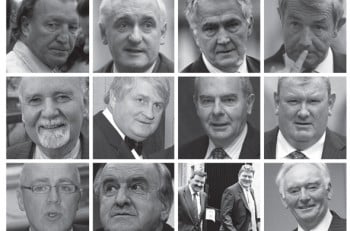
        Why no prosecutions? Some unethical behaviour is not criminal; and some prosecuting authorities are slow or inert. So bankers and the villains of our tribunals are not getting justice.   By Michael Smith   The law on corruption • The main relevant law in place when the activities considered by the tribunals took place was the Prevention of Corruption Acts 1889 to 1916 included the Public Bodies Corrupt Practices Act, 1889 which applied only to local authorities and created an offence of corruptly giving or receiving any consideration as an inducement or reward for exercising official authority in a particular manner. Simply stated, this Act made it an offence for members or servants of such bodies to accept or seek bribes.   • The Prevention of Corruption (Amendment) Act, 2001 made it easier to prove corruption because the person who gave the gift [or consideration or advantage] or on whose behalf the gift [or consideration or advantage] was given had an interest in [the way official powers were exercised] the gift or consideration or advantage was deemed corrupt. • Established in 1996, the role of the Criminal Assets Bureau is to carry out investigations into and potentially freeze the suspected proceeds of criminal conduct.   • Findings of Tribunals can’t be used in evidence in criminal proceedings.   BOX 2 Ray Burke, Frank Dunlop, Liam Lawlor served prison sentences arising, directly or indirectly from the Planning and Payments Tribunals. The twelve others who feature on the cover of the magazine have not faced prosecution   Ray Burke Minister for Foreign Affairs June-October October 1997; Minister for Justice 1989-1992;   Minister for Industry and Commerce 1988-1989;  Minister for Energy 1987-1988; 1987-1991; Minister for the Environment March-December 1982.   Experience in Tribunal Shortly after his appointment as Minister for Foreign Affairs, allegations resurfaced that Burke had received IR£80,000 from JMSE AND Bovale developments. Burke denied the allegations but resigned from the Cabinet and from the Dáil in 1997, after just four months in office. This allegation led to the establishment of the Planning Tribunal chaired by Justice Feargus Flood. In an interim report of the subsequent Flood Tribunal, Flood judged Burke to be “corrupt”.   The Flood Tribunal found that “the assignment of Briargate by Oakpark Developments Limited to Mr Burke conferred a substantial benefit upon him which in the opinion of the Tribunal was given in order to ensure that he would act in the best interests of Oakpark Developments Limited’s director, Mr. Tom Brennan and his associates when performing his public duties as a member of Dublin County Council and a member of Dáil Eireann. In the opinion of the Tribunal the transfer of Briargate to Burke amounted to a corrupt payment to him from Tom Brennan and his associates.   More problematically, the Tribunal was unable to discover what actions   Burke performed for  Tom Brennan or his associates in return for the benefit provided to him.   Experience in Court In July 2004, Burke pleaded guilty to making false tax returns. The charges arose from his failure to declare for tax purposes the payments that he had received from the backers of Century Radio. On 24 January 2005 he was sentenced to 6 months in jail for these offences, though he he got some remission.   Possible Criminal Action Presumably the difficulty was that the Tribunal as stated “was unable to discover what actions Mr. Burke performed for Mr. Tom Brennan or his associates in return for the benefit [corruptly] provided to him”.   Frank Dunlop He was appointed Press Secretary of the Fianna Fáil party in 1974, based at Leinster House. He was head of the Irish Government‘s Information Service and Government Press Secretary from 1977 to 1982.  He became a lobbyist, specialising in planning matters, and for a while fronted an RTE political programme with Fergus Finlay   Experience in Tribunal Dunlop was initially brought to the attention of the Tribunal by Tom Gilmartin, who alleged that Dunlop was being used as a bag-man for developers wishing to pay bribes to politicians in return for favours. When he first took the witness stand in 2000, after failing to provide a written statement, Judge Flood responded to his evidence by asking him to reflect overnight on his position. The following day, Dunlop began to reveal payments that he had made to politicians. Experience in Court When charged Dunlop replied “we always knew this day was coming and I will not be contesting the charges”. Dunlop was sentenced to two years in prison for corruption, with the final six months suspended. He had pleaded guilty to five charges of corruption. He admitted handing over money to politicians at the time of crucial rezoning votes at council meetings relating to lands at Carrickmines in Dublin. The 62-year-old was initially charged with 16 counts of bribing Dublin City Councillors, but he pleaded guilty to five sample charges. In May 2009, he was sentenced to two years in prison for corruption, with the final six months suspended.     CAB/Anything else The Criminal Assets Bureau successfully obtained a High Court order in 2006, freezing relevant land assets of 107 acres   at Carrickmines owned by Jackson Way Properties Ltd and preventing their sale.  Rezoning increased the value of just 17 acres   of the property from €8 million to €61 million. It is within the discretion of the DPP to prosecute  Dunlop for other crimes implied in the Mahon Report. And CAB can be expected to pursue other lands deemed to have been the object of illegal zonings such as Cherrywood or Quarryvale.  Nothing so far, mind you.   Liam Lawlor First elected to the Dáil in 1977, two years later he became a member of Dublin County Council. In 1987 he was appointed Chairman of the Oireachtas Joint Committee on Commercial State-Sponsored Bodies. Bertie Ahern appointed him chair of his “ethics” committee.   In 2000 he was expelled from Fianna Fail who took a dim view of his presence in the

    Loading

    Read more

  • Posted in:

    Gurdgiev vs ICTU: debate on social partnership

    Social Partnership is corruption.   Illegal corruption – in its various forms and expressions – is hardly a rarity in Irish society. This much we know. Perhaps less well understood are the legally permitted forms of corrupt behaviour that contribute to social and economic degradation and undermine democratic institutions and the legitimacy of the State.

    Loading

    Read more