Niall Crowley reviews ‘Micheline’s Three Conditions: How we fought gender inequality at Galway’s university and won’ by Rose Foley and Micheline Sheehy Skeffington
by Village
Niall Crowley reviews ‘Micheline’s Three Conditions: How we fought gender inequality at Galway’s university and won’ by Rose Foley and Micheline Sheehy Skeffington
by Village
Conor Lenihan reviews Richard O’Rawe’s astonishing ‘Stakeknife’s Dirty War: The Inside Story of Scappaticci, the IRA’s Nutting Squad and the British Spooks who Ran the War’
by Village
Lawyer Christopher Stanley reviews the eloquent and beautiful ‘Dirty Linen: The Troubles in My Home Place’, by Martin Doyle. The peace process in Northern Ireland which has followed the Good Friday Agreement in 1998 is best seen as transitional. During this transition, reconciliation requires a consensus of the voices of the dead being spoken through the loss and grief of their loved ones and through other sympathetic interlocutors. This is what Martin Doyle, currently Books Editor of the Irish Times, accomplishes in ‘Dirty Linen: The Troubles in My Home Place’. The violent deaths Doyle describes and the loss and grief he seeks to give expression to belong to his family and neighbours. Those who are left endow him and enable him, because he understands their person and place, to become their voices through his “speech marks”. Doyle’s project is “polyphonic work, communicating different perspectives through many voices” (page 15). He reminds us – and those who seek to impose silence – that those who suffered a violent death by bomb or bullet and their loved ones will not, should not and cannot be silenced. This includes those ‘own’ lost lives – the victims of suicide and their families – unable to bear the grief of violent loss. Doyle draws upon the Anglo-Irish cultural theorist Benedict Anderson: “The dead, far from being gone, remain as a powerful part of the community. How we think about the dead, and the stories we tell about the relation between the dead and the living, are central to imagining new forms of community and/or narratives of nationhood” (‘Imagined Communities’(1983) page 15). This is a compelling, eloquent, at times beautiful and vital account. It is a needful telling of a narrative — of the families, their lost loved ones, of neighbours in conflict, of fractured communities failing to reconcile deep-rooted religious, sectarian, and economic divisions upon The Narrow Ground, described by a well disposed Sir Walter Scott in 1825 as the space in which “envenomed” Irish factions did their battle “like people fighting with daggers in a hogshead”. It is part of the competing allegedly pernicious counter-narratives to that which the British State seeks to coerce and cleanse as the ‘official account’ for the ‘public record’. Doyle’s book assumes its rightful place – and at the right time – amid the literature of the Conflict most recently supplemented (as acknowledged by Doyle) in works by Anne Cadwallader, Ian Cobain, and Margaret Urwin, in poetry and in prose and in compelling academic contributions including Mark McGovern’s ‘Counterinsurgency and Collusion in Northern Ireland’ (2019). What distinguishes Doyle’s book is clear from its subtitle, The Troubles in My Home Place. This is an autobiography and a biography. It is about the life of the author and about his place and his home. His sense of place – his home returned to – is acute because he understands what has led to both the physical and psychological landscape that historically surrounds and embraces, but also excludes and expels, his community. This is both the inner landscape – the psyche – of emotions, beliefs, ideologies – violently moulded by economic, religious and political forces, religious intolerances and political exigencies and the shattered outer-world reality – The Troubles as ‘a little local difficulty’ upon a Narrow Ground. Doyle’s Narrow Ground is a handful of rural parishes – the “Murder Triangle’ of Newry, Lurgan and Dungannon ‘ the cockpit of the Troubles” (page 7). It is also the landscape as a bloody signification of a violent Conflict across the Island of Ireland, from Claudy to Banbridge to Belturbet, from Derry to Omagh, from Enniskllen to Dublin, from city to city, town to town, village to village, graveyard to graveyard. Doyle has not written the history of the Conflict in Northern Ireland. Doyle has written a history of the Conflict in Northern Ireland in his part of Ireland – the village of Laurencetown, 25 miles north of the border, in the County Down parish of Tullylish, within the murder triangle (“or Lawrencetown – we can’t even agree on how to spell it” (page 1)). It is his-story about aspects of his life, his space-place, his family, the family next door, his school and their church, a social club and their sports venue, his community and all its graveyards and memorial stones. Because he writes of what and where he knows, Doyle can listen, record, and understand and communicate as much as an anthropological field recording made solid and in unadorned prose (and that is praise not criticism). This is writing with understanding and understatement and without unnecessary adornment or embellishment. Doyle therefore achieves what Ian Cobain accomplishes in a different voice and a focus on a single violent incursion, the murder of off-duty RUC Photographer Millar McAllister in Lisburn on 22 April 1978, in ‘Anatomy of a Killing: Life and Death on a Divided Island’(2021). This is what the magisterial – and regrettably out of print – Lost Lives: The Stories of the Men, Women and Children who Died as a Result of the Northern Ireland Troubles (1999) achieves more clinically. Benedict Anderson’s statement about the relation between the living and the dead (quoted above) is is also used to introduce the Irish Linen Memorial into Doyle’s text – 400 white Irish linen handkerchiefs. The names of those killed between the years of 1966 and 2006 are printed and overstitched with embroidery, and spotted with sewn hair, onto each handkerchief. The Linen Memorial is a “creative project that has now spanned almost 20 years and has travelled to multiple countries, been constructed in churches, galleries, and libraries. it is an ongoing site‐conscious memorial which seeks to re‐narrate the almost 4,000 deaths which took place during the fraught period of ‘the Troubles’ in Northern Ireland” As Doyle’s publisher notes; “Doyle skilfully weaves together the two strands of history, with the decline of the local linen industry serving as a metaphor for the descent into communal violence, but also for the solidarity that transcends the sectarian
by admin
Liam Lynch, a republican martyr-ic0n, is the subject of a timely new biography in this, the hundredth anniversary of the ending of Ireland’s civil war. Lynch’s first biography by Florrie O’Donoghue is lyrical and incisive, being the work of a friend and comrade. Gerard Shannon, with wider access to archival material, has revealed the complexity of Lynch and is not bound to declamation as perhaps are his colleague fighters. Nevertheless in this new bookLynch’s heroism and commitment are not under question. Lynch, though a strong militarist, was not an extremist in spite of the fact that he is cherished as such by romantic nationalists. The irony is that Lynch only took over as Chief of Staff of the anti-treaty IRA when hardliners like Rory O’Connor and Liam Mellows had been executed. His military leadership and political acumen has been severely criticised, but Lynch was dealt a bad hand of cards. Lynch was at his best as a local commander, something he himself recognised when offered a promotion to a senior position in the GHQ Staff of the IRA – by rightly refusing it. He got on well with both Collins and Mulcahy but knew his limitations. It was Lynch’s military mindset, as well as that of others, and the execution of anti-treaty fighters that spiralled the conflict into a bitter dispute of recrimination and tit-for-tat atrocities His leadership in the War of Independence was spectacular. The highlights include a raid for arms on Fermoy barracks and the high-profile kidnap of General Lucas at the height of the disturbances in 1920. Lucas paid the rare compliment to Lynch and his men on his release stating he had been “treated as a gentleman by gentlemen”. The propaganda value to the IRA was enormous and greatly resented by Lucas’ superiors. The picture of Lynch that emerges throughout is one of deep asceticism, ruthlessness and a military disregard for civil authority. Similar to other IRA men like Todd Andrews, he saw the actions of Sinn Féin and the Dáil as “ancillary” to the military campaign and taking the fight to the enemy. Lynch was a strong advocate of reprisal and the simple but effective strategy of burning the big homes of the Anglo-Irish unionists when the humble shops and cottages of his own were destroyed by the British military. It was Lynch’s military mindset, as well as others, and the execution of anti-treaty fighters that spiralled the conflict into a bitter dispute of recrimination and tit-for-tat atrocities. Luminaries like Collins, Brugha, Harry Boland and Lynch made the ultimate sacrifice. The bitterness engendered left a long legacy in the country’s political system. None of this can be laid at Lynch’s door. In fact, it was British insistence on implementation of the letter of the treaty and the suppression of the Four Courts garrison that drove the sides apart. Intemperate language from De Valera escalated the debate at the beginning but, for the most part, he was marginal in the civil war campaign, his advice largely ignored while the army types retained control. The death of Lynch allowed De Valera to wind down the conflict through his ally and proxy Frank Aiken who issued the IRA order to “dump” arms. This was only done when it became clear that the Free State government was not going to offer peace terms. Viewed from the current day distance the whole episode looks like pointless and prolonged violence, despite the efforts by Florrie O’Donoghue and IRA Commander Tom Barry to broker peace. It seems a miracle, even today, that the British did not re-enter the country and impose order. That they didn’t is testimony to the guerilla fighters like Lynch and Barry who inflicted brutal blows on their British adversaries. The lesson from the life of Lynch is the perils of setting off a violent conflict where there is no clear political imperative and where due political authority is not in charge. Thankfully this was a lesson learnt by Martin McGuinness and Gerry Adams in their own efforts to reach both a ceasefire in IRA activity and a workable settlement. The parallels between Michael Collins and Martin McGuinness are striking. Both were militarists who were prepared to reach a settlement that fell far short of their strategic goals or ideal. Both saw the deals they signed as transitionary in character rather than a final settlement. McGuinness and the later Sinn Féin leadership had time and scope to ensure that they did not fall foul of a republican backlash from within their own ranks. The picture of Lynch that emerges throughout is one of deep asceticism, ruthlessness and a military disregard for civil authority Collins and Lynch were fighting a much more potent enemy – a British Empire still at its military and diplomatic height. The electoral mandate given to Collins proved decisive from a moral perspective during the civil war. Martin McGuinness benefitted from an extreme war weariness on the British side and a catastrophic shrinkage of British influence on the world stage. If ever there is proof that peace is always better than war, the tragedy and circumstances of the Irish Civil War is a glaring example. If the commemorations and ceremonies on the centenary seem subdued and without satisfaction there is good reason for it. It was a nadir in Irish history. Conor Lenihan is a former Fianna Fáil Minister
by admin
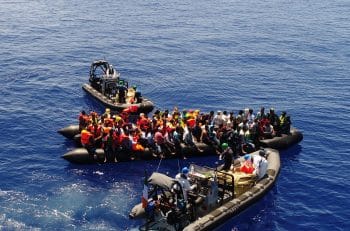
“Whoever was tortured, stays tortured” — Auschwitz survivor Jean Amery. In My Fourth Time We Drowned, multi-award-winning freelance journalist Sally Hayden documents the experiences of those who flee homes destroyed by conflict and oppression. Sally Rooney’s reaction is typical — “the most important work of contemporary reporting I have ever read”. Numerous boat crossings from Libya are detailed, each risking what happened off the Greek coast in mid-June when a boat with hundreds crammed aboard sank. Of an estimated 700 plus passengers, less than 100 bodies were recovered. The majority, locked in the hold, were feared dead. Rescue charities, and authorities in France, Greece and Malta, as well as European border control Frontex, had all been alerted, and monitoring the boat for 12 hours, but disagreed over words exchanged with passengers and what unfolded. Alexis Tsipras, Greece’s former left Prime Minister asked, “what sort of protocol does not call for the rescue … of an overloaded boat about to sink”? If practical assistance was not offered until it was too late, organisations failed in their sea duties under international laws. Barack Obama and others noted the contrast in media coverage of the Titanic submersible incident and called out obscene inequality and disparity in life chances. Meanwhile, Ireland is sending a Navy ship, Lé William Butler Yeats, to Libya, which may indirectly facilitate more drownings, because it is joining an EU naval operation tasked to sink or burn migrant ships encountered, often under smugglers’ control, meaning migrants must use increasingly more dangerous ships. Hayden explores similar ploys; denials of responsibility, or outsourcing it to criminal operators, passing the buck, hands-off exploitation and careerism, politicising desperate plights, whitewashing with tokenism, jargon, image branding, and more. The stricter migration control regime installed by the West since Gaddafi’s overthrow in 2011 has paved the way for ever-graver human rights catastrophes befalling those seeking sanctuary. Hayden’s use of unfiltered messages received directly from hundreds of refugees themselves illustrates how these European policies often result in cruel inhumane incarceration across North Africa, with Libyan militias and the modern slave trade being bankrolled by the EU, and with NGOs and the UN standing by, complicit and even corrupt. The opaque trail of accountability and striking under-reporting of activities and conditions suggest a collective wish to ignore and forget so many victims of the West’s neocolonial foreign policy. The EU does not count detainees, or have a process to contact families in emergencies, though the UN tracks numbers drowned at sea. At least 23,000 refugees have drowned or gone missing in the Mediterranean between 2014 and 2022. 1 in 51 attempting the crossing died in 2017 versus 1 in 21 in 2019. The number of people living as refugees rose by nearly 20 million from 2021 to nearly 110 million people by December 2022, according to a UN report. Hayden’s book is accessibly laid out, with lists of contents and key data, plus maps, notes on terminology, acronyms, acknowledgements and 65 pages of other notes and references, to end. According to the late David Graeber, co-author (with David Wengrow) of The Dawn of Everything, for the vast majority of human social experience, people enjoyed “three primordial freedoms: the freedom to move, the freedom to disobey and the freedom to create or transform social relationships”. Peaceful anarchy was the modus operandi. While inequalities in early human societies were not unknown, the structures of domination common to hierarchical government were absent. The tentacles of many institutions now creep around the planet, enforcing an imagined world of divisive identities, affecting millions of individuals in every facet of their lives. Exploration and colonisation over centuries brought genocides, ethnic cleansing, capture of labour, and accumulation of capital and resources. The spoils are still not going to those who earn them, although the Global South is waking up to the raw deals and lies imposed for too long. As power centres shift, Naomi Klein’s words seem apt: “In the hot and stormy future we have already made inevitable through our past emissions, an unshakeable belief in the equal rights of all people and a capacity for deep compassion will be the only things standing between civilization and barbarism”. A tragic parallel can be drawn between current migration journeys and those of Irish migrants piling into the infamous filthy overcrowded unseaworthy ‘coffin ships’ often arranged by Anglo-Irish landed gentry during the Great Irish Famine halfway through the nineteenth century. Many applicants were already at death’s door, unable to bear further hardships on route to America or Canada. Drownings and sinkings were common. Over 100,000 chose this dangerous option in 1846 alone, numbers which shocked the US Congress into passing two new Passengers Acts to raise minimum voyage fares as deterrents. Unfortunately, modern Ireland mimics international shortcomings. Evidence of human trafficking of migrant fishers off the Irish coast is mounting. And the Irish Refugee Council has recently criticised the preferential treatment of people seeking protection: “While we acknowledge the pressure on homeless services in Ireland, where homeless figures are at a record high, the decision to respond to two groups of people, that are both experiencing homelessness, with different policies on the grounds of their different status and/or nationality, risks being discriminatory and is not tenable”. The 1951 U.N. Refugee Convention states, “no Contracting State shall expel or return a refugee in any manner whatsoever to the frontiers of territories where his life or freedom would be threatened on account of his race, religion, nationality, membership of a particular social group or political opinion”. In a shameful saga, Hayden can be proud of her contribution That is the obligation under international law, incorporated widely into statutory law, but rarely cited anymore. Libya was not a signatory. Still, developing countries shelter about 87 % of the world’s refugees, most of whom have clear entitlements with experiences of conflict, poverty, enforced militarisation and so on. The goal of those fleeing strife is to contact the United Nations refugee agency, UN High Commissioner for Refugees (UNHCR) and/or the International Organisation for Migration (IOM)
by admin
In the 1990s, artists working in diverse mediums, from painting to installation, redescribed the world in the image of the “non-place”. Coined by French anthropologist Marc Augé, non-places are transitional spaces (motorways, airports, hotel rooms) found between places that are more culturally established and static. In such non-places the socially constructed identity of the individual is less certain, groups cannot form, and loneliness permeates. As Gertrude Stein said, “there is no there in a non-place”. Art, in one sense, is the display of the parts of the world we don’t notice or value, but discover anew in the work of art For the contemporary artist, these non-places are a perfect metaphor for a distracted body politic, whose members go about their workaday lives without paying attention to the liminal nooks and crannies of society. In a sense, the transitional non-place is a marvellous foil and opportunity for the artist to exhibit what is in plain sight, something both familiar but ignored by society at large. Art, in one sense, is the display of the parts of the world we don’t notice or value, but discover anew in the work of art. The most common non-places redescribed by the contemporary artist have an uncanny quality that evince a Freudian influence. Installation artists such as Mike Nelson, Mark Manders, Miroslaw Balka, Gregor Schneider, and photographers Thomas Demand and Jeff Wall, construct strange yet familiar spaces dotted with objects and props, that unsettle their architecture’s normalcy with the theatre of the absurd and the psychology of fear. In the same uncanny vein, the conceptual and minimalist artists of the 1970s presented the viewer with almost empty gallery spaces, such as Michael Asher’s removal of a gallery partition to reveal the machinations of the gallery administration and nothing more; or the masturbatory mechanics of desire performed in Vito Acconci’s Seedbed, where the artist jerked off under a solitary timber ramp in an otherwise empty gallery. Closer to the mainstream, Lars von Trier’s Dogville (2003) starring Nicole Kidman, is a good example of how stripping back a film stage to chalk-outlines can haunt the viewer with their own imagination and desires, like the inkblot Rorschach dramatised in the psychological TV drama. Why the long preface to a review (my first review for Village Magazine) of the solo exhibition We’ll See You Now by Tanad Aaron at Pallas-Projects Dublin? Well, I want to begin this critical venture by making explicit the importance of context and setting in the appreciation — what Christoph Menke calls more appropriately “apprehension” — of contemporary art. If we are dealing with subjectivities and ideologies over truths and facts in the apprehension of art, it helps if you are armed with a little context. The context (or ghost) that haunts Tanad Aaron’s work at Pallas Projects Dublin is collaboration. For close to a decade the artist has been instrumental in building timber displays and gallery furniture for exhibitions in the Irish art scene. Curators, art institutions and artists have commissioned Aaron’s artisan sensibility to consistent effect. In the early days, Aaron was known as part of a trio of artists (with Andreas von Knobloch and Tom Watt), who made exhibitions on their own terms, not under the aegis of curators and art institutions, who wanted yet another piece of shelving or table to decorate their administrative settings. In these curated contexts Aaron, von Knobloch and Watt became artist-technicians, commissioned for their carpentry skills to fabricate settings for exhibitions, which was at first novel, but then became convention. Going it alone at Pallas Projects is both an intriguing and challenging prospect for Aaron. Pallas Projects is a small gallery space, divided by a hinged partition that facilitates one large gallery space or two smaller ones. Aaron has gone for the latter configuration, using the larger entrance room to display some wall- and floor-bound objects, including tentative oil paintings that redescribe the shape of the curved ramp that arcs into the smaller room of the gallery. The gallery is dark, with the alien vibration of blue and green light emanating from argon tube lights that form illegible doodles in plain sight, or in-hiding under the platform. The lighting, which some might refer to as obsolescent neon without referring to the list of artworks, sets the mood, the feeling, that this is a space that tries to evade easy description. Empty speech bubbles, in their glass and refracted-light manifestations, testify wordlessly throughout the gallery. For those who aren’t equipped with context, whether historical or local, I can only imagine that Aaron’s exhibition presents a conceptual stumbling block, even though the timber platform is accessible via a smoothly crafted ramp. Craft is a big thing in Aaron’s toolbox. Even in his use of cheap plywood, MDF and paper bags, every corner and edge is finely bevelled and pleated in a dutiful alchemy. So much so that my attention is repeatedly drawn to the corners and edges of his timber fabrications, at the expense of digging deeper into the elusive content. You might say that this is to Aaron’s credit, that he is not interested in presenting the theories or issues of the day, rather they exist here as sublimation, not a headline. In the user-friendly press release the artist casually signposts to “waiting rooms” and sites of permanence and impermanence. And yet without other signposts, whether philosophical, journalistic, or literary, the installation slip-slides away, always going with the grain, without any breaks in the uniformly tanned language of MDF. If you refer to the gallery map, as I did, it does help to divide and conquer the wholeness of this exhibition into bit-parts, named and orphaned from their maternal MDF embrace. Socially primed for pronoun usage, the use of the pronoun we, as in the exhibition title We’ll See You Now, does (or doesn’t) do one of two things: it points to the obvious fascination the art world (and every other institutional bubble) has these days with the we of inclusion and community; or two,
Posted in:
by admin
Jeremy Corbyn’s new politics and his Labour Party are torn between radicalism and power and he needs to address popular values, party organisation, electoral prospects and policy