Asylum seekers

Random entry RSS

  • Posted in:

    Senator shared asylum documents posted by immigration-protest group

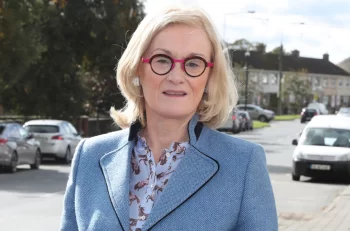
    Recent asylum arrivals in Westmeath were met with protests and racist language from locals and had their asylum documents shared on social media. By Conor O’Carroll. Senator Sharon Keogan has shared a link to personal asylum documents posted to the internet following claims that a family seeking asylum in Ireland had received a “new 3-bed apartment” after arriving. The independent Senator claimed that the family had arrived in Belfast last week before travelling down to Dublin to claim asylum. She cited a Facebook post from a little-known community group from Coole, County Westmeath, called Coole Concerns. The group shared pictures of what appears to be personal asylum documentation obtained from the applicants, who travelled to Ireland from Bangladesh fearing for their safety, according to the documents. Racist language was used to describe the families that remained stranded in the taxi, describing them as “gorillas”, with the group also demanding they be sent back to Dublin Bangladesh has been rocked by protests and political violence over the past number of weeks ahead of contentious elections set to be held in January. The violence has left at least eleven dead and thousands arrested, according to reports from Human Rights Watch. The opposition leader, along with over 160 Bangladesh Nationalist Party officials, has been charged with the murder of a police officer – an offence that carries the death penalty. Amnesty International has also recently criticised the Bangladeshi government’s “callous disregard for the right to life” relating to its use of capital punishment. Speaking to right-wing platform, Gript, Coole Concerns members said the family approached the group, who were standing outside protesting their arrival, seeking help from them. They said the family produced the documents provided to them by the Department of Children and the group took pictures of them and posted them online. A spokesperson for Coole Concerns told Village they were unsure whether permission was sought from the family to photograph and post their asylum documents, adding that there wasn’t agreement in the group on the matter. They did not answer questions asking whether sharing these documents had undermined the safety of the family in Ireland. Coole Concerns was formed in October this year following confirmation from the Department of Children that temporary emergency accommodation was to be used in the village to house 98 asylum seekers. The group has held meetings in the community and has attracted the support of National Party leader James Reynolds. The group has claimed that the village will be “up-ended and way of life completely changed” due to the arrival of these families and that there aren’t sufficient amenities in the area to support them. A series of protests outside the refurbished accommodation centre on the grounds of a former orthopaedic hospital have been held over the past number of weeks, including blocking the entrance and leaving families stranded in the taxis they arrived in. A livestream recording from the night the families arrived heard cries of “you’re not an Irishman, you’re a piece of shit” from the crowd, though it was unclear to whom it was directed. Videos from the night also saw the Coole Concerns members engaging with an official from the Department of Children and a member of An Garda Síochána. Racist language was used to describe the families that remained stranded in the taxi, describing them as “gorillas”, with the group also demanding they be sent back to Dublin. There was no reaction from those who were gathered to the racist language, apart from pleas from the Department of Children official to “not use that language about any human being”. The family produced the documents provided to them by the Department of Children and the group took pictures of them and posted them online The spokesperson for Coole Concerns, who asked not to be named, initially said that the person who used the racist language was an elderly man in the community, but later claimed that the person was not from the village, adding that they don’t think “the way it was said was the way it was meant”. They also claimed the man was not a part of the Coole Concerns committee or wider group. “We’re not racist in our group”, the spokesperson continued. The barricade outside the accommodation lasted for several hours, with the last livestream update coming in the early hours of the morning. As the families finally entered their accommodation, they were met with jeers from the gathered crowd. In recent days, the group has also shared posts from conspiracy website The Irish Inquiry and a Facebook page purporting to be the Australian Tea Party. Australia’s register of political parties does not include the ‘Tea Party’ and their website features several stock images claiming to be the party’s politicians. Senator Keogan told Village: “The publishing of anecdotal evidence of what towns and villages across the country are experiencing is vital if people are to be equipped with the information necessary to realise the full picture of what is going on”. “I utterly condemn any verbal attacks on, or use of slurs in referring to, any person”, Senator Keogan continued, saying “the thinking of others as ‘lesser’ has no place in Irish society”. She also said she abhors “violence of any kind”, calling for anyone thinking of targeting this family to “do nothing of the sort”.

    Loading

    Read more

  • Posted in:

    Maybe Equality

    The Government would be happy to go to the polls wrapped in the mantle of a ‘Yes Equality’ Government. The Government delivered on the marriage equality referendum. We had the referendum to beat all referendums and same sex couples can now get married, their relationships affirmed as equal. This was a remarkable achievement. Eamon Gilmore called it “the civil rights issue of this generation”. However, is it enough for Fine Gael and Labour to don the mantle of a ‘Yes Equality’ Government in search of a vote? Aodhán O’Riordáin, Minister of State at the Department of Justice and Equality, tried to keep the feeling warm. A month after the referendum he declared the report of the working group on direct provision for asylum-seekers, set up by his Department, as another “Yes Equality moment”. This sorely diminished the mantle and, indeed, any correlative right to don the mantle. The recommendations of this report were far from any ideal for equality and human rights. The report essentially permitted continuation of this inhumane direct provision system for receiving and accommodating asylum-seekers. Only those asylum-seekers serving five years or more in the system were to be released. The mantle has since been further sullied as even the limited recommendations have not been implemented. Direct Provision is not the only serious human rights violation that this Government has countenanced. RTE’s Prime Time exposed the gross abuse of people with disabilities living in Áras Attracta. Political disapproval owed yet action was absent. The Government ignored the 2011 Congregated Settings Report that recommended that “people with disabilities living in congregated settings move to community settings within seven years”. It ignored the costed submission of the HSE, made in 2015, seeking some €250m to implement the report. Whenever it came to money, this Government evinced little interest in donning the ‘Yes Equality’ mantle. The treatment of the Traveller community reflected a rejection of equality and human rights by the Government. There was an extraordinary disinvestment in the Traveller community. The education budget specifically allocated to Travellers was reduced by 87% and the accommodation budget by 85%. This happened despite significant educational inequality for Travellers and the scandalous, often dangerous, living conditions they continue to endure. The tragedy of ten lives lost in the fire on the temporary Traveller halting site in Carrick-mines was not unpredictable. Even tragedy, however, failed to secure any reinvestment in the Traveller community. People with disability fared badly. Their prospects for independent living receded. The Mobility Allowance and the Motorised Transport Grant for people with disabilities were cut. The Minister for Health and Children axed these schemes in 2013 because criteria governing the schemes were found to be in breach of the Equal Status Act in a case heard by the Equality Tribunal in 2008. The Minister did not have to axe the scheme. He promised the issues would be resolved quickly but some people with disabilities remain on the schemes found to be discriminatory and no new scheme has been provided for the many others now precluded from access to these vital supports. The schemes were central to participation in society and to ensuring people do not become trapped in their own homes. Lone parents didn’t fine it was a ‘Yes Equality’ Government. Changes to the One Parent Family Payment caused stress and hardship for many families, that are much more likely to experience poverty and social exclusion than others. 63% of them experienced enforced deprivation in 2013. The Government effectively ended access to the One Parent Family Payment in 2015 for lone parents whose youngest child is seven or over. The financial losses for working lone parents are so significant that they are likely to give up part-time employment. Trans people, on the other hand, did get some of the ‘Yes Equality’ treatment. Legislation secured legal recognition for them in the gender with which they identified. This was on foot of legal action taken by Lydia Foy to assert her rights. The legislation, despite its failure to respond adequately to young Trans people, compares well with the most progressive approaches to the rights of Trans people at a European level. The legislation to ensure 30% of all candidates of each party in national elections are women is progressive. There was a touch of the ‘Yes Equality’ about this. It did not cost money but it is clear that it is causing some significant pain in male bastions. The same commitment did not extend to private-sector boardrooms, despite proposals from the European Commission for a 40% quota of the under-represented gender on corporate boards. And that ‘Yes Equality’ feeling drained away with the failure so far to address women’s reproductive rights by repealing the iniquitous Eight Amendment to the Constitution that has put women’s lives and health at risk. This Government did inject some of the resources cut by the previous Government from the budgets of the Equality Authority and the Irish Human Rights Commission back into the equality and human rights infrastructure. Nothing, however, is ever straightforward when it comes to this Government and equality and human rights. The additional resources were only made available to a new, merged body, the Irish Human Rights and Equality Commission. It seems this potential ‘Yes Equality’ moment was actually more about sweeping equality under the human rights rug. Equality and human rights re ect two very different traditions. Equality is focused on achieving outcomes of equality for the different groups that make up society. Human rights are about minimum standards to be enjoyed by all individuals in society. In merging the two traditions there is much talk of the logic of equality being a human right. When equality is limited to being a human right it is confined to formal equality. Formal equality is only about equal treatment and non-discrimination. Not about outcomes. A merger of the Equality Authority and the Irish Human Rights Commission, based on such an understanding of the relationship between human rights and equality, diminishes any capacity for or drive towards the more substantive forms of equality that so many groups in our society aspire to and

    Loading

    Read more

  • Posted in:

    Skewed Irish Times asylum coverage

    The received narrative in a democracy is that there is an inherent adversarial relationship between politicians and civil servants on one side and journalists on the other. The job of the diligent journalist is to pursue transparency by scrutinising policy; they should hold government to account through critical engagement in order to arrive at the truth, or at least an approximation of the truth. The citizen is then properly informed on government policy by the journalist acting in the public interest as a watchdog on power. Well, that’s the theory at least. In Ireland and elsewhere however an incestuous nexus between media and government exists. Journalists frequently rely on anonymous sources—who are often Cabinet members and senior civil servants—to the detriment of real transparency and accountability. One story that illustrates this point well is coverage over the past year in the Irish Times of attempted reforms of the Direct Provision system and, more recently, the governmental response to the so-called ‘migrant’ crisis. Following months of protest in Direct Provision centres last summer, the Minister for Justice set up a working group, chaired by retired High Court Justice Bryan McMahon, to look into reform of the system. The group was an ‘independent’ vehicle comprising members from various NGOs and representatives from the relevant state departments including the Department of Justice (DoJ). A week after the announcement of the group, an article by Conor Lally headlined ‘Asylum claims increase for the first time in over a decade’ was published in the Irish Times. The article, apparently sourced from the DoJ, reported – accurately but well before official statistics were due to be announced – a 40% year-on-year increase in asylum applications. Lally, who is the Irish Times’ crime correspondent, had not written about statistics on asylum since 2006. In December of that year, Lally delivered another article, headlined ‘Asylum claims up 45% in first rise since 2000’. In this second piece, which again included accurate statistics before their official publication, Lally allowed anonymity to a “senior justice source” who said that “the fact the Republic was regarded internationally as recovering from its recessionary years may be a contributory factor for some of the increase”. In other words, the implication is, the increase in asylum-seeker numbers is down to crafty economic migrants falsely claiming asylum in Ireland to take advantage of our growing economy. At the time of the article, a number of “senior justice” officials were involved in the working group. The DoJ, in an attempt to limit the potential reforms being discussed by the group, had an incentive to push the narrative that the increasing numbers of asylum claims were due to an influx of ‘economic migrants’. Was Lally’s senior source involved in negotiations on the working group at the time? We may never know because Lally granted him or her anonymity for no clear reason except, perhaps, in the source’s interest. Fast forward to June 2015. Barring a couple of contentious resignations, the working group successfully completed its task and produced a report which called for minor reforms of Ireland’s Direct Provision and asylum systems. On the morning after the report was delivered to government, the front page of the Irish Times featured a story entitled ‘Minister Raises Concerns over Immigration Spike’. This article, by Fiach Kelly, was based entirely on anonymous sources. Before covering the McMahon report, Kelly gave his source prominence to say that “an estimated 700 migrants had entered the country in the space of one month”. Unlike for Lally’s statistics, there is no evidence to back up this ‘700’ figure. When he finally mentions the working group report, Kelly quotes “concern in the Coalition” that improving Direct Provision could make Ireland “a destination country for immigrants”. As a journalist, Kelly has a duty to ensure his reporting is in the public interest. It is not clear that the public interest is best served by granting anonymity to senior government sources so that they can engender and promote, using unverified figures, a concocted anxiety about welfare-seeking migrating hordes. It’s not clear if the public interest is served by contrasting the release of a long-awaited report with anonymous ‘concern’ that any change to the status quo would lead to increased immigration by people “who are in essence illegal immigrants”, as another anonymous source said in the article. What is clear, though, is that some within government and the DoJ had an interest in controlling, directing and containing the immediate political and media discourse surrounding the publication of the McMahon report. Kelly’s article allowed his sources to do that; in effect he let certain figures distort the release of the report under cover of anonymity. The intricate and incestuous nexus between government and media in this instance, you could say, trumped the democratic theory, and the imaginary adversarial relationship which we are told exists. After the release of the report, events in the Mediterranean and beyond overshadowed any Direct Provision reforms. The huge numbers of refugees arriving in Europe suddenly became big news after a number of tragedies including the death of three-year-old Aylan Kurdi in September. The EU slowly moved towards a response, finally agreeing to two refugee-relocation programmes in addition to a previous resettlement programme. Ireland agreed to take in around 4,000 under these programmes, and the government set up the Irish Refugee Protection Programme (IRPP), led by the DoJ, to deal with the logistics. The Irish Times’ coverage of the ‘migrant’ crisis on the fringes of Europe has been good. If you want to find out what’s happening in Serbia or on the Greek island of Lesbos, the Times will inform you. However, their coverage of the IRPP leaves a lot to be desired. The government is setting up, as part of the IRPP, a series of Emergency Reception and Orientation Centres (EROCs) to host and process the relocated refugees yet to arrive. Kitty Holland has produced some excellent reports on the first orientation centre (for resettled, as opposed to relocated, refugees), the Hazel Hotel in Monastarevin,

    Loading

    Read more