brexit

Random entry RSS

  • Posted in:

    NIexit will reduce protections

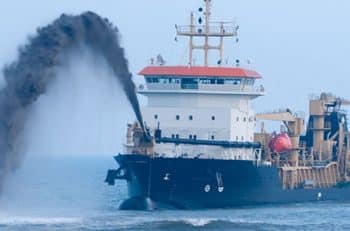
    Brexit brings a threat of the North accelerating in a race to the bottom in terms of the environment and employment, cutting costs in order to get economic advantage. In the face of this, much depends on when or if Devolution is reinstated. There is a particular concern on environmental matters because the EU has had a determining impact on the North’s environmental legislation. Even with EU membership, there is concern at a systemic failure to enforce environmental legislation. Sand has been dredged from Lough Neagh for years, without any planning process being applied. Currently about 1.5m tonnes per year is extracted. The Lough is the largest fresh-water lake in Ireland or Britain. It is a Special Protection Area. It is a Ramsar site, that is recognised as a wetland of international importance. Around 100,000 wild birds winter on and near it. It is one of only five lakes in the world where pollan are found. In June last year the North’s Court of Appeal allowed an appeal from Friends of the Earth against former Environment Minister Mark H Durkan’s decision not to order an immediate halt to the dredging. However, the Department of Infrastructure has said it is “not expedient” to stop dredging, which continues. In another regulatory failure, approximately one million tonnes of assorted waste was illegally dumped on a site at Mobuoy Road, Derry. Remediation will cost at least £20m (€22.4m), but may cost 12 times as much. The dump is beside the River Faughan, which provides drinking water for Derry City. Friends of the Earth has lodged a complaint with the European Commission against the North for systemic failure to enforce planning and environmental laws. The complaint is slowly making its way through the process. The North, like the rest of the UK, has no third-party right of appeal against planning decisions: developers have a right of appeal. That is contributing to pressures to restrict the right of appeal in the South. With this being the current situation, the North’s environmentalists are worried about developments after Brexit. They are particularly worried about the loss of the Habitats Directive. This has been key to their successes: in particular, their two biggest. These were the A5, the North’s biggest-ever road project, which was halted after a court challenge: and the court action on the Lough Neagh dredging. The Habitats Directive is particularly important because it contains the precautionary principle. Politically, there is no great will to protect the environment. The two dominant parties, the DUP and Sinn Féin, have shown little commitment. Famously the first measure the Paisley/McGuinness devolved administration introduced was a relaxation on the former Northern Ireland Minister’s restrictions on one-off housing. In 2008 Arlene Foster as Environment Minister rejected a report ‘Review of Environmental Governance. One of the recommendations was for an independent environmental protection agency, and a limited third party right of appeal. Former DUP Environment Minister Sammy Wilson has said people would “look back at this whole climate change debate and ask ourselves how on Earth were we ever conned into spending the billions of pounds” on policy changes. Sinn Féin has not denied climate change, but has been the main party pushing the A5 project. The party’s attitude to the environment is typically ad hoc. This is more worrying because the North’s environmentalists are not a major lobby group. The Assembly elected last year contains only two Greens, from 90 members. Only a handful of others have any significant interest in environmental matters. The effects on workers’ rights will partly depend on when or if devolution is restored. Certainly, trade unionists are seen as a better – organised lobby than environmentalists. They have had certain limited successes. The Executive parties rejected introducing proposed legislation further restricting the right to strike being introduced by the UK government. It did not follow the British parliament in extending the time limit for the right to claim unfair dismissal. On the other side, Northern wages are lower. The median weekly wage is £501 (€562.50), in contrast to €734.60 in South. The minimum wage, which is UK-wide, is £7.83 (€8.79) and only comes into operation at 25. In the South it is €9.55. It seems Northern Ireland is facing into a future without the threshold protections of for example the EU Working Time Directive 2003 which requires a minimum of four weeks paid holidays annually and a maximum 48-hour working week unless a worker individually consents; of the The Parental Leave Directive 2010 which prescribes four months of unpaid leave for parents to care for children before they turn eight years old, and of the Pregnant Workers Directive 1992 which creates a right for mothers to a minimum of 14 weeks paid leave to care for children. There will be continued pressure to reduce wages and protections. That will be strengthened by the tendency not to let a good crisis go by without seizing the chance to cut pay and conditions. Anton McCabe

    Loading

    Read more

  • Posted in:

    Dumb greens and unions

    One of the things historians may dwell on is how the key December 2017 and February 2018 eu drafts of the Brexit agreement came to take the forms they did. It is all the more important since the inept UK Government of Theresa May failed to produce its own draft, though it might have been expected to do just that. Of course that suggests a lack of seriousness on the UK’s part about the agreement and perhaps that the EU Drafts may not go as far as we, and the EU, think, but that is a separate matter. In particular it is interesting that the drafts – the first a draft political agreement, the second a draft legal agreement with the same substance enshrine the EU’s rules for the customs union and single market but not its rules for multifarious other spheres of eu activity that bind the UK while it remains a member of the EU: most notably on the environment, labour and consumer affairs. The body politic and commentators have missed the following: the UK could become the trading neighbour from hell by ignoring EU environmental, health, labour etc standards – exploiting the competitive advantage over the eu you’d expect from a country saving money by keeping these standards low. It is interesting is that so many dogs have failed to bark. One might have expected the British trade unions to be shocked at the potential dangers to workers’ rights if EU standards are abolished and they become subject to the whims of a hawkish Tory party. But they didn’t because, like the British Labour party of course, they can only think of the superior standards Jeremy Corbyn will bring to the sphere. This is self- absorbedly naïve. Corbyn will not be in power for ever and the Tories won’t be going anywhere. When they return they will not have to observe the comfort blanket that EU standards provide. We know well the frustrations of the Tory party over the years with what used to be known as the EU’s ‘Social Chapter’. Nothing is as certain as that they will not observe its prescripts on issues like maternity and overtime if they return to power in some post-Brexit outturn. There are occasional insights into this thinking but mostly the protagonists remain mute. Surprising too that the Irish unions have made so little noise about it but then the Irish Congress of Trades Unions and SIPTU are both challenged by having members and remits both North and South of the border. You’d think they’d be on the warpath. Environmentalists and Green parties have said little perhaps because typically they languish far from the vehicles of power and tend not to be as forensic or aggressive as the circumstances here demand. Village tried to provoke the establishment media, most of RTÉ’s and the Irish Times’ Europe, Northern Ireland and Environment correspondents etc (by twitter) into recognising their failure to cover this issue but – to a man – they’re too complacent, and probably too immersed in politics and economics, to think about social and environmental rights and rules. The issue is clouded as terms like “a common regulatory area on the island of Ireland” and “a single regulatory space on the island of Ireland…” in themselves don’t do justice to the fact that there are important areas that will no longer be regulated by the EU. It’s also a bit difficult for many people to get their heads around as “regulatory alignment” of Northern Ireland with the EU is only envisaged as a ‘backstop’ if the UK can’t strike a more wide- ranging deal with Ireland and if a technological border solution proves impossible. Of course with only a year left to Brexit it’s looking increasingly like neither of the two contingencies will come to pass. The easiest way to avoid the backstop is for the UK as a whole to remain in the customs union and the single market. But the UK government insists this will not happen. Because the contingencies are uncertain they were left out of the draft Withdrawal Agreement which is a strictly legalistic document, thought they had appeared in the December political draft – and they remain politically possible. It’s complicating too that the Tories and Brexiteers so vociferously think the common regulatory area described in the EU draft goes too far rather than not far enough – though of course they are referring essentially to economic matters, not to environmental and social matters about which they may care little. It is clouded because it may well be that no deal is possible. It is important to note that, despite occasional diplomatic pleasantries, there has been little progress on the central conundrum of the negotiations: if the UK leaves the EU trading bloc, then a customs border is needed either on the island of Ireland or in the Irish Sea. One is ruled out by the EU drafts, the other by the UK. Theresa May asked Brussels if Britain could stay in the bits of the single market that she likes and exit the bits that she does not. The EU doesn’t have to, and won’t, run with that – no matter how self-righteous Brexiteers fume. On this basis it is very possible the EU’s draft terms form no element of the (WTO) arrangement that the UK falls back on. And it is clouded because confusingly the Draft Withdrawal Agreement refers, in its Article 12, to the Environment. Most people (not you dear reader) glaze over a little when contemplating the diktats of a customs union and single market. The customs union is an agreement among members to charge the same import duties as each other and usually to allow free trade between themselves. The single market guarantees the free movement of goods, capital, services, and labour – the “four freedoms” – within the European Union. You couldn’t for example have goods which comprise some material, imported into Britain on the basis of a tariff-free agreement between Britain

    Loading

    Read more