budget

Random entry RSS

  • Posted in:

    Government ignored Central Bank advice on Budget 2024

    By Conor O’Carroll The government ignored the advice of the Central Bank on the mortgage-interest relief scheme introduced as part of Budget 2024, according to documents seen by Village Magazine. The records, which were released under Freedom of Information legislation, include confidential memos sent to the Department of Finance before the Budget where the Central Bank is unequivocal in its criticism of the government’s approach to mortgage-interest relief. The first memo, dated 25 September, highlights the Central Bank’s opposition to a broad mortgage-interest relief scheme, arguing that “the burden of higher interest rates does not fall evenly” across households. This, it argues, means “policy responses should focus on assisting households most at risk from cost-of-living pressures” and that it should be “timely, targeted, and sustainably funded”. A wide mortgage-interest relief package, Central Bank officials advise, would disproportionally reach high-income households and risk “overheating” the economy, which would bring about persistent higher rates of inflation. As part of Budget 2024, the government announced a mortgage-interest tax-relief scheme for homeowners who have an outstanding mortgage balance of between €80,000 and €500,000 on their primary home. Using the proposal submitted to them by the Department of Finance, the Central Bank finds that the main beneficiaries of the policy owe less than other borrowers on average and are disproportionately likely to be over 50 years old. However, the Central Bank advised that such a policy would be regressive. Pulling from a large body of international policy assessments from the OECD, the Central Bank found mortgage-interest relief schemes provide a subsidy to homeowners, who are more likely to have higher incomes than renters or those in social housing. It also states that studies show mortgage-interest relief schemes raise house prices without increasing homeownership rates. The Central Bank acknowledges, however, that the higher interest rates are “undoubtedly creating financial difficulties for some households” and suggests that relief through the social welfare system, where means-testing and targeting are more feasible, would have a greater impact in providing support to vulnerable households. A second memo, dated a week before Budget Day, reiterates the concerns held by the Central Bank with the “inherent regressivity of using taxpayer funds to support mortgage holders in a non-targeted fashion”. They also caution that the relief may increase the incentive for lenders to raise interest rates, arguing that under such a scenario “the relief would act to support lender profitability without necessarily helping borrowers as intended”. A spokesperson for the Department of Finance said: “The Government is acutely conscious of the impact of rising interest rates and mortgage costs on many taxpayers…As the Minister for Finance has stated previously, it is not possible or desirable for the Government to alleviate the full impact of the increased interest rates for all mortgage holders”. “Some mortgage holders, will be in a much stronger position and will have the capacity to absorb the impact of the recent increases in mortgage rates”, itcontinued, “and the Minister believes that the parameters of the relief are appropriate and sufficiently targeted”. The Department spokesperson did not respond specifically to a question from Village asking why the government did not take the advice of the Central Bank. Data from the European Central Bank showed interest rates in Ireland were the ninth highest in the Eurozone and coming in above the average rate in September. Using the proposal submitted to them by the Department of Finance, the Central Bank finds that the main beneficiaries of the policy owe less than other borrowers on average and are disproportionally likely to be over 50 years old. This, it says, “do not point to the targeting of greatest need for support”, as they “have benefited from lower average interest bills than other borrowers for a decade or more, with a total impact over time significantly exceeding recent changes in interest rate costs”. Conor Dowd, independent candidate for Galway East at the forthcoming local elections and recipient of the FOI replies told Village: “The government appear to be embracing a strategy rooted in electioneering, by trying to give the impression the mortgage interest relief of Budget 2024 is of benefit to a wide income range”. Having received the second memo from the Central Bank, officials from the Department of Finance responded with appreciation for its help and said “the advice is very clear”.

    Loading

    Read more

  • Posted in:

    Landlords the big winners from Budget 2024

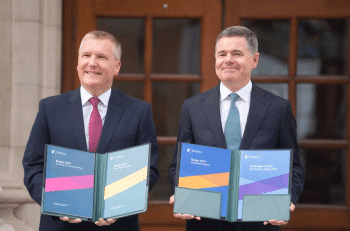
    McGrath’s first budget delivered significant tax breaks for landlords, a risky move with elections looming By Conor O’Carroll After much speculation, Fianna Fáil TD and Minister for Finance, Michael McGrath, delivered his first budget on Tuesday, ahead of what could be a hugely significant year for Irish politics. Local and European elections are already scheduled for next June, and the prospect of an early general election looms large on the horizon, meaning this may be the only chance McGrath gets to impress voters. However, while a raft of temporary measures to tackle the cost-of-living crisis were introduced or extended, it was landlords who are probably the happiest with today’s budget, with large tax breaks provided. Tax on rental income up to €3,000 is to be “disregarded at the standard rate”, equating to a roughly €600 tax break. Should the landlord remain in the market for four years, the rate will increase up to €4,000 in 2025 and €5,000 in 2026 and 2027, bringing the value of the tax break to landlords up to €1,000. Leaving the market will see any tax relief recouped. It’s possible that the tax breaks provided to landlords will also have a knock-on effect on housing prices This comes on top of the income tax cuts which saw the reduction of USC and an increase in the cut-off for the standard rate of tax. The rationale behind this cheque to landlords is to incentivise their continued presence in the rental market and prevent the mass exodus that has been muted in the media. However, the numbers behind this exodus don’t stack up. While the number of registered landlords with the Residential Tenancies Board (RTB) has been dwindling for many years, the most recent Census results show that the number of landlords has grown by 7% since 2016. The discrepancy between the Census and RTB data is over 50,000, suggesting that landlords aren’t leaving the rental market at all and many are instead not registering with the RTB. Speaking before the Oireachtas Committee on Housing today, Dr Michael Byrne, an Assistant Professor at the School of Social Policy in UCD, said the lack of concrete data makes it difficult to assess how many landlords are fleeing the market, as has been suggested. For renters, on the other hand, an increase to the Rent Tax Credit from €500 to €750 will be welcomed, provided it isn’t eaten into by subsequent rent increases. The latest RTB Rent Index for Q1 2023 shows that nationally, the average rent in newly registered tenancies was €1,544 per month, a year-on-year increase of 8.9%. Relief of €62.50 a month isn’t going to make much difference to those forking out over €18,500 a year just to put a roof over their heads. There was also no increase in capital spending on housing, however, with an underspend of €1 billion intended for social and affordable housing between 2020 and 2022, money doesn’t seem to be the issue causing housing targets to be missed. For prospective buyers, the Help-to-Buy scheme has been extended through to the end of 2025, though with property prices increasing by 1.5% in the past 12 months to July, affordability remains a significant issue. It’s possible that the tax breaks provided to landlords will also have a knock-on effect on housing prices. Writing for RTÉ Brainstorm last September, Dr Bryne says that “tax breaks for landlords might seem an obvious way to increase supply of rental properties, but it can also increase demand for housing”, leaving those in the rental market seeking to escape in competition with landlords seeking to invest. Elsewhere in the budget, the allocation to the Department of Health has been reduced by just under €1 billion, following an overspend of similar amounts this year. However, last year’s figure included €2.6 billion in disability services, which has since become the responsibility of the Department of Children. In his interview with Village (October – November issue) prior to the budget, McGrath said that he was “brassed off” at budgetary overrun and stressed the importance of improving results at the Department. Much of this year’s health budget is being used to maintain current levels of services. However, with almost 550 patients waiting on trolleys today according to the INMO, ballooning waiting lists for appointments and diagnoses, maintaining current levels is far from satisfactory. Other budgetary headlines announced today include further energy credits, a significant jump in the minimum wage to €12.70 and tax relief on mortgage interest up to €1,250 per property. There was no word on the rumoured RTÉ bailout, though if TV license receipts continue to fall, this may come later in the year. An increase to the Rent Tax Credit from €500 to €750 will be welcomed, provided it isn’t eaten into by subsequent rent increases Despite some much-needed measures to blunt the impact of the cost-of-living squeeze, McGrath’s budget seems measured and controlled as opposed to lavish. The coup for landlords will certainly provide fuel for the government’s detractors and the lack of change in housing policy will put the Department of Housing under significant pressure to deliver. With elections on the horizon, this may be the last chance they get.

    Loading

    Read more

  • Posted in:

    Bud get real

    The Annual ritual surrounding the budget will come to an end on Tuesday 10 october when finance minister, Paschal Donohoe, unveils his first package of tax and spending proposals since his appointment earlier this year. Don’t expect too many surprises though, as most of the expected initiatives have already been well aired through inspired leaks from various government and other sources. Once again, and despite the faux outrage of some Fianna Fáil frontbenchers who are threatening to pull out of its confidence-and-supply agreement unless the USC is cut or pensioners given another ver, the reality is that the deal is already done. It will not take much to cobble what both parties will claim as a victory in relation to cuts to the USC for lower- and middle-income earners while also ensuring that the wealthy are not overburdened and indeed will also gain from fiddling with tax bands and rates. Varadkar has promised to reward those who get up early and those who create wealth and pay for public services in what is clearly a pitch to the middle-class and better off voters he needs to keep on board if Fine Gael is to regain power. Equally, Micheál Martin does not wish to alienate the same constituency which he hopes will return to the Fianna Fáil fold in greater numbers than the party managed in 2016. Ultimately, the differences on tax and spending policies between the two main parties are minuscule and any rows over tax breaks for builders, increases in stamp duty, inheritance tax or whatever other measures are largely manufactured. The real question of the ratio between reducing the tax burden at the expense of improving public services is of course ideological. This makes the contribution of the hardly radical Economic and Social Research Unit all the more interesting. It has warned against tax cuts while the economy is growing by around 5% this year and an expected 4% in 2018. It submits that tax cuts will only overheat the economy. “Given the pace of growth over the past number of years there is certainly no case to stimulate economic activity with the budgetary package”, ESRI economist Kieran McQuinn said. He added that, if anything, the Government might need to raise taxes in order to dampen consumption and in order to raise the funds for essential capital spending on infrastructure in housing, health and education. This is not the narrative that Varadkar needs, to boost his chances of retaining power after the next election which many expect will come some time after the third and final budget to which Fianna Fáil committed in the confidence-and-supply deal. This is subject of course to the upshots of other unexpected events which could prompt a rush to the polls earlier next year or following the abortion referendum. Others on the Left who oppose the tax-cutting agenda and argue that the housing and health crises, not to mind other social needs, demand that all available resources should go into public services. SIPTU president Jack O’Connor spelled this out at the union’s biennial conference in Cork on 2 October. In his final presidential address to the union after more than fourteen years in the job, he argued that there should be no tax cuts whatever between now and the centenary of the foundation of the State in 2022. Arguing that all available resources should be put into the construction of social housing, decent health and education systems and a mandatory second-pillar pension scheme, he condemned the main parties for promoting tax-cutting policies and “a value system that precipitated the crisis in the first place”. “It’s back to be looking the other way, while exponentially growing inequality reasserts itself in our domestic and social affairs. It is absolutely unforgiveable that thousands of our children are homeless, in the aftermath of the collapse of a credit fuelled property bubble”, he told delegates in Cork city hall. “It is appalling to think that this is happening within twelve months of the celebration of the centenary of the insurrection of 1916, which was fought on the basis of a Proclamation which declared the establishment of a Republic which would cherish all the children of the nation equally. And while this is unforgivable in itself, it is absolutely obscene that our major political parties are again promoting a tax-cutting agenda while children are homeless, in this, one of the wealthiest countries in the world”. It is unlikely that Donohoe and Varadkar will heed such advice or that Fianna Fáil will do anything more than pay lip service to such utterances. As O’Connor, who is chairman of the Labour Party, also said, it will require an alliance of all genuinely progressive forces in Ireland to achieve his ambition for the common good by 2022. And that is a big ask. Frank Connolly

    Loading

    Read more

  • Posted in:

    Irexit

    Since the Brexit referendum in June I have been rapporteur of a Private Study Group of Irish economists and constitutional lawyers who have been examining what we should do when and if the UK leaves the EU. In August their report was sent to the Taoiseach, his Ministers and the Secretary-Generals of all Government Departments. It has been sent also to the EU embassies in Dublin, to UK Prime Minister Theresa May, her key Ministers and senior civil servants concerned with Brexit, and to a wide range of British Brexiteers whom my colleagues and I have got to know over the years. The report’s basic conclusion is that it is in the interest of the Irish people that Brexit should be accompanied by “Irexit” – Ireland exit. We applied to join the then EEC in 1961 because Britain and Northern Ireland did so. We joined simultaneously with the UK and Denmark in January 1973. Now that Britain and the North are leaving, we should do the same, for three principal reasons. The first is that Ireland is nowadays a loser, not a gainer, from EU membership. In 2014 we became a net contributor to the EU Budget for the first time, paying in €1.69bn and receiving €1.52bn. This means that in future any EU moneys that come to the Republic under the CAP, EU cohesion funds, research grants, support for community groups and the like, will be Irish taxpayers’ money coming back, employing some Brussels bureaucrats on the way. Henceforth the EU will no longer be the ‘cash cow’ most Irish people have regarded it as for decades, and which is the basis of much of our official and unofficial europhilia. A bonus would be that outside the EU Ireland can take back control of its sea-fishing waters. Eurostat’s estimates of the value of fish catches by non-Irish boats in Irish waters since 1973 are a many-times multiple of the EU cash we got over that time. The second reason why Irexit should go along with Brexit is that that is the only way of preventing the North-South border within Ireland becoming an EU external frontier, with new dimensions added to Partition, affecting trade, travel and different EU laws and legal standards as between Dublin and Belfast. For example without the UK as an EU Member alongside it, the Republic would be in a much weaker position to withstand pressure to adopt continental norms in EU crime and justice policy, which differ signi cantly from Anglo-Saxon ones in such areas as trial by jury, the presumption of innocence and habeas corpus. Such divergence would adversely affect good relations within Ireland as a whole and while it would not undermine the Peace Process, it would not help it either. If we stay in the EU while the UK leaves it would mean that for Irish reunification to come about at some future date the people of the North would have to rejoin an EU that Britain had long left, adopt the euro-currency, take on board a share of the €64bn of private bank debt which the ECB insisted that Irish taxpayers nance during the 2008-2010 currency crisis, and implement the further integration measures that are likely to be needed over the coming years if the Eurozone is to be held together. It would give 26 EU Governments in addition to the UK and the Republic a veto on eventual Irish reunification. Such a development should be unacceptable to all Irish nationalists. Another consideration is that if the South remains in the EU while the North leaves along with Britain, future Irish reunification would make the whole of Ireland part of an EU military bloc that is likely to come under greater Franco- German hegemony following Brexit. That potentially could be a security threat to Britain. This will surely change significantly the calculus of British State interest and give Britain a strategic reason for keeping the North inside the UK, an interest it has not got today. The third reason why most Irish people should now reassess their attitude to the EU is that the business case for Ireland remaining an EU member diminishes significantly if the UK leaves. Most foreign investment that comes here is geared to exporting to English-speaking markets, primarily the UK and USA, rather than to continental EU ones. Once the UK leaves the EU two-thirds of Irish exports will be going to countries that are outside it, as they are going today to countries outside the Eurozone, and three-quarters of our imports will be coming from outside. Outside also, Ireland’s 12.5% corporation tax rate would no longer be under EU threat. Of course our relations with the UK and the EU in the Brexit context are complicated by our membership of the Eurozone. Irish policy-makers abolished the national currency and joined the Eurozone in 1999 on the assumption that the UK would do so also and that by going first they would show how communautaire they were. It was an utterly irresponsible action in view of the fact that the Republic does most of its trade with countries that do not use the euro. With the pound sterling falling against the euro as the UK disengages from the EU, Ireland desperately needs an Irish pound that can fall with it, so maintaining its competitiveness in its principal export markets – the UK and America. That is why the Irish State urgently needs to get its own currency back. Economist Chris Johns noted in the Irish Times on 20 August that if the Irish pound existed today it would be worth some 10 percent more than the pound sterling. This was the level it reached in January 1994, when Irish industry was in crisis because of its overvalued exchange rate – explicitly then, implicitly today. That in turn precipitated the major devaluation which inaugurated our ‘Celtic Tiger’ years. Ireland needs to regain the freedom of being able to determine its own exchange rate. There is no legal way to

    Loading

    Read more

  • Posted in:

    If we can borrow it, we will spend it

    Two recent events highlight the true nature of the ongoing Irish economic recovery. Firstly, ahead of the infamous Ireland-Argentina Rugby World Cup match, the press office of the main governing party, Fine Gael, produced a rather brash infographic. Charting projected growth rates in real GDP for 2015 across all Rugby World Cup countries, the graph put Ireland at the top of the league with 6.2 percent forecast growth. “FACT: If the Rugby World Cup was based on economic growth, Ireland would win hands down”, shouted the headline. Having put forward a valiant performance, the Irish team went on to lose the game to Argentina, ending its incipient ascendancy. Secondly, within weeks of publication, Budget 2016 – billed by the Government as a programme for the ‘New Ireland’ – has been discounted by a range of analysts, including those with close proximity to the State, as representing the return of a fiscal policy of …electioneering. Worse, judging by the public opinion polls, even the average punter out there has been left with a pesky aftertaste from the political wedding cake produced by Merrion Street on October 13th. Tasteful or not, the public gloating about headline growth figures and the fiscal chest-thumping that accompanied Budget 2016 did not stretch far from reality. Official growth is roaring, public finances are in rude health, and the Government is back in the business of handing out candies to kids on every street corner. The air is filled with the sunshine of recovery and talk about the Celtic Tiger Redux is back on the menu for South Dublin along with the fennelised lamb. Ireland by the numbers On budget day the government projected full-year 2015 inflation-adjusted growth of 6.2 percent followed by 4.3 percent in 2016. Extraordinarily optimistic, “one minister acknowledged that the growth figure for this year is likely to end up nearer to 10% than the 6.2% estimated just 6 weeks ago”, according to a story on the front page of the Sunday Business Post in late November. Much less optimistic, the IMF has the figures at 4.9 percent and 3.8 percent, respectively. Still, this ranks Ireland at the top of the advanced economies’ growth league, with second place Iceland at 4.8 percent and 3.7 percent, respectively. The only other advanced economy expected to post above 4 percent growth in 2015 is Luxembourg. Which is dramatically telling: of all euro-area member states, the two most exposed to tax optimisation schemes are growing the fastest. Though only one has a Government gushing publicly about that fact. No medals for guessing which one. The problem is: the headline official GDP growth for Ireland means preciously little as far as the real economy is concerned. The reason for this is the composition of that growth by source and, specifically, the role of the Multinational Corporations trading from Ireland. We all know this, but keep harping on about the said ‘metric’ as if it mattered. Based on the figures for the first half of 2015 (the latest available through the official national accounts), the Irish economy grew by €6.4 bn or 6.9 percent in real GDP compared to the first half of 2014. Gross National Product, or GDP accounting for the officially declared net profits of multinational companies, expanded by a more modest 6.6 percent over the same period. Other distortions arising from this structural anomaly at the heart of the Irish economic miracle are the effects of foreign investment funds and companies on the capital side of the National Accounts. Back in 2014 the European Union reclassified R&D spending as investment, superficially inflating both GDP and GNP growth figures. Since then, our investment has been booming, outpacing both job creation and domestic public and private sector demand. In more recent quarters, capital investment has been outperforming exports growth too. Which compels a question: what are these investments about if not a tail sign of corporate inversions past and a forewarning of the changes in the pattern of economic output in anticipation of our heralded ‘Knowledge Development Box’? Beyond this, the legacy of the financial crisis has compounded the artificiality of growth statistics. Irish ‘bad bank’, Nama, and its vulture-fund clients are aggressively disposing of real estate loans and other assets bought at regrettable cost to the taxpayer. Any profits booked by these entities are counted as new investment here. Once again, GDP and GNP go up even if there is virtually nothing happening to buildings and sites which are being flipped by these investors. And while we are on the subject of the old ways, last month Ireland was announced as the domicile of choice for an upcoming merger between Pfizer and Allergan – two giants of the global pharma world. Despite numerous claims that Ireland no longer tolerates so- called ‘tax-driven corporate inversions’ (a practice whereby US multinationals domicile themselves in Ireland for tax purposes), it appears that we are back in the old game. Just as we are apparently back revenue shifting (another corporate tax practice that sets Ireland as a centre for the booking of global sales revenues despite no underlying activity taking place here), as exemplified by the Spanish Grifols announcement earlier in October. Just when we thought we were out they pull us back in! All of these growth sources also benefit from the weaker euro relative to the dollar and sterling, courtesy of ECB printing presses. Looking at the national accounts for January-June 2015, Gross Fixed Capital Formation accounted for €3.8 bn or almost 60 percent of total GDP growth over the last 12 months, and nearly three quarters of total GNP growth. In simple terms, the real economy in Ireland has been growing at closer to 3.5 or 4 percent annually in 2015 – still significant, but less impressive than the 6-percent-plus figures suggest. exchequer kindness Still, the above growth has worked well for the Irish Government. In the nine months up to September 2015, Irish Exchequer total tax receipts rose a strong €2.75 bn, or 9.5 percent year-on- year.

    Loading

    Read more