children

Random entry RSS

  • Posted in:

    Yes to history, no to commemoration

    Commemorations for the centenary of the 1916 Rising are well underway. This anniversary is being marked in a much less sanitised way than previous significant Easter Week commemorations. This is very welcome. For far too long, ceremonies celebrating the 1916 Rising were based on a highly simplified, monochrome account of history: Rebels good, Brits bad, civilians ignored. We did not see pictures of dead bodies. Few official accounts mentioned the deaths of women and children caught in the crossfire. This time around, things are different. The vital research work of many historians and others has contributed greatly to the generation of this more complex understanding of the 1916 Rising. We now know that approximately 488 people were killed during Easter Week. Of these, 40 were children, and over 200 were civilians. There were about 120 British soldiers killed, and 60 rebels. These numbers are as significant as the numbers we have traditionally associated with commemorations marking Easter Week: the seven signatories of the Proclamation, and the 16 men executed. It is timely to reflect on four key themes which should shape, and to some extent are shaping, the centenary commemoration process: de-militarisation; contextualisation; inclusivity; and humanisation. Commemorations should not be over-militaristic, nor should any death or killing be ‘celebrated’. This is even more necessary in the wake of the recent Brussels atrocity which showed the immense human tragedy of mixing religion, politics and violence. The events organised throughout Dublin for Easter Monday under the ‘Reflecting the Rising’ banner were far more in keeping with an inclusive spirit of commemoration, than the military parade that took place on Easter Sunday. In a similar spirit, commemorations should reflect the context of the time. The rise of important social movements, in particular the trade union and suffragette movements, as well the Irish cultural revival, should be marked alongside the nationalist struggle. The commemorations must be inclusive. Where official ceremonies include religious services, these must be carried out with respect for humanists, atheists and people of minority religions. Similarly, commemorations must be inclusive of both women and men. We now know, from the great work of feminist historians, that 77 women involved in the 1916 Rising were arrested along with their male colleagues at the end of Easter Week. Inclusivity also means remembering the many thousands of Irishmen who fought and died in World War I, but whose lives and deaths were not officially commemorated for many decades after independence. Commemorations must become humanised. It is welcome to see this happening in this centenary year. Many official and unofficial events have incorporated the telling of individual eye-witness accounts: some noble, some tragic, some humorous, and some poignant. These include stories like that of Catherine Byrne, who jumped through a side window of the GPO to join the male Volunteers inside. They include that of two-year old Sean Foster, who was shot dead in crossfire while being wheeled in a pram by his mother Katie on Church Street, and whose father had died on the Western Front the year before. In bringing these stories to the fore, we come closer to realising the past and to remembering the dead in a respectful and inclusive way. It is very welcome to see these four themes informing the 2016 commemoration process. Yet it appears that they are not embraced universally. The Glasnevin Cemetery Trust has carried out hugely important work in compiling accurate data on all the 488 people killed during the 1916 Rising. It is constructing a Necrology wall to mark all of their deaths in a non-judgemental fashion. It is unfortunate that some of the 1916 Relatives Association do not support this approach to commemoration. And that there was some scuffling at the recent unveiling. It seems that, for them, even 100 years on, there is still a hierarchy of grief. Those who still seek to elevate some deaths over others are themselves harking back to the old monochrome view of Easter Week. Their view should not prevail. The reality is that the concept of ‘commemoration’ is always problematic. Ultimately, we should not seek to replace ‘history’ with ‘commemoration’. Commemoration is a largely artificial concept, itself tending towards sanitisation. History is messy, complex, ambiguous and contradictory. The history of the 1916 Rising should be marked and remembered in a way that is appropriate to that reality. Accurate historical research, inclusive contextualised events, and vivid eye-witness accounts should replace empty commemorative ceremonies. Our process of marking the 1916 Rising should be de-sanitised, to reflect the real complexity of the history of the struggle for Irish independence. Ivana Bacik

    Loading

    Read more

  • Posted in:

    Protect!

    The new Minister for Social Protection will face a number of significant challenges. She has to deal comprehensively with the damage of the immediate past, while expediting long overdue reforms, and at the same time stay on top of new welfare challenges associated with changing forms of family, employment patterns, demographic trends: all betrayed by pervasive inequalities. The UN has provided some valuable guidance for the new Minister – in the Concluding Observations of the United Nations Committee on Economic, Social and Cultural Rights on the third periodic report of Ireland about implementation of the International Covenant on Economic, Social and Cultural Rights of June 2015. The Committee strongly advised that austerity policies should only be temporary and only cover the period of the crisis. They recommended that Ireland restore pre-crisis levels of social protection. They stated that Ireland must strengthen policy capacity with a disaggregated data strategy and adequate rights and equality-proofing mechanisms. Five key priorities for the new Minister for Social Protection are suggested: Redressing the impact of austerity cuts on children at risk of poverty, young people under 26, and lone parents. These groups suffered serious collateral damage from austerity budgets that failed to protect the vulnerable; Reversing reductions in welfare payments that left recipients below the poverty line; Tackling long-term unemployment in a manner that promotes inclusion in the labour market for all those who want employment, including people with disabilities, and all women; Ensuring the contribution of social welfare payments to the growing crisis in family homelessness. Changing the male breadwinner model and responding to new forms of family diversity.  The universal Child Benefit was reduced over a number of austerity budgets from €166 per month in 2010 to €130 pm in 2013, with additional cuts to the higher payments for the 3rd + child. This payment was increased by €5 over budgets 2015 and 2016 and is now €140. The combined impact of these cuts and parental unemployment means child poverty doubled over the crisis period. Social-welfare-dependent single families with children suffered cumulative cuts over the crisis. The number of jobless households with children also burgeoned. Tackling child poverty is far more complex than simply restoring child benefit to its pre-crisis level. The new Minister must take seriously the advice offered by the National Economic and Social Council (NESC0 and by various commissions and expert groups. A tiered and better targeted child-income-support system is a prerequisite for efficiently tackling child poverty but avoiding unnecessary unemployment and poverty traps. Austerity disproportionately damaged the young. Its mechanisms included emigration, deterioration in the quality of employment and severe social welfare cuts – with job-seekers’ allowance reduced by more than half for those under 25 (from €204 to €100). Many young people have emigrated to avoid not only poverty and unemployment but also low-quality employment and underemployment; others remain trapped in the parental home unable to afford the transition to independent adult life or to move to larger urban centres to seek employment. An immediate priority is resolving the situation of the 600 young people who, unable to sustain residential tenancies on such an inadequate income, are left dependant on emergency homeless services. The new Minister should revisit the previous Minister’s overzealous cuts to lone parents’ income disregards, and the decision to compel lone parents, once their youngest child is 14 years old, to work full-time. It is clear that this policy is not conducive to the wellbeing of parents or children. Various creative alternative reform proposals have been offered to promote a more positive reform agenda capable of addressing poverty and respecting parents’ choices for reconciling care work and paid employment. While the EU Survey of Income and Living Conditions (SILC) shows poverty, deprivation, consistent poverty and inequality rose over the crisis (Table 1), Watson and Maitre (2013) still nd high levels of efficacy in Irish social transfers. Despite social welfare cuts, Irish welfare payments were relatively effective in cushioning people from the worst effects of rising unemployment and falling incomes. Social transfers reduced the post-transfer poverty rate by 53% in 2004, but this rose to 71% by 2013. Despite such an impact, deprivation rates still rose from 13.7% to 24.5% between 2008 and 2011, and up to 30.5% in 2013 before decreasing. Deprivation rates for lone parents, however, peaked at 63% in 2014 (CSO). The NESC has outlined the significant social impact of the crisis (2013). It estimated that 10% of the population experience food poverty. There is growing use of ‘soup kitchens’ and runaway homelessness. The welfare system is the core mechanism for economic equality. There are, as Micheál Collins argued in last month’s Village, lessons to be learned from mistakes in previous recoveries where the failure to prioritise welfare increases saw social-welfare-dependent households’ fall dramatically behind general incomes. The new Minister must commit to, and budget for, adequacy and indexation of all social welfare payments, not just those considered ‘deserving’. These increases need to be a policy priority, not crumbs – or an afterthought. Since 2011 social welfare rates have not been decreased except for two social welfare cuts which decreased the adult working age payment by €16. As Focus Ireland recently observed these cuts coupled with an increasing cost of living, have resulted in a considerable erosion of living standards for those reliant on social welfare payments as can be seen in this comparison of recent increases in the Consumer Price Index (CPI) with stagnant Irish social welfare rates (Table 2). The last five years have seen an unprecedented level of reform in the State’s employment services, in particular merging institutions into INTREO. The Pathways to Work 2016-2020 policy document does acknowledge services are struggling to reach quality standards, with uneven service delivery and poor guidance capacity. Other capacity gaps are now being addressed by ‘Job Path’, private-sector services for the long-term unemployed. These are based on a ‘pay-by-results’ model which will probably increase pressure on people to take poor-quality employment. The new Minister must carefully consider whether this work- first activation model

    Loading

    Read more

  • Posted in:

    Bouquets to Boulders

    It is critical that the next Government have a credible and robust National Traveller and Roma Inclusion Strategy. This will depend on political will. The last number of months have been particularly difficult for Travellers and Traveller organisations. In October 2015 we witnessed the horrific deaths of 10 Travellers in a fire at a below-standard halting site in Carrickmines. There was a general outpouring of sympathy for the bereaved Traveller families which seemed to break through the barriers of negative stereotype. Soon, however, we were forced to watch the bouquets turn back into boulders as the local authority failed to implement its plans to accommodate the bereaved families due to objections from local residents. This unleashed shocking levels of anti-Traveller hate speech on the airwaves and on social media. Meanwhile the families were left to live on a car-park while they buried their loved ones. In November 2015 Traveller ethnicity was discussed in Dáil Eireann for the first time. The Government told the Dáil that Traveller ethnicity would be dealt with in their new National Traveller and Roma Inclusion Strategy. But we had to watch the Minister for Equality, who had promised to deliver on this issue, back down. He blamed ‘focus group led’ politics. This disappointment was followed in January this year with the spectacle of riot police evicting Travellers from a Traveller halting site in Dundalk. This was apparently for their own safety. Ministers refused to get involved in local authority operations. The Government was exposed as having no plan for Travellers and Roma. The last Government told the United Nations that poor education outcomes for Traveller children and third-world living conditions for Traveller children would be dealt with in the new National Traveller and Roma Inclusion Strategy. However, It succeeded in putting Traveller issues on hold, just long enough to get to the General Election. The week before the election Travellers and Traveller organisations were involved in a round of consultations with the Department of Justice and Equality on the National Traveller and Roma Inclusion Strategy. It was ironic that outside these consultations, in the real world of General Election campaigning, Traveller issues were barely mentioned. Considerable space in print, on the broadcast media and on Social Media is readily available to decry Travellers and to blame many of the ills of society on them. However, when it comes to political discourse the space available seems to shrink. Travellers and Traveller organisations have been engaging with the State for 30 years now. In this time there have been significant milestones. The 1995-Government-appointed Task Force on Travellers was the first to provide a comprehensive agenda of policy proposals for equality for Travellers based on a recognition of the distinct culture and identity of the Traveller community. The 1998 Employment Equality Act and the 2000 Equal Status Act introduced, for the first time, a system of redress for people experiencing discrimination in employment and in the provision of goods and services, including Travellers. In 2010 the First All-Ireland Traveller Health Study was published which acknowledged the critical role that living conditions play in determining unacceptably-poor Traveller health levels. What we have failed to see in the last 30 years is the implementation of policy in accommodation, health, education and employment. Many of the recommendations of the 1995 Task Force report remain to be implemented. There has been little tangible improvement in the standard of Traveller living conditions. Travellers and Roma represent a small percentage of the total population. It is not beyond our means to ensure equality and human rights for Traveller and Roma. We need leadership that Travellers can believe in. We need Government to commit to implementing a National Traveller and Roma Strategy that: 1. Provides safe, culturally-appropriate accommodation for all Travellers and Roma. 2. Supports positive action to enable labour-market participation and employment for Travellers and Roma. 3. Reinstates and grow resources to ensure participation by and outcomes for Travellers and Roma in culturally appropriate education at all levels. 4. Implements the recommendations of the All- Ireland Traveller Health Study. 5. Recognises the distinct ethnic identity of the Traveller community and addresses the practical implications of this in policy, programmes and services. 6. Addresses deprivation among Travellers and Roma in an integrated strategy for economic equality for these communities. 7. Funds Traveller and Roma organisations to give voice to the issues faced by their communities and to participate in decision-making that affects them. 8. Promotes a campaign of public education to combat racism and to stimulate a valuing of ethnic diversity. 9. Builds capacity in the public sector to respond effectively to cultural diversity and to implement the public-sector duty to promote and implement equality and human rights. Ronnie Fay Ronnie Fay is Director of Pavee Point

    Loading

    Read more

  • Posted in:

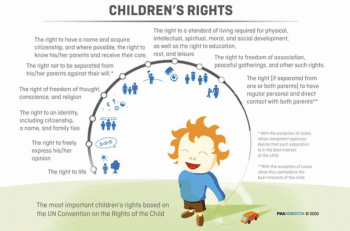
    UN scrutinises Children’s rights

    For the first time in a decade, the Irish government defended its record on children’s rights before the United Nations in Geneva, on 14th January 2016. Poverty and homelessness, the rights of children in direct provision, the rights of Traveller and Roma Children and education issues were dominant themes, raised from different perspectives. The UN Committee on the Rights of the Child also asked about the incorporation of children’s rights into Irish law, the duty to hear children in legal proceedings, complaints and monitoring mechanisms, and the child’s right to identity in the context of surrogacy. Child protection was an important focal point throughout the discussions and the UN Committee members asked a range of questions about the extent of services and supports available to protect children from harm and to support families. Children’s rights in healthcare – obesity, smoking, alcohol and mental health – were queried. The rights of children with disabilities and in alternative care, in detention and in the immigration system were all scrutinised. The hearing was part of the process of monitoring implementation of the Convention on the Rights of the Child, a treaty binding on Ireland since 1992. The government delegation was led by Minister for Children and Youth Affairs, Dr James Reilly, TD. It was a measure of the political importance of the process that the Minister was accompanied by a large delegation of civil servants and officials from all major government departments. The hearing is an important opportunity to put pressure on Government in a public, international forum. For many of the non-governmental organisations present like the Children’s Rights Alliance, – and for the Ombudsman for Children – this is the culmination of a decade of advocacy. The Irish Human Rights and Equality Commission participates in all UN treaty-monitoring hearings. The Convention on the Rights of the Child is a particularly wide-ranging treaty, making both its implementation and its monitoring challenging. Mainstream issues of education and health sit alongside the concerns of children who are especially vulnerable or whose rights are breached by their particular circumstances. Guidelines ensure that all matters of importance are covered in the six-hour dialogue with the Government delegation. The hearing is a probing, constructive dialogue, rather than an adversarial process. The Government delegation is obliged to provide information in almost immediate response to detailed questioning from the Committee members. Answers demonstrated that the Government delegation was well prepared and few questions threw them off guard. Responses were generally succinct and direct although the Committee regularly interrupted if answers were too long-winded or off-point, creating genuine accountability. Civil society representatives were able to clarify any issues with the responses given by Government. They were able to point out that the status of the School Admissions Bill 2015, presented by Government, was at best uncertain, for example. When the Committee asked about the legislative amendments required to address the issue of school discrimination to protect school ethos, the Government’s commitment to change the Equal Status Act was welcomed, if with some surprise. The Committee’s rapporteurs were clearly well informed and able to convey with authority their understanding of the Irish context. Their probing questions sought clarity about the true state of child poverty, questioned why children in direct provision could complain to the Committee on the Rights of the Child but not to the Ombudsman for Children and wondered why many of the Government’s policies in this area remained on the shelf, and why law reform takes so long. A contrasting style emerged between some civil servants and the Minister, who on occasion brought humility and humanity to issues like child poverty and homelessness. Overall, with the many advances made on constitutional reform, the cabinet-level Ministry, family-law reform and the removal of children from adult prison, the Government can be satisfied that it avoided the worst criticism. At the same time, there is little doubt that the impact of austerity on children and the particular suffering of very vulnerable children will loom large when the Committee completes its analysis of Ireland’s children’s rights record. For those who work with and for children, the Committee’s Concluding Observations will provide a blueprint for children’s rights advocacy and activism in the years to come. Given the impact that such Concluding Observations have had on Ireland’s children’s rights record to date, this is clearly where children’s rights advocacy can make a difference. Ursula Kilkelly Ursula Kilkelly is Professor of Law in the School of Law, University College Cork.

    Loading

    Read more

  • Posted in:

    Revive Sex Offences Bill

    The Criminal Law (Sexual Offences) Bill 2015 had passed through the Seanad and was before the Dáil. However, unfortunately the Bill will not be passed through the Dáil before the 2016 General Election. It is now vital to ensure that it is restored to the Dáil at the same stage it had reached very early in the term of the incoming government. The Bill represented groundbreaking reform of sexual-offences law. The Bill contains welcome changes to criminal-evidence rules in sex-offence cases, for example by setting out precise criteria restricting disclosure of victims’ counselling records to the defence, a practice which currently causes great distress for victims. Other important changes protect child witnesses from being cross-examined in person by defendants in sex offence trials; and prevent judges and barristers from wearing wigs and gowns when a child witness is giving evidence in such trials. The sections that have received most attention are those dealing with prostitution law. These sections would criminalise the purchaser of sexual services (the client), while decriminalising the seller (the person engaged in prostitution). This change is based on a law introduced in Sweden in 1999. It would radically reform our deeply awed prostitution law, under which both prostitutes and clients are criminalised. By criminalising buyers of sex, it will pave the way for an approach to regulating prostitution that recognises the lived reality of those in prostitution, and that genuinely seeks to tackle sexual exploitation of women. Current Irish law focuses on prohibiting the visible manifestation of prostitution through criminalising offences of ‘loitering’ and ‘soliciting’. While these offences are gender-neutral, most prosecutions in practice are brought against women, who will typically be convicted of ‘soliciting’ and ordered to pay a ne (which many will go back to prostitution to pay). This model clearly has not succeeded in reducing the numbers of those engaged in prostitution; or in addressing the real exploitation experienced by many of these women. The Oireachtas Joint Committee on Justice, Defence and Equality recently conducted a review of prostitution law in recognition of the problems with our current law. We received 800 written submissions, 80% of which favoured the Swedish approach. These submissions were drawn from a broad cross-section of civil society, including trade unions, frontline medical workers, service providers and those working with migrant women. We heard evidence from Sweden that their law has been effective in reducing prostitution levels, and has had a positive normative effect on social attitudes to sexuality. The Committee also held a series of public hearings, with input from those both for and against the Swedish approach, and from those directly engaged in prostitution. We heard that women enter prostitution in Ireland at a young age, many under 18. Many people are trafficked into prostitution and the vast majority are subject to control by a third party, or pimped. The report of the Committee, published in 2013, concluded that prostitution is widely available across Ireland. It is highly organised, highly profitable, highly exploitative and largely controlled by organised crime interests. That is the actual reality of prostitution. Current Irish law has failed to tackle this. We unanimously recommended a radical change with the adoption of the Swedish approach to criminalise only the client, the purchaser of sex. This Swedish law is based on a view of prostitution as inherently exploitative, amounting to gender-based exploitation. Laws based on this approach have already been introduced in other countries, including Canada, Norway, Iceland and most recently Northern Ireland. The changes we recommended were supported by a wide range of organisations, including the Immigrant Council of Ireland, the National Women’s Council and the Turn Off the Red Light campaign. Ultimately, they were adopted by the Government and included in the 2015 Bill. The Bill was debated at length in the Seanad over December and January. The campaign for this Bill must now continue into the next Dáil. Its offer of important changes to sex-offences law generally, its provisions to decriminalise those engaged in selling sex and to criminalise those purchasing sex, and its promise to tackle sexual exploitation, particularly of children and those engaged in prostitution must be defended and realised without delay. Ivana Bacik

    Loading

    Read more

  • Posted in:

    Get moving on that social housing

    Homelessness was always a winter story and affected individuals only. Now it’s an all-year narrative and the homeless are no longer just isolated individuals -although they are still there – but families, in all their forms and colour. Our recent research for the Housing Agency report, ‘Family experiences of path- ways into homelessness – the families’perspective’, sheds some light on the causes,consequences and features of these unwelcome developments. The research was basedon interviews with a sample of 30 families,including a mixture of family types (couples and one-parent households with children of differing ages, as well as families from minority – Traveller and migrant – backgrounds). The human story was com- pelling. Both of us, ‘seasoned’ researchers long involved in the homeless field, were shocked by the conditions and circumstances in which the families found themselves. Some were homeless for months, but for others it was years. We met families living for months in one room of a hotel. Others lived in damp basements and rooms, with heat turned on for only a few hours a day. Most of the families we met no longer had possessions, apart from those they could put in a suitcase. They were broke, having used up whatever savings they had. Parents were distressed, despairing, humiliated – often eg under curfew – but absolutely determined to ensure their children survived the experience. At a policy level there were clear findings. Almost all the families had lived in private rented accommodation: none were dispossessed mortgage-holders. Many had been in private rented accommodation that they liked, some in the same home, for long periods, whilst others moved around frequently.The problem was that this time, when they left or were evicted (the euphemistic term is ‘issued with a Notice of Termination’), they could not find an affordable alternative. They could not get back in. They typically called prospective landlords, or called door-to-door, 50, 60 times only to find the accommodation already gone, or, more likely, to be assailed with “no rent allowance here”. For some, leaving or being evicted was a sudden and brutal process: eg a violent ex-partner turning up and causing trouble, a ratinvasion or the roof falling in. For the majority, though their departure was the landlord deciding to get more rent from tenants. For tenants told to leave, the one thing theyneeded more than anything else was a reference for the next landlord, so they did not argue. Campaigns for tenants to be ‘better informed’ of their ‘rights’, when they have almost none, overlook the inequality of power. With little new housing built in recent years and a dearth of social housing, which can be traced to 1987, a previous austerity period and its cuts in spending on local authority housing, our rising population has put more pressure on accommodation. The bottom of the private rental market gets ‘squeezed’, and those on low incomes are squeezed out. As demand rises, landlords know that they can charge more. Rents move higher and higher above the rent supplement levels that the Department of Social Protection pays, putting them out of reach of those on low incomes. The introduction of the Homeless Housing Assistance Payment (HAP) which permits a 20% increase in rent supplement marks a welcome recognition that rent supplement levels are no longer adequate. The homeless families to whom we spoke had many ideas on how to solve the homelessness crisis, including the opening up of boarded-up local authority homes. For them(and we should listen), local authority accommodation was the ultimate solution, offering security, acceptable standards and affordable rent. The Social Housing Strategy 2020 – a six-year plan to address social-housing needs – commits to the provision of 35,000 new social-housing units, over half (18,000 units) of which are due to come on stream by the end of 2017, with the remainder (17,000 units) scheduled for completion by the end of 2020 at a cost of €3.8bn.While the requirement is clearly immediate, a useful additional measure has been the introduction of a Ministerial direction which requires named local authorities to allocate up to half of available social housing units to homeless (and other special needs) households for the first six months of 2015. Notably, no-one we spoke to expected to get back to private rented accommodation, ever. Kathy Walsh and Brian Harvey Kathy Walsh is Director of KW Research and Associates Ltd, and an experienced social researcher and strategic thinker with expertise in equality and integration.

    Loading

    Read more