company

Random entry RSS

  • Posted in:

    Russell, O Laoire and the Whitestown scandal

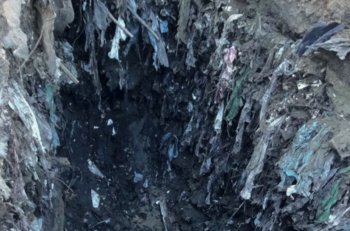
    When hazardous hospital waste was found in an illegal landfill at Whitestown, Co Wicklow Irish institutions and agencies were shocked. This wasn’t the usual domestic dumper avoiding charges of €1100 a tonne or a local authority dumping old road materials. The average cost of disposing of medical waste in 1998 was €11,480 a tonne. Clearly someone wanted to avoid such payments. The €40,000,000 bill handed to Wicklow County Council and, by default, Irish society that was explained in the February issue of Village puts the delinquency of those trying to avoid the disposal costs in perspective. Lest we forget the enormity of this case, which Judge Richard Humphreys described as centring on perhaps the largest illegal land ll in the history of the State, medical hazardous waste was found strewn in multi-tonnage amounts in initial examinations of the land ll. The World Health Organisation cites such illegally disposed waste as being responsible for 40% of hepatitis cases and 12% of HIV cases worldwide. The court case was primarily focused on the potential for pollution of water but those involved in the transporting waste to the site were also at high risk. The Judge and counsel bantered about Chicago in the 1930s and the Sopranos giving a avour of the waste-industry impropriety and corruption that figured in the case. Two of the individuals central to that case, Ireland’s Jarndyce v Jarndyce, that has lasted 16 years already, are Professor Ronnie Russell and Retired Commandant Donal O Laoire. The men have a business relationship through a range of associated directorships and companies that spans nearly 30 years to the present day. As O Laoire Russell Associates since 2001 and EMA International before that, they list clients including the World Bank, UNIDO, the European Commission and many Irish government, industry and regulatory authorities. With a PhD in Immunology from Glasgow University (1973-76), Professor Ronnie Russell is described on his own Linkedin page in terms that command respect: Adjunct Associate Professor TCD (1976 to present), Chairman HSE Decontamination Advisory Committee (2007-present), Vice-Chair of the Environmental Education Unit of An Taisce (which runs Ireland’s Green Schools, Blue Flags and other environmental programmes, 2015-present) and the technical representative for the disarmament section of the Department of Foreign Affairs at the UN in Geneva (1994-present) in which role he Chaired the EU Bioweapons Disarmament Expert Committee during Irish EU Presidencies. An RAF reconnaissance liaison and trainee Concorde pilot while studying for his Ph.D, he probably had a lot to complement the distinguished military experience of Donal O’Laoire whose profile on the CEMS website describes a professional career background in the Irish Defence Forces: Donal O Laoire has practised as an independent consultant in Ireland, EU, Eastern Europe, North Africa and Asia for almost 20 years, and is a graduate and post-graduate of Trinity College Dublin. Working with agencies of the United Nations, he has designed and project-managed large-scale environmental projects including land decontamination and remediation in several countries. In some biographies he de nes a lecturing role at TCD. This pair constitutes a formidable galaxy of knowledge, influence and contacts. What is here relevant is their involvement with one of the companies listed as having possibly contributed waste to the illegal land ll in the first place, Eco-Safe Systems Limited. Russell and O Laoire were two of the initial directors in Eco-safe Systems Ltd and both were shareholders. The implication of this company went unchallenged at all stages and was accepted by the High Court last year. Eco-Safe Systems Ltd had become the only company granted an Environmental Protection Agency (EPA) permit to dispose of treated hazardous hospital waste legally – in a, designated, Irish land ll. The compelling, frightening image of this land ll was graphically depicted in court by Professor Ronnie Russell. On 14 July 2005 he swore a lengthy affidavit about his examination of the site. His first paragraph included the following: “The items tested included bandages and dressings, cannulas, hypodermic needles and syringes. Many of these proved strongly positive for the presence of blood indicating a contaminated state. Furthermore, intravenous lines, assorted plastic tubings, sample containers and other clinical materials showed no evidence of having been autoclaved (having been subjected to high temperature sterilisation treatment) as would be appropriate for such material before being discarded”. O Laoire in his affidavit stated: “During this initial inspection I observed gas bubbling through waste puddles on the surface. Parts of surgical gloves were observed on the surface. All these parts of gloves seemed to have been systematically cut or shredded. Further examination of the surface revealed small amounts of broken glass, shredded tin cans, and medical equipment such as masks, syringes, surgical gloves and theatre gowns at surface level”. Other engineers and consultants also swore lengthy affidavits in July 2005 as to what was on site, including hospital waste. In other words, Wicklow County Council may have unwittingly invited two of the founding directors of that highly innovative new medical-waste-disposal company to forensically investigate the scene of a crime where waste from that company might have been illegally brought. There are ways that this could happen without the knowledge of company principals but the looming ethics question is why they did not bring this to the immediate attention of the Garda leading the Criminal Investigation. If they had, the excellent insurance coverage Eco-Safe Systems Ltd had in place as a prerequisite to being awarded the EPA waste licence permit 54-01 could have covered 15m for each of the ndings of illegal medical waste which might have paid for the entire subsequent clean-up of the whole site before the problem was exacerbated by the botched remediation. There is no legal time-limit on hospital waste generator obligations for proper disposal. They could also have met a medical duty of care to the workers who may unwittingly have been exposed to hazardous material and now perhaps even be suffering mystery illnesses of unknown origin. The “botched remediation” effectively blended all categories of waste on the site together leaving a

    Loading

    Read more

  • Posted in:

    Gardai look again at white collar acquittals

    Acounty meath businessman has fought a prolonged battle to recover what he claims are millions of euro in losses and damages caused by former employees who set up a company using his business name and equipment. Paddy Sheils of P Sheils Plant Hire (PSPH) has claimed that three former employees established a company also called PSPH, in 2008, to supply customers, including Meath County Council, with road digging, maintenance and other services using his equipment. One former employee, Siobhan Ryan, pleaded guilty in the District Court in 2014 to offences related to the fraud. Another former employee, David O’Donoghue, was acquitted following a jury trial in 2016. The charges against a third, Sinead McNamara, were withdrawn. The complaint by Sheils has been the subject of investigation by the Garda and by the local authority but he has never received compensation from Meath County Council for his alleged losses. Last week, the state solicitor for Meath, Vincent O’Reilly, was given leave in the Trim District Court to obtain transcripts of the trial of David O’Donoghue as it has been alleged that incorrect evidence was given to the court in his case. Paddy Sheils started his plant hire business in 1989 at Garballagh, Duleek, County Meath and by 1993 was obtaining civil and contract work from Meath County Council. In 1996, he incorporated P Sheils Plant Hire Ltd. (PSPH) and purchased a yard with offices at Rathdrinagh, Beauparc in Navan. He was managing director running the day-to-day operations of the company while his brother Fergus held a 1% share and was also a director. He purchased a quarry at Knockmooney in Slane in 2004 from which he supplied stone for building sites and motorway projects. He did extensive road and footpath work, water repairs, and maintenance for Meath County Council. His workforce grew to more than 80 employees over the next few years. In September 2009, he noticed discrepancies in the company’s financial records, including in relation to cheque-book payments. His accountant found that there were irregularities in cash receipts and in the payment of wages for goods and services provided by the company. Siobhan Ryan of Kells, County Meath had worked for the company since February 2008 being responsible for financial accounts, before she departed in April 2009. David O’Donoghue, from Collon in Louth, had worked with Sheils’ company since 2006, starting out as a lorry driver before being given responsibility for organising the servicing, repair and replacement of plant and machinery at the company. He left the job in February 2009. Sinead McNamara from Drumconrath, near Navan took worked with P Sheils Plant Hire from 2007 to 2009 managing contracts for clients, including the local authority, as well as holding responsibility for health and safety matters for the company. After they left, Sheils discovered that his company had been defrauded and that the three former staff had established their own company, also called PSPH, in 2008. His company logo, evidence of its health and safety compliance as well as insurance documentation, had been used by the new rm to tender for work from Meath County Council. He discovered that invoices had been submitted by former staff to the local authority for work done by his company with his equipment. The money was paid into an account in a bank in Ardee, County Louth, according to gardaí. When she pleaded guilty to the offences, Siobhan Ryan told gardai that all three were acting in concert. However, O’Donoghue was acquitted following his trial in 2016 and the charges against McNamara were withdrawn earlier. Siobhan Ryan admitted that she was responsible for false entries on the accounts system which she operated. She made a compensation payment of 120,000 to Sheils, and the Probation Act was applied by the court in February 2014. O’Donoghue was tried in the Circuit Court in Trim where he was found not guilty. Sinead McNamara provided evidence in this case on his behalf. Sheils has since produced information that contradicts the evidence of McNamara. He has also questioned why the charges against her were dropped given that investigating gardai had established that she had collected a cheque payment from Meath County Council which was lodged into the account of PSPH, the company his former staff established in 2008. Sheils has also pressed for an investigation into the role of Council officials and employees who dealt with his former staff and authorised payments to them and has sought the return of these monies to him. He claims that his company suffered losses of hundreds of thousands of euro as a result of the fraud and that the original Garda investigation was less than satisfactory. A new investigation was prompted following Dáil questions by County Louth Fine Gael deputy, Fergus O’Dowd, to then justice minister, Frances Fitzgerald, in December 2016 and March 2017. This led to a successful application by garda Michael Devine to the Trim District Court on 30 May for the transcripts of the earlier trial of David O’Donoghue which took place in the Circuit Court in 2016. Frank Connolly

    Loading

    Read more