conflict

Random entry RSS

  • Posted in:

    Israel Politik: Illegal settlement

    After completing his Ph.D in the University of Pennsylvania, the former Palestinian foreign minister, Nabil Shaath, lectured in financial economics at the elite Ivy League Wharton School in the US. Among his students was a brash undergraduate named Donald Trump who did little study, flunked his exams and was expelled from the university. With the help of his very rich father, Trump was readmitted and, despite his poor academic credentials, went on to greater things. “He was not a good student. He dropped out and his academic standard did not come up to scratch. I was teaching advanced corporate finance and he flunked the courses. The idea of this man as President of the US to me shows the decline of American civilisation”. Some half a century later, Trump is leading the latest assault on the historic right of the Palestinian people to their own land, including international recognition of Jerusalem as the capital of their independent state. Last December, President Trump confirmed that he intended to move the US embassy in Israel from Tel Aviv to Jerusalem in a move that deeply angered the Arab world while elating many Israelis who have long had their sights on ultimate control of the holy city, which has been traditionally shared by Muslim, Christian and Jewish religions. The decision to move the embassy to Jerusalem was authorised by the US Congress some years ago but was put on hold by President Barack Obama, who believed the decision could only hamper efforts to find a lasting peace in the region and, in particular, the achievement of a two-state solution with east Jerusalem as capital of Palestine. For the Palestinian president, Mahmoud Abbas, and for Nabil Shaath who acts as foreign relations advisor to him, this divisive action by the Trump administration has confirmed a view they have long held privately: that the US cannot be considered as an honest broker in the search for a just solution to the Middle-East crisis, arguably one of the world’s most egregious human rights scandals. Over recent weeks, 35 Palestinian people have been killed and over 1500 injured by live rounds fired by Israeli army snipers from behind a fortified security fence erected in Gaza. Each Friday thousands of people from the besieged and almost destroyed Gaza Strip have protested for their “Right to Return” to the lands from which they and their families were expelled during the Nakba or catastrophe when the state of Israel was declared in 1948, and over the decades since. The policy of the government led by Benjamin Netanyahu and of the Israeli Defence Forces (IDF) is that the right-to-return protests must be resisted with maximum force, including by the killing of unarmed activists and the maiming of thousands. Already overstretched and under-resourced Gazan hospitals have been unable to cope with the recent slaughter, while their efforts to transfer shooting victims with serious injuries to hospitals in the West Bank have been obstructed by the IDF. Two young men who each had had a leg amputated after suffering severe bullet wounds lost their other leg after doctors were prevented by Israeli authorities from transferring them from Gaza to better-equipped hospitals for treatment. The reason they were refused access to urgent medical care in Ramallah was because their “medical condition is a function of their participation in the disturbances”, the Israeli authorities confirmed. One of the young men, Yousef Karnez, said that he was a trainee journalist and was holding a camera at the demonstration which he sought to document. “I got two bullets. One hit my left leg and crushed it and the other hit my right leg, where it gravely injured my shin. Doctors have already amputated my left leg and I am begging; I don’t want to lost my other leg,”, he pleaded in the days after he was shot in early April. A young journalist, Yaser Murtaja, who was wearing a white ‘Press’ sign on his chest during the same protest on 6t April, was shot dead by IDF snipers and wrongly accused by the Israeli defence minister, Avigdor Lieberman, of being a member of Hamas who had been operating a ‘spy drone’ before he was killed. His claims were denied by the International Federation of Journalists who said that Murtaja had worked for both national and international media over recent years including for the BBC and Al Jazeera, and that his company Ain Media had been funded by the US Agency for International Development. His production company had used drones for aerial filming and he was due to start a new job with the Norwegian Refugee Council two days after he was shot. Nabil Shaath, a Gazan, believes the people of the strip are desperate and the large ‘Right to Return’ protests are a reflection of their appalling living conditions. The electricity in Gaza, where some 2.5 million Palestinians live, is turned off for sixteen hours each day, there is no clean water, and there are severe shortages of food and medical supplies. Efforts to establish a unity government across the West Bank, east Jerusalem and Gaza which commenced last year have so far been unsuccessful due to the inability of the Palestinian Authority (PA) and Fatah (the political organisation led by President Mahmoud Abbas) and Hamas to reach agreement. At the core of their disagreement is the refusal of Hamas, which took political power in Gaza following elections in 2006, to cede control of security to a new government of Palestine. “We have a presidential system in Palestine and the President is in charge of security and foreign relations,” Shaath explains. “Hamas was elected in Gaza in 2006 by popular vote and we accepted that mandate. However, the PA remains responsible for ensuring that the people of Gaza have sufficient finance to cover the costs of education, health, water and electricity. We have now said to Hamas that we can only continue to pay the bills if they agree to complete discussions for a unity government that will include security”. This

    Loading

    Read more

  • Posted in:

    The cost of costs

    Real justice requires access to justice, which requires effective access to courts, which requires that courts be accessible without the threat of prohibitive costs. Some 90%, or an even higher percentage, of people in Ireland have no realistic access to justice, due to the prohibitiveness of the costs associated with legal actions via the courts. The Irish system of access to justice is permeated with unfair procedures, unconstitutional laws, and conflicts of interests, which means that most court users in Ireland are vulnerable users. BalaNCiNG CONFliCTiNG CONSTiTUTiONal RiGHTS: The English rule (Loser pays rule) on legal costs does not balance two conflicting rights – (1) the property rights of winning litigants, and (2) the right of persons to have access to the courts, without being threatened by unpredictable and prohibitive legal costs. Notionally, proponents of the English rule claim that winners are entitled to be 100% vindicated, and so be in a position to cover all their legal costs. However, this is a very narrow view, which fails to assess the big-picture consequences: (a) winners are also threatened, up to the point of winning, and can be threatened as defendants, in circumstances where they have no chance of recovery of costs from penny-less plaintiffs. (b) the English rule creates all sorts of conflicts of interests and market distortions, which enormously inflate the costs payable. (c) wealthy litigants can threaten persons of lessor wealth, with adverse costs, such that the case is determined more often by issues of fear, rather than justice. (d) the state, and most government actors become unaccountable, as the decision makers are immune from costs (lumped ontaxpayers, often, with little transparency), but can pursue political goals, or engage in abuse of power, with no financial downside, and can still threaten all challengers with financial ruin; this inequality of arms, means that citizens are generally unable to challenge the unconstitutional laws and conduct of government. HeNCe, THe eNGliSH RUle iS NOT COMPaTiBle WiTH a Real CONSTiTUTiONal deMOCRaCy: Costs Allocation Rules incentivise Unfair Adjudication Rules which also incentivise Inefficiencies into the system. Because the government is allowed to intimidate its challengers with unlimited adverse costs, it then wants to maximise those costs, so as to bolster its threat and avoid oversight; High Legal Costs has been the default weapon of choice for all governments since the commencement of the state; the “Big Stick” is maintained to bounce its opponents out of the ring, and this has so far been achieved with little condemnation by international institutions, which have largely failed to recognise the stealth threat that prohibitive costs represents as a threat to the rule of law. The Big Stick undemocratically deters citizens and/or NGOs from challenging the government when it passes unconstitutional laws, or acts unconstitutionally – this allows the government to pander to its own electoral constituency while depriving less well represented persons access to rights protection, leading to violations of minority rights and individual rights. When populist demands call for adjudicative processes which affect specific rights of connected groups, QUANGOs are often created in order to parry off populist demands for accessible justice. The substitute QUANGO justice can rarely be as independent as courts, and the outcomes are often secretised, thus bypassing democratic oversight. Hence, the government passes unfair laws for legal costs adjudication, so as to frighten all challengers – this allows it to exercise power with minimum oversight. THe Need FOR CCOS (COSTS CaPPiNG ORdeRS) In the ex parte application by Dymphna Maher [2012], the applicant effectively sought an assurance from the High Court that any adverse costs would not be prohibitively expensive, if her lawsuit was subsequently deemed not to have fallen under the ambit of the special costs regime (related to some environmental cases). Judge Hedigan insisted that there was no legal authority to permit him to make the order sought by the applicant. However, he observed that: “[It was] very arguable that the absence of some legal provision permitting an applicant to bring such a motion, without exposure to an order for costs, acts in such a way as to nullify the State’s efforts to comply with its obligation to ensure that costs in certain planning matters are not prohibitive. As things stand, I have no power to change this”. This case along with 12 other cases was appealed to the Supreme Court (SC) on an ex parte basis – where only one of the parties is heard. The SC held that it could not provide such an assurance, on an ex parte basis, as the other side (the EPA) needed to be heard first. The SC decision in the Coffey case means, in effect, that any person seeing to access the courts in Ireland is threatened with financial ruin, even if just seeking a CCO. The court failed proportionately to balance the right of access to the courts as a right conflicting with the property rights of government, particularly in the context of the need for real separation of powers. The judicial sphere of power is rendered inaccessible to most citizens, when the loser-pays rule is applied to challenges to executive power, and so the judicial sphere of power is inappropriately diminished; this undermines the checks and balances necessary in a liberal democracy between the legislative, executive an judicial functions. SePaRaTiON OF POWeRS By dividing power between these traditional three spheres, the courts, the government, and the Oireachtas, we help to disperse power and make less probable the accumulation of power to one person, or a small elite, as often happens in what are referred to as illiberal democracies. Diagram 1, above, displays the traditional Montesquieu view of three spheres of power. However the (Montesquieu) tripartite division of power, is a poor reflection of reality. This is largely because it generally fails to engage with the level of real power held by each of the three spheres, in practice. A second flaw, is that there should really be five spheres of power, and not three; the people should be seen

    Loading

    Read more

  • Posted in:

    Conflict in Corner

    A situation is unfolding in the Northern Ireland Royal Courts of Justice which calls into question the integrity of the Administration of Justice, the right to a fair hearing and fair procedures on which the entire system depends. It is the worst kept secret in legal circles in Northern Ireland and yet not one media organisation has chosen to run the story. On 9th March 2017 Justice Mark Horner, a well-regarded judge best known for a recent liberal judgment on abortion rights in the North, was asked by a litigant-in-person to recuse himself from a case involving Bank of Ireland (UK) Plc as it had been brought to the litigant’s attention that Justice Horner had a serious conflict of interest which he had failed to bring to the court’s attention at any stage while he sat as Judge on the case. Justice Horner was a director up until late 2011 and is currently a shareholder in TMKK Limited which was a financially-troubled client of the bank. On 14 March the litigant-in-person made an official complaint to the Lord Chief Justice’s office and has yet not received a substantive reply as the office seems wrongfooted. The Lord Chief Justice’s office seems nowhere close to convening the Tribunal envisaged in the Code of Practice on Judicial complaints. On 27 March Justice Horner recused himself from the litigant-in-person’s case giving a statement saying that the reason he recused himself was because the litigant in person would not accept his judgment. This is judicial nonsense. No judge ever should doubt the acceptance of his judgment by a party. The Lord Chief Justice’s office told Village: “Mr Justice Horner stated in open court that he was recusing himself in the case involving the Bank of Ireland and the personal litigant. He said he was satisfied that there was no question of actual bias or that he had any conflict of interest in the case, but that it was apparent to him that ‘the party would never feel able to accept [his] verdict’”. On 4 April in a separate case involving the same plaintiff i.e. Bank of Ireland (UK) Plc, the bank itself, presumably sensing the dangers of compromise and appeal, actually instructed its own QC, Patrick Good, to request that Justice Horner recuse himself from that case. Horner had little choice but to stand down from this case also. The same legal firm, C & H Jefferson now DWF, represented the plaintiff, Bank of Ireland (UK) Plc in both cases described above. It is obvious that the plaintiff was aware of the conflict of interest with Justice Horner as the judge had for many years been a director and is currently a shareholder in TMKK Limited which was a client of the bank. However, neither the bank nor its legal team made the court aware of the conflict though, as solicitors are officers of the court, it is normally their duty to do so. The solicitor who acted for the plaintiff in both cases seems not to have fulfilled that duty. She is no longer acting for her rm in either of the cases. After that Justice Horner stopped sitting on any cases involving Bank of Ireland in the Chancery court but moved to the Commercial Courts in September and has sat on a number of Bank of Ireland cases. On 4 october 2017, as Village was going to press, a Bank of Ireland case was listed in the Commercial Court [image C, 1] (Interestingly another case was listed for the same day (not involving Bank of Ireland) where the defendant is the current master of the High Court in Belfast, Ian Thomas Hardstaff, who was in partnership with the Harrison referred to in the list who is still a shareholder and director of TMKK Limited) [image C, 7]. Moreover Justice Horner also has dealings with The Northern Bank Ltd through TMKK Limited. Here too he sat on many cases and did not inform the parties of this. The defending party in one such case is aware of his recusal in the two Bank of Ireland cases. That defendant is currently appealing a case involving Northern Bank Ltd in which Justice Horner gave a judgment against them. They brought his conflict of interest with Northern Bank Ltd to the Appeal Judges’ attention and the court remitted the matter back to the Chancery Court as it is the appropriate court to determine such matters. Justice Horner resigned as a director of TMKK Ltd before applying for appointment to the High Court – though he and his wife both remain shareholders. Indeed his wife replaced him as a director. Relevant accounts (page 144 section 4 [image A]) for TMKK Ltd available from the Companies office show that it is indebted to Bank of Ireland and Northern Bank (now Danske bank). However, much more dramatically the company is insolvent. The final paragraph of the accounts entitled “Going concern” [image b] clearly states that TMKK Ltd is only trading at the discretion of Bank of Ireland. By any standard this Judge should not be hearing any cases involving Bank of Ireland. He has immense power and has given possession orders in favour of Bank of Ireland and Northern Bank while he has been seriously conflicted. This could have involved both commercial properties and family homes. All of his cases are on public record. Anyone who has had a case under Justice Horner involving Bank of Ireland or Northern Bank Ltd/Danske Bank may be able to have their judgment set aside due to failure to disclose a serious and fundamental conflict of interest. The Lord Chief Justice’s office notes that while the judge may be considering Queen’s bench actions which are listed for mention he is not now “adjudicating on any commercial or Chancery cases involving the Bank of Ireland”. The Lord Chief Justice’s office said it was “unable to comment further as the Justice (NI) Act 2002 provides information on complaints on judicial office holders is confidential and must

    Loading

    Read more

  • Posted in:

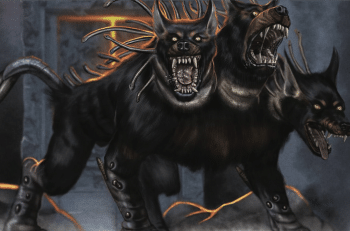
    Cerberus conflicts are biggest financial and political issue facing NI Executive

    An investigation by BBC’s ‘Spotlight’ programme broadcase on, 29th February, into the sale of NAMA’s huge property portfolio in Northern Ireland has revived an embarrassing issue for the outgoing government. Village readers will recall how distressed commercial and residential properties, previously valued at £4.5 billion, were sold to US vulture fund Cerberus, for just £1.2 billion in April 2014. An article in December documented how the sale was now the subject of investigations in the US and the UK and by the Law Society and the Stormont finance committee in Northern Ireland. At the centre of the controversy is former NAMA official, Ronnie Hanna, who resigned as the agency’s Head of Asset Recovery six months after the sale of the portfolio known as ‘Project Eagle’. Hanna was named in the Dáil by independent TD, Mick Wallace, as one of a small group of people who met multi-billion-dollar-backed US investment funds to promote the sale of the portfolio, accompanied by Frank Cushnahan, a former member of NAMA’s Northern Ireland Advisory Committee. It was also sensationally claimed at the Stormont hearings in September last that Cushnahan; Belfast accountant, David Watters; former partner in Tughan’s solicitors, John Coulter; property developer, Andrew Creighton; and former DUP leader, Peter Robinson, were to receive substantial sums from the Project Eagle sale. All denied the allegations. Cushnahan and Coulter, along with US law firm Brown Rudnick, were to take €15 million in fee payments from another US investment fund, Pimco, if its bid for the property portfolio was successful. Pimco withdrew from the process in early 2014 after its compliance officers advised that such payments would be illegal, under US law. In March 2014, NAMA informed finance minister, Michael Noonan, of the dodgy fee arrangements being offered in connection with what is the largest ever disposal of public assets in the history of the state. Instead of calling an immediate halt to the bidding process the finance minister advised NAMA to plough ahead with the sale. Noonan seemed implicitly to consider that the ethical problems were at the other end, in Belfast. And that the Belfast office didn’t really reflect on the Dublin office. The problem for Noonan and NAMA is that if Hanna is involved in wrongdoing that brings the culpability right back into the Dublin office and the remit of the Irish government. Cushnahan and Coulter then encouraged Cerberus to enter the race in the clear expectation that fee payments would be made if its bid was successful. The Spotlight programme revealed that Cushnahan misled his former colleagues in NAMA by continuing secretly to work on the Cerberus deal without their knowledge. Cushnahan confirmed in a clandestinely recorded discussion last year with Belfast property developer, John Miskelly and accountant David Gray, associate of Waters, that he was due to get a “ fixer’s fee” from the Cerberus deal. He said that he and Coulter had done “all the work on the deal” but his role was kept secret because of objections from NAMA to his involvement. Cushnahan said that Coulter moved £6 million into a holding account for him so he could be paid. During the recorded discussion, reference is made to assistance provided by Ronnie Hanna to distressed developers. There is also a description of how Peter Robinson’s son Gareth advised Miskelly to go to Cushnahan about his NAMA-controlled debts. Miskelly confirmed to the BBC that the recordings were an accurate reflection of the lunch meeting with Cushnahan and part of an effort by him to expose the financial misconduct surrounding the sale of the Project Eagle portfolio which is under investigation by the US Securities and Exchange Commission and the National Crime Agency in Britain. Miskelly claims he has handed evidence of wrongdoing to both. Cerberus has denied any wrongdoing in respect of the purchase, while refusing to provide answers to detailed queries due to the ongoing criminal inquiries. Similarly, Cushnahan; Hanna who runs a private consultancy in Belfast; and Robinson, have declined to comment further. Robinson surprised many when he announced his retirement as first minister as hearings into the Project Eagle sale were taking place last Autumn. Village documented in January how Gerry Adams had in effect telegraphed Robinson on his need – in the context of ethical issues relating to the NAMA debacle of which Adams was apprised – to reinstitute the then suspended Northern Executive. Robinson and former finance minister, Sammy Wilson, were involved in discussions with Noonan and NAMA to try to minimise the exposure to personal guarantees of a number of prominent developers in Belfast and across the North in respect of their debts taken on by the agency. Last year, it emerged that Robinson held meetings with former US president Dan Quayle, chairman of Cerberus, and had discussions on the sale with Noonan, without disclosing them to his deputy first minister, Martin McGuinness. It now transpires that Cushnahan was on three sides of the deal having worked for NAMA, some of the bidders as well as for the distressed developers. The latest explosive revelations prompted Sinn Féin leader, Gerry Adams, to repeat a call for a Commission of Investigation into the NAMA sale. Frank Connolly

    Loading

    Read more

  • Posted in:

    World War 1 and the Middle-East

    If Colonel Gadaffi were still running Libya there would not be mass migration across the Mediterranean, with thousands drowned because of unscrupulous traffickers. Gadaffi was guilty of the sin of all those secular dictators. He was too independent of ‘the West’. Britain and France, backed by America, bombed him out of existence. Their excuse was that he intended assaulting civilians in a provincial town. They got the cover of a UN Security Council resolution, which a weak Russia failed to veto. Now Libya is a failed state racked by civil war. Where do these Mediterranean migrants come from? Many are from Syria, another state afflicted by civil war encouraged by the West. Since 2011 the Syrian rebels against the Assad regime have been covertly financed and armed by Saudi Arabia, Qatar and Turkey, with the CIA and Israeli intelligence overseeing the details. Recall the House of Commons vote which denied Tory Premier David Cameron permission to bomb Syria by 285 votes to 272 in 2013. Encouraged by the US, Cameron and France’s Hollande wanted to repeat in Syria the regime- change they had brought about in Libya two years before. It was surely Ed Miliband’s finest moment as Labour leader that he refused to go along. 30 Tories and nine Lib Dems voted against Cameron too. This House of Commons No in turn gave the US Congress the impetus to stop Obama’s impending assault on Assad. In Syria the pretext was to be that Assad used chemical weapons against his foreign-financed rebels. If these rebels succeed in overthrowing the Assad regime, the country’s Christians, Alawites and many Shia Muslims are likely to have their throats cut. The paradox now is that support for the Assad regime in Syria and its Shia-backed counterpart in Iraq looks like being the best hope of holding back the ISIS monster which these ‘rebel’ groups with their dubious sources of arms and finance have spawned. America needs Iran and its clients as allies, not opponents, in the region. Najibiullah in Afghanistan, at the time of the Russian intervention there, was the first of the secular dictators America sought to overthrow by backing the mujahideen fundamentalists against him. Osama Bin Laden was on the US payroll then. Najibullah was executed by the Taliban in 1996. Saddam Hussein was the second, overthrown by Bush and Blair in their 2003 invasion of Iraq. When Saddam ruled Iraq, Sunni, Shia and Christians lived peaceably side by side. Now Iraq too is well on the way to being a failed state, racked by the Shia-Sunni conflict which America encouraged until the tormented politics of the region spawned ISIS. Najibullah, Saddam Hussein, Gadaffi and Assad were certainly dictators but the West did not realise that worse could follow. Since Bush invaded Iraq the USA has become self-sufficient in oil because of the fracking revolution. America no longer needs Saudi oil as it once did. This is the basis of Obama’s turn towards Iran, which in turn causes consternation among the Saudis and Israelis. The Saudi-Israeli response is to try to up Sunni-Shia antagonism further, building on what the Americans had started, seeking thereby to undermine Iran’s clients in the Iraqi and Syrian governments and in the Lebanese Hezbollah, in the hope of stymying a US-Iran deal. A seminal book on the historical background to the region’s current anguished politics, is James Barr’s ‘A Line in the Sand: Britain, France and the Struggle that shaped the Middle East’. The catastrophe in the Middle East is rooted in Western power-grabbing for the provinces of the Ottoman Empire a century ago in World War 1. Iraq, Syria, Lebanon, Palestine and Jordan were all Ottoman provinces then. The different religious communities had lived peaceably side by side in them for centuries. Getting hold of them was one of the war aims of imperial Britain and imperial France in 1914. It was why Britain and France pushed Turkey into an alliance with Germany in the first months of the Great War. What was presented to British and French public opinion as a war to defend the rights of small nations and to prevent ‘poor little Belgium’ from falling under German rule, was seen by these countries’ Governments as an opportunity to expand their empires in the Middle East at the expense of the Turks. Britain particularly wanted to gain control of Palestine and with it the eastern approaches to the Suez Canal, that vital route to Britain’s empire in India. The Bolsheviks published the secret treaties between the Entente Powers within a month of the 1917 Revolution, while simultaneously repudiating them and announcing Russia’s withdrawal from the War. The British were embarrassed, the Arabs dismayed and the Turks delighted. The most important secret treaty was the agreement in March 1915, just one month before the Gallipoli operation, promising Russia control of Constantinople and the Dardanelles after the war, in return for Russian agreement to support British interests in Persia, next to India. Britain had fought the Crimean War in 1854 to prevent Russia taking Constantinople and establishing itself on the Mediterranean. For the same reason Disraeli risked war with Russia in 1878 and sent the British Mediterranean fleet through the Dardanelles at the time. In the lead-up to World War 1, however, a century of British rivalry with Russia – the “Great Game” that was given literary form in Kipling’s novel ‘Kim’ – was abandoned in order to induce Russia to join France in encircling Germany. Russia and France together were the only European land powers that could crush Britain’s rising commercial rival, Germany. As a seapower Britain could help in that defeat, but only land power and large armies could ensure a decisive victory. In early 1915, with stalemate on the Western Front based on static trench warfare from the Channel to the Swiss border, the British and French Governments were worried that Russia might pull out of the war altogether in view of the pasting its armies were taking at the time from

    Loading

    Read more