• Posted in:

    From Naughten to Neachtain: nothin’ worth notin’

    It is not a question of whether, but how many, more people will become embroiled in the developing row between Independent News and Media and the Office of the Director of Public Enforcement (ODCE). The battle should more accurately be described as one between the biggest shareholder in INM, Denis O’Brien, his appointed chairman to the company and confidant, Leslie Buckley, and Ian Drennan the director of the ODCE who is seeking to appoint High Court inspectors to examine aspects of the media corporations’ governance. In the latest twist to the saga the Minister for Communications, Climate Action and the Environment, Denis Naughten was almost forced to fall on his sword after it emerged that he gave commercially sensitive information to lobbyist, Eoghan O Neachtain, indicating a probable referral of the attempted media purchase of Celtic Media Group by INM to the Broadcasting Authority of Ireland (BAI). Heneghan PR for whom O’Neachtain works, was acting for INM when the lobbyist made the call to Naughten in November 2016, and company boss, Nigel Heneghan, promptly informed his client Leslie Buckley about the news that a referral to the BAI was likely. Buckley immediately passed it on to O’Brien, who controls 29.9% of INM, but apparently did not extend the same courtesy to other board members at the time. When asked about a possible referral by him of the Celtic Media purchase proposal to the BAI by Independent TD Catherine Murphy and Brian Stanley of Sinn Féin three weeks after the phone call with the lobbyist, Naughten had refused to confirm his likely course of action to the Dáil. In the normal course of events, in a normal democracy, a minister passing on such market-sensitive information to a company, or in this case to its largest shareholder, would precipitate a thorough investigation and probably a ministerial head on a plate. Not so in this case. Incredibly, the independent minister insisted that he was only expressing a ‘personal opinion’ to O’Neachtain, whom he said he knows socially from Connacht rugby circles. He confirmed that he had taken no notes of the call. He also said that he met Buckley at an event organised by INM in May 2017 just a month before INM cancelled the acquisition of Celtic Media and just before the minister was to determine whether the deal should proceed. He told the Dáil that he was “trying to recall the detail of that but I do not recall him (Buckley) raising with me at that stage” the issues pertaining to the Celtic Media purchase. In his affidavit to the High Court, heavily leaked, Drennan has suggested that the minister’s action may have breached corporate governance rules insofar as commercially sensitive information was provided to just one shareholder of INM in advance of the likely referral of the Celtic Media purchase to the BAI. By fully supporting the minister, Leo Varadkar may well find himself the focus of criticism further down the road by the corporate watchdog for pre-empting an investigation by the High Court inspectors he is seeking to have appointed to investigate a string of alleged serious, including criminal, behaviour in INM. Varadkar has until now managed to avoid any entanglement in the uncomfortable and controversial relationship between O’Brien and Fine Gael, going back to the mid-1990s when the businessman won the hugely lucrative second mobile phone licence with the assistance of then communications minister, Michael Lowry. The party managed to clear its debt within a few years and although its main fundraiser, Lowry, was forced out in the wake of the Moriarty tribunal investigation, the links between O’Brien and senior party figures, including former leader Enda Kenny and current EU commissioner, Phil Hogan, has long persisted. The main opposition parties have concentrated on this potential exposure of the Taoiseach to the ongoing dispute between the INM and the ODCE, which is investigating an alleged data breach by the company affecting senior staff, journalists, lawyers and others as well as issues over the, since abandoned, attempt by Buckley to get INM to buy Newstalk, the radio station controlled by O’Brien. According to a protected disclosure by former INM chief executive, Robert Pitt, Buckley tried to get the board to pay substantially more for Newstalk than he and his advisors thought it was worth. O’Neachtain, of course, is a former press officer for Fianna Fáil and once toiled day and night to defend Bertie Ahern as he sought to explain his inexplicable financial arrangements to the Mahon Tribunal during the period he was a finance minister, without a bank account. No doubt he knows where other Fianna Fáil skeletons are buried and indeed must be aware of a thing orf two about Fine Gael having advised Enda Kenny during his term at Taoiseach. But Fianna Fáil is also holding fire because it does not want to provoke a general election which would edge closer if Naughten were forced out of cabinet and government, potentially weakening the wafer-thin voting balance in the current Dáil. Besides, following the next election the party may need the support of independents like Naughten. Sinn Féin is reluctant to do anything which could jeopardise the stability of government in advance of the referendum to repeal the 8th amendment in late May. Frank Connolly

    Loading

    Read more

  • Posted in:

    Ireland, Italy and the Disclosures Tribunal

    Leonardo Sciascia was an Italian political journalist, an elected radical member of parliament and the most prominent anti-mafia critic. All of this features in his famous detective novels which are in fact anti-detective novels or works of political observation. Coupled with his masterly analysis of the assassination by the Red Brigade of the Christian Democrat conciliator and former Prime Minister Aldo Moro they amount to a sustained critique of Italian and Sicilian political and cultural life. They reflect the complex interstices of corruption and collusion between extreme-right-wing Catholicism, organised crime and the shadowy self-protection syndicates of big business, politics, a malevolent state bureaucracy and crime. His books show the lethal effects of innuendo, smoke, mirrors and sighs, the nefarious rumour mill, shadows. Sciascia was a specialist in the mafia and he demonstrated how they kill and destroy. First they isolate, disempower and then denigrate. They in effect demonise their prey. And those who seek to investigate them, such as Judge Giovanni Falcone, who act on principle are destroyed in the process. This is exquisitely detailed in ‘Equal Danger’, his best book. In Sciascia’s fiction, it is the detective, not the murderer, who is isolated and suspected. Ironically in the end Sciascia attacked the crusading judges as putting civil rights at stake in an article, when he was dying, that irredeemably punctured his reputation, by attacking Falcone as a celebrity judge. This is deeply relevant to Ireland. Our mafia are our corrupt politicians, bankers and lawyers and the toxic relationship of our shadow state of governance between the police and the justice department. Those who challenge corruption or blow the whistle are reputationally destroyed, personally attacked, framed, driven to self-destruction or simply disposed of. Ireland is Italy and “equal danger” a cautionary text. The smearing of the state knows no boundaries and frequent collusion with Tulsa a criminal conspiracy maintained by many lawyers who should be disbarred. Another Sciascia theme, particularly evident in his most famous text, ‘The day of the Owl’ is the Sicilian trait of anomie or indifference. A shrug of the shoulders. It is what it is. Life moves on. Principle, justice and the truth are a waste of time. In controlled societies such as Ireland and Italy Sciascia’s books show the lethal effects of innuendo, smoke, mirrors and sighs, the nefarious rumour mill, shadows, in Italy trivialisation amounts to a resigned admission that the victims of crime had it coming to them in some obscure way. It betrays a desire for yourself not to go the same way. Being principled in an unprincipled society is very difficult. We know more than 10 black sacks of shredding left the office of the Commissioner under the supervision of a superintendent who has given evidence twice already to the Tribunal. The phone of the two past heads of national intelligence, Callinan and Ms. O’Sullivan are gone…vanished, destroyed. Yet no issue of the destruction of crucial evidence seems to be of concern to the Tribunal. It was the husband of the former Commissioner O’Sullivan who was appointed to take charge of the investigation into Superintendent Taylor. The phone of the Superintendent was taken but that crucial evidence too is lost. It seems to be simply a matter of no consequence. A judge whose orientation in private practice was prosecutorial and who, on the bench, has been somewhat indulgent of changes to evidential exclusionary rules to the advantage of fact-gathering gardaí, risks steering a Tribunal away from the glaringly obvious criminality of the highest level of the Department of Justice and the police. Moreover Maurice McCabe is represented at the Tribunal by former Minister for Justice Michael McDowell SC, a long-time and visceral political defender of the police and law and order. If I were McCabe I would contemplate refreshing my legal representation and wonder how the now ascendant narrative is that a cock-up rather than obvious state criminality smeared him. He should dwell on whether it was in fact appropriate for him to concede that the evidence established that the inclusion of the false allegation against him of rape in the 2013 Tusla report “was some form of cut and paste error”, and that the error was not the result of any deliberate action or ill will. And he should consider how the damning evidence of the press secretary Dave Taylor was not addressed first, as the Tribunal’s first module, as dictated by the terms of reference; and how the sequence of modules was altered so the less clearcut Tusla model was heard first. Instead the Tribunal opened with an arbitrarily selected series of smokescreen narratives implying a cock-up by Tulsa, and culpability for outlying zealot Callinan perhaps. Noel Waters, former Secretary General of the Department of Justice, has suffered from amnesia. In his evidence to the Tribunal he declared he could not remember, on nearly 50 occasions. Most damningly, he spoke to Nóirín O’Sullivan at a crucial moment during the O’Higgins Commission which in 2015 was looking at allegations of poor policing in Cavan/ Monaghan made by Sergeant McCabe, phone records indicate. However, neither Waters nor O’Sullivan can remember the 14-minute call on May 15, 2015. The crucial moment was when O’Sullivan’s lawyers were asked by the commission to confirm that they had been instructed to attack Sergeant McCabe’s motivation, and the commission adjourned briefly so that she could be contacted. The Tribunal had previously heard that O’Sullivan “sought time to speak to the Department of Justice” before confirming her original instructions. The Department has maintained neither it nor then Minister for Justice Frances Fitzgerald had prior knowledge of, or input into, the legal strategy. Waters said he could not remember the call, and insisted the Department had played no role in the strategy. When it was put to him by Tribunal counsel, Diarmaid McGuinness SC, that it was reasonable to assume he and O’Sullivan discussed what was occurring at O’Higgins that day, Waters replied: “I have to say in response that I have no recollection of that at all”.

    Loading

    Read more

  • Posted in:

    NIexit will reduce protections

    Brexit brings a threat of the North accelerating in a race to the bottom in terms of the environment and employment, cutting costs in order to get economic advantage. In the face of this, much depends on when or if Devolution is reinstated. There is a particular concern on environmental matters because the EU has had a determining impact on the North’s environmental legislation. Even with EU membership, there is concern at a systemic failure to enforce environmental legislation. Sand has been dredged from Lough Neagh for years, without any planning process being applied. Currently about 1.5m tonnes per year is extracted. The Lough is the largest fresh-water lake in Ireland or Britain. It is a Special Protection Area. It is a Ramsar site, that is recognised as a wetland of international importance. Around 100,000 wild birds winter on and near it. It is one of only five lakes in the world where pollan are found. In June last year the North’s Court of Appeal allowed an appeal from Friends of the Earth against former Environment Minister Mark H Durkan’s decision not to order an immediate halt to the dredging. However, the Department of Infrastructure has said it is “not expedient” to stop dredging, which continues. In another regulatory failure, approximately one million tonnes of assorted waste was illegally dumped on a site at Mobuoy Road, Derry. Remediation will cost at least £20m (€22.4m), but may cost 12 times as much. The dump is beside the River Faughan, which provides drinking water for Derry City. Friends of the Earth has lodged a complaint with the European Commission against the North for systemic failure to enforce planning and environmental laws. The complaint is slowly making its way through the process. The North, like the rest of the UK, has no third-party right of appeal against planning decisions: developers have a right of appeal. That is contributing to pressures to restrict the right of appeal in the South. With this being the current situation, the North’s environmentalists are worried about developments after Brexit. They are particularly worried about the loss of the Habitats Directive. This has been key to their successes: in particular, their two biggest. These were the A5, the North’s biggest-ever road project, which was halted after a court challenge: and the court action on the Lough Neagh dredging. The Habitats Directive is particularly important because it contains the precautionary principle. Politically, there is no great will to protect the environment. The two dominant parties, the DUP and Sinn Féin, have shown little commitment. Famously the first measure the Paisley/McGuinness devolved administration introduced was a relaxation on the former Northern Ireland Minister’s restrictions on one-off housing. In 2008 Arlene Foster as Environment Minister rejected a report ‘Review of Environmental Governance. One of the recommendations was for an independent environmental protection agency, and a limited third party right of appeal. Former DUP Environment Minister Sammy Wilson has said people would “look back at this whole climate change debate and ask ourselves how on Earth were we ever conned into spending the billions of pounds” on policy changes. Sinn Féin has not denied climate change, but has been the main party pushing the A5 project. The party’s attitude to the environment is typically ad hoc. This is more worrying because the North’s environmentalists are not a major lobby group. The Assembly elected last year contains only two Greens, from 90 members. Only a handful of others have any significant interest in environmental matters. The effects on workers’ rights will partly depend on when or if devolution is restored. Certainly, trade unionists are seen as a better – organised lobby than environmentalists. They have had certain limited successes. The Executive parties rejected introducing proposed legislation further restricting the right to strike being introduced by the UK government. It did not follow the British parliament in extending the time limit for the right to claim unfair dismissal. On the other side, Northern wages are lower. The median weekly wage is £501 (€562.50), in contrast to €734.60 in South. The minimum wage, which is UK-wide, is £7.83 (€8.79) and only comes into operation at 25. In the South it is €9.55. It seems Northern Ireland is facing into a future without the threshold protections of for example the EU Working Time Directive 2003 which requires a minimum of four weeks paid holidays annually and a maximum 48-hour working week unless a worker individually consents; of the The Parental Leave Directive 2010 which prescribes four months of unpaid leave for parents to care for children before they turn eight years old, and of the Pregnant Workers Directive 1992 which creates a right for mothers to a minimum of 14 weeks paid leave to care for children. There will be continued pressure to reduce wages and protections. That will be strengthened by the tendency not to let a good crisis go by without seizing the chance to cut pay and conditions. Anton McCabe

    Loading

    Read more

  • Posted in:

    The Right to have Rights

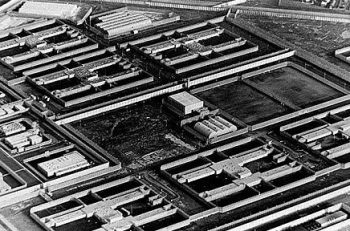
    Hannah Arendt’s famous phrase ‘the right to have rights’ was coined in her 1958 book ‘The Human Condition’. The condition of being stateless, of being a displaced person, which began its modern history in Europe with World War I, has been experienced since by untold millions who have had to listen to the claim that ‘human rights’ are universal and fundamental – but not for them. Once we had the glamorous figure of the cosmopolitan, the person who belonged to the world, the global community; that figure has been displaced by the refugee, who belongs nowhere, but is to be found everywhere in the paradigmatic settings of the modern and contemporary world – the prison camp, the internment zone, the refugee camp, the ghetto, the jail, the arena of suspension where people live in a place that is always outside the country that it is inside. Arendt pointed out that the creation of such places and conditions is a political decision, not just a terrible catastrophe. It is the prevailing form of the penal colony, the new home that we have built to house the theory of human rights. Since Arendt, and most especially in the indebted work of Giorgio Agamben, it has become clear that the concentration camp of the twentieth century was not some historical anomaly, but that it is actually one of the paradigm sites of Western modernity. The internment camp is a zone of suspension, of ‘rendition’, a place that is always outside the country it is inside – Guantanamo is the best-known example, although there many such places – our best- known example was The Maze in Northern Ireland. Those entrapped there expose the hollowness of any claim to universal human rights, to having rights just on the basis of being human. Arendt said it plainly: the refugee, the displaced person, has regularly been denied the right to have rights. The denial is a political decision. It takes its most popular form in the denial that there are any ‘political prisoners’ in the denying country, although enemy countries are full of them. Its political nature has been counterpointed more clearly since 1948, since the United Nations began its series of declarations of Human Rights, unabated since that date; rights of men, women, children, of minorities, of the disabled, of all indeed who can be characterised as having been ‘excluded’, which means that even the ‘poor’, a constituency which enlarges globally by the hour, faster than ever since the almost perpendicular rise of neo-liberalism in the decades before and after the financial crash. Reading these rights, as ‘declared’ (whatever that means), in that bland United Nations universalistic rhetoric, it is hard to know whether to laugh or cry. Such noble vacuities, such actual atrocities – produced by the same state systems that have prevailed since 1945. It was part of Arendt’s long argument, which began in 1943 with her essay “We Refugees” (about Jewish migrants who had become ‘stateless’, that condition in which they had no rights) that asked why European civilisation had so successfully produced the barbarism that made statelessness pandemic and human rights so unavailable to the millions of ‘displaced persons’ of World War II. Part of her answer was that this barbarism was so successful precisely because it was so concealed within or behind the declarations of universal rights and justice which the West, in the case of the American and the French Revolutions, had made central to the powerful ideology of what mutated into Western ‘freedom’. Arendt’s question then was: how could such an ideology be developed (as through the UN declarations) and simultaneously traduced (as in American foreign policy)? It is too feeble an explanation to put it down to hypocrisy. Hypocrisy on this scale occurs when the people who most sincerely believe in the peaceful principles are those who most regularly betray them in violent action. The British spent three centuries in perfecting their international reputation as hypocrites, a nation that believed itself to be peaceful even as it waged endless wars. Now that role has been assumed, largely, by the Americans. But, to achieve world domination is one thing; world hegemony is another. That’s what the World Wars were fought for. Arendt achieved notoriety with her reporting on the 1961 trial of the Nazi Adolf Eichmann, which was published in book form as ‘Eichmann in Jerusalem: A Report on the Banality of Evil’, where she developed the central figure of the ‘desk-murderer’, the bureaucrat who administered the death-camps. But her key point was that this was a show-trial, that pretended to be an example of universal justice triumphing over universal evil. Rather, it was in fact a national victory of the Israelis over their Nazi persecutors. In this exemplary instance, we are shown how the language of universalism can be used as a disguise for a state’s policies. The jurist who had the ambition to do that for a successful Nazi state, Carl Schmitt (1888-1985), described in his ‘Nomos of the Earth’ (1950), how the European system of international law had been replaced by an American one, with the UN as its legislature and the International Tribunal or Court as its executive. In effect, the language of universal rights was used to ratify the aims of American foreign policy; Nuremberg, Tokyo, Damascus, the Hague were, like the Moscow show trials of the 1930s, elaborate pretences that something objectively true was being defended from the current version of sectarian betrayal – war criminality, terrorism, the new terms of ‘war crime’ and its flourishing neighbourly companions, such as ‘ethnic cleansing’. Danilo Zolo has demonstrated in Victor’s Justice how the Kosovo war of 1999, that infamous intervention (to be followed by interventions in Iraq, Afghanistan , Libya and elsewhere, saving the ‘people’ of those countries for democracy, largely by killing and dispossessing them), with its International Court at the Hague, which could try anybody but Americans, is the most egregious example so far of how the language of universal rights has been perverted

    Loading

    Read more

  • Posted in:

    1916 values diverted

    One value of the 1916 Rising commemorations is to highlight the contrast between the aspirations of those who set out to establish an independent Irish State for the whole island of Ireland and the reality of what exists today – a partitioned country whose native language, Irish, is on the point of death as a cradle-spoken tongue, and in which the State that did come from the independence movement has been reduced to provincial or regional status in a supranational EU quasi-Federation that now makes most of our laws. The Easter Proclamation read: “We declare the right of the people of Ireland to the ownership of Ireland and to the unfettered control of Irish destinies to be sovereign and indefeasible”. “Indefeasible” means cannot be lost. That right may notionally exist still, but the reality of a sovereign Irish State in which its own Parliament and Government are the sole source of the laws prevailing in its territory has clearly been lost, as with the 27 other EU countries, through membership of the EU. Growing public awareness of this fact, in Ireland and other EU countries, is at the root of the current EU discontents. Article 29.4 of the Constitution, which was inserted by referendum in 1972 to enable Ireland to join the then European Economic Community (EEC), gives European law primacy over any countervailing Irish law. It reads: “No provision of this Constitution invalidates laws enacted, acts done or measures adopted by the State that are necessitated by the obligations of membership of the European Union, or prevents laws enacted, acts done or measures adopted by the said European Union from having the force of law in the State”. Realisation of the implications of supranational EU law being given primacy in this way over the provisions of the 1937 Irish Constitution that he had personally drafted led then President Eamon De Valera to say, somewhat poignantly, to his family on New Year’s Eve 1972, the day before this change took place: “I am the first and last President of an independent Irish Republic”. So Eamon O Cuív TD, De Valera’s grandson, who was present on that occasion, told me*. The loss of independence has gone much further since. In 1999 Ireland abolished its national currency and joined the Eurozone, thereby abandoning control of either its rate of interest or its exchange rate – the former essential for controlling credit, the latter for influencing economic competitiveness. EU Commission President Romano Prodi underlined the political significance of this when he said at the time, “The two pillars of the Nation State are the sword and the currency, and we have changed that”. The 1987 Single European Act, the 1992 Maastricht Treaty, the 1998 Amsterdam Treaty and the 2001 Nice Treaty saw further growth of EU powers and simultaneous diminution of national State powers. This culminated in the 2009 Treaty of Lisbon, which gave the EU the constitutional form of a supranational Federal State. Lisbon incorporated 99% of the provisions of the Treaty Establishing a Constitution for Europe that had been rejected by French and Dutch voters in referendums in 2005. Whereas the rejected constitutional treaty gave the EU a Federal Constitution directly, the Treaty of Lisbon did so indirectly, in the form of amendments to the existing EU treaties. Although the legal content of the two treaties was virtually the same, the French and Dutch were not allowed referendums on Lisbon. Ireland was the only EU country to be allowed that, because of the Supreme Court’s decision in the 1987 Crotty case that, as the Irish people were the repositories of State sovereignty, only they could agree to surrender it to the EU through a referendum. When Irish voters rejected ratifying Lisbon in 2008, they were made vote on exactly the same treaty the following year to deliver a different result. In the Lisbon Two referendum the constitutional amendment permitting Lisbon’s ratification differed from that in Lisbon One in that it included the sentence: “Ireland affirms its commitment to the European Union…”. Here was a supposedly independent Irish State affirming a constitutional “commitment” to a superior entity made up of other States – surely a remarkable development? Yet the Explanatory Handbook which the statutory Referendum Commission sent to all voter households, supposedly to inform them what the referendum was about, made no reference to this change. Neither, so far as I know, did anyone in the Irish media. The Lisbon Treaty replaced the existing European Community with a European Union that had full legal personality and its own constitution for the first time. It made citizens of the different Member States into real citizens of this new federal-type Union for the first time also. One can only be a citizen of a State. Before Lisbon, citizenship of the then embryonic EU was stated to “complement” national citizenship. It was an essentially notional or honorary concept. The Lisbon Treaty provided that EU citizenship should be “in addition to” one’s national citizenship, just as citizens of provincial states like California, Massachusetts, Bavaria or Brandenburg have two citizenships, for they are citizens also of their respective Federal States, the USA and Germany. Lisbon also gave explicit primacy to EU law over national law for the first time in an EU treaty. In most years nowadays arguably the majority of laws that are put through the national Parliaments of the EU Member States come from Brussels, although most people do not realise this. Eur-Lex estimates that there are currently some 134,000 EU rules, international agreements and legal acts binding on or affecting citizens across the EU. These include 1842 EU Directives, 11,547 Regulations, 18,545 Decisions, 15,023 EU Court verdicts and 62,397 international standards which the EU has signed up to and which are therefore binding on all its 28 members. If a Member States does not obey any one of these, the EU Court of Justice can impose heavy daily fines to enforce compliance. The EU Treaties prevent voters at national level, their parliaments and governments from amending or abolishing

    Loading

    Read more

  • Posted in:

    Legal affairs

    Village is loth to get into the salaciousness that drives the professional classes in decadent Dublin. Nevertheless the integrity of the judiciary, and indeed the perception of that integrity, has to be beyond doubt and a story unfortunately came our way which challenged it, anonymously, and was accompanied by affidavits submitted for in camera family proceedings. A bankrupt developer with an alpha personality and omega ethics alleged in the affidavits, which he was never allowed to open in court, that Irish High Court and Supreme Court judgments against him were tainted with bias because the lead Supreme Court judge in his case had an alleged affair affair with the High Court Judge who determined the matter originally, and that the Supreme Court judge anyway had shown in dealings with him in the judge’s former life as a barrister, that he despised him. The developer’s affidavits are clumsily drafted and he is careless as to whether the relationship may have continued at times when the Supreme Court judge heard the action – on occasion fudging the tenses about the timing of the relationship. Nevertheless as a matter of fact the relationship had ended by the time of the Supreme Court hearing, even if it had subsisted, insignificantly and irrelevantly, during the High Court hearing. The High Court judgment was persuasively damning of the developer personally, finding he had deliberately and fraudulently failed to make certain disclosures and misled the court and his ex-wife. The developer claimed he had been in the process of preparing disclosures when a settlement was reached that obviated the necessity for him to make the disclosures. But the High Court, on the facts, said there was no evidence of this. He had engaged in litigation misconduct. The appeal was fast-tracked to the Supreme Court but took four years to be heard. At the last minute, the Supreme Court panel of judges was apparently changed, with the particular Supreme Court justice who had allegedly had the affair stepping in to replace a judge who had been originally listed to sit. The developer claims to have been wrong-footed by the change between the judges and would have aimed to pre-empt the Supreme Court judge sitting on the matter had he known he intended to do so. He claims he had already advised his solicitor of the potential for the judge being compromised. His legal team noted that day one of a two-day appeal was already over, and they didn’t dare question the judicial etiquette. The Supreme Court upheld all the High Court’s substantive reasoning. When the judge endorsed his alleged former lover’s strong judgment without – according to the developer – “canvassing” all the developer’s fundamental grounds, the developer sought redress on grounds that there was a reasonable suspicion of objective or apprehended bias. Justice must not just be done but be seen to be done, was the cry. However, these days thankfully an alleged affair between judges that may have been finished for years does not constitute, or rather does not necessarily constitute, a reason for the appellate judge to refuse to hear an appeal of his former lover’s judgment. For obvious reasons the developer had difficulty getting any Irish lawyers to take on his prurient case. In the end he sought help from UK barristers but ultimately the Official Assignee in Bankruptcy successfully objected to the developer taking a judicial-bias challenge because he was bankrupt and therefore lacked the standing to take the case. The Assignee in Bankruptcy took the reasonable stance that even if the judgments were overturned it would not be appropriate for the Assignee, who alone could take the decision do so, to refight the substantive issues of fraud, failed disclosure etc on the part of the dubious developer. Even if the unsubstantiated allegation of bias could be proved, it would achieve nothing, for the case was not worth re-running. Michael Smith

    Loading

    Read more