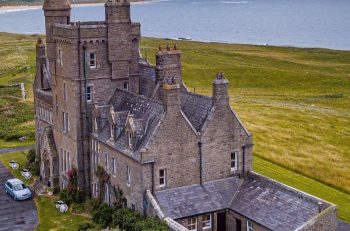
The stench of death associated with the Kincora child sex abuse scandal is heady. It includes the murder of a Westminster MP by an MI5 agent inside the IRA. The murderous agent was Alfredo ‘Freddie’ Scappaticci. The victim was Robert Bradford, a member of the Ulster Unionist Party and the Vanguard Progressive Unionist Party. He represented Belfast South. The death of Scappaticci earlier this year shut the door on the last realistic opportunity to solve Bradford’s murder. Operation Kenova, which has been probing the Scappaticci scandal for seven years, and has cost approximately €40,000,000, is unlikely now to establish what took place. The killing was linked to the cover-up of the Kincora Boys’ Home scandal. There are other murders which are associated with Kincora. One of the most significant Loyalist terrorists of the period 1968-82, was John McKeague, a paedophile. He knew all about Kincora. McKeague was murdered by British agents when he threatened to spill the beans on the scandal. William McGrath, who was the ‘housefather’ at Kincora, was a British agent. He was involved in the clandestine importation of arms for Loyalist terrorists, including his own paramilitary organisation, Tara. Many people were shot dead due to the arms smuggling efforts of British agents inside Loyalist paramilitary circles such as McGrath. The cascade of death connected to Kincora did not end with murder. Sex-abuse victims committed suicide. One Kincora boy took his life after being violated by Lord Louis Mountbatten. Rishi Sunak’s proposed legacy legislation, if passed, will help conceal the full extent of State-Loyalist collusion, some of which was linked to McGrath. 1. Honey Trap MI5 and MI6 ran a ‘honey trap’ operation at Kincora Boys Home, a residence in Belfast for boys, aged 14 years and upwards, in the 1970s. Residents were trafficked to Loyalist politicians and paramilitaries, as well as VIPs, for sexual abuse. Some were molested at the home, others at hotels such as the Europa, Girton Lodge and Park Avenue in Belfast, as well as the Queen’s Court in Bangor. ‘Kompromat’ or dirt was collected about politicians and paramilitaries. Some were blackmailed into working for the intelligence services. The British Establishment applied a double coat of whitewash over Kincora in an attempt to cover up the full extent of this scandal decades ago. A lot – but not all of it – has been peeled away by survivors, whistleblowers and obstinate truth-seekers. 2. Driven to suicide Eric Witchell is a paedophile. He now lives in London. In the 1970s he ran Williamson House in Belfast where he preyed on pre-pubescent boys and young teenagers. He and his accomplices drove at least three of them to commit suicide; another two to attempt it. A select few were transferred to Kincora when they reached 14. Witchell was not interviewed by any of the various inquiries into Kincora. Stephen Waring, one of the residents of Kincora, ran away from the home in November 1977, a few months after being abused by Lord Mountbatten at Classsiebawn, County Sligo. Waring made it as far as Liverpool where he was captured and put on the Ulster Monarch car ferry destined for Belfast. He never made it home. Apparently, he jumped overboard to his death. His body was never found. The Garda have retained the security logs which record the visitors to Classsiebawn in 1977 but have declined to disclose them to me and Andrew Lownie, Mountbatten’s biographer. They undoubtedly record the arrival of Joe Mains, the Warden of Kincora, in a vehicle with boys, including Waring, who was seated in the rear. I am frankly aghast that the Irish government – which could intervene – has no interest in helping the survivors of sex abuse committed in Sligo by ordering Garda Commissioner Drew Harris to release the security logs. 3. A dismembered child’s body in the Lagan Brian McDermott, aged 10, disappeared from Ormeau Park on 3 September 1973. Part of his dismembered and charred body was found in a sack in the River Lagan a week later. The RUC discovered evidence that he was abducted and murdered by Alan Campbell, a founding member of the DUP. Campbell was also in Tara, a Loyalist paramilitary organisation, and was a friend of the paedophiles who ran Kincora. Colin Wallace, who worked at the British Army’s HQ at Lisburn, has told Village that the British Army, which had an interest in Tara, was alerted by the RUC that they were about to arrest Campbell. Then, suddenly, the police were ordered to stand down. Only the Northern Ireland Office (NIO) possessed that sort of authority. The security apparatus of the NIO was run by MI5 and Ministry of Defence officials. The manoeuvre ensured that the Kincora ‘honey trap’ operation did not unravel at that time. Significantly, Campbell was a British agent. Authors Jack Holland and Henry McDonald, referred to him as the ‘Demon Preacher’ in their books, describing him as an obvious British agent. Campbell and his cabal are suspects in the abduction of four other Belfast boys whose bodies were never recovered: Jonathan Aven, age 14, who disappeared on 20 September 1969; David Leckey, aged 12, who went missing on 25 September 1969; Thomas Spence, age 11, and John Rogers, aged 13, who both vanished on 26 November 1974. Had the RUC been permitted to arrest Campbell, it is probable that young Spence and Rogers would still be alive today. The BBC commissioned a documentary about the disappearance of these boys. It was completed in 2021 and entitled, ‘The Lost Boys of Belfast’. It was intended to be broadcast in May 2021 but was pulled by management. It is not certain if it will ever be aired. It uncovered evidence of MI5 involvement in the protection of Campbell and the Kincora cabal. RUC officers went on record in front of the cameras. Campbell was not interviewed by any of the various inquiries into Kincora. 4. The gunrunning operations of the ‘housefather’ of Kincora, William McGrath Colin ‘Jay’ Wyatt, joined Tara following the