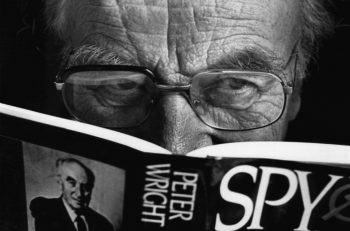
Frank Kitson

Random entry RSS

  • Posted in:

    The McGurk’s Bar cover-up. Heath’s Faustian pact. How a British prime minister covered up a UVF massacre in the hope of acquiring Unionist votes to enable the UK join the European Economic Community, the forerunner of the EU.

    Tory PM Edward Heath concealed the identity of a paramilitary organisation which perpetrated a massacre in Belfast in 1971. He did so in the hope of acquiring the votes he needed to win a majority in the House of Commons to enable the UK to join the EEC, the forerunner of the EU. What he did has remained the best kept and murkiest secret of the EEC-EU-BREXIT saga of the last 50 years. A string of declassified documents have now emerged which, when read together, expose what Heath, the British Army, propaganda operatives and the RUC Special Branch did. The documents are about to be presented to the new British Cabinet Secretary, Simon Case. By David Burke. INTRODUCTION. Ted Heath’s role in the cover-up of the McGurk’s Bar bomb atrocity of 4 December 1971 is the best kept dirty secret of the EEC-EU-UK-Brexit saga of the last 50 years. It would have remained under wraps indefinitely but for the determination of the historian, author and McGurk’s bomb campaigner Ciarán MacAirt. Irrefutable documentary proof of the Heath-McGurk’s scandal is about to reach the Whitehall desk of Simon Case, the former GCHQ spook and Northern Ireland Office official who is now Cabinet Secretary to Boris Johnson’s government. Case was a key figure in the British Establishment conspiracy which refused to order a judicial inquiry into the murder of the lawyer Patrick Finucane two weeks ago. Everyone in Whitehall – including Case – knows that MI5-FRU and RUC agents in the UDA murdered Finucane with ‘cabinet level’ approval. If Case was unhappy with this, he did not resign or protest publicly (nor even discreetly to a friendly journalist). The Finucane decision was an affront to decency, democracy and a direction from the UK’s Supreme Court. Case has surely learnt by now that a key aspect of his job is to cover up for a certain type of murder carried out during the Troubles. He is now about to be put to the test again. On this occasion it will involve his approach to the massacre of 15 decent and honest people:  the innocent victims of The McGurk Bar bomb massacre of 4 December 1971 in Belfast. HEATH’s FAUSTIAN PACT In December 1971 the UK’s prime minister, Edward Heath, was working to secure Britain’s entry to the EEC, the forerunner of the EU. He needed all the votes he could attract to get his legislation over the line in Westminster. One group with the potential to help was the Official Unionist Party. It was led by Brian Faulkner, the Prime Minister of Northern Ireland. The Unionists held eight key votes in the Commons in London. Faulkner had just taken over from James Chichester-Clark as prime minster of NI on 23 March 1971 on the basis he was the Unionist hard man who would defeat the IRA. As minister for home affairs during the IRA’s Border Campaign, 1956 – 1962, he had introduced internment, something Unionists credited with defeating the IRA on that occasion. It has never been a secret that there was a price to pay to keep Faulkner happy: Heath was to re-introduce internment. Although Faulkner was prime minister of NI, he still needed Heath and his army to make it happen. Crucially, Faulkner wanted internment for the IRA only. This meant – and Faulkner knew full well – that the UVF, Red Hand Commando and the UDA would to be left alone to bomb, kidnap, torture and murder Catholics. Heath’s cabinet had sought a balanced internment with the IRA and loyalist groups being swept up at the same time. They also wanted guns held by rifle clubs called in. The overwhelming majority of these weapons were in Unionist hands. A third requirement was a ban on parades. None of this was acceptable to Faulkner who went as far as to suggest there was no evidence of Loyalist terrorism and that the guns held by the members of rifle clubs were not a security threat. A ban on parades, he argued, could not be enforced. Heath caved in on all three issues., save that there was to be a six month ban on parades. An overview of UVF terrorist actions – including those of the 1960s and the period 1970 – 1971, can be found at: https://en.m.wikipedia.org/wiki/Timeline_of_Ulster_Volunteer_Force_actions Despite the murders and bombings perpetrated by the UVF and Red Hand Commando, when internment was introduced in August 1971, Loyalist paramilitaries were not swept up by the Army. Instead, they were let go about their gruesome activities. Heath was a man with a ruthless edge perfectly capable of bending the rules to get what he wanted. As a junior minister in the Foreign Office, he had been involved in machinations that led to the murder of the democratically elected prime minister of the Congo, Patrice Lumumba. An official at the Foreign Office – Howard Smith – had started the murder ball rolling by suggesting that MI6 assassinate Lumumba. In his private life Heath was just as selfish. In August 2015 the Wiltshire Police launched ‘Operation Conifer’ into allegations that he had been a paedophile. In 2017 the force announced that grounds existed to suspect him of child abuse. As a matter of law, the force was not entitled to reach any conclusions about the potential guilt of Heath and it did not. The furthest it could go was to state that if Heath were alive, he would have faced further questioning about the accusations levelled against him. Mindful of this, the force revealed that Heath would have faced questions under criminal caution relating to: One incident of rape of a male 16; Three incidents of indecent assault on a male under; Four indecent assaults on a male under 14; Two indecent assaults on a male over 16. The investigation spanned the period 1956-92. None of these incidents took place while Heath was PM, 1970-74. See also Carl Beech and the ‘Useful idiots’ at the BBC. The inco6mpetence of the BBC has now made it

    Loading

    Read more

  • Posted in:

    Did Thatcher sanction the Finucane murder? It is now up to PM Boris Johnson and his Home Secretary, Priti Patel, to order a full judicial inquiry into the murder of Patrick Finucane to establish whether or not Margaret Thatcher gave Sir Patrick Walker, Director-General of MI5, the green light to murder him.

    Update: this article was published in October 2019. One year later the British government has refused to carry out a judicial inquiry. One of the stated reasons is that the PSNI and Police Ombudsman are reviewing the case. However, no  review is about to take place. Patrick Finucane’s widow has responded by saying that “as long as there is breath” in her body she will continue to seek answers about her husband’s murder and that the decision by the British government was “quite a shock” and showed “startling arrogance at ignoring the highest court in the land”,  i.e. the UK Supreme Court which has ruled that an inquiry should take place. Mrs Finucane has also pointed out that Brandon Lewis, the Northern Ireland Secretary of State, did not go into any detail about why the decision to refuse the inquiry was made. It  “does seem rather bizarre” she added  “that he [Lewis] is insisting the police [will investigate]” as the PSNI later issued a statement saying there is nothing new to investigate. The Police Ombudsman has no funding for a review. In any event such a review would be pointless and it is a judicial inquiry that is required. Clearly, there are other reasons Lewis and his boss Boris Johnson are blocking an inquiry. Village’s 2019 investigation addressed some of the issues the Tories, MI5 and other elements of the British Establishment are trying to suppress. That article starts here: Introduction: Margaret Thatcher and the cold-blooded murder of an Irish lawyer On 12 February, 1989, the UDA assassinated Patrick Finucane, a highly-regarded Belfast solicitor, at his North Belfast home. Finucane, who was 38-years-old, was shot 14 times by two masked UDA gunmen who sledgehammered their way into his house. His wife Geraldine was also injured during the attack which took place while the couple was enjoying a meal with their young family. In 2019 the Supreme Court in London ruled that the British Government had failed to investigate the murder properly. The only tenable reason for this is because the murder was organised by MI5, the intelligence service attached to the Home Office. A retired Canadian judge, Peter Cory, investigated the murder on behalf of the British State. During his inquiry MI5 officers broke into his office and stole some of the evidence he had accumulated. Cory also told Geraldine Finucane that he had seen a document relevant to her husband’s case which was marked  “for Cabinet eyes only”. Mrs Finucane knows no more. This raises the distinct possibility that her husband’s case was discussed in Whitehall in sinister circumstances before the murder. These revelations formed part of BBC NI’s compelling seven part Spotlight  series,  ‘The Secret History of the Troubles’. They have been ignored by the mainstream British media. Put simply, the finger of blame is now pointing at Margaret Thatcher. It now looks like she gave MI5 the green light to murder a perfectly respectable, law abiding lawyer. If Thatcher  and her circle did not order the murder, why are the Tory top brass so terrified of an inquiry? MI5 was led by Sir Patrick Walker at the time the assassination was planned and executed. If MI5 was involved, it is inconceivable he did not call  the shots – literally. When David Cameron was in 10 Downing Street he told the Finucane family that he could not order a public inquiry into the scandal. When Finucane’s brother Martin asked him why, he turned to Mrs Finucane and said: “Look, the last administration couldn’t deliver an inquiry in your husband’s case and neither can we”. According to Cameron this was because “there are people all around this place, [10 Downing Street], who won’t let it happen”. As he was saying this, he raised a finger and made a circular motion in the air. Theresa May, who was Cameron’s Home Secretary between 2010 and 2016, did not order a proper inquiry either when she took over at 10 Downing Street. The opportunity and duty to do the right thing and call one has passed to Theresa May’s successor, Boris Johnson, and his Home Secretary, Priti Patel. Yet, will they prove every bit as disdainful and corrupt as Blair, Cameron and May and continue the cover-up? Time is fast running out to hear what potentially key living  witnesses have to offer about the Finucane case. The list includes  Thatcher’s then Home Secretary, Douglas Hurd. Born in March 1930, he published a 524 page autobiography in 2003.  Unfortunately, there is no entry under the word “Finucane” in its index. Village  offers him the freedom of this website to inform our readers about what he know about the case, most particularly anything about “cabinet eyes only” documents. The evidence that continues to accumulate points to the probability that Finucane, a skilful lawyer, was targeted by the British State because he had mastered the intricacies of the Diplock Court system in NI and was representing his clients to the best of his very considerable abilities. A lot of Provos were walking free from court. In the mind of Thatcher and others in London, he had to have been a Provo and his death warrant was approved. In these circumstances, the task of assassinating him was passed to Walker and his gang of cutthroats at MI5. However, Finucane was not a Provo. On the contrary, he represented both Republicans and Loyalists. Who ever heard of a Provo securing the freedom of the Loyalist enemy? Moreover, he was married to a Protestant. Finucane was perfectly innocent of any involvement with the IRA although he was vilified as a member after his death. Insofar as the UDA was concerned, the kill-order was issued by Tommy ‘Tucker’ Lyttle, the UDA’s ‘brigadier’ or commander in West Belfast. Ian Hurst, who served with the then top secret Force Reconnaissance Unit (FRU) of the British Army, has stated “with cast iron certainty” that Lyttle was a British agent who was “handled” by the RUC’s Special Branch (RUCSB) using the codename “Rodney Stewart”. Lyttle himself

    Loading

    Read more

  • Posted in:

    An Offence Against The State

    On 1 December 1972 a car bomb exploded beside Liberty Hall in Dublin. Fortunately no one died but George Bradshaw, a CIE bus driver, and Thomas Duffy, a bus conductor, perished in a second explosion at Sackville Place. No one has ever been charged with these crimes. The UVF belatedly claimed sole responsibility for them but there are legitimate doubts about the veracity of this claim. These bombings were part of four bombings in Dublin’s north city centre at the end of 1972 and beginning of 1973 and are to be distinguished from the even more horrific bombings in the same general area in 1974.   A State In Denial Margaret Urwin has just published ‘A State in Denial’ which unravels a web of intrigue connecting the British Secret State (BSS) to loyalist paramilitaries at a variety of levels. No objective reader of this impressive work could doubt that London focused the might of its counter-insurgency arsenal against Republicans while turning a knowing blind eye at loyalist wrongdoing and also arming and colluding with them. Irwin’s book is fascinating for its dissection of official papers to discern what was going on behind closed doors.   The Man with the English-Belfast Accent The publication of ‘A State in Denial’ is timely as yet another anniversary of the 1972 Dublin bombings comes around. On that fateful evening a man with a mixed English-Belfast accent parked a car bomb beside Liberty Hall. After he alighted, he asked someone who had just left the building when it was likely to empty out for the night. One of the cars used by the bombers to get to Dublin was a Ford Zephyr which had been stolen in Antrim from an Englishman called Joseph Fleming the previous August, along with Fleming’s driver’s licence. Fleming’s licence was put to use on two occasions in November 1972 by an imposter posing as Fleming, to hire cars in Belfast. The imposter was either extraordinarily reckless or had good reason to believe Fleming’s licence was not detailed on the lists circulated by the RUC to carrental companies. He obtained a number of cars over the space of a week, a timespan which underlines his confidence about the use of a stolen licence; and all this at a time when an epidemic of car bombings was bringing Belfast to a standstill. In addition, he left his fingerprints and handwriting on the forms he completed. Another significant fact was that he spoke with a mixture of a Belfast and English accent.   Kitson’s Military Reaction Force The UVF would have us believe that its volunteers: • Stole Fleming’s car in August 1972 and hid it for three months, and; • Drove it across the Border with its original registration plates on display, and; • Proceeded to Dublin at the same time – and possibly as part of a convoy of cars, parked it with explosives, and • Faced an extremely high risk of detection because the rental cars had been acquired using a stolen licence which the gang must have believed was on an RUC watchlist; • Yet all the while possessed the confidence to proceed without any high-level protection from the BSS. It is unlikely this is what happened. On the other hand, the highly secretive Military Reconnaissance Force (MRF) of the British Army had the nerve, skill and high-level protection in place to undertake just such an operation. The MRF was literally above the law. It was a sprawling organisation established by Brigadier Frank Kitson in 1971 to engage in agent-recruitment; surveillance; drive-by shootings (deploying the type of weapons the IRA were known to carry); laundry collection, to detect the residue of explosives on clothing; and even brothel management, to collect gossip and obtain blackmail material. It had access to loyalist agents recruited by the British Army and M15. Stealing vehicles and hiding them at its Palace Barracks HQ for use later was one of its known practices. The MRF could easily have arranged for the details about Fleming’s vehicle and licence to have been erased from the RUC watch lists. With this backing, the loyalist gang that bombed Dublin (or at least some of them) would have enjoyed the confidence to hire the cars and drive them to Dublin.   Albert Ginger Baker Albert Ginger Baker, an alleged British Army deserter, who joined the UDA in the early 1970, ticked all the boxes as an MRF agent. His family have claimed that he was involved in the 1972 bombings. In 1976 the Sunday World published an article exposing his links to a ‘Captain Bunty’, a mysterious figure who can only have been his handler. The pair met regularly in a Belfast coffee bar. Baker was involved in a string of gruesome sectarian murders in Belfast. During one of them, James Patrick McCartan, a 22-year-old forklifttruck driver, was stripped naked, hung up by his ankles and punched, kicked and beaten with a pickshaft, while a dagger was used to stab him in the hands and thigh over 200 times. He was threatened with castration and dropped head first from the ceiling. Eventually one of Baker’s UDA superiors gave him a pistol and told him to kill McCartan. Baker put a hood over his head, and blasted into his skull three times. A grenade Baker’s gang used in another attack was standard British Army issue, which raises questions about how they acquired it. It is doubtful the prospect of bombing Dublin could have troubled the conscience of those in the BSS who ultimately controlled men like Baker. Baker suffered some sort of a crisis in 1973, and fled to England where he confessed to a string of sectarian murders to the police in Warminster, in Wiltshire. As far as the BSS was concerned, some rather nasty cats were now peeping out of the bag. Damage limitation became the order of the day. Hence, while Baker was convicted and sent to prison in 1973, his secret link to the MRF was

    Loading

    Read more