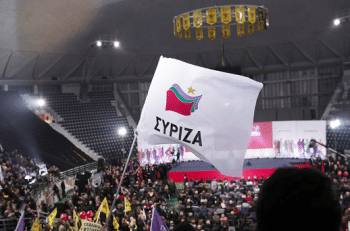
By Ronan Burtenshaw In late September 2009 I was walking through Dublin as the city prepared for the rerun of the Lisbon Treaty referendum. Outside Dublin Castle I ran into canvassers from Generation Yes, a young, liberal, pro-Europe group established early that year to campaign for the passage of the treaty. Drawing them into conversation you could feel the passion of their arguments. They were the erasmus generation – students and graduates who saw the European Union as an engine of progress for Ireland and a liberator that had broken us from our bleak, parochial past. Rather than the ‘Yes for Jobs’ vacuities many of the main political parties ran with in the campaign, Generation Yes spoke to direct experience living and working in Europe or for European businesses in Ireland. Many of its best advocates came from the tech sector and saw the EU as a vanguard project of a globalising world, breaking down borders, encouraging innovation and providing opportunity. Generation Yes played a crucial role in the landslide victory of 2009. More clearly than any other organisation involved they developed an identity for the Yes camp. The European Union represented a young, modern, idealistic cosmopolitanism. The No camp, as I remember now-Senator John Crown saying on my local radio station, were the past, “Trotskyite communists and right-wing zealots”. So, Lisbon II passed, Ireland’s political elite celebrated, and Generation Yes disappeared. But less than a year later the European Union, so long considered a benevolent actor in Irish politics, imposing human rights with a pat on the head from the continent, came to wear a quite different mask. 2010 brought the Troika. Just five years after its arrival on the scene, the creditors’ union of the European Commission, the European Central Bank and the International Monetary Fund has come to dominate the popular imagination of the European Union. For the peripheral states they made their home their policies have inextricably linked the project of European integration to falling living standards, crumbling welfare states and debt servitude. It isn’t an exaggeration to say that a Generation Yes for 2015 is almost impossible to imagine. A group of the same name might intervene in a referendum, it might even attempt to use a similar message, but it would have to reckon with the fact that the sickly-sweet vision of Europe it once sold has been indissolubly mixed with the bitterness of austerity. It would also have to reckon with a rival identity. Not the eurosceptic Right, a nationalist opponent it had always comfortably beaten in Ireland. But, since 2011, a rival, pro-European identity has emerged which is highly critical of the Troika and the increasingly undemocratic apparatus of the European Union. Last month, in Greece, this movement was given a name: Generation No. The vote in Greece was striking in its breakdown. The average No voter rejecting the Troika’s ultimatum was young, working-class and held increasingly left-wing views. The percentage for ‘oxi’ under 25 was 85, under 35 was 78. These were a new generation, living in conditions of over 60% unemployment, often having to stretch out their studies over many years to afford to complete them, relying on cash from their parents to survive. But also, it is a generation increasingly willing to challenge the shibboleths of our societies – to experiment in unorthodox relationships to the economy, to housing, to politics. The price of building up the reputation of the European Union as an arena of opportunity for Europe’s periphery has been the weight of frustrated expectations when this turned out not to be the case. As a result not just in Greece but in an increasing number of states it isn’t Generation Yes which represents the future but Generation No. This shift in orientation towards the European project is not down to a turn against Europe. In fact, the Greek No vote enjoyed enormous support from across the continent – marches, direct actions, statements from social movements, trade unions, NGOs, academics and intellectuals. Instead what has happened is that the European Union has been stripped back to its essence as a neoliberal economic project. Gone are the pretences of internationalism or a social element – the Greek crisis has demonstrated that bonds of solidarity stretch only as far as is profitable. To understand why this disconnect between growing internationalism of European peoples and the European Union exists, we have to explore its economic basis. The idea of a ‘social Europe’ has never been at the heart of this market-oriented project of European integration. At the same time as Jacque Delors was seducing Europe’s social democrats into this myth in the 1980s, he was trapping them into arrangements they would never agree to without it. First in 1988 the directive mandating for extensive free movement of capital and then, in 1992, the Maastricht Treaty. These arrangements provided the foundation for the euro – a currency which was to drive the stake of neoliberalism into the heart of the European Union. The money in our pockets is the most right-wing currency ever designed, with a central bank that doesn’t care about unemployment and won’t act as a lender of last resort, modelled to work only in the free-market utopias predicted to arrive at Francis Fukuyama’s end of history. It was also forged in two stages of class warfare. On its inception the policies of Agenda 2010 forced wages and conditions down for German workers to create optimal conditions for its export industry. On the occasion of its first crisis the same has been done to workers in peripheral Europe. These divisions – between core and periphery, capital and labour – are key to understanding why the European project has ended up where it has. If we are mystified by the results of the recent negotiations in Greece it is only because so many stories about the euro haven’t been told. Another hidden story takes place in the late 1990s, when German banks took on huge exposure in states like Greece by investing in high-yield bonds. For the business class this meant