• Posted in:

    Was revenge the cause of the ferocity on Bloody Sunday? By Brian Lacey, author of 'Siege City: the story of Derry and Londonderry'.

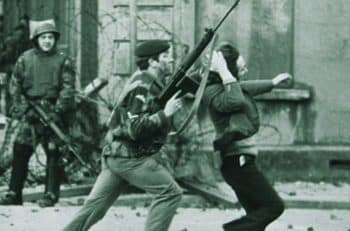
    The 2010 Report of the Saville Enquiry describes much of what happened in Derry on Bloody Sunday (30 January 1972). Various commentaries and later publications have added further information, some of it of a nature that the authorities must have hoped would never be revealed. It seems however that the ferocity of the slaughter that day has still not been adequately explained. Could ‘pure’ revenge be that explanation, as it had been on several other occasions in the past when the British army committed similar atrocities in Ireland. In the late 1980s while living in Derry and in the course of doing research for my book ‘Siege City: the story of Derry and Londonderry’ (published 1990), I became aware that as well as the terrible deaths in the city on Bloody Sunday, on the same day Major Robin Alers-Hankey, an officer in the Royal Green Jackets, had died also – but in London.  Major Alers-Hankey was the first British army officer to be killed in the Troubles.  He died of an injury sustained several months earlier while on duty in Derry’s Bogside, at a location that figured prominently in the deaths of the civilians on Bloody Sunday.  There are slightly differing accounts of the incident but, apparently, he was shot while providing security cover for the fire brigade which had been called out to a burning building in Abbey Street. It is possible that the fire had been started deliberately with the intention of luring the soldiers into an ambush. I was struck by the coincidence of the major’s death on the same day as the terrible events in Derry itself and wondered if there could have been any connection between the two tragedies.  However, I didn’t know what time of the day the major had died and in those pre-googling days I had no easy way of finding out.  Clearly his death would have had to have occurred before the slaughter in Derry if there was to have been any connection. I mentioned the subject to various people in Derry from time to time, but I never met anybody who seemed to know much about the incident.  Most times I spoke about it I got the distinct impression that people thought I’d be better not to enquire too much into the matter; at best it would be seen as a distraction from the main unresolved issues, at worst I might even be accused of providing a ‘reason’ or possibly an ‘excuse’ for the actions of the paras.  The latter, of course, was the last thing on my mind; but as an historian I felt that the question was worth pursuing or, at very least, worth asking. I was asked by the Bloody Sunday Trust to chair a fairly large public meeting in the Pilots’ Row Community Centre in the Bogside on the weekend of the 25th anniversary of Bloody Sunday, in 1997.  In the course of my introduction, I mentioned the Alers-Hankey affair and although some of my other remarks were responded to by those attending and reported, for example in the Derry Journal, my reference to the officer’s death seemed to fall totally flat and was not mentioned again. On 25 January 2002, however, the Irish Times reported that Martin McGuinness “was under pressure to state all he knows about 34 murders carried out by the IRA in Derry during 1972”. Among those listed was the killing of Robin Alers-Hankey. On 8 February 2002, the Irish Times published a letter from Jonathan Stephenson, a trades union official in Belfast and a former chairman of the SDLP (1995-8). It appeared under the heading ‘Remembering Bloody Sunday’. In the letter Mr Stephenson (who was English) mentioned that Major Alers-Hankey was ‘a member of my family’. He went on to refer to Martin McGuinness’s role in the IRA in Derry saying: ‘it is entirely possible that Mr McGuinness might have a fair idea who killed him [Major Alers-Hankey].’ I didn’t pursue the matter in any way subsequently although my curiosity about it remained. I assumed that it would be dealt with by the Saville Enquiry.  By then living in Dublin, I made a preliminary check of the Saville Report immediately on its publication on 15 June 2010. The Report does mention the major’s death on Bloody Sunday as background to the situation in Derry at that time but (as far as I know) it does not mention the time of his death or suggest any link with the atrocity.  There also seems to be some discrepancy in the dates given for the original wounding of the major: Saville states 2 September 1971, while a number of army-related sources (e.g. Holywood Palace Barracks website) suggest 16 October. On the day of the Saville Report publication (15 June 2010) and over the next few days I made attempts to contact a well-known journalist who I thought might be interested in what I had to say about the matter and who might mention it in his own coverage.* Having failed to make contact I wrote a short letter to the Irish Times, still indicating that I was unaware of the time of the Major’s death. The letter was published on 17 June and among those who contacted me as a result (18 June) was a female reporter from RTÉ/TG4 Nuacht who wanted to interview me.  Unfortunately, I cannot now remember the reporter’s name.  On the phone, I explained to her that my hypothesis that there might be a connection between the two events was dependant on the time of the major’s death and if it was possible that news of it could have reached Derry prior to the attack on the marchers. An hour later the interview crew arrived in my office in Dublin.  In the meantime, the reporter had done a bit of googling and had found a relevant reference in ‘Those are real bullets: Bloody Sunday, Derry, 1972’ by Peter Pringle and Philip Jacobson (published 2000). The following is the relevant

    Loading

    Read more

  • Posted in:

    Judge Horner’s ruling creates the framework for a new Omagh inquiry.

    By Deirdre Younge. On 8 October 2021, Judge Mark Horner in the High Court in Belfast gave the reasoned judgment behind his decision of 21 July that there should be a new Human Rights compliant investigation into the catastrophic bombing of Omagh on 15 August 1998. He suggested that preferably there should also be one conducted simultaneously in the Republic of Ireland. The judgment was on foot of a Judicial Review brought by Michael Gallagher in 2013. Gallagher was appealing the decision of the then Secretary of State for Northern Ireland Theresa Villiers not to set up a public inquiry into the bombing of Omagh by dissident republicans (referred to as DRs by Judge Horner).  Michael Gallagher’s son Aiden was one of the 29 people who died.  Judge Horner found that there were reasonable grounds for believing that the Omagh bomb could have been prevented. The case, conducted largely in closed session, heard closed (secret) intelligence from MI5 and other agencies as well as evidence in open court. The Judicial Review was of course a civil case but one which engaged issues of (UK)  National Security because of the intelligence material from M15 and other agencies which was revealed to the court. Mr Justice Horner put heavy emphasis on the intelligence given to his RUC CID handlers in 1998 of a British  agent/informant  ‘Kevin Fulton’ who had also been the central witness at the Smithwick Tribunal in Dublin, giving evidence in 2011. Fulton was a former FRU, Special Branch, MI5 and latterly RUC CID agent and informer ‘embedded’ with the IRA in Dundalk and Newry in the 1980s and 1990s. The Secretary of State for Northern Ireland is setting up a statutary inquiry into the Omagh bomb using the grounds on which Mr Justice Horner made his ruling, as the terms of reference. In an endorsement of Fulton’s highly contested intelligence leading up to the bombing the Judge said: “I am satisfied that it is arguable that the intelligence supplied by Kevin Fulton, either on its own or more importantly in conjunction with other intelligence about the activities of those who planned the Omagh bomb and other bombs had a real prospect of preventing this tragedy”. Neither Fulton nor his handlers claimed to have foreknowledge of the Omagh bomb itself but said he had warned handlers that a huge bomb was being prepared that was about to be moved north of the border days before the bomb.   The former Police Ombudsman Nuala O’Loan in her 2001 report and now Judge Horner believe that the intelligence Fulton gave his RUC handlers in the months, days and weeks running up to the bombing was crucial information that should have been acted on to prevent the bombing. Fulton and his handler gave evidence about this intelligence concerning dissident republicans to O’Loan and Smithwick.  The October /November print  issue of Village magazine contains an extensive analysis of the evidence of Fulton and his handler  leading up to the Omagh bombing and its aftermath, and explains the significance of this intelligence in detail. Reliable sources maintain that Keeley was not in fact a detached observer of events leading up to Omagh, as he maintains, but was deeply involved himself.    In his evidence to Smithwick in December 2011 Fulton describes the operation of the timer unit of a bomb. In Queen v Hoey (2006) Mr Justice Weir describes how such a safety mechanism was added to timer units in the run up to the Omagh Bomb. Of the ten arguments put forward by the applicants Mr Justice Horner accepted the following –  Ground 2: Information passed to police between June and August 1998 by a former British security agent known by the name of Kevin Fulton relating to DR* activity. Ground 6: Surveillance operations relating to events surrounding the Omagh bomb that were reported on in a BBC Panorama; in particular telephone and vehicle monitoring carried out by GCHQ. Ground 7/9: the tracking and pattern of telephone usage by DRs and the connection arising between different bomb attacks, including the same mobile telephone being used in the Omagh bomb and the bomb in Banbridge on 1 August 1998. Detective Chief Superintendent Norman Baxters evidence to the NIAC, [Northern Ireland Affairs Committee HOC] to the effect that investigators into previous attacks in 1998 did not have access to intelligence which may have enabled them to disrupt the DR gang by way of arrest or house searches prior to the Omagh bomb. There were a number of arguments put forward by the applicants which the Judge did not accept as grounds for a new inquiry: Ground 3: Information provided by David Rupert  Ground 4: Information sent to the RUC by AGS on 13  August 1998 relating to the particulars of the red Vauxhall Cavalier that was used in the Omagh bomb. Ground 5: Information shared by AGS with the RUC relating to intelligence obtained by Detective Sergeant John White from the agent known by the name of “Paddy Dixon” [in] relation to DR activity. Judge Horner concluded: “I am satisfied that grounds 2, 6, 7 and 9 when considered together give rise to plausible arguments that there was a real prospect of preventing the Omagh bombing. Judge Horner’s judgment is a vindication for Kevin Fulton over Omagh but like all informants and agents operating in the stygian underworld there is a dark side to Fulton which Village Magazine has also explored at length. (Like many British agents Fulton has a dark side: see Investigation: Killusion and How Drew Harris diverted the Smithwick Tribunal. The High Court  judgment was in the context of Mr Gallagher’s civil proceedings. Many victims or their families are taking civil actions against the State, not just to achieve some form of redress, but to gain an understanding of events through the discovery process.   Since 2013 such proceedings are often  conducted partly or wholly as ‘Closed Material Proceedings’  ( CMPs) for reasons of ‘National Security’ and to comply with human rights legislation to protect

    Loading

    Read more

  • Posted in:

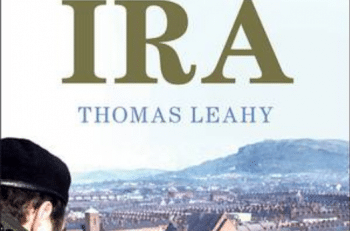
    Nobody Won: debunking the myth the Provisionals were brought to their knees by British spies. Margaret Urwin reviews ‘The Intelligence War Against the IRA’ by Thomas Leahy.

    By Margaret Urwin. In ‘The Intelligence War against the IRA’, Thomas Leahy, Senior Lecturer in Politics in Cardiff University, challenges the growing dominant narrative that the IRA was brought to the negotiating table in the 1990s because they had been ‘brought to their knees’ by British intelligence. Since the outing of State agents, Stakeknife and Denis Donaldson in particular, in the early 2000s, many academics, historians and commentators have concluded that the IRA campaign ended in defeat because it was fatally compromised by agents and informers. Existing books and articles, while not studying the intelligence war in any significant detail, yet conclude that British intelligence was vital in forcing the IRA into peace. Leahy meticulously, painstakingly and, indeed, convincingly, debunks that conclusion.  Leahy meticulously, painstakingly and, indeed, convincingly, debunks that conclusion.  The book is the first to evaluate fully the impact of British intelligence agents, SAS and other operations against the Provisional IRA. From the wealth of material examined in Irish and UK archives, interviews and memoirs, Leahy argues that British intelligence did not force the IRA into surrender and that political factors were crucial in delivering peace. He suggests that, in fact, particular intelligence operations may have, rather, increased IRA support in its heartlands because of anger against the British State. It is one of the first studies of the conflict that researches what happened by region. It examines British intelligence and security strategy impact on IRA urban units in Belfast and Derry but also rural units in south Armagh, north and mid-Armagh, Fermanagh, south Derry, north Down, south Down and Tyrone. The IRA campaign in England is also considered in detail. Leahy concludes that a previous major focus on the IRA in Belfast has overlooked crucial aspects of the overall picture of what happened and why during the conflict and the regional factors affecting it. A range of republicans (both pro-peace-process and dissentient) have been interviewed, as well as British security personnel; also memoirs from all sides of the conflict including self-confessed IRA informers and intelligence handlers have been accessed. Of particular value is the extensive use of the relatively new sources of personal papers of Brendan Duddy (intermediary between the IRA and the British at critical times during the course of the conflict), Ruairi Ó Brádaigh and Daithí Ó Conaill, which provide crucial behind-the-scenes insights. Both British and Irish Government policy towards republicans is reviewed. Leahy suggests that, from 1969 to 1972; 1973-74 and 1976-90, the British State sought to contain IRA violence at ‘an acceptable level’. Evidence is provided to show that that this policy failed. After the breakdown of the 1975 ceasefire, from 1976, in particular, policies were enacted to marginalise the IRA, e.g., the abolition of ‘Special Category Status’ and the introduction of ‘criminalisation and Ulsterisation’. The intention was ‘to isolate republicans from political settlements whilst eroding the IRA’s armed capacity to a point where they no longer had any influence on Northern Irish politics’. After Roy Mason was appointed as Secretary of State for Northern Ireland, he told Prime Minister Callaghan in January 1977 that there was no intention of engaging in further talks with Sinn Féin and he ended all contact with intermediary Brendan Duddy. As part of the strategy of marginalising republicans, from my own research I am aware that, also in 1977, the British made vigorous efforts to prove a link between Sinn Féin and the IRA  so that Sinn Féin, which had been a legal organisation since May 1974, could be re-proscribed. A lengthy intelligence operation involving surveillance, searches of Sinn Féin offices, seizures of documents and interviews with suspects were carried out for more than a year. However, when the investigation was complete and a report produced in October 1978, the result showed the evidence did not support the view that the IRA and Sinn Féin were inextricably linked and so Sinn Féin could not be re-proscribed. The book presents original evidence suggesting that republican leaders were seeking talks towards a political settlement in the early 1980s, as Sinn Féin’s electoral mandate was increasing. This was, however, ignored as the British Government tried to negotiate a ‘moderate’ peace settlement with the SDLP and the UUP. The book presents original evidence suggesting that republican leaders were seeking talks towards a political settlement in the early 1980s, as Sinn Féin’s electoral mandate was increasing. This was, however, ignored as the British Government tried to negotiate a ‘moderate’ peace settlement with the SDLP and the UUP. This initiative failed due to persistent IRA activity, Sinn Féin’s electoral mandate in Northern Ireland and, by 1990, both the Irish Government and the SDLP were anxious to include Sinn Féin in peace talks. The importance of the rural IRA to the overall campaign is emphasised. South Armagh, in particular, was the strongest unit and, with significant support from the local community, was almost impenetrable. The community had been incensed by the building of watch-towers and constant helicopter flights.  Its position of strength enabled it to carry out operations in England in the late 1980s and 1990s. If the IRA was heavily infiltrated it would not have been possible to carry out a litany of spectacular bombings in England – Brighton (1985); the Royal Marine School of Music (1989); a booby-trap bomb under a car killing Ian Gow MP (1990); the firing of mortars into the back garden of 10 Downing Street (1991); the bombing of the Baltic Exchange (1992) and the NatWest Tower at Bishopsgate (1993); the firing of mortars onto runways at Heathrow Airport (1994) and, after the breakdown of the ceasefire in 1996, the Docklands and Manchester City bombings. Leahy agrees with Jonathan Powell that talking to all sides involved in the conflict was necessary in order to deliver peace. Sinn Féin’s electoral support was too sizeable to be ignored in a political settlement. He suggests that, ultimately, it was the political mandate and persistent conflict that led all sides to negotiate and to accept a peace settlement. Nobody ‘won’. It

    Loading

    Read more

  • Posted in:

    Ducking all the hard questions. Des O’Malley has vilified an array of decent men and refuses to answer obvious questions about the Arms Crisis and the manner in which the Provisional IRA was let flourish while he was minister for justice.

    The print edition of Village magazine posed a number of questions to Des O’Malley about the Arms Crisis but he ignored them. They arose out of an article he had published in the Sunday Independent in September. He also used that article as a platform to attack recent research on the crisis without addressing any of the evidence which has appeared in two new books. His Sunday Independent article vilified the organisers of the Citizen Defence Committees (CDC) alleging they were supporters of the Provisionals. He has yet to withdraw the smears about the CDC organisers. The original article with a small amount of new material is reproduced below. By David Burke. Introduction. Des O’Malley served as Chief Whip and Junior Minister for Defence to Jack Lynch’s government in 1969 and 1970. In May 1970 he was appointed as Minister for Justice by Lynch, though he was only 31 years of age – just as the Arms Crisis was erupting. Despite his youth and inexperience, Lynch chose to place him in this crucial position. On top of this, the appointment was made as the Provisional IRA was learning to crawl. The Provos maintained a low profile throughout 1970 and some of 1971 while its leaders focused on recruiting volunteers in competition with the Marxist Official IRA. So low was its profile that Martin McGuinness joined the Officials unaware that the Provisionals even existed. Cleary, O’Malley did not appreciate what was afoot either. O’Malley has recently descended from retirement claiming to be “duty bound” to set the record straight on new revelations about the controversial arms importation attempt that sparked the Arms Crisis. The new – and not so new – evidence about the crisis O’Malley contests portrays his hero Jack Lynch in a very poor light. It indicates that Lynch knew about the arms importation that sparked the Arms Crisis; moreover, that it was a secret but legal manoeuvre of the State. In making his case O’Malley pointedly vilified the memory of Captain James Kelly and a multitude of others in the Citizen Defence Committees (CDCs) whom he has recklessly and inaccurately portrayed as midwives to the Provisional IRA. Unfortunately, Des O’Malley has not engaged with any of the evidence which has emerged in recent times, not to mention that which has been in existence for decades. His account is a conceited fantasy in which he and Lynch saved the State from civil war despite daunting odds and the treachery of disloyal Fianna Fáil colleagues who were aided and abetted by menacing allies in military intelligence. All he seems prepared to offer is an assertion that Lynch was a man of great integrity incapable of deceit and that – for some bizarre reason – the authors of two new books on the Arms Crisis – Michael Heney and myself – have claimed that Jack Lynch was a party to a plot to arm the Provisionals. This is an astonishing misrepresentation for neither of us made any claim that even remotely chimes with this. I would like to test O’Malley’s account of his struggle to save Ireland from doom by reference to a number of documents which contradict his mythmaking. The Smoking Gun Document That Refers to the Taoiseach. How, if the arms importation operation which was at the centre of the Arms Crisis was conducted behind Lynch’s back, does O’Malley explain the content of a document which came into existence on 10 February 1970? It was prepared by the Department of Defence. It was withheld from the jury at the Arms Trials but eventually released by the National Archives. It was reproduced in a book by Angela Clifford entitled ‘Military Aspects of Ireland’s Arms Crisis of 1969-70’ in 2006. In other words, O’Malley has had at least 14 years to provide his account of it. He ignored its existence in his memoirs which appeared in 2014. He did not mention it in his recent Sunday Independent article. O’Malley was the Junior Minister for Defence when the document – from his Department, remember – came into existence. The document specifically referred to the Taoiseach Jack Lynch and was entitled Addendum to the Memo of 10/2/70, Ministerial Directive to CF: It stated that: “The Taoiseach and other Ministers have met delegations from the North. At these meetings urgent demands were made for respirators, weapons and ammunition the provision of which the Government agreed. Accordingly truckloads of these items will be put at readiness so that they may be available in a matter of hours”. There is no sign this document, despite it’s  unimpeachable pedigree, has yet registered with O’Malley. Question 1: How do you reconcile this document with your assertion that Jack Lynch did not know about attempts to supply weapons to the citizens of the North? The ‘Secret’ Military Document That Refers to the 150 Rifles Which Were Stored in Dundalk. It was Withheld From the Arms Trial jury. In early April 1970 panic swept across Ballymurphy, a Catholic estate in Belfast, that the British Army was about to abandon the Catholics who lived there to an onslaught by  Loyalist murder and arson gangs: in other words, a repeat of the violent killings and forced evictions of August 1969. The fear proved ill-founded and was short lived. While the panic was abroad, (senior) Minister for Defence James Gibbons ordered the transport of some of the Irish Army rifles that had been set aside under the orders given in February 1970. He did so without input from Jack Lynch who could not be contacted. A transport of army trucks with 500 rifles, 80,000 rounds of ammunition and respirators was sent to the North but did not cross the border. Instead, the trucks parked at Dundalk Barracks in the Republic. According to a Military Intelligence file, there was insufficient room to store all 500 of the rifles so 350 were returned to Dublin. The remaining 150 were kept in Dundalk. This contradicts the Gibbons-O’Malley-Lynch version of events which would have us believe

    Loading

    Read more

  • Posted in:

    THE BATTLE FOR ST MATTHEW’S, JUNE 1970: THE UNPUBLISHED PAMPHLET. The British Army left the area defenceless; someone had to step in.

    Introduction by Kieran Glennon. In the immediate aftermath of the violence that erupted in Belfast in August 1969, Citizens’ Defence Committees (CDCs) were formed in many nationalist areas; barricades were hastily erected and patrols of vigilantes armed with clubs were organised to ensure that loyalist mobs, the B Specials and the RUC were all kept at bay. Within days, a co-ordinating group was established to link the individual CDCs, the Central Citizens’ Defence Committee (CCDC); its first chairman was Jim Sullivan, who was also Adjutant of the IRA’s Belfast Brigade. Jim Sullivan, Adjutant of Belfast IRA and first chairman of Central Citizens’ Defence Committee (CCDC) By early 1970 Sullivan had been deposed and replaced as chairman by Tom Conaty, a fruit and vegetable merchant from west Belfast. Conaty’s closest ally on the CCDC was Canon Pádraig Murphy, the administrator of St Peter’s Cathedral in the Lower Falls. Paddy Devlin MP had remained the CCDC’s secretary since its inception. Fifty years ago this month at the end of June 1970 the Provisional IRA made their first appearance on the streets of Belfast, in conjunction with armed members of the local CDC, in what came to be known as the Battle of St Matthew’s. In Ballymacarrett in the east of the city, more commonly known today as the Short Strand, three people were killed in the worst night of violence since August 1969. At that time, Tom Henry – a nom de plume – was self-employed as a researcher and was commissioned by Conaty and Murphy to write a history of St Matthew’s church for the diocese of Down and Connor. Also at that time, Conaty and Murphy were welcome at Army HQ Lisburn as representing the Bishop of Down and Connor, Doctor William Philbin. Canon Padraig Murphy and Major General Tony Dyball Henry was given access to parish records at St Matthew’s as well as written statements from witnesses who were present there during that night. However, despite their central involvement in the battle, Henry did not knowingly interview any members of the IRA or their local auxiliaries. Fearful of the police scrutiny that would inevitably follow the pamphlet’s publication, he took the view that what he didn’t know couldn’t be got out of him, even under torture. So, while there is one reference in his text to “armed defenders”, the initials “IRA” are not mentioned. Henry completed his pamphlet in April 1971 and concluded that on the night the British Army had failed to honour written agreements given to the Ballymacarrett CDC for the defence of the area if attacked. In view of this conclusion, he believed the pamphlet would not be well received. This conclusion did not suit Conaty and Murphy. At the time, they were trying to position the CCDC as the spokesmen for moderate nationalists; their efforts to develop a close relationship with Army HQ in Lisburn would receive a frosty response if they were to publish an account of the debacle that was critical of the Army. Tom Conaty, Chairman of the CCDC: commissioned the pamphlet but its conclusions would have threatened his relationship with British Army HQ, Lisburn. I have known Tom Henry for many years and know him to be a man of impeccable integrity: he was not about to change his conclusion to suit the positions of Conaty and Murphy. A copy of the manuscript was shown to Henry Kelly, then northern correspondent of the Irish Times whose opinion, as he informed Henry, was that the pamphlet would never see the light of day. That remark turned out to be prophetic. It is notable that while the confrontation became known as the Battle of St Matthew’s, Henry entitled his pamphlet the “Battle for St Matthew’s”; the distinction is subtle, but probably reflects more closely what happened on the night. Historian Andrew Boyd had a copy of the manuscript and donated it to the Linen Hall Library in Belfast, considering it to be an important historical document. Although it was referenced in the book Belfast and Derry in Revolt, by Simon Prince and Geoffrey Warner, the full text has never before been published. Included as a prologue, as they form an essential foundation for Henry’s conclusion, are the verbatim texts of the documents supplied by the Army to the Ballymacarrett CDC in September 1969; also included are excerpts from written responses to the Army and RUC by the CDC and their legal advisor. Taken together, these constitute the “Joint Military and Police Security Plan for Ballymacarrett.” Like the pamphlet itself, they have never previously been published. The early chapters of the pamphlet provide context for the events of June 1970. Chapter 3 outlines previous attacks made on St Matthew’s in the course of the pogrom of 1920-22. Chapter 4 recounts the opposition to the planned building of a Catholic church elsewhere in east Belfast in the 1930s, illustrating that sectarian hatred was directed, not just at St Matthew’s in particular, but at Catholic churches in general. Chapter 5 details correspondence between the Bishop of Down and Connor, William Philbin, and the chairman of the Sirocco Works at Bridge End, near St Matthew’s, concerning the extent of religious discrimination in employment at the firm – overturning such discrimination was one of the key objectives of the Civil Rights movement, to which unionism took such violent exception. What happened during the Battle for St Matthew’s undoubtedly flowed from what had happened before – but what ultimately transpired was not inevitable. Kieran Glennon is the author of From Pogrom to Civil War, Tom Glennon and the Belfast IRA. Although he is not from the area, two of his great grandparents were married in St Matthew’s. In 1920, his grandfather, as a member of the IRA, did picket duty at the church to protect it from sectarian attack. Prologue: September 1969 On 12th September 1969, the Ballymacarrett Citizens’ Defence Committee (CDC) met with the British Army and RUC to discuss security in the area; the next day,

    Loading

    Read more

  • Posted in:

    The armalite and the ballot box: election results could vindicate Sinn Féin’s electoral strategy.

    Via violence to contempt to abstentionism to normalisation perhaps to government. By Dan Haverty. It is difficult to exaggerate the magnitude of Sinn Féin’s electoral performance in the Irish general election. Once the political wing of the paramilitary Provisional Irish Republican Army (IRA), Sinn Féin took down a political establishment that had been in power since the state’s foundation in 1922. It won the most first preference votes of any party, topping the poll in a shocking 24 out of 39 constituencies. It secured its place as the leading voice of the Irish left, probably marking the definitive end of the Labour Party’s 108-year run as a relevant force in national politics. Although it only ran 42 candidates across the 39 constituencies (thus ensuring it didn’t win even more seats), pundits agree that Sinn Féin is now one of the dominant forces in Irish politics. For outside observers, the results mark a dramatic realignment of Irish politics that began with the financial collapse in 2008. For republicans, Sinn Féin’s historic performance brings a highly controversial four-decade-old internal process of politicisation close to final vindication. The modern iteration of Sinn Féin emerged out of a split within the republican movement in 1970. The ‘Provisional’ faction of the movement (from which modern Sinn Féin emerged) opposed the ‘Official’ faction’s move toward electoral politics, choosing instead to pursue the full unification of Ireland through violence. Born in a culture of absolute contempt for party politics, Sinn Féin’s role was minimal, serving as little more than a mouthpiece for the far larger and more active Provisional IRA. Sinn Féin began to take on a more important role in the movement’s activities as tensions between authorities and republican internees in Long Kesh prison worsened in the late 1970s. In 1976, the British government chose to revoke political status from paramilitary prisoners in its attempt to “normalise” and “criminalise” the security situation in Northern Ireland. This sparked a spontaneous prison-wide protest among republican prisoners, culminating in the high-profile hunger strikes of 1980 and 1981. The republican leadership on the outside had little control over the direction of the protest movement, and rather than try to assert authority over its living martyrs, it opted instead to organise a grassroots campaign to support them. Sinn Féin was at the forefront of directing the day-to-day activities of the so-called Anti H-Block committees, organising street demonstrations and fund-raising campaigns that generated a renewed interest in—and sympathy for—the republican struggle. The campaign escalated sharply in March 1981, when independent Fermanagh and South Tyrone MP Frank Maguire died of a sudden heart attack, forcing a by-election for his seat. Sinn Féin was initially reluctant to contest the seat, fearing a loss would undermine support for the prisoners. But it ultimately decided that a strong enough loss would still serve its wider purposes, and it chose to stand lead hunger striker Bobby Sands on an Anti H-Block ticket. A groundswell of support followed, which Sinn Féin carefully channelled into electoral points for Sands. Sands won the election, sending shockwaves through both the British and Irish political establishments. Two more hunger strikers were elected to the Irish parliament in the general election in June of that year, convincing a large section of the movement that a well-organised, grassroots campaign in support of republican objectives could deliver tangible political results. In the aftermath of the hunger strikes, Sinn Féin opted for a new strategy combining armed struggle with electoral politics. But by the middle of the 1980s, the Gerry Adams and Martin McGuinness-led leadership decided a more comprehensive electoral strategy was needed to advance the struggle. They wanted to build a political movement in the Republic to support the fight for freedom in the North, but they knew this required an economic and social programme independent of the struggle that could appeal to Southern working-class voters. This necessarily had to include a commitment to take their seats in the Irish legislature, an institution Sinn Féin had never previously participated in because it was viewed as a British-imposed body with no legitimacy in Ireland. The ensuing debate over whether to end abstention from the Irish legislature opened a chasm within the movement, pitting traditionalists against reformists over the soul of republicanism. Abstentionism was first employed in the 1910s in an attempt to render the British parliament inoperable, but it was elevated to principle status after the revolutionary period of the 1920s. Traditionalists argued that it embodied their rejection of British-imposed institutions and thus justified the armed struggle. On a strategic level, traditionalists always argued that violence was the only force capable of pushing the British out of Ireland. If a political strategy was adopted, its needs would supersede the needs of the armed struggle, and the IRA would have to be restrained and eventually disbanded, thus depriving the movement of its cutting edge. Once defanged, the need to win votes would lead to ever increasing compromises which would push republicans to soften their political aims, thus neutralizing any meaningful threat to the state. But by the mid-1980s, the conflict was nearing two decades old and was seemingly in a stalemate, and the reformists privately arrived at the conclusion that the moment for armed struggle had passed and they could no longer achieve their aims militarily. They feared that if they did not change their tactics, they risked losing the tremendous wave of sympathy generated by the hunger strikes. They concluded that the conditions were ripe enough to move Sinn Féin and the IRA fully out of war and into politics. The reformists won out, and in 1986, the IRA made the historic decision to drop abstention from the Irish parliament and allow elected Sinn Féin representatives to take their seats. It followed an emotional (and deeply divisive) debate within the movement, leading a faction of traditionalists to leave and form their own breakaway group. It still took decades for Sinn Féin to build a respectable following in the Republic, but the change freed it to

    Loading

    Read more

  • Posted in:

    Keeler Concealer: the British Establishment’s severe embarrassment at the depth of the Soviet Union’s penetration of MI5 and MI6.

    By David Burke The BBC’s lavish Christine Keeler drama concealed her claim that the Director-General of MI5 was a Soviet mole and ignored what she knew about the infidelities of Prince Philip. The real story is one of treachery, depravity, judicial corruption and the sexual abuse of children by VIPs such as Lord Mountbatten. The six-part BBC drama, ‘The Trial of Christine Keeler’,  has just come to an end. It was meant to be an accurate and comprehenisve portrayal of the notorious Profumo Affair during which a teenager, Christine Keeler, slept with Captain Eugene Ivanov, a Russian naval attaché at the Soviet Embassy in London, while also having a relationship with the much older John Profumo, the high-flying Conservative MP who was Secretary of State for War. Profumo, who met Keeler in July 1961, dramatically denied a relationship with her in the House of Commons but later admitted he had lied and, in June 1963, resigned in disgrace. Stephen Ward, the artist and society osteopath who had introduced Keeler to Profumo, was subsequently put on trial for living off the immoral earnings of prostitutes. He took an overdose of medication before the jury returned a verdict against him and died shortly thereafter. He was found guilty on two charges. 1. THE WIMPOLE MEWS SPY RING. The puzzle that lies at the heart of the BBC’s production is that it ignored the most significant claim Keeler made about the affair: that Sir Roger Hollis was a Soviet mole who was part of a network consisting of Stephen Ward and Sir Anthony Blunt. Hollis served as the Director-General of MI5, 1956 – 1965. Blunt was a KGB mole who penetrated MI5 during WW2. Keeler made the claim in her book, Secrets and Lies (2001). Keeler says she told Lord Denning about D-G Hollis in 1963 while the latter was carrying out his controversial inquiry into the affair and that he made notes of what she said. Hence, there is one straightforward way to resolve the question of D-G Hollis’ loyalty: declassify Denning’s files. Clearly, Keeler could not have known that D-G Hollis was a suspected Soviet mole until the 1980s when this allegation emerged into the public domain, except from her observation of him at Ward’s residence at Wimpole Mews where she had lived with Ward for a while. She said she was witness to a string of meetings between D-G Hollis and Ward at the address. There is a way to resolve the question of D-G Hollis’ loyalty: declassify Denning’s files. 2. THE TRUE DEPTH OF THE KGB’S PENETRATION OF MI5 AND MI6 MAY BE UNFATHOMABLE. Anthony Blunt joined MI5 at the start of WW2 and supplied the Soviets with classified and sensitive secrets throughout the conflict. The perceived wisdom is that he cut all links with Moscow after he retired from MI5 after the war ended and became the Surveyor of the King’s Pictures at Buckingham Palace. Keeler’s revelations, however, indicate that he was still an active Soviet agent as late as the early 1960s. Blunt eventually confessed his role as a Soviet agent and hence there is no doubt about his duplicity. If D-G Hollis was yet another traitor, it means that he had over a decade to plant and promote fellow conspirators up the ranks and turn a blind eye to Soviet operations directed against Britain and her colonies. (MI5 is responsible for the security of UK and her colonies; MI6 spies on foreign soil.) The British media has been obsessed with the hunt for the so-called ‘Fifth Man’ inside the Cambridge Spy Ring for decades. For many years D-G Hollis was viewed as a serious candidate for that perch. The Cambridge Ring consisted of Kim Philby, Guy Burgess, Blunt and Donald Maclean. British commentators now generally agree that a man called John Cairncross was the Fifth Man. Yet, there is no logical reason to believe there were only five high level traitors inside the Establishment or that Cambridge was the only campus visited by Soviet talent scouts. If Keeler’s revelations about D-G Hollis are reliable, there is a strong possibility that MI5 was nothing less than a burgeoning nest of traitors. Indeed, D-G Hollis was only one of an array of suspects. A slew of books have been published which make out cases against a variety of suspects including the man D-G Hollis appointed as his deputy, Graham Mitchell. Another senior MI5 officer, Guy Liddell, was also put under the microscope as was Lord Victor Rothschild who served in MI5 during WW2. There is no logical reason to believe there were only five high level traitors inside the Establishment or that Cambridge was the only campus visited by Soviet talent scouts. 3. AND THEN THERE WERE THE BLACKMAIL TARGETS Aside from ideologically motivated traitors, the KGB used blackmail to recruit reluctant informants. Incredible as it may seem, the FBI suspected Lord Mountbatten – who held a senior position in the Admiralty and had access to NATO secrets – was a traitor and monitored his private life. They learnt that he was a paedophile with a ‘lust for boys’. The Provisional IRA, who monitored and attempted to assassinate Sir Maurice Oldfield of MI6 in the mid-1970s, learnt he was a homosexual. If they knew, is it likely the KGB did not? In 2016 MI6 told the Hart Inquiry in Northern Ireland that Oldfield had a ‘relationship’ with the man who ran the notorious Kincora Boys’ Home in Belfast where sex abuse was rampant. If the Soviets knew even a fraction of this, why did they not destroy his career by exposing him? Instead, did they coerce him into spilling MI6 secrets? MI5 carried out an investigation into the possibility he had been blackmailed in 1980 and concluded he had not. Was Oldfield’s reputed successor as Deputy Chief of MI6, Sir Peter Hayman, another of their blackmail targets? Hayman was a notorious paedophile with a conviction for gross indecency in a public lavatory. One of his victims was

    Loading

    Read more

  • Posted in:

    SECOND UPDATE: Kincora boy abused by Mountbatten committed suicide months later. By David Burke.

    This article was updated on 20 December 2019 with additional information about the ongoing refusal of the Gardai to release the log of a visit by the Warden of Kincora Boys’ Home to Mountbatten’s home in the Republic of Ireland (See section 2) and further evidence of a link between Mountbatten and the abuse of boys at Portora Royal School (See section 13). It has long been rumoured in Britain that Lord Louis Mountbatten was a paedophile. A book now on sale has dug up impressive new evidence confirming what Irish sources – including the Provisional IRA – have known for decades  about his sexual predilections. So impressive is the new evidence that mainstream British media outlets such as The Mail on Sunday,   The Sunday Times  and The Sun  are covering the story. The book contains sensational new information about Kincora Boys’ Home in Belfast. Curiously, while the British media are happy to report on Mountbatten’s abuse of boys generally, the sections in the book about Kincora are being ignored. The book is called The Mountbattens: their Lives & Loves, and is written by Andrew Lownie. The author is a respected and serious historian who was once a Conservative Party Westminster election candidate. He is still friendly with many Tory MPs including one recently retired Cabinet minister. Lownie is also author of a book on Guy Burgess entitled Stalin’s Englishman which had many interesting Irish angles to it. 1. LOWNIE WAS DENIED ACCESS TO CERTAIN IRISH STATE FILES ON MOUNTBATTEN  During his research for the biography, Lownie tried to gain access to certain Irish State files including Garda files about Mountbatten only to be rebuffed.  They may contain some interesting material. A Deputy Garda Commissioner who is now dead told Village  a number of years ago that he had heard disturbing rumours about Mountbatten sexual activities before he was killed. Another Garda intelligence source says that he had heard stories that while Mountbatten had been living in India, he had had access to a 14 year old boy. If Garda Intelligence, led by Larry Wren, the Head of C3 during the 1970s, knew anything about Mountbatten’s predilections, or the presence of cars with Northern Ireland registration plates, or of teenage boys visiting his property at Classiebawn in the company of older men,  he did nothing about any of it. The Gardai had a security at Mountbatten’s estate and must have noted the registration plates of visitors. This means that the Gardai should have logs for August 1977 which noted the arrival of the car belonging to Joe Mains, the Warden of the notorious Kincora Boys’ Home because he trafficked at least two boys to Classiebawn that month. If the logs still exist, will Garda Commissioner Drew Harris (ex-RUC and ex-PSNI link man to MI5) see to it that they are released and prove once and for all that an Anglo-Irish Vice Ring ring existed and it involved Joe Mains? While the Kincora scandal was exposed in 1980, it was not until 1982 that allegations about MI5 and MI6 involvement in the affair began to appear in the press. Wren became Garda Commissioner in early 1983. He had developed exceptionally close links with British Intelligence during his tenure at C3. If the logs of cars visiting Classiebawn prove to be missing, an inquiry should be held to see if they were destroyed under Wren’s watch. For further information about Wren’s strange career at C3 please visit  https://villagemagazine.ie/index.php/2019/06/16570/ ‎ Hopefully the car registration logs still exists. Will the Independent Inquiry into Child Sexual Abuse (IICSA) in London which is probing the existence of VIP child sex abuse request Drew Harris and the Irish Government to release the relevant logs for August 1977, and indeed for all of the summers Mountbatten stayed at Classiebawn? Mountbatten’s movements were of enormous importance to the Gardai in the 1970s. Typically, the first they would hear about his pending arrival in the country was a frantic call from MI5 in London to alert them that he had boarded the Hollyhead car ferry en route to Dublin. Mountbatten’s reputation inside the Garda was that of a man who was reckless about his safety. He often gave them a security headache. On one occasion he managed to disembark before the Gardai could reach the ferry and provide him with an escort. However, on this occasion his car broke down and they rushed to his aid inland. His vehicle was towed back to Garda HQ at the Phoenix Park in Dublin where it was repaired by the fleet service department. While the repairs were taking place, Mountbatten was given a tour of the HQ which had originally been built as a Royal Irish Constabulary complex. The Gardai who dealt with him found him to have been ‘a most charming man’. 2.UPDATE: LOGS NOT MISSING BUT DISCLOSURE CONTINUES TO BE DENIED BY THE GARDAI  Since this story first appeared, the Gardai have persisted in their refusal to allow Andrew Lownie gain access to their Classiebawn car registration logs. They emailed Lownie on 7 October 2019 stating that files ‘generated during the course of a criminal investigation’ are considered confidential and hence they would not be releasing them. It is significant that they did not deny that the logs still exist. Lownie responded to this by writing back pointing out that the logs he was looking for related to August 1977, i.e. two years prior to Mountbatten’s assassination. There could have been no investigation of a ‘criminal’ nature in 1977 to an assassination that did not take place until 1979. The head of the Irish police, Garda Commissioner Drew Harris is a former RUC Special Branch officer who worked extensively with MI5. To date, he has not intervened to have the logs of Mains’ visit  in August of 1977 extracted from the main file, copied and sent to Lownie. Instead, on 7 November the Gardai reverted to Lownie saying: ‘I wish to inform you that all such security logs form part of the Garda Investigation File, and for the reasons outlined in email

    Loading

    Read more

  • Posted in:

    How did Republicanism lose its way in the 1960s?

    The IRA in the 1960s, led by Cathal Goulding the IRA Chief and Tomás MacGiolla who chaired Sinn Féin, initiated a reform towards radical democratic politics. This was supported by Seán Cronin, later an Irish Times correspondent, who had led the 1950s armed campaign. I know this because he contacted me in around 1959 after his release from internment, to discuss left-republican ideas which I had been promoting in the Plough, an innovative Left periodical of the time with trade-union links. I had earlier been associated with the Irish Workers League, a Marxist group which I had had a hand in setting up, with student-left support via the Trinity College Dublin Fabian Society. I was however seeking broad-left alternatives, and was supporting the Plough, avoiding the basically Stalinist Irish Worker League which superseded the Communist Party here for a while and was associated with Jim Larkin. In 1960 my TCD/Dublin Institute of Advanced Studies post-graduate research period in physics ended, and I worked in London up to 1963, when I returned to a job in Dublin. In London I had worked politically with the Connolly Association and interacted with Desmond Greaves, a pioneer Marxist focusing on national questions. Greaves had come up with the need to focus, in the Irish context, on the civil rights issue in Northern Ireland, as an escape from religious sectarian politics. After my return to Dublin, I cultivated links with the republican movement, initially via the Wolfe Tone 1963 bi-centenary events, which included broad-based seminars in the Mansion House. These were manifestations of the Goulding/MacGiolla/Cronin influence on IRA reconstructive reform. I interacted with the leadership and we came up with the ‘Wolfe Tone Societies’ concept as a promotional model for democratic reform. From this I went on to cultivate an active role in the leadership of a reforming republican movement, in which the Northern IRA activists set themselves up openly as Republican Clubs and supported the Civil Rights Movement. We now have the problem: how did this evolve in the 60s and how and why did it occasion the militarist ‘Provisional’ split? I will not attempt this here and now, but I did try with my book ‘Century of Endeavour’ published initially in the US in 2003, with a revised edition in Ireland in 2006. This covers the century from my perspective and that of my father, a Tyrone Presbyterian supporter of all-Ireland Home Rule in 1913, who made his subsequent career in the Free State and in 1938 helped to set up the Irish Association to promote an all-Ireland cultural identity in the spirit of the de Valera Constitution. There are 576 pages in ‘Century of Endeavour’ and the period of 1960s activism takes up about 150 pages for the 60s decade. There is much detail in the book about the 1960s politics of republican transformation, and I feel I need help in analysing the record of how it evolved into a ‘near miss’ of what now has, I hope, been achieved by Adams et al but could have happened then. Certainly I believe the split led by O Brádaigh and MacStiofáin who resisted moves to end abstentionism from the British, Irish and Northern Ireland parliaments, to form the ‘Provisional IRA’, was a disaster! Will anyone interested in helping to research how the 1960s politics evolved into decades of mayhem, and the current complex ‘hard border’ problem, please e-mail me with some comments on the above overview; I am contactable via roy@rjtechne.org; please do not phone as my hearing aid is not phone-friendly. You can usually get the ‘Century’ book in libraries; it is also still on the market, but I have some copies here that I can donate to people interested in analysing critically how the 1960s political problems were nearly deals with without the use of the gun! Roy Johnston Dr Roy HW Johnston (born 1929) is an Irish physicist. As a Marxist member of the IRA in the 1960s he argued for a National Liberation Strategy to unite the Catholic and Protestant working classes. He wrote extensively for such newspapers as The United Irishman and the Irish Times, remaining as a member of the Official IRA after the split. Johnston left the stickies in 1972 after the assassination of Northern Ireland Senator John Barnhill and joined the Communist Party of Ireland, which he left in 1977. He was later a member of the Labour Party, serving on their International Affairs Committee, and is currently a member of the Green Party. He wrote a bi-montly science column for the Irish Times in the 1970s.

    Loading

    Read more