movement

Random entry RSS

  • Posted in:

    The appeal of Repeal

    There have been many turning points and defining moments as the debate over repealing the Eighth Amendment has unfolded over recent weeks. Some of these have been the powerful stories of individual women or groups of women; others have been the remarkable statements of specific organisations and yet others have been the unexpected campaigning experiences on the ground. Not least of these turning points has been the remarkable fund-raising campaign launched by Together for Yes just two weeks ago. It had a target of €50,000 initially but quickly increased to €100,000, €250,000,€300,000, €450,000 and surpassed €500,000 in the space of just ten days. But what moved even veteran campaigners were the heart-breaking stories and compelling responses of many of the almost 15,000 thousands who contributed. And for some, who made the decision to contribute despite being hardly in any position to afford to, they were matched in turn by other women and men welcoming the chance to make a public statement and many other thousands who contributed in silence. It was truly amazing the way you could see, feel and watch the secrecy that still thrives in Ireland as many who contributed asked to be anonymous, but were glad that they had found a way to make their statement within a society that silences and renders invisible their actual experiences as women in this country. Other defining moments have been the courageous statements by some organisations that have refused to have their stories manipulated in the interests of those who want to deny women access to health services in their own country and to reproductive justice for all women in Ireland – including migrant women, adoptees and women with disabilities. I would highlight in particular the statements of Downs Syndrome Ireland (DSI), Migrants and Ethnic-Minorities for Reproductive Justice (MERJ), Adoption Rights Alliance (ARA) and Inclusion Ireland (II). Without the timely intervention of Downs Syndrome Ireland (DSI) appealing against the exploitative use of images of children with Downs Syndrome, such images would have been far more pervasive. DSI has been joined by Inclusion Ireland making visible the often hidden experiences of women with disabilities, too many of whom have been denied the right to have a child or who have experienced disrespect and marginalisation within the maternity services in Ireland. It has been the persistent campaigning and activism of MERJ that has ensured that the rights and experiences of migrants and ethnic minorities have been kept in the forefront of the campaign for Repeal: “We often hear about Irish women who are forced to travel to England to access abortion. But what about the stories of the people who can’t travel to access healthcare due to legal status, lack of money, lack of childcare, disability, etc? Migrants and ethnic-minorities face enormous barriers to accessing abortion and maternity services and are disproportionately affected by the 8th amendment. Let’s remember Savita Halapanavar, Ms. Y and the countless others”. Another critical turning point and special moment in this Together for Yes Campaign has to be the very powerful and unstinting voice rarely heard in the mainstream debate on reproductive justice. The Adoption Rights Alliance (ARA) puts forward its compelling case for Repeal in the strongest possible terms. “For our organisation, the Eighth Amendment represents the latest incarnation of the control that was exerted over the thousands of women and girls who were forced to relinquish their children for adoption and who were incarcerated in Mother and Baby Homes, Magdalene Laundries and other institutions. Since 1983, all pregnant women in Ireland have been denied the right to choose whether to proceed with a pregnancy, just as adopted people’s natural mothers were denied any choice. ARA is opposed in the strongest possible terms to the notion that adoption represents a viable alternative to abortion. We firmly recognise the right of a woman to choose not to pro- ceed with a pregnancy. Adoption should only ever be utilised in situations where a child genuinely needs a home, and not as a mechanism whereby women and girls are forced to carry to term and then relinquish the child to a closed, secret system”. Individual voices have also brought new and unexpected emotional experiences to the urgent Repeal cause – in the last few days the story recounted by Chris Fitzpatrick, Obstetrician and Gynaecologist has caught the imagination of many. “I am a doctor. I am supposed to look after people. The woman sitting in front of me is crying. She has had a scan. Her baby’s brain has not developed. The baby will not survive. The woman is 20 weeks pregnant. Her partner has his arm around her. Her mother and father are on their way. Some of her in-laws too. I go over the options. It’s too early to make any decisions. Emotions are too raw. The midwife is very kind to them. We go through everything again the next day. The woman says she cannot go through the rest of the pregnancy. She is too upset. She is wringing her hands in anguish. I cannot help her. She will have to go to England. She and her partner will have to make their own arrangements. Of course, I’ll see her back afterwards. She has our number. She will have to talk to the doctors in England about how to bring the baby home. She wants to bury her baby with her grandparents. The woman is still crying. I offer her a tissue. I have a ticket for the hospital car park. They won’t have to pay on the way out. Inadequate gestures. Cold comfort. There is nothing more I can do. Doctors in another country will look after her. Everyone tells us how important communication between doctors is. I don’t lift a phone. I don’t write a letter. My hands are tied. As they leave, they thank me. I wonder: for what? I close the door of my office. I can hear the woman crying on the corridor.” (Chris Fitzpatrick, consultant obstetrician and gynaecologist (and former

    Loading

    Read more

  • Posted in:

    Cometh the hour

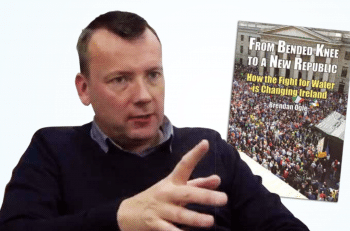
    ‘From Bended knee to a New Republic: How the fight for water is changing Ireland’ by Brendan Ogle, promises in its opening pages to take us on a journey “through the travails of a nation broken, sold and left in penury”. Ogle, unlike the many politicians and political parties he describes, fulfils this promise. The book brings you on a fascinating, inspiring, informative, and thoughtful journey through inequality in Ireland and “a nation’s fightback against it”. It should be clear from this that the book, just like the protest movement itself, is about much more than water. It comprehensively answers the question that many have asked: why was water the “issue that Irish people would take their first and biggest real stand against austerity?”. Ogle is the Education, Politics and Development organiser for the Unite trade union in Ireland and one of the founders of the Right2Water and Right2Change campaigns. The first quarter of the book provides detailed analysis of the political, economic, and social circumstances that gave rise to the Irish water protests which are “the biggest (per capita) and most peaceful protest movement for social change anywhere in the world”. These include the global water privatisation agenda, austerity, poverty and the health and housing crises. Neoliberalism is explored before an analysis of the self-evisceration of social democracy through Tony Blair’s ‘third way’ acceptance and implementation of neoliberalism, and its adoption by the Irish Labour Party. He suggests the Labour Party has become an “obstacle to progress toward a more equal Ireland, and is in fact an enabler of neoliberal inequality”. Ogle spends the rest of the book describing how the Right2Water campaign was organised and the challenges it faced in becoming a mass movement. He recounts how he and Dave Gibney, the other main organiser in Right2Water, withstood difficult negotiations with local communities who had been let down by trade unions in the past but had started this new movement in order to build trust and a strong working partnership with them. He writes about how ‘civil society’ organisations failed to offer much support to the movement. He describes the constant work required to build unity amongst the fractious left-wing parties that make up the ‘political pillar’ of the movement. We can read how he and others in the water movement which “could so easily have been just another failed campaign in a failed Republic”, actually developed the most successful mass-protest movement in modern Irish history. It is, therefore, an essential read for those looking to understand not just how and why the water movement developed in Ireland but for those seeking lessons of how to build successful social movements. A central purpose of the book is to set out the origins and purpose of the water movement, and to tell the story of the water activists, which, as Ogle rightly says, you won’t read about in the media or many other places. The book provides an important contribution to documenting Ireland’s recent socio-political history and geography, particularly the excluded voices and views in society which are too often ignored. The book documents how the movement was built from the grassroots up in working class communities like Edenmore in Coolock in Dublin and by “wonderful people” from all over Ireland “who were determined to make a difference”. It tells the inspiring story of water activists such as Karen Doyle, a “housewife and mother who also works part-time outside the home” from ‘Cobh says No’. She got involved in the water charges movement and formed one of the hundreds of ‘meter watch’ groups, which were the heart of the movement across the country, to obstruct water meters being installed. It is from such actions that a broader social movement was born. Ogle writes: “every week-day morning someone would rise about 4.00 to 5.00 am and find where the meter contractor vans were heading. Text alerts were sent so that by the time the vans arrived people like Karen were at estate entrances to protest. A caravan and trailer were procured and soup, tea and coffee produced every day for sustenance. Margaret Thatcher would have hated it. Society! People came from their homes, their individual isolated bolt holes, to start sharing stories about where it had all gone wrong, how their lives had been impacted by the breaking of a nation, which gave them the strength, the determination, to do something about it”. These groups, according to Ogle, faced problems from “some on the ultra-left” who saw the local groups “as a vehicle for advancing their own agenda, viewing people like Karen as potential recruits”. He describes how “people who got involved in a campaign out of genuine concern for their community and their country”, were hurt as they found themselves “the focal of bitter and personalised attacks”. He notes that in the past “many have walked away from the campaigns, surrendering them to the dogmatic ultra-left and the inevitable failure to deliver on their promise”. But not this time. Karen and many other community activists like her continued on and developed their own spaces and confidence to keep building a broad and inclusive movement. important in this was the support given by the Right2Water trade unions, and Unite in particular through its political economy education. It ran nine free ‘political economy’ courses for 150 ‘non-aligned’ community activists “with the objective of giving activists who were central to the growing water movement access to the type of information that would enable them to understand the political economic agenda behind water privatisation”. This was a very innovative approach which provided an important longer term empowering aspect to the movement. Ogle writes how “through the training we not only helped them connect with each other on a national level but showed how the tax and privatisation agenda are global issues…giving renewed energy as to how to challenge the neoliberal consensus”. Ogle persuasively tackles the critiques of the water movement in relation to water conservation. He highlights how people in the UK, which has

    Loading

    Read more

  • Posted in:

    Nationalists as Real Men

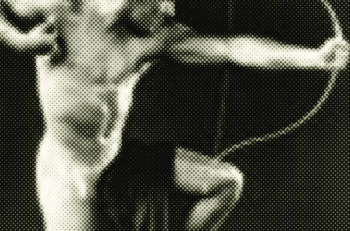
    In 1909 Patrick Pearse wrote a short six-verse Irish-language poem, ‘A Mhic Bhig na gCleas’, translated into English as ‘Little Lad of the Tricks’. A relatively disposable piece, it has since gone on to have an infamous status; proof for many that Pearse had dark sexual proclivities: … Raise your comely head Till I kiss your mouth: If either of us is the better of that I am the better of it. There is a fragrance in your kiss That I have not found yet In the kisses of women Or in the honey of their bodies… Ruth Dudley Edwards’ 1979 revisionist biography, ‘The Triumph of Failure’ makes much of this poem, presenting it as evidence of Pearse’s supressed tendencies. And later works have echoed her, to the point that the trope of Pearse-as-Paedophile is now standard fare among Irish historians. Similar speculations have also been made about Eoin O’Duffy and even about Michael Collins. Such tabloid innuendos, though, ignore a central truth about Irish nationalists in the early years of the twentieth century: masculinity mattered for them. Not in the sense of private peccadilloes, but as a key part of their public ideology. Masculinity did much work for organisations like Sinn Féin and the Irish Volunteers, allowing them, as it did, to imagine what national sovereignty and the end of British colonial rule would look like. It allowed them to analyse that British rule as an effeminising influence on Irish men. And it allowed them to attack opponents, such as the Irish Parliamentary Party, as unmanly traitors. The heavy emphasis on masculinity also does much to explain how and why women and leftists were systematically frustrated in their efforts to influence the national movement; imagining the nation as a male fraternity was a convenient way to dismiss feminism or socialism as divisive ideologies that pitted brother against brother. In another of Pearse’s most famous texts, ‘The Murder Machine’, the educator-nationalist railed against the British state schools in Ireland (the “machine”). And in a telling passage, Pearse denounced the contemporary school system as worse than “an edict for the general castration of Irish males”. Anglicised Irishmen, he said, are “not slaves merely, but very eunuchs”. For Pearse, Irish men had been emasculated by British colonialism and by the slow parallel process of Anglicisation. These were common anxieties among almost all Irish nationalists. A recurring theme in Gaelic League publications was that the Irish, by abandoning their native language, had become de cient and deformed and no longer real men. As one turn-of-the-century Gaelic Leaguer said, if the Irish continued to speak only English, then “we can never be perfect men, full and strong men, able to do a true man’s part for God and Fatherland”. The movement to revive the Irish language was thus imagined as a process of reasserting a purified male power and was often associated with a recovery of sovereignty and strength. When the Irish Volunteers were established in 1912, many of their founding members had already imbibed the thinking that saw national revival and masculine revival as two parts of a broader whole. Writing in the Irish Republican Brotherhood’s Irish Freedom newspaper in July 1912, Ernest Blythe, a government minister in the 1920s, discussed the contribution that the Volunteers would make to healthy Irish masculinity. While he criticised the weak “ abby men” that predominated in Ireland, he also spoke of a subterranean manliness still surviving, he said, thanks to both militant nationalists “but also those whose thoughts have gone no further than the running and leaping and hurling which they delighted in”. The future Irishmen, whom physical-culture and physical-force enthusiasts such as these would birth, would be noticeable by their “mighty lungs and muscled frames”. The Volunteers were “the rebirth of manhood unto this Nation”. Their muscular masculinity would replace the abby weakness of Ireland under British rule. Talk of masculine power continued to circulate in the years after the Rising. Indeed, Ernie O’Malley, a medical student turned IRA soldier, later remembered that one positive effect of the war was that the “familiar stage-Irishman had disappeared”, replaced by the confident, armed men of the IRA. The rhetoric of heroic men standing together for the national interest, also lent itself to suppressing the ‘wrong’ kind of politics. A 1921 pamphlet on ‘The Labour Problem’ published by the Sinn Féin-allied Cumann Léigheachtaí an Phobhail presented socialism as an intrusion into the national fraternity of men: “Labour… is like a virulent foreign element in the social system… whatever else we are, capitalist or worker or neither, we are all Irishmen interested beyond anything else in the welfare of our common country, and as an Irishman speaking to Irishmen I put it that these industrial conflicts, if continued, will inevitably impair, if not utterly destroy, our common country”. Feminism was denounced in almost the exact same terms. The tourism-friendly version of Irish nationalism that has featured in the ‘Decade of Commemorations’ has received a large dose of justified criticism. With the government promoting an image of romantic, if depoliticised Irish rebels, it is worth remembering, first, how much Irish nationalism was a product of the encounter with British colonialism. Second, the State that emerged from this national struggle was noticeably coercive, particularly when it came to female citizens or left-wing politics. Masculinity, and the nationalist desire to create a harmonious nation of muscular men, was central to all of that. Masculinity matters. Aidan Joseph Beatty Aidan Joseph Beatty is Scholar-in-Residence at the School of Canadian Irish Studies, Concor- dia University, Montreal and author of ‘Masculinity and Power in Irish Nationalism, 1884-1938’. aidanbeatty.com

    Loading

    Read more