muslim

Random entry RSS

  • Posted in:

    Israel Politik: Illegal settlement

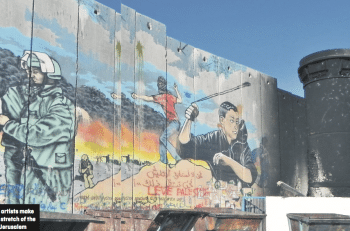
    After completing his Ph.D in the University of Pennsylvania, the former Palestinian foreign minister, Nabil Shaath, lectured in financial economics at the elite Ivy League Wharton School in the US. Among his students was a brash undergraduate named Donald Trump who did little study, flunked his exams and was expelled from the university. With the help of his very rich father, Trump was readmitted and, despite his poor academic credentials, went on to greater things. “He was not a good student. He dropped out and his academic standard did not come up to scratch. I was teaching advanced corporate finance and he flunked the courses. The idea of this man as President of the US to me shows the decline of American civilisation”. Some half a century later, Trump is leading the latest assault on the historic right of the Palestinian people to their own land, including international recognition of Jerusalem as the capital of their independent state. Last December, President Trump confirmed that he intended to move the US embassy in Israel from Tel Aviv to Jerusalem in a move that deeply angered the Arab world while elating many Israelis who have long had their sights on ultimate control of the holy city, which has been traditionally shared by Muslim, Christian and Jewish religions. The decision to move the embassy to Jerusalem was authorised by the US Congress some years ago but was put on hold by President Barack Obama, who believed the decision could only hamper efforts to find a lasting peace in the region and, in particular, the achievement of a two-state solution with east Jerusalem as capital of Palestine. For the Palestinian president, Mahmoud Abbas, and for Nabil Shaath who acts as foreign relations advisor to him, this divisive action by the Trump administration has confirmed a view they have long held privately: that the US cannot be considered as an honest broker in the search for a just solution to the Middle-East crisis, arguably one of the world’s most egregious human rights scandals. Over recent weeks, 35 Palestinian people have been killed and over 1500 injured by live rounds fired by Israeli army snipers from behind a fortified security fence erected in Gaza. Each Friday thousands of people from the besieged and almost destroyed Gaza Strip have protested for their “Right to Return” to the lands from which they and their families were expelled during the Nakba or catastrophe when the state of Israel was declared in 1948, and over the decades since. The policy of the government led by Benjamin Netanyahu and of the Israeli Defence Forces (IDF) is that the right-to-return protests must be resisted with maximum force, including by the killing of unarmed activists and the maiming of thousands. Already overstretched and under-resourced Gazan hospitals have been unable to cope with the recent slaughter, while their efforts to transfer shooting victims with serious injuries to hospitals in the West Bank have been obstructed by the IDF. Two young men who each had had a leg amputated after suffering severe bullet wounds lost their other leg after doctors were prevented by Israeli authorities from transferring them from Gaza to better-equipped hospitals for treatment. The reason they were refused access to urgent medical care in Ramallah was because their “medical condition is a function of their participation in the disturbances”, the Israeli authorities confirmed. One of the young men, Yousef Karnez, said that he was a trainee journalist and was holding a camera at the demonstration which he sought to document. “I got two bullets. One hit my left leg and crushed it and the other hit my right leg, where it gravely injured my shin. Doctors have already amputated my left leg and I am begging; I don’t want to lost my other leg,”, he pleaded in the days after he was shot in early April. A young journalist, Yaser Murtaja, who was wearing a white ‘Press’ sign on his chest during the same protest on 6t April, was shot dead by IDF snipers and wrongly accused by the Israeli defence minister, Avigdor Lieberman, of being a member of Hamas who had been operating a ‘spy drone’ before he was killed. His claims were denied by the International Federation of Journalists who said that Murtaja had worked for both national and international media over recent years including for the BBC and Al Jazeera, and that his company Ain Media had been funded by the US Agency for International Development. His production company had used drones for aerial filming and he was due to start a new job with the Norwegian Refugee Council two days after he was shot. Nabil Shaath, a Gazan, believes the people of the strip are desperate and the large ‘Right to Return’ protests are a reflection of their appalling living conditions. The electricity in Gaza, where some 2.5 million Palestinians live, is turned off for sixteen hours each day, there is no clean water, and there are severe shortages of food and medical supplies. Efforts to establish a unity government across the West Bank, east Jerusalem and Gaza which commenced last year have so far been unsuccessful due to the inability of the Palestinian Authority (PA) and Fatah (the political organisation led by President Mahmoud Abbas) and Hamas to reach agreement. At the core of their disagreement is the refusal of Hamas, which took political power in Gaza following elections in 2006, to cede control of security to a new government of Palestine. “We have a presidential system in Palestine and the President is in charge of security and foreign relations,” Shaath explains. “Hamas was elected in Gaza in 2006 by popular vote and we accepted that mandate. However, the PA remains responsible for ensuring that the people of Gaza have sufficient finance to cover the costs of education, health, water and electricity. We have now said to Hamas that we can only continue to pay the bills if they agree to complete discussions for a unity government that will include security”. This

    Loading

    Read more

  • Posted in:

    Re-Ligion!

    Michel A aq (1910-1989) was the principal ideologue of the pan-Arabist Ba’ath Socialist party which still rules Syria, as it previously did Iraq under Saddam Hussein. Although born Christian, he believed Islam to be proof of Arab genius and allegedly converted before his death in Baghdad. The Arabs were a motley collection of illiterate warring tribes inhabiting the Arabian Peninsula until the Prophet Muhammed (570-632 CE) and his successors built an enduring empire with extraordinary speed. The early Muslims were not only successful warriors conquering territory from Spain to Persia but also projected a ‘soft’ power allowing them to convert subjugated peoples. The era brought great advances in philosophy, art and mathematics and was marked by a tolerance unknown in Christendom. The Qu’ran itself was the first book written in Arabic, and according to the historian Albert Hourani Muslims believe Arabic is revealed in it; it certainly ushered in a great era of literacy. It is perhaps unsurprising that contemporary Arabic political movements have expressed themselves in the idiom of Islam however diverse that inheritance is. Furthermore the failures of Arab nationalism especially under Egypt’s Gamal Abdel Nasser (1918-70) appeared to make Political Islam the answer to the project of throwing off the economic and cultural shackles of imperialism, and confronting Israel. The brutalisation of the Middle East through internal repression and outside intervention has shaped the emergence of ISIS, but its unsophisticated ideology has an historical trajectory. Likewise Christianity has had a lasting influence on the idea of Irishness: first because Christianity’s arrival in Ireland brought with it literacy (Ogham script hardly qualifies) that generated a seismic cultural awakening; second, and another source of pride, Irish Christians performed vital missions in restoring Christianity to Britain and other parts of Europe; third, the Reformation in Britain occurred simultaneously with its second wave of colonisation of Ireland, creating an effective method of creating a ruling caste; fourth, the decline of the Gaelic language left Catholicism as the most obvious point of cultural differentiation between the Irish and English. Thus in George Moore’s novel ‘The Lake’ Father Moran opines: “Religion in Ireland was another form of love of country and if Catholics were intolerant to every form of heresy, it was because they instinctively felt that the questioning of any dogma would mean some slight subsidence from the idea of nationality that held the people together”. He continues: “Like the ancient Jews, the Irish believed that the faith of their forefathers could bring them into their ultimate inheritance”. Moore himself eventually renounced Catholicism, just like the main character in the novel Father Gogarty who says: “my moral ideas were not my own. They were borrowed from others and badly assimilated”. Gogarty bemoans the Church’s attitude to women, recalling how “at Maynooth the tradition was always to despise women”. Well before Irish independence in 1922 the Catholic Church held a firm hold over Irish society especially in the crucial sphere of education. Maynooth was estab- lished in 1795 and Irish primary education had become increasingly denominational by the end of the nineteenth century. To some extent this suited the British administration as it recognised the Church as a force of conservatism that would protect private property against social revolutionaries. James Joyce also violently repudiated Catholicism. He wrote to Nora Barnacle in 1904: “Six years ago I left the Catholic Church, hating it most fervently … Now I make war upon it by what I write and say and do. I cannot enter the social order except as a vagabond”. In ‘Portrait’ he resolves: “I will not serve that in which I no longer believe, whether it calls itself my home, my fatherland, or my church: and I will try to express myself in some mode of life or art as freely as I can and as wholly as I can, using for my defence the only arms I allow myself to use – silence, exile and cunning”. It took artists of the stature of Joyce and Moore to escape their Catholic upbringings. Unfortunately most of the revolutionary generation rapidly conformed and thereby stamped out the pluralism, feminism and even vegetarianism that animated the more free-thinking period before hostilities began. One of the most powerful ministers in the first government, Kevin O’Higgins, remarked: “we were probably the most conservative-minded revolutionaries that ever put through a revolution”. That it should have been an ‘Easter Rising’ that kicked off the affair is revealing. There was an obtuse connection drawn between the crucifixion and resurrection of Jesus and the blood sacrifice and emergence of an Irish nation state. Remarkably, in the wake of the Rising such illustrious revolutionaries as Roger Casement, Countess Marckievicz and James Connolly converted to Catholicism. The Civil War between two children squabbling over the spoils of a new state imported no relevance for the relationship with the Church. Observers were already noting the “sombre bodyguard of priests” surrounding de Valera as he ascended political platforms in the early 1920s; and the first Cumann na nGaedheal administration (1922-32) alienated many erst- while progressive supporters, including WB Yeats, by bringing in a ban against divorce in 1925. We now know that the Catholic Church was virtually untouchable in its position of power in Ireland until the 1990s when the staggering effect of sexual repression and a culture of impunity became apparent. The same-sex marriage referendum last year affirmed that the once vice-like grip was no more: only Roscommon voted against the proposal, despite the Church’s opposition. It remains firmly entrenched in education but such is the prevailing distrust for priests in particular that this situation is unlikely to endure much longer. Moreover, Irish people are no longer drawn to the priest’s house or convent as they were in droves. The Church simply does not have the personnel to project its message any longer. Of course there are residual defenders of Catholic conservatism in the Iona Institute and the broader Pro-Life movement. But the abuse scandals seem to have changed most Irish people’s outlook and the Pro-Life movement now looks

    Loading

    Read more