Politics

Random entry RSS

  • Posted in:

    Unannounced special advisers push total salaries towards €6 million

    By Conor O’Carroll The Department of Education has confirmed to Village Magazine that three as-yet-unannounced special advisers are employed at the department. Áine Doyle and Eoin Murphy are employed as special advisers to Minister of Education, Norma Foley TD, while Diane O’Gorman is employed as a special adviser to Minister of State, Josepha Madigan TD, a department spokesperson said. None of these appointments have been publicly notified in Iris Oifigiúil, or through the release of the statutory instrument confirming their appointment. They also don’t appear on the government’s list of special advisers. No explanation was given for why the advisers, which are required to be officially reappointed following the rotation of Taoiseach last December, have not been made public yet. Another special adviser appointed in April has also yet to see any official announcement. Eoin Delaney, special adviser to the Minister of State at the Department of Foreign Affairs, Seán Fleming TD, was appointed on April 10th and given a salary of almost €75,000. Despite the lack of public announcement, Delaney appears to have begun advising, accompanying Fleming on a visit to Killeshin National School in Laois a few days after he was appointed. A spokesperson for the Department of Foreign Affairs said, “Mr Delaney’s appointment has progressed through the standard process as required by [Section 11(1) of the Public Service Management Act (1997) and the Ministerial Appointments for the 33rd Dáil guidelines]”. “The order for his appointment has been finalised and will now proceed for official approval and publication”, they continued. Last month, following the announcement of Taoiseach Leo Varadkar’s eighth special adviser, Village reported that a substantial delay often exists between appointment and official announcement. This trend continued recently, when two more announcements were made, confirming special advisers for Minister for Further and Higher Education, Simon Harris TD and Minister of State at the Department of Finance, Jennifer Carroll MacNeill TD.  Official notice of these appointments was provided, however, in the case of the Department of Further and Higher Education, no statutory instrument (and name of the appointee) has followed. Over six weeks have elapsed since the official notice in the July 28th edition of Iris Oifigiúil. No explanation was given for this delay by a department spokesperson, stating that “it is expected that the relevant Statutory Instrument will be finalised shortly”. As for the Department of Finance, the statutory instrument was released, showing that Stephen Foley, Jennifer Carroll MacNeill’s new adviser, was appointed on 13 March 2023 and announced 151 days later. A spokesperson for the Department of Finance said that “there was an administrative oversight within the Department of Finance HR” that led to the delay. They claimed that “HR was not aware a separate statutory instrument was required for the specific individual to be named”. These new appointments, along with those from the Department of Education, bring the total number of special advisers to 60. It is also unknown how much the new appointees will earn, though the current average salary for special advisers stands at over €100,000. Following queries made by Village Magazine in July as to why three special advisers – Patrick Cluskey, Fiach Kelly, and Jim D’Arcy – had not been added to the official government list, a spokesperson committed to updating the list to reflect the uncovered appointments. At the time of writing, however, the list has still not been updated and is now also missing a further six special adviser appointments. The salaries of these nine appointments are likely to push the total cost towards €6 million annually, though the true figure won’t be revealed until the government updates their list. The current rules surrounding special advisers stipulate that Ministers, other than the Taoiseach, Tánaiste and party leaders, may not appoint more than two special advisers. The appointment of Simon Harris’ new adviser brings every government minister to the maximum of two special advisers. The rules also state that Ministers of State may only appoint one special adviser, though appointing two is permitted provided that they regularly attend meetings of the Government. Just two Ministers of State, Hildegarde Naughton TD (Department of the Taoiseach – Chief Whip) and Pippa Hackett TD (Department of Agriculture) have appointed two special advisers, with ten others settling for just one.

    Loading

    Read more

  • Posted in:

    Varadkar appoints eighth special adviser days before Dáil recess

    By Conor O’Carroll The Government has announced the appointment of a new special adviser to the Taoiseach, Leo Varadkar, just days before the Dáil adjourned until mid-September for the summer break. The appointment order is dated 11 July and was included in the 14 July edition of Iris Oifigiúil – Ireland’s official public record – however, it is only today that it has been confirmed as Jim D’Arcy. He will join the nine special advisers currently employed by the Department of An Taoiseach – seven by the Taoiseach and two by Chief Whip and Fine Gael TD Hildegarde Naughton. Ordinarily, the number of special advisers a Minister can have is limited to two, though this rule does not apply to the Taoiseach, Tánaiste or leader of any political party. As a result, An Tánaiste, Micheál Martin, has five special advisers, while Eamon Ryan has eight – two of which are employed on a job-share basis. The appointment of special advisers requires Government approval and the order confirming their appointment is published as a statutory instrument. The appointment order states that D’Arcy’s role has been effective from 16 January 2023, meaning 191 days have elapsed since his appointment and the release of the statutory instrument. This is the longest delay in announcement for the current crop of special advisers, but this practice isn’t unusual. Following the rotation of the Taoiseach in December last year, Ministers were required to re-appoint their special advisers. Analysis of each statutory instrument released since then shows that on average 94 days elapse between appointment and public notification. Noel Byrne’s appointment as special adviser to Fianna Fáil TD and Minister of State Anne Rabbitte on 21 December 2022 was signed by the Taoiseach on 4 May 2023, 66 days after he had left the post on 28 February. In total, fifteen of the 55 appointments were not officially announced until over 100 days after their start date as listed on the order. A further 23 announcements came more than 90 days after the appointment. The shortest gap between appointment and the statutory instrument being signed was 38 days, when Fiona Campbell was appointed as special adviser to Fine Gael TD and Minister for State Neale Richmond. Just ten appointment orders were signed within 60 days of the position being filled. A spokesperson for the Department of the Taoiseach stated “it is common for there to be a delay between the effective date of appointment and the making of the Order given the practicalities involved”. No response was offered when clarity was sought as to what these practicalities entailed. Further discrepancies arise when these statutory instruments are compared to the list of special advisers published by the government. The appointment order of Patrick Cluskey and Fiach Kelly as special advisers to the Taoiseach was signed on 16 May 2023 – 151 days after their appointment – but neither official appears in the list of special advisers published by the government. Responding to a parliamentary question submitted by Independent TD Violet-Anne Wynne earlier this month, Minister for Justice Helen McEntee confirmed that both were employed at the Department of Justice as her special advisers. The spokesperson for the Department of the Taoiseach continued, “The addition of the two advisers to the Department of the Taoiseach was a temporary measure due to the arrangements for maternity leave for Minister McEntee. The omission of the names of the two advisers from the list published by the Department of Public Expenditure, NDP Delivery & Reform was an oversight and the list will be updated in due course”. Despite the list purporting to be accurate as of 11 July, Jim D’Arcy too is not on the list, at the time of writing. The total salaries of those employed by the various Ministers and Ministers of State comes to just over €5 million, though this figure does not include Patrick Cluskey, Fiach Kelly or the Taoiseach’s latest appointment. It also does not include any incremental increases earned over time or the 2% pay rise received by civil servants as part of the 2023 public sector pay increase applied from March 2023. The salaries range from €51,679 (as part of a job share arrangement) to €195,137, though the two highest earners – Deirdre Gillane (€195,137) and Brian Murphy (€185,350) – have voluntarily returned an unknown amount of their salary. Alan Ahearne, special adviser to An Tánaiste Micheál Martin, does not receive any salary as he is on part-time secondment from NUIG. Of the 50 special advisers to receive a salary, 35 earn in excess of €100,000. It is as yet unclear how much the Taoiseach’s latest appointment will earn.

    Loading

    Read more

  • Posted in:

    Politics instead of vision

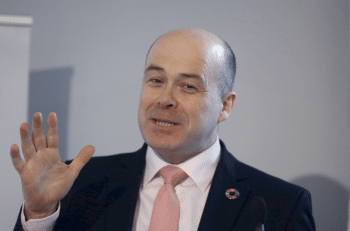
    Denis Naughten (45) was born in Drum, County Roscommon, site of the Meehambee Dolmen, a portal tomb estimated to be 5,500 years old, and educated at St Aloysius College, Athlone which closed last year, University College Dublin and University College Cork, where he did a PhD in Food Microbiology (impressively focused on extracellular polysaccharide – complex carbohydrates – production in lactic acid bacteria). Just as DeV was said to be one of only three people in the world who understood Relativity, Naughtenites allege he is driven by the scientific approach. He is married to Mary Tiernan and they have four children. In the New Year of 2017, Naughten was nearly killed while cycling with his wife along a road between Roscommon town and Fuerty when struck by a car, sustaining back injuries. Naughten’s father, Liam, was a Fine Gael TD (1982- 1987) and was Cathaoirleach of Seanad Eireann from 1995 to late 1996. Young Denis succeeded him following his tragic early death aged 52 in a car crash, at a by-election to Seanad Éireann in 1997 , making him the youngest ever senator. He has the ever-important keen interest in all sports and has played Gaelic football with Clann na nGael GAA club and held both county and provincial athletic titles with Moore AC. He was elected for the Longford–Roscommon constituency in the 1997 general election, aged just 24, and re-elected in 2002 when he and Simon Coveney were initially touted as the ace young guns who might replace the jaded Michael Noonan – before Big and wily Phil Hogan moved in to clear the path for Enda Kenny – with preferment promised. Within his first few weeks in the Dáil, he duly became Fine Gael Spokesperson on Youth Affairs, School Transport and Adult Education. This appears to be his level. He was re-elected at the 2007 general election for the new constituency of Roscommon–South Leitrim. In June 2010, he unwisely supported Richard Bruton’s leadership challenge to Enda Kenny, after he had been promised the deputy leadership in a Bruton shadow cabinet. Following Kenny’s victory in a motion of confidence, Naughten was not re-appointed to the front bench and there was bad blood between him and Kenny, perhaps partly because Kenny and Liam Naughten had been close. In October 2010, he was appointed as party Deputy Spokesperson on Health. He was a member of the Governing Council of the Association of European Parliamentarians with Africa which aims to strengthen parliamentary democracy in Africa and keep Africa high on the political agenda in Europe. He prevailed again at the 2011 general election. He voted against the Government in a motion to reverse cuts at Roscommon Hospital and lost the party whip. This parochial issue was the making of him; defined him. His party and constituency colleague Frank Feighan voted with the Government on the controversial issue, despite intense pressure from angry locals. The Government won the vote. On 13 September 2013, he and six other expellees formed the Reform Alliance, described as a “loose alliance” rather than a political party or “loose cannons”. The now largely forgotten grouping included TDs Lucinda Creighton, Billy Timmins, Terence Flanagan, and Peter Mathews as well as Senators Paul Bradford and Fidelma Healy-Eames who lost the whip over an abortion vote. In the run-up to the 2016 General Election Naughten told the Connacht Tribune he would be willing to prop-up a minority Government after the general election – as long as it maintained and invested in Portiuncula Hospital Ballinasloe and Roscommon Hospital, and local health services. He seems to draw his political tempo from his service on Roscommon County Council and the Western Health Board from January 1997 to October 2003. Any more profound political philosophy or vision of the common good has never crossed his lips. Naughten is really a rural populist, the Big Man, with a veneer of scientificism. His website is propelled by slogans like ‘Putting People First” and promises to “Get More Jobs to Cross The Shannon” and “Ensure That Every Child Leaving Primary School Can Read and Write”. Naughten was re-elected in 2016 and the numbers catapulted him to a ministry. The ambitious and crafty Naughten emerged as Minister for Communications, Climate Action and Environment in Enda Kenny’s Fine Gael/Independent minority government after two months of negotiation following the 2016 general election. He styles himself an Independent and has long dumped both Lucinda Creighton’s Reform Alliance and Shane Ross’s Independent Alliance. A year into his second government, Enda Kenny was asked if he would accept Minister Naughten back into Fine Gael. He said that was a matter for Naughten, and that he was doing a good job as an Independent Minister. He said: “How am I getting on with Denis Naughten? Great”. With Enda Kenny gone his rehabilitation is complete. So… time to see if the quiet man with the scientific bent is any good – playing, as they say, senior hurling. COMMUNICATIONS He has little interest in the communications brief, as it is of little value to his constituency. He has been almost invisible as minister for data protection – for Google and Facebook. The underpowered Data Protection Commissioner serves under the aegis of his department from an unimpressive office in Portarlington. Ireland took Facebook’s word for it that very few of the 87 million people compromised by Cambridge Analytica were Irish. He has, however, pushed for wider availability for high-speed broadband. Partly because viability has been undermined by Ireland’s unique fetish for one-off housing, Eir (successor to Eircom) pulled out of the bidding for the National Broadband Plan. Naughten was notably unable to get Eir, which owns much of the national phone infrastructure, to bid for the least attractive – farthest flung – next tranche of business, after it had delivered the most lucrative tranche to 300,000 houses in denser communities. Naughten may have been so reluctant to accept the logic of densifiying rural communities, anathema to his electorate, that he was blinded to its economic downsides. HIS MOST INFAMOUS OUTING IN HIS MEDIA

    Loading

    Read more

  • Posted in:

    Equality over freedom

    Politics is a continuum from equality to freedom. If freedom is the vertical axis of a graph and equality the horizontal axis, every society – and every citizen – decides where the balance should be. A libertarian society tending towards survival of the fittest will not foster equality; an egalitarian society may need to be enforced by a strong state to the detriment of individual licence, and so on. Philosophers from Tocqueville to Hayek to mainstream liberals accept there is a trade-off. Village tends to the egalitarian end of the scale: truly free equality, after education and reflection – precise processes for which have been touted by many modern philosophers – is a mature and more stable goal than equal freedom. Workaday politics can be charted and defined on the graph. However, the same political action can be justified by different points on the graph. Issues like divorce, gay marriage, and abortion can be deemed imperatives of either freedom or equality. In this respect the language used is not a definitive indicator of the politics. A campaign can claim to be about equality but in fact on analysis be defined by positions only of freedom. Any campaign fronted by Simon Harris or Leo Varadkar – agents above all of the propertied, of the status quo for the wealthy – is unlikely to be rooted in any real substantive equality. It is perfectly legitimate to campaign for gay marriage or abortion because you want yourself or others to exercise rights to freedom to get married or have an abortion. Telltale signs if you do so you may include that you are less likely to make common cause with campaigns for others suffering discrimination of all sorts. You may ignore issues like racial equality, Travellers rights; you may express no concern about economic, social and educational inequalities. It is legitimate but it is not Village’s political motivation of preference. For Village recent referendums reached the right solutions but were disappointingly rooted in the politics of freedom rather than that of equality. The egregious wrongs in Irish society are best resolved by solutions driven by equality. This society above all facilitates those who are economically adroit. It provides opportunity for people who are strong; worse still it provides opportunity for them to make mistakes (trashing the environment is the one posterity will most register). It provides very little vision as to how they should exercise their freedoms. – this is in part the problem of 100 channels but nothing on the television. But on a societal scale. It is now time to move on to new agendas that are really radical. These include: agendas of radical redistribution of wealth in society, of radical changes to the opportunities available to those who have suffered traditional discrimination, including (still) to women and to those of minority sexual orientations, to racial minorities including Travellers; of educational opportunities facilitated by positive discrimination so even (or especially) the poorest in society can be whoever they want to be; of redistribution of power so it is exercised at the lowest, most local, most democratic levels; of attenuation of property rights so they are exercised in the common good. The goods in society should be distributed by that society so those least well off are most compensated. Everyone in society is morally equal, they should be treated by society in a way so they can participate in the fruits of the earth equally. It is a myth that the fruits of the earth are distributed in accordance with merit – they have been accumulated largely by force and luck. The idea that in 2018 a child’s future is determined by the time it reaches two years old is an abomination. Ireland is growing up politically. Ireland has waved good-bye to the invidious influence of an unrealistic Church and voted the right way on divorce, gay rights and abortion. However, these are really liberal causes focused on issues of identity. It is time we addressed the issues of endemic inequality enshrined down the generations. As regards the Constitution we do need to abolish Article 41 which recognises the woman’s life within the home, so devaluing women who choose not to work within the home; and to eliminate the part of the preamble which invokes the Constitution “in the name of the Holy Spirit”. Indeed the Constitution’s premises relate to another era and the whole document should be reconceived. More generally, materialism, capitalism and competition have had their day, it is time to welcome in a new agenda – of equality of outcome/condition: equality of wealth and power, of quality of life, of environment, of education, of fulfilment and happiness, of respect and opportunity. This should be achieved through politics and laws. The constitution should be amended to reflect it too. The most radical change would be to enshrine equality of outcome/condition as a constitutional imperative across the range.

    Loading

    Read more

  • Posted in:

    Cold, and Hot

    Someone has finally said it. The Cold War is back. The man who made the statement was Antonio Gutierres and he carries some weight on the matter as Secretary General of the United Nations. Up to now most commentators and experts have stopped short of using those two words. They have spoken of a “deterioration in relations” between Russia and the United States and an end of trust between the two countries. But to those of us who remember the First Cold War certain alarm bells have started to ring. There are people alive today who remember the Cuban Missile Crisis which brought us to the verge of annihilation. In those days both the Soviet Union and the United States had enough weaponry to destroy the planet several times over but the two sides were led by men whose political flexibility served to bring the crisis to an end. Back then the US was led by John F Kennedy and the leader of the Soviet Union was Nikita Khrushchev. Today both powers can still destroy the world but they are led by Donald Trump and Vladimir Putin. A direct military clash between the two in Syria has been avoided so far and, hopefully, will be avoided in the future but the hostile propaganda that characterised the old Cold War is being used to full effect. As in hot wars the first casualty in cold wars is the truth. Nuclear warheads remain in both camps but in today’s world a new set of weaponry exists that was unheard of back in the days of Kennedy and Khrushchev. Propaganda used to be issued on radio, TV, the newspapers and, occasionally, from the pulpit. There were lots of opinions doing the rounds but the Soviets saw to it that very little news, fake or otherwise, emerged from their territory. Back then we were told that the, Soviet peoples, and the Russians in particular, were brainwashed automatons ready to give their lives at a moment’s notice if their leaders asked them to. The Red Army would pour through the Fulda Gap in its hundreds of thousands to end what we considered to be civilisation. Before long we would be as brainwashed as they were and would be ready to do the bidding of our masters. For me that particular vision of Russia came to an end on a warm July evening in Moscow in 1991. I had arrived a month earlier as the Irish Times correspondent and was settling in to life in what was still the Union of Soviet Socialist Republics. On that afternoon my wife and I decided to visit the Novodevichy Monastery one of the city’s numerous historic sites, famous for its beautiful frescoes in the Cathedral of Our Lady of Smolensk. It was there that we caught our first glimpse of a member of the dreaded Red Army that was all set to annihilate us. What we saw was not what we had expected. The soldier’s appearance was far from terrifying. He was a raw-looking kid in his late teens or early twenties. His uniform cap was slouched back on his head in a manner that would engender the ire of a sergeant in that far less threatening military organisation known to us at home as the FCA. But that was not all. This boy in uniform was not alone. He walked arm-in-arm with his mother. It was a striking message to us that Russians are as human as we are and in this case perhaps more so. As for the automatons who believed everything their leaders told them, well that wasn’t true either. There was a burgeoning industry in jokes about the past leader Leonid Brezhnev’s ineptitude. The current leader Mikhail Gorbachev was mocked by sophisticated Muscovites as a country bumpkin with a south-Russian accent. Workers took things easy under the slogan: “They pretend to pay us, so we pretend to work”. Intellectuals had their own slogan which went: “How can we know what our future is today when we don’t know what our history will be tomorrow”. Russians didn’t need western propaganda to persuade them that things were not working well. So how have they ended up supporting Putin? The answer has a lot to do with Boris Yeltsin. Yeltsin brought hope initially but eventually Russia’s economy and its moral compass disintegrated under his rule. Crony capitalism took over from crony communism. Some people became immensely rich while others were selling their belongings in Moscow’s underpasses in order barely to exist. The gun became a major business tool. The Russian Mafia emerged from the shadows and many of its members had backgrounds in the security services. The tradition of the razborka, the settling of matters by the gun, became a major feature of everyday life. On one occasion that I particularly remember a family visited the grave of one of its members only to be blown to pieces by a bomb planted by a rival group. TV pictures showed the crows picking at human flesh on the branches of the cemetery’s trees. While this was going on the West indulged Yeltsin. If the 1996 presidential election was rigged then it was done to save the country. If Yeltsin wandered at night in the Washington streets in his underpants it was endearing. If he couldn’t manage to get off the plane in Shannon he was “tired”. Russians knew better. Ordinary people rang the Irish Times Moscow office to apologise for their president’s behaviour. The word stabilnost (stability) was on everyone’s lips. Then along came Putin. Russians craved stability and they got it. The West’s tone changed. Here was someone who might make Russia strong again. Bit by bit the demonisation of Vladimir Putin began. Relentlessly he was portrayed as the evil emperor. As time went on he helped the propagandists by behaving as they predicted. We have now reached the stage that any allegations against him are instantly believed. He was responsible for Trump’s election even though it

    Loading

    Read more

  • Posted in:

    Pervasive effects of precarious work

    Employment in Ireland is often spoken about in terms of the economic recovery and falling unemployment rates. However, the real issue that needs to be addressed is job quality and the types of jobs that are being created. There has been increasing recognition that for many workers in Ireland and Europe employment has become insecure, with temporary and casual work increasing. The FEPS-TASC Report, ‘Living with uncertainty: the social implications of precarious work’, sets out to map precarious work in Ireland, and the impact this type of work has on precarious workers’ lives. This research involved 40 in-depth interviews with men and women living in Ireland, aged between 18 and 40, who work or had worked in temporary employment, were employed on a part-time basis with irregular hours and/or were hired on a self-employed basis. There are many definitions of precarious work, as no agreed definition exists. However, for the purpose of this report, we are focusing on employment that is contractually insecure, which includes part-time with variable numbers of highly skilled people are now being locked into insecure employment. A number of sectors of the Irish labour market have a disproportionate share of precarious work. Eight sectors scored higher than the national average. Transportation had high levels of solo self-employment, human health was characterised by a high level of part-time work, and education had a high level of temporary work. The remaining sectors (construction, wholesale and retail, accommodation and administration and support) had two or more dimensions of precarious work at relatively high levels. “Other NACE sectors”, which include occupations such as hairdressers, sports facilities workers and artists, scored high on all three dimensions. To understand the effects of precarious work, we need to look at life outside of the workplace, like the house-hold situation and access to social supports and services. We need to examine the consequences of precarious work for quality of life because, even though the basis of contractually precarious work might be similar in different countries, the experiences differ as a consequence of the availability of public services and state subsidies – for example, universal healthcare or child-care. The following are our main findings in the report. Precarious workers did not choose to be precarious First, the report found that none of our participants chose to be in temporary and “part-time with variable hour” employment. Much of solo self-employment was also not entered by choice but interviewees were forced into this arrangement as a condition for their employment. Importantly, we discovered that many people are unaware that they are working precariously; there are many workers who are working without a contract, or who assume a rolling contract to mean permanency. This finding points to the need for employers to be up-front about contractual status. Precarious workers cannot afford to be sick The report found that precarious working conditions can have a negative effect on physical and mental health. On top of that, the majority of participants cannot afford to be ill. The burden of expense is felt in two ways: through no paid sick leave, and as well as the expenses of paying to see a GP and for medication, tests and follow-up appointments. This lack of support can result in having to make hard decisions such as whether to first buy food, or pay bills or rent. Medical cards and GP cards are means-tested and most precarious workers do not fit the eligibility criteria to obtain them even though they are not able to afford primary care services. Precarious workers have difficulty finding stable housing The housing crisis in Ireland affects families and individuals with very different backgrounds. However, the difficulties that people in non-standard employment encounter are even more pronounced, as they lack economic stability. Precarious workers are not left with any other choice but to rent, or if the option was available to them, to live in the family home. With tightening mortgage regulations, (which followed the economic crash), and soaring property prices, people working in non-standard employment are unlikely to be approved by any lending bank. At the same time, renting in the private market has become prohibitively expensive in the last number of years. This has resulted in bouts of ‘hidden homelessness’ for many of our participants, situations during which they have nowhere to live and are forced to sleep on friends’ couches or stay with their parents. Precarious workers postpone having families It emerged from our interviews that having children was often challenging for precarious workers. While some decided to have children regardless, the majority of our participants continued to postpone childbearing. Postponement of childrearing amongst precarious workers is often not a choice based on individual preference. Instead, while precarious workers want to have children, their financial insecurity, directly related to their contractual insecurity, prevents them from becoming parents. For those who already had children, maternity leave and childcare are the most important issues that they face. It became clear through the interviews that maternity leave is challenging for women in precarious employment, especially for those who are on temporary contracts. First of all, the contract may be shorter than the actual leave. Likewise, for those who were on temporary contracts, maternity leave is a possible obstacle for the continuity of their employment. Formal childcare is too expensive for participants who have insecure incomes and thus alternative arrangements are often necessary. In the most extreme cases, one of the parents has no other choice but to quit their job. Such a decision is usually not based on traditional gender roles, but on employment status. Based on the interviews, precarious work does not appear conducive to having a family. Precarious work leads to insecure lives Contract insecurity and wage unpredictability lead to workplace insecurity and create insecure and unpredictable lives. The lack of independence that precarious work entails often creates a situation in which many people must live with their parents and thus are unable to develop independent lives. Public benefits and support services, such as state access to free primary care services, accommodation,

    Loading

    Read more

  • Posted in:

    Sinn Féin alone

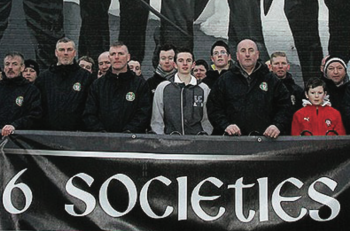
    Republicanism is fragmenting. That was  seen on Easter Sunday, when at least eight Republican groups held commemorations on Belfast’s Falls Road. At protests in the North, it is common for various ‘dissident’ groups to have more presence that mainstream Sinn Féin. That party has a much smaller activist base than a decade ago. Paradoxically, as that base has shrunk, the vote has increased. The exodus of members has not affected the vote. That was seen most starkly in last year’s assembly election for North Antrim. A councillor and 17 other activists resigned in protest when the party forced assembly Member Dáithí McKay to resign. Monica Digney, an able and respected former councillor, and one of those who had resigned, stood as an Independent. Sinn Féin’s vote increased by just under 3%. Digney polled just 435, lagging behind the Green Party. That is a stark version of trends across the north. A few years ago, even Sinn Féin strategists believed the vote had plateaued, and might even fall back. In last year’s Westminster election, Sinn Féin took 29.4% of the vote. That was a 4.8% increase in a year. The terminal decline of the SDlP has been hastened. Sinn Féin took the SDlP’s two perceived strongholds: South Down and, of greater importance, Derry. That is not to deny the importance of the exodus. There is a disillusionment with Sinn Féin. An Easter statement from Óglaigh na hÉireann prisoners sums up the dissidents’ problems: “It’s clear that presently the revolutionary Republican community appear to be facing challenging times and lack strategic direction in response to these events”. The largest single non-Sinn Féin grouping are the 1916 societies. There have spread out of their initial base in East Tyrone across the North, and into the South. They have a sizeable membership, mostly of an older generation, but they also have a small but significant membership from the post-IRA generation. They are an excellent symptom of how widespread the malaise in Republicanism is. They have engaged in some co-ordinated activity, such as calling for an all-Ireland Referendum on unity. However, their main activity is commemorations. This is the only activity on which all non-Sinn Féin Republicans can agree. They certainly cannot on a central debate for Republicans: whether or not there should be an armed campaign. Most are opposed. some, mostly from the anti-armed-campaign cohort, are becoming involved in community issues as individuals or through different organisations. There is no issue about which ‘dissidents’ can coalesce. In 1969-70, the Republican movement split into ‘official’ and ‘Provisional’ wings. (The ‘Provisionals’ became today’s Sinn Féin, while the remnants of the ‘officials’ are the Workers Party). The ‘Provisionals’ derived from the anger of many young Catholics, and a belief that the IRA had spent too much time on left-wing politics rather than preparing to defend catholic areas. This time, there is no single big issue to divide Republicans. There is a generalised unhappiness at Sinn Féin’s acceptance of Stormont and the PSNI. In some cases, unhappiness has spilled over into demoralisation. Some in Sinn Féin dismiss ‘dissidents’ as criminals. That is not to say there are not criminals using dissident groups as a cover; and others who, their war over, have turned to criminality but it is not the central case. The dissident groups are fragmented. The new IRA and the continuity IRA are continuing their campaign, while Óglaigh na hÉireann has called a ceasefire. All armed groups are riddled by infiltration by security-force agents. However, they have found a certain niche in carrying out punishment attacks. These grew by 60% between 2013 and last year. They are popular among a significant layer of the population in Catholic working-class areas. Part of the reason is the traditional hostility between the catholic minority and the police in the Northern state. Part is also that punishment attacks offer ‘quick x’ justice, without the necessity to take the time taken by a formal court system. Police seem willing to let punishment attacks continue, as long as the victims are perceived ‘hoods’. Vigilantism, though, is not a basis for building organisations that will be a serious alternative to Sinn Féin in Catholic areas. Sinn Féin could probably benefit from a bit of coherent opposition from people whose political premises, at least viscerally, it identifies with. Anton McCabe

    Loading

    Read more

  • Posted in:

    Paschal Donohoe: Minister for Finance, Public Expenditure and Reform

    I interview the charming, chatty and firm Minister for Finance in the Department of Finance on a bright Wednesday in late April. He has just benefited from a profile in the Irish Times which of course likes his supposed toughness, especially when public-sector-pay talks loom, and which quotes a senior Fianna Fáiler praising him as “the cleverest man in the room” (even when Varadkar is in it). It also notes that despite his “Hello, Everybody” manner, “Business and interest groups that come into contact with him leave impressed with his knowledge and command of his brief. These are the traits that other politicians note and envy”. Donohoe is, then, an Irish Times sort of guy. Arranging the interview was straightforward, and his handlers, particularly Deb Sweeney, efficient and unstuffy. He gave me more time than had been allocated, and a book, ‘The Value of Everything, Making and Taking in the Global Economy’ by Mariana Mazzucato (2018), as I was leaving. He was still engaging about his favourite works of literature as I was in the end ushered down a corridor and out into the sunlight. Mazzucato, in her book, claims that many advanced western countries, in particular the US and Britain, now confuse those who create value for those who extract it or destroy it, leading to impoverished and unhappy societies, soaring inequality and declining growth. I conclude the gift was well-judged. On his Political Philosophy… “My political philosophy is a politics of the very strong centre. I look at the opportunities and chances that I’ve had in life by virtue of the school that I went to and the upbringing that I’ve had. I believe that should be available to everybody in our country. I believe that, in order to make that happen, we need to have an open society and a diverse economy. I want to see an Ireland that is inclusive, that can welcome people and make them feel at home, and I strongly believe in a mixed economy. I believe we need both strong governments and strong markets and I think either on its own cannot achieve what citizens need”. On his Economic Philosophy… “My economic philosophy then springs from that. I believe in a resilient and mixed economy. I believe that markets can do some things well and I believe government can do many things well. If you look at the kinds of new economies that are being developed and the new challenges that are developing, we can only respond to them if both the State and markets play their role. We have seen, to the great cost of our citizens in particular, what can happen if markets become unbridled; and we have seen at other times in history what can happen if the State is expected to do everything; and I don’t believe either work. I believe the global balance needs further shifting at the moment – in favour of the State. I believe that we get the balance about right here in Ireland but I believe that we are going to need to continue to support supranational organisations like the European Union, like the WTO, like the OECD, to help nation states respond back to new challenges like artificial intelligence and to the de-globalisation agenda that is now beginning to develop. I believe very strongly in equality of opportunity but I’m very conscious at the moment that that credo is being challenged by developments within the market economy – if we keep on encouraging our citizens to believe they have equality of opportunity and then, generation by generation, that equality of opportunity is not realised, it poses very serious questions for citizens regarding how they feel about the State. Because if, from generation to generation, that opportunity is not realised or even offered the prospect of citizens either blaming themselves or the system and the State for not offering that agenda poses really grave challenges for how we organise our liberal democracies. I unfortunately believe some of those risks are beginning to materialise elsewhere at the moment”. On equality of outcome… “I think equality of outcome is something that is very, very difficult to achieve because I think it runs against the grain of initiative and individuality that I ultimately believe has a very important role to play in our society as well”. As to whether equality of opportunity is desirable… “I think equality of opportunity is more desirable than equality of outcome and certainly in the policies I try to follow and implement in the two jobs I do at the moment it is about trying to realise opportunity. But I’m conscious of the fact that an equality of opportunity agenda doesn’t speak to, or doesn’t help, citizens who are at the margins of our society; and for those citizens a more interventionist approach is necessary on behalf of the State I should say”. As to whether equality of opportunity can be unfair to the extent that people’s capacity for grasping opportunity is sometimes determined by luck and not entirely a product of effort or initiative… “And this is why I accompany my support of equality of opportunity with a strong support for the necessary role for an enabling and strong State. The difficulty that the equality of opportunity agenda has is when it runs into the chance of birth or runs into intergenerational inequality, and this is why I believe we need an active and enabling State alongside regulated and flourishing markets. I would be supporting the interventions that we have at the moment. I do not think that the agenda of positive discrimination is one that can command ongoing support here in Ireland and so this is why I support the State playing a more active role in the management of land, why I support for example property taxes. It’s why I support a a progressive tax code. Because without having those things in place you can’t offer the support that is needed to deliver the funding for an active State”. On difference in emphasis from Michael Noonan’s… “As

    Loading

    Read more