rights

Random entry RSS

  • Posted in:

    If not zeal then logic

    It could not be clearer. The Irish Human Rights and Equality Commission Act 2014 says that public bodies must, when they are preparing strategic plans, assess and identify the human rights and equality issues that are relevant to their functions as policy maker, employer and service provider. Public bodies must also identify the policies and practices that they have in place or that they plan to put in place to address these issues. We can only assume they meant it when they enacted the legislation, two years ago now. The excitement could, therefore, hardly be contained as the Department of Education and skills was first out of the traps with its new statement of strategy. All other Government Departments are still in the process of finalising their own new statements of strategies. They lag behind education, hot off the press with its ‘Action Plan for Education 2016-2019’. The statement of strategy opens with a picture of a smiling minister Richard Bruton and his commitment that “we can work together with all the people who work in and depend on the education and training service to, collectively, make it into the best in Europe”. This ‘best in world’ stuff is cringe-inducing but, whatever, how did it manage the new public sector duty? It is worth setting it out in full. It comes under the less than promising subheading “ensuring equity”. Equity, it must be remembered, is about fairness, not the more particular, more ambitious equality, not even human rights. It goes like this… “As part of their public sector duty, public bodies are required to consider human rights and equality issues relevant to them. In preparing this document, such issues were considered and individual actions address matters specific to the education and training sector. Ensuring access to an equitable system is a driving force throughout the Department’s work”. That’s it. It feels like a crude two fingers to the legislation, to the Oireachtas that enacted it, and to anybody who had naively entertained expectations deriving from the legislation. Human Rights don’t even get another mention in the 64- page document. Equality gets a mention as it is part of the name of the Deis (Delivering Equality of Opportunity in Schools) initiative and, under Goal 2, where the statement of strategy complacently recites that “we have made considerable progress in advancing equity and equality of opportunity”, but does deign to acknowledge that “significant challenges remain if we are to ensure that children and young people from different backgrounds are adequately supported so that they can experience success in the education system”. Anything vaguely equality-related is squashed into Goal 2 of the strategy statement which is to improve the progress of learners at risk of educational disadvantage or learners with special education needs. Goal 2 has 18 actions. This compares with 35 actions under Goal 1 to improve the learning experience and success of learners, 29 actions under Goal 3 to help those delivering educational services to continuously improve, 37 actions under Goal 4 to build stronger bridges between education and the wider community, and 20 actions under Goal 5 to improve national planning and support services. The Irish Human Rights and Equality Commission has produced limited but clear guidance on implementing this public-sector duty. The steps required include: Undertake an assessment of human rights and equality issues that are relevant to its functions, to the services it provides and to its employees. The Department of Education and Skills Statement of Strategy demonstrates no evidence of such an analysis. Consult broadly with employees, managers, trade unions, individuals and communities accessing and using the services, and other key stakeholders, which may be affected by inequalities and human rights issues. The Department of Education and Skills received submissions from 600 individuals and groups but there is no evidence that any of these related to equality and human rights or the public-sector duty. Screen and analyse policies and programmes from a human rights and equality perspective, identifying which existing policies and programmes are particularly relevant. The Department of Education and Skills Statement of Strategy demonstrates no evidence of such screening or analysis. Develop action plans on human rights and equality with defined actions and responsibilities. The Department of Education and Skills Statement of Strategy demonstrates no evidence of such an action plan. So, what next? The Irish Human Rights and Equality Commission, in its guidance, states that where it “considers there are failures to fulfil the Public Sector Duty, it can invite a public body to carry out an equality and human rights review of the work of the organisation and prepare and implement an action plan”. Logically then, the only outstanding matter now is when will the Irish Human Rights and Equality Commission act? Niall Crowley

    Loading

    Read more

  • Posted in:

    UN scrutinises Children’s rights

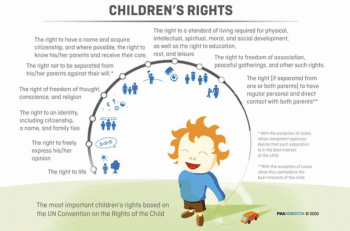
    For the first time in a decade, the Irish government defended its record on children’s rights before the United Nations in Geneva, on 14th January 2016. Poverty and homelessness, the rights of children in direct provision, the rights of Traveller and Roma Children and education issues were dominant themes, raised from different perspectives. The UN Committee on the Rights of the Child also asked about the incorporation of children’s rights into Irish law, the duty to hear children in legal proceedings, complaints and monitoring mechanisms, and the child’s right to identity in the context of surrogacy. Child protection was an important focal point throughout the discussions and the UN Committee members asked a range of questions about the extent of services and supports available to protect children from harm and to support families. Children’s rights in healthcare – obesity, smoking, alcohol and mental health – were queried. The rights of children with disabilities and in alternative care, in detention and in the immigration system were all scrutinised. The hearing was part of the process of monitoring implementation of the Convention on the Rights of the Child, a treaty binding on Ireland since 1992. The government delegation was led by Minister for Children and Youth Affairs, Dr James Reilly, TD. It was a measure of the political importance of the process that the Minister was accompanied by a large delegation of civil servants and officials from all major government departments. The hearing is an important opportunity to put pressure on Government in a public, international forum. For many of the non-governmental organisations present like the Children’s Rights Alliance, – and for the Ombudsman for Children – this is the culmination of a decade of advocacy. The Irish Human Rights and Equality Commission participates in all UN treaty-monitoring hearings. The Convention on the Rights of the Child is a particularly wide-ranging treaty, making both its implementation and its monitoring challenging. Mainstream issues of education and health sit alongside the concerns of children who are especially vulnerable or whose rights are breached by their particular circumstances. Guidelines ensure that all matters of importance are covered in the six-hour dialogue with the Government delegation. The hearing is a probing, constructive dialogue, rather than an adversarial process. The Government delegation is obliged to provide information in almost immediate response to detailed questioning from the Committee members. Answers demonstrated that the Government delegation was well prepared and few questions threw them off guard. Responses were generally succinct and direct although the Committee regularly interrupted if answers were too long-winded or off-point, creating genuine accountability. Civil society representatives were able to clarify any issues with the responses given by Government. They were able to point out that the status of the School Admissions Bill 2015, presented by Government, was at best uncertain, for example. When the Committee asked about the legislative amendments required to address the issue of school discrimination to protect school ethos, the Government’s commitment to change the Equal Status Act was welcomed, if with some surprise. The Committee’s rapporteurs were clearly well informed and able to convey with authority their understanding of the Irish context. Their probing questions sought clarity about the true state of child poverty, questioned why children in direct provision could complain to the Committee on the Rights of the Child but not to the Ombudsman for Children and wondered why many of the Government’s policies in this area remained on the shelf, and why law reform takes so long. A contrasting style emerged between some civil servants and the Minister, who on occasion brought humility and humanity to issues like child poverty and homelessness. Overall, with the many advances made on constitutional reform, the cabinet-level Ministry, family-law reform and the removal of children from adult prison, the Government can be satisfied that it avoided the worst criticism. At the same time, there is little doubt that the impact of austerity on children and the particular suffering of very vulnerable children will loom large when the Committee completes its analysis of Ireland’s children’s rights record. For those who work with and for children, the Committee’s Concluding Observations will provide a blueprint for children’s rights advocacy and activism in the years to come. Given the impact that such Concluding Observations have had on Ireland’s children’s rights record to date, this is clearly where children’s rights advocacy can make a difference. Ursula Kilkelly Ursula Kilkelly is Professor of Law in the School of Law, University College Cork.

    Loading

    Read more