sexism

Random entry RSS

  • Posted in:

    Some rugger-buggers hooked on group sex

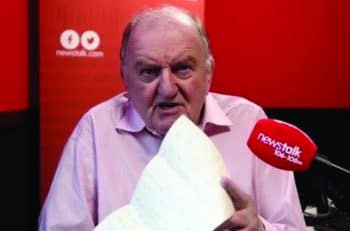
     The George Hook affair – in which he scandalously suggested that a woman might hold a degree of responsibility for being raped – touched on many things, but one overlooked aspect is a connection to a worrying trend in the world of rugby, where he made his name as a trainer and commentator. Irish society is accustomed to cover-ups and prevarication within corporate organisations, especially where there are allegations of sexual abuse. So, does the Irish Rugby Football Union (IRFU) need to address the advent of a dangerous culture of sexism among its professionals? Four current or former Irish rugby players are set for trial in Belfast this year for rape. The precise details are not open for discussion, but Ulster and Ireland players Paddy Jackson (25) and Stuart Olding (24) are accused on two counts each of raping the same woman on June 28, 2016. Both deny the charges. Former Ulster player Blane McIlroy has been charged with exposing himself to cause “alarm or distress” on the same date, and former UCD player Rory Harrison (25) has been charged with perverting the course of justice by allegedly making a false witness statement to police. He is also accused of withholding evidence. Needless to say, anyone accused of a crime is innocent until proven guilty, but we need to consider the autonomous issue of whether rugby has a cultural problem with sexism and alcohol abuse. Superficial similarities Until recently rape was considered a property crime of man against man: women. Women were not their own agents. In a different and ancient way we still see this attitude in Bunreacht na hÉireann. Victims were commonly accused of incitement, and even subject to punishment. In India and Pakistan, unfortunately, that is still sometimes the case. In Ireland, rape within marriage was only recognised as an offence in 1990. Ireland, like most countries, has long had a problem with under-reporting of this heinous crime. The Rape Crisis Centre reported in 2016 that 65% of survivors using their services had not previously reported to any formal authority. The conduct of many Irish men clearly remains hugely problematic. George Hook courted controversy, and lost his job, for offensive comments he made on his Newstalk show regarding a case with superficial similarities to the Ulster players’ case now playing out in Britain. Hook was reacting to details of a court case involving a young woman who returned to the hotel bedroom of British Olympic swimmer Ieuan Lloyd and had consensual sex with him, where upon, she alleges, she was “passed on” to his friend Otto Putland who, she claims, raped her. Hook said: “Why does a girl who just meets a fella in a bar go back to a hotel room?”. “Should she be raped? Of course she shouldn’t. Isn’t she entitled to say no? Of course she is. Is the guy who came in a scumbag? Certainly. Should he go to jail? Of course. All those things”. And then the clanger – “But is there no blame now to the person who puts themselves in danger?”. The answer, to be clear, is that there is none. A woman always has a right to choose with whom, and when, she has sexual relations. Provocateurs George Hook is a proud rugby man, whose hulking six-foot-three frame equipped him for the playing fields of Presentation Cork. He would find elusive success as a rugby coach, with Connacht and London Irish, and also the United States in the first Rugby World Cup in 1987. But it was as a pundit on RTÉ sports television, beginning in 1997, that he really shot to prominence; copying the role Eamon Dunphy plays in soccer commentary – as a provocateur who stands up for the values of his game. Having found fame in his twilight, he embarked on a successful media career as conservative columnist for the Sunday Independent, and then as Ireland’s first ‘shock jock’ on Newstalk. Along the way he has championed “beleaguered” motorists against girlie-men cyclists, infuriated feminists, and proclaimed himself an unashamed Blueshirt, reaching out to those who eat their dinner in the middle of the day. When TV3’s Colette Fitzpatrick suggested he was “controversial” he lost his temper, saying it was an “outrageous accusation” which was the same as calling him a “liar” and a “fake”, that it was a stereotype that he battles every single day. George Hook may not represent mainstream views on rape in the rugby community, but his success on the airwaves attests to a constituency of angry, middle-age men among them who inveigh against a rapidly changing world. To that mindset perhaps, the scantily-clad, inebriated girl – the tart – who returns to a hotel room with a group of men should not expect to halt proceedings once she puts herself in that position. Worryingly, the Ulstermen are not the only Irish professional rugby players to have been accused of rape this year. In March Denis Coulson (23), then playing in France for Grenoble, was detained along with two non-Irish team-mates in Bordeaux after a 21-year-old woman alleged she was drugged, taken to a hotel room and raped. He strenuously denies a charge that did not prevent the IRFU re-integrating him into the Irish game as a member of the Connacht squad. It might appear that group participation in sex is a form of currency among elite rugby players. In 2013 another incident of group sex involving two other prominent Irish rugby players, being filmed by a third, was widely reported in the media, especially the Irish Independent which lapped up the sordid details. A video went viral via social media, and soon afterwards the woman involved felt compelled to leave the country. There is no suggestion that consent was absent or withdrawn, or any sexual assault committed, but there was nonetheless a serious violation of privacy. The players faced no public sanction, and the IRFU did not deem it necessary to investigate whether a culture of sexism operates among rugby players in

    Loading

    Read more

  • Posted in:

    History is not Herstory

    Less than 30% of the writers in Village are women. And only 30% of the articles submitted for publication come from women. What’s going on? Village is politically correct and right-on. Uniquely it never, to take an example, markets magazines by putting attractive women on the cover. Village takes progressive social theory seriously. It consistently takes the most ‘liberal’ stance on abortion and reproductive rights. Most of all, and this is what determines so much of its stance, Village believes in inconvenient and prickly equality of outcome, not shiny and friendly equality of opportunity. In other words not just opening up for all, but giving the worse-off an actual leg up or a quota to compensate for the iniquities of history. This applies to women as much to any group. The new Dáil will have only 35 women out of 158. This is a more-than-50% improvement since 2011 and the number of female candidates was up to 163 from 86 in 2011 when it yielded 22 women out of 166 (up from 3 in 1973 and 22 in 2002 and 2007). Nationally, the average number of first-preference votes per man was 4,205. For women, it was 3,260. Village has given a good bit of of space to women who want to change this, to move towards fty percent female representation in parliament. The Electoral Act 2012, amusingly promoted by Phil Hogan and opposed by Fianna Fáil, applied a gender-quota rule that parties had to have at least 30% candidates of each sex or they lose half of their state funding. All parties except Direct Democracy Ireland applied their quota. Village supports this. I support this. That’s politics. We should push for immediate progress, everywhere. History and culture are different. The Abbey Theatre got into trouble recently because only one of the ten authors chosen for its 1916 commemorative programme, Waking the Nation, was a women. Other theatres and film bodies have taken similar flak. A recent rather unconvincing evocation of the Rising, Rebellion, made efforts to portray the events of that era with women to the fore. I disagree with these approaches. As to the Abbey’s Programme, what if the women took bog-standard anti-feminist positions, would they still merit advancement in the programme? Is it that a third of the writers should usually write pro-feminist pieces or is it that the third should have written pro-feminist pieces in this instance? Should there also be a certain number of works produced that have been written authors from racial minorities, from the young and the old, from LGBT and straight? Should it be the same with the actors? What about the audience? The answer to much of this is No. And as regards history, you’re trying to record the way things were: history. You shouldn’t, and you don’t need for any political reason to, distort it. All you can do with history is acknowledge and let it inform, though never determine, your politics. For the same reason that you don’t make the ruling classes working classes or younger than they were in the interests of some perceived correctness, you don’t pretend that women were the protagonists in the Rising. Unfortunately they were not. I also disagree more generally with distorting the facts to suit the ideology. The idea underpinning politics is to resolve the facts objectively and then apply the ideology. Not the other way around unless you thing your ideology is so weak that it won’t fit certain facts. In which case change your ideology, it was wrong. When the facts don‘t suit your ideology it is time to find a new ideology, or stay quiet; and more precisely to realise you should have had a better ideology in the first place The debate on women’s rights has become unintellectualised, entrenched and sometimes underinformed. For example a recent only partly-corrected Una Mullally article in the Irish Times misreported that Fianna Fáil’s policy was to have “up to a third of its candidates women”. She ridiculed the policy even though the policy did not, and legally and logically could not have, said this. It would certainly have been nice for those of us who believe that the point of that party is only ever to adopt progressive agendas, at the very last minute, if Fianna Fáil had got it so skewed, but they had not. Between Una Mullally and her employer they could not bring themselves to correct the article properly. The reason for the politics of women’s equality is that it has been an unequal world. It was an unequal world when they (men) made God a Man, it was unequal in 1916 and it’s still unequal because women earn less, are politically less powerful and have less autonomy than men. Only a fool would deny it. Because of the legacy of thousands of years of suppression women have not written as good, or indeed nearly as many, plays as men. Women also write differently from men, largely for socio-cultural reasons but also sometimes for reasons based in their physiological natures. The point is to change that by counterbalancing. Women of today who want it and show talent should get more training in playwrighting paid for by the state and its institutions, than that available to similar men, particularly training that helps them break down prejudices and that facilitates overcoming sexist obstacles to success. An admirable recently announced initiative from the Irish Film Board is doing roughly this. Such initiatives tend to generate equality of outcome. Regrettably in the arts it will be some generations before the volume of brilliant works by women rivals the volume of brilliant works by men, created over the aeons, even controlling for the heightened relevance of contemporariness. It is different with politics which, unlike history, does not or should not, trade in the past. It is possible, indeed imperative, to push for progressive change. It is, because of the nature of the discipline, and the period in which it trades – the past, not possible to push for change of

    Loading

    Read more