students

Random entry RSS

  • Posted in:

    “I could be on the streets in a month”: Minister flooded with complaints over lack of student accommodation.

    By Conor O’Carroll Over a hundred complaints were sent to the Minister for Further and Higher Education, Simon Harris TD, ahead of the start of the academic year as the struggle for student accommodation continued for thousands of students. Parents and students inundated the Minister’s office with complaints about the lack of available accommodation, while some pleaded for help, records released to Village Magazine show. “Never once in the 14 years of getting my children up and out to school with their lunch and uniform did it occur to me that they may not get to university because of a severe lack of student accommodation”, one parent fumed. “Students have been let down in this regard”, they continued. Another complained that “there is a total crisis in accommodation if you don’t want to pay over €2,000 [a month] for a one-bedroom shoe box”. Desperate measures to attend also saw some students living in hostels and hotels, at great expense to themselves and their families. Others faced long commutes or sleeping on the floors of friends The removal of several student accommodation options from the market, with the spaces instead being used to house Ukrainian refugees, created a further scarcity of purpose-built student accommodation this year. Analysis of tender documents published by the Department of Children shows at least eight student-accommodation options from Dublin, Limerick, Galway and Cork have been contracted for Ukrainian accommodation. While there was an understanding of the need to house Ukrainians fleeing war, the use of student accommodation amid shortages was met with frustration by many. “Unless you have your head in the sand you must know that third-level students have faced a huge challenge in securing accommodation”, complained one parent, describing the situation as a “government in which the right hand does not seem to know what the left hand is doing”. The competing demands of the two departments led to internal clashes between staffers when two more student accommodation premises in Sligo were contracted by the Department of Children earlier this summer. Sheenagh Rooney, Assistant Secretary of the Ukraine Programme Management Division, pushed back against queries from Department of Further & Higher Education officials at a Humanitarian Senior Officials Group meeting in June. Rooney cited “competing priorities” between the two departments and noted that the student accommodation beds were coming from private providers. The government eventually overturned the decision to contract student accommodation in Sligo and new rules were put in place requiring student accommodation to be vacant for 12 months before it is eligible to house refugees. However, with contracts at many premises already signed for this year, this change was of little benefit to the students struggling to find somewhere to live. Analysis of tender documents published by the Department of Children shows at least eight student-accommodation options from Dublin, Limerick, Galway and Cork have been contracted for Ukrainian accommodation “How can young people attend college if they have no place to live”, questioned one student, while another asked: “What are we to do? Keep deferring for years in the hope that some accommodation will become available”? Union of Students in Ireland President, Chris Clifford said: “There is no doubt that student accommodation is an absolute disaster at the moment, and it has been for a number of years”. “Students are paying extortionate prices for rooms, just so they can get their degrees and make a life for themselves. Many who haven’t been able to find accommodation at all are commuting long distances on buses, some up to three or four hours a day, or incurring huge expenses driving to college”, he continued. Another issue raised repeatedly in the emails to Minister Harris was the lack of primary teaching options outside of Dublin and Limerick, and the accommodation pressures this creates with students for the popular career choice congregating in one area. Earlier this year, Minister for Education, Norma Foley TD, announced over 600 new primary teaching course places over the next two years to combat the ongoing recruitment struggles schools face. However, these extra spaces weren’t matched with additional beds. In Limerick, hundreds of beds were also lost when student accommodation close to Mary Immaculate College was contracted to house Ukrainian refugees. “I do not see the benefit of announcing additional college places if there is nowhere for the students to live”, wrote one parent, calling the search for accommodation “an extremely stressful and expensive process”. As the start of the academic year loomed, the stress and anxiety placed on families and students searching for accommodation grew. Some spoke of being forced to defer courses, or in some cases defer for a second time meaning they would have to re-apply with the CAO next year. Others questioned whether they should give up on their dream because of the lack of accommodation. Desperate measures to attend also saw some students living in hostels and hotels, at great expense to themselves and their families. Others faced long commutes or sleeping on the floors of friends. Clifford said these arrangments adversely affect students’ mental health, with many feeling “isolated and disconnected” from their classmates, friends and wider college experience. A spokesperson for the Department of Further and Higher Education told Village: “Minister Harris is acutely aware of the difficulties being faced by students and their families in securing appropriate affordable accommodation to allow their participation in higher education”. “An additional 929 beds were available in publicly funded Higher Education institutions this academic year, compared to last year.  The Department is aware of an additional 618 private beds completed so far this year, with a further 1,500 privately funded beds scheduled for completion this year”, the spokesperson continued. “To date, the Government has approved a total of up to €61m to directly invest in the construction of circa 1,000 new student accommodation units across a number of higher education institutions with discounted rates targeted at SUSI and other student cohorts for a percentage of the units”. Some questioned whether they should give up on their dream because of the lack

    Loading

    Read more

  • Posted in:

    “The thought of being homeless again is terrifying, it gives me nightmares”: Students struggle for college accommodation

    By Ava Liange After two consecutive years of COVID-19, online learning and postponed exams, the housing crisis is once again the main obstacle that prevents students from pursuing their studies. With the start of the new academic year just around the corner, it is becoming increasingly challenging for students to find accommodation near universities. Many are confronted with the choice of commuting several hours a day to access their course, paying extortionate rent for on-campus accommodation, or turning to unregulated ‘digs’ accommodation. Faced with these choices, sacrifices on affordability and living conditions are often made. “We’ve had to deal with mould and rodents”, Jamie Clarke, an Atlantic Technological University (ATU) student, explained to Village Magazine. “[Our landlord] said he’d paint the house with anti-mould paint and call in an exterminator, but they never came back to check in and it didn’t work so we had to deal with it ourselves”. The housing crisis has become a great source of anxiety for students “Every summer it’s like a déjà vu all over again as we wonder just how much worse matters can get”, says Molly Greenough, President of the Students’ Union at University College Dublin (UCD), following the release of their latest Accommodation Report. According to the new figures, around two-thirds of students pay up to €750 a month for student accommodation, considerably higher than a national average of €469 cited in a recent Higher Education Authority study. “The acute shortage of beds is starting to have a seriously worrying impact on the pursuit of education”, continued Greenough, with the report highlighting how many students are forced into the private rental market where they pay market rates and compete with working professionals. Due to inflationary pressures on the rental market and a lack of options for on-campus accommodation, more and more students are drawn to ‘digs’, where students rent a room in a house where the landlord lives. While often times cheaper than the alternative, these arrangements leave the students with very few rights. ‘Digs’ don’t fall under the remit of the Residential Tenancies Board meaning there are no minimum physical standards that the property must comply with and the restrictions on rent increases for other private rented accommodation do not apply. Students have reported being denied access to facilities or certain areas of the house, landlords invading their privacy by entering their room unannounced or when they aren’t there, and being hit with unnotified rent increases. One student living in ‘digs’ last year described the experience as being treated like a burden rather than a person, while others said they felt “infantilised”. The impact of this search for accommodation can be draining on students’ mental health. “There’s just a period of time when you’re searching for a house, and you’re losing time you could use doing assignments”, says Jamie. “It definitely affects your energy levels and how you’re able to focus on things”, he continues. On top of affecting their studies, the housing crisis has become a source of anxiety for students. “The thought of being homeless again is terrifying”, says Brigid MacBrough, another student from ATU, “it gives me nightmares”. Students who have to commute spend a large amount of time and money each day and find themselves exposed to anxiety as well, “The last year of college I tried to find accommodation, but I couldn’t so I had to commute for three hours a day”, says Dawid Blasevac, a former student. “I hated it, that on top of stressing about finishing the course and the stress of finding a job after. I did feel incredibly garbage after each day”. Many students are forced into the private rental market where they pay market rates and compete with working professionals There seems little sign of improvement either, according to Aiobhe O’Brien, Welfare Officer at the University College of Cork. This crisis is a burden “for students at any given year”, she explains. “It is becoming an increasing problem because nothing is changing, it’s getting worse on the number of rooms but also on how much they’re charging per room…there are so many scams, landlords say they’re out of the country and just ask for the money”. The lack of options leaves some students wondering whether they would be better served going abroad to study. Brigid is one student who has concerns about continuing with her studies. While thinking of doing a master’s in Dublin she “considered going abroad because the cost of living as a whole would still be cheaper”. With the housing crisis having reached a point where students have to choose whether they want to move abroad to pursue their studies or do so in Ireland at an excruciating price, it’s clear that something has to change soon before Ireland loses another generation of young people to emigration.

    Loading

    Read more

  • Posted in:

    50 years since 1968

    Not a week has gone by in 2018 Ireland without several street demonstrations, especially about abortion and the housing crisis. In France, protesting is part of the vernacular. Riots are common: just look at 1789 and 1968. Ireland and France share a reputation for feistiness. A comparison between Irish and French demonstrations could be instructive. “What do we want? Public housing! When do we want it? Now!”. More than 10,000 people are currently home- less in Ireland. The demonstration I attended, organised by the National Homeless and Housing Coalition, on 7 April was good-natured: festive and serene. People played and sang music as they marched. The Garda seemed engaged and smiled while overseeing the demonstration: a safe protest. It appeared the crowd was representative of the general population, as perhaps you might want. It started at the Garden of Remembrance and ended in front of the Custom House in Dublin in light rain, as cheerful as the weather allowed. Its effectiveness was its mainstream attendance; there was no danger here. It would, I reflected, be different: more fractious, less representative, angrier – in France. Ireland fights for Human Rights At the moment Ireland is in arms over: abortion, education, sex education, health, animal welfare, drugs. But I have the sense that some of these campaigns are not mainstream, even as protests. Certainly the Water Protests were successful, albeit the underlying political message (no new taxes?) and symbolic value were not too clear. Abortion is a long-standing divisive issue in Ireland, symbolising the hegemony and, later, decline of the Catholic Church. Protests date back to 1983 when an unwise blanket prohibition was approved in a referendum. In May there will be a rerun. There are many events, debates and demonstrations on both sides, with pro-choice as fashionable politically as pro-life must have been a generation ago. The demonstration I attended in April was ‘pro-choice’- for ‘Equality, Freedom and Choice’, organised by Rosa. The rally was jubilant and confident, almost over-confident. The Daddy of all modern Irish marches is the PAYE protests from 1979-1980. Around 700,000 Dubliners marched against the stifling ‘Pay As You Earn’ tax. The BBC called it “the largest peaceful protest in post-war Europe”. But I sense things have changed since then. There is no longer an Ireland the sense that the regime is fundamentally at odds with its electorate. Perhaps it’s because the country now mostly complies with international norms or is fast moving in that direction; perhaps it’s because the country is simply much wealthier and has never been so confident. In 2003, Irish anti-war protesters organised a demonstration for peace in Iraq. The British and Americans had invaded Iraq. 100,000 walked on the streets of Dublin. It was a thoroughly internationalist protest. In 2006, a violent demonstration took place in Dublin’s O’Connell Street. For some reason Northern Unionists wanted to organise a ‘Love Ulster’ Parade to honour the victims of the IRA. A counter demonstration materialised and a riot started. Several Molotov cocktails were thrown and cars were burnt. A total amount of 14 persons were wounded and 41 arrested by Garda. Locals put the intense violence down to the alien influence of recalcitrant Northerners: it didn’t symptomise a new riot mentality. These kinds of demonstrations are pretty rare in Ireland compared to in France, where there are wide-ranging politically-driven strikes and demonstrations every year. Governments can fall as a result of demonstration culture in France. If France had had an international bailout that was forcibly inflicted on the population; if France had had the iniquities of Nama bailing out the richest failed developers there would have been strikes and riots. A country’s protest mentality varies from generation to generation. We’ll put down the Irish monster meetings and boycotts of the nineteenth century as the fruits of a different era. Where a country is colonised and not run for the benefit of the majority – or a significant minority – wideranging subversion is to be expected. In Ireland it culminated in the Easter Rising in 1916 and the War of Independence 1919-21. In the North of course discrimination against Catholics fuelled a later whirlwind. In the Bogside riots of 1969, eight people were killed, a majority Catholic, and over 150 homes destroyed; and the IRA campaign resulted in 1696 deaths. But, though important, this all speaks little to the modern-day Republic of Ireland.   France, protest pioneer French demonstrations have been well-known and lethal since at least the 18th century with a sustained and celebrated (though not of course by Edmund Burke) historic riot: the French Revolution, facilitating a declaration of the rights of man and changing forever the notion of the political establishment. In the twenty-first century, protests are still an important political phenomenon. France has been a global leader in dissent. The rockstar of street opposition was May 1968 when strikes and demonstrations led by students and workers and the occupation of universities and factories across France brought the entire economy of France to its knees and political leaders feared civil war or revolution. The moribund government itself ceased to function for a while after President Charles de Gaulle secretly fled France for a few hours in Germany. ‘68 changed France’s democracy: the super-annuated President De Gaulle resigned, the Assemblée Nationale was dissolved, and government committees were formed to restructure secondary schooling, universities, the film industry, the theatre and the news media. The Grenelle Accord gave better conditions for the unemployed, a 35% increase in the minimum wage and a fourth week of paid leave for those in employment. Mentalities started to change too with a sexual revolution from the young. Mixed schools became more common. 1968 sundered a post-War France of austerity, conservatism and asceticism. Nevertheless the movement succeeded “as a social revolution, not as a political one”. President of the Republic (2007-12) Nicolas Sarkozy famously denounced May 1968 as the source of contemporary France’s problems. The student revolts against bourgeois society introduced a “relativism”, he argued, that undermined national identity, the spirit of

    Loading

    Read more

  • Posted in:

    Rape Disgrace

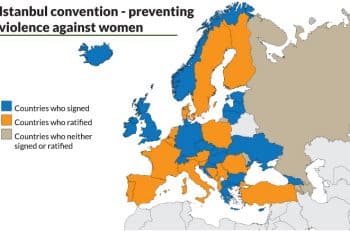
    We’re living in a “rape culture”, even though the term seems to annoy some people. So let’s just say we’re living in a culture in which rape is routinely trivialised, where victims are frequently blamed for its occurrence and their testimony is denied and ridiculed, and where the onus is placed on them to prevent rape from happening. Just under a third of female respondents to a recent survey among Trinity College Dublin students said they had experienced unwanted physical contact while at Trinity. A quarter of female students had been sexually assaulted, or had a “non-consensual sexual experience”. The Dublin Rape Crisis Centre (DRCC) has recorded a shocking increase of 36% in the number of victims of rape and sexual assault to the Sexual Assault Treatment Unit in the Rotunda Hospital in Dublin in 2015. Ellen O’Malley-Dunlop, CEO of DRCC, said: “The 36% increase in the number of victims accompanied to the Sexual Assault Treatment Unit in Dublin, for 2015 in comparison with 2014, is very concerning. We have yet to analyse these figures as to why there has been such an increase”. Surprisingly, 24% of callers were male and there has been a steady year-on-year increase in males using the Helpline since 2008 when the gure was 14%. There was an increase of 30% in first-time callers to the National 24-Hour Helpline in 2014 (the latest year for which statistics are available), compared with 2013 figures. Calls relating to adult rape showed an increase of 14% compared with 2013 figures. There was an increase of 71% in crisis appointments for recent rape and sexual assault delivered by therapists in 2014, compared with 2013 figures. Our statistics on sexual crime are shocking. It is now thirteen years since publication of the Sexual Abuse and Violence in Ireland Report (SAVI) detailing the prevalence of sexual violence in relation to age and gender for over 3,000 adults, it remains a very distressing document. So with a general election looming what’s to be done? Ratification of the Istanbul Convention would generate change. The convention deals with prevention, requiring us to put in place measures to challenge the gender stereotypes, roles and attitudes that promote this culture of violence against women. It obliges us to ensure that the Garda respond immediately to calls for assistance and that all victims have access to special protection measures during investigation and judicial proceedings. The convention crucially deals with protection, ensuring that the needs and safety of survivors are placed at the heart of all measures. It demands the setting up of specialised support services that provide medical assistance as well as psychological and legal counselling to survivors and their children. The convention also stipulates the number of refuges that are needed to adequately respond to women, that of one refuge place per 10,000 of population – we’re well behind this target right now. The Istanbul Convention provides the framework for structural and personal reforms and provides a mechanism to hold the Government to account. We need stronger legislation. Domestic violence should be a crime of itself, accompanied by appropriate sanctions that match the seriousness of the act. Within the proposed sexual-offences legislation, a definition of consent should be included. Consent should be freely given – an enthusiastic, clearly communicated and ongoing Yes. Right now one in ten victims of sexual crime in Ireland reports that crime. Of that one in ten, only 7% lead to a conviction. We urgently need sanctions that are effective, consistent, proportionate and dissuasive. The appallingly high attrition rates within our criminal justice system and send out a message to women that if they report a crime justice will be done. We must provide a supportive environment for women to continue through the system and seek justice. Setting up the new Garda unit – The Human Protective Services Bureau – was a great move but it requires increased personnel and financial resources to target domestic and sexual violence. Specialist units in each Garda Division should now be established to address domestic and sexual violence ,and ongoing training is required at all levels to develop an expertise within the force that both supports the victim and pursues perpetrators to arrest and conviction. We will only seriously address this issue when we shift the focus from women, from asking what did she do, why was she there at that time, why did she stay, and place the focus on men who perpetrate these crimes. We must break the malicious disbelief, victim-blaming and perpetrator-excusal that surrounds rape. We must restore funding to the organisations that help victims. We must shatter this culture of rape. Lorraine Courtney

    Loading

    Read more