Village Magazine

Random entry RSS

  • Posted in:

    Paschal Donohoe: Minister for Finance, Public Expenditure and Reform

    I interview the charming, chatty and firm Minister for Finance in the Department of Finance on a bright Wednesday in late April. He has just benefited from a profile in the Irish Times which of course likes his supposed toughness, especially when public-sector-pay talks loom, and which quotes a senior Fianna Fáiler praising him as “the cleverest man in the room” (even when Varadkar is in it). It also notes that despite his “Hello, Everybody” manner, “Business and interest groups that come into contact with him leave impressed with his knowledge and command of his brief. These are the traits that other politicians note and envy”. Donohoe is, then, an Irish Times sort of guy. Arranging the interview was straightforward, and his handlers, particularly Deb Sweeney, efficient and unstuffy. He gave me more time than had been allocated, and a book, ‘The Value of Everything, Making and Taking in the Global Economy’ by Mariana Mazzucato (2018), as I was leaving. He was still engaging about his favourite works of literature as I was in the end ushered down a corridor and out into the sunlight. Mazzucato, in her book, claims that many advanced western countries, in particular the US and Britain, now confuse those who create value for those who extract it or destroy it, leading to impoverished and unhappy societies, soaring inequality and declining growth. I conclude the gift was well-judged. On his Political Philosophy… “My political philosophy is a politics of the very strong centre. I look at the opportunities and chances that I’ve had in life by virtue of the school that I went to and the upbringing that I’ve had. I believe that should be available to everybody in our country. I believe that, in order to make that happen, we need to have an open society and a diverse economy. I want to see an Ireland that is inclusive, that can welcome people and make them feel at home, and I strongly believe in a mixed economy. I believe we need both strong governments and strong markets and I think either on its own cannot achieve what citizens need”. On his Economic Philosophy… “My economic philosophy then springs from that. I believe in a resilient and mixed economy. I believe that markets can do some things well and I believe government can do many things well. If you look at the kinds of new economies that are being developed and the new challenges that are developing, we can only respond to them if both the State and markets play their role. We have seen, to the great cost of our citizens in particular, what can happen if markets become unbridled; and we have seen at other times in history what can happen if the State is expected to do everything; and I don’t believe either work. I believe the global balance needs further shifting at the moment – in favour of the State. I believe that we get the balance about right here in Ireland but I believe that we are going to need to continue to support supranational organisations like the European Union, like the WTO, like the OECD, to help nation states respond back to new challenges like artificial intelligence and to the de-globalisation agenda that is now beginning to develop. I believe very strongly in equality of opportunity but I’m very conscious at the moment that that credo is being challenged by developments within the market economy – if we keep on encouraging our citizens to believe they have equality of opportunity and then, generation by generation, that equality of opportunity is not realised, it poses very serious questions for citizens regarding how they feel about the State. Because if, from generation to generation, that opportunity is not realised or even offered the prospect of citizens either blaming themselves or the system and the State for not offering that agenda poses really grave challenges for how we organise our liberal democracies. I unfortunately believe some of those risks are beginning to materialise elsewhere at the moment”. On equality of outcome… “I think equality of outcome is something that is very, very difficult to achieve because I think it runs against the grain of initiative and individuality that I ultimately believe has a very important role to play in our society as well”. As to whether equality of opportunity is desirable… “I think equality of opportunity is more desirable than equality of outcome and certainly in the policies I try to follow and implement in the two jobs I do at the moment it is about trying to realise opportunity. But I’m conscious of the fact that an equality of opportunity agenda doesn’t speak to, or doesn’t help, citizens who are at the margins of our society; and for those citizens a more interventionist approach is necessary on behalf of the State I should say”. As to whether equality of opportunity can be unfair to the extent that people’s capacity for grasping opportunity is sometimes determined by luck and not entirely a product of effort or initiative… “And this is why I accompany my support of equality of opportunity with a strong support for the necessary role for an enabling and strong State. The difficulty that the equality of opportunity agenda has is when it runs into the chance of birth or runs into intergenerational inequality, and this is why I believe we need an active and enabling State alongside regulated and flourishing markets. I would be supporting the interventions that we have at the moment. I do not think that the agenda of positive discrimination is one that can command ongoing support here in Ireland and so this is why I support the State playing a more active role in the management of land, why I support for example property taxes. It’s why I support a a progressive tax code. Because without having those things in place you can’t offer the support that is needed to deliver the funding for an active State”. On difference in emphasis from Michael Noonan’s… “As

    Loading

    Read more

  • Posted in:

    From Naughten to Neachtain: nothin’ worth notin’

    It is not a question of whether, but how many, more people will become embroiled in the developing row between Independent News and Media and the Office of the Director of Public Enforcement (ODCE). The battle should more accurately be described as one between the biggest shareholder in INM, Denis O’Brien, his appointed chairman to the company and confidant, Leslie Buckley, and Ian Drennan the director of the ODCE who is seeking to appoint High Court inspectors to examine aspects of the media corporations’ governance. In the latest twist to the saga the Minister for Communications, Climate Action and the Environment, Denis Naughten was almost forced to fall on his sword after it emerged that he gave commercially sensitive information to lobbyist, Eoghan O Neachtain, indicating a probable referral of the attempted media purchase of Celtic Media Group by INM to the Broadcasting Authority of Ireland (BAI). Heneghan PR for whom O’Neachtain works, was acting for INM when the lobbyist made the call to Naughten in November 2016, and company boss, Nigel Heneghan, promptly informed his client Leslie Buckley about the news that a referral to the BAI was likely. Buckley immediately passed it on to O’Brien, who controls 29.9% of INM, but apparently did not extend the same courtesy to other board members at the time. When asked about a possible referral by him of the Celtic Media purchase proposal to the BAI by Independent TD Catherine Murphy and Brian Stanley of Sinn Féin three weeks after the phone call with the lobbyist, Naughten had refused to confirm his likely course of action to the Dáil. In the normal course of events, in a normal democracy, a minister passing on such market-sensitive information to a company, or in this case to its largest shareholder, would precipitate a thorough investigation and probably a ministerial head on a plate. Not so in this case. Incredibly, the independent minister insisted that he was only expressing a ‘personal opinion’ to O’Neachtain, whom he said he knows socially from Connacht rugby circles. He confirmed that he had taken no notes of the call. He also said that he met Buckley at an event organised by INM in May 2017 just a month before INM cancelled the acquisition of Celtic Media and just before the minister was to determine whether the deal should proceed. He told the Dáil that he was “trying to recall the detail of that but I do not recall him (Buckley) raising with me at that stage” the issues pertaining to the Celtic Media purchase. In his affidavit to the High Court, heavily leaked, Drennan has suggested that the minister’s action may have breached corporate governance rules insofar as commercially sensitive information was provided to just one shareholder of INM in advance of the likely referral of the Celtic Media purchase to the BAI. By fully supporting the minister, Leo Varadkar may well find himself the focus of criticism further down the road by the corporate watchdog for pre-empting an investigation by the High Court inspectors he is seeking to have appointed to investigate a string of alleged serious, including criminal, behaviour in INM. Varadkar has until now managed to avoid any entanglement in the uncomfortable and controversial relationship between O’Brien and Fine Gael, going back to the mid-1990s when the businessman won the hugely lucrative second mobile phone licence with the assistance of then communications minister, Michael Lowry. The party managed to clear its debt within a few years and although its main fundraiser, Lowry, was forced out in the wake of the Moriarty tribunal investigation, the links between O’Brien and senior party figures, including former leader Enda Kenny and current EU commissioner, Phil Hogan, has long persisted. The main opposition parties have concentrated on this potential exposure of the Taoiseach to the ongoing dispute between the INM and the ODCE, which is investigating an alleged data breach by the company affecting senior staff, journalists, lawyers and others as well as issues over the, since abandoned, attempt by Buckley to get INM to buy Newstalk, the radio station controlled by O’Brien. According to a protected disclosure by former INM chief executive, Robert Pitt, Buckley tried to get the board to pay substantially more for Newstalk than he and his advisors thought it was worth. O’Neachtain, of course, is a former press officer for Fianna Fáil and once toiled day and night to defend Bertie Ahern as he sought to explain his inexplicable financial arrangements to the Mahon Tribunal during the period he was a finance minister, without a bank account. No doubt he knows where other Fianna Fáil skeletons are buried and indeed must be aware of a thing orf two about Fine Gael having advised Enda Kenny during his term at Taoiseach. But Fianna Fáil is also holding fire because it does not want to provoke a general election which would edge closer if Naughten were forced out of cabinet and government, potentially weakening the wafer-thin voting balance in the current Dáil. Besides, following the next election the party may need the support of independents like Naughten. Sinn Féin is reluctant to do anything which could jeopardise the stability of government in advance of the referendum to repeal the 8th amendment in late May. Frank Connolly

    Loading

    Read more

  • Posted in:

    Ireland, Italy and the Disclosures Tribunal

    Leonardo Sciascia was an Italian political journalist, an elected radical member of parliament and the most prominent anti-mafia critic. All of this features in his famous detective novels which are in fact anti-detective novels or works of political observation. Coupled with his masterly analysis of the assassination by the Red Brigade of the Christian Democrat conciliator and former Prime Minister Aldo Moro they amount to a sustained critique of Italian and Sicilian political and cultural life. They reflect the complex interstices of corruption and collusion between extreme-right-wing Catholicism, organised crime and the shadowy self-protection syndicates of big business, politics, a malevolent state bureaucracy and crime. His books show the lethal effects of innuendo, smoke, mirrors and sighs, the nefarious rumour mill, shadows. Sciascia was a specialist in the mafia and he demonstrated how they kill and destroy. First they isolate, disempower and then denigrate. They in effect demonise their prey. And those who seek to investigate them, such as Judge Giovanni Falcone, who act on principle are destroyed in the process. This is exquisitely detailed in ‘Equal Danger’, his best book. In Sciascia’s fiction, it is the detective, not the murderer, who is isolated and suspected. Ironically in the end Sciascia attacked the crusading judges as putting civil rights at stake in an article, when he was dying, that irredeemably punctured his reputation, by attacking Falcone as a celebrity judge. This is deeply relevant to Ireland. Our mafia are our corrupt politicians, bankers and lawyers and the toxic relationship of our shadow state of governance between the police and the justice department. Those who challenge corruption or blow the whistle are reputationally destroyed, personally attacked, framed, driven to self-destruction or simply disposed of. Ireland is Italy and “equal danger” a cautionary text. The smearing of the state knows no boundaries and frequent collusion with Tulsa a criminal conspiracy maintained by many lawyers who should be disbarred. Another Sciascia theme, particularly evident in his most famous text, ‘The day of the Owl’ is the Sicilian trait of anomie or indifference. A shrug of the shoulders. It is what it is. Life moves on. Principle, justice and the truth are a waste of time. In controlled societies such as Ireland and Italy Sciascia’s books show the lethal effects of innuendo, smoke, mirrors and sighs, the nefarious rumour mill, shadows, in Italy trivialisation amounts to a resigned admission that the victims of crime had it coming to them in some obscure way. It betrays a desire for yourself not to go the same way. Being principled in an unprincipled society is very difficult. We know more than 10 black sacks of shredding left the office of the Commissioner under the supervision of a superintendent who has given evidence twice already to the Tribunal. The phone of the two past heads of national intelligence, Callinan and Ms. O’Sullivan are gone…vanished, destroyed. Yet no issue of the destruction of crucial evidence seems to be of concern to the Tribunal. It was the husband of the former Commissioner O’Sullivan who was appointed to take charge of the investigation into Superintendent Taylor. The phone of the Superintendent was taken but that crucial evidence too is lost. It seems to be simply a matter of no consequence. A judge whose orientation in private practice was prosecutorial and who, on the bench, has been somewhat indulgent of changes to evidential exclusionary rules to the advantage of fact-gathering gardaí, risks steering a Tribunal away from the glaringly obvious criminality of the highest level of the Department of Justice and the police. Moreover Maurice McCabe is represented at the Tribunal by former Minister for Justice Michael McDowell SC, a long-time and visceral political defender of the police and law and order. If I were McCabe I would contemplate refreshing my legal representation and wonder how the now ascendant narrative is that a cock-up rather than obvious state criminality smeared him. He should dwell on whether it was in fact appropriate for him to concede that the evidence established that the inclusion of the false allegation against him of rape in the 2013 Tusla report “was some form of cut and paste error”, and that the error was not the result of any deliberate action or ill will. And he should consider how the damning evidence of the press secretary Dave Taylor was not addressed first, as the Tribunal’s first module, as dictated by the terms of reference; and how the sequence of modules was altered so the less clearcut Tusla model was heard first. Instead the Tribunal opened with an arbitrarily selected series of smokescreen narratives implying a cock-up by Tulsa, and culpability for outlying zealot Callinan perhaps. Noel Waters, former Secretary General of the Department of Justice, has suffered from amnesia. In his evidence to the Tribunal he declared he could not remember, on nearly 50 occasions. Most damningly, he spoke to Nóirín O’Sullivan at a crucial moment during the O’Higgins Commission which in 2015 was looking at allegations of poor policing in Cavan/ Monaghan made by Sergeant McCabe, phone records indicate. However, neither Waters nor O’Sullivan can remember the 14-minute call on May 15, 2015. The crucial moment was when O’Sullivan’s lawyers were asked by the commission to confirm that they had been instructed to attack Sergeant McCabe’s motivation, and the commission adjourned briefly so that she could be contacted. The Tribunal had previously heard that O’Sullivan “sought time to speak to the Department of Justice” before confirming her original instructions. The Department has maintained neither it nor then Minister for Justice Frances Fitzgerald had prior knowledge of, or input into, the legal strategy. Waters said he could not remember the call, and insisted the Department had played no role in the strategy. When it was put to him by Tribunal counsel, Diarmaid McGuinness SC, that it was reasonable to assume he and O’Sullivan discussed what was occurring at O’Higgins that day, Waters replied: “I have to say in response that I have no recollection of that at all”.

    Loading

    Read more

  • Posted in:

    Panoramaphosa

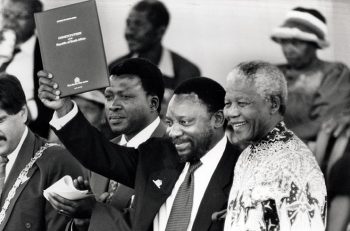
    On a recent drive to Cape Town International airport the ‘Rainbow Nation’ was nowhere to be seen. Instead it was like old times when I was the Irish Times Correspondent there in the 1990s. The scene carried a strong message of the work that faces the country’s new President Cyril Ramaphosa. Along the motorway known as ‘Settlers Way’ there was a clear run out of town to deposit the hired car and catch the early-morning flight to Lanseria north of Johannesburg. The other carriageway, the one carrying traffic into the city centre, told an entirely different story. On that side the traffic was chock-a-block and consisted almost in its entirety of white minibuses carrying black workers from the vast townships of Gugulethu, Langa and elsewhere. They were travelling in their thousands to service the needs of the white population of the city and its wealthy suburbs. Earlier that week in Franschhoek, a tourist and wine-producing town , it was also like old times. The restaurants were full of white folk of retirement age being served by waiters from the Black and Cape Coloured Communities. In Johannesburg restaurants things were different but only slightly. There were tables occupied by white clients and tables occupied by black clients but no tables at which blacks and whites dined together. These casual and anecdotal observations don’t tell the full story but they are an indication of how deeply-ingrained apartheid and its legacy have been in South African society. It will take a very long time and a great deal of patience to make significant changes but there is no doubt that the country’s new President, Cyril Ramaphosa, is a patient man. -Nelson Mandela indicated that Ramaphosa was his preferred successor but the African National Congress (ANC) was, and still is, a very complicated organisation and as in most African countries ethnic loyalties played their part in the succession stakes. Ramaphosa is a member of the small Venda nation. His opponent for the vice- presidency and eventual presidency, Thabo Mbeki, was a Xhosa, a group that produced Mandela himself, his political partners Oliver Tambo and Walter Sisulu as well as the influential churchman Archbishop Desmond Tutu. Nelson Mandela merely indicated a preference for Ramaphosa but his estranged wife Winnie mobilised the ANC Youth League behind Mbeki’s candidacy. Ramaphosa’s time for campaigning had been limited due to his involvement in negotiations on a new Constitution. All these factors: tribes, internal ANC politics and time constraints played their part in his defeat by Mbeki. Ramaphosa had to wait until December of 2017 before he could make his move. Mbeki, a small bookish man with a penchant for the poetry of W B Yeats, fell under the spell of American pseudo-scientists who peddled the theory that HIV did not cause AIDS. The result for South Africa was disastrous but the ANC’s response was predictable. As a former liberation movement, loyalty had been vital to the organisation’s very existence during the struggle against the apartheid regime but it became a hindrance to progress after the party came to power. ANC loyalty kept Mbeki in power amid a catastrophic AIDS epidemic, just as it kept Jacob Zuma in a presidency that smacked of intense corruption and maladministration. After Mbeki had won the nomination to become Mandela’s vice-president, Ramaphosa made a rare rash decision. He refused to attend Nelson Mandela’s presidential inauguration in Pretoria in 1994. From then on, however, he matured and played a political waiting game, concentrating on business opportunities that made him one of South Africa’s wealthiest men with a personal fortune of more than $550 million. During that time Zuma, a member of the Zulu nation, the country’s largest ethnicity, became entangled in a web of deals with the Guptas, a wealthy Indian business family. Corruption allegations abounded and a new glossary of political terms was spawned, the most prominent of which was ‘State Capture’ suggesting much more than personal corruption. The phrase indicates the belief that the entire State and its institutions had been ‘captured’ by the Guptas and their allies in the ANC. And Zuma was not the only ‘captured’ ANC member. In Parliament, as the popular newspaper City Press recently put it, six ministers sat in what it has been tempted to call the “Gupta Corner” of the Government front bench. Ramaphosa has recaptured the cabinet in a quick reshuffle in order to get moving but by doing so has increased tensions and enmity within his own party. The ANC’s traditional loyalty to its leader in this instance could provide a positive counteraction to its negative effects in the past. He has got off to an energetic start, setting out on early-morning exercises in his Ronald McDonald socks in various parts of the country, ranging from the promenade at the prosperous Cape Town suburb of Sea Point, to the beach at East London; and on a long walk at 5.30 am in the Cape from the black Township of Gugulethu to the ‘coloured’ community of Athlone. In each case these were exercises in building up his profile in local communities as a man of the people instead of his image as a wealthy man who loves fast cars and good wine. In parliament his State of the Nation address was delivered without interruption, a very rare happening in a place where raucous heckling is frequent. In that address he touched on the country’s problems which he has vowed to solve. The education system is in a parlous state. Poverty abounds mainly in non-white areas but also amongst Afrikaans-speaking people who have always had a “poor white” section of their community. Health services need reform. Public transport is almost non-existent with Uber taking over its role especially in white areas. There have been a number of murders of white farmers, and Ramaphosa caused raised eyebrows among them by stating in his address that he would pursue the expropriation, without compensation, of land that had been confiscated from blacks. Right-wing commentators saw their chance and

    Loading

    Read more

  • Posted in:

    Oxymoron

    By 2040 we expect that an additional one million people will live in Ireland, an additional two-thirds of a million people will work here. An ageing population and smaller family size mean that we will need an additional half a million homes to accommodate this growth. Project Ireland 2040 purports to address this. It consists of the National Planning Framework which sets out a spatial strategy for Ireland, to accommodate in a “sustainable and balanced” fashion these significant demographic changes. It is the overall Plan from which other, more detailed plans including city and county development plans and regional strategies will take their lead. Learning from past experience, the NPF is backed up by an infrastructure investment programme, the National Development Plan. This National Development Plan sets out the significant level of investment, almost €116 billion, which will underpin the NPF and drive its implementation over the next ten years. €91 billion in Exchequer funding for public capital investment has been allocated and will be supplemented with substantial investment by commercial State Owned Enterprises. This increased level of resources is expected to move Ireland close to the top of the international league table for public investment, from a low post-crash base. In short, the State’s infrastructure investment – the money – should be guided by and follow the Plan. That is what makes Project Ireland 2040 different and a significant innovation in Irish public policy. What is not different is that it does not have teeth, particularly to stop market-driven development that is incompatible with the vision. Project Ireland 2040 is about enabling all parts of Ireland to achieve their full potential. It seeks to move away from the current, developer-led, business as usual pattern of development, to one informed by the needs and requirements of society. This means seeking to disrupt trends that have been apparent over the last fifty years and have accelerated over the past twenty. It purports to aim to ensure that rather than have excessive population growth focused on Dublin – as is the current trend – that 75% of all population growth occurs in the rest of the country.The immediate priority is to increase overall housing supply to a baseline level of 25,000 homes a year by 2020, and then a likely level of 30-35,000 annually up to 2027. 112,000 households are expected to obtain social housing over the decade. A new €2 billion Urban Regeneration and Development Fund will aim to achieve sustainable growth in Ireland’s five cities – Dublin, Cork, Limerick, Waterford and Galway – and other large urban centres, incentivising collaborative approaches to development by public and private sectors. It aims to secure at least 40% of future housing needs by building and renewing within our existing built-up areas, whether they be in the many villages and towns in need of regeneration or in our cities and larger towns where there are also huge opportunities for city and town centre regeneration. Of course the corollary of this is that an unsustainable 60% of future housing need will be met on green-field sites. It targets a level of growth in the Northern and Western, and Southern, Regions combined to at least match that projected for the East and Midland Region. It will support the future growth of Dublin as Ireland’s leading global city of scale, by better managing Ireland’s growth to ensure that more of it can be accommodated within and close to the city. It supports ambitious growth targets to enable the four cities of Cork, Limerick, Galway and Waterford to each grow by at least 50% to 2040 and to enhance their significant potential to become cities of scale. It recognises the extent to which Sligo in the North West and Athlone in the Midlands fulfil the role of regional centres. It recognises Letterkenny in the context of the North-West Gateway Initiative and Drogheda- Dundalk in the context of the Dublin- Belfast economic corridor. It seeks to strengthen our rural fabric, by reversing town/village and rural population decline, by encouraging new roles and functions for buildings, streets and sites, and supporting the sustainable growth of rural communities, to include development in rural areas. That’s one- off housing. Anyone who follows this will see that there’s not much sense of anything being ruled out, and indeed almost everything seems to be ruled in. That suggests it won’t all happen. And the determinant of what happens and what doesn’t will, as usual, be the market – which will skew to Dublin and its hinterland, and of course one-off housing whose site costs are negligible (for those lucky enough to own rural land) but which pose difficulties for sustainability: economic, social and environmental. It costs more to service far-flung housing with broadband, and everything else. One might quibble with elements of the plan. Dr Edgar Morgenroth – Professor of Economics at DCU and a primary author of the document – said that plans for the €850m motorway between Cork and Limerick would undermine the proper growth of “second tier” cities in Ireland. He rejected claims by An Taoiseach Leo Varadkar that the motorway would encourage the cities to grow faster saying it would instead lead to sprawl. He told ‘Morning Ireland’ it was important “to put the infrastructure into the cities, not between them”. “Once you put the motorway between two cities what you’re doing is getting more sprawl. So you’re undermining your own strategy”, he said. Morgenroth also said that building a new motorway undermined a commitment by government to reduce carbon emissions. The NPF will also have “statutory backing” overseen, quasi-independently, by the new Office of the Planning Regulator (OPR) – a key recommendation of the Mahon Tribunal.   Unfortunately this particulator Regulator will not regulate but rather advise others whose motivation may be political and short-termist. A regulator who does not regulate. There has been much light-free heat, led by Sinn Féin which even claimed to be seeking a legal opinion, about the failure of the government to put the NPF to a parliamentary vote but instead to include

    Loading

    Read more

  • Posted in:

    Punker

    “Things can only get better”, went the lyrics to the hit by D:Ream which became the anthem of the incoming New Labour government in 1997, fronted by the relentlessly upbeat Tony Blair. Six years later, Blair joined the US in its illegal invasion of Iraq, a move that plunged the entire Middle East into a new era of violent instability and a refugee crisis that today, some 15 years later, shows little signs of abating. Things, it turns out, can also get worse. Statistics can, however, be schooled into presenting a beguilingly different picture of the true state of the world, and the darling of global optimism, psychologist and author Steven Pinker is a skilful inquisitor of data. His scholarship seems to have caught the zeitgeist of the latest wave of techno-optimism, and his data-fuelled Panglossian creed is being enthusiastically embraced by global influencers like billionaire Bill Gates. So excited were the editors of Time magazine that in January, for the first time in its more than 90-year history, it invited Gates to be guest editor of an edition, titled ‘The Optimists’. His editorial was essentially a re-heat of Pinker’s tome, ‘Enlightenment Now’, which, Gates gushed, was his “new favorite book of all time” and “the most inspiring book I’ve ever read”. High praise indeed. Gates’ benediction no doubt helped Pinker’s tome to become a runaway bestseller. What got the Microsoft über-nerd so excited is that: “this is not some naively optimistic view; it’s backed by data”. And Pinker cites data by the chartload, much of it undoubtedly painting an accurate picture of one species doing remarkably well. Life expectancy is a case in point. In just the last 28 years, the number of children dying before their fifth birthday has halved. Women’s and LGBT rights have made remarkable, if uneven, advances in recent decades. Fewer people are living in absolute poverty. Child labour, slavery and sexual abuse have not been eradicated globally but all indicators point towards major progress for millions of people. Catastrophic famines are rarer now; more people now live in democracies (Trump’s populism notwithstanding) than in all of human history and, while there are hundreds of deadly local and regional conflicts around the world, there are, mercifully, no full-scale wars between countries. Were an 18th or 19th century European to survey the region today, they would be astonished to find that the perpetually warring great powers – France, Italy, Spain, Germany, the Netherlands and Britain – have enjoyed more than 75 years of peace, co-operation and prosperity, with just occasional insults now being hurled at one another, where until quite recently, disputes were routinely settled with bloodbaths and pogroms. So, all’s well with the world, it seems. Another contributor to the Time special edition was the estimable investor and billionaire Warren Buffett. He waxed about the astonishing economic progress that swept across the US in the 20th century. No argument there. “The game of economic miracles is in its early innings. Americans will benefit from far more and better ‘stuff’ in the future”, he opined. At this point, it’s time to take a deep breath and a sharp step backwards. How can such heavy-hitters as Pinker, Gates and Buffett have possibly discounted or ignored the ecological train-wreck hurtling ever closer towards humanity? Pinker’s book does indeed grapple – after a fashion – with environmental limits, but it’s hardly encouraging that someone who prides himself on offering numeracy as the cure for biases then launches – unprovoked – into a biased jeremiad against the “quasi-religious ideology” that is what he disparagingly terms “greenism”. For someone regarded as among the world’s great thinkers, this is dull fare indeed. Undeterred, Pinker lashes out at this “apocalyptic creed” which he finds to be “laced with misanthropy”. Quite why it was necessary for Pinker to denigrate environmentalism becomes clear as the narrative unfolds. The vehemence of his anti-environmental rhetoric is in inverse ratio to his ability to address the profound critiques of his beloved ‘progress’ posed by the findings of climate and environmental sciences. He points out – correctly – that as countries get richer, they usually clean up their own rivers and ease local pollution. The fact that rich countries simply outsource much of their dirty heavy industries and ship their wastes to the ‘developing’ world is glossed over. Climate change of course does not respect national borders; faced with the quite over-whelming evidence from the physical sciences (and he frequently claims to be an advocate for science), Pinker baulks at what he dismissively calls the “tragic” view that humanity may well destroy both industrial civilisation and itself in the process. Pinker concedes: “humanity has never faced a problem” like climate change. Rather than ponder this existential threat, he instead brandishes the magic wand of eco-modernism and waves away the gloomy ‘eco- pessimism’ he and his billionaire fan club find so objectionable. He points out that global carbon intensity has been static or declining slightly in recent years. The atmosphere is, however, indifferent to such subtle points. All that matters are the gross numbers, and these continue to climb inexorably. Science tells us we have a finite and rapidly reducing global ‘carbon budget’. The only way of avoiding irreversibly smashing through this budget in the next 10-20 years is drastic, compulsory, permanent and deeply unpleasant cuts in carbon, starting yesterday. Per capita, the greatest carbon polluters on the planet are the global elite, billionaires like Gates and fellow Microsoft founder, Paul Allen. The latter maintains three very large ocean-going yachts at all times, so that one is always fully staffed and equipped close to wherever in the world he might happen to jet. That’s an awful lot of carbon to have to forego. The eight richest billionaires control as much wealth as the world’s poorest 3.7 billion people. Imagine then how pleased Gates will have been to read Pinker’s pronouncement that staggering and increasing wealth inequality is really not that big a deal. In common with Trump, Pinker also tries to blame the media for stoking “irrational pessimism” about the state of the world. I have long argued the opposite:

    Loading

    Read more

  • Posted in:

    Avoiding League Relegation

    In Ireland, North and South. In the last 50 years no pub or shop has changed its language from English to Irish. In recent years, in the last pockets of the Gaeltacht, the young people have been switching to English. Clearly, the time has come for the Gaelic League, Conradh na Gaeilge, to take its last, this time decisive, action to save Irish, our ancestral language, from becoming a revered dead language like Latin, and instead keep it for the future spoken, written and joked in by thousands. The Gaelic League’s original aim in its glory days when it nourished the mind of the Irish Revolution was to make Irish again the language of the entire nation. After Independence, as the League realised that this was not going to happen, its aim became to preserve the Gaeltacht and to ensure that through the schools system and its own classes many thousands in the rest of Ireland would be able to speak and write Irish. That last aim has succeeded and it is now time to reap the harvest and put it to use. Many individuals, North and South, in many different occupations are now able to speak and write Irish well, and because they are in many different occupations they possess the Irish language more fully than the merely rural Gaeltacht did. In many cases, North and South, these persons amount to families where Irish is the family language. The League must seek out, for a start, 1500 of these people from the general population North and South and the Gaeltacht remnants; people who would pledge to speak and write Irish with each other and, if they have children, as their family language. Each of them above the age of twelve would wear a discreet badge to identify themselves to others. That for a start. Then each year, the elected committee of this community, which might call itself Na Caomhnóirí (Guardians), would hold an all-Ireland rally to coincide with Oireachtas na Gaeilge. Spaced through-out the year. Four regional committees would organise provincial gatherings. At these various coming togethers, they would discuss and decide what joint ventures – publications etc, – they would engage in. Na Caomhnóirí would call for new applicants and hold an annual entrance examination as a big public event. That annual event would give the secondary Gaelscoileanna and the university courses in Irish a concrete and prestigious goal to aim at. The entrance exam would be held each year until the number of members would reach 10,000. In this way, whatever else happens, the future of Irish as a spoken and written language would be assured into the future – into the new civilisation which will succeed the disintegrating European civilisation. And in that achievement the Gaelscoileanna, as feeder schools, would have a concrete goal to aim at. Unless action along these lines is taken, the so-called Irish language movement will plough ahead without any concrete goal to aim at and with diminishing support from a State that has lost interest. Probably TG4 and Raidió na Gaeltachta would continue for a while to broadcast and Irish would be spoken occasionally in the Dáil and as a cúpla focal at formal dinners. Latin, too, has its news media on the internet, and English football results are broadcast on radio in Latin. At important ceremonies of the Vatican and of many universities formal Latin is spoken. But because Latin is not spoken and joked in every day by a substantial living community, it is reckoned to be a dead language. To save Irish from becoming that and the League from becoming a historical curiosity, it is necessary to act decisively now in the manner I have outlined. Desmond Fennell Dr Desmond Fennell’s latest book is his autobiography ‘About Being Normal: My Life in Abnormal Circumstances’ (Somerville Press).

    Loading

    Read more

  • Posted in:

    The Right to have Rights

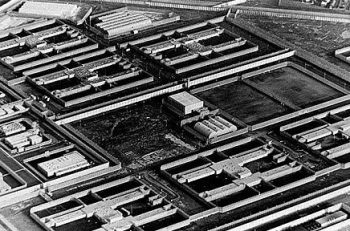
    Hannah Arendt’s famous phrase ‘the right to have rights’ was coined in her 1958 book ‘The Human Condition’. The condition of being stateless, of being a displaced person, which began its modern history in Europe with World War I, has been experienced since by untold millions who have had to listen to the claim that ‘human rights’ are universal and fundamental – but not for them. Once we had the glamorous figure of the cosmopolitan, the person who belonged to the world, the global community; that figure has been displaced by the refugee, who belongs nowhere, but is to be found everywhere in the paradigmatic settings of the modern and contemporary world – the prison camp, the internment zone, the refugee camp, the ghetto, the jail, the arena of suspension where people live in a place that is always outside the country that it is inside. Arendt pointed out that the creation of such places and conditions is a political decision, not just a terrible catastrophe. It is the prevailing form of the penal colony, the new home that we have built to house the theory of human rights. Since Arendt, and most especially in the indebted work of Giorgio Agamben, it has become clear that the concentration camp of the twentieth century was not some historical anomaly, but that it is actually one of the paradigm sites of Western modernity. The internment camp is a zone of suspension, of ‘rendition’, a place that is always outside the country it is inside – Guantanamo is the best-known example, although there many such places – our best- known example was The Maze in Northern Ireland. Those entrapped there expose the hollowness of any claim to universal human rights, to having rights just on the basis of being human. Arendt said it plainly: the refugee, the displaced person, has regularly been denied the right to have rights. The denial is a political decision. It takes its most popular form in the denial that there are any ‘political prisoners’ in the denying country, although enemy countries are full of them. Its political nature has been counterpointed more clearly since 1948, since the United Nations began its series of declarations of Human Rights, unabated since that date; rights of men, women, children, of minorities, of the disabled, of all indeed who can be characterised as having been ‘excluded’, which means that even the ‘poor’, a constituency which enlarges globally by the hour, faster than ever since the almost perpendicular rise of neo-liberalism in the decades before and after the financial crash. Reading these rights, as ‘declared’ (whatever that means), in that bland United Nations universalistic rhetoric, it is hard to know whether to laugh or cry. Such noble vacuities, such actual atrocities – produced by the same state systems that have prevailed since 1945. It was part of Arendt’s long argument, which began in 1943 with her essay “We Refugees” (about Jewish migrants who had become ‘stateless’, that condition in which they had no rights) that asked why European civilisation had so successfully produced the barbarism that made statelessness pandemic and human rights so unavailable to the millions of ‘displaced persons’ of World War II. Part of her answer was that this barbarism was so successful precisely because it was so concealed within or behind the declarations of universal rights and justice which the West, in the case of the American and the French Revolutions, had made central to the powerful ideology of what mutated into Western ‘freedom’. Arendt’s question then was: how could such an ideology be developed (as through the UN declarations) and simultaneously traduced (as in American foreign policy)? It is too feeble an explanation to put it down to hypocrisy. Hypocrisy on this scale occurs when the people who most sincerely believe in the peaceful principles are those who most regularly betray them in violent action. The British spent three centuries in perfecting their international reputation as hypocrites, a nation that believed itself to be peaceful even as it waged endless wars. Now that role has been assumed, largely, by the Americans. But, to achieve world domination is one thing; world hegemony is another. That’s what the World Wars were fought for. Arendt achieved notoriety with her reporting on the 1961 trial of the Nazi Adolf Eichmann, which was published in book form as ‘Eichmann in Jerusalem: A Report on the Banality of Evil’, where she developed the central figure of the ‘desk-murderer’, the bureaucrat who administered the death-camps. But her key point was that this was a show-trial, that pretended to be an example of universal justice triumphing over universal evil. Rather, it was in fact a national victory of the Israelis over their Nazi persecutors. In this exemplary instance, we are shown how the language of universalism can be used as a disguise for a state’s policies. The jurist who had the ambition to do that for a successful Nazi state, Carl Schmitt (1888-1985), described in his ‘Nomos of the Earth’ (1950), how the European system of international law had been replaced by an American one, with the UN as its legislature and the International Tribunal or Court as its executive. In effect, the language of universal rights was used to ratify the aims of American foreign policy; Nuremberg, Tokyo, Damascus, the Hague were, like the Moscow show trials of the 1930s, elaborate pretences that something objectively true was being defended from the current version of sectarian betrayal – war criminality, terrorism, the new terms of ‘war crime’ and its flourishing neighbourly companions, such as ‘ethnic cleansing’. Danilo Zolo has demonstrated in Victor’s Justice how the Kosovo war of 1999, that infamous intervention (to be followed by interventions in Iraq, Afghanistan , Libya and elsewhere, saving the ‘people’ of those countries for democracy, largely by killing and dispossessing them), with its International Court at the Hague, which could try anybody but Americans, is the most egregious example so far of how the language of universal rights has been perverted

    Loading

    Read more