• Posted in:

    History is not Herstory

    Less than 30% of the writers in Village are women. And only 30% of the articles submitted for publication come from women. What’s going on? Village is politically correct and right-on. Uniquely it never, to take an example, markets magazines by putting attractive women on the cover. Village takes progressive social theory seriously. It consistently takes the most ‘liberal’ stance on abortion and reproductive rights. Most of all, and this is what determines so much of its stance, Village believes in inconvenient and prickly equality of outcome, not shiny and friendly equality of opportunity. In other words not just opening up for all, but giving the worse-off an actual leg up or a quota to compensate for the iniquities of history. This applies to women as much to any group. The new Dáil will have only 35 women out of 158. This is a more-than-50% improvement since 2011 and the number of female candidates was up to 163 from 86 in 2011 when it yielded 22 women out of 166 (up from 3 in 1973 and 22 in 2002 and 2007). Nationally, the average number of first-preference votes per man was 4,205. For women, it was 3,260. Village has given a good bit of of space to women who want to change this, to move towards fty percent female representation in parliament. The Electoral Act 2012, amusingly promoted by Phil Hogan and opposed by Fianna Fáil, applied a gender-quota rule that parties had to have at least 30% candidates of each sex or they lose half of their state funding. All parties except Direct Democracy Ireland applied their quota. Village supports this. I support this. That’s politics. We should push for immediate progress, everywhere. History and culture are different. The Abbey Theatre got into trouble recently because only one of the ten authors chosen for its 1916 commemorative programme, Waking the Nation, was a women. Other theatres and film bodies have taken similar flak. A recent rather unconvincing evocation of the Rising, Rebellion, made efforts to portray the events of that era with women to the fore. I disagree with these approaches. As to the Abbey’s Programme, what if the women took bog-standard anti-feminist positions, would they still merit advancement in the programme? Is it that a third of the writers should usually write pro-feminist pieces or is it that the third should have written pro-feminist pieces in this instance? Should there also be a certain number of works produced that have been written authors from racial minorities, from the young and the old, from LGBT and straight? Should it be the same with the actors? What about the audience? The answer to much of this is No. And as regards history, you’re trying to record the way things were: history. You shouldn’t, and you don’t need for any political reason to, distort it. All you can do with history is acknowledge and let it inform, though never determine, your politics. For the same reason that you don’t make the ruling classes working classes or younger than they were in the interests of some perceived correctness, you don’t pretend that women were the protagonists in the Rising. Unfortunately they were not. I also disagree more generally with distorting the facts to suit the ideology. The idea underpinning politics is to resolve the facts objectively and then apply the ideology. Not the other way around unless you thing your ideology is so weak that it won’t fit certain facts. In which case change your ideology, it was wrong. When the facts don‘t suit your ideology it is time to find a new ideology, or stay quiet; and more precisely to realise you should have had a better ideology in the first place The debate on women’s rights has become unintellectualised, entrenched and sometimes underinformed. For example a recent only partly-corrected Una Mullally article in the Irish Times misreported that Fianna Fáil’s policy was to have “up to a third of its candidates women”. She ridiculed the policy even though the policy did not, and legally and logically could not have, said this. It would certainly have been nice for those of us who believe that the point of that party is only ever to adopt progressive agendas, at the very last minute, if Fianna Fáil had got it so skewed, but they had not. Between Una Mullally and her employer they could not bring themselves to correct the article properly. The reason for the politics of women’s equality is that it has been an unequal world. It was an unequal world when they (men) made God a Man, it was unequal in 1916 and it’s still unequal because women earn less, are politically less powerful and have less autonomy than men. Only a fool would deny it. Because of the legacy of thousands of years of suppression women have not written as good, or indeed nearly as many, plays as men. Women also write differently from men, largely for socio-cultural reasons but also sometimes for reasons based in their physiological natures. The point is to change that by counterbalancing. Women of today who want it and show talent should get more training in playwrighting paid for by the state and its institutions, than that available to similar men, particularly training that helps them break down prejudices and that facilitates overcoming sexist obstacles to success. An admirable recently announced initiative from the Irish Film Board is doing roughly this. Such initiatives tend to generate equality of outcome. Regrettably in the arts it will be some generations before the volume of brilliant works by women rivals the volume of brilliant works by men, created over the aeons, even controlling for the heightened relevance of contemporariness. It is different with politics which, unlike history, does not or should not, trade in the past. It is possible, indeed imperative, to push for progressive change. It is, because of the nature of the discipline, and the period in which it trades – the past, not possible to push for change of

    Loading

    Read more

  • Posted in:

    Let’s despatch the Eighth

    One morning recently I woke up to abusive tweets. “What is it with lesbians hating unborn babies?? Please explain!”. “Why so many lesbians pushing abortion when they should never really need one??!!!”. As a long-time feminist campaigner and Convenor of the Coalition to Repeal the Eighth Amendment, vulgar interactions from anti-choice supporters are inescapable. I’m too long in the activist tooth to let them bother me (much), but this latest batch does make me wonder. Why is “lesbian” used as a term of abuse, and what has it got to do with “hating” babies, or women, or men, or indeed anything else? I’d like to tweet back (but I don’t): “Look here, you with the vituperative tweet finger, I’m a feminist, lesbian, radical Irish grannie (of two, so far), and I’m pro-choice because I believe in equality, in human rights, in justice, and in a world where all women, everywhere, including my daughter and my granddaughter, have the right to make decisions for ourselves about our bodies and our reproductive lives. It’s a national issue, it’s global and it’s also very personal. So there!”. The Coalition to Repeal the Eighth Amendment was set up in recognition of evident and popular demand for change. Our members include trade unions, pro-choice and feminist groups, human-rights organisations and many other NGOs and groups. The next year or so will be vitally important in advancing this issue. It has become a real election issue. If political soundings are to be believed, we can expect a “national conversation” after the election in the form of a Citizens’ Convention, followed by a referendum. It is hard to exaggerate the ‘chilling’ impact of the Eighth Amendment on women, on doctors in preventing them from working in the best interests of their patients, and on our society as a whole. What does it say about respect for women and our capacity to make our own decisions about our lives? What does it say about respect for human rights principles? Successive Governments have ignored robust criticism of the Eight Amendment from UN and other international human rights bodies. Even as I write, there’s a woman setting off from Sligo or Kerry or Wexford or Dublin on that dismal journey to the UK for an abortion she can’t obtain here with the support of her partner, her family, her friends, her GP. There’s another woman getting off the plane on her lonely trek back, and another desperately trying to find the money or the vital travel documents, or whatever else she needs to go abroad for an abortion. Every day, at least ten women are forced to go through this exhausting and demeaning process because the law and the health services fail to provide for women’s full reproductive needs and rights. We have no idea how many more women are in tears and desperate because they don’t have the resources of money, travel papers, childcare, time off work, good enough health and capacity, or whatever it is they would need to be able to make the journey. We predicted the direct and dangerous implications of the Eighth Amendment for women when it was introduced into the Constitution in 1983. We have learned with terrible sadness and anger of women dying. We have had to bear unwilling witness to innumerable personal tragedies dragged through the Courts and exposed in the media. As women, the Eighth Amendment ensures that our human rights are consistently breached during pregnancy by making a dangerous, unworkable distinction between our lives and our health. It denies us life-saving treatment such as chemotherapy. It forces us to remain pregnant against our will, even in cases of rape, incest and where a fatal foetal abnormality has been diagnosed. The Eighth Amendment puts our health at risk, denying us options even when the outcomes are clearly long-term and debilitating. It discriminates against poor and marginalised women and all those who cannot travel abroad for an abortion. Disgracefully, it criminalises women for the ‘procurement’ of an abortion, including women who obtain the abortion pill, the safest and most straightforward means of abortion. It criminalises medical professionals who assist women to do so. It places punitively strict parameters around the crucial information that reproductive health services can provide. It’s clear that the Eighth Amendment no longer reflects public opinion, with poll after poll showing strong support for its repeal. While we certainly don’t underestimate the amount of work to be done, our members are committed to the battle ahead. With public support we will campaign vigorously for repeal of the Eighth Amendment. In 2016, we don’t think that’s too much to ask. Do you? Ailbhe Smyth Ailbhe Smyth is Convenor of the Coalition to Repeal the Eighth Amendment

    Loading

    Read more

  • Posted in:

    Revive Sex Offences Bill

    The Criminal Law (Sexual Offences) Bill 2015 had passed through the Seanad and was before the Dáil. However, unfortunately the Bill will not be passed through the Dáil before the 2016 General Election. It is now vital to ensure that it is restored to the Dáil at the same stage it had reached very early in the term of the incoming government. The Bill represented groundbreaking reform of sexual-offences law. The Bill contains welcome changes to criminal-evidence rules in sex-offence cases, for example by setting out precise criteria restricting disclosure of victims’ counselling records to the defence, a practice which currently causes great distress for victims. Other important changes protect child witnesses from being cross-examined in person by defendants in sex offence trials; and prevent judges and barristers from wearing wigs and gowns when a child witness is giving evidence in such trials. The sections that have received most attention are those dealing with prostitution law. These sections would criminalise the purchaser of sexual services (the client), while decriminalising the seller (the person engaged in prostitution). This change is based on a law introduced in Sweden in 1999. It would radically reform our deeply awed prostitution law, under which both prostitutes and clients are criminalised. By criminalising buyers of sex, it will pave the way for an approach to regulating prostitution that recognises the lived reality of those in prostitution, and that genuinely seeks to tackle sexual exploitation of women. Current Irish law focuses on prohibiting the visible manifestation of prostitution through criminalising offences of ‘loitering’ and ‘soliciting’. While these offences are gender-neutral, most prosecutions in practice are brought against women, who will typically be convicted of ‘soliciting’ and ordered to pay a ne (which many will go back to prostitution to pay). This model clearly has not succeeded in reducing the numbers of those engaged in prostitution; or in addressing the real exploitation experienced by many of these women. The Oireachtas Joint Committee on Justice, Defence and Equality recently conducted a review of prostitution law in recognition of the problems with our current law. We received 800 written submissions, 80% of which favoured the Swedish approach. These submissions were drawn from a broad cross-section of civil society, including trade unions, frontline medical workers, service providers and those working with migrant women. We heard evidence from Sweden that their law has been effective in reducing prostitution levels, and has had a positive normative effect on social attitudes to sexuality. The Committee also held a series of public hearings, with input from those both for and against the Swedish approach, and from those directly engaged in prostitution. We heard that women enter prostitution in Ireland at a young age, many under 18. Many people are trafficked into prostitution and the vast majority are subject to control by a third party, or pimped. The report of the Committee, published in 2013, concluded that prostitution is widely available across Ireland. It is highly organised, highly profitable, highly exploitative and largely controlled by organised crime interests. That is the actual reality of prostitution. Current Irish law has failed to tackle this. We unanimously recommended a radical change with the adoption of the Swedish approach to criminalise only the client, the purchaser of sex. This Swedish law is based on a view of prostitution as inherently exploitative, amounting to gender-based exploitation. Laws based on this approach have already been introduced in other countries, including Canada, Norway, Iceland and most recently Northern Ireland. The changes we recommended were supported by a wide range of organisations, including the Immigrant Council of Ireland, the National Women’s Council and the Turn Off the Red Light campaign. Ultimately, they were adopted by the Government and included in the 2015 Bill. The Bill was debated at length in the Seanad over December and January. The campaign for this Bill must now continue into the next Dáil. Its offer of important changes to sex-offences law generally, its provisions to decriminalise those engaged in selling sex and to criminalise those purchasing sex, and its promise to tackle sexual exploitation, particularly of children and those engaged in prostitution must be defended and realised without delay. Ivana Bacik

    Loading

    Read more

  • Posted in:

    Rape Disgrace

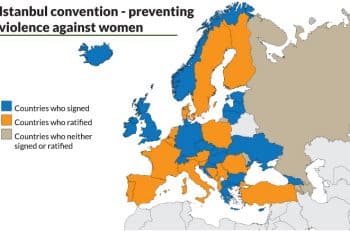
    We’re living in a “rape culture”, even though the term seems to annoy some people. So let’s just say we’re living in a culture in which rape is routinely trivialised, where victims are frequently blamed for its occurrence and their testimony is denied and ridiculed, and where the onus is placed on them to prevent rape from happening. Just under a third of female respondents to a recent survey among Trinity College Dublin students said they had experienced unwanted physical contact while at Trinity. A quarter of female students had been sexually assaulted, or had a “non-consensual sexual experience”. The Dublin Rape Crisis Centre (DRCC) has recorded a shocking increase of 36% in the number of victims of rape and sexual assault to the Sexual Assault Treatment Unit in the Rotunda Hospital in Dublin in 2015. Ellen O’Malley-Dunlop, CEO of DRCC, said: “The 36% increase in the number of victims accompanied to the Sexual Assault Treatment Unit in Dublin, for 2015 in comparison with 2014, is very concerning. We have yet to analyse these figures as to why there has been such an increase”. Surprisingly, 24% of callers were male and there has been a steady year-on-year increase in males using the Helpline since 2008 when the gure was 14%. There was an increase of 30% in first-time callers to the National 24-Hour Helpline in 2014 (the latest year for which statistics are available), compared with 2013 figures. Calls relating to adult rape showed an increase of 14% compared with 2013 figures. There was an increase of 71% in crisis appointments for recent rape and sexual assault delivered by therapists in 2014, compared with 2013 figures. Our statistics on sexual crime are shocking. It is now thirteen years since publication of the Sexual Abuse and Violence in Ireland Report (SAVI) detailing the prevalence of sexual violence in relation to age and gender for over 3,000 adults, it remains a very distressing document. So with a general election looming what’s to be done? Ratification of the Istanbul Convention would generate change. The convention deals with prevention, requiring us to put in place measures to challenge the gender stereotypes, roles and attitudes that promote this culture of violence against women. It obliges us to ensure that the Garda respond immediately to calls for assistance and that all victims have access to special protection measures during investigation and judicial proceedings. The convention crucially deals with protection, ensuring that the needs and safety of survivors are placed at the heart of all measures. It demands the setting up of specialised support services that provide medical assistance as well as psychological and legal counselling to survivors and their children. The convention also stipulates the number of refuges that are needed to adequately respond to women, that of one refuge place per 10,000 of population – we’re well behind this target right now. The Istanbul Convention provides the framework for structural and personal reforms and provides a mechanism to hold the Government to account. We need stronger legislation. Domestic violence should be a crime of itself, accompanied by appropriate sanctions that match the seriousness of the act. Within the proposed sexual-offences legislation, a definition of consent should be included. Consent should be freely given – an enthusiastic, clearly communicated and ongoing Yes. Right now one in ten victims of sexual crime in Ireland reports that crime. Of that one in ten, only 7% lead to a conviction. We urgently need sanctions that are effective, consistent, proportionate and dissuasive. The appallingly high attrition rates within our criminal justice system and send out a message to women that if they report a crime justice will be done. We must provide a supportive environment for women to continue through the system and seek justice. Setting up the new Garda unit – The Human Protective Services Bureau – was a great move but it requires increased personnel and financial resources to target domestic and sexual violence. Specialist units in each Garda Division should now be established to address domestic and sexual violence ,and ongoing training is required at all levels to develop an expertise within the force that both supports the victim and pursues perpetrators to arrest and conviction. We will only seriously address this issue when we shift the focus from women, from asking what did she do, why was she there at that time, why did she stay, and place the focus on men who perpetrate these crimes. We must break the malicious disbelief, victim-blaming and perpetrator-excusal that surrounds rape. We must restore funding to the organisations that help victims. We must shatter this culture of rape. Lorraine Courtney

    Loading

    Read more