world war I

Random entry RSS

  • Posted in:

    The Right to have Rights

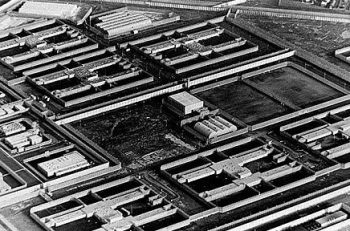
    Hannah Arendt’s famous phrase ‘the right to have rights’ was coined in her 1958 book ‘The Human Condition’. The condition of being stateless, of being a displaced person, which began its modern history in Europe with World War I, has been experienced since by untold millions who have had to listen to the claim that ‘human rights’ are universal and fundamental – but not for them. Once we had the glamorous figure of the cosmopolitan, the person who belonged to the world, the global community; that figure has been displaced by the refugee, who belongs nowhere, but is to be found everywhere in the paradigmatic settings of the modern and contemporary world – the prison camp, the internment zone, the refugee camp, the ghetto, the jail, the arena of suspension where people live in a place that is always outside the country that it is inside. Arendt pointed out that the creation of such places and conditions is a political decision, not just a terrible catastrophe. It is the prevailing form of the penal colony, the new home that we have built to house the theory of human rights. Since Arendt, and most especially in the indebted work of Giorgio Agamben, it has become clear that the concentration camp of the twentieth century was not some historical anomaly, but that it is actually one of the paradigm sites of Western modernity. The internment camp is a zone of suspension, of ‘rendition’, a place that is always outside the country it is inside – Guantanamo is the best-known example, although there many such places – our best- known example was The Maze in Northern Ireland. Those entrapped there expose the hollowness of any claim to universal human rights, to having rights just on the basis of being human. Arendt said it plainly: the refugee, the displaced person, has regularly been denied the right to have rights. The denial is a political decision. It takes its most popular form in the denial that there are any ‘political prisoners’ in the denying country, although enemy countries are full of them. Its political nature has been counterpointed more clearly since 1948, since the United Nations began its series of declarations of Human Rights, unabated since that date; rights of men, women, children, of minorities, of the disabled, of all indeed who can be characterised as having been ‘excluded’, which means that even the ‘poor’, a constituency which enlarges globally by the hour, faster than ever since the almost perpendicular rise of neo-liberalism in the decades before and after the financial crash. Reading these rights, as ‘declared’ (whatever that means), in that bland United Nations universalistic rhetoric, it is hard to know whether to laugh or cry. Such noble vacuities, such actual atrocities – produced by the same state systems that have prevailed since 1945. It was part of Arendt’s long argument, which began in 1943 with her essay “We Refugees” (about Jewish migrants who had become ‘stateless’, that condition in which they had no rights) that asked why European civilisation had so successfully produced the barbarism that made statelessness pandemic and human rights so unavailable to the millions of ‘displaced persons’ of World War II. Part of her answer was that this barbarism was so successful precisely because it was so concealed within or behind the declarations of universal rights and justice which the West, in the case of the American and the French Revolutions, had made central to the powerful ideology of what mutated into Western ‘freedom’. Arendt’s question then was: how could such an ideology be developed (as through the UN declarations) and simultaneously traduced (as in American foreign policy)? It is too feeble an explanation to put it down to hypocrisy. Hypocrisy on this scale occurs when the people who most sincerely believe in the peaceful principles are those who most regularly betray them in violent action. The British spent three centuries in perfecting their international reputation as hypocrites, a nation that believed itself to be peaceful even as it waged endless wars. Now that role has been assumed, largely, by the Americans. But, to achieve world domination is one thing; world hegemony is another. That’s what the World Wars were fought for. Arendt achieved notoriety with her reporting on the 1961 trial of the Nazi Adolf Eichmann, which was published in book form as ‘Eichmann in Jerusalem: A Report on the Banality of Evil’, where she developed the central figure of the ‘desk-murderer’, the bureaucrat who administered the death-camps. But her key point was that this was a show-trial, that pretended to be an example of universal justice triumphing over universal evil. Rather, it was in fact a national victory of the Israelis over their Nazi persecutors. In this exemplary instance, we are shown how the language of universalism can be used as a disguise for a state’s policies. The jurist who had the ambition to do that for a successful Nazi state, Carl Schmitt (1888-1985), described in his ‘Nomos of the Earth’ (1950), how the European system of international law had been replaced by an American one, with the UN as its legislature and the International Tribunal or Court as its executive. In effect, the language of universal rights was used to ratify the aims of American foreign policy; Nuremberg, Tokyo, Damascus, the Hague were, like the Moscow show trials of the 1930s, elaborate pretences that something objectively true was being defended from the current version of sectarian betrayal – war criminality, terrorism, the new terms of ‘war crime’ and its flourishing neighbourly companions, such as ‘ethnic cleansing’. Danilo Zolo has demonstrated in Victor’s Justice how the Kosovo war of 1999, that infamous intervention (to be followed by interventions in Iraq, Afghanistan , Libya and elsewhere, saving the ‘people’ of those countries for democracy, largely by killing and dispossessing them), with its International Court at the Hague, which could try anybody but Americans, is the most egregious example so far of how the language of universal rights has been perverted

    Loading

    Read more

  • Posted in:

    Telling the story of Easter 1916

    Patrick Pearse loved his students not wisely but too well, if you know what I mean – what with writing poems about kissing them on the mouth and relocating his school from the healthy hustle-bustle of Ranelagh to dark woodlands in Rathfarnham. Oh, and his students didn’t necessarily reciprocate the affection: a teenage James Joyce dropped out of Pearse’s UCD Irish-language lessons because the teacher was an ideological bore. That’s just a sample of the titbits you’d pick up from Colm Tóibín’s long essay on 1916 in the London Review of Books, arguably this season’s archetypal commemorative/explanatory text from Ireland’s media/ intellectual establishment. Whether you regard it as barrel-scraping to discredit the Rising or an exemplary eye for the telling detail is a matter of taste – if you’re like me, you might reckon it’s a bit of both – but one can’t help but notice the contrast between Tóibín’s forensic litany of Fenian foibles and failings and his breezy flypast of, say, World War I. In the writer’s brief telling, the war was on the verge of Bringing Us All Together, something Pearse and the boyos couldn’t abide and wouldn’t permit: “Britain was merely the supposed enemy. The population of the two countries spoke the same language after all, and had the same education system. Many Irish people moved back and forth between Ireland and England seeking work; many in Ireland also had family in England. While most in the south of Ireland actively or tacitly supported Home Rule, Home Rule was postponed until the war ended. It looked as though the two islands were going to join forces in the war effort. (More than 200,000 Irishmen eventually volunteered in the First World War. Although conscription was threatened in Ireland, it was never actually introduced.)” Recall that Tóibín is addressing, in part, an international audience that may be getting its first substantial account of the Rising, that his article is billed as “Colm Tóibín tells the story of Easter 1916”; this audience will hear nothing from him of the consequences for Home Rule of the Ulster crisis, of Irish carnage in the war, nor of the massive, life-saving popular movement that arose in part from the Rising to resist conscription in Ireland, conscription that was not merely ‘threatened’, but introduced in legislation. Some contexts are, it seems, more worthy of contextualising than others. As the brilliant blogger Richard McAleavey writes: “Questions about whether Pádraig Pearse, say, was a fanatic, or a repressed paedophile even, are intended to psychopathologise any kind of radical political action or thought. They are intended to draw attention away from consideration of the real material conditions and political considerations that produced the Rising, lest they might be used to draw the wrong kind of parallels in the present”. Material conditions? In 17,000 words, Colm Tóibín’s only mention of Dublin’s infamous slums is in a quote from arch-revisionist historian David Fitzpatrick, who says the rebels must have staged the ght in the midst of the city’s poor to ensure maximum casualties among them – as though it were the rebels who loaded the shells into the Helga’s guns, or the rebels who went house to house in North King Street murdering young men. These and other aspects of, shall we say, imperial ‘agency’ have been largely neglected throughout recent commemoration and coverage, in favour of relentless scrutiny of the Rising’s leaders. Just below the achingly familiar debate about the Easter Rising – was it an act of visionary heroism or an act of perverse terrorism? – there lurks a more interesting series of questions about its relationship to what came after. And those are the questions that can lead us beyond dry argument and actually help us understand who commemorates what in the Ireland of 2016, and how those commemorations have played out and continue to play out in the state and corporate media. Thus you can be on either side of the heroism/terrorism split and still hold (tightly or otherwise) any of the following views: (1) the state(s) in which we reside today can be understood as a direct and roughly intentional outcome of the Rising and its guiding lights; OR (2) Ireland over the last century has been a fumbling, contingent, contradictory and ultimately limited effort to fulfil the Republic of 1916; OR (3) the Irish revolution launched at Easter 1916 was firmly defeated in the Treaty and thereafter by an elite that concealed its continuity with the ancien régime behind reluctant memorials to supposed revolutionary heroes. (There are other positional alternatives and variations on all points of the political spectrum but these seem to me to be the major tendencies.) Official and media Ireland prefers to hold and host tiresome debates about the Rising itself (Kevin Myers? Bob Geldof? Really?) rather than any really clear exploration of where we live today in relation to it. Positions number 1 and 2 are generally implied rather than directly stated, with a little frisson of excitement when the likes of Michael D. Higgins suggests that the truth may lean further towards 2 than 1 – a sort of “a lot done, more to do” view of a Republic that still awaits its full and complete child-cherishing achievement. In mainstream media, position 3 – that there was a successful counter-revolution – is almost unthinkable, or at least unspeakable, residing outside the realm of acceptable discussion. And yet it seems to me that it lurks with influence on both the right and left wings of Irish politics. The more or less overt Redmondism of John Bruton and other conservatives – often more Redmondite than Redmond himself – contains an implied celebration of the ‘restoration’ of constitutionalism in Ireland, coloured by regret over militant republicanism’s recrudescence in the Northern Troubles, but not reliant on that regret for its critique of the rebels of 1916-21. The left-wing, pro-Rising version of position 3, alleging that there was a successful counter-revolution in Ireland, is more openly and interestingly embraced. Important gures on

    Loading

    Read more