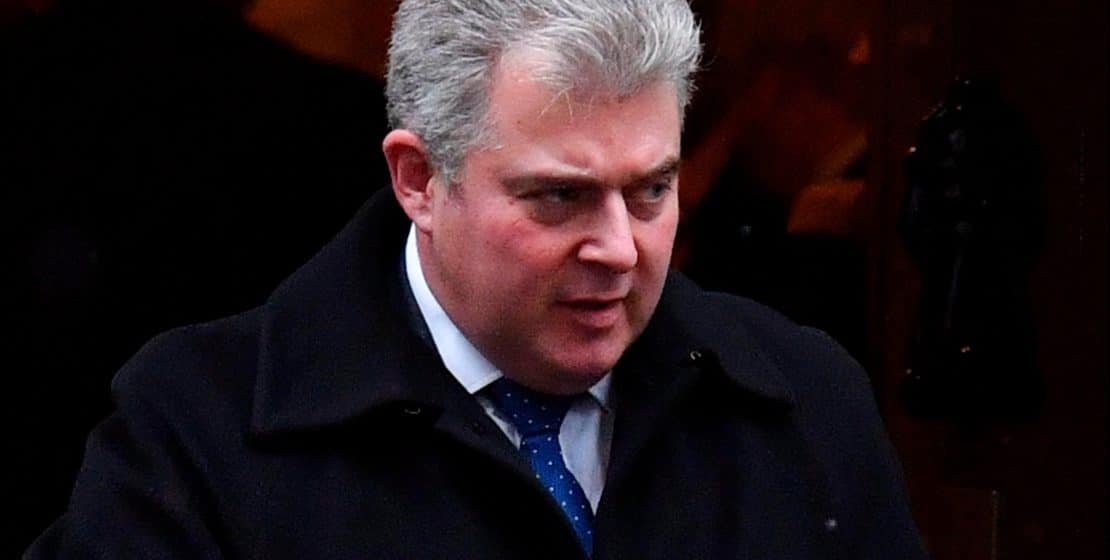
THE LEGACY OF THE CONFLICT: UPDATE ON THE MODEST PROPOSALS
Christopher Stanley, Litigation Consultant, KRW LAW LLP, Belfast.[i] THE LEGACY OF THE CONFLICT: UPDATE ON THE MODEST PROPOSALS Christopher Stanley, Litigation Consultant, KRW LAW LLP, Belfast.[i] Earlier this year Village published my comment THE LEGACY OF THE CONFLICT: MR LEWIS’S MODEST PROPOSAL – Village Magazine. This comment concerned the following: “On 14 July 2021 Her Majesty’s Secretary of State for Northern Ireland, the Right Honourable Brandon Lewis MP (a lawyer by trade), made a statement in the House of Commons and his office published a Modest Proposal: ‘Addressing the Legacy of Northern Ireland’s Past’ (CP498). It is fair to say that Mr Lewis’s Modest Proposal created a backlash within the community after its publication.” As the UK’s Parliament is now in session it is appropriate to update readers of Village on the progress of Mr Lewis’s Modest Proposals. Those Modest Proposals: The Draftsman Cometh As of today (26 October 2021) the British government has yet to publish its proposed legislation to “Address the Legacy of Northern Ireland’s Past”. There is still no prospect that there will be a public consultation before the introduction of legislation as it was introduced as a White Paper which means the government is not obliged to consult on the contents as opposed to a Green Paper. Mr Lewis made this point clear in his most recent oral evidence session to the Northern Ireland Affairs Committee (NIAC) on 27 October 2021: “Let us be clear: this was not a formal consultation in that sense. This was a Command Paper.” https://committees.parliament.uk/oralevidence/2917/pdf/ (last accessed 2 November 2021) In the UK there has been cross-party condemnation of the approach of the British government on this issue. There has also been condemnation from politicians in Ireland and USA and from international organisations including the European Human Rights Commissioner and the United Nations Special Rapporteurs. For example: The Council of Europe Commissioner for Human Rights has warned that the proposals are “indistinguishable from a blanket unconditional amnesty for those not yet convicted” and “would undermine human rights protections and cut off avenues to justice for victims and their families”. The relevant UN special rapporteurs have also expressed their concern regarding the proposals, which in their view would place the United Kingdom “in flagrant violation” of its international obligations. The Ad Hoc Committee to Protect the Good Friday Agreement (GFA) of the United States Senate wrote to the British Prime Minister Boris Johnson on 8 September 2021: “We find this proposal to be at odds with both the spirit and architecture of the Good Friday Agreement. It would abrogate the hard-won compromise regarding legacy issues in the NDNA and appears to us to represent a significant breach of several international human rights agreements to which the UK is a party. Equally important, the cross-community opposition to the current proposal in Northern Ireland should be enough to signal that this points not to reconciliation, but instead to continuing division there. Painful as it is, enduring reconciliation is dependent on accountability and transparency with respect to all participants in Troubles-related violence. There is no shortcut, and the GFA does not countenance one. It is tragic that so many years have been wasted with obfuscation and legal wrangling, but that does not justify abandoning the commitments made by the UK government to see the process through. While the GFA does not impose specific obligations with respect to legacy, it does mandate that both state parties observe and implement the European Convention on Human Rights. Toward this end, both governments are required to incorporate the European Convention into domestic law. The UK in particular must provide for “direct access to the courts, and remedies for breach of the Convention.” The UK addressed these duties domestically with the Human Rights Act of 1998. As a matter of international law, the UK has a double obligation to adhere to the European Convention, first as a party to that treaty, and second, through the GFA. Central to those protections under the European Convention is the right to life, set out in Article 2.” Ad-Hoc-Comm-letter-to-PM-on-Amnesty-Proposal-090821.pdf (caj.org.uk) (last accessed 20 October 2021) Dear Strasbourg: Keep off our Grass On 18 October 2021 the Secretary of State wrote to Clare Ovey of Department for the Execution of Judgments of the ECHR regarding the forthcoming review of the McKerr group of judgments by the Secretariat of Ministers of the Council of Europe. In his initial response he states: “The UK Government is committed to dealing with legacy issues in a way that supports information recovery and reconciliation, complies with international human rights obligations, and responds to the needs of individual victims and survivors, as well as society as a whole.” These Modest Proposals are clear evidence that this is not the commitment of the British government. The Modest Proposals offend and breach international human rights obligations and do not respond to the needs of relatives of victims and survivors. “The UKG proposals follow on from the principles set out in the Stormont House Agreement, while attempting to address the implementation problems within that agreement.” They do not follow the principles in the Stormont House Agreement 2014 (SHA 2014) “We think the best way to help Northern Ireland move towards reconciliation is through information recovery rather than an adversarial court process. It is therefore proposed that a statute of limitations would apply equally to all Troubles-related incidents.” “A meeting of the British-Irish Intergovernmental Conference (BIIGC) took place at Dublin Castle on 24 June 2021 . At this meeting the UK and Irish Governments agreed there was a need for a ‘process of intensive engagement’ with the Northern Ireland parties and others on legacy issues. This would build on previous discussions, take account of the views of all participants and include consideration of new proposals which the UK Government intended to bring forward.” MPs have confirmed to relatives of victims and survivors of the Conflict that NO ‘process of intensive engagement’ has occurred since 24 June 2021. As previously noted there … Continue reading THE LEGACY OF THE CONFLICT: UPDATE ON THE MODEST PROPOSALS
Copy and paste this URL into your WordPress site to embed
Copy and paste this code into your site to embed