Archives

OK

Random entry RSS

Loading

  • Posted in:

    Build More Social Housing

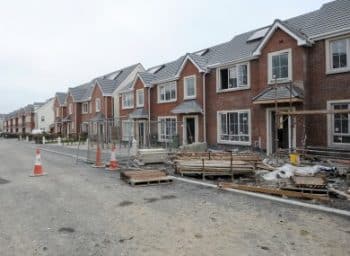
    Local authorities built only 394 homes in 2017 by Mel Reynolds   MINISTER FOR FINANCE Paschal Donohoe set out the stall for Social Housing in Budget 2018: “I am allocating a total of €1.83bn for housing in 2018. Some 3,800 new social homes will be built next year by local authorities and approved housing bodies…1”. In fact Local Authorities are building a fraction of this figure. Gains and Losses Purpose-built new homes are an essential component of permanent social housing provision. But they are not the only component. Additional permanent stock can come from a number of sources. New and second-hand private-home purchases (acquisitions) and so-called ‘Part V’ housing – 10% of schemes acquired from or built by developers, all add to permanent stock. Official tallies also include ‘voids reclaimed’ as additional homes. These are typically short-term vacant local-authority properties brought back into stock but counted as additional homes. Leases can also count as, temporary, housing ‘solutions’, and are similarly included as additional stock. There are losses to stock to be considered. For example, just looking at new homes completed last year: Dublin City Council (DCC) completed 139 new-builds and purchased 58 ‘turnkey’ new homes from developers. However, DCC demolished 148 and sold 54 existing local authority dwellings, leaving a lower net figure2. Nevertheless, new-build social housing illustrates how the state is managing public resources and delivering new permanent stock on state land. Local Authorities own zoned land with a capacity for 48,724 dwellings nationwide yet they used just 0.8% of this state land capacity for new-builds, 394 units3. But state capacity is even greater. Nama-controlled land currently has a capacity for 65,399 dwellings. 10% Part V social housing could be provided, giving an additional 6,540 social homes.   New Builds The Department of Housing, Planning and Local Government (DHPLG) produces detailed new-build social housing data. Established as part of the ‘Rebuilding Ireland’ housing strategy in 2016, quarterly ‘Social Housing Construction Status Reports’ currently catalogue 930 projects with a ‘pipeline’ of 14,813 new homes, noting location, stage of delivery, number of units, and if units are being purchased or built by Local Authorities or Approved Housing Bodies (AHBs). These reports include two categories of new homes as ‘builds’. New-builds are purpose-built new social homes procured directly by Local Authorities and AHBs. So-called ‘turnkey’ units are new homes purchased from developers (acquisitions) and are somewhat contentious as the state is competing with private buyers in the open market. Both types are, however, additional permanent stock with security of tenure.   2017 Output In 2017 Local Authorities built 394 homes and purchased 386 ‘turnkey’ new homes from developers. AHBs built 270 new homes and purchased 654 ‘turnkey’ new home acquisitions4. Excluding purchases, there were 664 new-builds nationwide in 2017. 375 new social homes were built in the City and County of Dublin and, of this, the four Dublin Local Authorities completed just 232 new-builds. In 2017 there were 44,802 on Co Dublin housing waiting lists.   2018 Output In 2018 so far Local Authorities have built 364 social homes and purchased 123 ‘turnkey’ acquisitions from developers nationwide5. AHBs delivered 113 new-builds and purchased 200 ‘turnkey’ new homes. Excluding new home purchases, there were 477 new-build social homes in the first six months of 2018 from all sources. Dublin Local Authorities completed 145 newbuilds in six months. Local Authorities own enough vacant zoned land in Dublin to accommodate 29,377 dwellings but have used 0.5% of this capacity for new-builds so far this year.   Conclusion There were 10,694 subsidised leases in the first six months of 2018, 22 leases for every newbuild in the country6. The Department of Public Expenditure and Reform (DPER) estimate that, in areas of high demand such as Co. Dublin, a subsidised lease is twice as costly as a Local Authority new-build on state land. In 2018 more than €900m per year will be spent on subsidise private-sector social rents, homeless services and other rent assistance programmes. DPER project more than €1.7bn will be spent per year on state rent assistance by 20227. There has been little increase in new-build social housing in Co Dublin, the area with the most acute housing need. New-build social housing output will need to increase increase four-fold to achieve Budget targets.   1. Budget 2018 speech delivered in Dáil by Minister for Finance Paschal Donohoe #budget2018” Leinster Express; https://www.leinsterexpress.ie/news/news/275348/budget-2018-speech-delivered-in-dail-by-minister-paschal- donohoe-budget2018.html 2. Noac Performance Indicators Report 2017 (p13); http://noac.ie/wp-content/uploads/2018/09/NOAC Performance-Indicators-Report-2017.pdf 3. “State owns enough zoned land to build 114,000homes” Irish Times; https://www.irishtimes.com/news/social-affairs/state-owns-enough-zoned-land-to-build-114-000-homes-1.3481853.Housing: land scarcity? – Eolas Magazine; http://www.eolasmagazine.ie/housing-land-scarcity 4. Minister Murphy publishes Social Housing Construction Status Report Q4 2017 – Rebuilding Ireland; http:// rebuildingireland.ie/news/ 5. Minister Murphy publishes Social Housing Construction Status Report Q2 2018 and details of Social Housing Output for Quarter 2 2018 | Department of Housing, Planning and Local Government; https://www.housing.gov.ie/housing/social-housing/construction/minister-murphy-publishes-social-housing-constructionstatusminister-murphy-publishes-social-housing-construction-status-report-q4-2017/ 6. Housing Data: 9 Oct 2018: Written answers (Kildare-Street.com) Q534- 537 incl.; https://www.kildarestreet.com/wrans/?id=2018-10-09a.1534 7. “Spending Review 2018 Current and Capital Expenditure on Social Housing Delivery Mechanisms – Daniel O’Callaghan and Paul Kilkenny , IGEES Unit and Housing, Planning and Local Government Vote” July 2018; https://static.rasset.ie/documents/news/2018/07/19.-current-andcapital-expenditure-on-social-housing delivery.pdf

    Loading

    Read more

  • Posted in:

    From Senna to Joyce

    Exile from hypocrisy, lack of standards, formalism, begrudgery and betrayal by David Langwallner   The legendary Formula 1 driver Ayrton Senna was famous for flamboyant risk taking. His great rival Alain Prost would complain about his dangerous overtaking and bumper-to-bumper manoeuvrings. Senna was, without doubt, the greatest Formula 1 driver of all time both in terms of style and indeed achievements, even if Prost had a better win record. But of course people can become addicted to risk and risking everything all of the time is likely to prove counterproductive. As I have found to my cost, occasionally consolidation is often the wise course. Senna was also a decent and religious person, dedicated to a series of charitable causes. In the days before he died in the fatal crash in the Monaco Grand Prix he was very concerned about the state of the track in Imola. He had for years been vociferous about the need for greater safety checks in his sport. Ironically, many were introduced as a result of his death. Indeed Senna may have had a premonition of his own death. I have a similar attitude to Ireland which, as I have written previously, does not as a state conform to the rule of law. The reason for the rapid decline is crucial. The word that is truly missing in Ireland in this country is ‘standards’. We do not have any. First, our legal and medical professions are in disarray, unethical and controlled by a narrow privileged elite drawn from established Dublin families recalling what Aneurin Bevin said of Anthony Eden: “Beneath the sophistication of his appearance and manner he has all the unplumable stupidities and unawareness of his class and type”. Further, our police force and social workers – led by Tusla – are utterly unfit for purpose. I have written extensively about the police. They are trained to assume guilt, they bend and manufacture evidence to achieve outcomes, many of them though not all are criminal either by intent or negligence and the cancer of course, as recent events have demonstrated, comes from the top down. I also see the work of Catholic action groups and religious zealots over our family structures and in places our legal profession. In fact to ascend beyond Inspector or Barristerial ‘Devil’ level it is a help to be privy to the corruption. In a dissenting judgment in 2015 in DPP v JC, the late Supreme Court Justice Adrian Hardiman stated: “[T]here have been two Tribunals of Inquiry, each presided over by an eminent member of the judiciary, which have each reported in a profoundly disturbing manner, The first report of the Morris Tribunal, published in 2004… related to bogus explosive finds by gardaí in County Donegal. The report observed that Garda culture: “generally militates against open and transparent cooperation with investigations both internal and external and manifests itself in a policy of ‘don’t hang your own’”. Then there is the relationship between the police and the child-protection agencies, evoking on occasion a deeply unsettling nexus of collusion, with the enlistment of lawyers to manufacture cases and to target people they want to denigrate or destroy. I have known for several years that the Garda have used Tusla to frame innocent people for sex abuse, and indeed other things. Sergeant Maurice McCabe is only one of many who have been smeared by the textbook play of false sex allegations coming from the highest level down. I have seen this myself, personally. I now feel a growing sense of apprehension visiting Dublin, evoking Indonesia or Chile in the 1970s. I have in recent months given papers in Queen’s and also in Waterford to the Irish Association of Law Teachers, and concluded a Coroners Court case but I feel a sense of dread and foreboding when I visit Dublin similar I think to what Senna felt before Imola. It is an unsafe track. The safety standards are not there. But what do standards mean? More to the point what are they confused with? In Ireland standards are confused with other things, reflecting a fetish for appearance over reality: respectability, obsequious etiquette, formal politeness, vested reassurance, sexual abstinence (for the religiously compliant), accurate footnoting (by academics), unwise balance, cowardice and bullshit. These are Irish specialities, over-compensation for the want of seriousness, the want of standards, that have drained my patience as I left these shores for the moment at least. Form over substance, appearance over reality, the sneer on lips of ill-disguised begrudgery. An egregious example of the formalism that weighs down this country is the conservative mindset of our judges, driven by a furious imperative to uphold the state at all costs. Symptoms include their tendency to exclude evidence based on claims of ‘privilege’ or ‘locus standi’, the contrivance of constraints based on pleadings rather than the underlying substance of complaints, a systemic resolution to avoid dealing with the constitution. And the latest vogue: deference to the ‘separation of powers’ as an excuse for licensing executive overbearance. If you are presiding over a Tribunal or Inquiry take refuge in the fact the politicians will have made sure the terms of reference are skewed. Never look at the substance of an iniquitous system if you can divert those who seek justice – down a parallel procedure track. Play the man rather than the ball – after all that is what you learnt in the ‘rock. Most of this derives from our educational system at primary, secondary and college level particularly the regimes in the values-light powerhouse technical schools of UCD. Across the range, our education makes no effort to ‘draw out’ the spirit or ethic of its victims. There is little focus on structural thinking, logic, ethics or vision. Philosophy is a foreign land; values a naïve unattainable luxury. Instead we get rote learning to please the lecturer with a limited and predictable sectoral agenda, tested by pre-signalled exam questions: technocratic skills learned for material and financial ends. James Joyce’s ‘A Portrait of the Artist of a

    Loading

    Read more

  • Posted in:

    FIRE, after Grenfell

    ”Nothing to see here” approach means Ireland’s Fire Safety Task Force was wrongly comprised, only looked at buildings over 6 storeys and assessed only half of the 226 buildings identified as at risk By Orla Hegarty and Lorcan Sirr   IT WAS PURE LUCK that the March 2015 fire in Millfield Manor in Kildare didn’t kill anyone. The luck factor was that the fire happened midafternoon when many people were out at work. In less than thirty minutes, a terrace of six timber-framed houses burned down. The next year, five reports into safety failings in Irish schools confirmed that the issues are not limited to housing. In 2017, a tower of social housing in London, Grenfell Tower, caught fire. A series of technical failings, including combustible cladding, resulted in more than 72 people losing their lives. A 2018 report found that their “current system of building regulations and fire safety is not fit for purpose and that a culture change is required”. The Irish response to these events – in a country where timber-frame houses are prevalent, and where construction has fewer controls than in the UK and no independent oversight – has effectively been ‘nothing to see here’. The then Minister for the Environment, Alan Kelly, commissioned a report into the Millfield Manor fire. It was due to be published in January 2016. The report eventually saw daylight in mid-2017, but only after a round of Freedom of Information requests. When he saw the report, Alan Kelly said it was not in accordance with the terms of reference. Significantly, the report didn’t look at failings in the regulatory system; and it referred homeowners in other estates back to their own architects and engineers, the very same people who had been waiting for official guidance from the report The 24-page document that was published largely restated existing regulations and offered advice on how to prevent fires; there was no mention of concerns about timber-frame construction, or the Department’s own report in 2003 that had warned about timber-frame construction which subsequently accounted for up to 30% of homes built in the boom and which make up a substantial proportion of new estates now under construction; and nor did the report use the houses as a case study, as it was claimed it was supposed to do. Councillor Cian O’Callaghan called the report a “spectacular failure”. Last year Minister Eoghan Murphy established a Task Force to carry out a review after the Grenfell Tower tragedy, which was published in May of this year as ‘Fire Safety in Ireland’. The composition of the Task Force is worth noting. More than 80% of the Task Force who authored the report were civil or public servants with only three external members out of eighteen (one from SIPTU, one fire engineer and one architect). 45% of the membership came from the Department of Housing, Planning and Local Government itself who are responsible for fire safety regulations. Following Grenfell, the UK government established an independent expert advisory panel and this group have been reporting as the issues emerge. The terms of reference of the report pulled its punches with a very limited scope of reference. The most notable limitation was in the type of buildings that were to be examined in the report: only multiunit social housing and buildings “more than 6 storeys or more than 18m with external cladding or rainscreen systems” were to be examined (842 in total). This therefore ignored buildings up to five floors, critically excluding buildings such as schools, hospitals, shopping centres, student housing and even airports, as well as the thousands of apartments (many of timber frame construction) built during the boom where residents have been calling for a national audit of fire safety risks . In addition, the report offers reassurances about cladding, detection and alarms, without assessing the substantial risks of fire and smoke spread due to inadequate compartmentation and poor construction. In May the Fire Safety Task Force concluded “at this point the combination of contributory factors which gave rise to the Grenfell Tower tragedy do not appear to be present in buildings in Ireland”. It had identified 226 buildings where building owners were required to assess the fire safety risk because of their cladding, but there is no indication of where they are. Five hospitals have been named as the subject of a HSE investigation, although at the conclusion of the Task Force’s work fewer than half (47%) of the buildings identified as being at risk had even been technically assessed and in some cases no progress had been made because the building owner wasn’t identified. There is no duty to notify occupants of the buildings concerned. The locations are known to the local fire services in the 31 local authorities, but the Task Force compiling the report did not have this information. Indeed, finding information on fire safety is no easy task in Ireland. Each fire authority is obliged to keep at its offices a register of fire safety notices served by it and the register must be open to inspection by any person at all reasonable times. Try getting access to the register, however, and in many instances you are met with “why do you want to see it?”, “are you looking for something specific? ”and “you’ll have to make an appointment”, all of which are hardly in keeping with the spirit of a “public register”, but very much in line with the spirit of “nothing to see here”. Or maybe more accurately, “there may or may not be anything here to see, but we’re damned if we’re going to make it easy for you to find out”. Under the provisions of section 20(1) of the Fire Services Act 1981, fire authorities may issue a fire safety notice on the owner of a building if they are of the opinion the building is unsafe. Such notices can prohibit the use of the building or parts or it; direct the owner to carry out certain fire-safetyrelated works

    Loading

    Read more

  • Posted in:

    Vertical Sprawl

    Obfuscating high-rise with high density serves only deregulatory market-driven ideology by Gavin Daly Rule #101 of the neoliberal playbook – when faced with a housing supply crisis, attack the planning system! It has been thus at leasgt since Michael Heseltine, Thatcher’s bouffant environment secretary in the 1980s, launched his famous broadside against the “jobs locked up in the dusty filing cabinets of planning departments”. Of course, it matters little that there is zero evidence that the planning system is actually stifling supply – the ideology demands that planning regulation must remain firmly in the crosshairs. As planning academic Michael Gunder puts it – “planning is the chief remaining scapegoat of neoliberal governance”, a convenient patsy for contemporary political failures. Housing and planning Minister Eoghan Murphy’s latest wheeze in this anti-planning crusade is a draft diktat to all planning authorities to overrule, what he sees as the overly restrictive maximum building height caps in our towns and cities. Ostensibly justified on grounds of sustainable densification, a presumption in favour of increased buildings heights will now become a mandatory policy requirement in all urban development plans. It is hard to fathom how high-rise development, an entirely niche issue in the context of a very serious housing crisis, has come to dominate public discourse about city planning. Certainly, it has become a lighting-rod for those who see planning regulation as the chief villain and bugbear in impeding housing supply, and development more generally. Influential commentators throughout the mediascape, cheered on by business lobbies and rightwing YIMBY Twitterati, fulminate that we must go “Up!Up!Up!”. Quizzical voices, on the other hand, are traduced as anti-progress, NIMBY, luddites for having the temerity to condemn an entire generation to overpriced homes and endless commutes. It has, of course, long been documented that, contrary to common myth, a simplistic correlation between highrise and high-density is entirely misguided. It goes without saying that some of the tallest cities in the world are also, characteristically, the most sprawling. Indeed, Minister Murphy’s own cost modelling, published just last April, identifies building heights of up to six storeys as being optimal from a viability, density and affordability perspective. Above six storeys, building costs spiral exponentially, due to increased fire safety and other structural requirements. This is entirely counterproductive when the delivery of affordable homes for the estimated 100,000 people who languish on housing lists and the 10,000 homeless is the objective. A mid-rise urban form of six to eight storeys also accords with all international best-practice principles for the creation of high-density, high-quality, transit-oriented, ‘liveable’ and equitable urban spaces, as in oft-cited archetypes Amsterdam, Copenhagen and Barcelona. Indeed it also conforms with long-standing Irish planning guidelines and policies, such as the sustainable urban development guidelines introduced by Government in 2009. Dublin City Council has been debating this issue for nigh on two decades now, which has culminated in a general consensus for a building-height cap of eight storeys with some select locations designated as potentially suitable for higher rise development. So given that this debate has long been settled and the widespread acknowledgement that high-rise towers would make no meaningful contribution whatsoever to general housing affordability or urban density, why then is there a need for this latest edict from the Minister? Why does such an inconsequential fringe issue merit such an intervention and continue to enjoy such a prominent position in public debate? Cui bono? The answer, of course, lies in the hidden rationalities of a resurgent deregulatory ‘let the market rip’ urban growth machine politics and a planning system incessantly targeted by short-term profit-seeking masquerading as a supposed green shift to smart, sustainable urbanism. True to form, where its interests dictate, propertied power implicitly sets the terms of public discourse. Professor Brendan Gleeson of the University of Melbourne describes this global phenomenon as “vertical sprawl” driven by coalitions of property developers, agents and other rentiers seeking to maximise their yields from high-value land. Barely ten years after the collapse of the Celtic Tiger, where poor planning regulation was rightly fingered as a key contributor to financial ruin, we are again witnessing the creeping recrudescence of a discredited deregulatory ideology. It is little wonder that, following his umpteenth failure to secure planning permission for a high-rise tower in Dublin city centre, charlatan urbanist, Johnny Ronan, has publicly stated his intention to try once again. No doubt his dogged perseverance will one day pay off. Of course, it was Ireland’s original rightist ideologues, the Progressive Democrats, who were the progenitors for proposals to Manhattanise Dublin city centre with their ‘A New Heart for the City’ proposal for a gleaming, gentrified enclave of chrome and glass skyscrapers in the docklands, first mooted back in 2006 just before the economic implosion. Indeed, it was Ronan’s, now bankrupt, Treasury Holdings which was to the fore in ceaseless boom-time efforts (which haven’t gone away, you know) to relocate Dublin Port in order to clone a new sterile high-rise downtown. Throughout the western world, these phallic citadels of global financial capitalism exclusively target the corporate elite and the Frappuccinosipping affluent, creative classes. It is with no hint of irony that all the recent exemplars of tall buildings triumphantly depicted in Minister Murphy’s proposed guidelines as architectural prototypes, such as the loftily christened ‘Millennium Tower, ‘Elysium’, and ‘Capital Dock’, exclusively provide for upmarket corporate offices, hotels and highend condos. As DIT housing lecturer Lorcan Sirr coins it: “High rise is for high rollers”. This in the midst of an ongoing social housing calamity. That is why this debate really matters. The real rationality behind persistent clamours to lift building height restrictions lies not in specious claims of a supposedly green shift to intensified, highdensity compact urban forms or easing housing supply bottlenecks, but is synoptic of the battle for the type of cities we wish to create. Deliberately obfuscating high-rise with high density is a clever ruse which belies the deregulatory marketdriven ideology that underpins it, and serves only as an object to co-opt and deflect critique. What the

    Loading

    Read more

  • Posted in:

    (S)height

    Eoghan Murphy’s crude and desperate guidelines on Building Heights risk the aesthetic of our towns and cities By Michael Smith   Density is desirable We should all be able to agree the desirability of densification of the Dublin City area – in accordance with the principles of sustainable development. The advantages of density include being able to justify significant infrastructural, including public transportation but also for example parks, expenditure, which promotes the maximisation of quality of life.   Density and high-rise However, in low-rise cities overshadowing, the need for ground-level plazas and the expense and difficulty of building high (lifts, fire safety, design to avoid windtunnelling and overshadowing), particularly in low-rise environments, militate against high-rise producing high densities or affordable housing, legitimate current policy imperatives. Indeed, with the exception of the world’s megalopolises high–rise, in general, serves the developer, not the public interest.   Irish cities are not like New York! It is perfectly sensible to like New York and to be mostly happy when it goes higher still while recognising that Dublin City Centre (and other Irish towns and cities) a different unique selling point. When we think of Dublin, when tourists spend two days in Dublin, it is the low-rise historic character that IS the city. A Dublin that people overall like. It is fragile because a few twenty-storey buildings in the wrong place could change it forever. A policy of six-storey buildings on three-storey streets could change it forever.This is precisely what the lumbering time-serving of the Department of Housing and their uncertain Minister have delivered as their salvo at posterity.   What high-rise might involve There is no reason to think the sorts of applications that were closed down as ridiculous over the last 25 years would not resurface under these draft guidelines. Irish planning does not have the discipline to provide for discreet areas of high-rise that to not subvert its heritage. I recall for example applications for permission for a 16-storey development on the north side of Thomas Street, a 13-storey apartment block at the Tivoli Theatre on Francis St, a 12-storey residential scheme at School Street and a 13-storey building at Bridgefoot Street. There was a permission for a 16-storey tower for an Arnotts redevelopment plan, an 11-storey development on Chancery St, a 13-storey development on Merrion Road, and the approved demolition of most of the Clarence Hotel in favour of an oversailing cybership. I remember a Liberty-Hallheight sky-borne ski-slope structure over the Carlton site on O’Connell St. I remember when Treasury holdings wanted a 35 storey hotel to the rear of the Convention Centre and an application by Manor Park Homes for a 51-storey building on Thomas St in Dublin’s Liberties as well as Sean Dunne’s proposal in Ballsbridge for a 37-storey, 132-metre high residential tower that would of course have been “cut like a diamond”. Recently we had Johnny Ronan’s application for 22 storeys on Tara St, likened to a skybound fridge.   Rhetoric differs from reality Inevitably these applications are dressed up in property-supplement-speak as “crystalline”, ‘sculptural”, “breathtaking” and as heralding Ireland’s arrival in the exciting big-time. The reality – as we know from O’Connell Bridge House, Liberty Hall, Georges Quay etc as well as from much of England is that there can be few urban aesthetics as depressing and lumpen as an incoherent skyline.   Do it properly: scientifically assess carrying capacity In parts of low-rise historic cities there may indeed be a carrying capacity for high-rise. This needs to be methodically ascertained, using balloons and other geo-architectural techniques. It is extraordinary that the draft guidelines and accompanying Strategic Environmental Assessment provide for no such scientific exercise. I reserve my right to challenge the largely generic SEA which pays inadequate attention to material assets and the cultural especially architectural heritage; and for this reason is unlawful. Where, following assessment of local carrying capacity, high-rise development can be squeezed in in low-rise historic cities it is a good thing.   The model There are possible paradigms: all buildings, meaning buildings significantly higher than neighbourhood or surrounding buildings, may be considered only following adoption of Local Area Plans which should specifically provide for preservation in full of existing positive local and civic character; and should be prepared only after the fullest consultation and engagement with the public including local residents, public sector agencies, non governmental agencies, local community groups and commercial and business interests within the area. If possible, local community groups should be afforded reasonable costs for the making of submissions on Local Area Plans. This mechanism would provide for the proper assessment and consultation that must precede any significant change in the ethos of those parts of the city that may actually benefit (I believe there are some) from high-rise. We cannot tell in Dublin but it is to be expected that it would include most of Docklands, maybe Heuston, maybe around Connolly, probably in much of suburbia, particularly where architectural banality could benefit from counterpointing. Why not consider judicious place-affirming high-rise on the Long Mile Road, or in Dean’s Grange or Adamstown? The guidelines disdain character and locality. The draft guidelines criticise local authorities for “setting generic maximum height limits across their functional areas”, mainly in response to “local-level concerns like maintaining the character of an existing built-up area”, even though this could “undermine wider national policy objectives”. But surely these local concerns are legitimate? Anyone concerned with democracy or urban planning would. Because as described above this particular concern for character is entirely consistent with national policy objectives, including the demi-god, densification.   The guidelines are wrong about city-centre density Though it seems to have escaped the unimaginative but now policy-desperate Department of the Environment, recent studies confirm that densities within Inner City Dublin are high. Eurostat’s 2016 publication ‘Urban Europe – statistics on cities, towns and suburbs’ highlights the number of inhabitants per square kilometre. in the three highest density electoral areas in each EU country. The highest densities in Ireland are in Inner City Dublin, being:

    Loading

    Read more

  • Posted in:

    LauraKennedyWatch

    Recent publishings in the Irish Times from Laura Kennedy: Freelance writer, doctor in philosophy, columnist @IrishTimes and beauty columnist @IrishTimesMag   I wonder, not for the first time, how it is that many of the changes in my life have been punctuated by sitting on some park bench or other, listening to the faint trilling of children in a playground, and to the birds, if the season has them inclined to sing. This may sound like something a philosopher shouldn’t say, and I hope I’m not booted from the club for suggesting it, but time is a concept that doesn’t bear thinking about all that much. Sometimes, events occur in our lives which can prompt a reassessment of the things we think we know about ourselves… Such examples as I have witnessed include a man at a friend’s wedding who chose to become so drunk that while other guests were dancing to Rock the Boat, he thought it a good idea to simulate making love to the (already cut) wedding cake, which naturally was unable to proffer its consent. Suddenly, Jules leaned forward from his window seat and addressed the woman, who was sitting between me and the aisle. “Just so you know…,” he said calmly and with a benign smile on his face, ‘I am going to go the bathroom one hundred times during this flight’. Knowing that he would never actually do such a thing, I stifled a small chuckle as the plane began to ascend. Suddenly, a key worries in the front door lock, and himself trundles through, loud and large as always, holding a hurley and a paper bag. “I BROUGHT YOU A MUFFIN,” he shouts, waving the bag and totally unfazed to see me sitting on the floor. “IT’S BLUEBERRY.” I take the muffin from him gratefully. Home does not have to be a place. I Finished my doctorate because I had sacrificed and slowed progress in other areas of my life to sit in rooms with excellent dead guys such as Spinoza and William James, and I felt as though I deserved the piece of paper which certified the knowledge I had worked so hard to gain. After all, such pieces of paper represent leverage in the social and working world. The women I am having brunch with (brunch is a “notions” meal observed by notions Dublin types, and Aisling would strongly favour a sandwich with chips on the side) tell stories of Aislings they know or work with, or tell stories about themselves in an attempt to prove they are “actually a complete Aisling really”. My friend’s snippiness expresses itself as a sort of unfriendly absence of joy in someone else’s achievement, or the odd disparaging comment seemingly out of the blue. Recently, when a mutual acquaintance told my friend and I about someone we both know and like sadly getting a divorce, my snippy friend looked positively smug. The woman whose marriage is coming to an end had what most people would think of as an ideal marriage – financial comfort, a good job and a baby with almost unbelievably squeezable cheeks. I thought of that baby and felt terribly sad. My friend said, almost merrily “She’ll be less full of herself now anyway!”, before bouncing off to the bathroom. My companion and I stared after her, mouths slightlYagape, then looked at one another, unsure of what to say. It is difficult to attribute such meanness to anything other than resentment. An individual act that would improve all humankind: whenever you knock/ring on/at a front door, presume that the person inside is on the loo, and calculate how long it would take them to get off the loo before you knock/ring a second time. It’s what Kant should have done. The job of a beauty writer simply could not be nicer. Beauty products are not just frivolity; in many ways they are a sort of soundtrack to our lives. I know it is taboo as an adult to say you don’t have a lot of friends, if only because it is embarrassing to admit. If you have not developed a sturdy net of social connections by your 30s, there is a sort of taint on you; a kind of maudlin aspect that suggests there might be something wrong with you. Perhaps you had friends once, but you murdered them all and they are stuffed and arranged in your garden shed in an exact replica of Leonardo’s Last Supper, or maybe you’re just a crap friend. The sort of person who borrows money and never pays it back, or who puts their shoed feet on other people’s cream sofas while remarking on the asymmetry of their children’s faces. I was in my mid-20s when I found Narciso Eau de Parfum by Narciso Rodriguez (2; from €55 for 30mls), recommended to me by fellow beauty writer and friend Laura Bermingham while we were tearing through a French airport (there’s always time to stop to look at perfume).

    Loading

    Read more

  • Posted in:

    430,689 not 85,799

    We need to face up to what mature countries call housing need by Rory Hearne   There is general acceptance that the housing crisis has reached unacceptable levels. However, the government’s current policies are inadequate to address the crisis because, firstly, they underestimate the scale of the crisis. Secondly, they deny the overall housing policy framework of ‘Rebuilding Ireland’ has failed. This article makes the case that the level of housing ‘need’ is much higher than current official estimates and that Rebuilding Ireland should be jettisoned, and a new housing policy developed. A new housing policy for Ireland should start with the aim of ensuring everyone in this country has their right to a home fulfilled i.e. access to affordable, quality and secure housing, and this is to be achieved by the state playing a central role in ensuring the building of large-scale ‘public housing’. This public housing should be a new form of social and affordable housing – available for a range of incomes considerably higher than allowed by current social housing rules. This would involve the state, mainly through local authorities, but also through not-for-profit housing associations and co-ops, and a new state house building agency, using public land to build high-quality, well planned and environmentally sustainable ‘communities’ of-different housing types for a range of households including workers of all incomes, families, students, the elderly and those with disabilities. Key associated issues include facilitating and funding the correct amount of this ‘public’ housing. Firstly, in regard to estimating the real housing need it is clear that there is a large number of households which cannot afford housing. However, estimates of housing need are restricted to the households that qualify for social housing – currently the 85,799 households on local authority lists. This list does not include tenants who are in the privaterental sector in receipt of social housing supports like the Housing Assistance Payment (HAP) and the Rental Accommodation Scheme (RAS). These tenants do not have security of tenure (they can be evicted by landlords) and therefore they are still in housing need. Neither do the official lists include some homeless households, those in direct provision, and those in domestic-violence refuges, who are all clearly in housing need. Furthermore, there are approximately 35,000 home-owners over 360 days in arrears on their mortgages who are also clearly in major housing need. If you add these then the total social housing need becomes 185,505 households: over double current estimates of need. This figure demonstrates the real scale of the crisis. The problem is if policies are underestimating the real scale of need they are clearly going to be ineffective in meeting the actual level of need. However, we also know that the need for ‘affordable’ housing extends to many more households. It includes many renters in the private sector who are paying more than 30% of their income on rents (an internationally accepted definition of ‘affordable’ housing), it includes aspirant home owners who cannot afford current house prices, students and many adult children living at home with parents, couch-surfing, etc. While it is difficult to estimate how many households this includes, the ESRI notes that a third of renters in the private rental sector have ‘high’ housing costs. If you remove the 56,000 HAP and RAS households from the private rental sector, this equates to 85,000 households in need of affordable housing from the private-rental sector. Adding this to the estimate of housing need above gives a total of 270,505 households in need of social and affordable housing – three times the current social housing waiting list. Another way of estimating need is to compare how countries with effective housing systems assess it. In countries like the Netherlands, Sweden, Austria and Denmark, social housing (non-market housing) comprises between 24% and 40% of all housing stock. In Ireland just 10% of housing stock is social housing. A good target for Ireland then, if we are to solve the housing crisis permanently, is to bring our stock of social housing up to around 30% of total housing stock. This would equate to approximately 606,800 units. However, our current social housing stock is only 176,178 units. So we would need to add 430,689 public affordable units. If we were to do this over a reasonable timeframe, say ten years, then that means providing approximately 43,000 units per year of new public housing. This could be approximately, 27,000 for those qualifying for ‘social’ housing and 16,000 for those on higher incomes. When we compare these to the Rebuilding Ireland targets and its approach to delivery we can see clearly why the Government and Department of Housing have failed to solve this crisis. Rebuilding Ireland aims to provide between 21,000 and 26,000 ‘new’ social housing units per annum. These are interesting and useful figures because providing 26,000 new social housing units per annum, over 10 years, gets close to meeting the level of actual social housing need I have calculated earlier (at 270,000 households, but this is a static figure based on current need and assumes that housing need does not grow. In the current climate we can see this is not the case. However, the Rebuilding Ireland figures are completely misleading because approximately 18,000, or 70%, of these ‘new’ units are not new social housing stock but just various forms of subsidised private rental housing via HAP or RAS schemes. This is a vital point to understand because not only do HAP and RAS not provide security for tenants, they constitute very poor value for money as the state is handing over almost €750m a year to private landlords. Worse, it exacerbates the crisis by adding to demand rather than supply. The housing crisis is a crisis of supply, but it is the lack of social and affordable supply that is at its heart. There is increasing cross-society consensus that the state must build more social and affordable housing in the form of new public housing through cost rental and other forms of social and

    Loading

    Read more

  • Posted in:

    McWilliams regurgitates

    But it’s only his own old articles by Emma Gilleece David McWilliams has been a household name since 1999 when he invented the term Celtic Tiger. Except he didn’t. Later that year he conceded it was an ex-pat City of London-based analyst called Kevin Gardiner who used the term in a Morgan Stanley report published in 1994. As late as 2005 the Irish Times was still reporting “that McWilliams coined the term ‘Celtic Tiger’”. An article in Village earlier this year postulated that, after this, McWilliams – a prolific and entertaining, though largely value-free, social commentator – seems to have privately resolved that no Celtic-Tiger-derived phenomenon in Irish society would go unnamed by him. So in his book the ‘Pope’s Children’ (2005) he introduced us to social icons like Breakfastroll Man, DIY Declan, Speedbump mom, Kell’s angel, Hi Co, Bouncy Castle man, Carrot Juice Contrarian, to Robopaddy, Low GI Jane, and The Expectocracy; and to phenomena of the time like the Wonderbra effect and Deckland. He was also famously the force behind the bank guarantee, though not of course as it was eventually implemented, and of the Global Irish Forum which achieved very little with a great deal of noise for the dark years from 2009 up to 2015 before quietly being put down. An academic from Trinity drew attention some time ago to issues with McWilliams drawing inspiration from well…himself. He reuses material from one organ in another. This might be forgiveable in a low-budget magazine but it is reprehensible in a star columnist, as McWilliams has for many years been. He currently has a prominent weekly column in the Irish Times Weekend Supplement. On June 30 McWilliams wrote a lengthy feature on the creative class in the Weekend section: ‘Ireland needs to nourish its creative class’. Its thrust was the same as a piece he wrote in February 2016 in the Irish Independent in. Both articles contain the phrase, “There is, and has always been, a strong correlation between tolerance and wealth. The more open, tolerant and irreverent a society, and the more foreigners and non-mainstream people living in it, the more effervescent the economy”. A little earlier both articles contain the following: “In contrast, cities with a much higher blue-collar population are stagnating and are much more susceptible to competition from the third world, particularly China”. On and on he goes (in both: “For example, in the US, there is a strong positive link between the creative class and the “gay index” (the concentration of gay people and the relative tolerance of legislation in a city or state). The reason for this is gay people are much more likely to feel comfortable settling in tolerant cities, and these places are also much more likely to display soft economic power. (This is not to say gay people are more creative, but where you see a significant presence of a creative class, you also see more gay people.)”. His thinking does, let it be said, sometimes evolve. In 2016 he felt Gays were ‘the last Outsiders” but by 2017 he noted that they were Outsiders “until recently”. A piece in Gay Community News in 2015 (Outsiders still) made the same arguments in the same phraseology. McWilliams’ articles on moving Dublin Port (one from the Irish Times in 2018: ‘David McWilliams: Dublin Port is a waste of space. Move it’ and the other from the Irish Independent in 2017: ‘Move Dublin Port and create new city on the water’ too are very similar. Perhaps there’s only one thing he wants to say about it. In the end McWilliams seems to have been pulled up on his compulsive repetitiveness by the Irish Times. However, as recently as 2 October an article ‘Why Ireland leads in tolerance towards immigrants’ borrows extensively from a paragraph from McWilliams’ blog ‘To fight far right we must help Muslims to fit in’ from 26 February 2017. In 2012, media watcher noticed that the blog of a new New Yorker staff writer’, Jonah Lehrer, “Why Smart People Are Stupid” copied, at times verbatim, three paragraphs from Lehrer’s 2011 Wall Street Journal story “The Science of Irrationality. In the end The New Yorker added editors’ notes to all five blog posts that “paragraphs,” “portions,” or “details” originally appeared in earlier Lehrer works. Perhaps plagiarism does not harm: perhaps people don’t mind paying for articles that are plagiarised; one only helps McWilliams isn’t paid for it.

    Loading

    Read more