Archives

OK

Random entry RSS

Loading

  • Posted in:

    Teetering

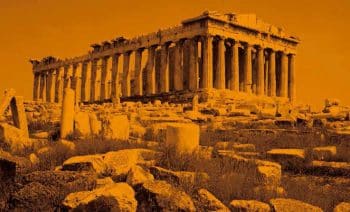
    Walking around the complex of rocks, Doric columns and temples of the Acropolis in Athens evokes the debt Western Civilisation owes to the ancient Graeco- Roman world. It was here that the Athenian City State developed the first and most sophisticated philosophical notions of how a democracy should work. It remains remarkable how much of democracy itself is attributable to this world as distinct from to the more modern world where the franchise took root and popular politics was adopted and adapted by nation states. In essence much of contemporary democracy does not reflect modernity and is ill equipped to deal with exploitative populist efforts that cut across its fundaments. For example, the ancient Greeks were so idealistic that they saw no separation between politics and philosophy, culture, the arts and theatre. In fact their notion of democracy saw philosophy and the body politic as inseparable twins. In order for democracy to survive it had to live in close proximity to the world of philosophy and that of the intellect. In the modern world that we now live in this umbilical link between philosophy and the world of politics has been utterly broken. It is hard to be precise as to when these two worlds separated but it is clear that the cleavage is such as to render latter day democracy incomprehensible and irrelevant to many citizens. After the collapse of the Berlin Wall and communism there was a public clamour to declare an unprecedented victory for the forces of freedom encapsulated by liberal democracy and free-market capitalism. The enormous recession of 2008, which leaves a long economic and social shadow and reduced the number of countries that can be described as democracies, has put paid to the heady optimism and ambitious ideas heavily promoted by writers such as Francis Fukuyama. Since the collapse of the wall there has been an extraordinary burgeoning of trade, investment and human contact powered on a global basis by adventurous risk capital and new, seemingly liberating online technologies that facilitate commercial and social transactions within the blink of an eye. The political class, with its associated elites, has been left stranded in the wake of these fast-moving, converging and engulfing technologies like the internet, social media, instant (and sometimes illusory) capital transfer. The political class have a mandate to manage and control these developments but as ever the regulation is chasing after the market reality. Modern democratic states are very unsuited to handling these changes being rooted in the ancient world and the world of nation states – both epochs that are now past. Modern day Greece serves as a good example of how the nation state model of democracy cannot deliver for its citizens. The country has been pulverised by the financial crisis which began in the US and rapidly exported its wealth everywhere. Since 2008 Greece has been subjected to a force-fed austerity programme, multiple bail-out packages, and the near destruction of its entire banking system. The main Greek Parties that dominated politics since the departure of the military, of left and right ( Pasok and New Democracy) have been swept away in favour of a street-led-protest party headed up by Prime Minister Tspiras. Greece has been scarred. The magnificent streetscapes of the capital Athens have been desecrated by vulgar and ubiquitous graffiti – testimony to pervasive radicalisation. There is no public will to remove it and the authorities –animated by Syriza – appear slow to remove it lest it becomes a vivid reminder that the anarcho-revolution they began has now run into the sand. SyrIza promised all sorts of resistance to austerity, foreign diktat, Brussels bureaucracy, the ECB, and of course Germany. Two years on and it looks like they took on more than they could chew. Quite the opposite to what was promised has occurred. Even Syriza’s high-profile former Finance Minister Varoufakis has given up the ghost and formed his own party. A former ministerial colleague of mine from Greece confided in me during my visit that notwithstanding the volte face in the confrontation with Brussels Tspiras has managed to make a connection to the ordinary Greeks public. Nevertheless the ones I have met here remain ineradicably cynical about politics. Many feel that Syriza is simply serving its apprenticeship and that it is only a matter of time before it becomes as self-serving as its predecessors. Greece has witnessed enormous public corruption and bureaucratic incompetence that is almost the civic mirror image of what happens in the Northern European core countries of the EU. The economy also has a huge black economy of private and cash transactions. On a visit eight years ago, precrisis, I was surprised at the difficulty of finding a retailer that would accept credit cards. It is now far worse and if there is a credit card machine in situ, more often than not, the shopkeeper will claim that the machine is broken. A businessman friend informs me it is quite common for a BMW car to be bought with €70k cash as part of the transaction. Given the governments they have got there is a natural reluctance to pay taxes. The miracle is that the Greek economy and democracy has managed even to survive the economic crisis. This, my business friend reminds me, would not have happened were it not for the black economy. When all else failed it was the only capitalist show in town. The events have been a crushing blow to ordinary Greeks, in particular because of their pride in their illustrious past. The Germans and their own political class have taken the lion’s share of the blame. The extent to which debilitating terms and bailout conditions were imposed on Greece shows both the strengths and weaknesses of the Eurozone system. The fight had to be taken to the streets but was ultimately resolved in the joyless back offices of Brussels, Frankfurt and Berlin. It was probably a mistake for the Greeks to depict Merkel as a latter-day Nazi but the

    Loading

    Read more

  • Posted in:

    Where optimism died

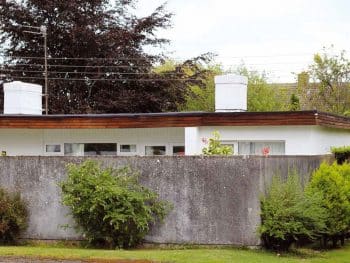
    Driving down the dreary N11 eight miles out of Dublin a curious grouping of houses peeks intermittently over a high County Councilissue boundary stone wall. It’s just another far-flung estate. But in 1963 this represented the modernist dream: open-plan clapboard-fronted American-style houses with two garages adjoining the convenient new tree-lined dual-carriageway, one of Ireland’s first. You can still catch glimpses of its adulterated sleek lines and its once-utopian, now often octogenarian and jaundiced, first settlers. With the rapid uptake in private car ownership the new professional middle classes had realised they could set up home further and further away from the office. Speculative builders were only too happy to facilitate modern suburbia. Louglinstown – just beyond Cabinteely – was a buffer zone between city and countryside cushioned by green fields as far as the eye could see, watched over by rural Carrickgollogan and within striking distance of Killiney Bay, Shankill and Bray, all then established and desirable. Excitingly half of Loughlinstown village, including its celebrated ‘Big Tree’ had been demolished to smooth the tarmac of the spanking new dual-carriageway. It was a playground for the 1960s dream. Shining Shanganagh Shanganagh Vale tapped the optimism. It was named after a beleaguered local river, the euphonious name celebrated by James Joyce: it was originally to be called the less mellifluous Hawthorn Court but individualistic residents kicked up and changed it. Shanganagh Vale was utterly undeferential to the Irish vernacular or the lumpen housing estates on the way out from the city; it was a-contextual, streamlined, uncompromising, unIrish, American. Modern. All of the houses were oriented to give maximum sunlight throughout the day. The entrance curved the road around greens of newly planted poplar trees and detached, single-storey houses hidden by shrubbery. Reflecting the age of the car as symbol of democracy, the houses originally had double garages and were surrounded by generous roads and inviting footpaths. Walking around the estate each turn brought secret laneways and pockets of green. Shrubbery, defiant of boundary lines, made the houses seem to snuggle together. It was an opportunity for Merit Homes to create a new world on a blank canvas, not contextualised. Shanganagh Vale was a Garden City model of out-of-town suburb away from the morally and physically corrupting urban centre, surrounded by parkland and connected to the city centre by unclogged roads. It was visualised as sprawling down the whole Shanganagh Valley towards the Ramblers Rest pub in rustic Ballybrack. Builders Shanganagh Vale was a the first (and last) residential development for Merit Homes Ltd, a subsidiary of John Sisk and Sons which still collects some of the land rents today. The initial modernist development was phased through four different house types, ranging from singlestorey flat-roofed houses to single-storey and two-storey, pitched roofed four-bedroom houses. Architects It was the first residential estate for the London-based practice, Diamond Redfern Anderson. This was one of the first times an architect was used to design the new rash of residential schemes. Other works by Diamond Redfern Anderson include Oak Apple Green, Rathgar; Golden Bay, Lough Corrib, Co. Galway and Claremount Court, Glasnevin Dublin. Architect Denis Anderson, now in his eighties and retired in Holywood outside Belfast says that: “Architects shied away from housing at the time”. The practice is best known for its celebrated Castlepark Village, in Kinsale Co. Cork (1969- 72), considered a seminal work of Irish residential architecture. It is renowned. By contrast little has been documented on Shanganagh Vale. Arab Quarter Anderson told Village it had been important during the design process to separate vehicular traffic from pedestrian traffic – which was novel at the time. Landscaping was also a priority to the practice and the relationship of house to site. The estate is a combination of private and public spaces along with in-between greens which ease the relationship between the houses and the road. high-screen walls around patios gained the houses the nickname the ‘Arab Quarter’, from the confounded local Edwardians. All the houses in Shanganagh Vale were at angles to each other, with different heights of walls projecting here and there and vastly different open spaces, some of which were not clearly designated public or private. It all betokened a relaxed attitude to space and property. The word that best fits the untidy house cluster is one often heard in Ireland – ‘throughother’. Denizens could shape it themselves. The estate was so green that the architects were soon receiving phone calls from the residents complaining about weekend picnickers. The lanes were ideal for the wellspoken children of the estate to cycle their Raleigh Chopper cycles in file, and years later to sneak an occasional unobserved smoke. Flat Scandinavians Closest to the entrance are the Scandinavian-looking, flat-roofed single-storey bungalows. Architect Denis Anderson comments that he took his inspiration from Finland. House+Garden magazine had started to churn out issues on Scandinavian homes, which the perspicacious Irish consumer was taking notice of. Vancouver, Loughlinstown Again fashionably foreign-inspired, the Vancouver – the second look Diamond Redfern Anderson launched was characterised by a box-like structure, low projecting roofs and balconies across the white wooden-panelled frontage. The Vancouver show-house advertised in the Irish Times on 9 November 1963 was completely furnished and “decorated by Brown Thomas and Co Ltd of Grafton Street”. The description reels off the mod cons of the day: “large plate-glass sliding windows, which may be double-glazed if desired”; “large open-plan lounge and dining area, with its fine fireplace of brick and Parana wood paneling”. The kitchen had “attractive breakfast bar with an ‘adjoining laundrette”. Upstairs the bedrooms boasted built-in wardrobes and dressing tables. The asking price was £5150. More than you’d pay for something red-brick in the inner suburbs. But then this was a different land with different rules. The Theory In a literary timepiece, Ruairí Quinn, later leader of the Labour Party, wrote in the Architects Journal in 1974: “Anderson’s design approach is a reversal of the conventional wisdom of the architecture schools, as he first formulates the solution and works back

    Loading

    Read more

  • Posted in:

    Peak Tourism

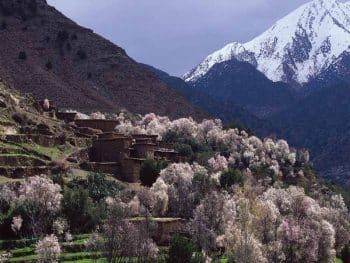
    ‘Eight Million Tourists Expected To Visit Ireland Next Year As Star Wars Effect Lifts Off’ Headline in the Irish Examiner, December 1, 2015 Marrakech is a hard city to leave, because someone is always tugging at your arm. One hour south, near the highest mountain in North Africa, you can hike to a pass with a view of three valleys and still be interrupted. I was alone up there for half an hour when an elderly man appeared, smiled and presented me with a sad lump of coal about the size of a tennis ball. I almost laughed, but I was wrong. He opened the stone to reveal a shimmering bed of purple crystals. It was a piece of amethyst. The old man seemed reluctant to part with his treasure for just €20, and I felt a bit guilty about defrauding him, but we shook hands and the deal was done. On holiday one craves experience that feels privileged, local, unusual. In Ireland that means drinking in a pub after closing time, the ancient but highly regarded lockin. In India it might be a ten-day silent meditation. Authentic and rare, here was another great travel moment. Half a mile up the road there was a hut with a rusty Pepsi sign. That’s charming, I thought, I must be their first customer today. But no! The owner was chatting to my friend the amethyst dealer. Not talking, really, so much as laughing, as if they had just played a practical joke on someone. And look! There I was, sipping a lukewarm Pepsi, not Lawrence of Arabia but something more mundane. The first proper patsy of the day. My amethyst story was not supposed to end like that. Going on holiday is meant to broaden the mind. Saint Augustine said the world is a book and people who don’t travel read only one page. If that’s true, then we’re in luck. It has never been cheaper or easier to fly to faraway places, and sometimes tourists have a benign impact. In 2003, when going to Burma – with its corrupt military dictatorship – was widely frowned upon, a diplomat told me that one of the most encouraging developments there was a rise in tourism, as it facilitated a more open society. In 2008 I discovered the power of personal diplomacy when I spent three weeks hiking in Iran. One day I taught a 12-year-old boy how to juggle. In Morocco I was a traveller until the moment I became a stupid tourist. Still, I can’t blame the chap for selling me that rock. The observer always affects the observed. And there is often a tension between visitor and host. In Barcelona, locals hang banners from their balconies, begging tourists to allow them a good night’s sleep. The 42-year-old mayor of the city, Ada Colau, was elected on a promise to recapture Barcelona for its citizens. In Hong Kong, local residents have marched in protest against visitors from China, whom they call ‘locusts’. As they say in, well, everywhere, tourists are a pain in the ass. Why do we bother going on holiday, anyway? Personally I travel to get away, to be alone, to escape myself, or at least to meet a more attractive version of myself. moments of transcendence – ‘that wine is delicious and it costs half-nothing’ – but for the most part holidays are confused, even disturbing, experiences. Consider: Your flight takes off in just five and a half hours. There you are, packing new clothes in an old suitcase. As you fantasise about lounging by the pool it’s easy to forget that you will be appearing as yourself. (Look! The skin is falling off your nose.) Then there’s the quiet domestic hell of other people. The comedian Kelly Kingham: “My wife and I can never agree on holidays. I want to fly to exotic places and stay in five-star hotels. And she wants to come with me”. Who among us knew that a hotel reception would make such a lively venue for a family row? Or that a short flight could be quite so depressing? Consider the fatalistic niceties (“In the event of an accident…”), the casual indignities and the cruel economies that are now accepted as part of the bargain. When Michael O’Leary of Ryanair joked about charging to use the toilet, many of his customers thought he was serious. The literature is of no assistance. Brochures are works of fiction. Travel journalism is PR with a suntan. And guidebooks are just as bad. Over-scripted drivel, they rob travel of its novelty, thus its charm. (“No visit to New York is complete without seeing the view at sunset from the top of the Empire State Building”.) Maybe we are not explorers, you and I. Maybe we are rough girls and lonely plonkers – a nuisance, frankly, with all our demands that strip a place of what made it attractive in the first place. When I tell you that Starbucks tastes just the same in Marrakech, I should be blushing. It was the German writer Hans Magnus Enzensberger who first argued that tourists threaten or destroy what they have come to see: originality and local colour. That was nearly 60 years ago. Enzensberger’s theory (“Tourism anticipates its refutation”) still seems topical. Writing in the Guardian a few months ago, Tobias Jones observed the same Faustian pact: “The more visitors you have and the more money you make, the less you are the naive, folkloric, authentic, untouched place of the tourist imagination”. Last year there were 1.2 billion tourists. There will be two billion tourist arrivals by 2030. We coach-tour insects like to think of ourselves as a benign presence. We imagine that a long journey absolves us of any petty provincialism. It’s good of us to meet the people. But most of the time the exchange is purely commercial. We are just a source of revenue, and most of it goes to elites. In 2006 the Canadian journalist

    Loading

    Read more

  • Posted in:

    Bremain

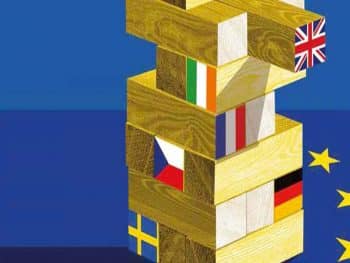
    Brexit will probably never happen. The news narrative has become one of delay, with the odd Brexiteer keeping the flag flying in the Daily Telegraph but a lot of stasis. Next year, there will be many stories about the major problems that Brexit will cause. Negative economic effects will loom. Village editorialised in its last edition that no one who understands history or economics could vote Brexit and certainly it does undermine fundaments of what many regard as political imperatives. There will be surprise at the huge range of problems involved in taking EU law out of UK law given that an integration of laws has been underway for over forty years. Gradually, a wide-ranging complex vista of Brexit problems will emerge across British social and economic life; for instance, residency, travel, employment laws, training, education, research, and also in business, whether trade, competition, employment or any of the recesses into which the EU has long delved. The probable break-up of the UK following Brexit will inevitably continue as an issue in the media background, because, very probably if Brexit happened, Scotland would become independent and join the EU. Democrats could not ignore if 5.3 million EU citizens in a separate national area, were expelled from the EU against their collective will. Furthermore, there must be a significant chance that the court challenges to unilateral UK Government action on Brexit will succeed and force an early vote in Parliament on the issue, causing further delay and uncertainty about Brexit. But behind the scenes, there are other unreported factors. We don’t know what Theresa May and Angela Merkel said to each other and it would be very hard to guess. We can be much more confident about what the current American Government from Obama to the State Department to the military are saying: don’t leave the EU. While Brexiteers will brush off the partisan advice of a lame-duck administration, the US will have a new President- elect on November 9th next. Assuming it is Clinton, she will reiterate in private the insistence of the current administration. British Government Ministers, officials and army generals will be left under no illusions by their American counterparts that Brexit is a no-no from global strategic and security perspectives and will have to be averted by whatever means. Initial post-Brexit reporting in English language media emphasised how the UK was in a strong negotiating position because of its trade deficit with the rest of the EU and that Germany’s Angela Merkel wanted a reasonable agreement for the UK, partly because of German exports to the UK. In fact, Brits will continue to buy their BMWs. In reality, the dominant market focus of big German exporters is growth of their Asian sales, especially China. More seriously for the UK, Germany, including Chancellor Merkel herself and her closest political allies, is increasingly indicating that it will take a tough negotiating position with the UK on Brexit and that it strongly supports a united EU position towards the UK. Merkel indicated this twice recently including at a high-profile meeting with France’s Hollande and Italy’s Renzi. Even more ominously for the UK, Merkel appears to be supporting an EU strategy to restrict the ability of City of London financial services, especially banks, to operate in the EU after Brexit. That is by far the UK’s most important exporting business. Michael Fuchs, deputy leader of Merkel’s CDU party, said recently that banks operating in the EU must be subject to EU supervision and can’t be run out of London when the UK is no longer a member. “I really think this is something that’s not negotiable, the so-called banking passport”. Germany and France greatly resent the extent of the economic gains and influence that the City of London gets from selling financial services throughout the EU. In the event of Brexit, they would try and repatriate as much financial business activity as possible to Frankfurt and Paris. Moreover, the issue makes a powerful bargaining chip. There will probably be an often lengthened delay before the UK triggers Article 50 and formal Brexit negotiations, if it ever does trigger it. Even if it does, Brexit is still very unlikely; mostly because it would cause too much damage to the UK economy and disruption to social and economic life in the UK. The end result will most probably be an agreement that the UK will remain in the EU, with the UK’s best hope being to maintain the favourable agreement that David Cameron negotiated in February 2016. In reality, internal British, European and global politics all mean that Brexit is a madness that will have to be averted. Brendan Lynch is an Economist and former stockbroker. He is the author of ‘EMU: Ireland’s Dream Start – The Political and Economic Impact of EMU on Ireland’ (2008).

    Loading

    Read more

  • Posted in:

    Controlling the s****

    Most Irish traditional news outlets offer some form of reader participation but there are heterogeneous requirements before comments can be left on sites

    Loading

    Read more

  • Posted in:

    Laws of unintended coherence

    The case revolved around the circumstance of the unmarried father, with otherwise no rights to remain in Ireland, seeking to avail of his fatherhood of an Irish unborn child in order to remain here – and the extent of the child’s rights

    Loading

    Read more

  • Posted in:

    Unexplained disparities in care orders

    Children are more than twice as likely to end up in care in one region of the country as they are in another, official figures from the child and family agency Tusla have shown. The records show that the number of children ending up subject to care orders is significantly above the national average in the HSE South region. There were 614 care orders in the South during 2014 – which ended up higher than two of the other regions (Dublin Mid-Leinster and the West) even when combined. Over half of those care orders, 320 in all, were in the city and county of Cork which meant that out of the 1,632 children to enter care in that year, almost one fifth were in Cork when the country makes up just 11% of the Irish population. Detailed analysis of the figures on the basis of population aged under 17 bears out the stark difference in rates around the country. On a national level, 142 children per 100,000 ended up in care during the course of 2014. However, the rate for the HSE South was significantly higher at 209 and the rate significantly lower in Dublin Mid Leinster where it was just 81. The other two regions – HSE West and HSE Dublin North East – were closer to the national average and stood at 125 and 158 respectively. Professor Pat Dolan, a childcare expert from NUI Galway, told Village that ultimately care orders should develop a consistency across the country but that “supply and demand” was still playing a major part. He said: “If you look back in the eighties, we really only discovered child sexual abuse and there was a massive increase in referrals after the Kilkenny incest case. Was there suddenly a proliferation of abuse of children? Or did we just become much more aware of referring it into the garda and social work systems? There are trends in this. The other main factor has to do with availability of service. If you take residential care, the more children’s homes you build, the more you fill. There is an issue of understanding this in terms of services available. The more [children the services] can see, the more these numbers will go up. If you have waiting lists, the numbers stay down – that doesn’t mean the cases aren’t there. But if you buy a Panadol in Cork, it should be the same dosage as everywhere else. It should be the same in terms of service provision. It should be the same regardless of where you are but the one thing we know is that it’s not”. Professor Dolan, who is Director of the Child and Family Research Centre in NUIG, said unusual spikes like this were not uncommon and that after high-profile cases of abuse referrals could suddenly rise. Similarly, highly publicised cases of abuse in care settings could have the opposite effect and lead to a reduction in the number of children being placed. He said that while poverty was a key factor – the country also tended to concentrate services of this type in areas that are more deprived. He said; “What is the level of abuse in middle and upper class Dublin? It’s not policed as much from a social perspective. [So the question becomes] is there far more abuse in one area, or is it just that we are looking much more closely? “It’s a problem and provision issue. In some areas, you have more social workers seeking care orders in some communities. It’s almost like a siege for them but you would wonder why this is the case in Cork”. Nationally, 1,632 children were taken into care in 2014 with over two-thirds of those cases involving a voluntary admission. There were 163 cases – around 10% of the total – involving emergency care orders and another 198  where interim care orders being used. One case involving a detention order of the High Court was also recorded. The figures – provided under FOI – were also listed according to age, with the largest number of cases, 231 in total, involving babies of twelve months or less. Significantly, of those cases – over 100 involved some form of care order and only 130 were by voluntary admission. By comparison, of the 118 cases involving children of eight years of age, 100 of those were a voluntary admission where a parent had given consent. In a statement, Tusla said: “Children and young people are referred into [our] Child Protection and Welfare Services in each of its four regions (West, South, Dublin North East and Dublin Mid Leinster). The rate of referrals is affected by a range of factors in each region including, but not limited to, population, demographics, deprivation levels, addiction issues and the level of supports available, e.g. family support services. These can in turn be affected by the social and economic history of the region. By Ken Foxe

    Loading

    Read more