european

Random entry RSS

  • Posted in:

    The Right to have Rights

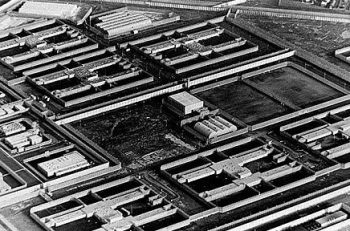
    Hannah Arendt’s famous phrase ‘the right to have rights’ was coined in her 1958 book ‘The Human Condition’. The condition of being stateless, of being a displaced person, which began its modern history in Europe with World War I, has been experienced since by untold millions who have had to listen to the claim that ‘human rights’ are universal and fundamental – but not for them. Once we had the glamorous figure of the cosmopolitan, the person who belonged to the world, the global community; that figure has been displaced by the refugee, who belongs nowhere, but is to be found everywhere in the paradigmatic settings of the modern and contemporary world – the prison camp, the internment zone, the refugee camp, the ghetto, the jail, the arena of suspension where people live in a place that is always outside the country that it is inside. Arendt pointed out that the creation of such places and conditions is a political decision, not just a terrible catastrophe. It is the prevailing form of the penal colony, the new home that we have built to house the theory of human rights. Since Arendt, and most especially in the indebted work of Giorgio Agamben, it has become clear that the concentration camp of the twentieth century was not some historical anomaly, but that it is actually one of the paradigm sites of Western modernity. The internment camp is a zone of suspension, of ‘rendition’, a place that is always outside the country it is inside – Guantanamo is the best-known example, although there many such places – our best- known example was The Maze in Northern Ireland. Those entrapped there expose the hollowness of any claim to universal human rights, to having rights just on the basis of being human. Arendt said it plainly: the refugee, the displaced person, has regularly been denied the right to have rights. The denial is a political decision. It takes its most popular form in the denial that there are any ‘political prisoners’ in the denying country, although enemy countries are full of them. Its political nature has been counterpointed more clearly since 1948, since the United Nations began its series of declarations of Human Rights, unabated since that date; rights of men, women, children, of minorities, of the disabled, of all indeed who can be characterised as having been ‘excluded’, which means that even the ‘poor’, a constituency which enlarges globally by the hour, faster than ever since the almost perpendicular rise of neo-liberalism in the decades before and after the financial crash. Reading these rights, as ‘declared’ (whatever that means), in that bland United Nations universalistic rhetoric, it is hard to know whether to laugh or cry. Such noble vacuities, such actual atrocities – produced by the same state systems that have prevailed since 1945. It was part of Arendt’s long argument, which began in 1943 with her essay “We Refugees” (about Jewish migrants who had become ‘stateless’, that condition in which they had no rights) that asked why European civilisation had so successfully produced the barbarism that made statelessness pandemic and human rights so unavailable to the millions of ‘displaced persons’ of World War II. Part of her answer was that this barbarism was so successful precisely because it was so concealed within or behind the declarations of universal rights and justice which the West, in the case of the American and the French Revolutions, had made central to the powerful ideology of what mutated into Western ‘freedom’. Arendt’s question then was: how could such an ideology be developed (as through the UN declarations) and simultaneously traduced (as in American foreign policy)? It is too feeble an explanation to put it down to hypocrisy. Hypocrisy on this scale occurs when the people who most sincerely believe in the peaceful principles are those who most regularly betray them in violent action. The British spent three centuries in perfecting their international reputation as hypocrites, a nation that believed itself to be peaceful even as it waged endless wars. Now that role has been assumed, largely, by the Americans. But, to achieve world domination is one thing; world hegemony is another. That’s what the World Wars were fought for. Arendt achieved notoriety with her reporting on the 1961 trial of the Nazi Adolf Eichmann, which was published in book form as ‘Eichmann in Jerusalem: A Report on the Banality of Evil’, where she developed the central figure of the ‘desk-murderer’, the bureaucrat who administered the death-camps. But her key point was that this was a show-trial, that pretended to be an example of universal justice triumphing over universal evil. Rather, it was in fact a national victory of the Israelis over their Nazi persecutors. In this exemplary instance, we are shown how the language of universalism can be used as a disguise for a state’s policies. The jurist who had the ambition to do that for a successful Nazi state, Carl Schmitt (1888-1985), described in his ‘Nomos of the Earth’ (1950), how the European system of international law had been replaced by an American one, with the UN as its legislature and the International Tribunal or Court as its executive. In effect, the language of universal rights was used to ratify the aims of American foreign policy; Nuremberg, Tokyo, Damascus, the Hague were, like the Moscow show trials of the 1930s, elaborate pretences that something objectively true was being defended from the current version of sectarian betrayal – war criminality, terrorism, the new terms of ‘war crime’ and its flourishing neighbourly companions, such as ‘ethnic cleansing’. Danilo Zolo has demonstrated in Victor’s Justice how the Kosovo war of 1999, that infamous intervention (to be followed by interventions in Iraq, Afghanistan , Libya and elsewhere, saving the ‘people’ of those countries for democracy, largely by killing and dispossessing them), with its International Court at the Hague, which could try anybody but Americans, is the most egregious example so far of how the language of universal rights has been perverted

    Loading

    Read more

  • Posted in:

    Independence in a Vassal State

    In his 1976 poem, ‘A Part of Speech’, Joseph Brodsky says Russian narratives of the future and of history are informed by language, not facts. “… and when “the future” is uttered, swarms of mice rush out of the Russian language and gnaw a piece of ripened memory which is twice as hole-ridden as real cheese”. Current events in Ireland import his observations to our own milieu. March and April mark the peak of the Centennial celebrations season in Ireland – the months of remembering, interpreting and occasionally re-writing the already troubled historical narratives of the nation to reflect the distant 1916 Easter Rising. The ripened memory is hole-ridden by interpretations and narrations, though the factual history of the event could easily be explained in simple timelines. Thus the focus of many analysts has drifted from the original Easter Rebellion to the future. The culmination of this was a rather simple, yet far-reaching, observation by President Michael D Higgins that modern Ireland is a society that has yet to achieve the core perceived objectives of the Rising: the story of Ireland is still being told. This notion of Irish sovereign incompleteness, one hundred years from the Rising, is an important and complex one. To some, extracting relevance from the Rising means projecting historical myopia into an evolving future: the ideal of national independence defined by physical boundaries. Nationalist rhetoric, historically apt, but backward-looking, has been one of the significant themes in the Centenary. For others, including myself, relevance is less about the ideals of the original Rebellion, and more about the nature of the Irish state and its elites within the context of the modern reality, framed forcefully by the memory of the Global Financial Crisis. Put simply, irrespective of the wishes of the 1916 leaders and the generations of Irish national leaders who followed them today’s Ireland is, economically-speaking, a vassal state, dependent on fortunes, choices and policies determined well beyond our shores. Perhaps the saddest part of this truth is that this state of affairs is the direct outcome of the willful co-opting of Irish elites by our external masters: the technocracies of Europe and the Multinational Corporations. As in 1916, today Ireland has little control over its own destiny. And just as in 1916, there is only a small minority of the Irish people willing to confront this reality. No matter what the Irish President declares about the ‘Irish story’ being a continuing saga, we are subjects of the world order that our leaders, aided by the silent majority of us, have not the will to alter. Still less the capacity. Over the hundred years that separate the Easter Rebellion and today, Ireland has travelled an impressive path of economic growth – a path that is still new but which is celebrated today as our major achievement. However, attributing the economic success of today to the struggle for independence in the past is a false narrative. Apart from the fact that on average Irish citizens were doing well before the Rising, asserting Ireland’s economic independence from the UK required a period of painful and exceptionally protracted misery that stretched from the Rebellion into the early 1970s. When we finally did get growth to ourish, we squandered its fruits. And though we have growth it has not yielded independence. The economic renaissance after 1973, attributed to TK Whitaker-promoted economic openness and FDI-focused development, did not mark meaningful economic sovereignty for the country. Rather it represented a shift in Irish economic dependency from reluctant participation in UK-centric trade, investment and labour markets to an enthusiastic embrace of the EU as an opportunity for the beggarthy-neighbour model of tax arbitrage policies and to comprehensive prostration to corporate markets, first represented by the ‘civilised’ foreign direct investors, lately – by the blackmail-wielding bondholders and vultures. The overall outcome was belated prosperity, but also atrophying leadership. Economic growth came with policy de a- tion through Social Partnership, the perceived and real demands of FDI, and reliance on the importation of social, cultural and economic ideas (and institutions) from the EU. A nation once subjugated to the UK found itself subjugated to a virulent blend of nationalism and religion and, finally, to yet another set of hegemonies.By the end of the 1990s, the Irish model of commerce, traditionally defined by the triumvirate of the local councilor, local priest and local bank manager presiding over economic resources gave way to the Social Partnership model where those three agents were supplemented by a motley crew of social and business groups and state bureaucrats whose sole preoccupation was to make sure that the wishes of the MNCs and Brussels were not trampled by mere local selfishness. The fruits of 100 years of striving for independence is an economic culture of dependency. Which, in cold and impersonal language of economic statistics, looks like this: In 2014, Ireland spent more than the EU and euro-area average as a percentage of GNP – 0.87-0.88% – on social housing, against the Euro area’s roughly 0.72%. In return, we got a spiralling homelessness crisis and a ratcheting length and duration of social housing queues. We posted the second highest GDP per capita figure, based on EU purchasing power parity, but only average (for the euro area) levels of actual real individual consumption. We got the fastest growing economy in the EU, with OECD-topping investment figures. But we also have average or below average growth rates in construction spending (+3.1% in the first nine months of 2015 compared to the same period of 2014) and our companies’ investments in machinery and equipment was down almost 18%. In fact, January- September 2015, total investment growth, excluding intellectual property – domain of smoke and mirrors generated by the tax-shifting MNCs – was down 9.5%, just as official total investment figures for the economy were up 26.8%. Consider the following simple exercise. We used to believe that the true state of the Irish economy was described by our Gross National Product (GNP) because, unlike GDP, it ‘accounts’ for profit

    Loading

    Read more