• Posted in:

    Wicklow Council reacts to housing crisis

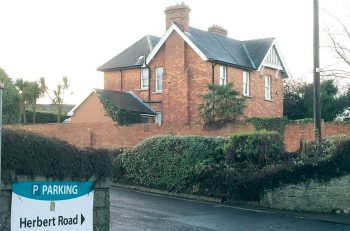
    A fiercely fought decision by Wicklow County Council officials to buy and demolish an Edwardian house in central Bray for 45 car spaces raises questions about the power of local authorities. The house, inhabited until now, was torn down on 12-13 April. Residents suspect that spending at least€1.3m to buy and replace it constitutes an indirect public subsidy to Paddy McKillen’s Oakmount/Navybrook. Oakmount is erecting the Florentine retail centre nearby, for which Wicklow council reduced the number of car spaces required compared to previous plans. Officials snubbed a last-minute appeal by local TD and Minister for Health Simon Harris who supported the residents’ call for independent legal advice before proceeding with, as Harris put it, “the irreversible action of demolishing this heritage house”. Minister Simon Harris TD and Sinn Féin’s John Brady TD, as well as the Green Party, An Taisce, Bray Cualann Historical Society and many local residents (including this writer) have objected to demolition. But a coalition of Fianna Fáil and Fine Gael councillors held firm and rejected calls by fourteen councillors for an independent legal opinion on the process followed. And the Office of the Information Commissioner has now informed residents that it has identified more than thirty records relating to St Paul’s Lodge that the council did not previously disclose to it on foot of a continuing Freedom of Information appeal by residents. Wrecking St Paul’s Lodge during a housing shortage is the latest in a series of controversies involving Wick- low County Council. Last year it was strongly criticised by a High Court judge. The Council was originally poised also to buy and demolish for more spaces at the same location a second house, occupied by Wicklow’s former county manager. Although the Council assured An Bord Pleanála that the planned Florentine centre included enough car spaces, it now claims that new spaces are needed elsewhere “urgently” and at public expense. Critics point out that at least double the number of spaces planned to replace St Paul’s Lodge are empty daily in the car park under the Council’s own civic offices on Bray’s Main Street, and objectors have also identified other alternatives. For some time critics have called on the minister for the environment to initiate an enquiry into how Wicklow Council does business. The management of Bray’s fire services and of related matters following the death of two firemen there, the presence of an illegal dump in West Wicklow that may cost the state tens of millions to clean up, the status of land near Greystones, and the sale of public properties on Bray seafront and elsewhere have given rise to concerns. It is remarkable (and not widely appreciated) that, when endorsed by a majority of councillors, plans to demolish or build on council-owned properties cannot be appealed even to An Bord Pleanála. The absence of any right to appeal may be unconstitutional. John Ryan, the Fine Gael councillor most prominently supporting demolition, recently filed a form declaring his interest in a contract to provide services to Wicklow County Council staff. But he did not inform or withdraw from meetings about St Paul’s at which councillors had to adjudicate between council staff and objectors. Nor did Fianna Fáil’s Pat Vance, who owns commercial properties facing the Florentine site. Eight of 32 Wicklow councillors represent Bray, with just one each from Fianna Fáil and Fine Gael (elected last and second-last respectively). Fianna Fáil’s Bray councillor is Pat Vance, currently deputy chair of Wicklow council. Fine Gael’s is John Ryan. Most independent councillors in Wicklow, especially retired garda Brendan Thornhill, along with Green Party and Sinn Féin councillors have strongly resisted the demolition of St Paul’s Lodge. Protesting councillors convened a special meeting of Wicklow County Council in March to question the way in which the decision to demolish St Paul’s Lodge has been taken. That meeting lasted over two hours but the large Fianna Fáil-Fine Gael bloc largely remained silent before voting against a proposal to take independent legal advice. It was backed by Bray District Chairman, Councillor Christopher Fox. Councillors from these two parties in Wicklow generally support one another, with implications for resources. Three trips abroad during the St Paul’s controversy cost the Council over €6,500 and saw Council chairman Edward Timmins in New York with the county CEO, while deputy chair Pat Vance and a Council official went to Dublin, California (twinned with Bray). With residents against the demolition of St Paul’s refused permission to address the full Council, and their requests to meet officials rebuffed since last June, such trips exacerbate a sense of exclusion. The Council told residents last June that it was examining all options for parking. In fact, as its appeal to the Office of the Information Commissioner has already revealed, the Council had earlier decided to try and purchase both St Paul’s Lodge and an adjacent house. No record has been discovered that reflects any consideration of options beyond Herbert Road. Nor have records been uncovered that record any authorising decision early last year to buy two houses, or that might reveal who inside or outside the Council first suggested this, or what budget was allocated for the transaction. The Council eventually spent well above its initial valuer’s estimate of €765,000 buying St Paul’s Lodge, and even covered the cost of the vendor’s auctioneer, solicitor and furniture removal to Spain. Residents would have campaigned earlier to stop demolition had they been frankly informed when they first enquired. They object especially to the fact that council officials closed the purchase of St Paul’s unconditionally before the necessary statutory ‘Part 8’ consultation was even commenced, and question the point of that consultation, in which 150 parties including An Taisce made submissions. The Council admits that it did not ask its own heritage officer for her opinion. Submissions opposing demolition were also not circulated to councillors but were instead dismissed in a report presented by the Council official who had directed the purchase of St Paul’s Lodge. Most of the undisclosed records now

    Loading

    Read more

  • Posted in:

    Wicklow Manager bouncing Bray demolition

    Village last month reported that Wicklow County Council has agreed to sell a prime town-centre site in Bray to developer Paddy McKillen’s Navybrook Ltd for just €2.6m. The deal is contingent on Navybrook delivering a commercial development by the end of 2019. It is also a controversial sale that has raised questions about value for money. Most Councillors and most residents of Bray want the site developed. Known as the ‘Florentine’, it has been vacant for 20 years, but has also served meanwhile as a convenient car park with 225 spaces. A Council official in January told Wicklow County Council that the site is actually worth more as a paying car park than as a development site. “There’s not huge value in this for developers”, he claimed. But a related effect of the sale of that site to Navybrook is now proving controversial too. For it transpires that Council officials set aside a sum almost equivalent to the Florentine’s sale price to buy and demolish two large inhabited houses at Herbert Road nearby in order to extend another surface car park by up to 100 spaces. The proposed new spaces are seen by some residents as an incentive or subsidy to the purchaser of the Florentine site. The original Council budget for the extra spaces appears to have been only about 10% less than what that Navybrook has agreed to pay for the Florentine. Wicklow County Council might have insisted on any purchaser of the Florentine erecting a multi-storey with 356 car spaces, instead of the 256 now planned there. Had Wicklow County Council insisted on 100 more car spaces at the Florentine, it would still have been fewer than had been required as a condition, when planning permission was granted for the Florentine site to an earlier owner. One previous planning permission for an earlier proposed development on the Florentine site, one that included apartments, had required 417 parking spaces. Wicklow County Council acquired the site at a bargain-basement price during the recent crash. It believes that the Florentine will yield it commercial rates of up to half a million euros annually when completed. The County Council itself sought planning permission for the Florentine before selling the site to Navybrook. The inspector for An Bord Pleanála pointed out that objectors had stated that the Council was not making sufficient allowance for car parking, with provision being promised for just 256 spaces. The inspector’s report included a statement that applying car-parking standards in the, then-current, Wicklow county development plan 2010-2016 would have meant that “504 spaces would be required”. But Wicklow County Council insisted that 256 spaces were enough, and An Bord Pleanála accepted the Council’s assurances. Permission was granted last year. Just one month later the Council was engaged nearby in private negotiations to buy St Paul’s Lodge and another big house, both adjacent to the existing surface car park on Herbert Road which is an area zoned for mixed use. Local residents were not informed, but the prospective purchasers were told that Wicklow County Council wanted to buy their houses, and that the purpose for which the Council wanted them was additional parking. The owners first sought €1.5m each (as opposed to the€765,000 valuation that the Council’s own surveyor put on one of the houses last year). In the end, only the sale of St Paul’s Lodge went ahead, for €913,000 including the vendor’s legal and other costs (such as furniture removal to Spain). The Council thus acquired an Edwardian home and large garden that officials hope to clear for up to 47 hard-surface car spaces.   Bray residents (including myself ) oppose the Council’s proposal to destroy St Paul’s Lodge, on architectural and social grounds among others, pointing out that it was reportedly designed by the architect of Farmleigh House, and that destroying family homes during a housing shortage pushes up the cost of new homes for everyone. Hearing rumours of the Council’s wish to destroy part of their neighbourhood, residents tried between June and October last year to elicit information from Wicklow County Council. We were told by the Council simply that, “We are examining all aspects of parking in the town at this time”. In fact Council officials were then intent on closing the purchase of St Paul’s Lodge as quickly as possible. Council officials concluded the purchase of St Paul’s Lodge unconditionally, despite the fact that it was bought solely “in order to raze it to the ground and build a car park on the site”, as the vendor’s solicitor put it last July. It is an extraordinary fact of current law that Council officials have great freedom to spend public money on acquisitions without the approval of elected representatives. However, approval is required to demolish or dispose of a building, and the process of securing approval in such a case requires public consultation under a provision known as ‘Part 8’. But what kind of consultation? In this case Wicklow County Council ignored expressions of concern by local residents and inserted no provision in the contract of sale contingent on Council approval. The Council closed the sale without first completing the consultation concerning possible demolition. This has put Councillors under pressure to approve demolition. The house could be put back on the market. There is a strong demand for such houses in the immediate vicinity, and at least one older and bigger house nearby (in bad shape) was recently bought and substantially renovated. But the fact that officials paid above what their surveyor considered to be the house’s normal market value could leave the Council out of pocket from any resale. Residents had their request for a meeting ignored by Council management, and have been forced to take an appeal to the Office of the Information Commissioner to get some documents eventually released that reveal details. The first site notices of planned demolition were not clearly visible from the road and none at all was put on the property of St Paul’s itself. A new notice was published when

    Loading

    Read more

  • Posted in:

    Democracy and war

    DEMOCRACY AT HOME General Election 2016 has thrown up an utterly unpredictable result with Fianna Fáil in the ascendant. At the time of writing the consequences of the vote including who will survive as leaders, who will be in government and who will lead the government could not be less predictable and, without resorting to metaphysics, will reflect only opaquely the will of the people. Yet we carry on as if this did not reflect in any way on the integrity of our democracy. DEMOCRACY ABROAD The Brexit referendum should have been framed on whether the UK will be in the EU, in EFTA, or independent. But, as always in these islands, the third option, the middle one, has been omitted. The outcome, therefore, is bound to be inaccurate. And given the divisive nature of the in-or-out, stay-or-leave question, it is highly likely that the ‘leave’ option will win. In a three-option poll, the ‘leave’ option will probably lose. On 20th Dec last year, Spain went to the polls… and two months later, Spanish politicians are still arguing about who should be in government. But this is par for the course. As happens in so many democracies, open and transparent elections are followed by closed and opaque discussions, as various parties wheel and deal behind closed doors, trying to concoct a majority coalition. In 2013, Germany’s four parties took 67 days to sort something out. In 2010/11, Belgium’s dozen took 451 days! Will Ireland have the same sort of uncertainty? Democracy is for everybody, not just a majority. Conflict zones like Syria and Ukraine need inclusive governance, governments of national unity. Inter alia, this should mean that elections are preferential and proportional; that power is shared in both joint presidencies and all-party coalition cabinets; while the third ingredient is preferential voting and collective responsibility in parliament. Sadly, while we preach at least some of these ideals abroad, we practice the very opposite at home: majority rule in the Dáil and the Commons, and divisive majority voting both in parliaments and national referendums. Before the Scottish referendum of 2014, it was widely assumed that ‘devo-max’, the middle option for maximum devolution, would get about 60 per cent. The ballot, however, included only the two other options, status quo and independence. The result, therefore, was a highly inaccurate nonsense. There are times, as with the election victory of Aung San Suu Kyi in Myanmar, or our own recent referendum on same sex marriage, when democracy is wonderful. On other occasions, as in the Balkans, it was downright dangerous: the 1990 elections there were little more than sectarian headcounts and “all the wars in the former Yugoslavia started with a referendum”. (Oslo- bodjenje, Sarajevo’s main newspaper, 7.2.1999.) It must also be remembered that Napoleon became the Emperor by a popular vote, one in which he, literally, dictated the question. Hitler, too, came to power ‘democratically’. In the 1924 elections, the National Socialists won just 14 seats but, in the wake of the great depression, this rose to 107 (17.6%). The subsequent history consisted of weighted majority votes in parliament (like the Enabling Act of 1933), simple majority votes in referendums in which, again, the dictator di tated the question, and war. DEMOCRACY AND WAR The focus of this article is Westminster’s democracy and the decision to go to war in Syria. Would the outcome of the debate on bombing in Syria have been different if the chosen methodology of decision-making in parliament were not majority voting? In other words, would the House have made a different decision if the procedures had allowed for a more pluralist decision-making methodology? First of all, a little background. In 2002, in the UN Security Council debate on Iraq, Resolution 1441, both France and Germany objected to the phrase “serious consequences” in Clause 13. Yet both voted in favour of that resolution. The outcome, described as “unanimous”, was (not the but) a cause of war, of the invasion of Iraq on 20.3.2003, and of the sorry story since, not least in Syria. But that outcome – 15-nil – was not unanimous! France and Germany did indeed object to the above clause, and perhaps would have objected to other paragraphs if but the procedures had catered for such criticisms. Maybe other Council members, one or other of the ten temporary non-veto powers, which at the time included Ireland, might have had policy proposals worthy of consideration. Unfortunately, binary voting means questions are dichotomous. So countries vote in favour, perhaps because the resolution is better than nothing, perhaps because of the need for international solidarity, we don’t know. There is the main resolution; there may be amendments to this clause or that, or even perhaps a wrecking amendment; but everything is yes-or-no; it is this methodology which is at fault. Majority voting was, yes, a cause of war. A MORE INCLUSIVE PROCEDURE A more accurate methodology would allow the UK and USA to propose one draft Resolution 1441; option A. If France and Germany objected to Clause 13 or whatever, they could propose an alternative wording, even if only for this one clause, whence their preference would be a slightly revised but nevertheless complete package, option B. Syria, then a temporary member of Council, might have preferred another complete package, option C. Ireland could have preferred a more obviously neutral option D, and so on. Naturally enough, countries might seek to come together in groups to favour this or that option but the first principle would remain: everything should be on the table, (computer screen and dedicated web-page). The subsequent debate would allow for questions, clarifications, composites and even new proposals (although of course, at any one time, any one country could sponsor only one motion). At various stages, participating countries could express their preferences, so to indicate where the eventual consensus might lie. Then, at the end of the debate, all concerned would cast their preferences on a final (short) list of about five options. The winning outcome,

    Loading

    Read more