Vicky Phelan

Random entry RSS

  • Posted in:

    Mary, Mary, quite contrary

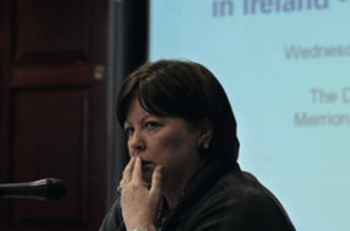
    By Frank Connolly. Former Minister for Health, Mary Harney, met one of the US firms at the centre of the cervical smear-testing scandal on three occasions in 2008 and 2009. Harney was Minister when US firm, Quest Diagnostics, secured the tender for smear testing in 2008 against the advice of leading Irish cytologists who questioned the reliability of the US laboratories. According to documents obtained by Village from the Department of Health, Harney met representatives of Quest in October 2008, June 2009 and October 2009 although details of the discussions were not revealed. The first encounter took place soon after Quest was awarded the multi-million-euro contract to provide laboratory-testing services to the HSE. It had been checking slides from Irish hospitals for breast and other cancers for some years but with the introduction of national-screening programmes and a significant backlog in Irish laboratories, it was decided to outsource the service to Quest and, two years later, to other US laboratories. Objections raised by Irish pathologists, including by Dr David Gibbons of St Luke’s Hospital, about the poor quality of US tests compared to Irish results were dismissed by the HSE and by Tony O’Brien who was then in charge of the National Cancer Screening Service (NCSS). Dr Gibbons has said that he resigned from the oversight board which supervised the NCSS after his warnings were ignored. O’Brien stood down from his post as Director General of the HSE last month in the wake of the cervical-smear scandal. In 2008, the NCSS awarded the contract to analyse 300,000 Irish smear tests to Quest Diagnostics. Two years later Clinical Pathology Laboratories (CPL), based in Austin, Texas, was awarded a tender to provide laboratory services for CervicalCheck, the programme run by the NCSS. Both firms continue to provide laboratory testing services to the Irish health service. Two months ago, Vicky Phelan (43) from Limerick settled her action in the High Court action against CPL for €2.5m. A smear test by the US firm in 2011 was misdiagnosed and failed to detect her cancer which was not found until three years later. She was not informed until September last that an audit in 2014 had discovered the 2011 misdiagnosis. Emma Mhic Mhathúna was diagnosed with cervical cancer in 2016 after being told that a test of her slides had been wrongly diagnosed by Quest in 2013 and possibly as far back as 2010 when another slide was apparently misread by the New-Jersey-based company. The 37-year-old mother of five children is dying of cancer. In late May, further distress was caused to her when the High Court was informed that Quest was seeking to have her children interviewed by a psychologist to assess the impact her death would have on them. There was significant controversy when Quest was awarded the major testing contract in 2008 – with cytologists and medical laboratory scientists warning that there was already evidence that the US system produced results that were less accurate than the work done in Irish hospitals, including at St Luke’s Hospital and the Royal College of Surgeons in Dublin and Cork University Hospital (CUH). Village has recently learned that an inquiry by HIQA into the incorrect diagnosis of tests of cancer sufferer Rebecca O’Malley was informed by a medical scientist in CUH in 2007, a year before the main contract was awarded to Quest, that there was an unacceptably high failure rate in its test results. The debate over the decision to award the contract to Quest was revived in February 2009 when it emerged that Harney had spent almost a week in the US, including on visits to Texas, Arizona and Washington DC a year earlier, in February 2008 – just months before the contract to Quest was awarded. Most of the media attention focused on her attendance, with her husband Brian Geoghegan, at the Super Bowl football game in Arizona during her trip. She visited several US health facilities including the Mayo Clinic and a cancer-treatment centre in Houston, Texas. The itinerary provided by the Department of Health to Village in recent days does not include any mention of meetings or visits to Quest or any other laboratory testing firms. Details released under Freedom of Information at the time disclosed that the trip cost some €190,000 involving 23 hours of flying time on the government jet at a cost of €163,000, €11,000 on hotel bills, €3,380 on food and drink and more than €11,000 on hiring mini-buses to ferry the seven-member delegation to various venues. Asked about the content and outcome of her meetings with Quest in 2008 and 2009, the Department did not address the question directly but said: “A dedicated team is in place in the Department to oversee and progress the CervicalCheck records trawl. Work is ongoing and the trawl is being informed by the broad terms of reference of the Inquiry being undertaken by Dr (Gabriel) Scally. At this point, however, the Department can advise that following a check of the Minister’s diary database there are three entries relating to meetings between the then Minister and Quest Diagnostics: 9/10/2008; 17/6/2009; 13/10/2009”. Harney, who was the leader of the Progres- sive Democrats during her time as Minister in the Fianna Fáil led government, is expected to appear before the Scally inquiry to explain the contents of her discussions with Quest. She will also be asked to explain her role in the decision to outsource to the US laboratories the testing of slides of Irish women seeking to avoid life-threatening cancer conditions. The decision to outsource the service to US companies was hugely influenced by the estimate by the HSE and the Department of Health that the programme would be significantly more cost-effective than the Irish system at the time. Irish laboratories complained at the time that the tender criteria, whereby applicants must be capable of carrying out large volumes of tests, rendered them unable to compete given the shortage of laboratory scientists although there were training programmes underway. Most of the

    Loading

    Read more