voters

Random entry RSS

  • Posted in:

    When shall we three meet again?

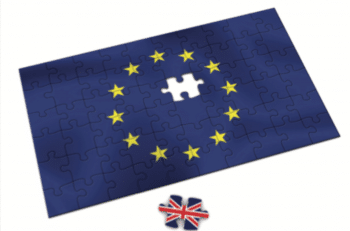
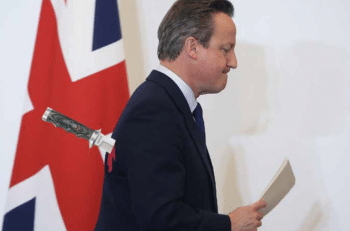
    This is a saga of sadness, a tragic tale of three ‘whiches’, a fairy ‘which’, a whichsoever ‘which’ and a wicked ‘which’. In initiating each of three referendums, David Cameron said, “You have a choice, ‘this’ or ‘that’, which do you want?”. So all three ballots were binary, and while the first two delivered what he wanted, the last one was, in effect, political suicide. All three outcomes were inaccurate reflections of ‘the will of the people’. Let’s have a look, and then let’s consider a better methodology. 2011 Referendum on the Electoral System After the 2010 general election, the UK had a coalition government: Cameron’s Conservative Party (Tories) and the Liberal-Democrats. And he probably thought to himself, “How can I rid myself of the Lib-Dems’ persistent pursuit of proportional representation, PR?” Hence the first ‘which’, so to silence any further debate on electoral reform. Some people liked single-seat constituencies, either the UK’s first-past-the-post, FPTP, a plurality vote; or France’s two-round system, trs, a plurality vote followed by a majority vote; both are single preference systems; or again, there is the Australian alternative vote, av, a preference vote which is like a knock-out competition – in a series of plurality votes, the least popular is eliminated after each round and his/her votes are transferred to the voters’ second or subsequent preference… until a candidate gets 50%. Meanwhile, many wanted PR in multi-member constituencies. There is the German half FPTP and half PR-list system called multi-member proportional, mmp. There is PR-list – in Israel, you vote for a party; in the Netherlands, for a candidate of one party; in Belgium, for one or more candidates of one party; and in Switzerland, for those of more than one party. Or there’s the Irish PR-single transferable vote, PR-STV, where voters can vote cross-party in order of preference; STV is like AV except that success depends on (not a majority but) just a quota of votes. Overall, then, the choice was huge. But Cameron’s 1st preference was FPTP and his 2nd av. So that was the 2011 referendum, the first ‘which’: “FPTP or AV, which do you want?” For countless (and uncounted) supporters of pr, this was like asking vegetarians, ‘Beef or lamb?’. Now maybe FPTP was the most popular but, based on data from just a two-option poll, impossible to say. For Cameron, however, it was a dream: he chose the question, and the question determined the answer, just as any fairy godmother would have wished: a massive 67.9 to 32.1%. Magic. Furthermore, the Electoral Commission said the question was fair. Amazing. The Ombudsman agreed. Incredible. And many thought this was all democratic. So that was the end of that argument. So why not a second fantasia, another referendum? Scotland 2014 “Double, double, toil and trouble”, said the witches in Macbeth. The Scottish Nationalist Party, (SNP), always on about independence. How can I rid myself of these skittish Scots? This was Cameron’s second problem, and so, as if on a broomstick from the darkest recesses of Westminster, the second ‘which’ enters the political stage. There were three options: (a) the status quo, (b) maximum devolution or ‘devo-max’ as it was called, and (c) independence. Thinking that (a) would easily beat (c) in a two-option contest, just as FPTP had wiped out av, Cameron waved his wizard’s wand and demanded a binary ballot. So the second ‘which’ was again dichotomous: “(a) or (c), which do you want?” In the campaign itself, however, the gremlins were grumbling, option (c) was gaining ground. Cameron twitched; no – panicked: and so, as if at the witches’ coven, a vow was made – zap! – and option (a) morphed into option (b). On the ballot paper, however, there was no switch, the ‘which’ was still “(a) or (c)?” So the result was a stich-up: 55.3% and 44.7% respectively were highly in ated levels of support for (a) and/or (c). Furthermore, the winner was (b)… but no-one had voted for it! For Cameron, though the potion was fading, the plebiscite was still successful, and that was the (very temporary) end of that argument too. We return to the diviners’ den. The EU Referendum Believing as it does in majority voting, the Tory Party (and many another) is a beast of two wings and no body. Little wonder that this weird creature is often in a ap, especially over Europe. “Those cursed Europhobes”, he might have muttered. And then, stage extreme right, another scary monster, the UK Independence Party, Ukip. “Oh how can I rid myself of these damned devils?” Ah-ha, the third… but this was the wicked ‘which’. The wrong side won. The Electoral Commission’s semantic change from ‘yes-or-no?’ or ‘in-or-out?’ to ‘remain-or-leave?’ did not change the poisonous potent of the poll, its binary bind, its divisive ‘positive-or-negative’ nature. The question – “Which do you want?” – was again adversarial. The campaign was horrible. And the result? 48.1% chose ‘remain’ to 51.9% ‘leave’. But nobody knows what the latter actually want! To suggest, then, that this outcome is ‘the will of the people’ is, again, bunkum. Meanwhile, politically, Cameron is dead, impaled on his own petard; in a word, ‘bewhiched’. Democratic Theory and Practice So what should have happened? Well, consider first a hypothetical example. The average age of the electorate cannot be identified by a majority vote. If such a piece of research were to be attempted, the question would probably be, “Are you young or old?” In which case, no matter what the answer and by what percentage, it would be wrong! If, however, the question were multi-optional, ‘Are you in your twenties, thirties, forties, etc.?’ the answer could be pretty accurate. With average age or collective opinion, as in a German constructive vote of con dence, voters should be positive. No-one should vote ‘no’ or ‘out’ or ‘leave’; instead, everyone should be in favour of something: for the UK to be in the EU, or like Norway in the EEA, or like Switzerland in a looser

    Loading

    Read more

  • Posted in:

    Braced for Brexit

    Back in the 1960s I once stood on the plinth of Nelson’s column in Trafalgar Square, London, between Landseer’s lions, at a Connolly Association rally against anti-Catholic discrimination by the Northern Ireland Stormont regime. Lots of people were waving tricolours. Forty years later I spoke again in the same spot, at an anti-EU rally organised by the Democracy Movement, one of Britain’s EU-critical bodies, before a sea of little Union Jacks. I smiled to myself. Here were the English discovering the drawbacks of being ruled by foreigners, by people they did not elect, and how EU laws had come to have primacy over those of their own Parliament. They were reacting against losing their democracy and national independence. British Euroscepticism is largely English nationalism. The political psychology of the governing élites in England and Ireland is very different, not least in their attitudes to the EU. The lack of self-confidence of the Irish élite is shown by their continual anxiety to be seen as ‘good Europeans”’. Hence for example Enda Kenny’s boast that our recent modest economic improvement has “restored our reputation in Europe”. I was at the EU summit in Gothenburg, Sweden, a few days after Irish voters rejected the EU’s Treaty of Nice in 2001. The then Taoiseach, Bertie Ahern, was virtually beating his breast there as he explained apologetically to the international media how Irish voters were mistaken, but they would have a chance to change their minds in a second referendum – which of course duly happened. By contrast England’s governing élite has the psychology of a ruling power. For centuries they backed the second strongest powers of Europe against the strongest, thereby preventing any one power dominating the continent. When the EU came along after World War II they joined it in the hope of either prising France and Germany apart or else of being co-opted by the Franco-Germans as an equal partner to run ‘Europe’ as a triumvirate. Both hopes have proved illusory. Hence English disillusion with the EU. They never shared the Euro-federalist visions of the continentals – something that former Commission President Jacques Delors expressed when he said in 1993: “We’re not here to make a single market – that doesn’t interest me – but to make a political union”. Prime Minister Cameron wants to stick with the EU. But most of his party and large swathes of British public opinion see the EU as a low-growth economic area mired in recession, with a dysfunctional currency and high unemployment. They want to regain their freedom of action, especially over trade, by leaving. They want to develop trade and investment links with the five continents and the far-flung English-speaking world. The obvious power imbalance between the two sides would make it extraordinary if the “Leave” people were to prevail over the “Remain-Ins” in the Brexit referendum. On the one side are the British Government, the American Government, the German and 25 other EU Governments, Wall Street, the CBI, the TUC, the British Labour Party, the Brussels Commission, the European Movement, most EU-based High Finance and Transnational Corporations, plus in Ireland all the parties in the Oireachtas. On the other side is a diverse and sometimes quarrelsome range of groups and individuals on the Left, Right and Centre of British affairs, united only by their desire to get back their right to make their own laws, control their own borders and that their Government should decide independently its relations with other countries. It would be unrealistic though to think that a “Remain-in” vote in June will decisively settle the matter. It is likely merely to delay the inevitable divorce, for the interests of the continentals and the island Britons are just too fundamentally opposed. And what of the Celtic fringe? Contrary to the received wisdom there could well be a substantial “Leave” vote in those areas too. If the UK as a whole votes to leave, will Scotland want to break away from the rest of the UK in order to remain in the EU, abolish sterling and adopt the euro – that being a requirement for all newly acceding States to the EU? It is very doubtful. The Irish media have not yet picked up on one big downside for Irish people of the deal David Cameron concluded in Brussels before he launched his referendum. This is the implication of the EU agreement that if the UK votes to remain, new immigrants to the UK are liable to have lower social benefits for some years than those already there. It will be impossible under EU law to differentiate between Irish immigrants on the one hand and non-Irish ones on the other. This means that new Irish immigrants to Britain or the North must face cuts in social bene ts too if the “Remain” side wins. This proposal will not affect Irish people already settled in the UK, but solidarity with their fellow countrymen and women should still cause lots of them to vote Leave. If a booming British economy, freed of EU regulation, becomes the Singapore of Europe outside the EU, which is perfectly possible, it can only benefit Ireland economically. Lurid scenarios are being painted of the consequences of Britain leaving the EU while Ireland remains in it. If Brexit happens some uncertainty is inevitable for a year or two, but it will not be the end of the world. Free trade will continue between Ireland and the UK under all realistic “Leave” scenarios, so there will be no customs posts on the North-South border within Ireland, no passport controls or anything like that. Such claims are simply scaremongering, part of “Project Fear”. What of Northern Ireland in the event of Brexit? Over the past decade the UK has paid over £150 billion to the EU budget – far more than it has got back. It sends £350 million to Brussels every week. This is some ten times the Northern Ireland schools budget. EU subsidies to the North in the form of

    Loading

    Read more