Archives

OK

Random entry RSS

Loading

  • Posted in:

    Captain James Kelly’s family phone was tapped

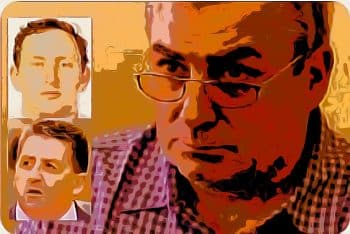
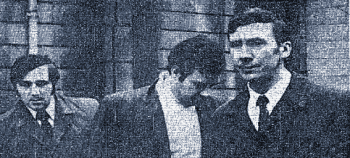
    By David Burke. The family phone of Captain James Kelly and his wife Sheila, in Terenure, Dublin, was tapped by the gardai in 1970. Captain Kelly was one of the Arms Trial defendants who went on trial 50 years ago this week. He was acquitted. It is inconceivable that Mícheál Ó Móráin, who served as minister for justice until early May 1970 would have permitted such an intrusion on an officer of military intelligence. Equally it is impossible to believe that Des O’Malley, who succeeded him, would have done any differently unless – as is sadly possible – the Garda presented him with compelling information from their valued ‘informer’ Seán MacStíofáin. Unfortunately, MacStíofáin was a peddler of deceit who spun the most amazing yarns which his gullible Garda handlers swallowed whole. Hence, if O’Malley signed a warrant, he did so in good faith. Perhaps O’Malley will clarify this issue should the State permit him to address the issue. It is more probable that there was no warrant and none of the politicians was aware of what was afoot. I will provide some additional details about the tap in ‘Deception and Lies, the Hidden History of the Arms Crisis’ next week. I will be able to show that tape recordings were made of an unhinged individual who set out to terrify the children who answered the phone. The tapes of the horrific things he said to them were reviewed by the gardaí in charge of the surveillance. To their credit, they admitted the tapping was taking place unofficially and helped identify the culprit. The Kelly family is entitled to know when the tap was placed (and possibly renewed) and if it was continued after their father was acquitted at the second Arms Trial of October 1970. If it transpires that there was no warrant it means that officers of the gardai were tapping phones illegally behind the back of their minister. The late James Downey described in his biography of Brian Lenihan how, after the Arms Crisis had erupted, ministers were placed under surveillance. “For the Lenihan family”, Downey wrote, “this was a terrible time. Anyone associated with Haughey and Blaney came under suspicion … Telephones were tapped…”. Downey’s source was a “senior official of the Department of Justice” who informed him that the Special Branch had “filled an entire room in Dublin Castle with tapes of tapped conversations, mostly involving ministers”. According to Downey, “Men, presumably from the intelligence services, lurked outside Lenihan’s house. He was ‘shadowed/ on his way to work and social functions”. A few years later, the dilapidated RIC toilets at Garda HQ at the Phoenix Park were packed with files which were burnt on the orders of the then Assistant Garda Commissioner Ned Garvey who was in overall charge of Garda Intelligence. This was in either 1974 or 1975. It is likely that the transcripts of the phone-tap targets were destroyed at this stage along with other records and files. However, there is no reason to suspect that the original warrant for any legal tap was destroyed in Garvey’s bonfire. The originals would have been kept in the Department of Justice. The Department should still hold any of the warrants issued to permit the tapping of the phones described by Downey. It is looking increasingly likely that the State will finally apologise to the family of Captain Kelly for the many wrongs occasioned to him. Whether the tap on his phone was legal or not, any such apology should include this invasion of the privacy of the entire family. The level of intrusion was so intense that – in a repeating vignette illustrative of the seamy side of Irish political life in the 1970s – Mrs Kelly often had to ask the Garda tappers who she could hear chatting to each other on the line to go away while she rang her mother. OTHER STORIES ABOUT THE ARMS CRISIS AND RELATED EVENTS ON THIS WEBSITE: Misrepresenting Haughey’s relationship with the Provos. The Irish Times promoted the Official IRA’s version of the Arms Crisis. The Official IRA planned the murders of journalists Ed Moloney and Vincent Browne. Dick Walsh’s covert committee monitored OIRA media enemies. Future Irish Times Assistant editor put colleagues on lists. Ducking all the hard questions. Des O’Malley has vilified an array of decent men and refuses to answer obvious questions about the Arms Crisis and the manner in which the Provisional IRA was let flourish while he was minister for justice. The ‘Last Man Alive’ is still saying nothing. Des O’Malley’s silence about his role in the Arms Trials and Arms Crises of 1970 has become thunderous. RTE’s ‘Gun Plot’: Why has it taken so long for the true narrative of the Arms Crisis 1970 to emerge? Vilification Once More British Secret Service Smear sheet: the document that proves Charles Haughey was the target of MI6 vilification after the Arms Trial. [Expanded] British Intelligence must have known that Seán MacStíofáin was a Garda ‘informer’. Vandalising history. How the truth about Ireland’s Arms Crisis was corrupted by a gang of NI paedophiles, a dissembling Taoiseach, Private Eye magazine in London, some British Intelligence black propagandists as well as an Irish Times reporter who was an ally of the Official IRA. The long shadow of the Arms Crisis: more to Haughey’s question than meets the eye Minister for Justice confirms existence of unreleased “sensitive” Garda files about Arms Crisis but fails to commit to their release after Seán Haughey TD describes Seán MacStíofáin of the IRA as mis-informer in Dáil Éireann. ‘Deception and Lies’: A thrilling history that confirms Lynch not Haughey as unprincipled and explains how a named IRA double agent deceived the nation and the record. Paudge Brennan, the forgotten man of the Arms Crisis The Forgotten Arms Crisis Scoop: how a London newspaper reported details of what became known as the Arms Crisis nearly seven months before it erupted in Ireland. Government must release Des O’Malley, the former Minister for Justice,

    Loading

    Read more

  • Posted in:

    Minister for Justice confirms existence of unreleased “sensitive” Garda files about Arms Crisis but fails to commit to their release after Seán Haughey TD describes Seán MacStíofáin of the IRA as mis-informer in Dáil Éireann.

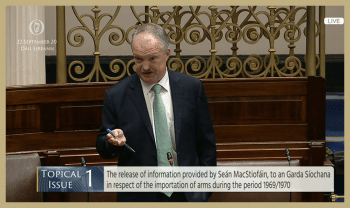
    By Michael Smith. Justice Minister Helen McEntee has confirmed the existence of secret and “sensitive’” Garda files relating to the Arms Crisis. She did not rule out releasing them in “appropriate” circumstances. Her comments were made on Tuesday evening in response to Seán Haughey TD of Fianna Fáil who was asking her to confirm that Seán MacStíofáin, the former chief-of-staff of the Provisional IRA, was a Garda informer but – crucially – one who had misled the Special Branch for his own devious ends and had sparked the Arms Crisis. This week marks the 50th anniversary of the opening of the Arms Trial. Haughey was looking for the files on MacStíofáin insofar as they related to information he had provided to the Special Branch about the Arms Crisis. Haughey made a compelling case to distinguish the MacStíofáin case from those of other informers who deserve anonymity and protection: MacStíofáin misled and damaged the State wilfully and was never a bona fide informer. Furthermore, that the Dáil was misled about events connected to MacStíofáin and that the record remains in error 50 years on. Seán Haughey is the son of the former Taoiseach Charles Haughey who was put on trial exactly 50 years ago this week. Haughey began his call as follows: The events which became known as the Arms Crisis convulsed the politics of this island 50 years ago. Some people came to believe that certain Fianna Fáil ministers, along with a cabal of Irish Army officers, attempted to import arms for the IRA through Dublin Airport. A trial involving four defendants opened exactly 50 years ago today (22 September). All were acquitted.  An account of these events was provided a decade later by the late Peter Berry, Secretary General of the Department of Justice, who made it clear that the Special Branch had a source inside the IRA who had had access to the deliberations of the IRA Army Council.   Colonel Michael Heffron, the Director of Military Intelligence, G2, in 1970, knew that the Special Branch had two paramilitary sources. One was in the IRA, and the other in Saor Éire.   In his 2016 memoirs, Des O’Malley, who was Minister for Justice in 1970, revealed that the Special Branch had received a “tipoff” about the incoming arms flight at Dublin Airport, that foreshadowed the Arms Crisis.   The informer has now been identified as Seán MacStiofáin, a member of the IRA Army Council, in a new book to be published on 23 September, ‘Deception & Lies, the Hidden History of the Arms Crisis’ by David Burke.  The author reveals that MacStíofáin exploited his position to create mischief for his arch rival, Cathal Goulding. In August of 1969 MacStíofáin convinced the Special Branch that the Army Council had struck a deal with the Irish government led by Taoiseach Jack Lynch to assist a campaign of violence in Northern Ireland. This was untrue.  In October 1969 Capt. Kelly of G2 hosted a meeting of the Citizens Defence Committees of Northern Ireland at a hotel in Baileboro. It was called to discuss the defence of Catholic communities and the possibility of arms being supplied to them by the Irish government. The ranks of the defence committees included priests, lawyers, a future SDLP minister, Paddy Devlin, as well as some IRA veterans. Yet, MacStiofáin portrayed Baileboro as a gathering of the IRA in furtherance of Goulding’s alleged links with FF.        Seán Haughey added that: During November and December 1969, MacStíofáin told the Special Branch that FF was channelling funds to Goulding via Capt. Kelly. This was also untrue.   The IRA as we know split into the Provisional and Official IRA in December 1969.   In March 1970 MacStíofáin, who joined the Provisionals, discovered that G2 was about to land an arms shipment at Dublin docks. It was destined for a monastery in Co. Cavan and earmarked for release to the citizens defence committees — not the Official IRA — in the event of a pogrom. Even then, the guns were only to be released after a vote at Cabinet. MacStiofáin sent a Provisional IRA unit to hijack the weapons. In the event, the arms were not on the boat and the hijack was called off at the last minute. This demonstrates that MacStiofain was not a genuine informer and that the guns were not destined for the Provisional IRA.    By April 1970 the Provisionals had established their own arms supply from America and did not need the inferior arms that G2 was now arranging to fly into Dublin. Deviously, MacStiofáin told the Special Branch that guns were on their way to Goulding’s Official IRA. This sparked the Arms Crisis.      Haughey asserted that it was clear from the foregoing that:  the Special Branch had what they believed was a genuine source of information at the highest reaches of the IRA;  But that he was peddling misinformation, and that;  Des O’Malley, the Minister for Justice at the time, was aware of a tip-off to the Special Branch about the arms flight.  Seán Haughey then turned to an inference that flowed from the new facts, namely that the Dáil had been misled: Regrettably, this house was misled about how the State came to learn of the imminent arrival of the arms flight. It was told it had been discovered by civil servants who were concerned about certain aspects of the paperwork associated with the flight.  After McEntee had confirmed the existence of “sensitive” Garda files, Haughey said, I am calling on the Minister to confirm that MacStíofáin was in fact an informer and to declassify all files relating to the information, he provided to the Special Branch about the events I have just outlined.  I appreciate what the Minister has just said in relations to the sensitive nature of these files. However, I think this House was given inaccurate information on 8 May 1970 when it heard a version of events which purported to explain how the State had discovered the

    Loading

    Read more

  • Posted in:

    ‘Deception and Lies’: A thrilling history that confirms Lynch not Haughey as unprincipled and explains how a named IRA double agent deceived the nation and the record.

    Conor Lenihan reviews ‘Deception and Lies – the Hidden History of the Arms Crisis 1970’  by David Burke: the arms crisis was a legitimate operation of state which history has falsely judged as a nefarious adventure by Haughey who went on trial 50 years ago this week for alleged illegal gunrunning. The year 1970 was a pivotal year for Northern Ireland. The political earthquake discharged by the evidence of the Arms Trial left the career of Charles J Haughey in tatters. While acquitted of charges that he had trafficked weaponry for the benefit of the IRA, the public belief that he had done so left a shadow of suspicion over him that even to this day it is difficult for new evidence to dissipate. Haughey clawed his way back to power and in the process effectively toppled his nemesis in the Arms Trial –  the then Taoiseach Jack Lynch.  The main career victims of the Arms Crisis were those on the republican wing of Fianna Fáil, most prominently Neil Blaney, Kevin Boland and the less celebrated Wicklow TD Paudge Brennan. However, in human terms, the biggest victim was Captain James Kelly, who as a career army officer, dutifully carried out his duties in the military intelligence section of the defence forces. Though acquitted in the Trial, Captain Kelly and his family were on the receiving end of state harassment and persecution for years afterwards. It was only after his death that the state, through a statement from then Taoiseach Bertie Ahern, frankly acknowledged he had done no wrong.  ‘While acquitted of charges that he had trafficked weaponry for the benefit of the IRA, the public belief that Haughey had done so left a shadow of suspicion over him that even to this day it is difficult for new evidence to dissipate’ At the heart of the Arms Crisis was an attempt by the government in Dublin to grapple with a situation that was veering out of control in the north with the potentially lethal possibility of a “doomsday” situation or civil war on the island of Ireland pitching Catholic against Protestant. From the summer of 1969 feelings were running high. Loyalist mobs ran amok in response to the minority Catholic population’s embrace of peaceful protests through the civil rights agitation. Catholic homes were burnt in what had all the appearance of an organised pogrom perpetrated by the sectarian elements in the loyalist community. If the Dublin government were wrong-footed by the crisis so too were the forces of moderate unionism as well as the entrenched interests of the Stormont government. Extreme loyalists, including the Reverend Ian Paisley, were brutally outflanking the moderates by exaggerating the influence of the IRA and suggesting the civil rights marches were being orchestrated by republican paramilitaries.  Against this background and failed efforts by the Dublin government to escalate the crisis at UN level ministers launched efforts to deal  with the plight of the nationalists in the north. The Irish army was ordered to the border and relief camps set up for those who were fleeing the early stages of the conflict. Delegations from the north demanded that the southern government supply them with guns so that they could defend their communities.  The Taoiseach Jack Lynch agreed to supply weapons, if the situation worsened,  and initiated arrangements through his Minister for Defence Jim Gibbons that the army would discreetly acquire weaponry that could not be traced to Dublin should the “doomsday” scenario occur.  Captain Jim Kelly, an assistant to the head of Army Intelligence, was given the lead role to travel north, assess the situation on the ground, and ensure that citizen defence committees got the assistance they needed. These committees had only come about because the IRA’s campaign, under the leadership of Cathal Goulding, had become political and Marxist with little actual military capability to defend the community. Captain Kelly was, with the full knowledge of ministers, putting together a covert operation of state that was designed to get weapons and make them available to suitable people north of the border. Too many people got to know of his operation as it progressed. ‘David Burke’s new book on the Arms Crisis slots in  a final, but vital, piece of the jigsaw. Why was it that, while the Irish army were fully involved in the operation, the Department of Justice and Garda intelligence were left out of the loop?’ David Burke’s new book on the Arms Crisis slots in a final, but vital piece of the jigsaw, into play. Why was it that, while the Irish army were fully involved in the operation, the Department of Justice and Garda intelligence were left out of the loop? It appears that the then Secretary of the Department of Justice Peter Berry, an overpowering figure, was simply not trusted to be involved given his paranoia on security matters generally. Few of the books to date have focused on Berry’s motivations and weaknesses.  ‘David Burke, for the first time ever, explains why Berry and the Special Branch moved to close down what, as a matter of political and historical fact, was a legitimate operation of state, approved by the Taoiseach’ Berry used his considerable influence to blow the whistle on the operation. David Burke, for the first time ever, explains why Berry and the Special Branch moved to close down what, as a matter of political and historical fact, was a legitimate operation of state, approved by the Taoiseach and supervised by his most important ministers. ‘The reason is truly startling: Seán MacStíofáin – the first Chief of Staff of the Provisional wing of the IRA played the Special Branch – to damage Goulding’s Marxist wing of the IRA and perhaps to split, and corrupt history’s view of, Fianna Fáil’ The reason is truly startling and the book takes on the aspect of a thriller as Burke posits the figure of “the deceiver” and finally unmasks him later in the book as (spoiler alert)…Seán MacStíofáin, the first Chief of

    Loading

    Read more

  • Posted in:

    Recognise their place in the system and care for them

    VILLAGE IS about nothing if it isn’t giving space to whistleblowers. Reflecting this, the magazine has several times illustrated articles with a cartoon whistleblower, cheeks inflated to bursting, typically to no political avail. It’s a good image for the magazine in general, Village’s frustrated sympathy is nearly always with those prepared to blow and it remains confounded by official concealments. The success of the whistleblowers covered by Village in getting the recalcitrants held to account has been variable. George McLoughlin figured on the cover of the last edition of the magazine for his insider allegations that the Workplace Relations Commission is systemically biased against employees but there was no pick-up by other media or the body politic. Meanwhile he is enmired in a miasma of legal actions with his employer, itself the WRC, about its failure to renew its contract with him after his retirement. Village has gone nuts about diverted funding at the long-dysfunctional Irish Red Cross, about a heavyweight Ansbacher cover-up, about Jonathan Sugarman, about the abuse of its dominant position in the market by Ireland’s biggest company – CRH, about the illegal dumping of 10 million tyres in the Donegal bog, about corruption in local authorities around the country, led by a former county manager in Donegal, about the role of MI5 in promoting compromising paedophilia in Northern Ireland; all to little avail. There’s a vague glamour to whistleblowing. It has been the centrepiece of works of art from Henrik Ibsen‘s ‘An Enemy of The People’, (1882) and Nobelist Halder Laxness’s ‘Independent People’, (1934) to Elia Kazan’s ‘On The Waterfront’, (1952) and Steven Soderbergh’s ‘Erin Brockovich’ (2000). But the glamour mostly attaches to journalists. Unless they’re from Village. Englishman WT Stead is considered to be the founding father of investigative journalism and the inventor of the sensationalism that gave rise to tabloid newspapers. His famous investigation into the trafficking of young girls in 1885 earned him a jail sentence but precipitated passage of a law raising the age of consent, and indeed Shaw’s play ‘Pygmalion’. Journalistic whistleblowing became a phemonenon with Emile Zola who was convicted by a French court for criminal libel for his campaign to establish the innocence of Jewish army officer Albert Dreyfuss of passing secrets to Germany in the late 1890s. Nellie Bly, a pseudonym used by journalist Elizabeth Cochrane Seaman around the same time, famously feigned insanity as part of her 1887 undercover exposé of the Women’s Lunatic Asylum in New York City. But modern investigative journalism took forensic shape in 1960s Britain. From Ludovic Kennedy’s 1960s re-examining of cases such as the murder convictions of Timothy Evans and Derek Bentley to Harold Evans’ 1970s exposé of thalidomide in the Sunday Times to Pilger and Hitchens and the crusades of Paul Foot on James Hanratty hanged in 1962 for the A6 murder, journalists in Britain have in a de facto sense acted as whistleblowers even if there is scant legislative protection for them. They are never legislatively classified as whistleblowers. These journalists attained a measure of respect, especially among the cognoscenti. We should nevertheless be clear that with the demise of the likes of Don McCullin and Peter Hitchens and even ‘Prime Time Investigates’ and the rise of the plutocratic oligarchs in the press, that intrepid investigation is under threat and in decline. The underlying characters who break from their peers to tell tales on their institutions, that’s a different matter. Most of them finish up destroyed. An excellent recent book by NUIG academic Kate Kenny, ‘Whistleblowing: Towards a New Theory’ (2019, Harvard University Press), makes the case that journalists make life more difficult for whistleblowers by spotlighting them and making them targets for scrutiny “We see this clearly in the recent media obsession with well-known whistleblowers such as Edward Snowden, Julian Assange and Chelsea Manning in which more attention is given to the individuals, their private selves and their personalities than to the information they report“. There is much literature on the dynamic and motivation of whistleblowing. Elements of vanity are often to the fore, proponents are rarely comfortable team players. Antagonists can often have a field day at their expense. Indeed though you’ll mostly recognise one when you see one in fact there are divergent views as to who should be classified as a whistleblower in the first place. Certainly an employee but what about a consultant or an associate or an independent journalist? Does criminal behaviour lose you the status? And what sectors? Certainly blowing the whistle on crime, terrorism, national security, and corruption are protected in most jurisdictions. Beyond that there is a definite ambivalence, reflected in official inertia. This is manifest in the fact that legislation is not in general effective and the whistleblower may expect to be subjected to what the literature deems reprisals or retaliation. This typically means internal disciplinary sanctions on a spectrum from an informal warning to dismissal on fabricated grounds. Bullying, harrassment, termination of career prospects or employment and threats are common but some have paid even higher prices. A notable such casualty was journalist, Daphne Anne Caruana Galizia, who led the Panama Papers investigation into corruption, targeting widely from the Prime Minister to the Mafia, in Malta. She was killed last year by a car bomb. Her experience was the worst but nearly all whistleblowers suffer for their stance. This is shown by a review of the best known. Before his recent eviction and jailing for skipping bail, Julian Assange was forced to seek refuge in London’s Ecuadorian embassy after facing an investigation by Swedish prosecutors into rape offences centring on his refusal to use a condom or have a STD test with two woman he stayed with while he was giving talks in Stockholm in 2010. Meanwhile, the US is applying for his extradition. Assange is not charged with anything related to Russia or Russiagate or even with breaking a law. Assange is charged with being in a conspiracy with Chelsea Manning “to commit computer intrusion” over the Collateral Murder

    Loading

    Read more

  • Posted in:

    Environmentalism without class struggle is gardening:

    The Green Party should be – and appear to be – this century’s equivalent to the trade union movement. By Councillor Oliver Moran. Protests against environmental taxes in Europe, farmers’ blockades in the Netherlands, urban unrest in France, and the water-charges movement here in Ireland should cast a long shadow for the Green Party in government.  The Waste Action Plan for a Circular Economy launched last week contains much that is worthwhile, but an awareness of the political importance of avoiding an environmental transition that lacks social empathy should be visible in everything the party says and does. Climate change and ecological decline disproportionately punish the worst off. The systems of economics that underlie them are exploitative of the poor, both globally and domestically, every bit as much as they are exploitative of nature and the planet. The solutions not only should not add to that but must necessarily challenge the assumptions of ecologically and socially exploitative capitalism. This is not an easy balance to strike. System change, if not implemented well, is more likely to affect the most vulnerable first. The party has progressive values at its core. This is a party that has among its founding principles that (a) unrestricted economic growth must be replaced by an ecologically and socially regulated economy and (b) the poverty of two thirds of the world’s family demands a fair re-distribution of the world’s resources. But the Green Party has missed opportunities since entering government to speak in that sociological voice with the same conviction that it speaks about technocratic solutions for environmentalism. This shortcoming isn’t derived from any malice on behalf of my party colleagues in government but from a cultural reluctance within the party to publicly express these convictions in clear and unequivocal tones. One of the roles of the Just Transition Greens, an explicitly left-wing faction affiliated with the party, is to challenge the party in government. Demanding more of it.  Time, both political and in the context of climate and biodiversity emergencies, does not allow us the luxury of waiting. The Just Transition Greens’ critique is evolving. Its end-point is not defined. What unites our members is not particular stances or policy demands that are very different to the rest of the party but a shared conviction. A conviction that it is the duty of the green movement in government to ensure that environmental solutions not only do not punish the exploited further but actively improve their conditions. A just transition For some this conviction is based in eco-socialism. For others it is faith based. One of the most acerbic criticisms of Pippa Hackett’s forestry bill was from the Jesuit Centre for Faith and Justice. Others, like me, reach for the traditional green pillars of peace, democracy and social justice. This does not boil down to simplistic notions of “cycles lanes” vs “social justice”. It is about the lenses through which we see the world. Cycle infrastructure can and should be seen through the lens of social justice too, empowering communities through accessible and safe transportation. The unifying aspect is a philosophy that refuses to disentangle the social from the environmental. A just transition recognises that not everything that is good for the planet is good for people. If, in our rush to save the planet, we neglect the dignity of the poorest in our society, what kind of world will we leave our children?  A just transition should lift up the horizons of all people, improving standards of living and protecting at risk workers and communities. Waste policy On 4 September, Eamon Ryan launched the new national waste policy. Justified or not, a far reaching policy that puts emphasis on the producers of waste was overshadowed by two bullet points in an 89-page document that seemingly lacked a nous for social justice. The irony was this drove some people to in effect defending exploitative capitalism. It was lost in some of the criticism that ‘buy one get one free’ on items like confectionery and fizzy drinks does not benefit the lower paid. It is itself a system of exploitation driving consumption and waste. The supermarkets and retail multiples are no friends of the left or workers and producers. They work actively to exploit the poor, labour, farmers and the environment. Neither is ‘fast fashion’ – as opposed to affordable clothing – a source of liberation for the poor. It too is exploitation, based on driving consumption, and it is a source of humiliation for people without the resources to keep up. The waste policy is very good at what it sets out to do. What it does, it does well on its own terms. Where it falls short is in addressing some of the greater social challenges with equal strength. It describes but doesn’t explicitly challenge the inherent wastefulness of capitalism. It lacks a sociological perspective. It doesn’t mention the income of households and how this affects consumption and waste patterns. Politically, launching a waste policy – that on the face of it would levy low cost clothing and ban cheap food offers – the day after a report had shown that 18% in Ireland are suffering deprivation is tone deaf. Not wrong, as I have described above, but tone deaf – and seemingly lacking in empathy and equal conviction for matters of social justice. A socio-economic lens Over-consumption and waste need to be seen through a lens that is socioeconomic every bit as much as technocratic. Tackling over-consumption and waste will only succeed if simultaneous efforts are undertaken to tackle income inequality, food sovereignty and human-rights violations. Our environmental policies should recognise the interconnectedness between economic development and environmental degradation. They should, as the UN Sustainable Development Goals demand, seek to reach the furthest behind first.  That is why our policies include a Universal Basic Income and a commitment to transform the relationship between producer and consumer, bringing them closer together – without the mediation of the consumption-driven capitalism of supermarkets and retail multiples. Both

    Loading

    Read more

  • Posted in:

    Mass violence: the difference between paramilitaries and militia

    “Paramilitarism: Mass Violence in the Shadow of the State” by Uĝur Ümit Üngör (Oxford: Oxford University Press, 2020). Reviewed by Chris Stanley. The genesis for this book was an analysis of Assad of Syria’s unleashing of militias to repress an uprising against his regime in 2011. Upon reflection the author realised that that violent episode deserved a monograph in its own right. But the Syrian episode provides a prism through which Uĝur Ümit Üngör compellingly considers paramilitarism, violence and the state. He uses the metaphor of the solar eclipse to reveal the dark heat of the relationship between state and paramilitarism (page 186).  Üngör opens with the recent and continuing Syrian ‘experience’ of violent conflict reliant upon the paramilitary militias. Episodes of insurgency and counter-insurgency can be painfully drawn out over years, as those in Northern Ireland are all too sadly aware. And this aspect of paramilitarism is possibly more important than Üngör realises.  Today in Northern Ireland there continue to be the entrails of violent paramilitary activity by Republican dissidents set against the peace process. This activity relies upon political and economic disenfranchisement largely among the young and led to the murder in 2019 of the journalist Lyra McKee in Derry. But the structure and activities of these Republican dissients paramilitary groups are vastly different to those of the PIRA and INLA at the height of the Conflict.  Also today in Northern Ireland the remnants of Loyalist paramilitary exists in the form of low-level violent gangsterism and criminality. Üngör has a sound understanding of the relationship between paramilitarism and criminality.  The shadow of paramilitarism still looms as a presence in Northern Ireland; its force still to be understood through the continued contested out-workings of the Legacy of the Conflict and the relations between the British state and Loyalist and Republican paramilitarism through the policies and practices of collusion, most recently explored by Mark McGovern in ‘Counterinsurgency and Colllusion in Northern Ireland’ (London: Pluto Press, 2019). But what is paramilitarism? Üngör conceptualizes it as “a system in which a state has a relationship with irregular armed organisations that carry out violence. But what is paramilitarism? Üngör conceptualizes it as “a system in which a state has a relationship with irregular armed organisations that carry out violence. These armed groups have different forms and types of relationship with the state, but nevertheless are linked to it” (page 7).  By having a link to the state these organisations achieve a quasi-legitimacy (even if for many it is deniable) – unlike militias. By having a link to the state these organisations achieve a quasi-legitimacy (even if for many it is deniable). There is both a dynamic and a relational proximity between paramilitary groups and the state (page 8) which sets them aside from militias which might have a more dominant role in a failing state or a state which is ceasing to exist or coming into existence. Hence the importance of the organic nature of this relationship.  PIRA was terrorist because it was anti-state (despite collusion between it and aspects of the British security forces, characterised by the role of PIRA-informer Freddie Scappaticci aka Stakeknife) whilst the UDA/UVF/UFF grouping was paramilitary because of direct links between elements within the UDR and the RUC In a counter-insurgency situation such as the Conflict in Northern Ireland, the PIRA was terrorist because it was anti-state (despite collusion between it and aspects of the Britsih security forces, characterised by the role of PIRA-informer Freddie Scappaticci aka Stakeknife) whilst the UDA/UVF/UFF grouping was paramilitary because of direct links between elements within the UDR and the RUC, the latter providing intelligence, personnel and equipment – most notoriously in the Dublin-Monagham Bombings in 1974 which former British Army Military Intelligence Officer (MIO) Fred Holroyd described as the closest point Britain came to invading Ireland in the post-war period.  The UDA was more than tolerated by the British state; it was indeed relied upon because it was outside a legitimate (and therefore accountable-deniable) structure The UDA was more than tolerated by the British state; it was indeed relied upon because it was outside a legitimate (and therefore accountable-deniable) structure (page 11). The UDA was manageable for a period but as with similar organisations described by Üngör (page 15) its value to the state was determined by political-security need and with the Good Friday Peace Agreement 1998 its work for the state was done.  Thus it fragmented into its present form of low-level Loyalist gangsterism mirrored by fragmented dissident Republicanism.   Üngör’s book starts with a loose history or survey – necessarily so given the shadowy nature of his subject – of paramilitarism. He traces its development from militias in emerging modern states and their role in supporting those seeking or claiming territorial rights. The paramilitary subaltern can well be imagined in the Machiavellian world of The Prince. It is in the twentieth century that what might be described as modern paramilitarism emerges, as state authority becomes more settled. The role of the state evolves to protecting its ideological values and countering attempts at insurgency. Regarding Northern Ireland, Üngör considers three heads. First, the security dilemma between identity communities (the sectarian divide). Second, collusion. Third, criminal infighting ‘after the war’. It is welcome that Üngör recognises the centrality of collusion to the Conflict in Northern Ireland – collusion which is still being exposed and contested – as it goes to state impunity for  ‘political’ violence.  I suggest Üngör is wrong in describing the Conflict as ‘war’.  It was a counterinsurgency for the British state and struggle for equality and British withdrawal for Republicans However, I suggest Üngör is wrong in describing the Conflict as ‘war’. Whereas the Conflict has been described as the “Irish War” or “The Dirty War” in fact the Conflict was never designated as either a war or an internal armed conflict as such designations would have invoked the Geneva Conventions. It was a counter-insurgency exercise for the British state and a Republican struggle for equality and the forced withdrawal of the British. Üngör

    Read more

  • Posted in:

    Bin the Spike

    by Michael Smith It’s 2020.  We’re transitioning to a civilisation with a wiser sensibility. We’re defenestrating monuments that subvert our values.  What’s the first erection we should remove? On its twentieth anniversary, it’s Dublin’s spike, the ‘Spire of Dublin’, a tiger in metal. Dublin lost the run of itself in a boom that started in the mid-1990s and found its monument in a lump of pointed pointless metal on its main street erected in 2003 after a battle, to celebrate the millennium. It was non-functional, non-contextual and sterile, a  searing icon of the times. It replaced Nelson’s Column, the tallest Doric column in Europe which afforded full public access, and complemented the classical architecture of the street perfectly.  Nelson could have been pulverised and replaced by James Joyce, Ulick O’Connor, Mannix Flynn, Maeve Binchy or Maureen Potter atop the statuesque and visitor-friendly pillar. No. In 1966 the whole column went up! The spire of Dublin was selected by Dublin City Council in March 1999 by 34 votes to 14.  It was designed by the London-based firm Ian Ritchie Architects. It is a 120m high cone that is three metres wide at the base and tapers to 150mm at the top.   At the time, I wrote a submission, on behalf of An Taisce, decrying the proposal.  I conspired with Mícheál O Nualláin, a wry artist and ex-school-inspector, to challenge the scheme for want of an Environmental Impact Statement.  He was the perfect person to do this as he was Flann O’Brien’s sibling, figuring in the great surrealist writer’s works as “the brother”.  Na Gopaleen had an acute sense of Dublin and would have murdered this ridiculous self-conscious symbol. “The vainglorious spire of Dublin has had its day and should be chain-sawed“  The brother’s own design, one of the original 205 competition entries, had been rejected. As reported by Frank McDonald in the Irish Times, Ó Nuallain had proposed a ‘skypod’ mounted on a huge hexagonal column rising from a three-storey glazed box at street level, a ‘sculpted flying saucer’. Ó Nualláin’s scheme was awful but he was justifiably miffed when the winner proposed something much bigger and aesthetically outside the bounds of what was envisaged in the architectural competition they had both entered – which had required that the monument relate to the scale of the buildings on O’Connell St. If “relate” was to mean anything by reference to the quantitative phenomenon of height it must have meant “be similar to”.  At 120m it clearly was dissimilar to the heights of all other buildings on the street and thus did not relate to their scale – though as regards the qualitative criterion of materials – “quality” it may indeed have “related”, though perhaps primarily through contrast! Ó’Nualláin found a good vehicle for his case in the EIS Directive and a forceful advocate for it in the well-named Colm MacEochaidh, a young barrister and a friend of mine. The case was never really treated seriously. Joan O’Connor, President of the Architects’ Institute, who thought the spire would be best “infinitely” high, claimed  that  the  spire was the first time an EIS has been required for anything as “ephemeral as a slim and beautiful object”. As Chairwoman of the architectural-competition panel for the spike she might usefully have been aware that the last thing beauty (which aspires to transcendence) aims at is  ephemerality  (which means transience). In the Irish Times, Frank McDonald focused more on Ó’ Nualláin’s own entry than the breach of the competition’s rules or the need for an impact study.  McDonald was a worshipper at the altar of the phosphorescent architecture of the Celtic Tiger and here championed its icon. In July 1999, Judge TC Smyth ruled that an EIS had indeed been required before the spire could be built. Commentators then and now don’t realise that any urban development that “is likely to have a significant effect on the environment by virtue inter alia of its nature, size or location”, requires an EIS. The nature, size and location of the spire could not have been more important, even if it was ephemeral, beautiful and slim. Subsequently, a detailed EIS was compiled and submitted in June 2000 to the Minister for the Environment rather than to the City Council itself as would have been the case if the EIS had not been requisite.  Of the 121 submissions received on it, three-quarters were against the project. Nevertheless it was approved. Progressives are looking for monuments to topple.  The spire symbolises how a country lost the run of itself, sterilised its national genius, lost its sense of irony and came to respect quantity over quality, and money over values. At the time I noted that the scheme was “reversible and could be erected somewhere else if its siting jars with  a future generation”. It should be chain-sawed at its base and removed, on the shoulders of the citizenry, to the Croppies’ Acre park where it can be interred next to its sister in folly, the floozie in the jacuzzi. And then we can have a debate about what aspirations we want to see enshrined in a magnificent and democratic replacement.  

    Loading

    Read more

  • Posted in:

    Incitement to hatred of the speckled.

    An Outsider’s view  of always present, now boiling, racism in Ireland By David Langwallner  Hugo Hamilton wrote a book called ‘The Speckled People’ (2003) which to some extent mirrored my experience in growing up with a Germanic mother and a Gaeilgeoir Irish father who refused to allow him to speak English. “Speckled, ‘half and half…Irish on top and German below’”. I was raised largely in Dublin, half Austrian. My school days in a minor school were blighted by Nazi remarks: “go back to Germany Hitler” in the school yard from kids who are now our envied establishment: police or civil servants, or indeed family or criminal lawyers. Austria, I knew, was the country of Mozart,  Schubert, Haydn and Strauss, and Egon Schiele: they did not understand or care when they spied a vehicle for their bullying. They instinctively knew to search for something to which there could be no comeback, to something innate I could do nothing about. It was a huge struggle to survive that and I did so through academic achievement which diminished the bullying somewhat. Like many who have been tormented I also developed the facility with the spoken word which has stood me in good stead. In fact I over-compensated, though I say so myself, with a certain loquaciousness in desperation to gain an acceptance never willingly forthcoming.  When I eventually went to Trinity College in Dublin there was an initial sense of release but there was always an element of bullying and my relationship with the Trinity Law Faculty then and now was terrible, particularly since the importation of academics from UCD. There are far too many little Irelanders in positions of institutional responsibility in Trinity and certain extremists of a fundamentalist nature. Insidious. For them I was neither fish nor fowl. Guinness with blackcurrant. Half-caste, speckled. I remember in the Irish Observer Mace for Trinity an international debate competition I subsequently won I  was undermined with a choice racist comment which drew great guffaws of laughter from the mobocracy of UCD’s premier debating society the L and H: Nein Danke, Herr Langwallner.  I have always considered UCD a breeding ground for corporate criminals and social glibness and the two go hand in glove.  Have you ever gone to the Gaeltacht or a session of traditional Irish music, a UCD-spawned non-entity senior counsel with a Gaelgeoir name asked me a few years ago? Well why should that matter? UCD’s law faculty spawned Sutherland, Cowen, McDowell, Paul Gallagher: all agents of the globalised neo-liberal establishment. But also a disproportionate number of jailbirds such as solicitor Thomas Byrne and ‘Cocaine Jim’ who robbed his own bank.  At times the difference seems to me to be missable. Having studied and worked in the UK and America I am now confirmedly multicultural and non-racist. In effect I am a mongrel, so my antennae are always raised about racist biases and evaluations. I think my worldview constitutes the acquisition of empathy through bitter personal experience. I escaped Ireland’s adolescent universities and enjoyed a time in better colleges in the US and the UK. Harvard is a multi-cultural and mixed-race community and the LSE is immersed in heterogeneous London.  They were models of cosmopolitan tolerance. I might add that interaction with the protestant Brahmin community in Harvard was also a slightly odd experience. I felt not unlike the way Woody Allen imagines himself turning into a caricature Jew at a protestant thanksgiving in Annie Hall. I suspect that is why I got on so well with the legendary Alan Dershowitz, Professor of Criminal Law at Harvard, like Allen a secular Jew, who has represented the likes of Assange, Tyson, OJ Simpson, and Epstein. Outsiders. The recently departed Gunter Grass wrote many novels and was a vigorous political polemicist and  a German national figure. He is most famous for his novel ‘The Tin Drum’(1959).  Its premise is that Oscar, a severely mentally handicapped child or child adult, sees everything that is going on at the onset of fascism in Germany; and reacts by banging a tin drum. It is the perspective of the outsider, the clown observant, the not-to-be-taken-seriously, the boy who cried wolf. The person suffering from a disability. He cannot be seen as a threat. Like a lot of autistic people and those suffering from Aspergers, of which I have had considerable professional experience, he is inclined to tell the truth or call it as he sees it. His mind is unfiltered by bourgeois hypocrisy. When the lunatics have taken over the asylum they designate the truth-teller as mad.  So yes, I have always been an outsider: precarious but at  least equipped with an objectivity. It was always going to be dangerous to return to Ireland thirty years ago and deploy a faux cosmopolitanism or vicarious celebrity that local parochialism and the parish pump of Ireland do not accept or endorse. And so, ill-equipped, I practised and lectured law in Ireland. I became dean of Griffith College’s law department and lectured for years in the King’s Inns. My role in establishing The Irish Innocence Project, which seeks to get innocent prisoners off death row, gradually led to moves against me and frankly attempted state murder. Some of the spectres of my minor school now in positions of institutional authority came back to haunt, for racism in fact is very much on the ascendant in Ireland. Certainly the more public you become. I should of course state that the level of racism I have encountered is not equivalent to that often suffered by people of colour. More generally, a very recent EU Survey from its Fundamental Rights Agency confirmed that Ireland has a particular problem. In Ireland 17 per cent of immigrants said they had faced discrimination at work because of their background, whereas on average in the EU less than one in 10 had. 38 per cent said they had been harassed, though in the EU it was less than a quarter. In Ireland, 8 per cent had had suffered racist violence compared to 3 per cent in the EU. In Ireland in 2020 we

    Loading

    Read more