Archives

OK

Random entry RSS

Loading

  • Posted in:

    Church betrays its public-interest legacy by school-land sales

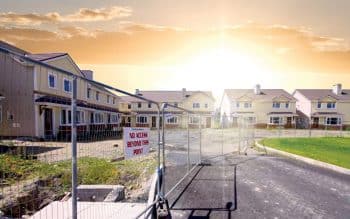
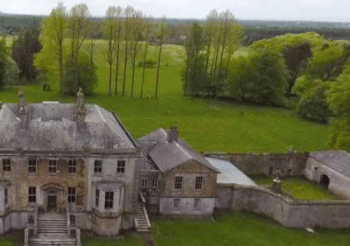
    Assets that are social not just financial Ireland’s housing crisis and swirling property prices threaten precious and irreplaceable green spaces in our cities and suburbs with housing developments. House prices have risen more in the first six months of this year than the entire twelve months of 2016. Recognising the opportunity for maximum prices to take care of an aged clerical population and reparation commitments for historical abuse, religious orders are selling off their most valuable assets (after their faith) – their land. Unfortunately these sites are not vacant lands. Agonisingly they are where the children go at breaks and lunch-time, they are the schools’ resort for children’s sports and funding fairs and often community resources for dog-walking and exercise and simple relief from the traffic and commotion. Dublin has the highest land valuations and so has seen the biggest rise in the sale of school land in recent years. Infamous examples include Oatlands in Mount Merrion, St Paul’s in Raheny, and Notre Dame in Churchtown, carried through despite a shortage of schools in these areas. Holy Faith Convent in Killester, adjoining the school of the same name, is currently for sale. The brochure from WK Nowlan Real Estate Advisors suggests the zoning allows 70 apartments on the attractive one-hectare site which also contains a large former convent building. The same agent will sell the former St Teresa’s school in Blackrock, which closed in 1988, by auction on 21 July. It describes it as an “Exceptional Development Opportunity and period residence on approximately 3.92 hectares (9.7 acres). Large Residence, Gate lodge and former school buildings on mature landscaped grounds”. Of course in sales of mature institutional lands from Kilcoole to All Hallows WK Nowlan, the reverends’ favourite, publishes expensive marketing materials that suggest that the opportunities to cover these attractive lands in second rate housing is an occasion for public celebration. There has never been a greater market for education in this country. The population of the country continues to grow and projections for new schools continue to grow. Doctors complain that our children are not exercising enough. Institutional lands cannot be replaced once built on. A future generation, richer and more civilised than ours, will certainly curse us for the betrayal of our legacy of fine institutions on elegant grounds. So whose interest is being served by their ubiquitous sales over the last generation and in its desperation to deal with a severe housing crisis are the government and local authorities sleepwalking us into an educational crisis in Dublin?     God’s Land The Catholic Church owns €3.743bn of land and property in the State. It owns or occupies more than 10,700 properties across the country and controlled nearly 6,700 religious and educational sites. The assets owned by the State’s 26 dioceses and 160-plus congregations and other district Catholic organisations have been accumulated over more than two centuries of providing religious, educational, health and other services to a once comprehensively devout populace. In the case of many orders the congregations transferred the running of institutions to separate bodies which are invariably charities, for example the Edmund Rice Schools Trust (ERST) which was set up in 2008 with responsibility for 95 former Christian Brother schools and 37,000 pupils. Its objective (as stated on its website) is “to foster the advancement of education”. Interestingly, and showing that Richard Bruton’s proposal to preclude Catholic schools from discriminating against those who have not been baptised in the Church is, at least in the case of the Christian Brothers, pushing an open door, its schools “promote equality of access and participation – in other words, children of any faith, or none, at every level of ability, of any nationality or ethnic grouping are all welcome in our schools”.     Addressing the Redress Scheme Apart from peak land price, the tiptoe to the auctioneers is driven by clerical abuse and its financial legacy. The Catholic Church has surrendered ownership of 44 properties worth €42m to the State as part of the 2002 Residential Institutions Redress Act. In the wake of the 2009 Ryan report, the Government wanted the religious orders to pay half of the total bill of €1.4bn due for redress payments and legal costs. But the religious orders still have a long way to go to reach the €700m the State in the end demanded. Minister for Education Richard Bruton spoke out in March of this year, following the publication of a report by the Comptroller and Auditor General (C&AG) which showed that in total €209m has been received by the Irish Government from religious groups to address historical child abuse. Bruton condemned religious organisations for failing to help meet the costs of residential institutional child abuse. It might be argued that the Church should have met sanctions at the upper end of the financial scale and as a result transferred not just ownership, but control, of the institutions over which it is widely accepted it exercised control well out of proportion to its mandate in today’s society. Many of the schools, hospitals and clerical-training colleges could have been transferred to the Republic, with little unfairness since much of the money subscribed in the first place was for progressive-secular, as well as religious, purposes. In addition the funds raised from these sales are to meet the challenges arising from declining and ageing congregations of nuns, brothers and priests. The average age of the Christian Brothers is 79 and of the Sisters of Mercy 74 with over three-quarters of the nuns aged over 65. Part of the cost of maintaining retired members and the staffing of their care homes will be taken from the final price fetched for the school land sales.     Celestial Figures The sale of these lands is not only taking away green spaces from the schools but it also ignores the need for new and expanding schools in light of anticipated population growth in these areas. There are currently 345,550 secondary-school pupils in the Republic (excluding PLC

    Loading

    Read more

  • Posted in:

    The Health Halo: Marketing is killing us

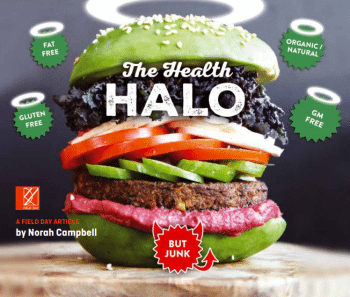
    Several years ago I lectured in a management school in England. One of the classes I gave was on food marketing. I began the class by playing a clip from the then famous documentary, ‘Super Size Me’, where the protagonist Morgan Spurlock undertakes an extreme diet of McDonald’s-only food for a month to chart the consequences on his body and mental health. The clip I chose is near the beginning of the documentary – where two American teenagers are about to sue McDonald’s for their obesity. I freeze-framed the image of the two teenagers, and turned to the class. “Where”, I wanted to know, “does personal responsibility end and corporate responsibility begin?”. As you can imagine, the entire class fell silent. Then one student pointed to the screen, and said, “Do you see those two girls? They deserve to die”. My shock only lasted a moment before the other students chimed in with qualifications to the student’s statement – no, not really that they deserved to die, but that they were the ones that were ultimately responsible for their own health! – everyone knows that McDonald’s is unhealthy food and should be eaten in moderation! – no one is forcing them to eat junk food! – and so on. I asked them whether they would react differently had I presented them with a documentary on the beauty industry and freeze-framed two anorexic girls who were suing L’Oréal for their unrepresentative portrayals of extremely thin women. “No!” was the incredulous reaction. In such a scenario, there would be more justification for blaming beauty brands, as they stimulate a mental vulnerability in all women, with some falling victim at a more extreme level. The classroom is a microcosm of society – albeit a pretty rarefied one. These students, I concluded, were not some extremist bunch whose mental processes were close to psychotic. In fact, you could probably argue, their reactions were a base point for most people’s; they just happened to be unguarded in their response. I suspect in fact most people feel this way. We feel that we should be able to ingest what we want, as long as it’s legal, and that the market doesn’t force us to do anything – certainly not to consume to excess. These two obese girls are what we would call ‘bad consumers’ – they haven’t learned the rules of the market properly. Perhaps they lack information (they don’t know that it’s healthy to eat at least five pieces of fruit or vegetables a day, for example). Or perhaps they lack restraint, whether moral or physiological (as in, their hypothalamus, the part of the brain that supposedly regulates appetite, isn’t functioning properly). And yet, is this the whole picture? The longer I teach marketing, the more uneasy I am about where this locus of control lies. We have never been so health-conscious and at the same time so fat. These two trends, rather than being opposites, go hand-in-hand. How come? The first reason I believe lies in what I call the perversity of marketplace knowledge. Marketplace knowledge refers to all the information we have about the market – how much a pint of milk costs, where to buy a lawnmower, how many calories are in a can of Diet Coke, that washing machines live longer with Calgon. That is a huge trove of information that we learn over the years and carry around in our heads! Thus, it is much better to think of consumers as learners and marketing as their teacher. Within this model, you’d be forgiven for thinking that the more information you had the better decisions you’d be able to make. However, recent research would suggest that this is not the case. In fact, the more involved we are in our market-place decisions, the more ‘brand literate’ we are, the more we fall victim to what are known as halo effects. The consumer researcher Pierre Chandon has shown that when one aspect of a food is portrayed as healthy, consumers will tend to mentally categorise the entire food as healthy, leading them to underestimate its calorie content, and to overconsume it. This phenomenon is known as the health halo, and it is not ‘marketing illiterate’ consumers who fall victim to it, but precisely those of us who know a little about nutrition, are health conscious, and can understand how branding works. When the so-called health benefits of a food are foregrounded on packaging and advertising (organic, gluten-free, high in natural fibre, sugar-free, low-fat, packed with fruit, etc.), consumers typically miscalculate the product’s calorific content: gluten-free bread or organic ice-cream is somehow healthier for us. This is not a conscious mechanism; in fact, when people are made aware of it, they tend to regulate their behaviour. The problem is of course that the environment we live in is obesogenic – we are surrounded by messages that encourage eating, and counter-messages are virtually non-existent. Chandon’s research also revealed that when consumers believe they are eating healthily they will unconsciously reward themselves – those who opted for Subway (positioned as a healthy fast food) over McDonald’s in one particular instance tended to add a side and a dessert to their order. In another experiment, by Chandon’s colleague Alexander Chernev, overweight participants when presented with ‘light’ M&Ms increased their consumption by 47%, whereas normal-weight participants only increased their consumption by 16%. In this ‘negative calorie illusion’, people who are more attuned to features of food and drink that supposedly promote health are likely to consume more. You can be weight-conscious and opt for diet versions of foods, but you are more likely to underestimate the calories, consume more and ultimately become heavier. These mechanisms are typical of the psychological vulnerabilities that the food marketing system is expert in. Our weaknesses stem in part from how we think of food in the first place. Ask anyone to give a definition of ‘food’, and their answer will likely be something like ‘a source of fuel or energy

    Loading

    Read more

  • Posted in:

    Judicial Reform: independence yes; pouting no

    A few rules completely cover the mysterious case of The Judicial Appointments Commission Bill 2017. The judiciary should be independent but not self-selecting. Independence is good, preening is bad. Lawyers robustly defending the judiciary against encroachments by the executive is welcome though not if it has been fundamentally mendacious and itself cut across the independence of the executive. Ministers who’ve attacked a lot of people and whose motivation is often self-serving don’t have the benefit of the doubt afforded to them when taking public-interest stances. Independent Alliance leader Shane Ross has secured a commitment from Fine Gael to set up a new judicial appointments body with a lay majority and headed by a non-legal chair. It will select a ranked shortlist of candidates for the bench. The Government will retain the final vote in the selection process and, in a definitive indication that the Bill does not go far enough, there is no reason to think party allegiances will be eliminated as a force in their preference. Nor is there, yet, provision for judicial training, or interviews. Yanis Varoufakis recounts, in his expose of the Greek bailout (reviewed in this magazine, p 76), a conversation with Larry Summers in which the former financial guru who served in the Clinton and Obama administrations asked him if he was an outsider or insider, and declared that everything turned on that. The answer to that question may determine your attitude to the question of whether judges, and indeed other elevated and privileged personages in our society, should be reined in. In a Republic we should have no time for privilege, or the defenders of privilege, because there are simply too many who are not even being afforded their rights. Where they exist they should be under attack, not defended. But where they are defended with self righteousness by the privileged themselves it’s difficult to watch. Sinn Féin’s Justice Spokesperson Jonathan O’Brien told the Dáil: “The only reason Fianna Fáil think the [Judicial Appointments] Bill is radical is because it is so rare for anyone to attempt to amend even slightly the systemic privileging of a particular group of people in Irish society”. You will justifiably detest the vauntings of the privileged and the scrapings of their deferential acolytes though you will of course appreciate that if that reining in serves to render the executive (Cabinet ) and legislative (Oireachtas) less accountable that it will have backfired. In his contribution on the Bill, Labour leader Brendan Howlin appeared to suggest that in Dublin Northsiders favour outsiderism, Southsiders insiderism. Howlin himself seemed, as usual, to straddle both but perhaps betrayed too much deference to the establishment, reflecting the power of the artful but anti-legal-reform Labour Lawyers group within the often surprisingly unradical Labour Party. Howlin castigated Shane Ross the hapless and inconsistent but feisty author of the reform initiative: “In his blunderbuss assault on official Ireland, insiders and cronyism, Shane Ross devoted a chapter of his book to judges. In truth, that is the only reason we are here today debating this legislation”. The parochial and insiderist downside of this small society is the unleashing of serial illogical and evidence-free vituperation against outsiderist attacks on privilege, in this case against Ross from almost every “eminent” legal and judicial personage, each intemperate jab heralded as wisdom by a deferential media. The headlines tell the tale: ‘Judicial appointments Bill just an ego trip’ (Diarmaid Ferriter, Irish Times); ‘Judicial reform plan a ‘deliberate kick in the teeth’ for Chief Justice’ (Catherine McGuinness, Irish Times); ‘Judicial appointments Bill driven by political self-interest’ Ruadhán Mac Cormaic, Irish Times; ‘Judicial Bill an unsound solution to a problem that does not exist’ (Noel Whelan, Irish Times); ‘Judicial reform ‘dishonest’ (Times Ireland cover headline); ‘Ex-Chief Justice slams judicial reforms’ (Sunday Business Post). As if there was any doubt judges and their acolytes (or any profession) would be open-minded about a reduction in their status, however small. So the views of Michael McDowell SC on the place of barristers in society can be discounted. Some months ago the Irish Times headlined a report, ‘Senator [McDowell] says lay majority on proposed appointments council is “an attack on the system”’. “He said the Republic was the only state in the common law world in which a government had ever proposed having a lay majority on a judicial advisory board. It is of some significance that such a change has not been proposed in America or anywhere else with a common law system”. His statement was utterly wrong though there is no indication that any attempt will be made to correct the record of the Seanad. The Judicial Appointment Commission in England and Wales has 15 members, twelve appointed through open competition, three selected by the judges’ council. The chair must always be lay. Currently it is Ajay Kakkar, professor of surgery at UCL. The Judicial Appointments Board in Scotland has 12 members, six lay, four judges, two additional legal. The chair must always be lay. In Northern Ireland the Judicial Appointments Commission has 13 members, only four judges (one of whom admittedly chairs the body). In America appointments must be scrutinised by the Senate Judicial Committee, a judge-free zone. Indeed much of the commentary is misinformed and deliberately misleading, particularly where the Council of Europe’s anti-corruption GRECO body has said Ireland is “globally unsatisfactory” for judicial independence and appointments. In this case the Law Society, which represents solicitors, has been an honourable exception. The Association of Judges in Ireland has pronounced in an intervention that through its reach and not just its inaccuracy breaches the separation of powers: “It is hard to imagine any other walk of life in which the majority of those involved in an appointment process would be required to come from outside the ranks of those serving in the area to which the appintments are being made”. Evidence-free fulmination is not judicial. For fear of flouting the separation of powers, no self-respecting Judges Association would issue a statement of any sort
    Loading

    Read more

  • Posted in:

    Corruption in Wicklow: Eddie Sheehy is exonerated

    The Minister for Housing, and recent FG leadership contender, Simon Coveney, appointed a former senior Council official to investigate an allegation of financial malpractice at Cavan County Council (CCC), even though the former official had been accused in the High Court of being “up to his neck in corruption”. In March, Coveney and his department officials asked former County Manager of Wicklow County Council (WCC), Eddie Sheehy, to examine an allegation that fake invoices were issued by a senior official at the Cavan local authority for work that was not done.     At the time his investigation commenced, Sheehy was a key witness in an ongoing legal case brought by waste operator, Brownfield Restoration Ltd., against Wicklow County Council about illegal dumping at a major site in west Wicklow. In the case, Brownfield alleged that WCC had itself dumped over 100,000 tonnes of illegal, including medical and toxic, waste at the biggest illegal dump in the country, at Whitestown. An allegation was made by a former Authorised Officer of the Council that he was involved in a corrupt enterprise to set up a private company to remediate the site and to make up to €30m and that the plan had been endorsed by Sheehy and another senior official at WCC, Michael Nicholson. Donal O’Laoire, Authorised Officer of the Council and an environmental consultant, told the High Court during his evidence earlier this year that Sheehy knew about and supported his plans to establish the private operation and “was up to his neck in corruption”. In turn, Sheehy described O’Laoire as a ‘liar and a perjurer’ when he subsequently gave evidence. During this time, Sheehy was working on the allegation that a senior official at Cavan County Council (CCC) had approved payment invoices for a least one private service-provider for work that was never carried out. In early April, Sheehy met senior CCC officials and interviewed Council staff at a Cavan hotel during his inquiries into the allegation concerning the issuance of false invoices.     A month later, Judge Richard Humphreys rejected the claims made by O’Laoire in relation to Sheehy’s involvement in his ‘corrupt’ remediation operation and described the former county manager as “an intelligent witness with a clear understanding of the legal and ethical framework within which he operated”. “His evidence was broadly internally consistent, was broadly consistent with other known facts on the issues on which he conflicted with Mr Ó Laoire… and was broadly consistent with his previous testimony. In the few points where he had to correct previous testimony, I find that inadvertence is a much more probable explanation than design for any errors or omissions in his previous evidence”, Judge Humphreys said, in his partial judgement in the case on 11th May last. Among the inadvertent errors Sheehy had made was to wrongly inform the High Court that the first time he had heard of O’Laoire’s plan to set up a private company to remediate the site was in 2009. The court heard that Sheehy had informed the Garda in 2007 of his knowledge of the proposals. The judge described O’Laoire  as “an amiable individual” who was also “suggestible” and “appeared to have little understanding of the legal and ethical constraints of his position as an authorised officer”. His ‘exoneration’ of Sheehy came as a huge relief to Council and Department officials even though the judge also ruled that WCC was in breach of EU law for its illegal dumping at Whitestown and the case continues. It was a setback for Brownfield which is suing the Council for failing to remediate the site as it promised the High Court it would do in 2009. The judgment also averted a potential embarrassment to Coveney in the middle of this campaign for the party leadership as it would have been difficult for him to defend Sheehy’s appointment to the Cavan inquiry if the former Wicklow County Manager had an adverse High court ruling made against him. Asked about his appointment of Sheehy to investigate corruption while the former county manager was himself the subject of serious allegations in the High Court, Coveney said during a visit to Wicklow days after the judgment that Sheehy had been “exonerated” in the court, Asked by local journalist and editor of the Wicklow Times, Shay Fitzmaurice, why he appointed Sheehy given the litany of complaints and allegations surrounding illegal dumping, planning and rezoning irregularities in the county over many years. Coveney said he planned to appoint a senior counsel to review the huge files he had seen on the matter. Meanwhile, judgment is awaited in the appeal by Wicklow Councillor, Tommy Cullen and former Councillor Barry Nevin, against a Circuit Court decision that also exonerated Sheehy and WCC. They have alleged that they were defamed in a press statement issued by the former County Manager in 2013 in regard to a planning matter relating to a major residential development near Greystones. The hearings before Justice Marie Baker started over a year ago. 

    Loading

    Read more

  • Posted in:

    Henry Phelan: First Garda murdered

    The Garda is in trouble, morale is low and there are numerous investigations into alleged incompetence and cover-ups. Village has been to the fore in detailing these delinquencies.  The purpose of this article is something different: to highlight through a not untypical case the extent of the duty and the dangers of service.  Overall, 88 gardaí have been killed in service, 23 by individuals or groups associated with the IRA/dissident republican paramilitary and terrorist groups, this being the most common cause of death apart from accidents. The most recent death was that of Garda Tony Golden, who was murdered in October 2015, while attending a domestic dispute, by dissident republican Adrian Crevan Mackin, who also shot and critically injured his partner before taking his own life. This article looks at the first Garda murder. In 1922. The War of Independence was ended by a truce on 11 July 1921 and the Anglo-Irish Treaty was ratified by Dáil Eireann early in 1922. Agreement was also reached by the British and the newly formed Provisional Government to disband the Royal Irish Constabulary, and in February 1922 a meeting was held at the Gresham Hotel Dublin to establish a police force to replace it. The Civic Guard was formed on 22 February 1922 and renamed the Garda Síochána on 8 August 1923. The Civic Guards were initially armed and trained at the Royal Dublin Society Showgrounds, Ballsbridge, Dublin and transferred from there to Kildare Military Barracks on 25 April 1922, and later to Collinstown before returning to the former RIC headquarters in Dublin’s Phoenix Park. Following a mutiny in Kildare the first commissioner, Michael Staines, TD tendered his resignation on 18 August and he was succeeded by General Eoin O’Duffy in September. Dublin Castle and nearby Ship Street Barracks was taken over by the Civic Guards on 17 August 1922. Following the accidental death of Charles Eastwood the Civic Guard became unarmed. Later that month the Gardai moved to Collinstown, County Dublin, and then to the Phoenix Park RIC Depot. The Civic Guard was then sent out among the people. The bitter civil war was still raging and the deployment of thousands of government-backed gardaí was certain to cause unrest, particularly in areas that were still controlled by republicans. The assurance that the Garda were above politics and concerning themselves only with criminal matters failed to impress the anti-Treaty IRA and their supporters. Dozens of barracks were attacked in the first months and it seemed only a matter of time before a garda would find himself on the wrong end of an IRA bullet. Henry Phelan would be the unfortunate victim after a tragic encounter in Mullinahone. Henry Phelan was born in 1899 neat Mountrath in County Laois. He was the youngest of a family of nine children but his father had died, forcing his widow and children to manage the farm alone. As Henry grew older he became interested in nationalism, eventually following the well-worn path of many of his generation to serve in the IRA during the war of independence. After the truce Phelan considered membership of the Civic Guard. He applied and was quickly accepted into the force, undergoing a short period of training in the Curragh. He qualified and was amongst the first detachment of twenty-six gardaí sent to the old RIC barracks on Parliament Street in Kilkenny City on 27 September 1922. At the end of October, along with twelve of his colleagues and a sergeant, Phelan was transferred to the town of Callan. Just after 3 pm on Tuesday, 14 November 1922, Phelan, along with two colleagues, garda Irwin and garda Flood, were granted an afternoon’s leave from their superior officer, a Sergeant Kilroy. The men had decided to cycle the five miles to Mullinahone. The trip was a recreational one and the guards’ intention was to buy a sliotar and hurleys for a new team that garda Phelan was attempting to set up in the Callan district. Like much of the county of Tipperary, Mullinahone was supposedly under the command of the government at that time but realistically the anti-Treaty IRA held great power in the area. Phelan and his colleagues decided to go to the village nonetheless. The gardaí succeeded in their mission of purchasing the goods, afterwards deciding to go to Miss Mullally’s licenced premises and general grocers on Kickham Street. The men ordered and were given a couple of glasses of lemonade which they finished quickly. Just then, three armed men rushed into the premises. The first of the intruders produced a revolver, while the man directly behind him held a rifle level with his hip. The first man fired a shot in the direction of the three men from a distance of about three or four yards. It hit garda Phelan in the face and he fell heavily onto the pub’s floor. The belated order was then given by the second man “Hands up”. The remaining two gardaí were horrified but complied with the command. The shooter then asked the shocked policemen if they had any arms. They replied that they did not. The second raider, who was still pointing a rifle at Irwin and Flood, seemed just as surprised by the shooting as the two gardaí and he asked his compatriot “What are you after doing; why did you fire?”. The first man muttered something inaudible and placed the revolver back in its holster. The third man was still standing at the door and said nothing during the altercation. Garda Flood begged the men to allow him to come to the aid of the stricken Phelan, who was still lying on his face and hands. They replied “You may”. They then left as garda Irwin went for help. The local doctor came swiftly but could not be of any assistance as Phelan was already dead. He had not spoken after the shot and died almost instantly. Word spread quickly about the first member of the Civic Guard to be killed

    Loading

    Read more

  • Posted in:

    Reality as mad as TV

    After a couple of stuttering seasons, Season 6 of ‘Homeland’, which ended in April, pulled off a decently gripping story this time round. The writers make life difficult for themselves, as with its predecessor ‘24’, by making daring near-future predictions about the political reality that will be in place by the time the show airs. ‘24’, with its never-ending terrorist emergency, struck a lucky chord when it came to screens in the first week of November 2001, at the height of post-9/11 hysteria. That show ran for eight seasons, and in fact still produces the odd additional couple of hours of material, though the quality, always dodgy, really is inexcusable at this point. Many things appealed in ‘24’ – Kiefer Sutherland’s depressive charisma, Chloe O’Brian’s Aspergersy fixity of purpose, the sneering and maniacal baddies, and, a consistent ingredient, the palace intrigue surrounding the US President. Even before Barack Obama became the junior senator for Illinois, and while Hillary Clinton was the senator for New York, ‘24’ had two black Presidents and one female President, all establishment-liberals in exactly the Obama-cum-Clinton mode. These seem daringly prescient at this remove, though at the time they felt rather poorly paced. The black Presidents pre-dated Obama by too long and so seemed too far-fetched, and Clinton never even got her party’s nomination in 2008. ‘Homeland’ picked up where ‘24’ left off in several other respects. Although it has always positioned itself as a rather more intelligent version of things, it has continued the steady stream of terrorism-induced paranoid fear and sustained our fascination with the alternately high-functioning/highly dysfunctional US security apparatus. Its slower pace has always given it a more measured air, and its relatively considered depiction of mental illness (bipolar disorder) leaves ‘24’’s depiction of its array of gibbering misfits, Jack Bauer chief among them, look like the parts cut out for being too incoherent from the fantasy world of a Tom-Clancy-inspired 4channer who cannot make eye contact with anyone but his dog and his mother. ‘Homeland’ even has a tang of John le Carré-lite with its nostalgic sequences of good old-fashioned spycraft and face-to-face encounters between old rivals and enemies. In ‘24’, most of the time the connection between the good guys and the bad guys was mediated by a surfeit of fantasy surveillance technology, and when enemies met face to face they were usually in a homicidal mood, or at least they would be trying to cut each other’s fingers off or somesuch. In ‘Homeland’, we’re in a more interesting milieu of Russian agents who we feel are really idiosyncratic failed novelists, Iranians who are ruthless and entirely secular Realpolitikers, and Israelis who are weird self-deceiving liars, with the tanned unblinking vacuousness of hothoused transnational professional tennis players. With the first episode of season 6 coming out in the days running up to the inauguration of Donald Trump, ‘Homeland’’s bad luck was to forecast a Democrat-style woman as the brand new President-elect. It would have been great to see this drama unfold parallel to the first months of Hillary Clinton’s term in office, but instead it just felt like they’d backed the wrong horse, like most of the rest of the media. It would be interesting to know how much time and leeway the makers had in skewing the narrative to bring it into line with the phantasmagoria of Trumpism. Because one thing they get spot-on is the alt-right racists and America Firsters, whose tactics are borrowed straight from the Russian hacker playbook and whose vitriolic rhetoric (brilliantly ventilated by Jake Weber) blends elements of Rush Limbaugh, Stephen Miller, Bill O’Reilly, and Richard Spencer. In this story, these guys are on the losing side, and they do all they can to destroy the President and the Presidency from within. What the show did not dare to predict was victory for Trump. They can hardly be blamed – if they did have a Trump-style victor but with no corresponding real-world Trump victory, the show would come across as a rather dystopian paranoia-fest. Whatever the case, what their choices provide proof of, if it were needed, is that these shows are the dream of American Hollywood liberalism. This is not immediately apparent, especially to us politically anaemic Europeans, but these TV shows of political nightmares, permanent wars, state-sanctioned torture, the State on the brink of attack and its values under constant attack from its own security services, are ultimately stabilising for the American self-image and even for the American State itself. Clinton was more of the same dressed up as a change (the first female President!), Trump was something different (the first unpredictable President!). Despite their seemingly nightmare visions, these shows did not predict Trump. He has proved literally unpredictable. This is part of his uncanniness, narratively speaking. In the normal run of things, our fears, racisms and intolerances can be effectively masked by narratives about terrorism and intelligence and prediction, prevention and risk and probability, and that is part of the magic formula of ‘Homeland’. In the early seasons, we could hate the Islamic terrorist villain and fervently support the extraordinary reach of the security apparatus to catch him, all the while not feeling like racists because he was a red-haired, white-skinned American, played by an Englishman (Damian Lewis). What job is left for these narratives to do now? The Trumpian disruption could well provide yet another threatening obstacle that will provide the opportunity for shows like these to depict the ever-evolving deep-State establishment triumphant once more. This desperately needs to happen in order for things to carry on roughly in the same mode, both in the world of screen fantasies and in the real world of politics, which are not two separate realms. But the other danger is that the Trumpian disruption will, when it ebbs, leave behind the full normalisation of the extraordinary measures undertaken by surveillance (private and public) and by neoliberal economic reform (private and public), which got its great initial momentum with the election of George

    Loading

    Read more

  • Posted in:

    ‘Left’ now used for ‘liberal’ not pro-worker

    I don’t like ‘-isms’,” War of Independence veteran George Gilmore once said to me.  “Heaven save me from the Marxists!”, an exasperated Karl Marx is reputed to have exclaimed. “All the ‘-isms’ are ‘-wasms’ ”, was a witticism following the collapse of East European communism in 1991. Nonetheless ‘-isms’, ideologies of one kind or another, show no sign of vanishing.  We all subscribe to some ideology or other once we have developed political views and think or say that our Government or the powers-that-be ought to do this or that, even if we do not know it or fail to give it a name. They are slippery things, “-isms”, shifting in meaning from place to place and accreting different connotations over time. One person’s praiseworthy “-ism” is likely to be regarded as reactionary by at least some others, depending on their politics. That is why sensible people who engage in political or polemical debate and want to avoid fruitless argument will seek first to define their ideological terms if they use them. “Populism” is a new “-ism” that has come into fashion only this past year.  It refers to electoral or referendum outcomes that the elite who control mainstream public narratives do not approve of – e.g. Brexit, Donald Trump’s election or the growth of EU-critical movements like UKIP, Marine Le Pen’s National Front and the Alternative for Germany party. ‘Nationalism’ is one of the oldest ideologies, from Latin ‘natus’, referring to where people were born.  In Ireland the word has traditionally had positive connotations as referring to the aspiration or movement for an independent State, which most Irish supported. Thus Pearse and Connolly were nationalists, as were De Valera, Collins, Cosgrave, Lemass etc. In modern Germany by contrast ‘nationalism’ is seen as a bad thing. ‘Nationalist’ is a term of abuse. The Nazis were nationalists. Hitler’s nationalism brought a catastrophe on Germany, as Mussolini’s did on Italy. The words are redolent of reactionary and anti-human doings. Clearly the same word, ‘nationalism’, can refer to quite different, even diametrically opposite, things in different contexts – to movements for national self-determination and independence on the one hand, with connotations of patriotism and love of country, and to imperialism on the other, the aspiration to conquer or dominate others, and associated chauvinism, racism and xenophobia. It is interesting how negative associations have come to attach to the words ‘nationalism’ and ‘nationalist’ in Irish public discourse since 1970.  The decades since have spawned a whole school of ‘anti-national’ revisionist history-writing which tended to disparage past movements for Irish independence. The IRA’s campaign of violence from 1970 to 1994 was one reason for this. The commitment of the Republic’s Great and Good to European economic integration since we joined the EEC in 1973 was another.  After all if one thinks that history is moving towards a supranational United States of Europe, talk of national independence for individual States is out-of-date and Europe’s national histories need to be drastically revised. ‘Internationalism’ is probably the most helpful ‘-ism’ to fall back on when one is dealing with national questions. Internationalists desire the emancipation of mankind. The human race is divided into nations. Therefore internationalism stands for the right to self-determination of nations. That was first advanced as one of the Rights of Man in the French Revolution. It is now a basic principle of international law, enshrined in the UN Charter, and is a fundamental of modern democracy. Internationalism does not mean that one is called on to urge every national community to seek a State of its own. Some nationalities are quite happy within multinational States as long as their rights as a minority are respected.   But if enough ‘nationals’ want to have a State of their own, that is their right, and internationalism calls for democrats everywhere to show solidarity with them if they seek it. In France’s recent presidential election the basic conflict, we were told, was between ‘globalisers’ and nationalists.  Nearly half the voters in the first round of the French election backed candidates who were critical of either the EU or the EU-currency. They were anti-globalisation.  By contrast, the victory of Emmanuel Macron, the most europhile of the candidates, was seen as a win for globalisation’s supporters.  Macron’s walk to the podium for his victory speech was to the tune of the EU anthem, not the French one. He plans to save the euro-currency by pushing for more integration in the Eurozone. The carrot he is likely to hold out to a reluctant Germany is the prospect of France’s nuclear weapon being ‘Europeanised’. That way Germany will get its finger on a collective nuclear trigger. The Deutschemark for the Euro-bomb, monetary union for political union, has been an objective of the Franco-German duo since the 1992 Maastricht Treaty. ‘Globalisation’ is at once a description of fact and an ideology, a mixture of ‘is’ and ‘ought’. It refers to important trends in the contemporary world: ease of travel, free trade, free movement of capital, the internet. The effect of these on the sovereignty of States is often exaggerated. States have always been interdependent to some extent. There was relatively more globalisation, in the sense of freer movement of labour, capital and trade, in the late 19th century than today, although the volumes involved were much smaller. At that time too most States were on the gold standard, a form of international money. In contrast to the 19th century modern States do more for their citizens, are expected by them to do more, and impinge more intimately on people’s lives than at any time in history, most obviously in providing public services and redistributing national incomes.  Globalisation imposes new constraints on States, but constraints there always have been. Nation States adapt to such changes, but they do not cause States to disappear or become less important. Globalisation as another newly fashionable ideology refers to the interests of transnational Big Business and High Finance that seek to roam the world looking for profitable

    Loading

    Read more

  • Posted in:

    Needed: Compassion for all nature

    Dante Alighieri opens ‘The Divine Comedy’ with the immortal lines: Nel mezzo del cammin di nostra vita mi ritrovai per una selva oscura, ché la diritta via era smarrita. (In the middle of the journey of our life I found myself within a dark wood where the straight path was lost) To the medieval mind of Dante, the great forests of Europe were a fearsome spectre of numinous presences, but by entering the wood of doubt he gained a deepened awareness. We retain these competing instincts: a wariness of wilderness that incites conquest, beside reverence for the sylvan mysteries. It is this latter instinct that requires nurturing. On a recent visit to Italy I embarked with a friend on a ramble towards Mount Sole near Bologna. This park had been the scene of a final battle in April 1945 between the Allies and Germans, along with their Italian fascist allies. Unfortunately our time was short, and as we ascended the narrow path, wending steeply through dense woodland towards the summit, a lengthy walk seemed imminent. In order to return for an appointment we had a decision to make. We had three alternatives: follow the path in the hope it would soon loop backwards; return the way we came; or take a short cut by descending directly through the thick deciduous forest flanking us. Contrary to good sense, we chose the latter course. Initially we divined a trail through the thickets of hornbeams and Turkey oaks – laid perhaps by the native cinghiale (wild boar) – but these soon lapsed as the descent became more precipitous. By then we were using trees, many tilted at curious angles, to lever ourselves like firemen down an increasingly sheer slope. This is when it became slightly dangerous as a surprising number seemed dead, giving way at the slightest pressure. The humous around the trees was also amazingly loose, and over some stretches we slid down soil that felt like snow. We had arrived in a natural sanctuary, and were cutting a swathe through it like a pair of conquistadores rampaging through an Indian village with steel. The acute angle of the hillside made this a route only the most foolhardy of large fauna would descend. In remote areas such as these we find fragile remains of unmolested old-growth European forests, although in these conditions only hardier species are in evidence, rather than the great beeches that once dominated the continent. This was, nonetheless, an impressive ecosystem that concentrates great wealth in the soil, and where old trees are allowed to live out their days in peace. Until we arrived that is. Then my friend’s foot came in contact with a hard metal object in the brittle soil, which on inspection proved to be a gun cartridge. Wiping away the earth revealed the inscription: “RH 1943 20mm”. A subsequent Internet trawl showed that it was a Spitfire Cartridge manufactured by the Raleigh Corporation in 1943. Bob’s Your Uncle! By happenstance I was then reading the German forester Peter Wohlleben’s remarkable little book: ‘The Hidden Life of Trees: What they feel, How they communicate; Discoveries from a secret world’. It seems we had made another, less explosive, discovery. “On hillsides”, he writes, “it is sometimes the ground itself that is sliding extremely slowly down to the valley over the course of many years, often at the rate of no more than an inch or two a year”. He continues: “Trees are losing their footing and being thrown completely off balance in the mushy subsoil. And because every individual tree is tipped in a different direction, the forest looks like a group of drunks staggering around. Accordingly, scientists call these ‘drunken trees’”. Coincidentally, on returning home to Ireland stories were emerging of one of the worst fires in living memory on thousands of acres of Coilte land in Cloosh Valley, east Galway. I knew this had to be coniferous cash crop as Wohlleben points out that a deciduous forest is not susceptible to fire: it lacks resins or essential oils, and must be seasoned for two years before it can serve as fuel. Conversely, the destruction of non-native evergreens offers a rare opportunity to use the site to reduce Ireland’s contribution to Climate Change. The great deciduous varieties are vast carbon storehouses, and incredible photosynthesisers (releasing oxygen in the process): just to grow its trunk, a mature beech requires as much sugar and cellulose as that yielded from a 2.5 acre field of wheat. This demands over 150 years, so our descendants are sure to be very grateful for measures taken today. If we assume (conservatively) 500 such beech trees grow on one acre, this offers space for 1250 trees on a 2.5 acre site. Its (stored) energy value can be calculated as follows: over one hundred and fifty years a wheat fields gathers an energy value of 150x (where ‘x’ is one year’s sugar and cellulose from a 2.5 acre site); whereas an acre of undisturbed beech trees offers 1250x for that period. This is both a potential energy source (that would eventually yield a fossil fuel) with over eight times more capacity than a wheat field, unsurprisingly considering heights of 150 feet. This leaves aside potential food (assuming we learn to process trees nuts better) and medicinal sources. Moreover, the expanding humous around trees contains vast carbon reserves, and trees, unlike wheat and most other crops, fix their own nitrogen. Suffice to say, old-growth forests are the leading weapon in the battle against Climate Change. According to Wohlleben the best thing to do in order to generate growth on a site is absolutely nothing, leaving Nature (relying on birds to carry seeds) to find a balance. In Ireland this will give us a summit vegetation of oak and hazel, which given the opportunity would colonize the whole country, and offer only marginally less bulk than beech. As it is, old-growth forests are virtually absent in the least-wooded substantial European country, which, paradoxically, has some

    Loading

    Read more