Archives

OK

Random entry RSS

Loading

  • Posted in:

    Nature-based solutions for our cities

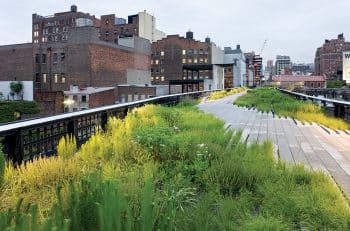
    The growth of Dublin at the expense of rural Ireland is a familiar refrain, amplified in post-crash Ireland. While it is true that Ireland has a particularly unbalanced economic and population growth pattern focused on its capital city, increased urbanisation is a global trend. Along with pressure on housing, this urbanisation poses a range of environmental challenges for cities that directly affects the health and wellbeing of inhabitants, as well as biodiversity. These environmental pressures are exacerbated by climate change, with more frequent flooding events and (possibly less obviously in this country) urban heat island effects. Increasingly policy-makers and communities are looking to what are termed ‘nature-based solutions’, actions copied or inspired by nature, to address these challenges and to help citizens re-connect with the natural world. Depending on calculations, about 60% of Irish people live in urban areas and this is only projected to increase. It is still relatively low relative to the European average of 73% which is projected to increase to 82% by 2050. Globally, over 3.5 billion people live in urban areas. This accounts for over 75% of global energy consumption and 80% of global CO2 emissions. The environmental impacts of urban development are linked to the population and wealth of a city and hence consumption levels and consequent demands on natural resources. The ecological footprint or impact of a community on natural resources and ecosystems is therefore greater with larger and wealthier populations. However, while cities concentrate negative environmental impacts, their very densities of population and consumption offer opportunities for sustainable development through innovations in land-use planning, transport and building design. The ‘greening’ of cities, or more specifically the (re)introduction of nature into towns and cities is one such opportunity to reduce environmental impacts and to promote more sustainable development. Having a greener city as a means of improving the environment through parks, street trees, green roofs and walls – even window boxes, seems obvious to most in some vague appreciation of its amenity value. Over the past twenty years an extensive body of research reveals the connection between public health, wellbeing and nature. Increased contact with nature is proven to have positive physical and mental effects, through mitigation of air pollution, increased physical activity and social interaction, and reduction in stress.     However, research also reflects concerns that urbanisation is quantitatively and qualitatively diminishing possibilities for human contact with nature. This may be particularly acute within often impoverished, inner-city neighbourhoods raising the issue of environmental justice. A 2016 study by UCD mapped greenery in Dublin city and highlighted stark disparities between areas, with the North East Inner City particularly lacking in greenery. There is good reason that the term ‘leafy suburbs’ tends to denote both a pleasant environment and wealth. The idea of enhanced urban greening is not wholly new. The earliest interest in land conservation was a reaction to urban environmental conditions in the nineteenth-century Industrial Revolution and the destruction of the natural environment. Nineteenth-century nature conservation came in the form of national parks and the protection of forests, rivers and wilderness, championed in the US by people like George Perkins Marsh who, in 1864, published ‘Man and Nature’ which castigated the destructive effects of human activity. Around this time, nature also began to be considered as a vehicle for urban planning and landscape development. The American author, poet, and naturalist Henry David Thoreau wrote that every town should have a park or primitive forest and Frederick Law Olmsted designed New York City’s Central Park and Prospect Park in the 1860s. In the UK, the Garden City movement developed as a reaction to the squalor and degradations of Victorian, urban, industrialised Britain. Pioneered by Ebenezer Howard with the new town of Letchworth, it incorporated housing, a connection and balance with nature, and economic viability. Garden City design principles were incorporated in Dublin in the newly developed suburbs of Marino and Drimnagh. Come the 1960s, Scottish landscape architect Ian McHarg promoted the concept of ecological planning for human settlement with his book ‘Design with Nature’. In this he divided the world into what was ‘fit’ and what wasn’t. Nature was deemed fit, whereas cities were seen as unfit or “scabrous entities”. In ‘The Granite Garden, Urban Nature and Human’ published in 1984, Anne Whiston Spirn explored how urban ecology can address environmental and social problems – such as water and air quality, the urban heat island, storm-water drainage, flooding, urban vegetation and wildlife – within the city itself. The contemporary concept of Sustainable Urbanism and its offshoot Green Urbanism have evolved from these earlier movements and writings. It brings together the strands of environmentalism, New Urbanism, Smart Growth and innovations in building and infrastructural design and technologies. Sustainable urbanism seeks to connect people with nature and natural systems and in contradiction to McHarg’s beliefs, this can be achieved even in dense urban environments.     Local authorities in cities around the world are slowly beginning to embrace green urbanism, with a particular focus on green infrastructure. Comhar, the defunct National Sustainabilty Forum, described green infrastructure as an interconnected network of green space that conserves natural ecosystem values and functions and provides associated benefits to human populations. Multi-functionality is at the core of the concept. ‘Ecosystem services’ that green infrastructure can deliver include clean air, temperature control and mitigation of the local ‘heat island effect’, recreation areas, flood protection, rainwater retention and flood prevention, maintenance of groundwater levels, and restoration or halt the loss of biodiversity. These are in addition to improving the health and quality of life of citizens through the provision of accessible and affordable areas for physical activity.       The multifunctional nature of green infrastructure means that the benefits accruing to it are not measured as just the sum of its constituent elements. Green infrastructure can be viewed as an approach rather than just a single entity. Its elements weave together synergistically, enabling the delivery of both ecosystem and human benefits in a way that enhances the environmental,

    Loading

    Read more

  • Posted in:

    Trump: Philosopher Mogul

    A group of United States mental health professionals has expressed concern about the mental health of Donald Trump. Psychologist Dr John Gartner said: “We do believe that Donald Trump’s mental illness is putting the entire country, and indeed the entire world, in danger. As health professionals we have an ethical duty to warn the public about that danger”. But what about duty to warn about his philosophy? Let us imagine that four famous dead philosophers, Herbert Marcuse, David Hume, Immanuel Kant and Plato, have been resurrected, and applied themselves to Trump. More unlikely, let’s pretend Trump opens himself to his philosophical side.     Herbert Marcuse is very, very worried In his famous 1960s book ‘One-Dimensional Man: Studies in the Ideology of Advanced Industrial Society’, Herbert Marcuse described the Happy Consciousness, the amoral product of the technocratic age, in which “guilt feeling has no place”. A person with such a deficiency, Marcuse says, “can give the signal that liquidates hundreds and thousands of people, then declare himself free from all pangs of conscience, and live happily ever after”. Trump, No? In ‘One-Dimensional Man’, Marcuse explained how nuclear-war planners represented this Happy Consciousness. They weirdly mixed the business of planning death on a nuclear scale with ‘fun’ talk about playing interesting games so trivialising mass murder. Trump’s frivolous flippancy about the possibility of nuclear war between North Korea and its neighbours: “Good luck, Enjoy yourself folks”, and his failure to rule out using them in Europe reflect this. Trump is a product of what Marcuse’s Frankfurt School colleagues called the Culture Industry – movies and TV. Despite its popularity the mass media is not democratic. The Culture Industry is an anti-democratic con job. As its Wikipedia entry says, “The culture industry perpetually cheats its consumers of what it perpetually promises”. Trump is a creation, Marcuse would conclude, of the fraudulent Culture Industry that perpetually dupes addict-consumers by conjuring up prefabricated fantasies about the endless promise of the American Dream. Donald Trump used his image as a wealthy celebrity showman to spread these fantasies and manipulate voters, who were desperate for a glimmer of success, glamour or fame, as well as for someone to bring them well-paying jobs. Marcuse claims that “advanced industrial society” creates false needs, which integrate individuals into the existing system of production and consumption via mass media, advertising, industrial management, and contemporary modes of thought creating a “one-dimensional” universe of thought and behaviour, in which critical thought and oppositional behaviour dissipate. Philosopher Roland Barthes, quoted by Marcuse, speaks of “magic-authoritarianism” where “there is no longer any delay between the naming and the judgement, and the closing of the language is complete”. Examples of this include the casual way Trump declared to her face that he’d prosecute ‘crooked’ Hillary Clinton and his judgement of Barack Obama as “Bad (or sick) Guy”, after he decided the former President had had him bugged. Trump lies – and lies about his lies – because he is a One-Dimensional Man entirely severed from the Truth and its ascendancy over falsity. It is all just a narcissistic magic show, hypnotic entertainment – the Post-Truth Triumph of the Spectacle. But in our fractious and dangerous era of media-generated ‘false news’ supported by international strategic hacking, leaking and subversion his powers are politically lethal.       David Hume warns not only about Trump, but his followers too David Hume, the apostle of scepticism, might also have something to say about Trump’s dangerous personality cult. In Hume’s essay ‘That Politics may be reduced to a Science’, citing the political vagaries of humanity, he declared “should be sorry to think that human affairs admit of no greater stability, than what they receive from the … characters of men”. In other words, Hume as a professional historian, would declaim the folly of Trump thinking that only he – just one leader – could fix America’s problems – an assertion that history tends to mock. And being an astute moralist, and observer of human nature, Hume would also have questioned why Trump’s followers were gullible enough to be fooled by overbearing bombast into heralding him as the master problem solver. In another essay ‘Of Impudence and Modesty’, Hume remarked: “Such indolence and incapacity is there in the generality of mankind, that they are apt to receive a man for whatever he has a mind to put himself off for; and admit his overbearing airs as proofs of that merit which he assumes to himself”. Moreover, Hume forewarns not just about about Trump, but his indolent supporters.     Kant: Donald Trump is my worst nightmare Immanuel Kant would have been disgusted by Donald Trump, appreciating in him the philosopher’s worse nightmares. For Kant integrity, honesty and consistency were everything. Trump would be akin to a philosophical pornographic website (we assume that our reborn Kant is up-to-the-minute). Kant had a dim view of an exclusive focus on sex. In his lectures “Duties towards the Body in Respect of Sexual Impulses”, he notes: “Sexual love makes of the loved person an object of appetite; as soon as that appetite has been stilled, the person is cast aside as one casts away a lemon which has been sucked dry… Taken by itself it is a degradation of human nature…”. Donald Trump, of course, engaged, as Kant would now be aware, in just such degradation: from beauty-contest-sponsorship to casual sexism and alleged real-life gropings. Kant might agree with Michael Moore, who noted that this predation explain why Trump rejects global climate treaties. Sexual predation against women and corporate predation against the environment are part of the same amoral game, which he characterizes as “crimes against humanity”. Yet what makes this even worse for Kant is that Donald Trump has been elected President of the United States of America, a nation for whose original revolution he had been an enthusiast, even though he denied the right of revolution. Morally, Kant invested every action with the importance of a universal action. But nearly all

    Loading

    Read more

  • Posted in:

    I, Dónal Blake?

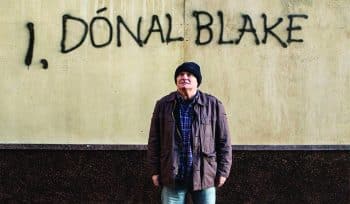
    Our new Taoiseach Leo Varadkar TD makes sure he gets out once a week, often to see a movie. Last year he went to see the English movie ‘I Daniel Blake’ directed by Mike Leigh. Discussing the movie at a Pobal conference he showed little sympathy for the plight of Daniel who, having suffered a heart attack at work, was forced to reply on job seekers payments while attempting to appeal a decision not to allow him  a disability payment.  Nor did he appear significantly moved by single mother Katie and her children (Daisy and Dylan). Katie, having moved to Newcastle from a London homeless persons’ hostel, and increasingly desperate to survive, resorted to  food banks, shoplifting, and work in a brothel. Indeed he has since gone out of his way to affirm his belief in the heavy-handed ‘work-first’ policy message at the heart of UK welfare reform. Through a rhetoric of ‘welfare cheats’ and an election campaign that spoke to the “coping classes”, the “people who get up in the morning” he has consciously sought to replicate an anti-welfare rhetoric in Irish political discourse.  The question we must now ask is whether, under his new emboldened leadership, the bleak lives of Daniel and Katie, dominated by a hostile welfare state, could happen here.  Are we seeing conditions emerge for ‘I, Dónal Blake?. The Irish welfare state has recently played catch-up to new forms of globalisation,  privatisation, marketisation and voguish new public management (NPM) and has, championed by both international and domestic actors,  moved towards work-first activation  which is  a more active use of income support to promote participation in paid employment.  It is a mixture of enabling, compensation and regulatory regimes, but the general international trend has been  for policy, and managerial, reforms to undermine potentially enabling elements and intensify its regulatory and punitive elements.  Pathways to Work (PTW),  Ireland’s activation policy,  has fundamentally restructured Ireland’s activation institutions and programmes,  rolling back old institutions like FÁS and rolling out new institutions like Intreo, the pay-by-results private-sector Job Path, and the Social Inclusion Community Activation Programme which has reoriented local community-development work towards supporting job readiness.  New penalties have been introduced and, while the incidence of sanctions is still comparatively low,  the unemployed have heard the message clearly. There is a new regime in town which must be engaged. Activation is often associated with recommodification of labour and mobilisation of a new form of ‘floating’, or more available and flexible employee,  where claimants are gauged by their ‘standby-ability’ and live in a condition of flex-insecurity. We can best understand what activation is for by asking activation ‘into what’. The crisis also saw increased incidences of low pay and more precarious working conditions.  Low pay is an increasing feature of the Irish labour market, with up to 30% of Irish workers low-paid according to the OECD definition of two thirds the industrial wage. Some groups of people are more likely to be low-paid, with women, young people and migrants not only more likely to be in low-paid work but also to work involuntarily part-time, to be underemployed or to  be in precarious forms of employment. The Irish state spends over €1bn  in in-work benefits to support low-paid workers and their families,  compensation mechanisms that supports participation in low paid employment ultimately act as forms of corporate welfare, supporting not only low-paid workers but ultimately making such low-paid work viable. Taken together then, recent Irish changes point to a work-first policy strategy with a greater use of privatised actors working in  a more managerial culture and using more  regulatory sanctions to pressurise working-aged claimants into low-paid and precarious employment.  That this work is often only viable through compensation in the form of in-work and employer subsidies raises questions about the quality of employment people can aspire to and whether in fact paid employment offers a sustainable route out of poverty.  There is an alternative and it includes  longer-term ‘preventative’ measures including properly accredited and quality education and training and regulating for decent jobs and living wages. One desirable recent change is the inclusion of Employment in the remit of the old Department of Social Protection.  We need to judge success not by movement from welfare into work, but movement into lasting, sustainable and decent employment.  If the new Taoiseach wishes to avoid a dystopian future or ‘I Dónal Blake’ situation  he might look to addressing low pay as a significant Irish labour market phenomenon and introduce policy initiatives that counter a ‘low hours’ employment culture.  People want jobs and to ‘get up in the morning’ but need a combination of institutional and income support responses to unemployment that reverse the emerging reality where approximately 30 percent of Irish workers experience not only low pay but also low hours of work, part-time work, temporary contracts and precarious working conditions.    By Micheál Collins and Mary Murphy

    Loading

    Read more

  • Posted in:

    New morning for Ireland’s housing problems

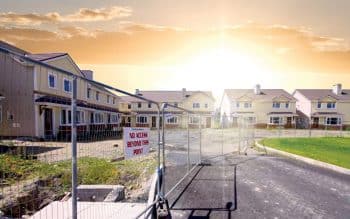
    On 20 June the consumer advocacy group Right2Homes presented a National Co-Operative Bill to the Oireachtas Joint Committee on Finance, Public Expenditure and Reform. Supporting the bill was an expert panel including Edmund Honohan, Master of the High Court, homeless campaigner Fr Peter McVerry, academic Dr Rory Hearne of Maynooth University and other industry professionals. Prominent US Cornell University Law School professor Robert Hockett submitted a separate written submission to the Chairman. The Bill envisages the establishment of a not-for-profit co-operative to purchase large volumes of mortgages currently on the books of Irish lending institutions, that are in arrears. It is envisaged as an off-balance-sheet self-funding initiative, a special purpose vehicle with the intention to purchase 42,000 homes currently in arrears of more than one year. €14bn of assets for a marked-down value of €5bn. The overarching intention is to “keep owners and tenants alike in their homes” out of an overheated private rental sector and to help prevent further homelessness. To put the initiative in context, it is useful to remind ourselves of the current housing status. Mortgage Arrears – a ‘perfect storm’ A March 2017 report by the Central Bank confirmed the scale of Ireland’s mortgage distress: one in ten mortgages (76,422) are in arrears over 90 days of which 33,447 were in arrears for more than two years. Out of this 14,367 are ‘Buy-to-Let accounts. Despite this, the current rate of repossessed properties disposed of was relatively low at 210 in the first quarter. Homeowners in arrears are facing a ‘perfect storm’ – on the one hand very low levels of new home supply give a net loss of overall housing stock and contribute towards historically low levels of rental properties. On the other there is a recovering economy, net inward migration of over 34,000 people per annum and increasing levels of household formation. The Housing Agency suggests there is a demand for 81,000 additional homes by 2021. The Central Statistics Office confirmed that, when all factors were taken into account, the total stock of housing increased by just 8,800 in 5 years. Sharp sales price and rental inflation in the past three years confirms that demand dramatically outstrips supply, even with 32,000 vacent and so-called ‘ghost estate’ homes having been brought back into habitable use since 2011. For owners and tenants facing repossession, options are limited. Social and Affordable Housing Under-investment in State housing has left thousands of families in social-rental ‘solutions’ – temporary tenancies with little security of tenure. In the five-year period 2011-2015 there were only 807 Part V social homes delivered. Just 37 Part V social homes were delivered nationwide last year. Ireland’s social housing is a subsidised private-rental model – state-sponsored tenants competing for living space in the private-rental sector. The average sales price of a new three-bed home in Co Dublin on a greenfield site is €360,000. Purchase at this price requires a combined household income of over €100,000. There is no official definition of ‘affordable’ housing at present, no affordable housing scheme and no official intention of introducing one. Legislation underpinning the previous affordable housing scheme was revoked and any new initiative would require a legal framework to be developed. State infrastructure funding of €240m has been announced and will subsidise infrastructure for a number of housing sites (LIHAF). The intention is to aid delivery of 23,000 new homes in a five-year period. However, there are no legal agreements in place with developers in receipt of LIHAF funding for affordable housing, and given the lack of clarity on what an affordable unit is, especially its price, it is unlikely that any family homes below the maximum affordable price limit of €290,000 will be provided. Officials talk of an ‘affordable dimension’ to the infrastructure initiative and the assumption is that additional new homes will reduce prices to affordable levels. Detailed analysis of Central Statistics Office (CSO) data confirms that increased new-homes supply follows increases in price and rent, and that over a 40-year cycle increasing supply has not once reduced prices. Rental Sector and Homelessness There are 3,100 available rental properties nationwide, just 1,300 of them in Dublin. This is the joint lowest level on record. All demand indicators point towards entrenched double-digit house price inflation in the short term, and even with a recently introduced cap, rent increases of over 7% per annum. There is an unprecedented level of homeless families in Ireland at present . Typically these are households left behind by the country’s recovery that, for various reasons, simply cannot afford higher rents. Officials are quick to point out that over 3,000 people exited homeless temporary accommodation last year. However Father Peter McVerry has confirmed that in 2016 there was a net increase in homelessness of 1,000 people, confirming that the rate of people entering the homeless system is currently at 4,000 per annum. To improve balance sheets, lending institutions may accelerate the sale of large tranches of distressed home loans to investment funds – so-called ‘vulture funds’ – as there is good demand and sale-price inflation approaching 10% . As many vendors require ‘vacant possession’ for sales, sales of 20% of the mortgages in arrears for two years or longer may result in a significant distortion of the rental sector. Owners and tenants-in-arrears will enter a volatile rental sector while their original properties become temporarily vacant during the sales period. Given the current historically low level of available rental properties this has the potential to drive up rents into double-digit figures and to increase the net numbers of families entering homelessness by up to 5,000 persons per year. National Housing Co-Op Bill It is against this bleak backdrop that The National Housing Co-Operative Bill 2017 has been proposed. By purchasing existing arrears properties for an average of €120,000, owners and tenants could be kept in place for less than €600 per month. This figure is less than half the current Housing Assistance Payment (HAP) level for a two-bed property in County Dublin. Off-balance-sheet bond-funding-mechanisms have been

    Loading

    Read more