Archives

OK

Random entry RSS

Loading

  • Posted in:

    Brother is bigger than you think

    With worldwide news leading with elaborate but anonymous hacking operations that have interfered with recent elections in the US and France – and pose a threat to the upcoming one in the UK – many are wondering how a foreign intelligence agency can conduct a surveillance or hacking operation without engaging with local law enforcement. Many have speculated why Ireland had been spared the terrorist attacks seen in other countries across Europe. It is possible there is a form of ‘Entente Cordiale’ between Islamic extremists and Irish law enforcement ensuring we remained untouched. In such circumstances a foreign agency would naturally be suspicious of any shared information and might look to conduct operations in a more ‘independent’ manner. Finding Targets Surveillance requires getting close to chosen targets to establish behaviour patterns and movements with the ultimate goal of eavesdropping on meetings and conversations to establish their intentions. The initial challenge would be to actually find a person of interest. There are many technologies that can be brought to bear on this problem including surveillance satellites, but there are far easier ways. Extremists need to hide where there is a large population, which immediately limits the choice of locations to one of only three or four cities in Ireland. Assuming an Islamic extremist is also somewhat devout, this narrows the search down to locations around our few mosques. They don’t need to live close by, merely to attend. Peppered around our target mosques will be mobile-phone-network antennae. Whenever a phone is powered on, when leaving religious services in a mosque for example, it reaches out to a number of mobile phone antennae to establish a connection. There would be two pieces of information of interest to our agency here, the initial connection information and the call detail records – more on those a little later. The initial connection information allows specific mobile phones to be identified. From this our agency might establish an initial group of targets, and start tracking on a rudimentary level. The phones don’t have to be smartphones with fancy GPS units, although that would make the process easier: the information is fundamental to the operation of the network and it is generated by every phone. Each phone has a unique identity that is used to tie it with all sorts of interesting information. Of particular interest is the call detail record, or CDR, used by telephone companies and hackable using illegal software. The CDR is a little nugget of information that underpins billing on mobile networks. It identifies, among other things, the number that is making a call, the number that is receiving the call, how long the call lasts and information on the telephone exchanges from which a general location of the caller and receiver could be largely established. From a CDR our agency could now track down a billing address and also a range of associates. Now it can start to infiltrate the homes of its targets. Through the Front Door Many extremists like the Internet, for its propaganda-spreading potential, sharing videos and pictures of their beliefs, ideals and manifestos, sometimes with abandon. Watching ISIS videos in a public place is not the best way to stay hidden so they have Internet connections to their homes. With the details from the CDR in hand, our agency could target Facebook, Twitter, Google and all of the other multiple Internet hangouts frequented by our extremists. With very little information a user’s Internet Protocol, or IP, address can be established. The IP address, while not unique, is enough to identify an Internet Service Provider; from there it’s a short hop for an intelligence agency to get to the Internet router, the anonymous device with the flashing lights connecting the extremist’s house, and probably yours, to the Internet. Suddenly, and invisibly, the agency can penetrate the perimeter of the target’s house. Closing the Noose The Internet router represents an extraordinary vulnerability in a house if not properly protected. Every Internet-enabled gadget connects through this single device and, to a sufficiently well-trained operative, it provides a digital potpourri of surveillance opportunities. There are three things to note at this stage, first the router cannot be properly protected, second even the poorest of intelligence agencies have sufficiently-well-trained operatives and finally routers can be compromised for weeks and months before raising any suspicion. Using the router as a stepping-stone, laptops, smart phones, tablets and increasingly ‘smart’ televisions all with microphones and cameras that can be turned on remotely and silently become available to the agency. The extremist has literally brought the surveillance device into their home and opened the door through which it can be accessed. Phishing for fun and Electoral Disruption The recent attacks on election campaign candidates fall into the realm of ‘phishing attacks’, bait-and-hook attacks with bad spelling. Phishing attacks present emails, instant messages and websites under a false flag. They look legitimate, but their entire purpose is to have the target reveal sensitive information such as passwords or bank account details. In the case of Macron, a mysterious Russian cyber espionage group, ‘Fancy Bear’ aka APT28, possibly associated with the Russian military intelligence agency GRU, last month registered decoy domain names, the addresses that drive the internet, which resembled the name of En Marche. Using these domain names, a flood of communications would have been issued, often, ironically, containing a security warning requesting password verification leading back to the false-flag domain. With this simple step, a user’s credentials are obtained, leaving access to the legitimate systems utterly compromised. In the case of Macron, those domains include onedrive-en-marche.fr and mail-en-marche.fr. OneDrive of course is the name of the cloud-based document service offered by Microsoft. The attackers’ standard mode of operation is to access these systems to download sensitive documents and materials, releasing it to the internet via Wikileaks or other leak sites, or through their own sites, to an agog international public. The Next Domestic Surveillance Device What do Siri, Alexa, Cortana, Amy, Bixby and Google Home all

    Loading

    Read more

  • Posted in:

    Czechs Kafka Kundera and consent

    I am now working in the Czech Republic. Before I arrived I had a certain tourist’s knowledge of Prague and had visited briefly twice previously for short periods but the main tourist sights sell this flecked and overlaid tapestry of a city short, neglecting its diversity of specialist shops and bookstores – fast disappearing from Dublin – and its shadowy labyrinth of side streets enveloped in mystery, particularly at night. My knowledge of the Czech Republic was solely of its florid culture. The novels of Milan are a crash course in uninhibited European eroticism framing a social culture unknown in Ireland – European decadence alien to our deeply repressive mindset and our low grade obsession with the smutty and tabloid side of sexuality. Kundera‘s novels are also written in an exquisite lapidary style. Short, precise staccato but also lyrical. Everybody should make time to read at least ‘The Farewell Party’, ‘The Unbearable Lightness of Being’ and the glorious collection of short stories ‘Laughable Loves’. There is also a lot of dark laughter in those books not unlike Flann O’Brien‘s and culturally there is at least here a reference in the black and lachrymose senses of humour and despair. Of course Kundera is not even close as far as The Czechs are concerned to their greatest writers led by Franz Kafka. Kafka is like a shadow over Prague. In the Jewish quarter there is a rather bold modernist statue of him. His visage and silhouette adorns mugs and t shirts in every tatty tourist shop. There is an expensive and uninformative Kafka museum and a bookshop in his name. There is above all else his house by the great castle where he lived a hundred years ago, not dissimilar to the two-bedroomed artisan houses near the Four Courts. Kafka was Jewish, an anomaly in the Czech Republic and of course he wrote in German. Since I have been taken aback at how Germania has been expurgated from Prague culture. The Czechs speak English and Russian primarily outside their own language. Still they venerate Kafka. It is a legal reference from a case that unsettled and derailed my career at the Dublin bar – Gilligan v Ireland (1997) – that sparked my later interest in Kafka. I used the expression “a Kafkaesque situation” in that case impromptu. It conjures a situation of absurdity and perversity. The Proceeds of Crime Act 1996 met it well. I am not sure it helped my career. Franz Kafka trained as a lawyer though he did not enjoy it. According to one account he found that the study of law: “Had the intellectual excitement of chewing sawdust that had been pre-chewed by thousands of other mouths”. The leading feminist scholar Robin West in a philosophical monograph, in the 1985 Harvard Law Review, argues that Kafka’s world presents law as alienating and excessively authoritarian, exerting in people a craving for conformity. People have an urge to conform or obey the law and may obey a law which is intrinsically unjust. As West argues: “Kafka’s world is peopled by excessively authoritarian personalities. Kafka’s characters usually do what they do – go to work in the morning, become lovers, commit crimes, obey laws, or whatever – not because they believe that by doing so they will improve their own wellbeing but because they have been told to do so and crave being told to do so”. She contrasts this negative view with the view of law as facilitating the maximisation of one’s own welfare, presented by the right-wing Law and Economics scholar Richard Posner, perennial candidate for appointment to the US Supreme Court: “Whereas Posner’s characters relentlessly pursue autonomy and personal wellbeing, Kafka’s characters just as relentlessly desire, need and ultimately seek out authority”. In evaluating these views, West points out that although both Kafka and Posner see people as consenting to the various transactions they enter into, for Kafka such consent can lead to humiliating and degrading employment, sex and even death. For Posner, the ultimate free-marketer, such consent is rational and self-fulfilling. For Kafka, such consent leads to victimisation, self-mutilation and death”. West draws from her reading of Kafka on consensual market transactions a conclusion laden with foreboding: “In all of these market transactions – commercial, employment, and sexual – Kafka portrays one party consenting to a transfer of power over that party’s body, and in each instance the transfer, although consensual, is horrifying. In none of Kafka’s depictions does consent entail an increase in wellbeing…The participants are often motivated by a desire to submit to authority, not to enhance autonomy”. West summarises the polar opposite visions of Posner and Kafka thus: “Posner teaches us that when the risk of the loss is voluntarily assumed, the ultimate suffering of that loss is consensual and we consequently need concern ourselves no more with losers in the market than with those in the lottery. Kafka’s stories tell a different tale. In Kafka’s stories, the community’s refusal to intervene and come to the aid of the market losers is revealed as a breakdown of community and brotherhood, not a legitimate response to a morally satisfactory state of affairs”. From this, she concludes that Posner’s theory is deeply flawed: “The problem with Posner’s argument is that even if these losses have been impliedly consented to, he has not shown that anything of moral significance follows from that fact”. And moral significance is the framework. West also examines the question of consent to law in Kafka. According to Posner, people consent to legal imperatives that are wealth-maximising. According to Kafka, they consent to impersonal state imperatives not because they are wealth-maximising but out of a deep-seated desire for judgment and punishment. Thus, in the short story ‘The Judgment’, a son submits to death by drowning as his father has decreed. In the short story ‘The Refusal’, the townspeople obey the colonel in charge of the town because authority has “just come about”. The most dramatic example of this submission to authority is, I

    Loading

    Read more

  • Posted in:

    US and EU

    All States and aspiring States have their ‘myth of origin’ – that is a story, true or false, of how they came into being. The myth of origin of the European Union is that it is fundamentally a peace project to prevent wars between Germany and France. Most wars are civil wars, not inter-State ones. One can make a plausible case that the EU contributed to the Yugoslav civil war in the early 1990s by recognising Croatia and Serbia as sovereign States within their internal-Yugoslav administrative boundaries, without any consultation with the large Croat and Serb national minorities that found themselves on the ‘wrong’ side. This was against all the norms of international law governing the recognition of new States. And did not the EU contribute to the Ukrainian civil war since 2014 by pushing an EU “economic partnership” agreement on Kiev and working with the US to lever Ukraine and the Crimea out of Russia’s sphere of influence? An important new book by University of California historian Ivan T Berend, ‘The History of European Integration, a New Perspective’ (Routledge, 2016) uses the American national archives for the first time to show that the EU’s own historical origins lie in war preparations rather than peace strivings. America was the original demiurge of European supranationalism. Europe was divided between East and West following World War II. The Cold War between the US and USSR took off in the later 1940s and the possibility of it turning into a real, ‘Hot’ War persisted until the 1980s. In the later 1940s American policy was to push Europe’s former imperial powers towards economic and political integration with one another. In 1947 the two Houses of the US Congress passed a resolution that “Congress favours the creation of a United States of Europe”.That same year US economic aid to revive Western Europe under the Marshall Plan was premised on support from the recipients for economic and political integration. “Europe must federate or perish”, said John Foster Dulles, later US Secretary of State.  In 1948 the American Committee on United Europe was established, supported by the Rockefeller and Ford Foundations. For years the Central Intelligence Agency (CIA) channelled money to the European Movement. That movement’s national sections became the main non-governmental lobbyists for ever further integration in the different European countries and have remained so to this day. In 1949 at the time of NATO’s formation the US wanted a rearmed West Germany as a member. This greatly alarmed France, which had been occupied by Germany only five years before. Jean Monnet, who was America’s man in the affair, came up with the solution. Monnet and other technocrats had been pushing schemes of federal-style supranationalism for Europe since the end of World War I in 1918. These had had no effect in preventing World War II, but in the new situation post-1945, with America now supporting Euro-federalism as a bulwark against communism, Monnet and his colleagues saw their opportunity. To assuage France’s fears of German rearmament Monnet drafted the Schuman Declaration, named after France’s Foreign Minister Robert Schuman, proposing to put the coal and steel industries of France, Germany and Benelux under a supranational High Authority as “the first step in the federation of Europe”. This led to the European Coal and Steel Community Treaty of 1951, the first of what were to become the three supranational Community treaties – the other two being the Atomic Energy Treaty, which gave us EURATOM, and the European Economic Community Treaty, which gave us the EEC. A federation is a State, so the political aim of establishing a European State or quasi-superstate under Franco-German hegemony was there from the start. The preamble to the German Constitution, adopted in 1949, speaks of Germany as “an equal partner in a united Europe”. Far from European integration being a peace project therefore, the historical fact is that the first step towards supranationalism in Europe, the 1951 European Coal and Steel Community, was advocated and supported by the US to facilitate German rearmament in the early years of the Cold War, and to reconcile France to that fact. The EU celebrates 9 May 1950, the date of the Schuman Declaration, as “Europe Day” each year.  Jean Monnet became secretary of the supranational High Authority which ran the Coal and Steel Community. This was the predecessor of today’s Brussels Commission. Forty years later, in 1992, the central political purpose of the single currency, the euro. was to reconcile France to German reunification following the collapse of the USSR. This was Monetary Union for Political Union or, put crudely, the Deutschemark for the Eurobomb, with Germany and France as effective joint hegemons of the European Union that was first mooted in the 1992 Maastricht Treaty that gave us the euro. Following the Coal and Steel Community Treaty and against the background of the 1950-51 Korean War, the French Government, again pushed by the Americans, produced an ambitious plan for a European Defence Community (EDC) in 1952. As Monnet put it in his Memoirs, “Now the federation of Europe would have to become an immediate objective. The army, its weapons and basic production, would all have to be placed simultaneously under joint sovereignty. We could no longer wait, as we had once planned, for political Europe to be the culminating point of a gradual process, since its joint defence was inconceivable without a joint political authority from the start”. This proposed European Defence Community was to have a European Army, a European Defence Minister, a Council of Ministers, a common budget and common arms procurement under the overall aegis of a European Political Community. The treaty establishing the EDC was ratified by the German Bundestag, but it caused a political storm on the Right and Left in France and in 1954 the French National Assembly narrowly rejected it. Chastened by this setback the Euro-federalists decided henceforth to play down their ultimate goal of political integration and to stress economic integration as the supposed route to

    Loading

    Read more

  • Posted in:

    Corporate welfare fares well

    Corporate welfare is controversial. Negatively, it can mean ‘crony capitalism’ – politicians using public resources to benefit their friends in business, or at best propping up failing enterprises for short-term political gain. A more positive understanding is that corporate welfare involves the state, employers and workers co-operating on a shared project of economic development. Corporate welfare, in a broad sense, is when public resources are used to give businesses one or more benefits. This can include direct payments or subsidies, the purchase of goods and services by public bodies (€8.5bn annually in Ireland), the provision of infrastructure, the availability of support services (like Enterprise Ireland), preferential tax treatment, tax breaks or lax regulation. Corporate welfare is highly prevalent across even the most avowedly ‘free market’ economies. There is no agreed definition of corporate welfare, and there is no standard way of measuring it. The CATO Institute (a US think-tank dedicated to limited government and free markets) estimates that just the most obvious state subsidies to business cost US taxpayers $100bn  [€90bn] in 2012. In the UK, a more expansive definition of corporate welfare was estimated by Dr Farnsworth of York University to cost £85bn [€120bn] in the year 2011-12. In Ireland, Paul Sweeney – Chair of the network of economists available to TASC, an independent progressive think-tank whose core focus is economic equality and democratic accountability – conservatively estimated state support to the Irish enterprise sector at between €4.7bn  and €6.2bn  in 2011. Governments routinely support businesses in order to boost employment, which in turn makes people – and the country as a whole – more prosperous, and reduces the cost of social protection payments to the public purse. In this way, corporate welfare is part of wider welfare policy. More recently, Ireland’s Department of Social Protection has supported people to leave unemployment by helping them to become self-employed, switching ‘welfare’ payments for ‘enterprise’ payments and blurring the boundaries of social protection and industrial policy. Unlike social welfare to households and individuals, the distributional effects of corporate welfare are much harder to measure. Although a business might gain from state supports, the effect in the economy might be to provide more jobs for people on low-to-middle incomes rather than to provide any additional profit for the business owner. In some cases, corporate welfare may be cost-neutral or even generate returns for the state. The cost might be off-set by benefits from increased exports, higher employment and more tax paid by companies in receipt of supports. Sometimes wider policy goals, like more balanced regional development, might be judged to outweigh the financial cost of business supports. Nonetheless, corporate welfare can mean public money benefiting individuals who are already wealthy. For example, businesses in receipt of state supports may give high pay to their executives and the effect of the state intervention may be to make a business more profitable in the long term, which means more wealth flowing to owners and shareholders. One of the most egregious examples of excessive pay in businesses supported by the state was the €500,000 agreed as the cap on executive remuneration in Ireland’s bailed-out banks, which even then met resistance from bankers. Distinguishing cronyism from genuine industrial policy can be difficult. The social costs and benefits of corporate welfare are not easy to calculate, as some measures may genuinely benefit the economy but also involve giving benefits to friends of the government of the day. Various Tribunals have passed judgment on crony capitalism in Ireland – Tribunals into beef export subsidies, planning decisions and a telecoms licence. These processes took years, and are not a practical or economical way to safeguard probity in business dealings with government. The Irish state has a long history of corporate welfare – from basic economic development such as electrification, to various supports and inducements to foreign direct investment today. Politically, the tendency has been for the radical extremes to oppose corporate welfare – the Left based on the accusation of crony capitalism and the Right out of deference to the religion of free markets, while those closer to the centre of the political spectrum are more likely to favour it. The connection between industrial policy and corporate welfare highlights the pro-enterprise role of the welfare state. This perspective also raises issues of equity that have been absent from earlier discussions of industrial policy, where the focus was chiefly on economic goals such as technological development or employment. The complex and changing role of the state in the economy is perhaps best described in terms of inter-dependence. It is widely accepted that the state should aid private enterprise in the developed capitalist economies. However, in the absence of detailed official data to permit more thorough analysis, it is impossible to say whether corporate welfare in Ireland delivers the best value for public money, or whether it is ethical.  Nat O’Connor is Lecturer in Public Policy and Public Management at Ulster University. This article is based on ‘Crisis and Corporate Welfare’ by Nat O’Connor and Paul Sweeney, in Murphy, M.P. and Dukelow, F. (editors 2016) ‘The Irish Welfare State in the

    Loading

    Read more

  • Posted in:

    Even kingdoms have rights

    Democracy means rule by people, however, there is some dispute as to what exactly this means in practice. It must mean more than majority rule – it cannot allow minorities to be oppressed just because they are minorities.   Democracy and fairness Democracy must embrace fairness in its broadest sense. It needs to engage with people’s identities, aspirations and sense of community, and through mechanisms including human rights and rule of law. Some procedural aspects of democracy are contentious; for example, whether proportional representation should prevail over single seat constituencies. Jurisdictional fairness is important too: gerrymandering is often circumscribed by allowing an independent commission to delineate constituency boundaries.   Unclear Boundary Rules Determining the boundaries and jurisdictions of countries too presents certain conundrums: Who decides what boundary defines a nation? When can part of a ‘kingdom’ decide to be sovereign and demand secession? History suggests that there are no rules, only that those who hold the power decide, retrospectively justifying the decisions or alternatively acquiescing to regional demands for regional sovereignty for reasons of political expediency. In the US for example in the Nineteenth Century the federalist states objected to the southern states’ demands for secession. Majority rule within the southern (confederate) states held no sway; the will of the more powerful “division” prevailed, after the Union Civil War. The US Supreme Court has been robust, holding in 1869 that Texas could not secede from “an indestructible Union”. The rights of persons other than those seeking secession are clearly at issue and must tempore any regional secession majority vote. Canada has been more circumspect. When Quebec secessionists sought independence and failed in two referenda, the last one in 1995 by a margin of 0.6%, the Canadian Supreme Court was asked to rule in 1998 on whether a vote for secession in Quebec would require implementation by federal authorities. It held, ambivalently, that both sides would be obliged to negotiate with due regard to constitutional principles and that any impasse should not be subject to judicial supervision due to its political nature. It did say though that the democracy principle “cannot be invoked to trump… the operation of democracy…in Canada as a whole”. Canada passed the Clarity Act in 2000 which sets out a broader participatory framework for any secession claims.   Secession versus Unification If two sovereign countries contemplate unification, a referendum which requires a majority in both ‘countries’ appears reasonable. However, when one ‘country’ such as Scotland aspires to independence, then a majority vote in the secession-claiming region is alone sometimes seen as sufficient, as when David Cameron conceded a referendum to Alex Salmond in October 2012, in the Edinburgh Agreement. But there may be an asymmetry between unification and separation. If the secessionist region times its challenge for a period of general instability of the larger region, as now with Brexit, regarding Scotland, then one lucky vote can forever divide a country, with no replay for the disenfranchised. Unfairness inevitably results from the asymmetry of process, whereby a vote for secession only needs to win once, whereas the unified region must win every time. Imagine a boxing match in which a challenger only needs to win one round out of fifteen, and can skip any round for a rest. The rights of citizens in the ‘abandoned’ region are clearly an issue too; the secessionist region may contain valuable resources (oil reserves for example) over which the abandoned region has a legitimate claim. The identity of the abandoned citizenry may be intrinsically tied to the unified country and the esteem, identity, integrity, power and military might associated with this greater power risk being downgraded. Without some bulwarks against secession there is a risk of fragmentation and chaos. Resource-rich regions could claim ‘Independence’ opportunistically to enhance the wealth of its citizens to the detriment of others. States could fragment into mini-kingdoms, each with its own laws and boundaries. Even the bald rule of law, a necessary component of democracy, requires that a brake be put on secessionist claims, which are based solely on regional ‘majority’ claims. One solution is to provide the (potentially) abandoned region with some say in any secession referendum process.   Everyone needs a say In the case of Scotland, for example, the remainder of the UK could also be allowed to vote in any new independence referendum. The more that Scotland’s independence is opposed in the UK, the higher the threshold which should be imposed upon Scottish voters to achieve independence. The percentage in the UK (less Scotland) in excess of 50% against independence could be divided by four and added to the 50% threshold, which was applicable to the last Scottish referendum, in 2014. Thus, if 80% of the remainder of the UK opposed change, then a majority in excess of 57.5% would be required for Scotland to secede. Such a system, or some similar formula, would better secure the conflictual rights at stake than determination by a simple majority of secessionists. Democracy must embrace the broader consequences of secession demands upon everyone and mould independence referenda procedures accordingly. Independence in an interdependent world is no longer simply a matter that should be left to those who see advantage in independence, no matter how noble such an aspiration may be, unless, as pointed out by the Canadian Supreme Court (in the international law context of self-determination), people are “subject to alien subjugation, domination or exploitation”. The ‘left-behind’ block of citizens has legitimate aspirations to stability and respect for their multi-stranded identities of which nationalism is but one facet. They should not be endlessly threatened with fragmentation of their notion of nationhood at the behest of one region of a country, particularly without their voices being heard. A minimum 15-year interval between any independence referenda coupled with a balanced participation formula (allowing all persons affected to partake) in any such vote would also conduce to a fairer system. The era of notionalism, of slavery to old slogans, must yield to a calculus of the greatest

    Loading

    Read more

  • Posted in:

    The other P O’Neill

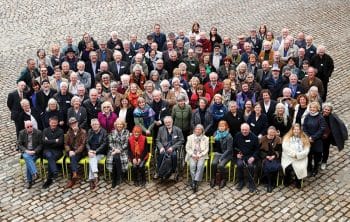
    The new editor of the Irish Times, Paul O’Neill, was brought up an only child in Waterford where his late father, Paddy, was editor of the ‘News and Star’. His mother Josie’s family, the Larkins, owned the well-known bar and grocery at The Duffry in Enniscorthy, now Donohoe’s/Pettitt’s. Paul started his career at that newspaper and worked for a while at the Cork Examiner. He is married to Jennifer and has two daughters. He is, at 52, five years younger than his predecessor, and an enthusiastic cyclist, though as he admits himself, more for health reasons than environmental concerns about fossil fuels. He cycles competitively with the Dundrum-based Orwell Wheelers. He has cycled the “Étape du tour’, a leg of the Tour de France – 138km from Saint-Jean-de-Maurienne to La Toussuire-Les Sybelles. “But the challenge wasn’t the distance. The true test lay in the climbs: a total of 61.5km uphill”. The challenges facing O’Neill are enormous. When the Irish Times broke the news on Twitter that a new editor had been installed, it incidentally highlighted one of the major problems the newspaper faces. A photo circulated of Paul O’Neill, taking over from Kevin O’Sullivan, who was stepping aside to take on the portfolios of agriculture, environment and science, showed the pair standing in the centre of a large circle as other Irish Times staff crowded round and listened to the announcement Such photos are a tradition in the Irish Times – they bespeak a hive of collegiality led by a winning editor. But as Twitter users quickly pointed out, that crowd was overwhelmingly made up of middle-aged men – pale, male and stale. In contrast to O’Sullivan’s appointment, which came after a lengthy period of speculation over the future direction of the newspaper as several candidates vied for the position, O’Neill’s promotion came on an otherwise unremarkable mid-week afternoon, without fanfare, or notice. “The challenges facing so-called old media companies have been well ventilated”, O’Neill was quoted as saying shortly after the announcement. “But the audience [sic] of The Irish Times continues to grow and now includes those who access our journalism via smartphones, iPads and desktops, as well as those who continue to read the newspaper. The media landscape is evolving rapidly and the future is not settled. But in a world of alternative facts, falsehoods and hidden agendas, I’m confident that The Irish Times and our independent journalism will continue to thrive. As people increasingly question the accuracy of the information presented to them, I believe the standards of quality and fairness associated with the Irish Times will be ever more relevant and valuable to them”. O’Neill was deputy editor (and is replaced by Denis Staunton), not to be confused with assistant editor, which is Fintan O’Toole, to both O’Sullivan and Geraldine Kennedy. He combined this with the title ‘Editorial Director’. Before that he had crossed over to the Dark Side for a time to work in public relations having taken a redundancy package from the paper at the turn of the century. Since he joined initially in 1989, he has been London correspondent, crime and news reporter and finance editor. He applied for the job last time around after Kennedy’s departure, and was very clearly regarded as the front runner for the post once O’Sullivan departed. In reported remarks on his departure O’Sullivan said his term as editor – the thirteenth in the paper’s history – “coincided with unprecedented turbulence and uncertainty for media businesses”. It has been rumoured that Dan Flinter, chairman of the board of the Irish Times Limited,and former boss of Enterprise Ireland, leant on O’Sullivan to move on. His removal was a cloak-and-dagger operation and it is indicative of low morale at the newspaper that none of the supposed standards watchdogs at the newspaper, which is guided by a lofty but precarious Trust arrangement and an “editorial committee”, complained about the furtive lack of proper interview procedures. That uncertainty about the future was also acknowledged by O’Neill in an interview with Sean O’Rourke on RTÉ radio, where he acknowledged the possibility that the Irish Times may eventually have to move to less frequent print editions, perhaps appearing in hard copy only on Saturdays. He had little to say about his editorial vision and nobody in the newspaper’s elevated governance seems to rate this as of much significance in the face of the need to adopt buzz concepts to address the accepted threats of digital, Google and Facebook. Cost-cutting not vision is the order of the day, still. In June last year the Irish Times announced plans to reduce costs by €3.5m over three years, including a target to cut employment costs in the business by €1.5m. Remarkably, the paper employs close to 400 staff but is currently completing a voluntary redundancy programme. Circulation has almost halved since its peak in 2008 and is down a third on O’Sullivan’s watch (compared to 28% at the Irish Independent). The Irish Times has managed to encourage readers to subscribe, both to print and digital offerings. Reading through statements both from the paper itself and the Audit Bureau of Circulation (ABC), it appears to have attracted 13,000 subscribers for the e-paper (a digital reproduction of the print product), and 12,000 more to access behind the website paywall, with an additional 30,000 paying for a joint web-and-print subscription.     These numbers allow the paper to claim a combined print+pixel circulation base of over 90,000, though the most recent ABC figure, counting only print sales, is a sobering 66,251. But even if the paper does manage to convert all of its print readers to digital (or – an even greater challenge – increase its total base by attracting new subscribers), it still faces the hard fact that digital advertising revenues are only a fraction of those it can attract for print. And there are only so many commercial features and “sponsored content” reports the paper can host before it starts to detract from the masthead’s credibility. To an

    Loading

    Read more

  • Posted in:

    A vision, with buy-in

    History and economics John Moran is former Secretary General at the Department of Finance. I meet him for brunch in a Mexican restaurant on bank holiday Monday. He is bright and open, and brings along his ebullient mother (but that is another story). Before elevation to the most senior position in the Department of Finance Moran worked as head of the banking unit at the Department, which he joined after a stint at the Central Bank. Before that he worked as a senior banker and corporate lawyer mostly outside Ireland. He did a law degree and a Master’s in the US, and followed up with a degree in maths. I ask him what he’s up to now. “Basically since I left the Department I’ve set up a company, RHH, which is designed to do social entrepreneurship and strategic leadership. We do a number of roles with different charities like the Hunt Museum”, of which he is chair. It also lobbies for the likes of Nomura and Uber. As a social entrepreneur Moran supports a number of not-for-profit organisations drawn from interconnected spheres including education, and regional and urban development.  He has helped established and serves as chair of Narrative 4 Europe, based in Limerick, a not-for-profit organisation promoting social change through storytelling co-founded by Irish novelist Colum McCann, and is an active member of the Limerick Economic Forum, since November known as Limerick Twenty Thirty which is charged with developing key strategic sites in Limerick City and County that will act as anchors for enterprise and investment development across Limerick”. It has generated a national buzz about Limerick and sites like the Opera Site and Hanging Gardens. Moran was appointed a board member of the European Investment Bank (EIB), and is a ‘Chevalier de l’Ordre National du Merit’, or ‘Knight’ of France’s second highest national order of merit. A Francophile, he’s involved in the restoration of La Maison Carrie-Boyer, a 13th Century medieval home in Cordes-sur-Ciel near Albi in the South-West of France. The building is classified as a national monument. He is no longer involved in the juice bar he once ran in France. He lives mostly in Islandbridge in Dublin but is also restoring a Georgian house on Pery Square in the centre of historic Limerick. He looks back on his time in the Department with favour and in particular considers he was influential in effecting a change towards collection of data and a more evidence-based approach, one which perhaps surprisingly had been lacking until then. I probe him on whether he thinks the Department made mistakes during his time there but he certainly doesn’t think so. He defends Nama for selling property early as that was its remit. If it had not done so it is probable there would not have been the return to vibrancy in the property market that we are now benefitting from. He doesn’t agree the vulture (and he disagrees with the term) funds were indulged. He won’t be drawn on whether Nama could have expected to retrieve closer to the original, par values of loans instead of the discounted prices it paid and he certainly won’t be drawn to criticism of the way Project Eagle was handled. He believes it was right to exit Northern Ireland. He met Oak Tree and Lone Star in the immediate run-up to their putting in, successful, bids for Project Sands but does not recall engaging with Cerberus about Project Eagle, though Michael Noonan did, the day before bids were due. He and Noonan made their diaries available to the Public Accounts Committee. And of course Nama and the Department are far from conterminous. He accepts that the Anglo €34bn is gone but believes the State will recoup the rest of the €64bn advanced in the bank bailout from the bailees. In terms of his political philosophy he is unforthcoming but he’s passionately in favour of equality of opportunity. Limerick It’s in that context that he’s got involved in promoting the development of Limerick (he grew up in Patrickswell and there are hints of the accent through the mid-Atlantic and Merrion St). He feels at the moment too much development is going to the Greater Dublin Area. The people of cities outside Dublin are simply not benefitting from equality of opportunity. His vision for spatial strategy is of a spreading of the benefits of economic development around the country. He’s actively engaging with the government’s draft National Planning Framework. He’s a big believer in quality of life so I ask him if they ever looked at linking tax incentives to quality of life indicators in the Department when he was there. In fairness after failures with the likes of the Upper Shannon blanket tax incentives the Department of Finance had, by the time of his tenure, become hostile to property-based tax incentives but he says they had not looked at such linkages. He’s a little defensive. He notes accurately that the Department’s strategic plan “didn’t look just at GDP, but at quality of life too” and I ask him if that had been enough. He insists it was an “evolving agenda” to look at quality of life too. His vision seems ad hoc rather than comprehensivist. Though he doesn’t agree with tax incentivisation, if they are introduced they should be for the public realm, for the outside of people’s houses, not the inside. That benefits everyone. More generally, he thinks good planning should facilitate quality of life through; “Public realm: I think the first thing you have to do is invest properly in terms of public realm and public transport”. As to what this might mean for Limerick, he notes it “has a huge amount of green space downtown and in terms of reaching out and into the county and along the river. I think they should draw a red line around those areas and keep them. But grow the city in terms of density using the rest of the spaces”. For the historic city: “You have to come up

    Loading

    Read more