
Posted in:
Laughter Lines
“Gervais, like Woody Allen, is always the same”
Posted in:
by admin
“The last century saw a steady rise in the status of prints. They were a crucial element of German Expressionism and Pop Art…”
Posted in:
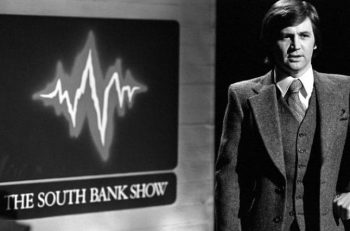
Melvyn Bragg will be seventy this year. Not that you’d know it from his evenly lined face and more specifically his beautifully coiffed, luxurious chestnut hair that is deserving of as many adjectives as a thesaurus has to offer. Only the filmmaker David Lynch can rival him in being so fantastically follicled. There is a personable quality to Bragg that goes beyond that of most well-known interviewees. He calls me by my name frequently, suggests that there is common ground between us – “you must know all about that sort of thing” – and seems to want to make it crystal clear to me that he understands certain things about Ireland. Which makes me think he doesn’t. Much of that could be down to the work for which he is best known, as an arts journalist on the South Bank Show, and as a commentator on all things artistic over the greater part of the last thirty years. The immediate sense is that he is well versed in luring people in and getting information. His broad approach back in 1978 when the South Bank Show began was peculiarly egalitarian for its time, everyone was fair game and everything was art as far as Bragg was concerned, from Hollywood movies to opera, and the programme flourished. Meanwhile, he has been writing constantly over the years, mostly books (more than thirty) and a few plays at the beginning of his career. So art has been his working life, and will continue to be in spite of ITV’s decision to cancel The South Bank Show earlier this month. The question of art, though, provokes an unusual stream of consciousness, a sort of trip down memory lane. “Um. It’s something that I found before I knew it was there, and was part of me way before I would admit to it and by that time it had become essential. And I can unravel that. I was lucky enough to be able to sing at the age of six, I mean really good choirs, we were good at choirs in the North of England….and then later, I don’t know…I was fourteen/ fifteen, I thought, ‘God I love this stuff, I’m listening to it on the radio, as well as singing it’. So it had become part of what I wanted to do. And then you sort of look up when you’re eight een or nineteen and you’re lucky to maybe have those two or three years of university where you can – just the right age to think, ‘I want to go in this direction’, and you never go in the direction you chose, you go in the other direction where there’s a rather steeper slope and hopefully you have a bit of luck. But anyway, that was what I wanted to do, from then on I wanted to write fiction and that was what I started to do from when I was about nineteen/twenty, and away you go.” Bragg’s steeper slope might have been his relationship with his first wife whom he married when he was twenty-one. His most recent book, “Remember Me”, is based on their relationship and its tragic demise when ten years later, she committed suicide after he left her. His writing, despite the intense subject matter, is rather light and draws you in like a trick. I tell him it reminds me of Evelyn Waugh. “Yeah I like Waugh very much, that’s very kind of you to pick it up. I very much like Waugh. He seemed to be one of those people who could move past on the surface, but big things are going on that you remember and you all of a sudden realise the woman he’s been gently prodding along is absolutely and totally, and almost fatally in love with a man, who in every way is hopeless, drunken and unfaithful and everything and you think ‘Christ what’s going on in her life?’ But he presents it so lightly on the surface, I love that contrast.” There is a strong sense in the book of nothing ever being enough, particularly for the central character Joe, who is based on Bragg himself. Is that part of the human condition, I wonder? “To be honest, I think that’s a … I’d go along with that. I mean I wouldn’t have formulated it quite in that way myself, but yeah, I do think this is an uncapped nature of the lives that a lot of people lead when they’re released form restraining context, which is class, location, tradition, which has been there very heavily. I mean you must find it in your contemporaries in Ireland, because that’s exhibiting it in a very vivid way.” I wonder what he can mean about my contemporaries here in Ireland, and he’s careful. “They just get out of a background which has been extraordinarily – it’s been sustaining, it might have been ruinously constricted, it’s both those things, it’s been very nourishing because of the closeness and the community, and the idea of lines being drawn all over the place, which are almost criss-crossed out of existence. And when you get away from that then I think you are without a compass. I think certain people are without a compass and they drive in different directions, thinking ‘I’m going to get there’, but they don’t know where is where, and you know, what happens if you do? And it’s”, he chuckles, “difficult to know what it is when you get there.” I gather he means that at one time the church and state were inextricably linked in Ireland and that now things are different. Booms come along and suddenly we don’t know where we are, or even if we do, as he says, what do we do about it? Bragg got out of his own background through education and art. He was “what would have once been termed working class”, growing up in Cumbria, the son of a dressmaker and a factory worker.
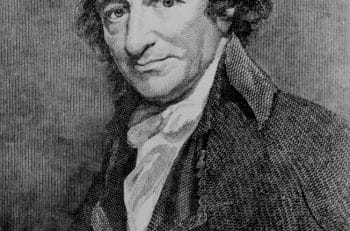
Thomas Paine (1737 – 1809) was a British revolutionary, radical, inventor, and one of the Founding Fathers of the United States. He lived and worked in Britain until he was 37, when he emigrated to America, in time to participate in the Revolution. His principal contributions were the powerful, widely-read pamphlet Common Sense (1776), advocating colonial America’s independence from the Kingdom of Great Britain; and The American Crisis (1776–1783), a pro-revolutionary series of pamphlets. After that, Paine influenced the French Revolution. He wrote the Rights of Man (1791), a guide to Enlightenment ideas advocating the revolutionary idea of representative government with enumerated social programs and progressive taxation to remedy the prevailing poverty of commoners. He was elected to the French National Convention in 1792, fixing – extraordinarily – his place in British, American and French history. He became notorious because of his anti-Christian The Age of Reason (1793–94). In France, he also wrote the pamphlet Agrarian Justice (1795), discussing the origins of property, and extolled the merit of a guaranteed minimum income. It is not that his ideas were original so much as that his pamphleteering attracted for him a wide readership and influence. Why he’s relevant He was ahead of his time, proposing in detail a form of social welfare and an old age pension as early as 1791. Paine wrote brilliantly on the need for a free press. He argued against monopolies and contributed a great deal to what became both the basic principles of the French Revolution and the Constitution of the United States of America. Nevertheless he has been practically washed out of popular history. Uncompromising Paine stepped on a great many toes. Some of the owners of these toes were very powerful indeed, and ruthless. He was not surprisingly derided by King George the Third because of his support for the French Revolution and the American war of independence, and he went head to head with Edmund Burke. The Rights of Man was Paine’s response to criticisms by Burke (who was born on Arran Quay in Dublin) of the revolution in his Reflections on the Revolution in France. Slavery There is strong evidence that the American Revolution would not have succeeded at all were it not for Paine’s work. The fact that he is not in the pantheon, with Jefferson and Washington is down primarily to his opposition to slavery. Most of the other founding fathers were slave owners. Paine was sidelined after the foundation of the Republic by his former colleagues for this reason. Religion The greatest obstacle to a place in posterity for Paine was his criticism of organised religion. He was not an atheist. He subscribed to the principles of Deism as did such notables as Thomas Jefferson and Benjamin Franklin. Greatest Contribution: US Constitution Even if Paine’s writings were left aside, and they should not be, his contribution to the birth of what was to become the United States of America, and his influence on its constitution, were immense. As there are very notable instances where our own constitution was influenced by that of the USA, it is also fair to say that Paine was an indirect contributor to our public and legal affairs also. Paine was perhaps the first great socialist. His concern for ordinary men and women, while it may give an additional clue to the attitude towards him of capitalist America, deserves to be recognised by those on the left wing today. That it is not might be down to the fact that, unlike Marx and Engels, who were theorists, Paine was a practical man. He suffered from no delusions whatever, and was somewhat less than patient with those that did. For that other major faction, the people who live according to principles that are only for public presentation and which they discard in private, and for frauds and exploiters everywhere, Paine was merciless. In the Press Barack Obama, has recognised the contribution that Paine made. In his inaugural address, the new president quoted from Paine’s pamphlet “The Crisis”, which was very influential at the time of the war of independence, and which George Washington had read to his troops in order to rally them at the critical period when the American army was on the verge of defeat by the British. The passage quoted by Obama is as follows: “Let it be told to the future world…that in the depth of winter, when nothing but hope and virtue could survive…that the city and the country, alarmed at one common danger, came forth to meet and to repulse it”. Paine’s spirit and insight deserve a renaissance. Written by Seamus McKenna
by admin
U2’s music is acclaimed, but its members pursuit of profit is not very Rock ‘n’ Roll.
by admin
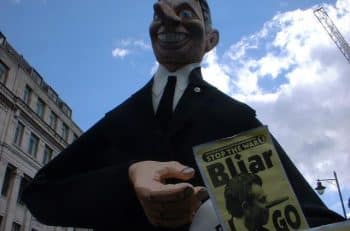
John Rawls (1921-2002) is often said to be the greatest political philosopher of the twentieth century. He was a professor at Harvard University in the right-on seventies. His most famous work is A Theory of Justice (1971). He refined it endlessly which made an already over-elaborate theory even trickier. His theory is intricate, full of jargon and somewhat contrived. Still it reflects something that many, perhaps most, reflective liberals, would find fair. In A Theory of Justice, Rawls attempts to balance liberty and equality, the basic components of justice and fairness, in his theory of “justice as fairness”. Utilitarianism advocates the greatest good for the greatest number. It is an appealing practice, possibly the dominant theoretical driver of liberal democracies (The Fine Gael website says that it is Enda Kenny’s long-standing political priority), but it does not have any theoretical justification – unlike Christianity for example which claims to be rooted in the Bible and natural law. Rawls feels the need to find a justification for the theory he is going to offer. He roots it in the idea that if we could work out what people would decide was just if they had no knowledge of the situation they are in, that decision would stand even when they do know the situation they are in. He infers a sort of social contract among people from what he says they would do in this “original position” operating under such a “veil of ignorance”. We would, Rawls argues abstractly, affirm a first principle of equal basic liberties, thus protecting the familiar liberal freedoms of conscience, association, expression, to vote and the like. However, he damagingly says that equal basic liberties must be preceded by meeting very “basic needs” for economic goods – in effect opening his theory to the usual tin-pot dictator excuses for violating rights to free speech etc. Rawls conservatively considers that demanding that everyone have exactly the same effective opportunities in life is a nonstarter since it would undermine the very liberties that are supposedly being equalised. Being American he assumes that free people would not want to be equal, that there are no “lasting benevolent impulses”. The most he would demand is fair equal opportunities not the same opportunities. So, he said, we would agree a two-part second principle requiring fair equality of opportunity – and the famous (and controversial) difference principle. This second principle demands that those with comparable talents and motivation face roughly similar life chances, and that inequalities in society work to the benefit of the least advantaged. Rawls further argued that these principles were to be “lexically ordered”, i.e. he gave priority to basic liberties over the more equalityoriented demands of the second principle. His theory can justify a sort of Tony Blair/Gordon Brown half-baked egalitarianism. The sort that balks at saying it wants an equal (or even “socialist”) society but happily lends its support to fairness. To equality of opportunity. Where he differs from them is that leftish governments now speak the language of community, not of individual rights; and of desert rather than the difference principle. Confusingly, this puts him both to the right and left of them. Rawls justifies inequalities provided they are necessary to increase the amount of stuff we all have. And provided they are not to the detriment of the very worst off. But the likes of Blair and Brown have a lax view of what is “necessary”. And so Rawls’ thinking can be used to justify shoulder- shrugging at inequalities in society. For example, if (as may well be the case) allowing corporate executives to earn annual incomes of ten of millions of dollars helps to generate the economic dynamism that raises living standards, including those of the poor, such inequalities are allowable. If it does not, however, they are not. Interestingly this seems to cut across orthodox contemporary leftish views that all things being equal the rich should be allowed to get richer, and not be taxed for the sake of it. So again Rawls is both to the right and left on the issue of inequalities in society. Of course his “liberal” orientation and even a half-baked egalitarianism has ruled Rawls out of the American debate. And he isn’t exactly a staple of the Irish discourse either
by Kate Fennell
I recently discovered that the famous Hollywood heart-throb, Matthew McConaughey, and myself, have something in common. We would both like our children to learn Irish in a Gaeltacht. I am already ahead of him slightly as I am raising my toddler here in the Connemara Gaeltacht, the same one that I was raised in for the first seven years of my life that rendered me fluent in Irish, and that propelled me around the world learning half a dozen other languages. However, before Matthew takes the plunge, I must counsel that he move quickly so that he won’t find that Irish has been abandoned as the vernacular here by the time his kids are teens. The embarrassment for us and the disappointment for him would be just too much. As odd as it may sound, we desperately need someone with a silver tongue to come here and tell a large majority of the population that their native tongue is in fact dying. This fundamental but tragic news must have somehow not reached these parts because otherwise the attitude about speaking the language would surely not be so lackadaisical, Visitors would feel encouraged to use Irish instead of English. All greetings in shops and pubs would be as Gaeilge. Most importantly, native speakers would be speaking Irish with their children. If they knew? Surely? The key but elusive message is simple: Irish needs to be spoken more than English, to survive. In my mind, McConaughey would then explain to the locals, who need reminding, that the Irish they speak is unique, a gift from their forefathers and practically impossible to learn from sterile textbooks. That their pronunciation, turn of phrase, rhythm, musicality, use and command of the language is theirs alone. That it changes from Gaeltacht to Gaeltacht, from Parish to Parish, from boreen to boreen, from family to family, from individual to individual. That it is spoken in no other country. That this is it: the living, breathing petri dish of Irish. That by fecklessly speaking English they are silently killing their culture. He would then explain to the parents that speaking their native tongue to their children would make them happier, more confident and more connected to their environment in the long run. In some cases he might express intrigue at parents’ reasons, if any, for not passing their heritage on. And then he could heap praise on the parents who are carrying the mantel successfully – raising bilingual children in a challenging linguistic and cultural environment. Just tell them that the effort is worth it. He would also let the teenagers know that they are not to blame, that they have been poorly led and are contending with a globalised world dominated by English. That all languages are suffering a haemorrhage due to English. Can he let them know that trying to emulate an English language community in a Gaeltacht makes them weaker? That they can draw from their own strengths and speak two languages fluently, enrich themselves with two cultures instead of one diluted one? Can he ask them not to be shy about speaking Irish even if they are now making a lot of mistakes in it? Encourage them that gradually they will improve, with practice. He would tell the 17 –year-old girl I met that I was sad when she told me no other family that she knows in the area speaks Irish at home. Ask her to speak Irish to her mum (who goes back generations here) when she goes home. She might even respond in Irish. He would persuade her to continue that with her brother, 10, who has a lovely grasp of the language and should be encouraged, not thwarted. Tell him his Irish is lovely, even though riddled with mistakes. After that, he would let her know that when she goes to her friends’ houses she should try to speak Irish to them even when everyone is answering in English. Just let her know she’s to ignore the awkwardness, the shame, the embarrassment, the famine that never left us. That it’s not hers. That it’s the environment she grew up in. No leadership, no courage, no confidence: environmental, cultural or historical. But, tell her, that that’s all gone now and everyone can have 3G. Or 4G. And emojis. As Gaeilge. The new rule is not to feel less in Irish. That was her parents’ rule and that time is over. Of all the things we have to save in the world – the whales, the donkeys, the trees – this must be one of the easiest. All we have to do in the Gaeltacht is go to our local shop, pub, school , open our mouths, and speak as Gaeilge. Live it. If only Greenpeace had their task so easy. Kate Fennell