
Culture

Random entry RSS

  • Posted in:

    How we discourage Irish thought

    We hear calls for Irish intellectuals, not only economists, to produce new thinking about the present and future of Irish society and politics.  In effect these are calls for Irish intellectuals to help the nation by becoming creative thinkers about the human condition and its requirements in Ireland now.  Such calls are understandable in the present circumstances, but they leave out of account the discouraging environment for creative thinkers which our Republic offers.  There is no weekly or monthly magazine of ideas in which Irish thinkers might present their thought in a sustained manner and debate with each other.  And the existing mass media have been engaged in an intellectual dumbing down.  Moreover, insofar as the print media, radio and television publicise or discuss Irish writing, they confine themselves to prose fiction, poetry and plays; that is to say, to fictive writing, to the neglect of creative writing about human reality in Ireland or generally.  State funding of creative writing practises a similar discrimination.  Aosdána, a state-funded, self-electing assembly of creative individuals, admits writers to membership among others.  To those writers who can prove their need, it pays an annual stipend.  But they must be fictive writers; philosophical writers are excluded, even if they are an Irish Fukuyama or Freud. In the matter of book-publishing the Arts Council discriminates similarly.  On the grounds that sales would likely be small, Irish publishers are reluctant to accept works of thought.  To obviate a similar obstacle in the case of prose fiction, plays or poetry, the Arts Council subsidises the publication of such works.  But thinkers are left to fend for themselves, even if they are a new George Berkeley, Edmund Burke or Douglas Hyde.  A third state-funded agency, Culture Ireland, is charged with promoting and subsidising Irish culture internationally.  In the year 2008 it subsidised 282 Irish cultural events.  Insofar as these involved Irish writers, once again all of them were of the fictive kind.  In other words, the 282 events included none—not one—in which Culture Ireland subsidised an Irish thinker addressing a foreign audience about some aspect of reality; perennial, contemporary, or past.  Thus Irish culture is officially represented to the world as a culture lacking any notable thought. What all these discouragements, taken together, seem to amount to is the Irish establishment and its subordinate tiers working to confirm that very English notion, notably articulated by Matthew Arnold, of the imaginative, thoughtless Celts: gifted entertainers of their pensive Saxon masters cogitating on how to run the world.  Certainly our past history plays a role in all this.  The objective discouragements which we impose on Irish creative thought both grow out of, and reinforce, an inherited subjective discouragement present in many Irish people.  To engage in sustained creative thought requires confidence in one’s ability and right to discover truth independently.  But the legacy of centuries-long mental colonisation of the Catholic Irish—the great majority, the conquered ‘natives’—by the English, their colony in Ireland, and the Catholic clergy, deprives many of us of that dual confidence. Generations of our ancestors were trained in the belief that it was only ‘others’—the Anglo-Irish, the English, the priests—who had that ability and right: and this has left an inherited ingrained mark in many.  Thousands of those so marked are active in the Republic’s mass media, government, schools and seats of learning, and subliminally delivering a similar doctrine, with the privileged ‘others’ now located outside Ireland.  This goes far to explain why, when the Catholic Irish ultimately achieved the chance to call the shots, they created a republic that discourages home-grown creative thought, and makes its sustained expression a guerrilla enterprise.  The resulting Irish life, conducted on the basis of unscrutinised imported thinking, falls short of adult life and resembles that of minors guided by what adult elders elsewhere think. As we witness, distressed, the swollen numbers of young suicides and the regular or occasionally spectacular nights of self-destructive youthful frenzy, a voice is sometimes heard saying: ‘Now that in great measure our young people lack the guidance previously given by the Catholic Church operating through believing parents, teachers, clergy and religious, what a shame that we have not inherited a thought-out philosophy of life and ethical behaviour, with the result that we lack such a philosophy now!’ What is not added is: ‘and do everything we can to prevent its production’. Dr Fennell’s latest book is Ireland After the End of Western Civilisation, Athol Books online.  He is at www.desmondfennell.com

    Loading

    Read more

  • Posted in:

    Paul McCartney: some spice amid the sugar

    kind of musician/composer is Paul McCartney? This may seem like an odd question, given that his unprecedented and unparalleled commercial success, even if it has not always been matched by concomitant critical approval, means that everyone thinks they have the story on Paul.  After all, McCartney is listed in The Guinness Book Of Records as the most successful musician and composer in popular music history, with 60 gold discs and sales of 100 million singles.  ‘Yesterday’ (credited to Lennon/McCartney, as all songs by either one as Beatles were, but composed entirely by McCartney) is listed as the most-covered song in history, by over 3,500 artists to date.  Wings’ 1977 single ‘Mull of Kintyre’ became the first single to sell more than two million copies in the UK, and remains the top selling non-charity single there.  He is the most successful songwriter in UK singles history, based on weeks that his compositions have spent on the charts.  As a performer or songwriter, McCartney has been responsible for 30 number-one singles on the US Hot 100 chart, 20 of them with The Beatles, the rest with Wings or as a solo artist.  You want someone for the British finale of Live Aid in 1985, and again for 2005’s 20th Anniversary Live 8 show, who you gonna call, Bob? The X-Factor final 2009? Fab Macca, of course.  And yet, who would care to define, accurately and based on a more than superficial knowledge, what his music is actually like? He’s been at it for a long time now, and his discography encompasses everything from charming folk to layered pop to amiable, household rock’n’roll to piledriving, uncompromising heavy metal to art-pop inclinations to lounge to classical.  He touched on the English folk tradition in songs like ‘Mother Nature’s Son’ and ‘Blackbird’, from 1968’s The Beatles (aka The White Album) and ‘Jenny Wren’ from 2005’s Chaos and Creation in the Backyard, joining the dots between Davy Graham, Nick Drake and Richard Thompson.  There are the forays into blues, ‘Used To Be Bad’ and ‘Really Love You’, on 1997’s Flaming Pie.  The more arcane corners of his back catalogue stretch from the classical Liverpool Oratorio (1991) to the electronica-based Liverpool Sound Collage (2000), to say nothing of the little-heard Thrillington (1977), made up of easy listening, big-band swing orchestral/instrumental versions of songs from his second album (co-credited to Linda) Ram (1971), recorded under the alter-ego Percy ‘Thrills’ Thrillington.  Indeed, he has a penchant for adopting a persona for his more outré excursions from his cosily good-humoured public image, as the three pseudonymous collaborations as The Fireman, with ex-Killing Joke’s bassist and pioneering ambient house producer, Youth, demonstrate.  ‘Monkberry Moon Delight’, from Ram, sounds like nothing so much as Tom Waits’ junkyard clatter avant la lettre, which in turn sounds like…? Leadbelly? In interview, he has evinced mild annoyance at being dubbed ‘the greatest living composer of love songs’, maintaining such a view is based largely on a misconception, and that he has written his share of nasty songs as well.  “Remember ‘Helter Skelter’? That was me”, (Incidentally, the usually incisive Ian MacDonald, in his meticulous concordance of Beatles’ songs, Revolution in the Head, has a definite blind spot for this composition, failing to share its composer’s regard for it, declaring: “…their attempts at emulating the heavy style were without exception embarrassing”.) So, he is a chameleon, and there perhaps lies his problem with how he is perceived: people who can be all things to all men (and women) invite the accusation that they have no real self.  Devoid of essence, they don a series of masks, and tell you what you want to hear.  It is even possible to treat what should be a positive characteristic, this voracious musical curiosity and impulse towards experimentation/innovation, with suspicion: why does he need to pretend to be someone else when he is doing it, rather than using his own name? It seems he is torn between self-conscious commercialism and the kind of music he makes when he’s not trying too hard to sell records.  Then again, he hardly needs the money, so why worry if sales of a particular record are large or small? Is he afraid of confusing his fair-weather, mainstream audience? Or is it that he needs the status and recognition his continuing fame affords? Without being tiresomely Freudian about it, one of his bonding experiences with John Lennon was that they had in common the early deaths of their mothers (McCartney’s of cancer when he was 15, Lennon’s run over by a car when he was 19.) The psychology of public performing suggests that not only is taking to the stage in pursuit of the love and approval of millions a means of sublimating grief, but also a belated attempt to prove oneself to an absent parent. The chief arguments marshalled by his detractors begin with the assumption that the years of mediocre, formulaic pop were motivated primarily by avarice.  The term ‘filler’ – as used by mp3 single-track downloading kids about their parents’ album collections – could have been coined for much of McCartney’s solo output.  Then there is the fact that he can undoubtedly be lyrically facile.  His tendency towards whimsy and mawkish sentimentality are trying.  Has a major artist ever released a more cringingly banal single than ‘Mary Had A Little Lamb’? And let’s not even get started on the ham-fisted pleas for togetherness, ‘Pipes of Peace’ and ‘Ebony and Ivory’, or the dubious 9/11 response, ‘Freedom’.  It can sometimes seem that if arch media prankster Victor Lewis-Smith’s assertion that the Beatles are dying in the wrong order has any validity, then Ringo will be next. However, there is much to be countered in his defence.  Firstly, when the group they formed as teenagers split up, The Beatles were all still young men: George 26, Paul 27, John 28, Ringo 29.  Apart from being an utterly jaw-dropping achievement, the revolutionary arc of their 12 studio albums and two dozen singles, all recorded

    Loading

    Read more

  • Posted in:

    Dangerous indulgence of high-rise (2009)

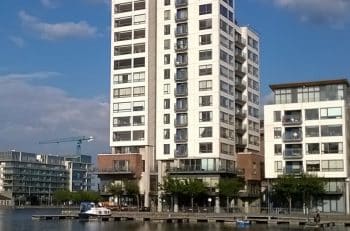
    Height in Dublin City By Michael Smith Dublin City Council is pushing a high-rise strategy through the Development Plan variation process.  After fractious public meetings it has toned down an initial draft of what it called in somewhat Orwellian terms: “Maximising the City: A strategy for densification and height”.   If successful it will come into force just before the  Council initiates the  process of creating a whole new Development Plan.  Clearly the process is pre-emptive and so wrong.  But the substance also threatens Dublin’s unusual, human scale. It is perfectly sensible to like New York and  to be  happy when it goes higher still while recognising that    Dublin City Centre has a different unique selling point. When we think of Dublin, when tourists spend two days in Dublin, it is the low rise character that IS the city. A Dublin that people overall like.  It is fragile because  two twenty-storey buildings could change it forever.   This document threatens it very really.   The document is discursive and self-contradictory in places – no doubt reflecting the complex discussions that led to the final draft.  But for those of us who have been involved in the planning process it is clear that loose language and confusion (which admittedly pervade the current development plan) is leapt on by developers to promote a laissez-faire approach.  And in any event the cynics know well that the city council is often happy to breach its own development   plan e.g. in the case of the development on the site of the former Carlton Cinema on O’Connell St or the Clarence Hotel.   Height versus density We should all be able to agree to densification of the Dublin City area – in accordance with the principles of sustainable development. The advantages of density include being able to justify significant infrastructural, including public transportation but also for example parks, expenditure, which promotes the maximisation of quality of life  The benefits of high-rise including legibility and the making of corporate or other statements are small in comparison.Intensification (or densification) is good as it benefits many and harms few. Height benefits very few and may be detrimental to the majority.In general   it is not in the public interest to search Dublin City for  “opportunities”, “potential” or “scope” for high buildings; or flexibility as a useful tool to this end.  It is important to note also that high-rise buildings – such as in Heuston – are usually not ultra-high density as problems of overshadowing usually lead to requirements for plazas at ground level. Certainly the city should look for opportunities to densify, but it should control, not maximise, the opportunities to build high.   A high-rise strategy may actually be premature until there is a coherent and agreed strategy for intensification.   The false premise It appears that City Council officials have in effect misinterpreted the planning strategies of cities comparable to Dublin.  Current policy as represented in a report by DEGW states that in the three cities it deemed comparable to Dublin (Copenhagen, Amsterdam and Lyon) “the planning strategy has been to intensify and consolidate city centre functions within the historic height restrictions and develop new peripheral cores at public transport nodes to meet emerging demands [p14, emphasis added]”.  DCC has ignored the key notion of peripherality! Dublin  should choose its analogues carefully.  It survived the second world war and has a large number of protected structures.  It should not be adopting strategies perhaps appropriate for Frankfurt or Rotterdam, even if there is a lobby for it from opportunistic developers and trite commentators. DCC needs to get a dictionary out and look up peripheral.   Substance The manager’s recently updated document which accepts the difference between high-rise and high-density, is clearer than before and uses a rhetoric about high-rise which is more mature than that used in earlier versions.  However, the substance of the document does not mirror this acceptance and rhetoric. Despite efforts by commentators (e.g. Frank McDonald disappointingly in the Irish Times) and some councillors, led surprisingly by Sinn Fein’s Daithi Doolan, which gloss over them, there remain substantial concerns about the substance of the revised document.   Transport Nodes and Height versus Density The document   continues in part to confuse the benefits of high-density with those of high-rise.  Transport nodes, meaning train stations but also perhaps future Metro stations such as one proposed for the edge of Temple Bar)  should attract high-density development to capitalise on the expensive transport infrastructure.  But the document proposes “high-rise” for transport nodes such as Connolly and Tara.  This is not justified where the transport nodes are in the city centre where amenities and the city’s heritage may be compromised by height.   Particular areas Concerns remain about some of the particular areas envisaged for high-rise, though most commentators support the proposed and existing schemes in the Docklands and Heuston areas.   The justification has not yet been made for many of the other areas or catchments envisaged for high-rise development.    Management needs to explain and justify the impact of high-rise buildings in the particular parts of the city cited. Ostensibly they risk undermining amenities and the historic heritage of the city.   City Centre: General There is particular concern about the impact of high-rise on the city centre and inadequate protection is provided for the historic core. It is unclear whether it is envisaged that much of the City Centre could be developed at eight storeys.  Certainly only buildings over eight storeys are defined as high-rise when under the current regime as represented by the DEGW report   [at 5.1] height is expressly a relative concept. The new document removes the existing provision for systematic assessment of the implications of high-rise in the city centre – unless the proposal is above eight storeys.  A seven-storey building on Bachelors Walk, for example, would not be specially assessed,   City Centre: Particular High-rise in each of  Tara St, Connolly and the   Digital Hub  around historic Thomas St is risky as they are all are close to the

    Loading

    Read more