treaty

Random entry RSS

  • Posted in:

    1916 values diverted

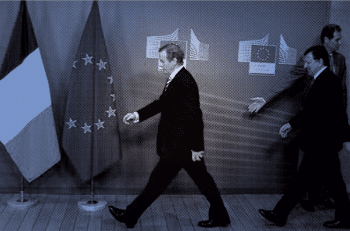
    One value of the 1916 Rising commemorations is to highlight the contrast between the aspirations of those who set out to establish an independent Irish State for the whole island of Ireland and the reality of what exists today – a partitioned country whose native language, Irish, is on the point of death as a cradle-spoken tongue, and in which the State that did come from the independence movement has been reduced to provincial or regional status in a supranational EU quasi-Federation that now makes most of our laws. The Easter Proclamation read: “We declare the right of the people of Ireland to the ownership of Ireland and to the unfettered control of Irish destinies to be sovereign and indefeasible”. “Indefeasible” means cannot be lost. That right may notionally exist still, but the reality of a sovereign Irish State in which its own Parliament and Government are the sole source of the laws prevailing in its territory has clearly been lost, as with the 27 other EU countries, through membership of the EU. Growing public awareness of this fact, in Ireland and other EU countries, is at the root of the current EU discontents. Article 29.4 of the Constitution, which was inserted by referendum in 1972 to enable Ireland to join the then European Economic Community (EEC), gives European law primacy over any countervailing Irish law. It reads: “No provision of this Constitution invalidates laws enacted, acts done or measures adopted by the State that are necessitated by the obligations of membership of the European Union, or prevents laws enacted, acts done or measures adopted by the said European Union from having the force of law in the State”. Realisation of the implications of supranational EU law being given primacy in this way over the provisions of the 1937 Irish Constitution that he had personally drafted led then President Eamon De Valera to say, somewhat poignantly, to his family on New Year’s Eve 1972, the day before this change took place: “I am the first and last President of an independent Irish Republic”. So Eamon O Cuív TD, De Valera’s grandson, who was present on that occasion, told me*. The loss of independence has gone much further since. In 1999 Ireland abolished its national currency and joined the Eurozone, thereby abandoning control of either its rate of interest or its exchange rate – the former essential for controlling credit, the latter for influencing economic competitiveness. EU Commission President Romano Prodi underlined the political significance of this when he said at the time, “The two pillars of the Nation State are the sword and the currency, and we have changed that”. The 1987 Single European Act, the 1992 Maastricht Treaty, the 1998 Amsterdam Treaty and the 2001 Nice Treaty saw further growth of EU powers and simultaneous diminution of national State powers. This culminated in the 2009 Treaty of Lisbon, which gave the EU the constitutional form of a supranational Federal State. Lisbon incorporated 99% of the provisions of the Treaty Establishing a Constitution for Europe that had been rejected by French and Dutch voters in referendums in 2005. Whereas the rejected constitutional treaty gave the EU a Federal Constitution directly, the Treaty of Lisbon did so indirectly, in the form of amendments to the existing EU treaties. Although the legal content of the two treaties was virtually the same, the French and Dutch were not allowed referendums on Lisbon. Ireland was the only EU country to be allowed that, because of the Supreme Court’s decision in the 1987 Crotty case that, as the Irish people were the repositories of State sovereignty, only they could agree to surrender it to the EU through a referendum. When Irish voters rejected ratifying Lisbon in 2008, they were made vote on exactly the same treaty the following year to deliver a different result. In the Lisbon Two referendum the constitutional amendment permitting Lisbon’s ratification differed from that in Lisbon One in that it included the sentence: “Ireland affirms its commitment to the European Union…”. Here was a supposedly independent Irish State affirming a constitutional “commitment” to a superior entity made up of other States – surely a remarkable development? Yet the Explanatory Handbook which the statutory Referendum Commission sent to all voter households, supposedly to inform them what the referendum was about, made no reference to this change. Neither, so far as I know, did anyone in the Irish media. The Lisbon Treaty replaced the existing European Community with a European Union that had full legal personality and its own constitution for the first time. It made citizens of the different Member States into real citizens of this new federal-type Union for the first time also. One can only be a citizen of a State. Before Lisbon, citizenship of the then embryonic EU was stated to “complement” national citizenship. It was an essentially notional or honorary concept. The Lisbon Treaty provided that EU citizenship should be “in addition to” one’s national citizenship, just as citizens of provincial states like California, Massachusetts, Bavaria or Brandenburg have two citizenships, for they are citizens also of their respective Federal States, the USA and Germany. Lisbon also gave explicit primacy to EU law over national law for the first time in an EU treaty. In most years nowadays arguably the majority of laws that are put through the national Parliaments of the EU Member States come from Brussels, although most people do not realise this. Eur-Lex estimates that there are currently some 134,000 EU rules, international agreements and legal acts binding on or affecting citizens across the EU. These include 1842 EU Directives, 11,547 Regulations, 18,545 Decisions, 15,023 EU Court verdicts and 62,397 international standards which the EU has signed up to and which are therefore binding on all its 28 members. If a Member States does not obey any one of these, the EU Court of Justice can impose heavy daily fines to enforce compliance. The EU Treaties prevent voters at national level, their parliaments and governments from amending or abolishing

    Loading

    Read more

  • Posted in:

    World War 1 and the Middle-East

    If Colonel Gadaffi were still running Libya there would not be mass migration across the Mediterranean, with thousands drowned because of unscrupulous traffickers. Gadaffi was guilty of the sin of all those secular dictators. He was too independent of ‘the West’. Britain and France, backed by America, bombed him out of existence. Their excuse was that he intended assaulting civilians in a provincial town. They got the cover of a UN Security Council resolution, which a weak Russia failed to veto. Now Libya is a failed state racked by civil war. Where do these Mediterranean migrants come from? Many are from Syria, another state afflicted by civil war encouraged by the West. Since 2011 the Syrian rebels against the Assad regime have been covertly financed and armed by Saudi Arabia, Qatar and Turkey, with the CIA and Israeli intelligence overseeing the details. Recall the House of Commons vote which denied Tory Premier David Cameron permission to bomb Syria by 285 votes to 272 in 2013. Encouraged by the US, Cameron and France’s Hollande wanted to repeat in Syria the regime- change they had brought about in Libya two years before. It was surely Ed Miliband’s finest moment as Labour leader that he refused to go along. 30 Tories and nine Lib Dems voted against Cameron too. This House of Commons No in turn gave the US Congress the impetus to stop Obama’s impending assault on Assad. In Syria the pretext was to be that Assad used chemical weapons against his foreign-financed rebels. If these rebels succeed in overthrowing the Assad regime, the country’s Christians, Alawites and many Shia Muslims are likely to have their throats cut. The paradox now is that support for the Assad regime in Syria and its Shia-backed counterpart in Iraq looks like being the best hope of holding back the ISIS monster which these ‘rebel’ groups with their dubious sources of arms and finance have spawned. America needs Iran and its clients as allies, not opponents, in the region. Najibiullah in Afghanistan, at the time of the Russian intervention there, was the first of the secular dictators America sought to overthrow by backing the mujahideen fundamentalists against him. Osama Bin Laden was on the US payroll then. Najibullah was executed by the Taliban in 1996. Saddam Hussein was the second, overthrown by Bush and Blair in their 2003 invasion of Iraq. When Saddam ruled Iraq, Sunni, Shia and Christians lived peaceably side by side. Now Iraq too is well on the way to being a failed state, racked by the Shia-Sunni conflict which America encouraged until the tormented politics of the region spawned ISIS. Najibullah, Saddam Hussein, Gadaffi and Assad were certainly dictators but the West did not realise that worse could follow. Since Bush invaded Iraq the USA has become self-sufficient in oil because of the fracking revolution. America no longer needs Saudi oil as it once did. This is the basis of Obama’s turn towards Iran, which in turn causes consternation among the Saudis and Israelis. The Saudi-Israeli response is to try to up Sunni-Shia antagonism further, building on what the Americans had started, seeking thereby to undermine Iran’s clients in the Iraqi and Syrian governments and in the Lebanese Hezbollah, in the hope of stymying a US-Iran deal. A seminal book on the historical background to the region’s current anguished politics, is James Barr’s ‘A Line in the Sand: Britain, France and the Struggle that shaped the Middle East’. The catastrophe in the Middle East is rooted in Western power-grabbing for the provinces of the Ottoman Empire a century ago in World War 1. Iraq, Syria, Lebanon, Palestine and Jordan were all Ottoman provinces then. The different religious communities had lived peaceably side by side in them for centuries. Getting hold of them was one of the war aims of imperial Britain and imperial France in 1914. It was why Britain and France pushed Turkey into an alliance with Germany in the first months of the Great War. What was presented to British and French public opinion as a war to defend the rights of small nations and to prevent ‘poor little Belgium’ from falling under German rule, was seen by these countries’ Governments as an opportunity to expand their empires in the Middle East at the expense of the Turks. Britain particularly wanted to gain control of Palestine and with it the eastern approaches to the Suez Canal, that vital route to Britain’s empire in India. The Bolsheviks published the secret treaties between the Entente Powers within a month of the 1917 Revolution, while simultaneously repudiating them and announcing Russia’s withdrawal from the War. The British were embarrassed, the Arabs dismayed and the Turks delighted. The most important secret treaty was the agreement in March 1915, just one month before the Gallipoli operation, promising Russia control of Constantinople and the Dardanelles after the war, in return for Russian agreement to support British interests in Persia, next to India. Britain had fought the Crimean War in 1854 to prevent Russia taking Constantinople and establishing itself on the Mediterranean. For the same reason Disraeli risked war with Russia in 1878 and sent the British Mediterranean fleet through the Dardanelles at the time. In the lead-up to World War 1, however, a century of British rivalry with Russia – the “Great Game” that was given literary form in Kipling’s novel ‘Kim’ – was abandoned in order to induce Russia to join France in encircling Germany. Russia and France together were the only European land powers that could crush Britain’s rising commercial rival, Germany. As a seapower Britain could help in that defeat, but only land power and large armies could ensure a decisive victory. In early 1915, with stalemate on the Western Front based on static trench warfare from the Channel to the Swiss border, the British and French Governments were worried that Russia might pull out of the war altogether in view of the pasting its armies were taking at the time from

    Loading

    Read more