Archives

OK

Random entry RSS

Loading

  • Posted in:

    Oprah No

    Before she declined febrile suggestions that she run the US presidency on the grounds that she does not “have the DNA for it” Oprah Winfrey, the nation’s mother was attracting a great deal of serious political and media attention. Ireland has tried its hand at Dana, Gay Byrne and Sean Gallagher and may see some future with Miriam O’Callaghan. But Oprah is the ne plus ultra of celebrity in the land that invented it. Her tough-minded speech at the Golden Globes highlighted her potential as erasure of fellow television personality, President Trump who ironically had joked, innocent decades ago, that Oprah would be his “first choice” for vice president if, counterfactually as it could only be, he ever became President. Now it is said, in our uninnocent time, that the possibility of a Winfrey campaign could unite a divided nation. “I want her to run for president”,the ever wholesome, ever progressive Meryl Streep told The Washington Post just after the Globes. “I don’t think she had any intention [of declaring]. But now she doesn’t have a choice. It was a barnburner. She runs a major company. She could lead the country. Instead of leading the country down”. Bill Kristol, doyen of respectable mad neoconservatism and the original promoter of Sarah Palin, tweeted “Oprah. #ImWithHer…Understands Middle America better than Elizabeth Warren. Less touchy-feely than Joe Biden, more pleasant than Andrew Cuomo, more charismatic than John Hickenlooper”, he declared, almost incontrovertibly. Not a good start, it all derives from a joke. Golden Globes host Seth Meyers mentioned his 2011 White House correspondents’ dinner gig, where he had plausibly joshed that Donald Trump wasn’t qualified for the presidency. “Some have said that night convinced him to run. So, if that’s true, I just want to say: Oprah, you will never be president! You do not have what it takes. And Hanks! Where’s Hanks? You will never be vice president. You are too mean and unrelatable. Now we just wait and see”. Winfrey tittered. But an hour later, she gripped the luvvies and their world with a roustabout call to action. “I want all the girls watching here and now to know that a new day is on the horizon”. Winfrey’s longtime partner, Stedman Graham who would know, later told the Los Angeles Times that “it’s up to the people. She would absolutely do it”. And when the Los Angeles Times told Winfrey herself that “the Internet is saying Oprah for president in 2020”, Winfrey responded. “I’m just glad I got through the speech! I thought a lot about it. I wanted this to be a meaningful moment”. But would she consider a 2020 presidential run? “Okaay!” she reportedly responded souciantly. It was the okay that launched a thousand opinion pieces, a thousand and one. “Yes, we can! Am I the only one who had that feeling? It feels like Oprah 2020”, gushed ‘The Daily Show’s Trevor Noah. It has been typical. It wasn’t an accident. In a March 2017 interview, Bloomberg TV’s David Rubenstein had asked Winfrey about her 2020 plans. And, doggone, she has 2020 plans. “I never considered the question even a possibility,” she said decorously, before adding, “I just thought, ‘Oh … oh?’”. Let’s be clear in the interests of good governance, this was “Oh…oh?” not “Oh Oh!”. Rubenstein then pointed out unhelpfully that “it’s clear you don’t need government experience to be elected president of the United States”. “That’s what I thought”, Winfrey said ruminatingly. “I thought, ‘Oh gee, I don’t have the experience, I don’t know enough’. And now I’m thinking, ‘Oh’”. But this inchoate inarticulacy is also arrogant. Republican consultant Ana Navarro explicates this perspective: “Are we really asking ourselves whether a political neophyte, billionaire, media-savvy TV star can become president? America answered that already. I don’t know how much she knows about foreign policy or some domestic policy issues. But hell, it’s not like she’d be running against Churchill. She’d be running against Trump”. But if you could have Churchill you’d take him without a sidewards glance (actually you mightn’t rush to choose Churchill but that’s not really the point here). There is an elementary flaw in the logic. What would we do if Oprah ran and then someone less celebrated but more ideological, and with a lifetime commitment to appropriate policy ran? What would we do if Bernie Sanders ran again, buoyed by a resurgent radical wing of the Democrat Party? Serious progressives would feel they’d let themselves down with the shiny diversion. Trump doesn’t have the seriousness of purpose to be President but nor does Winfrey. Trump being exposed the way he has been – as wrong, dangerous, life-and-welfare threatening, mad – doesn’t mean billionaire Oprah is qualified to take on the job of the world’s most powerful politician. In reality the Trump circus shows that celebrity and alleged acumen aren’t enough. The main difference between Trump and Winfrey is that he is sociopathic and she is comprehensively empathetic. But who said empathy was the key qualification for the Presidency? It is political judgement. And Oprah’s is totally untested. For example there is no evidence she is willing to do anything that might risk making her unpopular, ‘unempathetic’. Empathy is her essence and her selling point. Republican strategist Rick Wilson, an antiTrump diehard, put it succinctly: “Arguably Donald Trump is the most famous man in the world. Maybe you can only beat a celebrity with another celebrity”. Perhaps the best way to political office is to appeal with music, art, chat-showery, and then collect votes. But surely this demeans the intrinsic value of some of these media. Not everybody awaits beyond all else their first blast of fame viewing it as a vehicle to wealth and power. Integrity is about how one deals with the task in hand, not how one manipulates one’s way to bigger or better tasks, and rewards. Indeed it’s not so long ago that John McCain’s most effective attack ad against the insurgent Barack Obama was called “Celebrity” which

    Loading

    Read more

  • Posted in:

    Council to get €2.6m for site once valued at €28m

    Yet another controversy over its land disposals has hit Wicklow County Council following a decision by Councillors to hand over a valuable town-centre site in Bray to developer, Paddy McKillen junior. On Monday 15 January, Councillors voted to dispose of the 0.9 hectare Florentine site in Bray to Navybrook Ltd for €2.6m. The site has planning permission for two anchor stores, a cinema complex, retail and business units and a 256-space car-park. A number of Councillors objected to what they considered to be the poor outcome for the Council, claiming that the site was worth more than the agreed sale figure. Council management had accepted the offer from Navybrook, a company controlled by McKillen junior and Matt Ryan, and finalised a development agreement with the property company which sets out the parameters of the project and its completion by August 2019. Last December, Bannon Property Consultants valued the site at €750,000 and said this figure was based on “a single assumption that the subject property is subject to the contractual obligations contained within the Draft Development Agreement”. Under the terms of the agreement the developer “will be required to carry out the development in accordance with the plans, planning consent, developer’s agreement and developer’s timetable as required by Wicklow County Council and only thereafter acquire title to the property upon practical completion of the scheme”. Navybrook only becomes liable to pay the €2.6m price following completion, according to the disposal documents presented to Councillors before their vote in mid-January. At the meeting, some Councillors questioned the Bannon valuation on the basis that the land for sale includes a number of listed houses, at 6-8 Eglinton Road, which are worth more than the figure estimated by the property consultants for the entire site. An adjoining property, at 9 Eglinton Road, was sold in April 2015 for €620,000 while other houses on the street are valued at more than €700,000. The controversy over the disposal deepened when a potential conflict-of-interest issue emerged in the days before the vote. It transpired that there was an error in the valuation document presented by Bannon to the Council last December. In the terms of engagement which are included in the valuation report submitted to the Council, Bannon states that: “We can confirm that we have had no previous involvement with the subject property. We are satisfied that no conflict of interest arises in undertaking this instruction”. This statement under the heading of disclosures and conflicts of interest is repeated in a later section of the, 78-page, Bannon report. Documents seen by Village confirm that Bannon provided a valuation report to a previous owner of the site, Florentine Properties Ltd. (FPL), in 2005 in which it also provided a detailed assessment of projected costs, rental income and profits that could be achieved on completion of a town-centre project on the lands. Wicklow County Council Director of Services, Des O’Brien, told councillors before the vote on 15 January that: “The Council sees this as a simple error. It was a different department of Bannon (retail services rather than property valuations), most of those involved no longer work there, and in any case other than it being so long ago in a completely different market, Florentine Properties Ltd no longer exists to our knowledge. The main shareholders of Florentine Properties, the Ballymore Group, have no interest in the site, nor did they show any interest at any stage in participating in this competition. We believe this was a simple error that has no effect on the process; there is absolutely no conflict of interest, and this in no way affects the basis of their valuation”. Councillor Tom Fortune insisted that questions remained over the contradictions in the Bannon correspondence and said that he had unsuccessfully sought a copy of the Development Agreement made with Navybrook. Council management had refused to circulate the agreement, on legal advice that it contained commercially sensitive information. Councillor Brendan Thornhill was not convinced that the €2.6m agreed with Navybrook was a good deal for the Council given the value of the properties included in the sale package, including five houses, two shops on Main Street and a car park. He claimed that the site was worth closer to €7m than €2.6m. “I say here the people’s best interest is not being served by selling the site at this price, €2.6m”, Councillor Thornhill said. O’Brien disagreed and insisted that the restrictive terms of the development agreement, including a stipulation that the new town centre would be completed by August 2019, represented a good opportunity for the people of Bray. However, he opened up another potential controversy as he sought to explain why it required the valuation from Bannon, after Navybrook had submitted its €2.6m offer. Further uncomfortable questions for the Council arose when O’Brien explained to Councillors how the valuation and tendering process for the Florentine site was carried out. He said that, in 2013, the Council had hired Savills to advise on the potential rental income and value of the site. In 2017, Savills, he said were also commissioned by Navybrook to advise on its intended purchase of the site. Savills, according to O’Brien, continued to work for the Council during this period. After the Council received the €2.6m offer from Navybrook, it sought a fresh tender from Bannon which came in at the €750,000 estimate in the valuation report provided in December 2017. O’Brien said that it could not release the Development Agreement to councillors as it contained confidential valuation information. He did not disclose the original valuation of Florentine provided by Savills to the Council. Neither did he explain, nor was he asked, whether there was a potential conflict of interest arising from the fact that Savills was advising both Navybrook and the Council at the same time. He insisted that as Bannon had no involvement with Navybrook there was no conflict of interest on the part of the property consultants. O’Brien said: “We went and sought a valuation before

    Loading

    Read more

  • Posted in:

    Looking-down syndrome

    They think the right to life begins at conception and ends at birth. I grew up in a feminist household where that telling put-down of our American anti-abortion brigade was part of the lexicon. (It was also a Catholic household, but when it came to reproductive rights, as most things, feminism trumped religion). It’s a crude line, but it describes a political right for whom opposing abortion is a priority, top of a list that also includes opposing social welfare and environmental regulation, supporting imperialist wars and the death penalty. Ireland’s own anti-choice crusaders don’t necessarily match the full spectrum of the stereotype – though they appear happy to take money from those who do. It’s nonetheless hard to stomach their late-breaking concern for ‘cherishing’ people with Down syndrome (DS) and other disabilities, a population they allege to be at risk of eradication in a more free regime for terminations. Fact-checking should easily dispose of their arguments. There are the countries like Finland where very liberal abortion laws accompany the highest levels of both rights and visibility for people with DS –- do you remember the punk band, all its members with intellectual disabilities, that represented Finland in the Eurovision? We can’t all be Finns, so how about the UK stats that show prenatally diagnosed DS cases as a proportion of terminated pregnancies actually decreasing? (Yes, there are countries with different attitudes: the point is that abortion laws don’t determine whether a given state, or a given family, chooses to accept or reject the birth of people with serious disabilities). Recent international history demonstrates conclusively, however, that it’s a mistake to enter any campaign with confidence that truth will prevail on its own strength, to put it mildly. (“Don’t bring the truth to a knife fight”, as one recent analysis put it more bluntly.) We need to talk about how we talk about DS and abortion. And since we can’t count upon the media to hold and host these conversations in a responsible and representative way, we need to sharpen our critical faculties about what we read and hear. We need to do better than the media when we seek to persuade people who profess to care about such issues of the urgent need to repeal the Eighth. One thing’s for sure: the media wouldn’t print or broadcast the language that came out of one group of mothers of children with intellectual disabilities who found themselves talking recently about the emerging role of DS in the anti-choice campaign. According to a participant who recounted the conversation to me, it sounded less like the school-gate and more like the back-room in ‘The Sopranos’, complete with murderous intent. “Fuck them, the fuckers. What the fuck do they know about it? Every smug fucker that votes to retain the Eighth to ‘save the DS babies’ should have to pay for the upbringing and education of a person with a disability”. It was good to see Down Syndrome Ireland (DSI) point out in January that people with DS can read and understand the current debate: recent research suggests that four out of five people with DS are capable of a significant level of literacy. But the charity’s implication that they and their families are sensitive souls who should be protected from such discussion smacks of the paternalism that you’d expect from, well, a charity. “Yes, I feel like I want to keep him away from the TV and radio for the next few months”, a mother whose son has DS told me. “But if the media actually were listening to people with DS instead of talking about them, it might be different”. Instead, they and their families hear the complexity of their lives and choices reduced to pointscoring soundbites, and the whole vast range of age and capacity encompassed by the condition reduced to cutelooking children on leaflets and posters. ‘Nothing about us without us’ – it’s a principle of inclusion and participation that media routinely ignore in relation to immigrants, Travellers, homeless people…It’s hardly surprising, given the challenges, that people with intellectual disabilities are, even in the hands of sympathetic journalists, always a voiceless ‘they’, never part of a vocal ‘us’. (For the record, my ten-year-old friend who has Down syndrome says terminating babies is wrong but governments shouldn’t interfere with people’s decisions. He also says he hates the term ‘special needs’ and wonders what credentials I’ve got to write this article.) Instead of listening to people with intellectual disabilities, the media turn to charities, generally DSI – a powerful organisation that does a lot of good, including resourcing the speech and language therapies that are vital if many people with DS are ever going to find their voices. But even the best charity is just that: charity. The disproportionate power of a charity like DSI is part of the problem in Ireland, where the State deliberately outsources so much basic welfare provision that addressing the needs of people with disabilities becomes a matter of ‘kindness’ and ‘cherishing’, rather than of hard-won human rights that the State must vindicate. The media complete this vicious circle of ‘care’ when they confer authority on charities, who often brilliantly take up the State’s slack, but whose existence depends on the maintenance of this outsourcing model. As the recent story of ‘Molly’ and her foster family demonstrated, life for people with disabilities and their families can be hard, costly, devastating for personal and working lives. Being forced to negotiate the largely unaccountable bureaucracies of charities, along the bewildering border with the barely accountable services of the State, to get physical aids, educational materials, assistive technology, appropriate food – you name it – makes it even harder. In that context, even well-meaning commentators can sound patronising. Fintan O’Toole’s mostly admirable column on DS and the coming referendum campaign pointed out, superfluously, that “most people with DS can live happy and fulfilled lives”. True, perhaps, but so what? What does that implied ‘happy and fulfilled’ threshold even mean?

    Loading

    Read more

  • Posted in:

    Songs of Inexperience

    U2 released ‘Songs of Experience’ before Christmas as a companion piece to 2014’s Songs of Innocence. Thematically, ‘Songs of Innocence’ was inspired by the band’s memories of their youth in Dublin in the 1970s with Bono describing it as “the most personal album we’ve written”. ‘Songs of Innocence’ touched upon these memories as perceived four decades on. The chances are slim that U2 will ever release the music they actually recorded in the 1970s – which also explored these themes – but at a time when they were raw and painful. A collection of primitive U2 demos – all recorded before their first official release in September 1979 – has been largely consigned to the vaults. Much to the dismay of avid fans, the black market bootleggers never managed to get their grubby hands on more than a few of them. While they are no astonishing gems in the vaults, the tapes do at least provide a few insights into how the U2 sound evolved. U2’s first demo session was the prize for winning a talent contest in Limerick in March 1978. While snippets from it have been broadcast during radio interviews with the band, the session has remained virtually out of bounds to the bootleggers; and even avid U2 websites profess ignorance about what was recorded. After four decades, Village will now finally – and exclusively – review U2’s first ever recording.     The CBS Sessions: ‘They Were Extremely Nervous And No One Was Expecting Miracles’ One of the judges at the Limerick talent contest was Jackie Hayden of CBS Ireland who became a critical figure in U2’s early success. The band’s bass player Adam Clayton felt Hayden “had a bit of flair and he wanted to sign Irish bands. The rest of the companies weren’t interested but he offered the best he could. He actually talked CBS into paying for our first demo tape”. The session took place in April 1978 at Keystone Studios in Dublin. According to Adam, “It was our first time in the studio and I think his first time as producer. He told us to set up as we would for a live show and play the set. It was all done in two-track. He thought that was a good way to do a demo. Then he took the tapes off to London to try to talk them into signing us and they just laughed. The tapes were awful. We didn’t know at the time, we had nothing to compare them with”. Hayden didn’t disagree. “After all”, he has said, “it was their first recording date, they were extremely nervous and no one was expecting miracles”. HANG UP The first song on the CBS session was called Hang Up. Like most of the original compositions, the lyrics evoke teenage angst. On this one Bono pleads on the phone to a soon-to-be ex-girlfriend not to “hang up/time is a cure/time can be found”. UNKNOWN TITLE (possibly SHE’S MY GIRL) The next track is also about teenage yearning but is far more interesting for a hint at how the U2 sound evolved. U2’s guitar player, The Edge, has explained that, “Adam is a very ostentatious sort of person, you know, very extravagant, so when he started playing bass he wasn’t interested in taking the bottom end of the sound spectrum at all. He wanted to be right up there in the mid ranges…In order to give the group any sort of clarity, therefore, I had to stay away from the bottom end of the guitar as much as I could. So, I tended to work around those ringing sounds”. This track displays one of Clayton’s early midspectrum forays. It also features an unremarkable Edge solo in the typical do-it-yourself garage-pub rock style of the time. STREET MISSIONS Another version of this song was eventually released by the bootleggers. This version is not as polished as the later version and the Edge’s contribution is far more restrained here. CONCENTRATION CAMP This song grew to become one of the highlights of U2’s live set in 1979 as they edged closer to a recording contract. It contains a solo courtesy of the Edge and is propelled by a strong bass but is distinguished by Bono’s rapid-fire vocal delivery which is quite unlike any of the other numbers they recorded during the session. The theme is elusive. However, references to “schooldays” suggest that Bono was venting his anger against the educational system. During an interview 1979 he revealed that as a pupil he had reacted against excessive demands for “intelligence in school – everything that it seemed you were not was pushed at you and I had a bit of a heavy reaction against that’. Instead, as he states in this track, he wanted to “live his life tonight”. UNKNOWN TITLE The fourth song is a slow number with vague echoes of Shadows and Tall Trees which appeared on their debut album Boy in 1980. The theme is also dominated by descriptions of life on the streets of Dublin city. INSIDE OUT This forgotten composition, written in 1978, captures U2’s continuing evolution and innovation. It sways on Clayton’s ropey bass. Meanwhile, Bono sings about his feeling that he is “inside out” in the “modern world”. The bootleggers did manage to get a hold of it from tapes of an early radio interview with Bono during which it was afforded an airing. BORN IN THE BACK IN THE STREETS U2 just about stumbles to the end of this track with Bono making excuses: “Doesn’t matter if we make a mess of it, does it?”. They didn’t run through it again so this incomplete version may well be all that remains of this arrangement. Aside from references to being born in the back streets, the lyrics make little sense. Bono admitted in 1979 that: “I never write lyrics until the last minute because they are constantly building as we work out the song. They build subconsciously because I find that

    Loading

    Read more

  • Posted in:

    History Rarely Repeats, But Often Rhymes

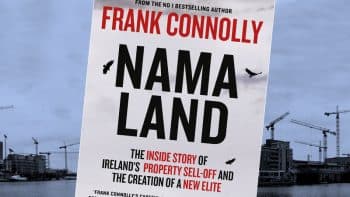
    For over a decade now, Dublin-based five-piece The Spook of the Thirteenth Lock have been fusing the folklore and musical traditions of their home city with sounds and processes from further afield, with elements of drone and post-rock sitting alongside the foundations of folk and trad across their previous pair of full-length records. In addressing and recontextualising tradition during the ‘decade of centenaries’, though, The Spook of the Thirteenth Lock have set themselves some massive tasks. In 2013, the band undertook to document and chronicle the lived experiences of the hundreds of thousands of workers denied basic human rights in the 1913 Strike and Lockout. The final product, ‘Lockout’, is a concept album in four movements, finally releasing this March via Dublin/Sapporo label Transduction, after a number of live airings in the intervening years. Having lived with their work for a while, band founder/vocalist/ lyricist Allen Blighe is content with the band’s work: “Initially it was planned as a short piece to tie into the Lockout anniversary but it grew legs. A lot happened, many were born, and many passed away in that time. We feel both happy and relieved to have created something original and ambitious, yet still quite cohesive”. Bassist/vocalist Enda Bates, himself no stranger to large-scale musical endeavours, expands on the size of the task at hand: “It was a big, complex project, both in terms of the writing and the production. We’re never stuck for ideas as a band, but the music does seem to take its own time. In the end, we’re very happy with the result and, despite the logistical demands, it was really great working with an electric-guitar orchestra”. Tackling the story of the Strike and Lockout with nuanced ramifications that lasted for generations, and that continue to reverberate in Irish society, and making of them a work for an eighteen-piece guitar orchestra was always going to be demanding on storytelling, compositional and logistical levels, according to Bates: “We knew we wanted to tell the story of the Lockout chronologically, and Allen had a list of key events he wanted to cover in the narrative. So we developed a timeline for the piece based on that, and it seemed to fall naturally into four sections. We already had some fragments of music written that seemed to fit nicely with certain events, and I had an idea for the opening in which each guitar comes in string by string and builds to a big crescendo before dropping back down to just Allen by himself. From then on we just worked through the timeline, sometimes arranging existing ideas for the orchestra, and sometimes writing new material to fit the narrative. The story of the Lockout contains moments of great hope and unity, but also plenty of violence and despair. We tried to represent this through very consonant material and this big, open C tuning on all the guitars, alongside some very dissonant rhythms and harmonies for the darker moments”. Blighe is keen to outline the serious research done on both the story’s main plot, and on concurrent events of the time, aiming to present a fuller picture of a society in turbulence. ”Much reading was done on the subject. Padraig Yeates’ excellent ‘Lockout: Dublin 1913’ was a big influence. Also, Jer O’Leary’s impassioned performances of Larkin speeches really struck a chord. There were many challenges in compressing such a complex story into an album. For example, we just didn’t have time to fit in anything on the controversy surrounding the so called “Dublin kiddies’ scheme”, where the church blocked efforts to send strikers’ children to sympathetic English families to escape the deprivation of the Lockout. Some other themes, such as those presented on ‘Suffrage’, part of the 4th movement, were important to include. This deals with the struggle for voting equality, and Markievicz’s legacy, one as chequered as many of her male contemporaries but judged more harshly for no other reason than her gender. Matching the music to the narrative was a really interesting process. In the past we’ve written the music first, and then found lyrical themes to apply. For this project we flipped that around, which was a rewarding change of approach”. There’s obviously a great resonance to the story today, over a hundred years later, with the current ideological impasse plateauing across Irish politics and working conditions getting ever tighter for countless people since the introduction of austerity. Blighe discusses the similarities: “The decade of centenaries has been an interesting time to reflect on what exactly Ireland is. Where 1916 and the war of independence were about the struggle for national sovereignty, the Lockout and the Civil War were struggles to define exactly what this nation might be. Things are different now but ‘history rarely repeats but often rhymes’. The Lockout was a struggle for a fairer deal for workers against a very hostile and callous bunch of Dublin employers headed by William Martin Murphy, head of the DUTC, the tram company and owner of the Irish Independent, who enjoyed the tacit support of the law and state. Today we have a few similar characters. Ireland since the collapse has been murky to say the least, and there are many questions about banking regulation, the wind-up of Anglo, NAMA deals such as Project Eagle, the sale of Siteserv, the write-off of debt at INM, the constant policing scandals as the disclosure tribunal continues to unfold, and most importantly, the housing crisis. There is a sense that the gains of the trade union movement are being systematically stripped back in the name of competitiveness in a system that hothouses inequality”. While that might seem grim, Blighe continues to outline what can be done domestically, and what lessons can be taken away from previous popular mobilisations. “Our fear is that if a positive left-wing movement, in the mode of the water protest movement is not generated to deal with this inequality, then we will see a slide to the far right. Irish nationalism

    Loading

    Read more

  • Posted in:

    Dáil and its legal reforms are pro-lawyer

    The circumstances of the demise of former Minister for Justice, Alan  Shatter, diverted attention from the risk of the thwarting of his reforms of the legal profession. Infamously many ministers, and their – often informal – advisers, are lawyers. Indicative of the problem is that at the last reading of the proposed reform bill, it was clear that both Fianna Fáil and Sinn Féin, the principal opposition contributors on the bill,  had nothing to contribute beyond what they had been fed by the representative bodies of the legal profession, the Law Society and Bar Council. The only person who seemed concerned by this was, ironically, the ex-Minister himself, a high-flying solicitor. Under successor minister, Frances Fitzgerald, the substance of his proposals remain intact. So far. To the detriment of all but the most pampered senior lawyers, they do not go far enough anyway. When the bar is accused of privilege and anticompetitive practices, the defence is often proffered that the fact that so many barristers are struggling and even leaving the profession proves lack of privilege and anticompetitive practices. This defence is incorrect. On the contrary, in a profession, the relative suffering of the incoming juniors is indicative of anti-competitive practices, not of their absence: both the general public and those less established in a profession pay for the profession’s obstruction of competition. Ireland shares with the UK the distinction of maintaining the highest legal costs in Europe, and a similar system of practices, including separate functions for barrister and solicitor, the real pressure to hire three lawyers in the higher courts, the much-questioned institution of Senior Counsel, and a system of legal-cost adjudication (formerly called ‘taxation’) in which the question of whether a lawyer has overcharged you is decided in a process which seems designed to punish you severely for challenging the lawyer’s bill. Obstacles to barrister right of establishment and to price competition Two key obstacles to barrister competition are restrictions on advertising, particularly of fees, and prohibition of direct access to barristers by clients (approach must be done through a solicitor). These obstacles have a powerful twofold economic effect in favour of established barristers: first, they obstruct new entrants from establishing themselves, getting market share and competing with the incumbents; second, they inhibit what economists call price competition: the system inhibits the client’s ‘shopping around’ for the best-value barrister for their needs, and haggling for fees, and thus bringing normal market forces to bear for lower fees. These two obstacles are of the Bar Council’s own making and it vehemently resists their repeal, desite the issuance of an infringement ‘formal notice’ by the EU Commission in November 2013. Theoretically the solicitor can do this ‘shopping around’ for the client. But there are three major problems with this. Firstly, the solicitor is not necessarily going to take this ‘shopping’ seriously enough as her own money is not on the line. Secondly, as this shopping takes the solicitor’s time, the solicitor can bill for it; if she does not, she is not incentivised to work thoroughly on it. Thirdly, there can be a fee-splitting practice where solicitor and barrister, while having actually billed the client distinctly, aggregate their actual received fees and split them. Fee-splitting is a form of kickback to the solicitor on the barrister’s fees, and actually puts price competition in reverse by perversely incentivising the solicitor to use a more expensive barrister. The barrister’s code of practice is totally silent on any such kickbacks; it does not prohibit them or even require that the client be notified of them, indeed it does not mention  them at all. Investigation by the Irish Competition Authority The Irish Competition Authority investigated the Irish legal profession and in a final report published in 2006, concluded that the legal profession was “in need of serious reform”, and “permeated with unnecessary and disproportionate restrictions on competition”. It set a target date of 2008 for the implementation of its many recommendations. As of 2014, the most important recommendations have not been implemented. Troika pressure and glacial government response The Irish government was under pressure from the Troika to reform the legal system and to do something about excessive legal fees. The first draft of the Legal Services Bill was published in 2011, already three years after the Competition Authority’s target date for implemented reforms. Since then, the draft bill has sat on the shelf for a further three years. In November 2013, the European Commission initiated an infringement procedure against Ireland (reference NIF 2013/2192) for continuing to allow the Bar Council to maintain the restrictions it has on advertising. The first draft of the bill had many problematic provisions, some of which have removed or improved in the new draft of the bill. Key obstacles to barrister competition not removed The draft seems to be pretending that it is implementing direct access to barristers, with a heading ‘code not to prevent direct access to barrister’. When you look closely, it is only implementing direct access in ‘non-contentious’ cases, that is, about 2% of barristers’ work. The bill does not mandate effective freedom of advertising for barristers at all. Flagrantly unjust legal cost adjudication regime The current draft of the Bill codifies and slightly modifies an existing 18th-century practice of financially flogging those who challenge lawyer’s bills: if you challenge your own lawyer’s bill and she is found to have overcharged by anything less than 15%, you have to pay an 8% ‘stamp duty’ on that bill and, additionally, the costs of the hearing. An even worse current practice is left unmentioned and unchanged by the Bill: you have to pay the stamp duty of 8%, regardless of whether or how much you have been overcharged, when you challenge the bill of a lawyer who is not your own (which happens only when you have to pay the costs of the other side). This system is in flagrant violation of natural justice, equality before the law, and arguably the constitution. In Ireland, unlike for

    Loading

    Read more

  • Posted in:

    Dr Pat and Harassment at the Museum

    ‘Gogglebox’ added a new face to its ever-deepening stable of television viewers last October. Pat Wallace, alongside wife Siobhan, joined TV3’s Irish rendering of BBC’s extremely popular vicarious Big Brother-style television inversion. Before then Dr Pat Wallace was notable mostly for his heroic record on the controversial Wood Quay archaeological dig from 1974 when speaking truth to power he took over the excavations at the tender age of 25, an honour he described variably as like “winning a £2 million scholarship” and a “sink or swim situation”. The son of a blacksmith from Askeaton in Limerick, Wallace had earned a scholarship to University College Galway after achieving the highest Leaving Cert results in Limerick for 1966. He later became Director of the National Museum and was a competent and articulate exponent of the archaeological agenda, standing up robustly against other national bodies for the sites in Tara, Woodstown and Carrickmines, in the teeth of aggressive road plans, for example. Hailing from a staunchly Republican background, Wallace was long a supporter of Fianna Fáil and laid the praise for the completion of a new campus in Collins Barracks at the feet of the Taoiseach of the day, Bertie Ahern. On the day of the opening of the Museum at Collins’ Barracks, however, the IMPACT trade union orchestrated a one-day strike which had the effect of keeping the Taoiseach away from the gala, as he refused to cross the picket in his own constituency of Dublin Central. The move to the Barracks had cost upwards of £30m, attracting scorn from some within the organisation who suggested that the premises itself was taking precedence over the artefacts it was ostensibly in service to. Wallace retired in 2012 after 24 years as Head of the National Museum. Wallace’s name came up again in a November 2017 postscript to a blog post originally uploaded in February 2017. Here, he was implicated as presiding over a “toxic” and “hierarchal” culture of “privilege” in his time as Director of the National Museum of Ireland by archaeologist and blogger Adrienne Corless, who described not only being bullied by Wallace but being sexually harassed on several occasions by her immediate superior, who she now felt ready to identify as Andy Halpin. Halpin, she claims, had touched her inappropriately on several occasions while she was working under him at the museum. Repeated informal complaints to HR had had little effect, as following only minor castigations Halpin would continue his harassment of her even having been moved on to other duties, according to the Irish Independent. When Corless finally initiated a formal complaint against Halpin, he confessed that he viewed her as a “foil for his fantasies”. On one occasion after seeing some “tall school girls” and wanting to “prolong the fantasy” he pushed her against a door to “measure [her] height”. Corless describes how she waited impatiently for news of Halpin’s admonishment at the hands of Museum management, only to be told upon phoning the HR department herself simply that they “had implemented the disciplinary code”. HR would not speak further as to what in practice this implied, and so it fell to Corless herself to look up the code and determine that, in fact, “he [had] received the softest possible reprimand”. Corless feels that Wallace knew about Andy Halpin’s behaviour, as it had continued unabated with other women before and after her experience with him, but had “thought that the Civil Service systems in place would take care of the problem of Mr. Halpin”, in spite of her “foolish” hope that Wallace “would say or do more”. In fact, she recalls an instance after she reported Halpin to HR where Wallace allegedly “chuckled to another senior manager” that he never thought “Halpin would have had it in him”, as if he saw her formal complaint against Halpin as a ‘badge of honour’. Some time after the HR complaint, Corless was offered Halpin’s former position, although Halpin was retained by the museum in a different capacity. Now without a department, Corless came to operate directly under Pat Wallace himself, whereupon his abusive and “bullying” behaviour towards her began to take shape. Wallace’s maltreatment of Corless is exemplified in an episode she relates in her blog post of February 12 2017: “At a social occasion, in front of horrified friends from outside the organisation [the National Museum of Ireland], he told my partner in a seemingly jovial way that he’d better not get me pregnant again”. This came following an incident in which Corless phoned to discuss upcoming maternity leave, and was “angrily” lambasted by Wallace who told her it was not his fault she was “up the pole”. This attitude appears to have been serially manifest in Wallace’s dealings with subordinates within the National Museum. Corless describes how “Higher Managers would pale before visitations of [Wallace]”, and how the “entire organisation” remained in a state of constant fear and anxiety over his appearances. In a more recent blog post in January of this year, hosted on the blog site of Grace Dyas who last year initiated the campaign against Michael Colgan’s harassment of women during his tenure as Director of the Gate Theatre, Corless relates the account of a Danish undergraduate student interning at the National Museum. Nina Vodstrup Andersen similarly alleges she experienced sexual harassment at the hands of Andy Halpin, as well as verbal harassment by other, unnamed staff members. Among them was Director Wallace himself, who she claims cornered her in a dim corridor one day and, “in a tone of voice laden with sexual glee”, accused her of having an affair with her supervisor, commenting that “You Scandinavians are all the same” before walking off. Andersen left the museum in 2008. Wallace claimed that his departure from the directorship of the National Museum in 2012 was a result of being effectively forced out by the realities of pension and salary cuts implemented across the board of the public sector in response to the financial crisis.

    Loading

    Read more

  • Posted in:

    Gonzagrievance

    Revelations of sex abuse in all-male private schools in past decades have been powerfully conveyed across the Irish media. That barbarism should not, however, deflect attention from other enduring problems. I believe grave damage is still being done to the development of boys in ostensibly civilised institutions. Moreover, unequal educational provision maintains widening inequalities, underpinning a pervasive competitive individualism. I draw on painful memories of my own educational background in Gonzaga College SJ (Society of Jesus ie Jesuit) to provide a critique of private, all-male education. This is a personal account and others will have different perspectives. In his ‘Portrait of the Artist as a Young Man’, James Joyce’s boyhood character disparages children from non-private schools as “Mickey Muck and Paddy Stink”. We have an enduring educational snobbery. Many a privately-schooled chap still dons the proverbial old school tie. By the 1920s, one of the leading Dublin Catholic secondary schools for boys of its time, O’Connell School on Richmond Street, recommended its pupils in the following terms: “Your ‘Richmond Street’ boy makes a good official. In the first place he possesses the necessary academic qualifications to place him high on the examination lists. He has, in addition, certain qualities which make him a good colleague. This is an essential point. However clever an official he may be, he has to pull with the team …”. The abiding ambition of most all-male private schools remains not only to produce good examination results, but also to develop a cast of mind disposed to “pull with the team”, rather than swim against the tide. Jesuit institutions have led the way in this regard. Since independence a disproportionate number of high office holders in this state have been educated in Jesuit schools, especially Clongowes Wood SJ in Kildare, Belvedere College SJ in Dublin, and after its foundation in 1950, my own alma mater Gonzaga College SJ, also in Dublin. All three of these are all-male and private, while the first is also a boarding school. The appointment of John Marcus O’Sullivan as Minister for Education in 1926 marked a tipping point such that non-combative Clongownians in the Cabinet outnumbered veterans of the 1916 Rising. Simon Coveney and Richard Bruton continue what is a long line of Clongownians, though the former was expelled, seemingly for underage drinking. This elite education is now more likely to produce managerial material for a thrusting private sector than diligent civil servants. But in these academic hothouses, creativity is still conflated with rebelliousness. After school, positions of influence, and wealth generation, are preserved by ‘old boy’ networks. Pressure is felt in middleclass families to reproduce this status in their sons and, to a lesser extent, daughters. A dominant Catholicism permitted horrific abuse against an older generation in Ireland. Nonetheless, professional lawyers applying Thomistic principles built a State founded on principles of universal justice. For good, and ill, Bunreacht na hEireann, our Constitution, is promulgated “in the name of the Holy Trinity”. The 1960s witnessed the advent of an era of unprecedented judicial activism. By then many of our judges were drawn from all-male, Catholic, especially Jesuit, schools. They ‘discovered’ “Unenumerated Rights”, based on a ‘Catholic’ Natural Law interpretation of the Constitution, an expansive approach the Court has since grown wary of. Moreover, Fine Gael’s ‘Towards a Just Society’ document, conceived by Declan Costello in the 1960s, aligned closely with Catholic social teaching after Vatican II, contemplating a society built on socialist principles, including state ownership of banks. There are still Jesuits, such as the visionary Father Peter McVerry, who maintain a missionary vocation for social justice. But arguments for a fair distribution of wealth did not figure prominently during my own ‘Jesuit’ education, where charitable activities tended to be characterised by noblesse oblige, and an assumption that it was valuable to witness how ‘the other half’ lived. Class divisions were, if anything, upheld by an awareness of a pronounced economic fault line. The 1990s was a peculiar era to be a teenager as Irish society embraced the conformities and staid hypocrisies, of 1950s America, which the beat poet Allen Ginsberg decried in his ‘Howl’ (1954). He asked: “What sphinx of cement and aluminium bashed open their skulls and ate up their brains and imagination?”. In both, a hypocritical conformity was maintained. We abided: “with dreams, with drugs, with waking nightmares, alcohol and cock and endless balls”. Binge drinking, and later bad hashish, were some of our preferred responses to a creeping sense of purposelessness. We stared agog at the fall of the Berlin Wall, and encountered foggy notions of an End of History. A pervasive popular culture, beholden to Mammon, including the exotic promise of sex in the sun played out on Australian soap operas, leached away instincts towards radical politics. The Leaving Certificate-obsessed and rugbybesotted Gonzaga I encountered demanded a dull conformity that did not give room for progressive post-Catholic ideas to flourish. Free-ranging speculation of a sort associated with the intellectual, or poet, was widely scorned. We passed from strangling religiosity to Neoliberal vacancy without coming up for breath. This has hobbled some of our best minds. Well before revelations of serious sexual misconduct, a Catholic ancien regime was already creaking, their pronouncements at odds with an upwardly-mobile generation of businessmen, who really ruled the roost. The emerging financial and technological sectors also boosted the professional classes, many of whose earnings spiralled. Gonzaga College SJ is still among the leading all-male secondary schools in the country, claiming a thoroughbred stable of academics, lawyers, and politicians such as Anthony Clare, Michael McDowell, and Peter Sutherland, the socalled “father of globalisation”. A sense of meritocracy was based on an entrance exam and Leaving Certificate results that often bred a preening elitism, without consideration of the worth of either. In my time, shades of Eton and Oxford cohabited with bog-Irish institutionalism, dissolving individuality into a corporate body toughened on rugby, and kept in check by cruel humour. Endowed with superficial polish, for many, meritocracy provided a fast train to plutocracy.

    Loading

    Read more