Archives

OK

Random entry RSS

Loading

  • Posted in:

    China, daily, everywhere

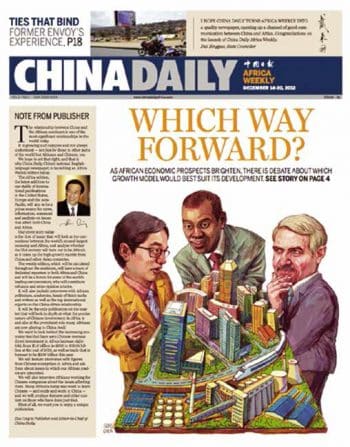
    I didn’t expect to find the China Daily in a beach town on the Algarve but then maybe that’s a logical place to find it, given the large population of expats and holidaying bureaucrats there. The same newspaper (its European edition) is also available for free in the very busy transfer lounges of Dubai and Abu Dhabi airports. And there are suggestions of a distribution deal through western outlets of international coffee chains: you can already pick the China Daily up for free in Chinese outlets of Costa Coffee and Starbucks. It’s unfair that China avails of western free markets to distribute propaganda (the China Daily and other English-language titles like Global Times are stateowned and supervised by the Central Propaganda Bureau of the Chinese Communist Party (CCP), while the websites of every major western media outlet are blocked in China. You can forget seeking to purchase any major news magazine or newspaper at a news kiosk in Beijing (although some publications are available in international hotel chains). Meanwhile, in late May China vetoed an application from the Committee to Protect Journalists for special consultative status with the Economic and Social Council of the UN. Even while it has no intention of opening up its own media market – the opposite in fact has been the case in the past year in particular – China has been taking advantage of the precarious financial condition of western media to force a diet of propaganda and its version of events. A bunch of English language newspapers and magazines published in Beijing for global audiences are produced with no profit criteria. The China Daily and the Global Times are published with little or no advertising but lots of content disparaging enemies like the Dalai Lama and Taiwan independence campaigners. Anyone who’s watched China Central TV, also known as CCTV, will wait for several minutes before realising it’s not CNN – the set livery and the use of western anchors makes it look like an American production, clearly inspired by western television news channels. That’s no coincidence given CCTV has hired a lot of talent from down-sizing western media outlets and also broadcasts from American studios. Unsurprisingly, the production value and design of Chinese state media are increasingly sophisticated and -like CCTV – are free. And if it’s the only English-language media outlet –and it is in many places, including Beijing (online and in print) and many Asian and African capitals – you find yourself, over time, believing (or at least not questioning) its content. That at least was my experience recently when travelling from western China through central Asia with the China Daily the only reliable, or at least reliably available, source of news. Lately the China Daily has started showing up inside, as well as alongside, mainstream western media. As well as distributing the papers free in China and around the world, the Chinese Propaganda ministry is also paying respected western media to insert the paper into their own pages. And many publications, including Britain’s Daily Telegraph and Australia’s Fairfax titles, distribute the China Daily as an insert because they’re paid to do so. While piggy-backing on respected but hardup western titles, China is also barracking western media that do not pursue its line. Chinese embassies have been instructed to pursue stories in foreign media that displease Beijing. Particular targets include coverage of Tibet, Taiwan and China’s current construction of artificial islands in disputed waters of the South China Sea. Getting freesheets into the hands of readers around the world is one arm of China’s propaganda strategy. Another arm is the country’s diplomatic corps. The head of the foreign ministry set the tone recently at a press conference in Ottawa where he berated a Canadian reporter for asking him about human rights. Foreign Minister Wang Yi found the question “full of prejudice against China” and “irresponsible” and declined to answer. Rather relations between Canada and China had entered a “new golden age” – a stock phrase used to describe relations with lots of western governments which, keen on Chinese investment, have become increasingly less strident critics of the rule of the Chinese Communist Party. Rather than rebutting coverage through discussion and debate, the Chinese foreign ministry and the Central Propaganda Bureau of the Chinese Communist Party (CCP) have also taken to hounding and courting western media headquarters. Paid-for trips to Tibet, chaperoned by officials, have taken the place of access to the region for China-based reporters, who remain barred from the region. A long-favourite tactic, regularly practised by Chinese authorities, is threatening the visas of reporters based in China. These have to be renewed annually, at the pleasure of Beijing authorities who late last year declined to renew the visa of a long-term French correspondent in Beijing because of articles critical of China’s management of its Uyghur muslim community. China ranked 176th out of 180 countries surveyed by the Reporters Without Borders Press Freedom Index, but have tightened further since Xi Jinping started to remind the Chinese media that their role is not to break news stories but to spread the word of the Communist Party. While Beijing is now putting its views into western media through insert deals for the China Daily, it isn’t reciprocal to printing alternative views. I offered several times to pen a response to opinion pieces by Chinese academics on several topics but was declined with polite silence. American diplomats visiting Beijing regularly bring up the harassment of foreign reporters with their Chinese counterparts – the issue has become important for Secretary of State John Kerry. Elsewhere US trade officials have warned China that blocking US news websites breaches China’s WTO membership commitments. While the US has long run its own propaganda operations like the Voice of America (it has a bureau in Beijing but its broadcasts are jammed in China) it has allowed free reporting access to Chinese journalists –and it has allowed CCTV to broadcast globally from its own US studios, something that’s unthinkable

    Loading

    Read more

  • Posted in:

    When home is Homs

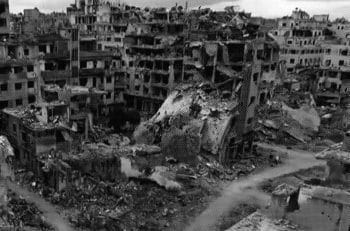
    “Everybody has lived this war”, writes Marwa Al-Sabouni at the beginning of her remarkable book, ‘The Battle for Home – the memoir of a Syrian architect’, which details in a singular voice how this once tolerant and beautiful country in the Middle East rapidly descended into murderous chaos after the Arab Uprisings in 2011. Al-Sabouni offers a unique perspective on the “nightmare of animal carnage” that Syria has endured by documenting her life as both a citizen and working architect in her home town of Homs. She examines how unthinking architecture and unscrupulous urban planning contributed to the catastrophic collapse of many communities, and asks what role these professions can play in healing deep sectarian wounds in the future. Homs is Syria’s third largest city, with a pre-war population similar to Greater Dublin’s, and it is here Al-Sabouni runs her private architectural studio. Even as the ‘Arab Spring’ descended into civil war in Syria, and grew savage, Al-Sabouni refused to leave, choosing to remain in the city with her husband and two young children. She details living under such conditions: subsistence with a symphony of bombs in the background (“every roaring sound, every stench of burning”) while she questions how corruption, cronyism, and thickheaded bureaucracy – all deeply embedded in Syrian society long before the war – helped fan the flames of her smouldering city. “Buildings do not lie to us: they tell the truth without taking sides”, she asserts, lamenting how a diminished sense of place and social cohesion were significant drivers in the disintegration of Homs. Once famous for its temperate environment and jasmine-scented breezes, Homs’s idyllic terrain was polluted long before the war by wrongheaded, grubby industrial planning. Although it is estimated that sixty per cent of cities like Homs have been destroyed in the conflict, a housing problem predated the urban dilapidation of city warfare. According to the 2010 Census, unmet demand for homes stood at 1.5million units, while nine million people (approximately fifty per cent of the total population) was living in slums and informal housing, despite 23 per cent of housing units being registered as vacant. According to al-Sabouni, most citizens are desperate for a place to call their own, but it is an almost impossible dream in their society due to crooked officialdom. In the past, Syrians would willingly work themselves to death just to afford a property; now death comes to their door as a consequence of a proxy war, which leaves little left to strive for anyway. Al-Sabouni deplores how it was the governor and mayoral offices that decided the shape of the city, not architects nor planners. Nonetheless, the city still possesses some remarkable architectural gems – the Ottoman mosque of Khalid Ibn Al-Walid, with its typical feature of Islamic architecture in the Levant Alablaq (black and white stripes). The mosque contained the priceless minbar – pulpit – ordered by the great Muslim leader Saladin, though it has been looted in the conflict. The city is also home to the Church of St Mary of the Holy Belt, supposedly the oldest church ever built in AD 59 (though rebuilt in 1852). The church reputedly houses the relic from which it takes its name: the belt of the Virgin Mary, now at a secret location for safety. Homs is also the site of the historic castle Krak des Chevaliers, a UNESCO world heritage spot which was held by the Knights Hospiteller during the 12/13th century Crusades. With these buildings, it is easy to understand how Syria was known as the palimpsest of civilisation; that Christian bells and the Muslim calls to prayers often rang through the streets at the same time, though Al-Sabouni notes “neither mosque nor church made a display of its importance”. The smoke has dissipated somewhat in Syria since the ceasefire late last year and there are some slivers of optimism for a diplomatic solution to the conflict. After two years of being unable to complete any work, Al-Sabouni now teaches at a University in Hama, a nearby city to Homs. She still holds on to a fierce anger, saying in a recent interview: “too many people died, like birds. You’d be walking in the street and someone would fall next too you”. The book contains some disputable points (she rejects socialism yet wants similar houses for both the rich and poor; she blames urban zoning more than religion for sectarian division and hatred; Al-Sabouni’s outlook is certainly conservative, with a small ‘c’). However, with a PhD in Islamic Architecture, she adumbrates incisive insights on the built environment. She rightly rejects the default modern mindset for Middle Eastern countries, where it seems design choice must be either starchitect-led hubris that has no meaning and ostensibly dropped from the sky (especially found in the Gulf states), or cliched, pseudo-Islamic buildings. Confusion on what constitutes traditional Islamic architecture and how modernism has fed into the Arab inferiority complex is a particularly strong theme of the book. Marwa Al-Sabouni’s 34-year-old eyes have seen sights most of us will never encounter, and she writes deeply on how the destruction of a home can relate to the destruction of one’s soul (how would we react to losing everything?). But her message is still one of hope, and at the end of this small jewel of a book it is easy to agree with the philosopher Roger Scruton (who has written the foreword) that Al-Sabouni is a profound thinker and “one of the most remarkable people I have never met”. Now, who will listen to her? The UN and local NGOs trying to fix things in Syria while the ceasefire holds might be wise to listen. If her outlook is not quite doveish considering everything she has witnessed, then Al-Sabouni’s book is best seen as an olive branch. Review by Niall McGarrigle

    Loading

    Read more

  • Posted in:

    US Zeitgeist shifts to isolationism

    “My foreign policy is ‘Don’t do stupid shit’”, Barack Obama said to the White House press corps on board Air Force One in 2014. So the New York Times’ Mark Landler, who was there, tells us in a recent illuminating book on the contrasting foreign policy approaches of Obama and Hillary Clinton as the US adjusts to a world in which it is no longer the hegemon it was for the quarter century since the collapse of the USSR in 1991.* Having been Obama’s rival for the 2008 Democratic presidential nomination, Hillary Clinton was in charge of his foreign policy as Secretary of State during Obama’s first term, and she now looks like succeeding him as President unless the Republican Donald Trump can stop her. We are all likely to be affected over the next four years by whichever of this duo eventually reaches the White House. The “stupid shit” Obama was referring to in 2014 was the pressure he was then under to get rid of the Assad regime in Syria, to escalate tension with Russia over Ukraine and to placate the Zionist Israeli lobby by abandoning his efforts to get a nuclear deal with Iran. Hillary Clinton was on the opposite side on each of these, and various other, foreign policy issues. Back in 2002 Obama, then a littleknown Illinois state senator, told a rally against George W Bush’s impending Iraq war, “I am not opposed to all wars. I am opposed to dumb wars”. By contrast, a week later Hillary Clinton, then also a senator, said she voted “with conviction” in favour of Bush’s invasion of Iraq. When Secretary of State in 2011, Hillary Clinton was the principal supporter in Obama’s Cabinet of Britain’s David Cameron and France’s Nicolas Sarkozy as they pushed for a total assault on Colonel Gadaffi’s regime in Libya. Obama then watched in consternation as post- Gadaffi Libya descended into a failed state. Regret at having given in to the hawkish Hillary on Libya undoubtedly influenced Obama in resisting pressure to follow a similar course in Syria. To quote Landler’s book: “Obama stands for those in America’s ruling circles who believe the US resorts too readily to military force to defend its interests, that American intevention in other countries usually ends in misery, and that the US would be well-served by defining its interests more narrowly than it has for most of the post-World War 2 era. Counterposed to that view are those, like Hillary Clinton, who believe that the calculated use of military power is vital to defending national interests, that American intervention does more good than harm and that America’s writ rightfully reaches, as George W Bush once declared, into ‘any dark corner of the world’”. Clinton and Obama embody competing visions of America’s role in the world. His vision is restrained, inward looking, radical in its acknowledgement of limits. Hers is hard-edged, hawkish and unabashedly old-fashioned. Hillary Clinton gets on well with America’s generals. They in turn are in and out of the military- industrial complex, which can never get enough orders for military hardware, whose share prices rocket when international tension increases, and about whose malign influence on US foreign policy former General Dwight D Eisenhower – who coined the term “militaryindustrial complex” – warned in his farewell address as Republican President in 1961. Of course Obama and Hillary Clinton are agreed on certain things. One is the European Union. When Obama came to London recently to tell the British public that they should vote against ‘Brexit’ and stay in the EU, he was voicing long-standing Democratic Party policy subscribed to wholeheartedly by Clinton: support of globalism in economic policy and support of the EU as America’s collective junior partner in foreign policy – with the British Government as America’s reliable voice in the EU. Many people do not know that the EU was largely an American creation, a spin-off of the Cold War, and that supranational integration was pushed by the US and its allies in the 1950s and later to provide an economic underpinning for NATO in Europe. In 1947 the two Houses of the US Congress resolved that “Congress favours the creation of a United States of Europe”. That same year, American-Marshall- Plan economic aid to post-War Western Europe to head off the threat of communism, was premised on the recipients supporting economic and political integration. In 1948 the American Committee on a United Europe was established. For years this body channelled CIA money to the European Movement, which was then and later the principal lobby group for supranational EU integration. In 1949 the USA wanted a rearmed Germany inside NATO when that military alliance was founded. This greatly alarmed France, which had been occupied by Germany just a few years before. The Frenchman Jean Monnet’s solution was the European Coal and Steel Community, which placed those key industries under a supranational authority as ”the first step in the federation of Europe”, to quote the accompanying Schuman Declaration. Monnet was America’s man in all this. In 1961 America’s President Kennedy succeeded in pressing British Prime Minister Harold Macmillan to apply to join the then EEC, offering Britain guided missiles in return so that she could continue as the world’s third thermonuclear power. Although Britain had already developed the H-bomb, it had no independent means of delivering it to possible targets. In 1965 a US State Department memo advised the Brussels Commission Vice-President at that time, Robert Marjolin, to pursue a common European currency by stealth. It recommended suppressing debate until the point at which “adoption of such proposals would become virtually inescapable”. Mainstream US Government policy as mediated through the State Department has for years backed the euro-currency for political reasons.  Successive British Governments have acted in effect as America’s voice inside the EU. This theme is central to the Anglo-American “special relationship”. A lot is therefore riding for official America on Britain remaining a member of the EU. Obama and Hillary Clinton are at

    Loading

    Read more

  • Posted in:

    Inconvenient then and now

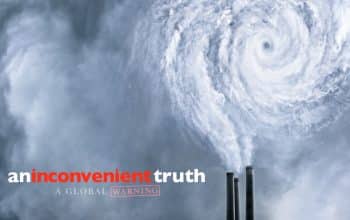
    How’s this for a deeply unpromising script idea: making a movie about a failed politician trailing around the world presenting wonkish slide shows on his laptop to mostly small audiences about, of all things, climate change? It hardly helped that the ex-politician in question, former US vice-president Al Gore was reviled across the political spectrum. Democrat supporters blamed him for gifting the White House to George W Bush with his incompetent run and premature concession in Florida in November 2000, while Republicans hated him mostly for not being a Republican. It might have been only a slight overstatement to call Gore a pariah in the mid-2000s. For him to then choose to relaunch into public life by campaigning on one of the few topics even more unpopular than himself seemed to underpin his tag as a serial loser. The film that emerged from Gore’s travelling slideshow, ‘An Inconvenient Truth’, didn’t exactly blow Hollywood away either – at least not at first. Director David Guggenheim recalled that before its debut at the Sundance Festival in June 2006, they brought the film reel to a major studio for a preview, which Gore attended. “I remember listening to one of them snore, then waking up awkwardly when the lights came up”, said Guggenheim. “I saw the executives going into another room and huddling, then coming back and the head of the studio saying to us: “We do not believe that this will ever have a theatrical distribution. We do not believe that anyone will pay to have a babysitter come so that they can go see this movie. Stop dreaming, this movie will never have a theatrical release”. And yet. The film became a critical success, landing two Oscars along the way and grossing over $24m in the US, small beer by Hollywood standards, yet one of the most commercially successful documentaries of all time. More importantly, it reignited the moribund environmental movement in the US after years of Bush-era denialism. Globally, it helped redefine ‘environmentalism’ as being a far broader church than that occupied by traditional environmentalists. Along the way, it helped to squarely frame climate change as the overarching ecological – and existential – crisis of the 21st century. Watching ‘An Inconvenient Truth’ was a deeply personal, emotionally wrenching experience for many people back in 2006. I know because I was one of them. Climate change had long been lurking in the shadows of public consciousness, poorly understood, frequently misrepresented and, as an issue, desperately short of passionate, persuasive advocates. “Men occasionally stumble over the truth”, Winston Churchill drily noted, “but most of them pick themselves up and hurry off as if nothing ever happened”. My first time to stumble over the deeply inconvenient reality of climate change in a world of ever-escalating human impacts had happened in the first two or three years of the 2000s, as I began to read my way into the subject, initially as an intellectual curiosity. The more I researched, the greater grew my sense of personal unease. Yet all around, life went on as before. Not a single person in my work, family or social circle at that time shared this growing sense of dread. It’s neither pleasant nor healthy to remain in a constant state of high anxiety, especially when all around you seem perfectly relaxed. So, despite being fairly well informed, I too began to relax, to compartmentalise my anxiety and box off my concerns. Though unaware at the time, I was probably experiencing what psychologists call the bystander effect: surely if things were really as serious as all that, other people would be alarmed too? But they weren’t. The invisibility of the issue in the media was both baffling and oddly reassuring. If there really was a massive story here, wouldn’t the media be all over it by now? The bystander effect hobbles us in three ways: first, there is a lack of sense that it’s anyone’s job in particular to intervene, so we’re off the hook as individuals for failing to act. Second, we all engage in social referencing, subtly aligning our actions with those around us; if they aren’t bothered, why should I be? Finally, few of us are comfortable sticking our necks out, especially if the issue seems complex or contested, so we mostly stay schtum. By mid-2006 my incessant low-level ecological panic was showing signs of finally receding. Watching ‘An Inconvenient Truth’ in the cinema changed all that. It was an environmental epiphany – that electrifying moment when everything I’d been reading and trying to process emotionally for several years came crashing into focus. It was like waking from a dream into a world that looked familiar, yet felt changed, utterly and beyond recognition. I knew in that moment that the days of being an eco-bystander were over. For me, the stand-out moment from the film was when Gore produced a chart on a giant screen tracking the uncanny lock-step relationship between CO2 levels and global temperatures stretching back through the millennia. By 2005, the year of filming, global atmospheric CO2 levels were approaching 380 ppm (parts per million), the highest level in at least 800,000 years. In a sleek piece of visual theatre, Gore then climbed aboard a cherry-picker and began to ascend, all the while tracking the graph showing CO2 levels 50 years into a business-as-usual future as they spiralled out of sight. Allowing such a future to come to pass was, he argued, “deeply unethical”. He could have added: suicidal. Today, more than one fifth of the way into that momentous half-century, the global CO2 figure has smashed through the 400ppm level, and continues to climb at the rate of some 3ppm every year, taking us rapidly into a completely new climatic era, the anthropocene. “Future generations may well have occasion to ask themselves: what were our parents thinking? Why didn’t they wake up when they had a chance? We have to hear that question from them. Now”. These were the sombre remarks

    Loading

    Read more

  • Posted in:

    Theatre without actors or action

    The first ever World Humanitarian Summit, held in Istanbul last month, is symptomatic of everything that is wrong with our world and our politics today. It brought the global political theatre, which has replaced real action at the UN in recent years, to new lows. These lows are all the more reprehensible when the lives of millions of people, caught up in humanitarian emergencies of all types, depended on the success of this Summit. Such a summit has been long overdue and will now become a regular event. It was the first time that the ‘humanitarian eco-system’ – the plethora of agencies involved in the burgeoning humanitarian industry, came together to examine their mission and role. The system is almost at breaking point, with the scale of need outweighing the funding and the capacity made available. Climate change and continued protracted conflict are destroying lives and economies. This year alone, El Niño, compounded by a spike in global temperatures due to climate change, has resulted in 50 million people right down along the east coast of Africa being in need of food aid. The UN Sustainable Development Goals cannot be reached if such calamities persist. Despite an 18-month lead-in process, and the substantial efforts of the humanitarian community, the Summit produced no outcome of substance. All that resulted was a weak communique, rich in hyperbole, but devoid of political reality. Most world leaders declined the invitation to attend. The failure of the G7 nations, particularly the permanent members of the UN Security Council, to attend the Summit meant no serious political discussion could take place. Angela Merkel was the only G7 leader who made it. The ongoing widespread violations of international humanitarian law in conflict zones, such as Syria, and the failure of countries to honour their responsibilities to take in refugees were the two big elephants in the room at the Summit. The choice of Turkey to host this Summit predated the crisis now unfolding on Europe’s borders. The location, and the EU’s seemingly unending migration crisis formed a critical backdrop. Yet none of this political context was even discussed. Médecins Sans Frontières (MSF) called the event a “fig leaf of good intentions”. They refused to go, given the controversy about the EU-Turkey migration deal and the ongoing targeting of their hospitals in conflict zones. Last year 75 MSF hospitals were bombed, killing and injuring hundreds of civilians, including their staff. However, the Summit did produce some small shifts, which will have an impact on the delivery of humanitarian relief, if implemented. One of these was the so-called ‘grand bargain’ which recognises the importance of international actors working together with smaller, national organisations in crisis situations. The irony of most current humanitarian responses is that the arrival of major international agencies often crowds out the local ones. This makes them more vulnerable to future crises and more dependent on external support. There were some important statements about the need to increase funding and to make it more flexible. The reality is that the humanitarian aid system is at breaking point. It is being overwhelmed, and the Summit did nothing to stem this trend. This is because there are simply too many crises; too many people displaced for too long who cannot integrate, cannot live lives without dependency on humanitarian aid; and the very high cost of sustaining people while wars continue. The resolution requires sustained political will and attention. This was not evident at the Summit. Ireland was represented at the Summit by President Higgins rather than a member of the Government. Perhaps this was a matter of timing, given that the Minister of State for Development Aid, Joe McHugh, was only appointed the week before the Summit. President Higgins made a big impact, if not on the outcome, certainly on the tone of the debate. His interventions at the Summit stood out because he chose to focus specifically on the many issues which were not up for discussion. These included the root causes of the growing humanitarian crisis globally, the need for reform of the international political system, and the urgency of a new ‘paradigm’ or economic order. His message resonated at the Summit. For those unfamiliar with the constitutional role of the President in Irish politics, including the international media, it may have appeared that the Irish Government had suddenly undergone a major conversion. Ironically, the a-political President Higgins got closer to addressing the politics of the situation than any other leader at the Summit. By Lorna Gold

    Loading

    Read more

  • Posted in:

    Ireland’s first frack

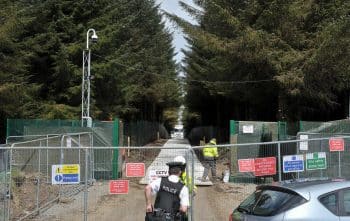
    On Tuesday 17th May exploratory drilling for oil began in Woodburn Forest, near Carrickfergus, County Antrim, the first adventure of fracking on this island. There are serious concerns about a lack of transparency and democracy as the project comes to life, despite an official moratorium on fracking. Campaigners point to a litany of governance and regulatory failures surrounding the scheme. Oil exploration has been allowed to proceed on publicly-owned land without planning permission, public consultation, due-diligence checks or an assessment of environmental impact. The UK-based energy company InfraStrata expects to find oil at Woodburn. It was granted a petroleum exploration licence for the Larne and Lough Neagh basin in March 2011 which was renewed in March 2016. This licence area stretches 520sq km across north-east Northern Ireland. It encompasses a site at Islandmagee in Antrim, where the company is constructing an underground gas-storage facility. Should InfraStrata find oil, it will secure the right to extract hydrocarbons across the entire licence area without ever having been subject to public scrutiny. The DUP’s finance spokesperson, Sammy Wilson has colourfully suggested he’d like to see “as much oil in Carrickfergus as there is in Texas”. Neither the DUP’s nor Sinn Féin’s MLAs seem exercised by the issue. Once oil or gas is found, any attempt by the Northern Irish executive to halt drilling would allow InfraStrata to make claims for compensation for loss of profits. In a similar ongoing case concerning the fracking company Tamboran Resources in County Fermanagh, the company is suing the state for compensation of up to £3bn. Members of the Stop the Drill campaign have maintained a vigil at the InfraStrata site in Woodburn, since February. They are highlighting the democratic deficit in the project, as well as the danger that drilling poses to the local community’s water supply. The drill rig is situated on land leased to the company by the public water utility, Northern Irish Water. The fifty-year agreement between Northern Irish Water and InfraStrata gives the company permission to re-inject petroleum, water and any other fluids into the ground at the site. It is just 300 metres from a reservoir that supplies water to 130,000 homes in Carrickfergus and Belfast. Situating the well on publicly owned land has meant that InfraStrata does not need to negotiate consent from local landowners. Legislation provides that if the company decided to proceed with the production phase, it can acquire the land without landowner’s authorisation. The use of public land to facilitate contentious energy projects over community objections echoes Shell’s lease of land from Coillte for its Corrib project. It raises serious questions about a lack of meaningful public consultation in the planning and development of energy projects in Northern Ireland. Such consultation is a right enshrined in the EU Aarhus Convention on access to information, participation and redress in environmental decision-making. After securing the site from Northern Irish Water, InfraStrata by-passed planning permission for the Woodburn project by exploiting a loop-hole in regulations known as ‘permitted development rights’ (PDR). This is normally used for minor, non-contentious issues. PDR was granted by default in November 2013 after the Department of Enterprise Trade and Investment failed to assess the application within the required statutory deadline. It also seems to breach the EU Environmental Impact Assessment Directive. Despite calls from the Stop the Drill campaign to review the project on the grounds that it should not be permitted under PDR, Minister Mark Durkan and the Mid and East Antrim Council allowed work to begin in February 2016. As tree-felling on the site began, the local community was alarmed that the company had still not produced a Waste Management Plan for the handling of toxins and dealing with any contamination on the sensitive water-catchment site. The arrival of the drill rig on site on 9th May was delayed by courageous action of the local community who maintained a defiant slow walk in front of the rig as it travelled to the site. A retired teacher attached himself to the rig with a bicycle lock, in a symbolic act of protest. In a statement to the assembled media, he declared his belief that he was justified in carrying out this act of civil disobedience in order to prevent what he saw as a larger crime from being committed by InfraStrata. A member of the local community, Richard Irwin, has taken two judicial review cases in an attempt to stop the drill. The first case refers to InfraStrata’s alleged breaches of its “permitted development rights”. The second seeks to question Northern Irish Water’s decision to lease land in a statutorily protected water catchment to an oil company. These cases are both continuing. In the meantime, community members and supporters continue to gather at the vigil camp in Woodburn Forest. For further information on the Stop the Drill campaign: www.stopthedrillcampaign.com. Jamie Gorman is a community worker undertaking PhD research on environmental justice

    Loading

    Read more

  • Posted in:

    Kenny and Noonan under pressure and in denial

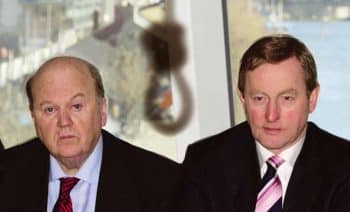
    The arrest of two men in connection with the criminal investigation into the sale of Project Eagle, the single largest disposal of Irish state assets, has discharged a seismic shock through the establishment, north and south. So shocking indeed that the government and large sections of the media have been caught napping, unable to explain the real context of the unfolding controversy that threatens the credibility of the National Assets Management Agency (NAMA) and a number of senior politicians, unable to see that the story threatens to enmire NAMA in Dublin and its defenders at the top of the Fine Gael party. Ronnie Hanna, a former head of asset management at NAMA in Dublin and Frank Cushnahan, a former member of the agency’s Northern Ireland Advisory Committee were arrested by police who also seized documents and computers during raids on a number of properties in Belfast. Village has learned that the arrests came just days before the BBC ‘Spotlight’ programme was due to reveal fresh information concerning the role of both men in the Project Eagle saga. The arrests of the two men by the NCA forced the cancellation of the programme, for legal reasons. On Thursday, 2nd June, the Irish News reported that Hanna and Cushnahan had been arrested two days earlier by the National Crime Agency (NCA) and were being released on bail “pending further enquiries”. It was the only news organisation to identify those arrested although, in its report, the Irish Times mentioned the pair as having been previously named in the Dáil by Mick Wallace in connection with the Project Eagle controversy. In June last year, Wallace sensationally alleged that a sum of £7m “reportedly earmarked for a politician” had been moved to an Isle of Man bank account during NAMA’s sale of its £1.24bn (€1.6bn) Northern Ireland property portfolio to US firm, Cerberus, in 2014. Under Dáil privilege, he later named Cushnahan and Hanna as having had discussions with bidders for the Project Eagle portfolio in advance of the sale. Hanna left NAMA in late 2014, six months after the controversial disposal, but his role in the sale of the massive portfolio of distressed property assets continues to haunt him and his former colleagues in the agency. The transaction has also been the subject of investigation by the Securities and Exchange Commission of the US Department of Justice, the Stormont finance committee and the Law Society in Belfast. In February, the Spotlight programme broadcast secretly filmed footage of Cushnahan claiming that he was to be the beneficiary of monies held offshore in connection with the deal and poured lavish praise on Hanna for the support he gave to distressed property owners in the North. It now appears that further information about his and Hanna’s role has emerged through the BBC investigation led by journalist, Mandy McAuley. The Project Eagle affair has already damaged the reputation of a number of senior business and political figures in the North and contributed to the unexpected resignation of Peter Robinson as First Minister and leader of the DUP in late 2015. This followed a barely disguised warning from the Sinn Féin leader, Gerry Adams, to Robinson that if he did not get the suspended political institutions up and running at Stormont he would find himself embroiled in the ongoing international investigations into the disposal of Project Eagle to Cerberus. Adams notably travelled to meet the New York State Comptroller to brief him on the controversial deal. Cerberus executives were then invited to a meeting to face a series of embarrassing questions from the Comptroller about the claims that massive fees had been paid to third parties in relation to the huge property acquisition. The reverberations from the controversial deal were not as loudly felt in Dublin where the Taoiseach, Enda Kenny, finance minister, Michael Noonan and NAMA chairman, Frank Daly, have continued to insist that there is nothing to see here and that the agency, or its officials, were not involved in any inappropriate behaviour in respect of Project Eagle. In May, NAMA threatened to sue TV3 over comments it hotly disputes, made during the Vincent Browne ‘Tonight’ programme which suggested that Cushnahan and Hanna were present at a meeting with Cerberus executives just before the agency set a reserve price of £1.24bn for the portfolio. Cerberus purchased it for £1.241bn. According to Mick Wallace, no other bidder enjoyed such access to NAMA and the main underbidder, the US fund Fortress, has complained about the manner in which the sales process was completed. Following the latest arrests, NAMA and the government have come under renewed pressure to reveal any further information about potential conflicts of interest arising from the transaction. The heat is also coming on Kenny and Noonan for their role in the affair and, in particular, the decision of the finance minister to allow NAMA to proceed with the disposal in early 2014, despite being informed of massive fee payments being sought by individuals involved in the transaction. On Tuesday 31st May, after news of the arrests emerged, Kenny refused a call by Gerry Adams for the establishment of a Commission of Inquiry into the sale and purchase of Project Eagle. Kenny said: “The Minister has made a full statement already and there has been quite a deal of discussion at the various Oireachtas committees on the question on NAMA. NAMA personnel at the highest level have responded and given much time on different occasions to discuss these matters. If two people have been arrested, they have been arrested on suspicion of particular charges and I expect that the court system in the jurisdiction in which they were arrested will follow through on arresting them in the first instance. Obviously, it is not for me to comment on the court system of a different jurisdiction. If they have been arrested, I assume that it is for good reason in respect of activities that would be outside the law. I trust that this will see itself through

    Loading

    Read more

  • Posted in:

    James Joyce, ordered Aristotelian

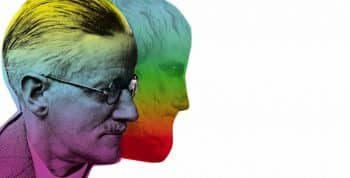
    It is arguable that Aristotle – next to Homer – was James Joyce’s greatest master. Without the ‘Odyssey’, Joyce could never have conceived ‘Ulysses’; had he not written the book celebrating his first rendezvous with a beautiful girl from Galway, whatever he wrote would, however, have been profoundly marked by Aristotle. There is, I suggest, a profound affinity of mind between Joyce and Aristotle; perhaps part of this kinship may be explained by its Homeric parentage. Aristotle too was profoundly influenced by Homer; he cites him over one hundred times, second in frequency only to Plato. One of the most moving documents which we possess from the entire corpus of ancient philosophy is the fragment of a letter written by Aristotle toward the end of his life: “The more solitary and isolated I am, the more I have come to love myths. One recalls Rembrandt’s famous painting of Aristotle contemplating the bust of Homer. That Joyce set out to emulate Homer and his success is beyond dispute. He was also a true and sympathetic follower of Aristotle. He regarded Aristotle as the greatest thinker of all times, declaring: “In the last two hundred years we have had no great thinker. My assertion is bold, since Kant is included. All the great thinkers of recent centuries from Kant to Benedetto Croce have only recultivated the garden. The greatest thinker of all times, in my opinion, is Aristotle. He defines everything with wonderful clarity and simplicity. Later, volumes were written to define the same things”. How did Joyce came to know Aristotle? Why such great esteem? For generations in Ireland, the name of Aristotle has been associated in the popular tradition with wisdom and erudition. The German travel writer Johann Georg Kohl, visiting Ireland in September 1842, reported that he twice heard Irish people “speak of Aristotle as a wise and mighty king of Greece, as if they had the same conception of him as of King Solomon”. Aristotle’s renown was alive i mbéal an phobail. My own greatgrandmother from West Cork, born a generation later, spoke reverently of “Harry Stakle” [ie Aristotle]. The Irish, however, by no means regarded Aristotle as omniscient; Joyce copied in ‘Scribbledehobble’, his workbook for FW, the widespread traditional Irish triad, “3 things Aristotle didn’t know: labour of bees, flow of tide, mind of women”. Joyce was unwittingly exposed to the categories of Aristotle throughout his Catholic education. Catholic theology has for centuries made use of Aristotelian concepts and terminology. Consider the traditional vocabulary of the catechism. The sacraments are explained in terms of Aristotelian principles: each has its matter and form. The Eucharist is described in the vocabulary of substance and accident. Joyce, like many Irish youngsters before and since, imbibed the practicality of Aristotle’s metaphysics. There is less sympathy, it may be noted, in the Protestant tradition of Luther, who did not disguise his contempt for “that cursed heathen”: “What will they not believe who have credited that ridiculous and injurious blasphemer Aristotle? His propositions are so absurd that an ass or a stone would cry out at them… My soul longs for nothing so ardently as to expose and publicly shame that Greek buffoon, who like a spectre has befooled the Church”. It may be fairly presumed that under the Jesuits Joyce was likewise exposed to the scholastic mode of deliberation, which owed much to the logic of Aristotle. Joyce rejected much of his Jesuit education, but was in many ways grateful. Buck Mulligan remarks to Stephen: “[Y]ou have the cursed jesuit strain in you, only it’s injected the wrong way”. Asked by the sculptor August Suter what he retained from his Jesuit education, he replied: “I have learnt to arrange things in such a way that they become easy to survey and to judge”. Commenting on Aristotle, Aquinas defines wisdom as the discovery of order: Sapientis est ordinare. The opening words of a translation of Aquinas which Joyce himself later owned, and which could not have failed to attract his attention on publication in 1905, read: “According to established popular usage, which the Philosopher [Aristotle] considers should be our guide in the naming of things, they are called ‘wise’ who put things in their right order and control them well”. Curiously, AE remarked to the young Joyce: “I do not see in your beginnings enough chaos to make a world”. It was precisely this confrontation with chaos that spurred him on. In ‘Stephen Hero’ we read: “And over all the chaos of history and legend, of fact and supposition, he strove to draw out a line of order, to reduce the abysses of the past to order by diagram”. Order was the hallmark of Aristotle’s mind; his investigations were a comprehensive attempt not only to analyse and differentiate the full entirety of given reality, but more importantly to integrate and unify. This fixity upon order is formulated in the mind of Bloom: “The necessity of order, a place for everything and everything in its place”. This is repeated in the essay title associated with Aristotle in ‘Night Lessons’ in ‘Finnegans Wake’: ‘A Place for Everything and Everything in its Place’. Joyce had occasionally, in Wallace Stevens’ phrase, a “blessed rage for order”. When Frank Budgen inquired of the progress of ‘Ulysses’, Joyce replied: “I have been working hard on it all day”. “Does that mean that you have written a great deal?”, Budgen asked. “Two sentences”, said Joyce, in all seriousness. “You have been seeking the mot juste?”. “No. I have the words already. What I am seeking is the perfect order of words in the sentence. There is an order in every way appropriate. I think I have it”. The words in question referred to the seductive effect of women’s silk petticoats hanging in a shop window: “Perfume of embraces all him assailed. With hungered flesh obscurely, he mutely craved to adore”. “You can see for yourself”, said Joyce, “in how many different ways they might be arranged”. This is echoed

    Loading

    Read more