Archives

OK

Random entry RSS

Loading

  • Posted in:

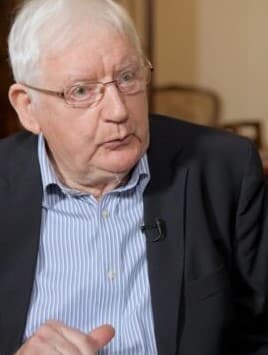
    Reckless disregard for our security. By Gerard Humphreys, former army officer.

    The Constitution of Ireland declares Ireland to be a sovereign independent democratic state. This declaration of sovereignty means that the State is not subject to any power or government. But sovereignty to be recognised in International Law brings with it rights and duties. International law is based upon the concept of the state and the exercise by that state of effective control over it’s own territory. Territorial sovereignty is the key concept in International Law in particular in regard to territorial defence. Ireland is not fulfilling its key obligations in International law. The Russians have already hacked our health system, and acted in a hostile manner in positioning warships over our crucial underseas cables (our south-western approaches) yet because of our reckless disregard for our own security we had insufficient number of naval personnel to deploy our ships or put an adequate number of aircraft in the sky. Yet the government are engaged in a massive PR exercise on celebrating a centenary of independence. Rules of international law come from two main sources, treaties and customary international law, both of which are created by States. States are bound by the rules to which they have chosen to bind themselves. Every State has jurisdiction over its territory. That is obvious given the concept of Statehood with which international law operates. Article 5 of the Constitution Proclaims: “Ireland is a sovereign, independent democratic state.” The territory of the State is the whole of the area within its borders and also the adjacent territorial seas up to 12 miles from the coast. It includes the airspace above and the subsoil below. The 1982 UN Convention on the Law of the Sea provides a comprehensive legal framework for the use of the seas along coastal States to exercise jurisdiction over the living, fish, whales etc. and non-living resources, oil, gas etc. of the sea and seabed and over certain other matters including pollution, scientific research and other installations such as oilrigs in a 200-mile exclusive economic zone adjacent to its coast. What does this mean? Therefore, it is not open to Ireland to abandon its responsibilities for its territory, airspace and exclusive economic zone. It is the sovereign duty of the State to deploy its ships into our exclusive economic zones off our coasts. It is our sovereign duty to police our airspace. It is questionable whether it is a permissible delegation in international law to have another sovereign State police our airspace to interrogate aircraft. It would appear that the Government have authorised British military aircraft to interrogate unidentified civil aircraft that fails to identify itself by radio or radar as it approaches Ireland from the Atlantic. It begs the question after interrogation if it is unsatisfactory and the aircraft is perceived as being hostile either by being hijacked or otherwise is there a power of interdiction also delegated? It would appear that the Government have authorised British military aircraft to interrogate unidentified civil aircraft that fails to identify itself by radio or radar as it approaches Ireland from the Atlantic. It begs the question after interrogation if it is unsatisfactory and the aircraft is perceived as being hostile either by being hijacked or otherwise is there a power of interdiction also delegated? It would appear that the British Prime Minister can authorise the interdiction of a civilian aircraft that is being weaponised. We do have a National Security Committee and the risk of an aircraft being weaponised is real but there is no effective democratic oversight of national security in Ireland. The Oireachtas and members of the Dáil and Seanad do not have access to classified information at any level. Ireland is one of the most secretive democracies when it comes to democratic oversight of national security issues. The Oireachtas and members of the Dáil and Seanad do not have access to classified information at any level. Ireland is one of the most secretive democracies when it comes to democratic oversight of national security issues. But this is a questionable delegation or power; it has all the hallmarks of an abdication of responsibility by our Government. Our duty of impartiality in International Law may not be viewed as neutral delegating to a NATO Country a power of interruption and possible interdiction. Of course we can request assistance, but the duty falls primarily on us under the self help principle. These are the real questions that our democratic representatives should be raising in the Dail and Seanad. The right to raise and maintain armed forces is vested in the Oireachtas. Why is our navy not capable of deploying naval vessels in our seas and exclusive economic zone? Why has our air corps not capable of policing our airspace a task that could be executed by the Air Corps in the 1960’s with Vampire jets then replaced by Fouga magisters but not now equipped with aircraft fit for purpose and the discharge of their primary task. Are we to spend the next 50 years pointing an accusing finger at the British for the destruction of an aircraft interdicted by them in our airspace when we have already spent 50 years pointing an accusatory finger at Britain in the media for the possibility that the Aer Lingus Viscount St. Phelim was accidentally shot down by a British missile off the coast of Wales? On that occasion the recovery of the Aer Lingus wreckage was carried out by the Royal Navy. The failure of a State to carry out its assigned duties as a State undermines the very existence of that State. It was the sovereign duty of the State to deploy its Navy off the south-west coast when there was suspicious activity being carried out by Russian vessels. That is the task of our naval vessels. ..we have already spent 50 years pointing an accusatory finger at Britain in the media for the possibility that the Aer Lingus Viscount St. Phelim was accidentally shot down by a British missile off the coast of Wales? On

    Loading

    Read more

  • Posted in:

    We are Complicit in its Failures: A Warning on Democratic Backsliding

    In this post Christopher Stanley, Litigation Consultant, KRW LAW LLP, review “Overruled: Confronting Our Vanishing Democracy in 8 Cases” by Sam Fowles (London: One World) “The job of the prime minister in difficult circumstances, when he has been handed a colossal mandate, is to keep going – and that’s what I’m going to do” (Boris Johnson 6 July 2022) “9:11 BREAKING Johnson to resign today – Boris Johnson will resign as prime minister today, the BBC has been told” (BBC Tweet 7 July 2022) [1] On most Saturday mornings I am incensed by the op ed piece by Charles Moore in the London edition of the Daily Telegraph. My wife questions why I continue to read him and allow my blood to boil over my tea and toast. Moore is like marmite (of which I am fond). Part of my anger is that the views of Moore on Saturday will be replicated by the red tops and tabloids on Monday. I made this point recently to an online discussion group organized under the title of ‘Democratic Backsliding’. I pointed out that I considered our concerns to be not about democratic backsliding but rather about constitutional backsliding: as (our) English democracy slides towards a constitutional abyss. [2] This book review is offered to readers of Village as a further dispatch from the Village of Westminster. It is a further caution – as if politicians in Dublin needed reminded of it – of the dangers of constitutional erosion which can result in democracy metaphorically falling over a cliff. Whilst politics in Ireland has its own style of theatricality, both tragedy and comedy, both gore and slapstick, in England, and I specify England because of the devolved settlement (including that pesky Northern Ireland Protocol), we (the subjects) appear to be in the grip of a dangerous attack on the constitutional settlement: democratic backsliding. [3] Constitutional backsliding is at the core of the analysis elegantly and persuasively presented by Sam Fowles in “Overruled: Confronting Our Vanishing Democracy in 8 Cases” through four themes – accountability, bullshit, centralization, and enfranchisement. (Bullshit: Statements that treat Truth as immaterial (page 8)). Fowles is anxious that “We have allowed principles that were once inviolable to become contestable” (page 7). A contested principle, such as power, means it is relational to other factors which in the present circumstances and era of English constitutionalism means living in a weakened democracy governed by an Elective Dictatorship from Downing Street serviced by unelected SPADS. That is some seismic relational shift in the constitutional settlement premised on John Locke’s Separation of Powers doctrine. The power to govern and the practice or art of government and governance are no longer accountable or answerable to the Judiciary and the Legislature, those institutions preserving the Rule of Law which serves to protect our democratic liberties and freedoms. The contested principles – the purposes of democracy – now serve those in/with power: the Executive not in Whitehall but in Downing Street. Power now means the delivery of the Democratic Mandate (the profoundly unread and obliquely drafted manifesto of pledges) in the interests of party supporters (read: donors). The Executive knows best in an expression of a venal paternalism corrupting the letter and the spirit of the received constitutional settlement through the erosion of those pesky checks and balances securing truth and accountability. Fowles “Overruled” is an antidote to the sophistry offered by Charles Moore when he is regurgitates the ideas of the right wing think tanks such as Policy Exchange – the SPAD academies. The problem is of how any alliance of adherents to the ‘Old Ways’ can assume and maintain credibility without becoming labelled precious liberal academics, money grubbing lefty human rights lawyers, champagne socialists quaffing at Glyndebourne, or hand wringing Liberals in Whig clothing, and pro-EU Guardian reading intellectual elites. Fowles is alert to this hostage to fortune which is why he is Counsel to the All-Party Parliamentary Group on Democracy and the Constitution and founder of the Institute for Constitutional and Democratic Research which informs the APPG. I declare a vested interest at this juncture. I am a public lawyer in a practice reliant in part on legal aid funding. I am a Fellow of the Institute for Constitutional and Democratic Research. I was the requester of file CJ4/6052 ‘Provisional IRA intentions and activities in Great Britain’ catalogued by the National Archives but retained by the Northern Ireland Office. My request is now reported as Christopher Stanley (KRW Solicitors) v Information Commissioner and Northern Ireland Office [EA/2019/0019]. Sam Fowles acted pro bono in this appeal. The case is discussed in Chapter of Six of “Overruled”. Therefore, I have had the privilege of working closely with the author. In a discussion on tactics – I think in the café of the RCJ – Sam introduced me to a blindingly obvious point (almost a syllogism): National Security is inevitably deployed to prevent access to disclosure of information held by the State (as it was in this instance – attaching to a file of material generated almost half a century ago) National Security is not defined by the State therefore its definition cannot be contested or subject to interpretation National Security serves to protect the UK democracy under the Rule of Law. The principles of democracy include transparency and accountability. Ipso facto National Security should facilitate transparency and openness through disclosure of information held by State and reasonably requested by a citizen when in the wider public interest. “A government which does not trust its citizens is always frightening” (page 127). Sam Fowles has been instructed in (even as a bag carrier) in eight cases (including the Article 50 Gina Miller litigation) which constitute the narrative of this book. Each case is an examination in the erosion of what I call constitutional ‘values’ and he calls constitutional rights. These are the values-rights attacked by the likes of Charles Moore and the inhabitants of Policy Exchange. These are the values described by Moore as The Blob. I called

    Loading

    Read more