Archives

OK

Random entry RSS

Loading

  • Posted in:

    THE LEGACY OF THE CONFLICT: UPDATE ON THE MODEST PROPOSALS

      Christopher Stanley, Litigation Consultant, KRW LAW LLP, Belfast.[i]     THE LEGACY OF THE CONFLICT: UPDATE ON THE MODEST PROPOSALS Christopher Stanley, Litigation Consultant, KRW LAW LLP, Belfast.[i] Earlier this year Village published my comment THE LEGACY OF THE CONFLICT: MR LEWIS’S MODEST PROPOSAL – Village Magazine. This comment concerned the following: “On 14 July 2021 Her Majesty’s Secretary of State for Northern Ireland, the Right Honourable Brandon Lewis MP (a lawyer by trade), made a statement in the House of Commons and his office published a Modest Proposal: ‘Addressing the Legacy of Northern Ireland’s Past’ (CP498). It  is fair to say that Mr Lewis’s Modest Proposal created a backlash within the community after its publication.” As the UK’s Parliament is now in session it is appropriate to update readers of Village on the progress of Mr Lewis’s Modest Proposals. Those Modest Proposals: The Draftsman Cometh As of today (26 October 2021) the British government has yet to publish its proposed legislation to “Address the Legacy of Northern Ireland’s Past”. There is still no prospect that there will be a public consultation before the introduction of legislation as it was introduced as a White Paper which means the government is not obliged to consult on the contents as opposed to a Green Paper. Mr Lewis made this point clear in his most recent oral evidence session to the Northern Ireland Affairs Committee (NIAC) on 27 October 2021: “Let us be clear: this was not a formal consultation in that sense. This was a Command Paper.” https://committees.parliament.uk/oralevidence/2917/pdf/ (last accessed 2 November 2021) In the UK there has been cross-party condemnation of the approach of the British government on this issue. There has also been condemnation from politicians in Ireland and USA and from international organisations including the European Human Rights Commissioner and the United Nations Special Rapporteurs. For example: The Council of Europe Commissioner for Human Rights has warned that the proposals are “indistinguishable from a blanket unconditional amnesty for those not yet convicted” and “would undermine human rights protections and cut off avenues to justice for victims and their families”. The relevant UN special rapporteurs have also expressed their concern regarding the proposals, which in their view would place the United Kingdom “in flagrant violation” of its international obligations. The Ad Hoc Committee to Protect the Good Friday Agreement (GFA) of the United States Senate wrote to the British Prime Minister Boris Johnson on 8 September 2021: “We find this proposal to be at odds with both the spirit and architecture of the Good Friday Agreement. It would abrogate the hard-won compromise regarding legacy issues in the NDNA and appears to us to represent a significant breach of several international human rights agreements to which the UK is a party. Equally important, the cross-community opposition to the current proposal in Northern Ireland should be enough to signal that this points not to reconciliation, but instead to continuing division there. Painful as it is, enduring reconciliation is dependent on accountability and transparency with respect to all participants in Troubles-related violence. There is no shortcut, and the GFA does not countenance one. It is tragic that so many years have been wasted with obfuscation and legal wrangling, but that does not justify abandoning the commitments made by the UK government to see the process through. While the GFA does not impose specific obligations with respect to legacy, it does mandate that both state parties observe and implement the European Convention on Human Rights. Toward this end, both governments are required to incorporate the European Convention into domestic law. The UK in particular must provide for “direct access to the courts, and remedies for breach of the Convention.” The UK addressed these duties domestically with the Human Rights Act of 1998. As a matter of international law, the UK has a double obligation to adhere to the European Convention, first as a party to that treaty, and second, through the GFA. Central to those protections under the European Convention is the right to life, set out in Article 2.” Ad-Hoc-Comm-letter-to-PM-on-Amnesty-Proposal-090821.pdf (caj.org.uk) (last accessed 20 October 2021) Dear Strasbourg: Keep off our Grass On 18 October 2021 the Secretary of State wrote to Clare Ovey of Department for the Execution of Judgments of the ECHR regarding the forthcoming review of the McKerr group of judgments by the Secretariat of Ministers of the Council of Europe. In his initial response he states: “The UK Government is committed to dealing with legacy issues in a way that supports information recovery and reconciliation, complies with international human rights obligations, and responds to the needs of individual victims and survivors, as well as society as a whole.” These Modest Proposals are clear evidence that this is not the commitment of the British government. The Modest Proposals offend and breach international human rights obligations and do not respond to the needs of relatives of victims and survivors. “The UKG proposals follow on from the principles set out in the Stormont House Agreement, while attempting to address the implementation problems within that agreement.” They do not follow the principles in the Stormont House Agreement 2014 (SHA 2014) “We think the best way to help Northern Ireland move towards reconciliation is through information recovery rather than an adversarial court process. It is therefore proposed that a statute of limitations would apply equally to all Troubles-related incidents.” “A meeting of the British-Irish Intergovernmental Conference (BIIGC) took place at Dublin Castle on 24 June 2021 . At this meeting the UK and Irish Governments agreed there was a need for a ‘process of intensive engagement’ with the Northern Ireland parties and others on legacy issues. This would build on previous discussions, take account of the views of all participants and include consideration of new proposals which the UK Government intended to bring forward.” MPs have confirmed to relatives of victims and survivors of the Conflict that NO ‘process of intensive engagement’ has occurred since 24 June 2021. As previously noted there

    Loading

    Read more

  • Posted in:

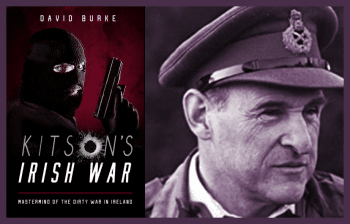
    Colin Wallace, the former British Army Psychological Operations officer, writes about Bloody Sunday in light of David Burke’s new book, Kitson’s Irish War, Mastermind of the Dirty War in Ireland.

    By Colin Wallace. 1. Memories of Brigadier Frank Kitson. David Burke’s fascinating new book on Frank Kitson includes a comprehensive analysis of what has become known around the world as ‘Bloody Sunday’. Reading it has stirred a lot of memories of the time I spent at Army HQ in Northern Ireland during the 1970s.  As the new book reveals,  Brigadier Kitson sometimes used me as a sounding board while we were both based at Thiepval Barracks, Lisburn. I remember him well coming to my office where he sat in a red armchair.  Unlike other senior officers, he never once called me to his office, which was on the other side of the complex. Intriguingly, he never spelt out to me precisely what had triggered the questions he put to me. The book also describes how the brigadier – as he was then – was encouraged by the Ministry of Defence to sue a British newspaper, The Daily Mirror. It had erroneously claimed  Brigadier Kitson had developed the five techniques which had been deployed against internees while he had served in Kenya. The ploy, as Burke describes, was designed to dampen the confidence of the media who were attacking the Army over those interrogation methods. Inevitably, with the passage of time, many of those distant memories have now morphed into a collage of blurred images, but some remain painfully in focus because of their emotional impact upon me at the time.   ‘Bloody Sunday’ is one of those.  Burke’s book covers a lot of ground including a lengthy section on the Bogside tragedy. He demonstrates that despite two major inquiries into the event, new information is still surfacing some 50 years after it. I believe his book makes an important contribution to the overall debate about what has become one of the most controversial and divisive episodes of that traumatic period. He demonstrates that despite two major inquiries into the event, new information is still surfacing some 50 years after it. I believe his book makes an important contribution to the overall debate about what has become one of the most controversial and divisive episodes of that traumatic period. 2. The Ministry of Defence (MoD) attempted to mislead the media about my role in Widgery. The complexity of the events surrounding ‘Bloody Sunday’ is well illustrated by the fact the initial Widgery Inquiry lasted 24 days and heard evidence from 114 witnesses.  The subsequent Saville Inquiry lasted five years and heard evidence from 922 witnesses.  It became the longest inquiry in British legal history!  Why did the additional 800 witnesses not appear at the Widgery Inquiry when their memories of the event were more likely to be fresh and, therefore, potentially more accurate? At the time of ‘Bloody Sunday’, I was part of the Army’s Psychological Operations (Psy Ops) unit.  My role was gathering and disseminating intelligence information in ways to assist the work of the Security Forces.  The work was sensitive and totally deniable.  In 1990, the MoD approached a number of journalists in an attempt to mislead the public about my role in Widgery Inquiry.  That was a pointless attempted cover-up because my role at Widgery had little, if anything, to do with Psy Ops.   However, MoD documents disclosed by the Government make it clear that, on 11 February 1972, I took over responsibility from Colonel Tugwell, the officer then in charge of Psy Ops in Northern Ireland, for what was known as ‘The Opposition Case’.  Another document compiled at the end of the Widgery Inquiry by the Deputy Director of the Army Legal Services, Lt Colonel  Colin Overbury, stated that I: “provided detailed background information (to the Army counsel) throughout the hearing“.  The Army legal Team also included two very experienced members of the Royal Military Police Special Investigation Branch who undertook ongoing research. It is now clear that some Government witnesses lied to the Saville Inquiry by falsely claiming that the Army had stopped using Psy Ops before ‘Bloody Sunday’ took place.  Why was that deception necessary and why was no action taken against those who committed perjury?  That failure tends to indicate that those witnesses were doing what was required of them by those in authority. Why was that deception necessary and why was no action taken against those who committed perjury?  That failure tends to indicate that those witnesses were doing what was required of them by those in authority. 3. An IRA ambush of a ‘distant cousin to the Queen’ during the Widgery tribunal was ‘quietly covered up’  One of my colleagues on the Army legal team was Major Henry Hugh-Smith of the Blues and Royals.  He was the team’s secretary and brought great energy and humour to his role.  He was described in Peerage News as “a distant cousin to the Queen”. All the members of Army team including the barristers stayed with the 2nd Battalion Royal Green Jackets, at Ballykelly, which is about half way between Derry and Coleraine where the Widgery Tribunal was being held. On the night before the final hearing, the Green Jackets invited Hugh and me to join one of their mobile patrols into the Bogside to see at first hand some of the locations featured in the Inquiry.  The lead Land Rover in which Henry was travelling was ambushed by the IRA.  An official account in Guards Magazine of what happened records that in the attack: “lasted eight minutes with some 600 rounds exchanged“.  It was believed that the IRA were using a variety of weapons in the ambush, including an American M60 machine-gun.  It is amazing that Army casualties were not higher. Two members of the IRA were killed in the ambush and Henry was shot in the right arm. His hand was subsequently amputated above the wrist.  I went to visit him early the following morning – the final day of the Inquiry – at Altnagelvin Hospital on the outskirts of Derry.  He was still very ill and heavily sedated. Two members of the IRA

    Loading

    Read more

  • Posted in:

    The boot is on the other foot. Former British 'PSYOPS' officer Colin Wallace sues the MoD. His case demonstrates that lying to Parliament did not start with Boris Johnson.

      By Joseph de Burca.     Introduction to Village’s online pamphlet on the Colin Wallace Affair. The Tory Government of Boris Johnson is routinely accused of deceiving the House of Commons. Many British commentators behave as if this is a new low in their democratic history.  Yet, there is nothing unusual about the situation. The UK’s Parliament has been misled by ministers at the behest of Britain’s intelligence services, especially MI5 for decades. MI5 is attached to the Home Office and is responsible for internal security. The deception of Parliament has been nowhere more evident than in the case of Colin Wallace, the man who tried to expose the notorious Kincora Boys’ Home child sex abuse scandal.  Village readers will be familiar with the case of Wallace. In the 1970s he worked at the British Army HQNI at Thiepval Barracks, Lisburn. He had a public job but also a clandestine one. On the surface, he performed public relations duties for the army. Towards this end, he briefed journalists about an array of routine military activities. His ‘open’ superior was Peter Broderick, a very senior official of the Ministry of Defence (MoD). Broderick served as the head of the Army Press Desk. Secretly, Wallace was also reporting to Col Maurice Tugwell and later Col Geoffrey Hutton who were in charge of the Information Policy Unit (IPU) which conducted psychological operations known as ‘PsyOps’.  Hutton took over from Col Tugwell in March 1973 and was in post for two years.  He was in charge when Wallace left NI in February 1975. Wallace has just issued proceedings in the High Court in Belfast with the intention of prising out further documents which are in the possession of the British government which will confirm his PsyOps role in detail.  In 1974-75 Ian Cameron of MI5 plotted against Wallace who wanted to expose the Kincora Boys’ Home scandal and was refusing to engage in smear campaigns directed against British politicians. During the course of his work, Wallace was ordered to leak certain documents to the journalist Robert Fisk. He was then disciplined for what he had done. At his disciplinary hearing, MI5 and others conspired to deceive the tribunal hearing his case. They alleged that he had only one role – his ordinary PR duties – and therefore should not have leaked anything sensitive to Fisk. Secretly, Cameron contacted the chair of the tribunal and told him that Wallace was in the UVF. Wallace, of course, had nothing to do with the UVF. Wallace lost his job. Worse still, in the 1980s he was framed for manslaughter on the basis of fabricated evidence by a corrupt Home Office pathologist who lied to the Court. The conviction was later overturned but not before Wallace spent six years in prison. The MoD has alleged that all of the files belonging to the IPU were destroyed in 1980.  The Ministry has admitted that those responsible for the destruction of the files have never been interviewed. It is highly unlikely that the documents were actually destroyed. In the main, this article – which is intended as an online version of the old fashioned pamphlet –  has been drawn together from reports which have already appeared in Village. This account has been prepared in response to the launch of Wallace’s legal action in Belfast. The materials included in the ‘pamphlet’ merely represent a portion of the evidence which shows that Wallace has been telling the truth for decades and the MoD, NIO, Home Office, Conservative Party and Whitehall have been lying. Readers should also watch the documentary ‘The Man Who Knew Too Much’ which is available on Youtube. More information about Colin Wallace can be found at:  https://en.wikipedia.org/wiki/Colin_Wallace WALLACE AND THE PERILOUS  PANTIES Wearing his IPU hat, Wallace and the members of his team were responsible for waging psychological warfare against Loyalist and Republican paramilitaries.  It is important to bear in mind that psychological warfare is not solely about spreading false information, it is about the use of intelligence and factual information in such a way as to influence the behaviour of others.  For example, one of Colin Wallace’s more amusing and notable successes was to deter female members and collaborators of the IRA from transporting explosives for the organisation. Wallace put a story into circulation that the static from the typical female pair of nylon knickers generated sufficient  electricity to explode the bomb materials being carried. As a result, there was a great reluctance to transport explosives. There was a scientific basis at the root of the story, as can be seen from a document entitled: ‘Ammunition and Explosives Safety Standards’. At pages 85-99 it stated: Explosives. The explosives or explosive mixtures that are sensitive to static discharge (electro-static sensitivity of 0.1 joule or less) when exposed are generally primer, initiator, detonator, igniter, tracer, incendiary, and pyrotechnic mixtures. In reality, the chances of explosions being caused by static electricity were very small. Similarly, the PsyOps unit pointed out that the use of nitro benzene in home-made explosives was potentially carcinogenic.  This claim is supported by the United States Environmental Protection Agency who considered nitro benzene a likely human carcinogen. See “Nitrobenzene CASRN 98-95-3 – IRIS – US EPA, ORD”.  An excellent account of Wallace’s exploitation of fears about devil worship stories can be watched on the Man Who Knew Too Much documentary. THE INFORMATION RESEARCH DEPARTMENT (IRD) The Army’s IPU was not the only organisation engaged in PsyOps. The notorious Information Research Department (IRD) was too. The IRD was part of the Foreign Office and worked closely with the British Secret Service, MI6, which is also attached to the Foreign Office. The IRD operated from a building in London called Riverbank House. The IRD was a Cold War Intelligence organisation designed to counter Soviet expansion globally. Inevitably, its staff became involved in the propaganda war in Ireland. The department’s representative in NI was Hugh Mooney, a graduate from Trinity College with Irish roots who had once worked for The Irish

    Loading

    Read more

  • Posted in:

    The British ‘Traitor King’ who contemplated settling in Ireland.

      By David Burke. Andrew Lownie will be known to many Village readers for the depth of his research into the life of Lord Louis Mountbatten and his wife, especially the former’s abuse of boys in the Republic of Ireland. During his research into Mountbatten, Lownie tried, and failed, to gain access to Garda logs showing who had visited Mountbatten at Classiebawn Castle in Sligo.  Lownie had more success earlier this year when he forced the British government to disclose some of Mountbatten’s diaries. The documents had been purchased by the British government and given to Southampton University but at some stage Whitehall had intervened to keep them under wraps. NO TRIAL FOR TREACHERY. In his captivating new book, Traitor King: The Scandalous Exile of the Duke and Duchess of Windsor, Lownie shreds the reputation of the Duke of Windsor, the former Edward VIII, who abdicated in 1936 so he could marry Wallis Simpson. The author confirms and elaborates on long-held suspicions that the Duke played fast and loose with the Nazi regime both before and during the Second World War. Lownie’s book describes grounds upon which the Duke could have been put on trial for treachery, so much so that the Nazis had come to view him as a potential puppet monarch, a British version of France’s Marshal Pétain. Lownie highlights a telegram sent on 15 August 1940 from Portugal while the Duke was on his way to the Bahamas. In it the Duke asked his Portuguese host, a Nazi sympathiser, to send “a communication” as soon as his action was required. The conclusion Lownie draws is that he was complicit in a plot to instal him as a puppet ruler in Britain after a negotiated peace with Hitler. Yet, somehow, the Duke never had to face the music. Churchill was one of a number of influential figures who prevented the post-war publication of captured German documents which detailed the Duke’s Nazi intrigues. Others were not so lucky. William Joyce, better known as Lord Haw Haw, sided with the Nazis in a very public way during the Second World War by becoming the voice of Nazi propaganda radio broadcasts to England. Despite the fact Joyce hailed from Galway, he was hauled back to England and executed for treason. John Amery was also executed. His father Leo was a Tory MP and minister. His brother Julian would marry the daughter of Prime Minister Harold Macmillan and go on to hold a number of government ministerial positions. None of these connections were sufficient to save the life of John Amery. THE MI5 TRAITOR WITH LINKS TO IRELAND WHO KNEW ABOUT THE DUKE’S TREACHERY. The Duke’s treachery had ramifications for Ireland. After the war ended, an MI5 officer called Anthony Blunt was sent to Germany to retrieve some of the embarrassing correspondence that had passed between the Duke and the Nazis. Blunt remained in MI5 while also serving as the Keeper of the King’s Pictures at Buckingham Palace. When it belatedly emerged that he had been working for the Russians while in MI5, his knowledge about the Nazi correspondence played a part in saving him from prosecution. By then he was the Keeper of the Queen’s pictures, a job he was able to retain notwithstanding his treachery. As part of a secret immunity deal he struck in 1964 with the Government, Blunt was granted an amnesty for all the crimes he had committed. These included the abuse of children ensnared by the Anglo-Irish vice ring of which the Duke’s relative Mountbatten was a leading member. Had Blunt been prosecuted, it is conceivable that his role in the abuse of children in Ireland might have emerged much earlier and the activities of the vice ring shut down. Part of the passage in Lownie’s book relating to Blunt’s mission to Germany reads as follows: In 1979, Blunt was publicly revealed to have been a Russian spy since the 1930s, though he had privately confessed to the intelligence services in 1964. The MI5 officer Peter Wright, who interrogated him, was informed by the Queen’s private secretary, Sir Michael Adeane, that Blunt had undertaken an “assignment … on behalf of the Palace – a visit to Germany”. Wright was told not to “pursue the matter…Strictly speaking it is not relevant to considerations of national security”, It looks like the trip [by Blunt] to Kronberg [in Germany] was a cover for a fishing expedition, which suggests that there was something else the Royal Family was worried about. “George VI had every reason to believe that the Hesse archives might contain a “Windsor file”, because Prince Philip of Hesse had been an intermediary, via the Duke of Kent, between Hitler and the Duke of Windsor”, claimed Prince Wolfgang of Hesse to the Sunday Times. It was a belief supported by the wartime intelligence officer Hugh Trevor-Roper, later Regius Professor of Modern History at Oxford University. It is confirmed by Andrew Sinclair, who spent eighteen months researching a biography of Vicky, The Other Victoria, who wrote that Blunt had retrieved “the Duke of Windsor’s correspondence with his German princely cousins, some of whom held high office in the Nazi party”. John Loftus, a lawyer with the US Justice Department, interviewed two former US military intelligence officers .. attached to General Patton’s forces, who confirmed that they had seen references to communications between the Duke of Windsor and Hitler. The documents had been found in a “villa that was owned by a close relative of the Duke which was occupied as an American officer’s club.” There can be little doubt that Blunt provided a report about – if not copies of – the Royal correspondence to Moscow. Ironically, Vladimir Putin and his circle would have ready access to them whereas British politicians would be turned away from Buckingham Palace if they made inquiries about the fate of the originals. A HOME IN IRELAND. There is an intriguing Irish angle to the book. After the war the Duke and Duchess

    Loading

    Read more

  • Posted in:

    Licence to Lie. Freddie Scappaticci, a British agent inside the IRA, sought immunity from prosecution from British legal authorities so he could claim he was not Agent Stakeknife at a secret meeting with a tribunal in Dublin.

    By Deirdre Younge.   Introduction. Freddie Scappaticci became an agent for British Army intelligence in 1978. A member of the IRA in Belfast he worked his way up the IRA hierarchy,  eventually becoming  second in command of the ‘Internal Security Unit”,  known as the feared “nutting squad”. He joined the British Army’s newly-formed Force Research Unit in 1982.  Scappaticci has consistently claimed he is not an agent called ‘Stakeknife’ or ‘Steaknife’ including in his dealings with the Smithwick Tribunal in Dublin. The latter was established to investigate allegations of Garda collusion in the murders of Chief Superintendent Harry Breen and Superintendent Bob Buchanan in South Armagh, after they had left a meeting in Dundalk Garda Station in March 1989. Operation Kenova investigating the agent believed to be Scappaticci has  submitted files to the Public Prosecution Service in relation to perjury charges. Scappaticci had an extensive engagement with the Smithwick Tribunal set up in 2005 which reported in 2013. Though he did not give sworn evidence his legal team argued on his behalf that he was not an agent called ‘’Steaknife’ or ‘Stakeknife’. Through letters obtained through Freedom of information requests to the Lord Advocate of Scotland and the Attorney General of England and Wales it is clear that Scappaticci obtained protection from prosecution or immunity in relation to his interactions with Smithwick from the Lord Advocate of Scotland. He did not not receive a similar immunity or amnesty from the Attorney General of the UK despite Smithwick’s assertions that witnesses from the UK and Northern Ireland had received such protection.Documents obtained through Freedom of Information requests to the (Irish) Department of Justice show Scappaticci was paid his full legal costs of 382,270 euro in 2015. The bills were paid by the Department of Justice, signed off by the Department of Public Expenditure. The Letter from the British Attorney General.   The absence of such an amnesty has enormous implications in light of perjury allegations against Scappaticci in relation to his continual denials that he is an agent called ‘Steaknife’ or ‘Stakeknife’. It also calls into question the decision by the Smithwick Tribunal, set up in 2005 by Dail Eireann, not to reveal details of covert meetings with him and the decision by the Irish State to pay Scappaticci  nearly 400,000 in legal costs, primarily to claim he was not a British Military Intelligence and MI5  Agent called Steaknife or Stakeknife. Senior legal sources assert that Scappaticci spent three days in Dublin talking to the Tribunal. Documents released by the Department of Justice under FOI in relation to substantial legal costs paid to him in 2015, indicate extensive interactions between Scappaticci and the Tribunal. Smithwick on amnesty In the opening chapters of his 2013 report Judge Peter Smithwick has a chapter on amnesty for witnesses and the legal cover afforded by the Irish Tribunals of Evidence Act as follows: Any witness before the Tribunal would have protection in this jurisdiction from criminal prosecution on the basis of evidence given before it. The protection is enshrined in section 5 of the Tribunals of Inquiry (Evidence) Act 1979 which provides as follows: A statement or admission made by a person before a Tribunal or when being examined in pursuance of a commission or request issued under subsection (1) of section 1 of the Principal Act shall not be admissible as evidence against that person in any criminal proceedings (other than proceedings in relation to an offence under subsection (2) ( c ) (as inserted by this Act) of that section) – ( and that is a reference to the offence of providing false testimony to the Tribunal) and subsection (3) of that section shall be construed and have effect accordingly. The Judge went on to explain how witnesses from outside the jurisdiction could be provided with legal cover, particularly those from Northern Ireland and the UK – “However, given the cross-border aspects of the Inquiry, it was equally important to securing the attendance of witnesses that such protection be extended to the United Kingdom. The Tribunal therefore sought and received an undertaking from the then Attorney General of England and Wales, the Right Hon.,The Baroness Scotland Q.C., to similar effect. Subsequent to the devolution of policing and Justice powers to Northern Ireland on the 12th April 2010, Sir Alistair Frasier, the Director of Public Prosecutions for Northern Ireland confirmed that he would continue to honour Baroness Scotland’s undertaking. After the change of Government in the United Kingdom…the new Attorney General of England and Wales..Dominic Grieve Q.C M.P provided the Tribunal with confirmation that Baroness Scotland’s undertaking would continue to apply. The Tribunal subsequently, at the request of Freddie Scappaticci, sought and received a similar undertaking from the Lord Advocate, in relation to Scotland. This was given in terms specific to Mr Scappaticci..”(Page 9, the final Smithwick report, 2013). Judge Smithwick went on to to refer specifically to Scappaticci in the one and only reference to him in the Tribunal report, as follows : The Tribunal subsequently, at the request of Freddie Scappaticci, sought and received a similar undertaking in relation to Scotland. This was given in terms specific to Mr Scappaticci..   The Lord Advocate of Scotland in his role as Crown Prosecutor gave Freddie Scappaticci an amnesty to cover his interactions with the Smithwick Tribunal so that he could provide “a full account” to the Tribunal in 2012. The AG of England and Wales it is now apparent gave no such amnesty to Scappaticci. Other witnesses from the UK and Northern Ireland included Scappaticci’s former FRU, British Army Intelligence handler, retired Major David Moyles, other British army officers, as well as ex RUC and PSNI officers. Witnesses also included representatives of the IRA ASU who talked to the Tribunal from 2008 onwards. First representation Scappaticci’s solicitor first made an application for legal representation in 2006 but this was refused However his legal representative, Belfast solicitor Michael Flanagan submitted his first bill in relation to meetings in 2007. Like all Scappaticci’s covert

    Loading

    Read more

  • Posted in:

    When the Official IRA and the UDA became Partners in Crime and Murder…and nearly killed me.

    By Ed Moloney. The document reproduced above is the opening five-paragraph extract of a four-page, forty-paragraph Ulster Defence Association (UDA) intelligence report, or ‘memo’ as it is titled, describing the genesis of the corrupt relationship that developed in the late 1970s between the Official IRA and some leading members of the UDA. Since both groups dealt in death as well as thievery and racketeering, some people lost their lives as a result, others came uncomfortably close to that fate. I was one those who had a lucky escape. Targeted by the Official IRA for my journalism in The Irish Times, my name was put on a hit list by OIRA and the UDA was given a false story that I was an intelligence officer for the INLA, using my work as a cover. But for the fact that the UDA leaders knew me well enough to smell a rat, I almost certainly would have been killed and my name besmirched in death. On the day I got the phone call from Gawn Street, asking to see me, I assumed a routine encounter would follow. The UDA leaders enjoyed the company of journalists and sometimes what might follow would be a story worth the trip. There were three senior figures waiting to see me. Since two are now long dead – John McMichael and Davy Payne – no harm can be done by naming them. The third is still living so he will remain nameless. The trio told me that I had been named as an undercover INLA activist but they had investigated and found the charge to be baseless. I subsequently learned that a senior figure in the Official IRA called Harry McKeown, was the source of the accusation. But he was only the errand boy in this case. The deal began with a self-serving pact between the UDA and the Official IRA but it eventually emerged that the UDA leadership had sanctioned deals with all the republican paramilitary groups, including the Provisional IRA and the INLA – although not everyone in the UDA power structure was aware of the arrangements. The corrupt relationship between the UDA and OIRA centered on self-enriching rackets – involving the extortion of building sites and/or tax exemption frauds in the construction industry – but in the case of the Provisional IRA it revolved around a so-called ‘top man’s agreement’, in which the Provos and the UDA agreed that their respective leaders would not be targeted for assassination. Needless to say this arrangement was a tightly guarded secret in both organisations and was known about only at the highest echelons of both groups and even then known selectively. In practice ‘the top man’s’ deal was honoured as much in the breach. It broke down on both sides several times. On two occasions the UDA tried to kill Gerry Adams, while the IRA succeeded in assassinating the UDA’s military leader, John McMichael. This was almost certainly due to the fact that not all those in the UDA’s top tier knew about the deals with the OIRA and PIRA. The fact that McMichael was investigating Jim Craig’s role in the corruption when he met his death may be more than a coincidence, and suggestions persist to this day that Craig set up McMichael for IRA assassination. Another attempt on Adams’ life was sabotaged by the British Army with the aid of the UDA British Army spy, Brian Nelson. But when Adams was badly wounded in a March 1984 UDA ambush in Belfast city centre, an indignant Joe Haughey phoned the UDA HQ in Gawn Street in East Belfast on behalf of the Provos to complain about this breach of the ‘top man’s agreement’. Craig was eventually shot dead by his own side, mostly on the initiative of the late Tommy Lyttle who led a putsch which also saw UDA Supreme Commander Andy Tyrie ousted. On the weekend that Craig was gunned down, in an East Belfast bar, Lyttle took a trip to Scotland, giving himself the perfect alibi. All these convulsions can credibly be traced back to the corrupt deal cut between the Official IRA and the UDA. Much more successful and enduring was the racketeering deal between the Official IRA and the UDA, an arrangement that was sanctioned by at least some of the UDA’s Gawn Street leadership and which enriched both organisations and individuals in leadership positions. The rackets centred on the construction industry and took two forms. First was the straightforward extortion of building sites using threats of violence. But much more lucrative, albeit more complex and difficult to arrange, were tax exemption frauds. These swindles worked in various ways; the most popular was to deduct income tax from bricklayers, roofers, plumbers etc employed on a job but fail to send the money on to the inland revenue. When the time came to pay up, the tax man would discover the business had folded. In practice, of course, the UDA, the Official IRA and their respective leaders arranged the bankruptcy of their businesses and then pocketed the government’s share of tax owed., The key figure in the scam, someone who made all this corruption possible, was Harry McKeown, an Official IRA member and one-time construction company owner who knew the corrupt side of the business better than most involved in the building trade. Without his accumulated knowledge the scam would never have got off the ground. McKeown had been a member of the IRA before the 1970 split and then went with the Officials at the parting of the ways. He was arrested in the August 1971 internment swoop but released the following year. In April 1972 he gave this interview to the New York Times, in which he indignantly complained that internment had cost him a thriving construction business. Former Observer and Irish Times journalist, Kevin Myers knew Harry McKeown well, better than I who had met him during my brief sojourn with the Republican Clubs in 1972. He wrote this tribute to him, in the Irish Independent, after his

    Loading

    Read more

  • Posted in:

    Philanderer Phil’s will.

    Prince Philip’s testament will be locked away for 90 years. What is the British Royal Family hiding? By Joseph de Burca. Prince Philip’s will is to be locked away in a safe controlled by the Family Division of Britain’s High Court. The justification for this is to preserve the ‘dignity’ of Queen Elizabeth. The odds are that Elizabeth’s blushes are being spared because her wayway husband has made provision for one or more of his former lovers – and possibly also his love children. The application to bury the will was made by Britain’s attorney-general at tax-payers’ expense. For more clues about the secret half siblings of Charles, Anne, Andrew and Edward see Prince Philip’s infidelity, love children and the Profumo scandal .

    Loading

    Read more

  • Posted in:

    The shooting of Marian Brown. A near 50-year cover-up is blown apart.

    By David Burke. Marian Brown, a 17-year old teenager, was shot dead in Belfast in June of 1972. For nearly half a century the British Government has denied that she was killed by British soldiers. Her family campaigned for the truth for five decades with the aid of researchers and lawyers. Armed with new information from the Historical Enquiries Team report into the case, Ó Muirigh Solicitors, who acted for the Brown family, petitioned the Attorney General for a new inquest in 2018. The petition was successful. After the inquest, Ó Muirigh Solicitors initiated civil proceedings against the British Ministry of Defence (MoD). Back in 2017, the Coroner’s Office had asked Ciaran MacAirt of Paper Trail to help target archival evidence. This he did and concluded that same year that Ms. Brown had been shot by British soldiers. Paper Trail did not publish its conclusions until this morning lest it interfere with the legal action against the MoD. The MoD has now settled the action with the victim’s family. The settlement vindicates the effort of all of those involved in this pursuit of justice. Significantly, the case highlights the injustice of Boris Johnson’s attempts to thwart similar cases through legislation. If Johnson succeeds, relatives of other victims will be denied justice and closure. MacAirt’s foray into Britain’s archives allowed him to conclude in 2017 “that British Army soldiers poured fire into the area” where Ms. Brown and three other teenagers had been shot. MacAirt’s also concluded that “either the British Army believed it was firing at gunmen … and the teenagers were in the line of fire; or the British Army patrols and sanger [fortification] were responding to each other’s firing and either shot the teenagers by mistake or targeted them deliberately”. Paper Trail also felt that the “British Army did not follow its own so-called Yellow Card Rules as the soldier(s) who fired the fatal shots had no clear target, no clear line of sight, and called no warnings”. A detailed article on the shooting can now be found on the Paper Trail website  at: https://www.papertrail.pro/the-killing-of-marian-brown/ The report brings to light one particularly distressing aspect of the tragedy: What makes the killing of Marian Brown more poignant is not only that the British armed forces covered up the circumstances of her death and that her family have fought for two generations for the truth, but also because Marian’s family did not know that she was pregnant at the time. Her family only discovered that she was carrying a baby when they were both killed when the Historical Enquiries Team (HET) reviewed her post-mortem files 40 years later. In a heart-breaking interview with Maurice Fitzmaurice in the Mirror, Marian’s brother, Richard, said: “It’s two people I lost that day… Our mother passed away and she never knew about the grandchild she never had.”  

    Loading

    Read more