Gender

Random entry RSS

  • Posted in:

    Proud of liberalism; hostile to hate

    Editorial from Village July-August 2023 Edition The case for gay rights, pioneered in the 1980s in this country by David Norris through the courts and the European Convention on Human Rights, is unanswerable. Everyone has the option – philosophically – to believe the equality of gays or to deny it. But the fact is that if people choose – politically i.e. in practice – to be offended by what others get up to where no nuisance is caused to third parties, there would be no end to the asymmetrical busybodinesses that would undermine public and individual welfare. For this reason, society is best served by freedom for consenting adults to exercise whatever sexual preferences fulfil them. But it’s easy to be smug. As Dublin overflowed with pride in mid-June other countries were not so self-confident. In May, Uganda introduced the death penalty for “aggravated homosexuality”. Russian authorities have been banning Pride events for years in order not to promote LGBTQ+ lifestyle to children. Former Moscow mayor Yuri Luzhkov also labelled Pride ‘satanic’. This year, 40 Turkish Pride activists were detained after they defied a ban to stage a march in Istanbul a month after Turkey’s homophobic and hate-filled election campaign. The celebrations in Houston, the largest pride event in conservative Texas, were scaled back due to rising insurance and security costs, as Texas lawmakers prepared bills banning youngsters from drag shows and restricting how they learn about the LGBTQ+ community; and restricting gender-affirming healthcare. Pride planners across the US and Canada said they were facing higher bills because of anti-LGBTQ+ disinformation and hatred, and many events were cancelled. Prominent members of the US Supreme Court have expressed scepticism about deriving LGBTQ+ rights from the Constitution. But the principles inherent in decriminalisation and celebration of LGBTQ+ politics and culture should animate greater tolerance and enthusiasm for others who exercise preferences contrary to those of the majority, and to vulnerable minorities. Village has no time for a la carte egalitarianism. You cannot be pro-LGBTQ+ but anti-Traveller. Against that background, this magazine asserts its strong support for Trans people, the latest target of discrimination and hatred, particularly online. If someone wishes to change their gender that is their business. Issues like Trans’ advantages in sport and female changing rooms can be dealt with forensically and sensibly. They do not cut across the overriding principle for society that the majority should not interfere with a minority that is doing no harm. So, if this government has done little else that appeals to this magazine, we commend its determined backing of new Hate Legislation currently nearing passage by the Seanad. The Criminal Justice (Incitement to Violence or Hatred and Hate Offences) Bill 2022 will amend the law on the prohibition of incitement to violence or hatred against a person or a group of persons on account of certain characteristics: (a) race, (b) colour, (c) nationality, (d) religion, (e) national or ethnic origin, (f) descent, (g) gender, (h) sex characteristics, (i) sexual orientation, or (j) disability. In our experience, however, many of the difficulties in enforcing Hate crimes at the moment – under the Prohibition of Incitement to Hatred Act 1989 — derive from inadequate training and enthusiasm from the Garda in pursuing those who harass or abuse others because of characteristics like race or gender. A changed ethos will be necessary. There has been dissent: some malicious, some thoughtful. Concerns have been expressed that Hate has not been defined. People Before Profit want the legislation to specify “intimidation, hostility or discrimination”. However, the judiciary is at least as well placed to ascertain the context and nuance of the motivation behind Hate Crimes as the legislature; perhaps marginally better placed because complexity requires discretion. And the usual suspects are up in arms that the legislation opens up the current binary of gender, so risking the prosecution of those who, for example, assert basic gender simplicities. But in fact, it is not the assertion of the simplicities that grounds a crime. It is the provocative assertion of them in ways that intimidate or humiliate. The Bill requires “intent [or recklessness] to incite violence or hatred against such a person or group of persons on account of those characteristics”. Irish people should reflect on the fact that advertising ‘No dogs, No Irish’ should have been a crime. Concern has also been expressed that the legislation opens up the possibility of a person “being criminalised purely for having material that is hateful, without that material being communicated to the public”. But the Bill makes it clear that the material must have been “made available on a platform that is or may be accessible by the public or a section of the public” and that, only then, will there be a presumption, that can be rebutted, “that the person intended to communicate the material to the public or a section of the public”. In short, most of the objections to the Bill are illusory. Few of them are offered by the vulnerable people who have asked for its protections. We live in a world of increasing economic inequality but in this country, we are moving against the tyranny of the majority imposing its mores on vulnerable minorities. It is progress worth fighting for.

    Loading

    Read more

  • Posted in:

    THE LEGACY OF THE CONFLICT: UPDATE ON THE MODEST PROPOSALS

      Christopher Stanley, Litigation Consultant, KRW LAW LLP, Belfast.[i]     THE LEGACY OF THE CONFLICT: UPDATE ON THE MODEST PROPOSALS Christopher Stanley, Litigation Consultant, KRW LAW LLP, Belfast.[i] Earlier this year Village published my comment THE LEGACY OF THE CONFLICT: MR LEWIS’S MODEST PROPOSAL – Village Magazine. This comment concerned the following: “On 14 July 2021 Her Majesty’s Secretary of State for Northern Ireland, the Right Honourable Brandon Lewis MP (a lawyer by trade), made a statement in the House of Commons and his office published a Modest Proposal: ‘Addressing the Legacy of Northern Ireland’s Past’ (CP498). It  is fair to say that Mr Lewis’s Modest Proposal created a backlash within the community after its publication.” As the UK’s Parliament is now in session it is appropriate to update readers of Village on the progress of Mr Lewis’s Modest Proposals. Those Modest Proposals: The Draftsman Cometh As of today (26 October 2021) the British government has yet to publish its proposed legislation to “Address the Legacy of Northern Ireland’s Past”. There is still no prospect that there will be a public consultation before the introduction of legislation as it was introduced as a White Paper which means the government is not obliged to consult on the contents as opposed to a Green Paper. Mr Lewis made this point clear in his most recent oral evidence session to the Northern Ireland Affairs Committee (NIAC) on 27 October 2021: “Let us be clear: this was not a formal consultation in that sense. This was a Command Paper.” https://committees.parliament.uk/oralevidence/2917/pdf/ (last accessed 2 November 2021) In the UK there has been cross-party condemnation of the approach of the British government on this issue. There has also been condemnation from politicians in Ireland and USA and from international organisations including the European Human Rights Commissioner and the United Nations Special Rapporteurs. For example: The Council of Europe Commissioner for Human Rights has warned that the proposals are “indistinguishable from a blanket unconditional amnesty for those not yet convicted” and “would undermine human rights protections and cut off avenues to justice for victims and their families”. The relevant UN special rapporteurs have also expressed their concern regarding the proposals, which in their view would place the United Kingdom “in flagrant violation” of its international obligations. The Ad Hoc Committee to Protect the Good Friday Agreement (GFA) of the United States Senate wrote to the British Prime Minister Boris Johnson on 8 September 2021: “We find this proposal to be at odds with both the spirit and architecture of the Good Friday Agreement. It would abrogate the hard-won compromise regarding legacy issues in the NDNA and appears to us to represent a significant breach of several international human rights agreements to which the UK is a party. Equally important, the cross-community opposition to the current proposal in Northern Ireland should be enough to signal that this points not to reconciliation, but instead to continuing division there. Painful as it is, enduring reconciliation is dependent on accountability and transparency with respect to all participants in Troubles-related violence. There is no shortcut, and the GFA does not countenance one. It is tragic that so many years have been wasted with obfuscation and legal wrangling, but that does not justify abandoning the commitments made by the UK government to see the process through. While the GFA does not impose specific obligations with respect to legacy, it does mandate that both state parties observe and implement the European Convention on Human Rights. Toward this end, both governments are required to incorporate the European Convention into domestic law. The UK in particular must provide for “direct access to the courts, and remedies for breach of the Convention.” The UK addressed these duties domestically with the Human Rights Act of 1998. As a matter of international law, the UK has a double obligation to adhere to the European Convention, first as a party to that treaty, and second, through the GFA. Central to those protections under the European Convention is the right to life, set out in Article 2.” Ad-Hoc-Comm-letter-to-PM-on-Amnesty-Proposal-090821.pdf (caj.org.uk) (last accessed 20 October 2021) Dear Strasbourg: Keep off our Grass On 18 October 2021 the Secretary of State wrote to Clare Ovey of Department for the Execution of Judgments of the ECHR regarding the forthcoming review of the McKerr group of judgments by the Secretariat of Ministers of the Council of Europe. In his initial response he states: “The UK Government is committed to dealing with legacy issues in a way that supports information recovery and reconciliation, complies with international human rights obligations, and responds to the needs of individual victims and survivors, as well as society as a whole.” These Modest Proposals are clear evidence that this is not the commitment of the British government. The Modest Proposals offend and breach international human rights obligations and do not respond to the needs of relatives of victims and survivors. “The UKG proposals follow on from the principles set out in the Stormont House Agreement, while attempting to address the implementation problems within that agreement.” They do not follow the principles in the Stormont House Agreement 2014 (SHA 2014) “We think the best way to help Northern Ireland move towards reconciliation is through information recovery rather than an adversarial court process. It is therefore proposed that a statute of limitations would apply equally to all Troubles-related incidents.” “A meeting of the British-Irish Intergovernmental Conference (BIIGC) took place at Dublin Castle on 24 June 2021 . At this meeting the UK and Irish Governments agreed there was a need for a ‘process of intensive engagement’ with the Northern Ireland parties and others on legacy issues. This would build on previous discussions, take account of the views of all participants and include consideration of new proposals which the UK Government intended to bring forward.” MPs have confirmed to relatives of victims and survivors of the Conflict that NO ‘process of intensive engagement’ has occurred since 24 June 2021. As previously noted there

    Loading

    Read more

  • Posted in:

    Ireland should stand with Poland on threats to gay rights

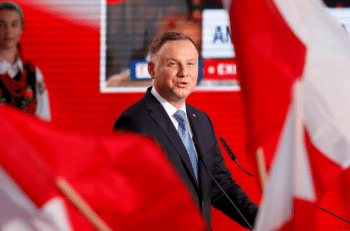
    An emigrée contrasts Poland’s reversion to hatred of LGBT+ with Ireland’s recent liberalisation. By Sara Chudzik. I was twelve when I first moved to Ireland in 2007. Ever since then with every passing year I would count how many years it is that I’ve lived in Poland and how many in Ireland. Now the Irish half is becoming top-heavy and I’ve lost count of the years. Yet, for the past few days I’ve felt more Polish than ever. On 6 August 2020 Andrzej Duda was sworn in for his second term as the President of the Republic of Poland, having narrowly defeated the liberal mayor of Warsaw, Rafał Trzaskowski, who  in 2019 promised to provide greater support to the city’s gay community, including offering some anti-discrimination and anti-bullying education in schools. Duda had claimed the mayor’s gesture constituted the “sexualisation of children” and the destruction of the family. Duda’s wish and promise it is to make Poland an LGBTQ+ free zone and to stop the spread of LGBTQ+ ‘ideology’. Since the election activists have taken to the streets to peacefully protest the extension of Duda’s conservative regime. Rainbow flags have begun to appear around monuments and statues around cities. Margot, a transgender activist, was violently arrested for stealing a registration plate from a van belonging to an anti-LGBT+ Fundacja Pro, an organisation responsible for spreading pseudo-scientific facts such as that homosexuality is on par with paedophilia. Margot was detained and taken to a man’s prison yesterday. Since then 48 more activists have been detained;  in many cases with no immediate information about their whereabouts.  Back in 2015 when Ireland became the first country to legalise gay marriage in a popular vote, I did not vote because I couldn’t. Despite living in this country for years and being educated here, I was still not a citizen. Technically, I did qualify. Practically, I never had the money to buy an Irish passport. I have never voted in Irish elections and could not take part in either the 2015 marriage equality or the 2018 choice referendums. Living in a country in which you don’t vote makes you feel like an observer or a lurker rather than an active participant of society. I feel deep regret at the fact that I wasn’t part of these monumental and historic changes in Ireland.  This entire time I’ve been a remote Polish citizen and when my parents reminded me of my right to vote in the upcoming election, knowing about Duda’s hatred-fuelled ideologies, I was excited at being able to exercise my right to vote. I wanted to take part in stopping Duda from continuing to a second term. When that didn’t happen, I felt useless. I’ve already heard of LGBTQ+ people being targeted by the police and about the violence that erupted at pride marches in June. Then Duda got re-elected and I was in Ireland, not knowing how to take action.  In the past few days, the situation has gone from bad to worse, as more peaceful demonstrations followed that were violently interrupted by the police. People gathered in their hundreds around Warsaw and other major cities in Poland. I saw brutal videos and images and read about the arrests of activists from the safety of my phone screen. For years I have considered Ireland my primary home but now I wish I was in Poland to be part of the fight — a wish that only those from a safe distance could make.  I watched and wondered — what about Ireland? The Polish are the biggest minority group here. There must be people out there angered by this. Eventually I came across a social media group which listed cities in Poland and around the world where peaceful protests and demonstrations were to take place. After scrolling through the comments, I saw a user ask about Dublin. Later I found an event which was to take place this Sunday.  I felt like I should make a poster for that purpose as I didn’t have any flags with me. I took out whatever materials I could find in my room in order to draw a Polish flag with the outline of the country with rainbow colours. Months ago, I bought some make-up and an eyeshadow palette that had red in it. Whatever could I use that for? Today that came in handy. Sometime later I found myself outside the GPO amongst dozens of both Irish and Polish people with LGBTQ+ flags and signs showing both solidarity and expressing the need for action. We stayed there for an hour as passers-by took interest and some stopped to learn more about the situation.  The GPO was the appropriate place for this as the sight of Ireland’s fight against oppression. And we weren’t standing there alone. Behind us were two stands with food for the homeless, one set up by the Sikh community, the other by a group of nuns. At the end, men with turbans offered us some rice and curry.  This wasn’t an uprising – it was only a small crowd, mostly young adults, but we all knew that being able to stand there uninterrupted and safe was a privilege that is not given to people like us in Poland. Some older demonstrators  who came from different parts of Poland remembered the protests from years ago. They said not much has changed. The goal right now is to raise awareness. People in Ireland need to know what is going on — we have been here and lived here for many years now and are part of this country — help us to protect people from where we came from. We aren’t in Poland but there are a number of things that we can do from here. You can donate to various organisations in Poland at  https://lgbtqpl.carrd.co The goal of the activists at the GPO on Sunday is for there to be consequences for the Polish government. The EU as well as governments outside of Poland have the power to prevent the spread

    Loading

    Read more

  • Posted in:

    Review: Medea’s incomprehensible crime

    The new production at the Gate makes Medea’s children more than mere victims By Anna Mulligan Like the play itself, the set for Oonagh Murphy’s Medea walks the line between the mundane and the mythic. The children have a teddy bear named Hercules, and the play takes place in a bedroom whose sloping sides, rising inwards, give the impression of an attic or a crawl space. At the apex is a kind of hovering wooden grid, as if the technicolour bedroom is not an attic but a dungeon, an oubliette, where Medea’s two children have been forgotten.  This might be a reference to the eyes of the gods, watching as they might in Euripides’ play, from a safe distance. It’s hard to know; the play draws on its myths indirectly in ambiguous flashes of memory, as when Medea’s children (played on this particular night by Oscar Butler and Jude Lynch) loosely re-tell the contours of their father Jason’s adventures, passing the time in their locked bedroom. Murphy’s new version of Medea is effectively a retelling of the old story from the children’s point of view. While we wait in the locked room for the play’s titular character, the boys summarise, speculate about and replay the story of their parents. At one point, while fighting, the younger brother uses magic to escape the boundary of “his side of the room” and play keep-away with the golden fleece, until the elder makes a false promise to take it back, his fingers crossed. Medea and Jason’s magic and betrayal come up in their spat, but not in the children’s telling of the parental love story, which one boy says was a “win-win” – Jason got the fleece, Medea got to leave home, they both found love. No harm, no foul. The two young actors shine from the beginning of our time with them, when they act out a series of death games. First they try to play dead, quietly, for as long as possible, and then they take turns choosing their own death – shot by a nerf gun, mauled by a bear, hit by an arrow and then dead of a seizure. The games are edgily acted, comic and unnerving without being heavy-handed in their foreshadowing of the deaths that the audience knows are coming anyway.  There were times in this early section when I thought I was waiting for Medea, as the titular character and one who generally dominates any story she populates, but the strength of the script is that I was not. When Medea did arrive, there were times when I felt she was a distraction from the main event of the brothers’ story, which is a testament to the reframing achieved by Mulvaney and Sarks. The play returns in the meandering of the children’s reflections towards death, and whether dead things count; towards being small, and whether small people count. The adults in Medea are playing games with the children, but the play itself takes them seriously on their own terms – their skills, their questions, the deaths they choose for themselves, which are for laughs. Over and again the boys run full tilt into the locked door, rattling the handle, showing us that they are not by choice narrative footnotes. Not long before the climax of the plot, they have a contemplative conversation about the meaningfulness of being small – as small as specks, compared to the glow-in-the-dark stars papering their ceiling – but when they have drunk Medea’s poison, as instructed, she won’t let them lie back down in that corner, and die looking at the stars. It’s at this point that Eileen Walsh’s character of Medea breaks through her lyrical and sentimental register into a rage until they stand up and allow themselves to be dressed and staged by her, so that they die in her arms. Medea’s character is a difficult needle to thread; the play struggles with her. We meet her dressed for distress in her pyjamas, dishevelled, telegraphing her tortured love for her children, her bitterness with Jason, her despair at the prospect of returning home to her father. None of it rings true: her singsong declarations of eternal love for them do not feel authentic, but neither do her moments of stagey bitterness and resolve in planning the death of Jason’s new love seem any truer at their core. Her moment of rage when the children resist her cajoling is a moment of clarity – but what does it mean? The crime no one can make sense of is still the crime no one can make sense of. Walsh’s Medea tries on different motives, but does not commit. Is she turning to murder to avoid returning to Colchis? Is she destroying the thing – the people – that she thinks Jason wants and cares for the most? Is she attacking the evidence of her life with Jason, now destroyed? Is she bored? She stages the crime for Jason by taking the children from their contemplation in the dark among the stars to a beam of light from the finally open door, locked for so much of the action. She’s not hiding them; they are to be displayed. In this way, the play’s conclusion is intentionally inconclusive; neither she nor the audience get to see the look on Jason’s face when he understands whatever it is she wants him to understand. Jason’s absence is deeply felt in the bedroom, where his golden fleece – now a purloined jumper that still smells of him, kept in a drawer – is lovingly cradled.In Jason’s absence, the children are not needed outside the bedroom; Medea visits them to update them on their status in the acrimonious separation. This is the thematic heart of the new Medea; the children, forgotten, are trapped by the weight of our captivation with heroes and demigods like Jason and Medea, whose children are pawns and cannot escape. The contemporary framing – the bickering of the shared bedroom, the word

    Read more

  • Posted in:

    Why Pay Teachers [They’re Only Women]?

    Last month, Minister for Education and Skills Richard Bruton mentioned that “the idea of courses to upskill homemakers were among a number of steps under consideration” to deal with the shortfall of teachers in key subject areas. Calling them “homemakers” may have been correctly gender-neutral, but the issues at stake are not. How could they be, given that women vastly predominate among stay-at-home parents, and among teachers? Why wouldn’t Irish mammies see their role as unpaid child minders extend to the classroom and shouldn’t they be delighted if the government decides to throw them a few euro for doing so? As a lecturer, activist and member of the Teachers Union of Ireland, I have been struck that the numerous public-service pay agreements over recent years have totally failed to address the relation of gender to the teaching profession. The government, trade unions and the media failed to comment on the fact that since the 1970s there has been an almost total feminisation of teaching in Ireland. According to the Central Statistics Office, women account for almost nine out of every ten teachers at primary level, and more than seven out of ten at second level. In the primary system, you have a 17% chance of being a principal if you are a man, but only 8% if you are a woman. So if primary school teaching is now an almost entirely female profession, how is it that men are twice as likely to become a school principal? Why are the majority of teachers now women, and why do men do better when it comes to promotion? There are two problems facing us here: the feminisation of teaching, and gender inequality when it comes to promotion. When a profession or job becomes feminised, there is a correlating depreciation in salaries. This is borne out by researchers such as Emily Murphy and Daniel Oesch, who point out that “in female-dominated professions salaries are lower and it is not only women with children, but also childless women, who earn lower wages”. According to a report by the Primary Education Committee, set up by the Minister for Education and Science in 2003, “There is a strong argument that jobs involving care work have been systematically devalued. For example, teaching and nursing are female-dominated professions while engineering and software development are male-dominated”. A recently qualified primary or secondary teacher starts on a basic salary of €34,602, rising to €43,292 after five years, and incrementally up to the top of the scale at €64,701. But it takes 27 years to reach this level. By contrast, according to the most recent Morgan McKinley salary guide for 2017, a Dublin-based qualified accountant starts on €45-55K, which increases after three years to between €55K and €65K, and after two more years to between €65K and €70K. A Dublin-based software (e.g. Android) developer can expect to start on €30-40K and to reach €85K after five years. Over the course of a career, therefore, teachers earn less than other professionals, and they endure incredibly slow career progression and mobility. Moreover, the 27-year incremental scale has since 2012 had a proportionally negative impact on career average pensions. As the teaching profession is dominated by women, what has developed is a system where women are systematically paid less, and where they will be most at risk of income poverty when it comes to living off their pensions. With such low salaries and lack of mobility and progression, not to mention increasing workloads, men are choosing not to become teachers. When male primary school teachers ten years into the profession were asked in a 2005 survey what would attract more men into the profession the answer most frequently given was “more money (improved salary structure/financial rewards/ promotion prospects)”. The next most common factor was the poor public image of the profession, which seems strange given the level of education and achievement required to enter. The CAO entry requirement for primary school teaching in 2017 was 451-466 points. New regulations introduced this year require entrants to score at least 60% in Leaving Cert Higher Level Irish. For secondary school teaching, an honours Bachelors degree is required, followed by a two-year Professional Masters in Education (PME). Not only does it take a lot of time to become a teacher, but there are financial expenses too. With the minimum number of years to acquire a primary teaching qualification at four years, and five years for a secondary school teacher (a three-year minimum degree plus two more years), the financial expenses start to mount: a basic degree is €3,000 per year, and the PME costs approximately €10,000. It is outrageous that, despite all this, our educational system does not value teachers and refuses to pay them commensurate with their professional qualifications and expertise. In fact, in the recent talks for the current pay agreement, the government has made it clear that it would rather permanently instate a lower rate of pay for new teachers entering the profession. The message is that teaching is ‘women’s work’ that doesn’t merit fair or equitable pay. Since the ballooning of state debt that was part of the decision to bail out the bondholders in 2008, all sectors of education in Ireland have suffered severe reductions in funding. At primary and secondary levels, the pupilteacher ratio has increased and moratoriums have been placed on recruitment to posts of responsibility, severely limiting promotional opportunities. Among Institutes of Technology, there was a 35% cut in funding between 2008 and 2015, but during the same period student numbers rose by 32% and full-time academic staff numbers fell by almost 10%. The Further Education sector has also undergone similar ‘reform’. From the point of view of teachers and lecturers, these cuts have created severe additional workload pressure, all in a context where the new norms of precarious employment status and hourly paid contracts are exacerbating income poverty. Numerous high-profile cases in Irish universities have also highlighted gender discrimination when it comes to promotion. It is no

    Loading

    Read more

  • Posted in:

    Don’t tell me my family’s ‘not ideal’.

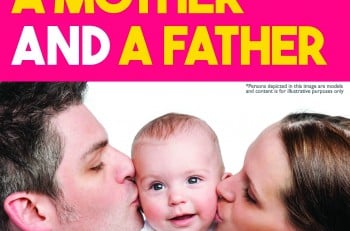
    By Daire Courtney. As far as my family are concerned, my two mothers are married. They tied the knot in New York  just under a year ago. The Irish state does not recognise their marriage, but with luck it will soon. With two weeks to go, the posters are up, the debate is in full swing and every nay-sayer wants to know: should gay couples be raising children? The Children and Family Relationships Act may have decided that issue legally, but the No campaign aren’t trying to debate marriage. They are looking to scare up No votes. They are asking people to prevent same-sex couples from bringing up children, despite the fact that they already are bringing them up. I am twenty years old. My mother came out as gay when I was two and she met her partner when I was eight. People often want to know what my childhood was like, but mostly they want to know what was wrong with it. This is the kind of subtle homophobia that comes from assumptions that you weren’t parented properly. Did you have the right kind of role models? Were you bullied? Did you feel like something was missing? Ultimately it all comes down to asking you if you regret that your parents are your parents. This is and always has been hurtful to me not only because it is homophobic, but also because it’s deeply offensive to every day I’ve lived with my parents. My parents are wonderful people. I won’t hear a word against them. Or I wouldn’t if I had the option to choose. The referendum has given space to many more hurtful opinions than usual. It’s frustrating to listen to people on TV saying your family is “not ideal”. It’s insulting to have to answer probing questions and educate people. I never had doubts about my family’s legitimacy. I don’t need the state to tell me that my parents are my parents. But the lack of legal recognition causes problems. When I was five years old, my mum’s first female partner was diagnosed with terminal breast cancer. She was given six months to live but she lived three years. I considered her as a parent. I started thinking about what would happen if my other mum died. When my new mum came into our lives, I felt more secure. But I realised at some point that my new mum had no legal claim to me. If something happened to my birth mum, where could my sister and I go? Both of our parents could be taken away. Not many ten-year-olds have to worry about things like that. It is also about having watched my parents campaign for years for marriage equality. Even without the problems for me growing up, my parents want their marriage recognised. That’s a good enough reason or me to campaign for a Yes vote. The easiest way for the No side to win seems to be to wax lyrical about the child’s ‘right to a mother and a father’, as if those concepts mean anything specific. Every parent is different. There are no characteristics that are unique to mothers or fathers, unless you believe in gendered stereotypes of Daddy breadwinners and Mammy bakers. The No side are using children to play on the fears of people. Not everyone knows a queer person and fewer people know a queer family. We have the statistics and the reports to counteract fears, but people need to see our families and connect with how the referendum affects us to understand. Canvassing for marriage equality has always been more successful when queer people go door to door and tell the story of how happy they and their partner are. For us children, this debate means opening up childhood memories and showing them off. Being a poster child is tough, but it is the only way to show voters who queer families are. This referendum is about LGBTQ children having equality in their future. It is about LGBTQ couples who have been waiting years, or even decades, for a real wedding. And yes, it’s about the children who have been told their whole lives that their families are not equal. •

    Loading

    Read more

  • Posted in:

    Men and guardianship: Bill improves, but still primitive.

    By Michael Smith. The Children and Family Relationships Bill is the most important piece of legislation affecting parents and children for a generation. There is much that is good in the bill but this article focuses on one surprising defect: the provisions on unmarried fathers and guardianship. While the extension of automatic guardianship under the Bill to fathers who can demonstrate that they have cohabited with the mother for one year (with three of the months after the birth of the child is an   advance of a sort, concerned agencies like Treoir, which provides advice to unmarried parents, believe that the Bill does not go far enough to reflect the rights and responsibilities of unmarried fathers for their children. Unmarried fathers should be the automatic guardians of their children – as married fathers are. The father’s relationship with the mother should not be determinant. The Law Reform Commission (LRC) recommended this in 2010 (and indeed in its 1982 Report on Illegitimacy). It stated unequivocally: “equality should be the guiding principle in reforming the law in this area”. Equality is a big principle with clear-cut edges and the Bill simply does not enshrine it. That is a fundamental problem. The LRC’s recommendation that “legislation be enacted to provide for automatic joint parental responsibility (guardianship) for both mother and father of any child” has been flouted in the Bill. Unmarried fathers are the automatic guardians of their children in Northern Ireland, Britain, Australia and many European countries. In these jurisdictions, automatic guardianship for unmarried fathers can be challenged by the mother if it is not in the best interest of the child. In other words the presumption that the father should have guardianship over his children can be rebutted (the same position as applies to the mother’s rights). The proposal in the current Irish bill seems to be based on the view that the father derives his guardianship rights as “family” rights from co-habitation. But the rights accrue to the child on the basis that it is better the child should have fully engaged parents, mother and father alike – and should not derive from any interpretation of family. It is possible that the Children and Family Relationships Bill when enacted will be infirm either constitutionally or under the European Convention on Human Rights. Currently where a child is born to parents who are married to each other, the child’s mother and father automatically acquire joint guardianship in respect of the child. By contrast, where a child is born outside marriage, only the mother will acquire automatic guardianship. An unmarried father is not automatically deemed to be a guardian, though he may become a guardian either by means of a statutory declaration made jointly by both parents, or by court order. This means that a child born to married parents automatically enjoys the guardianship of two persons. A child born outside marriage, on the other hand, has no automatic right to this second guardian. The child’s right to a second guardian is, in such cases, contingent on the father’s willingness to seek and accept guardianship, and then on either the mother’s willingness to accept him as a joint guardian or, in the alternative, on the assent of a court. The Commission’s suggestion of a strong presumption in favour of the father, while an incremental step, would nonetheless maintain the current situation whereby responsibility will be conferred only on unmarried fathers who seek to exercise such responsibility, (through the courts if the mother’s consent is not forthcoming) while mothers and marital fathers will continue automatically to assume such responsibilities on the birth of a child. The LRC thinking is reflected in that of the Equality Authority which has specifically committed itself to supporting initiatives “…[p]romoting the status of men as carers, in particular the equal sharing of caring rights and responsibilities between women and men and continuing dialogue with men’s organisations on issues of equality for men…”. In 2010 the Equality Authority recommended that steps be taken to promote equal sharing of parental responsibilities by those in a parenting role in respect of the child, where this is appropriate in the particular circumstances.  In this regard, as a matter of principle, the fact that a child is born inside of or outside of the context of marriage should have no bearing on the child’s right to be cared for and supported by both of his or her parents. If guardianship is viewed as a vehicle primarily for conferring responsibility in respect of a child, the case for conferring parental responsibility on both father and mother automatically on the birth of a non-marital child, has much to recommend itself: • It would remove the distinction between marital and non-marital fathers, emphasising that parental responsibility is predicated on the relationship between the parent and child and should not depend on the relationship between the parents of the child; • It would emphasise that mothers and fathers alike each have equal responsibilities towards their child. Certainly there may be exceptional cases in which it will not be either in the child’s best interests, or in the interests of the wellbeing of the mother, for the father (or indeed other guardians) to retain parental responsibility. Some disgracefully argue, for example, that rapists should potentially benefit from paternal rights including guardianship. These exceptional situations will necessitate a mechanism whereby a person may be removed as a guardian. Such situations should include, in particular, where that person has consistently failed to meet his responsibilities towards the relevant child or where that person has raped the mother or been convicted of a serious criminal offence or has committed a serious civil wrong against the person of the child or other guardian. This removal must be subject to periodic review and subject to appeal. Exceptional circumstances should not shape general policy and principles of the law as it applies to the majority of cases of childbirth. The Bill reveals an extraordinary deficit in egalitarianism – denigrating the father and

    Loading

    Read more