

Culture

Random entry RSS

  • Posted in:

    Temper-mental MissElayneous

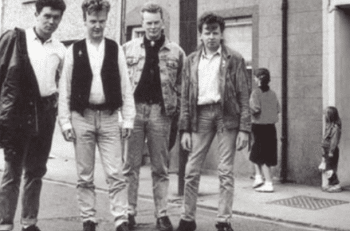
    Everything about Temper-Mental MissElayneous is out of step with the world of modern pop. And that is a criticism of the state of pop rather than the artist I shall refer to as Miss Elayneous. If pop was once the battleground of maverick innovators it is now the playground of rich calculators. Every publicity photo is airbrushed to perfection. Vocals are the product of auto-tuning. Any traces of humanity are corrected in the mix. The image is as meticulously tailored as the marketing strategy. Over the long run, that fulcrum of popular culture, the soap opera has found a new companion. It has been joined by the perfumed monologue of the narcissist. Appropriately enough, this manufactured fragrance is located in aisle number nine of your local supermarket. These icons of individuality, (their individuality – not yours and certainly not ours) can be found in any area of life where the currency is celebrity. And in a realm where these people celebrate nothing but themselves, they hardly merit the title. The non-noun, celeb, as empty and shallow as it is, fits them like their red-carpet designer outfits. The celebs sashay from many directions. They seep from the world of acting; from where cooking is done by spotlight rather than candlelight; even from sport, where many appear far more comfortable in the front row of the fashion show than, well, the front row. Yet perhaps they flood most quickly, fastest and most visibly from the world of pop music. The pop terrain now possesses the reflective sheen of that millennial artefact, the CD. Robin Thicke and Miley Cyrus are the two latest pop music celebs completely deserving of being ignored and simultaneously studied seriously. Their contribution to the mainstream pornification of culture is akin to Ronald McDonald seizing the keys to the Playboy Mansion. Thicke’s most noteworthy accolade was winning the Campaign to End Violence Against Women’s ‘Sexist of the Year Award’ for 2013. Cyrus is just beneath him, and contempt. It was encouraging to see how Sinéad O’Connor called her out on her market-driven, publicity-generating Look-at-Me shenanigans recently. And that brings us to another outspoken, individualistic, distinctive Irish female artist. Most of the last two decades of hip-hop have left me shivering. I m almost exclusively old school, even though I find it funny when Macklemore uses rude words in Thrift Shop. In terms of Irish hip-hop, Marxman, in particular with their early tracks like ‘Ship Ahoy’ and ‘All About Eve’ represented a high point for me. They proved that the terms Irish and hip-hop could work together at the highest level. Not coincidently Sinead O’ Connor was a guiding collaborator with the band. Like Sinead, Miss Elayneous finds wonderful and original people to yoke her talents to. Anyone who witnessed her set opening for The Clash’s Mick Jones and his merry crew in Dublin knows that she is a fearless performer. She’s not afraid to tackle the ageing punks on their home ground. Similarly her work with Paranoid Visions, most notably on the song ‘False Prophet’, added a new dimension to their apparent quest for the impossible sound. That band seem hellbent on destroying the rules of rock and roll by mashing music together in ways that on paper shouldn’t work. Recently they sound like Skinny Puppy brawling with Crass and Brendan Behan. With Miss Elayneous in the mix they approach the post-punk cacophony of bands like the Pop Group and Rip, Rig and Panic. Miss Elayneous has recently begun working with one of the heroes of the Irish music scene. Stano occupies a singular place in the Irish music landscape. His meticulous, painstaking collages of sound and rhythm narrowly escape falling into chaos. In fact, their proximity to chaos makes them exciting and compelling. Having collaborated with members of My Bloody Valentine, Thin Lizzy and Trouble Pilgrims/The Radiators it makes perfect sense for Stano and Miss Elayneous to craft new sounds together. Do I like everything Miss Elayneous does? No. Then again, what artist satisfies on every track? But in a world of fickle fads masquerading as pop I trust in Miss Elayneous. She has something to say. In fact, she has lots to say. And unlike most pop people it isn’t all about herself. He words bespeak immersion in society and community. She raps about back-handers and dirty deeds. I may not buy everything she releases. But I would vote for her. How many other rappers could you say that about? Michael Mary Murphy

    Loading

    Read more

  • Posted in:

    Particular, not pedantic

    Recently in the Irish Times (IT), Jennifer O’Connell wrote a column ‘Ten phrases we Irish could live without’ and the piece was as throwaway as the putrid prose she was targeting. She should look closer to home: leaf through that newspaper’s Saturday magazine and entertainment supplement – they are loaded with the very phrases she is lamenting and her own homey, thirty-something-year-old-next-door column certainly evokes ten ‘topics’ we could live without. Her shoulder-shrugging on language bespeaks a growing indifference on our Kennelly with his biographer, Sandrine Brissett behalf to what I’d like to call ‘dumbspeak’. Sadly, it’s splattered everywhere and tossed-off articles – ‘listicles’ to purveyors of dumbspeak – like the one in the IT, defeat their very purpose, as they give the doltish deviations a studied ironic legitimacy. Printing those words in your pages in a half-baked attempt to purloin the Zeitgeist, without any structured argument against them to give them a good kicking, tends to validate them. Why bother? It all brings on what Winston Churchill almost said: it is the sort of English up with which we should not put. The mindlessness is too pervasive for flippancy. Here is a small snippet of a con- versation I could not fail to hear in a Dublin café recently. “When we came here last year, the food really sucked and the service was really random, but it seems to have changed and these toasted sandwiches are really awesome, don’t you think?” “Absolutely. It’s like, so friggin’ fresh… it’s beyond real”. “Oh, and Tom just pinged me to say he got those tickets for the weekend. I’m so, like, happy now I could almost cry”. “Tom is like, the best ever”. “Totally”. “Totes”. We all experience it. It made me want to bite chunks out of the ceramic sugar bowl in front of me. Meat being scraped from bone. The sheer inanity of the chatter summoned to mind a countervailing recollection that 18th-century coffee houses were actually hotbeds of discourse and debate; I remembered Samuel Johnson’s idea of language being the dress of human thought, and reflected on how mangily the minds sat next to me were kitted out. With my back to them, I gamely tried to read my newspaper, but Troilus and Cressida had those oating, gaseous, vowel-stretching baritones that are beyond blocking. What struck me when I did look around was the age of the two awestruck ciabatta munchers: these people were not teenagers, who are, somewhat understandably, more susceptible to nouvelles influences. No, they were roughly the same age as me, in their mid-thirties, but their lexicon was driven by words that were downright silly, and ubiquitous underarching verbal crutches such as “like”, “fucking” and “whoa”. I finished my coffee and left, for I could suffer it no more. You may say, so what? I believe in good English. However, I’m not a grammar fascist, a pedant or a prissy self-appointed ‘protector of the language’. But I was taken aback at the verbal incontinence dissipating through the hip-grim café and the creeping trend of idiot words and sayings that lay siege to English like a corrosive virus. We hear it on TV and radio. Why do our six-o’-clock newsreaders revel so in their inanities of “thanks indeed”, “bye for now” and “take care!”? Worse even are the empty phrases prattling forth from the mouths of our pol- iticians who scrape at particular words in the hope of purchasing gravitas or perhaps time (“hand, act or part”, “we are where we are”, “moving forward”, “vis-à-vis”, “in the final analysis”, “at this juncture” “at this moment in time”). Or revel in cliché “all politics is local”, “it’s not rocket science”. Some of the worst language comes from the most pusillanimous – estate agents. Making property ‘prestigious’ or ‘exclusive’ leaves out what the property is, as opposed to how the upwardly mobile see it. The language itself creates a value based not on substance. Then there is the trend for using the word “so” to start a sentence, nonsensically. “So tell me about last night”. “So, we went out at nine…” “Chillax”, “epic”, “guys” “folks”, “no problem”, “no worries”: they all tend to grate. I realise that English evolves, new forms of communication bring substantial new concepts (tweet, online etc). Part of my concern may be attributable to a concern that America – the home of new technology – and Americanisation bring not just modernisation but simplification of necessary complexity, and homogenisation (alternate becomes indistinguishable from alternative, “at present” from “presently” and never say “niggardly”). Ideally language should be adaptable to taking on the tint of any country. “Words will not stay still”, TS Eliot noted, and last year the Oxford English Dictionary brought us “selfie”, “twerk” – and the compromised use of “literally”. Yet we do not have to accept new words without question or judgment or taste. Walt Whitman wrote: “Language is not an abstract construction of the learned, or the dictionary makers, but is something arising out of the work, needs, ties, joys, affections, tastes of long generations of humanity…” – therefore our language is only as good as ourselves; it reflects where we are as a society. Orwell also said that good English should be like a windowpane, so in a similar context, our spoken words can be held up as a mirror to our culture. Language and knowledge are interdependent. Good, working language presupposes and depends on a real knowledge of things. If ignorance is widespread, then so too will be language. If a cheeseburger can be awesome where does that leave the Taj Mahal? A useful response to people using dumbspeak is the word “huh?” – which, apart from serving its purpose of halting them, to explain their verbicides, just happens to be the universal word that the Max Planck Institute for Psycholinguistics found could be understood across all cultures and countries. Neat, huh? If English grows with the aid of poetic spirit all the better (“Grant me some wild expressions”, said

    Loading

    Read more

  • Posted in:

    An Bord Pleanala turns down memorial to abuse victims (27 Nov). In October Mannix Flynn explained why he opposed it.

    You can’t have a memorial of something that is not  yet history An Bord Pleanála should say no to commemorating  residential abuse with a tunnel next to the military memorial on Parnell Square ‘the Journey of Light is drab, unimaginative, insensitive,  visionless – and grandiose’ Mannix Flynn In late September, An Bord Pleanála heard appeals against the decision by Dublin City Council to give permission to the Office of Public Works for the €500,000 ‘Journey of Light’ memorial – to the victims of residential  abuse.  It will be  a covered passageway, lit at night and flanked by fossilised limestone walls and waterfalls running through Oisín Kelly’s Children of Lir monument commemorating the 1916 Rising in the Garden Of Remembrance, Parnell Square in Dublin. A memorial was a recommendation of the Ryan report, after generations  of abuse and decades of inquiries into child abuse including the Ferns report, the Murphy report, the Cloyne report, the Raphoe report, and  the Dublin Dioceses report. The hearing was extremely intense at times, hostile and defensive. It seemed to me as an observer and objector that the case for going ahead with this memorial was rather heavy-handed and oppressive. This was not a holistic process designed to give healing and create reconciliation.  It was evident that no real consideration had been given to the impact  and  integration of what can only be described as an entrance tunnel to the hallowed Garden of Remembrance. Multiple theoretical and visual aesthetic concerns were ventilated. For me the Journey of Light is drab, unimaginative, insensitive,  visionless – and grandiose. Independent TD, Maureen O’Sullivan maintained: “It is demeaning to the survivors not to give them their own space but to ask them to share with a memorial that is celebratory. And it is demeaning to those who fought for the principles of democracy, our independence, to ask them to share with this dark chapter of abuse”. Will soldiers at future  state occasions  have  to turn  their backs to  this  memorial? The Irish Georgian Society objected to the effect the proposal would have on the surrounding historic eighteenth-century square, and to the interventions in the garden. Parnell Square should eventually be reimagined with the  feel of a park. An Environmental Impact Statement would have been useful and should probably have  been required, legally.   Statements were also given by historian Tim Pat Coogan and John Connolly, grand nephew of James, against the proposal . The City Council was somewhat confused in its evidence. It had granted the permission despite a motion passed unanimously by all Councillors in December 2012, to make the site a protected structure. The ethical problem which sweeps aesthetic concerns in its path here is that there have in fact been no serious consequences for the individual perpetrators of the  residential abuse being memorialised. Or for the congregations of religious or the Irish Catholic Church or indeed the state departments that were involved in joint ventures in this diabolical delinquency, and which then indemnified the religious. Yet now the co-accused, the State as oppressor, is proposing this ill conceived, premature, insulting and unwanted gesture. Justice Seán Ryan in the Ryan report ensured in his recommendation that the then Taoiseach’s apology should be enshrined in any memorial expression. So the words of Bertie Ahern, a man who serially betrayed us all, are to be enshrined forever more on this state memorial that is supposed to heal us and acknowledge our suffering. This is a grandiose gesture from a bankrupt state. An unnecessary spend of money. A contempt to those children who are homeless on our streets this very day, who are still dying in our State care system. Who are unprotected and unsafe in their own homes. This state indifference is itself an abuse. There is a potential conflict of interest insofar as the Minister for Education, the department that is making the application for the memorial, appointed two of the memorial committee members to the Residential Institutions Statutory Fund (RISF). The memorial omits  mention of the Magdalene women,  the mother and baby homes, the banished babies, the Bethany home, the mental institutions: Grangegorman, Ballinasloe, and the Midlands. History here is being presented and created by the State, by a conspiracy of the OPW, the besmirched Department of Education  and Dublin  City Council, as the triumphant victor over oppression: the rescuer. In fact  this is a grab by the state, a monumental memorial cover-up by a co-accused that has evaded any accountability to this day. Beware of the state bearing monuments. We place great faith in the independence of An Bord Pleanála and believe it will reject this proposal in its entirety on planning grounds. But more importantly on ethical and moral grounds, on the grounds of contempt to the very idea of what memorial and monument can be and as further injury to the wounds of the many who are unfortunate enough to have been selected for incarceration in the regimes of state-run residential institutions that contained and brutalised those of us that were deemed surplus to need. As James Young wrote about the Holocaust, “once we assign monumental form to memory, we have to some degree divested ourselves of the obligation to remember”. Memorials are about the past and the issues of physical, emotional and sexual abuse in Irish institutions are not yet historical.

    Loading

    Read more

  • Posted in:

    Let culture out

    The state must respect and resource the cultural lives of poor communities not simply as audiences but as creators, producers, commentators, critics and decision-makers

    Loading

    Read more