Dermot Ahern: It’s a job. It puts bread on the table.
by admin
Dermot Ahern: It’s a job. It puts bread on the table.
Posted in:
by admin
He scratched himself, yawned, and looked out the window. But Kevin Haugh was always listening.
by admin
Tensions rise as media standards fall Media need to look to the facts, not ideology Tensions between the local community and the Shell-led gas consortium in north-west Mayo have considerably deepened following the sinking of the shellfish boat owned by Pat ‘the Chief’ O’Donnell in mid June. The sinking of his boat and the arrest of his son, Jonathan, as they exercised their historic rights to fish in Broadhaven Bay have removed a key obstacle in the company’s attempts to lay a pipeline from Glengad to the Corrib gas field. Last summer, close observers of the controversy surrounding the proposed high pressure gas pipeline and terminal at Bellanaboy suspected that the withdrawal of the massive pipe-laying vessel, the Solitaire, was primarily influenced by a fear on Shell’s part that O’Donnell might be successful in a High Court application to protect his historic fishing rights. Shell to Sea activist, Maura Harrington, was for a number of days also on hunger strike in protest at the presence of the ship in Irish waters before the sudden departure of the Solitaire last year although the company claimed that the pipe laying exercise was suspended due to technical problems. Many suspected that a court decision in favour of O’Donnell’s right to fish was a key consideration by Shell executives who feared that such a development could further delay by years an already seriously troubled project. Now with the forced removal of the O’Donnell’s from the water, however temporarily, and relatively mild weather conditions over the coming weeks Shell is hoping that the pipes close to shoreline can be laid without too much further disruption by opponents of the project. Pat O’Donnell and his son Jonathan have been arrested on a number of occasions and another of their boats seized since the shellfish boat Iona Isle was sunk on 11th June off Erris Head. There has yet to be a decision by An Bord Pleanála following its recent oral hearings into Shell’s renewed application for a revised pipe line route during which significant health and safety issues, similar to those raised over the previously unacceptable route, were raised by a number of interested parties. (see Michael McGaughan article page?). There has been some media speculation, fuelled by Shell advisors and spin doctors, that Pat O’Donnell may have sunk his own boat, and his livelihood, in the early hours of 11th June in order to gain sympathy for his position and of many others who want the proposed pipe line and terminal moved to a location where it does not threaten the health and safety of local people or the environment. This notion is rejected by O’Donnell and his crew member in the lengthy and detailed interview with Miriam Cotton which is reported in these pages. Both men are adamant that the boat was sunk when four armed and masked men with Eastern European accents boarded the trawler and held them at gun point while releasing water into the vessel. Similar allegations of attempted media manipulation by those opposed to Shell’s activities were made against local farmer, Willie Corduff, when he complained that he was beaten, again by masked men, after he emerged from under a truck where he was protesting against what he and others saw as Shell’s attempts to illegally fence off from the public an area at the Glengad landfall. In the early hours of April 23rd Corduff claimed that he was attacked and beaten around the head and body at the Glengad site by men wielding batons or heavy rubber instruments and subsequently hospitalised. Among the commentators to question the veracity of Corduff’s account was Peter Murtagh who suggested in The Irish Times that the former member of the Rossport 5 – who was jailed for ninety days in 2005 – was making it all up. Murtagh claimed that Corduff had not provided him with his hospital records which might substantiate his injury claims. The respected IT editorial executive did not record the fact that obtaining hospital records is not something that can be achieved within the deadline demands of a newspaper but can sometimes take weeks, as Village has learned. Witnesses including professional journalists who saw Corduff in hospital testified to his bruised condition as did a photograph published in The Irish Times on the day after the attack and s other photos published subsequently in Village magazine. The hospital and ambulance service records obtained and paid for by Willie and Mary Corduff and furnished to Village are consistent with his account of how he sustained injuries which left him in Mayo General Hospital in Castlebar for twenty-four hours. The diagnosis prepared by Mr Osama Elfaedy, the registrar to consultant surgeon Kevin Barry and sent to Corduff’s GP, Dr Brendan Molloy in Belmullet, records that Corduff suffered from bruising and had been kicked all over the body during an alleged assault at Glengad. Willie Corduff was suffering from kicks, headaches, nausea and vomiting upon his admission on 23 April. It also records that he had suffered a possible loss of consciousness. The hospital carried out a CT scan and X Rays on Corduff’s spine, chest and ankle where the bruising and pain were most pronounced. He also complained of pains to his legs and thigh. He was treated with pain reliefs and analgesia and advised to rest before his release from hospital on 24th April. Ambulance records note that Corduff complained of pains around his head and body when he was collected at Glengad and that he may have lost consciousness after he said he was beaten by masked security guards. In early July, Amnesty International reported that Shell and other oil producers in the Niger delta in Nigeria were responsible for serious environmental pollution along the routes of its pipelines in the West African country. Communities had been ravaged by leaks and explosions devastating farmland and ruining the environment and the health and safety of local people over many years. Amnesty accepted that there had also been a campaign
by Joan Burton
Brian Lenihan’s “Farmleigh Formula” of courting an eclectic group of venture capitalists, hedge funds and Irish oligarchs to re-capitalise the banks appears to be the Government’s only big idea for reforming and restructuring this crucial sector that affects all of our lives. Brian Lenihan should be wary of vulture financiers posing as good Samaritans. The news that former Taoiseach, Bertie Ahern, may be acting as a go-between to get these investors to dig-out our banks is quite scary. Most Irish people over the age of 30 will recall the Eircom flotation, botched by his colleagues in a previous Fianna Fáil Government. This was supposed to be Fianna Fáil’s version of “people’s capitalism”, a chance for everyone to get rich from selling off the state’s crown jewels. Not only did many small investors lose their shirt, but the bungled privatisation led to a number of private equity funds asset-stripping Eircom. This is the principal reason why the Celtic Tiger failed to produce the broadband infrastructure essential to any modern economy. Normally, the run-in to Christmas is the most profitable period for many Irish businesses, particularly the retail sector. However, this Christmas, businesses small and large are finding the going really tough, as credit from their local bank dries up. To make matters worse, tens of thousands of consumers are flocking north of the border for huge price reductions fuelled by lower VAT and weak sterling. Many businesses are hanging on by their fingernails until the January sales. If credit doesn’t get flowing again, and quickly, to sustainable businesses, tens of thousands of jobs will be put at risk in the New Year. Meanwhile, the Government appears paralysed, unable to face up to the banking crisis and its devastating impact on the real Irish Economy The Government has had the specially commissioned PricewaterhouseCooper (PWC) report on the Banks for some time now. Astonishingly, the Taoiseach told the Dáil that the report confirmed to the Financial Regulator that the technical liquidity and solvency situation of the banks was fine as at 30th September. This is akin to saying that the State rooms on the Titanic were all in order; but that the ship was sinking. The core of the problem, which the PWC report appears to have sidestepped, is that Irish Banks, just like Fianna Fáil politicians, are refusing to face up to the levels of toxic bad debts arising from construction and land deals that are poisoning their balance sheets. It seems at times that not just the bankers, but also Fianna Fáil Ministers, expect to wake up some morning and find that the calamitous collapse in construction was all a bad dream. Fianna Fáil seems to be shying away from any notion of the state taking a significant equity stake in our banks via the National Treasury Management Agency, or by using leverage from the National Pension Reserve Fund, to recapitalise and reform our banks. It is difficult to know if this comes from a deep aversion by the two Brians, Cowen and Lenihan, to any form of state activism in the financial sector. This is especially ironic given that the National Pension Reserve Fund has been investing in banks, particularly in the US, and is understood to have lost well over €100m on shares in AIG, Citigroup, Freddie Mac and Fannie Mae. Depending on how you look at it, the NPRF is our very own Sovereign Wealth Fund or Hedge Fund which has been losing large amount of taxpayers’ money in the recent financial meltdown. While the two Brians dither, the economic news keeps getting worse, not least because of a collapse of national and international confidence in the capacity of our Government to handle the situation. Its approach to the banking crisis is the most glaring symptom of that incompetence. The decisions they took on September 30th, and still boast about, have done absolutely nothing to lift the credit squeeze operated by the banks. It is this squeeze that it causing the most economic damage as perfectly viable businesses are unable to raise the loans they need to operate and to expand. Without access to regular credit these businesses shed jobs and die. That is the nightmare scenario which will make an already desperate unemployment situation much worse probably very soon. This is most evident already in the stagnant construction sector but is already spilling over into the wider economy. At present it seems many senior bank executives are unwilling to face up to this nightmare scenario and continue to present an unrealistic over-optimistic picture of their financial position. In that case the Minister has to take some very drastic action to put the entire banking sector on a more secure capital footing to maintain its capacity to service the economy. The alternative is a degree of economic stagnation that would be calamitous for the country. There is an illusion at the heart of many Ministerial arguments about the merit of the scheme they announced. That is the pretence that their scheme made no demands on the exchequer. That is just wishful thinking. The funding of the national exchequer requires an active economy that yields adequate tax returns. If businesses fail due to a shortage of capital then exchequer funds dry up. This has already happened in part but could get much worse if a series of firms were to go bankrupt. Many other Governments have seen the writing on the wall and have reacted aggressively to secure a programme of bank recapitalisation, even by taking threatened banks into public ownership. The Irish Government has effectively jettisoned the so called “moral hazard” argument. The misguided State guarantee now protects those who took foolish risks and operated reckless lending policies. Remember, Irish banks are currently owed €110 billion by builders and developers. Of every €100 that Irish residents have deposited in banks, €60 has been lent for property speculation. Now our Government has put billions of euros of the people’s money at risk to preserve every one of the
by admin
n September this year I visited cemeteries along the route of the western front of the First World War, where Irish Soldiers lie among the fallen.
by admin
John Drennan – Yer Man About The House
by Kate Fennell
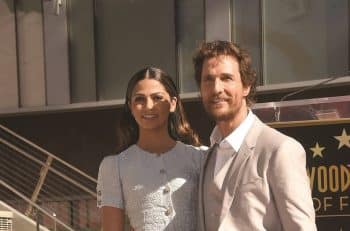
I recently discovered that the famous Hollywood heart-throb, Matthew McConaughey, and myself, have something in common. We would both like our children to learn Irish in a Gaeltacht. I am already ahead of him slightly as I am raising my toddler here in the Connemara Gaeltacht, the same one that I was raised in for the first seven years of my life that rendered me fluent in Irish, and that propelled me around the world learning half a dozen other languages. However, before Matthew takes the plunge, I must counsel that he move quickly so that he won’t find that Irish has been abandoned as the vernacular here by the time his kids are teens. The embarrassment for us and the disappointment for him would be just too much. As odd as it may sound, we desperately need someone with a silver tongue to come here and tell a large majority of the population that their native tongue is in fact dying. This fundamental but tragic news must have somehow not reached these parts because otherwise the attitude about speaking the language would surely not be so lackadaisical, Visitors would feel encouraged to use Irish instead of English. All greetings in shops and pubs would be as Gaeilge. Most importantly, native speakers would be speaking Irish with their children. If they knew? Surely? The key but elusive message is simple: Irish needs to be spoken more than English, to survive. In my mind, McConaughey would then explain to the locals, who need reminding, that the Irish they speak is unique, a gift from their forefathers and practically impossible to learn from sterile textbooks. That their pronunciation, turn of phrase, rhythm, musicality, use and command of the language is theirs alone. That it changes from Gaeltacht to Gaeltacht, from Parish to Parish, from boreen to boreen, from family to family, from individual to individual. That it is spoken in no other country. That this is it: the living, breathing petri dish of Irish. That by fecklessly speaking English they are silently killing their culture. He would then explain to the parents that speaking their native tongue to their children would make them happier, more confident and more connected to their environment in the long run. In some cases he might express intrigue at parents’ reasons, if any, for not passing their heritage on. And then he could heap praise on the parents who are carrying the mantel successfully – raising bilingual children in a challenging linguistic and cultural environment. Just tell them that the effort is worth it. He would also let the teenagers know that they are not to blame, that they have been poorly led and are contending with a globalised world dominated by English. That all languages are suffering a haemorrhage due to English. Can he let them know that trying to emulate an English language community in a Gaeltacht makes them weaker? That they can draw from their own strengths and speak two languages fluently, enrich themselves with two cultures instead of one diluted one? Can he ask them not to be shy about speaking Irish even if they are now making a lot of mistakes in it? Encourage them that gradually they will improve, with practice. He would tell the 17 –year-old girl I met that I was sad when she told me no other family that she knows in the area speaks Irish at home. Ask her to speak Irish to her mum (who goes back generations here) when she goes home. She might even respond in Irish. He would persuade her to continue that with her brother, 10, who has a lovely grasp of the language and should be encouraged, not thwarted. Tell him his Irish is lovely, even though riddled with mistakes. After that, he would let her know that when she goes to her friends’ houses she should try to speak Irish to them even when everyone is answering in English. Just let her know she’s to ignore the awkwardness, the shame, the embarrassment, the famine that never left us. That it’s not hers. That it’s the environment she grew up in. No leadership, no courage, no confidence: environmental, cultural or historical. But, tell her, that that’s all gone now and everyone can have 3G. Or 4G. And emojis. As Gaeilge. The new rule is not to feel less in Irish. That was her parents’ rule and that time is over. Of all the things we have to save in the world – the whales, the donkeys, the trees – this must be one of the easiest. All we have to do in the Gaeltacht is go to our local shop, pub, school , open our mouths, and speak as Gaeilge. Live it. If only Greenpeace had their task so easy. Kate Fennell