Corbyn offended the liberal fraternity, but his socialist ideas need a fair hearing, perhaps promoted by the young, the media-savvy, and the intelligentsia
The toxic secrets Peter Wright withheld about MI5, MI6, the Establishment, and Northern Ireland
Posted in:
Councillor Fiona McLoughlin Healy has risked her reputation challenging the low standards ingrained in Kildare County Council
Posted in:
by Village
A Freedom of Information Request showed that Simon Coveney and his officials knew that Departmental figures on housing completions were out, by up two thirds as it turns out, because they relied unduly on ESB-connection figures. Minutes of a meeting betewen the Housing Department and CSO shows the parties knew the figures were debased in February, though they used them up until May, confirming Village’s nasty April cover alleging Coveney was lying about housing completions.
Posted in:
Brzezinski was part of a triumvirate of Western powerbrokers whose malign influence has scorched the Earth for more than 50 years. One of his confreres, David Rockefeller, died last March aged 101. Now, only the third member of the coven, Henry Kissinger, is left to serve the interests of the billionaires and trillionaires of Wall Street and NATO. When Kissinger goes, their combined legacy will be plain to see: a mountain of twisted and broken skeletons.
Posted in:
One of the more intriguing stories surrounding the property disposals of NAMA concerns the sale of the historic Kilcooley Abbey Estate in Gortnahoe, County Tipperary. In late 2013, the estate comprising an 18th century mansion, 220 acres of farmland, five staff houses, courtyard buildings, a lake, boathouse and a 12th century Cistercian abbey and chapel was sold for a reported €2.1m to Newry businessman, Tom O’Gorman. He also purchased the freehold on 950 acres of adjoining woodland which had been leased by Coillte for many years for what is said to be a sum of €1.5m. The figures are unclear because neither the estate agents, Colliers, which handled the sale nor Bannons the receiver acting for NAMA which offloaded the property can confirm how much actually changed hands in the transaction. What makes the Kilcooley Abbey so interesting is the manner in which the sale was organised and how O’Gorman ended up as the successful bidder for the property. Originally owned by the Ponsonby family, the Kilcooley Abbey estate was purchased in 2008 by John McCann, a property developer from Crossmaglen and principal of the Castleway Group, who paid some €6-€8m for the house and lands, not including the forestry. McCann’s loans went into NAMA soon after, and he was chased all the way to the US for the €114m debt. McCann had acquired properties and built developments, north and south, during the boom years and also invested in the US including in an airport business park in Philadelphia, before his business collapsed in the wake of the crash. In 2011, the Kilcooley Abbey estate was put up for sale through Colliers and attracted interest from various parties, including Mary and Jim Redmond, an Irish couple living in London. They visited the property in 2012 and made an initial offer of €1.8m but were informed soon afterwards it was going to be sold to a higher bidder. A year later they discovered that the estate was up for sale again and they expressed their interest in spending up to €2.1m. By this time the property was in the hands of Bannon, who were appointed as receivers by NAMA over McCann’s assets. On 22 August, 2013, Marcus Magnier of Colliers informed the Redmonds that their offer had been rejected by the receiver who had signed a contract with another party at “an acceptable level”. Jim Redmond wrote to NAMA to complain about the sales process, which he claimed was neither open nor transparent. He also contacted the office of finance minister, Michael Noonan, to complain about what they considered was unfair treatment by NAMA and its agents. They received a letter from NAMA spokesperson, Martin Whelan, to say that the agency was advised by Bannons that due process was adhered to throughout the sale. It soon emerged that O’Gorman had purchased the estate and had also bought out the freehold on the forestry from Coillte. Efforts by the Redmonds to find out how much was paid, and why the fact that the Coillte-leased lands were also potentially available was not disclosed during their discussions with Colliers and Bannons, were unsuccessful. A complaint to NAMA, questions raised in the Dáil on their behalf and attempts to acquire information under the Aarhus convention on environmental information, proved fruitless. The only information about the purchase came through the property pages of various media which confirmed that O’Gorman, an oil and gas entrepreneur, had bought the estate and forest. O’Gorman was also the successful bidder for the 160-acre Blarney Golf Resort and hotel near Cork city in early 2014 which he boasted he had purchased ‘sight unseen’ for a reported €2.5m in a sale also handled by Colliers. He said he intended to invest a further €500,000 upgrading the leisure and hotel complex. Meanwhile, NAMA was chasing McCann for the debts he incurred and it was suggested that he had relocated from the US to Switzerland. The agency failed in a recent attempt in the US courts to get control of his assets including the proceeds of the sale of the airport business park. In 2015, it was reported that O’Gorman was hoping to sell Kilcooley for more than twice what he reportedly paid for it but up to early this year the property was registered at the address of his company in Dundalk. He has since erected gates and fencing to prevent local people from straying across his lands along traditional walking routes as the value of the property continues to soar. Once again, a NAMA sale has enriched those with pockets deep enough to invest and impatient enough to sell it on, before NAMA’s long work is done. The episode tends to suggest those who have not asked the right questions have had less chance of purchasing NAMA properties. By Frank Connolly
Posted in:
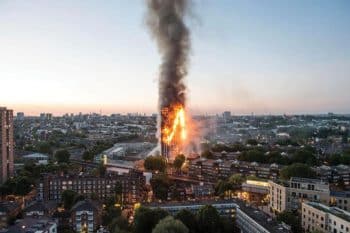
This magazine took a surprisingly benign stance on the mediocre legacy of Enda Kenny, despite the facts that he embraced neither the substantive equality nor the sustainability that animate this magazine. The main reason for this was that it is clear that our times have thrown up much worse. In Donald Trump and the Brexiteers the two most influential Anglophone countries let themselves down and opened their hearts to dangerous fools at the centres of their mature body politics. Our politicians have not yielded to intolerant populism. In the US, Donald Trump’s Presidency will, on the basis that character is destiny, end in a morass of shaftings, leaks, groundless policies and decisions, corruption, impeachment, and disgrace. The UK is more tragic. While Trump’s ascendancy symbolised an enormous and intolerant malaise, the UK’s muddle is more fragile, less personal, more endemic and not so easily solved. It’s about the British predicament. England has for centuries been riven by a class system, sustained by those at the top as it provided fodder for their estates and their Empire, and now prolonged because… well who knows why. Latterly it has denigrated education and aggrandised a boorish press, reaping a whirlwind in moronism and intolerance. Britain has struggled with its post-colonialising identity. Particularly in England many people are convinced of their country’s specialness, by which they may mean superiority. This is not something which has yielded much to the objective analyst. Few can doubt that it is now manifesting as a fullblown identity crisis. The UK’s external relations are now egregiously compromised. The reclaiming of coastal waters for the national fishing fleet is merely symbolic of the divisiveness of unilateral exit. Too many failed to register either the historic or the economic significance of the EU. Cynical propagandists in the press and Tory party created a myth of over-zealous regulation emanating from Johnny foreigner in Brussels, when as the tragic Grenfell fire only underlines, regulations are easily denigrated as fodder for bonfires, until you see what they prevent. Last year the UK voted to leave the EU. Village still predicts it will relent. But it still has a great deal of pain to go through. It will be humiliating to be outmanoeuvred at the start of the negotiation process by a bloc that has the upper hand, simply by dint of the nature of international trade and international-trade agreements which depend on complex long negotiations and which deliver benefits from mutuality, and disbenefits to those who cede. It will be humiliating to ask for a reversal of the Article 50 process which allows countries to leave the Union. The UK will decline economically though politically this is disastrous as the country is reeling from years of austerity, post-industrial decline and social discrimination. It will continue to experience loss of international investment as the markets indulge their fears of uncertainty, of the adversity generated by less trade and less favourable trade, and less immigration with the economic dynamism it generates; but worse of the reality of Brexit, of a hobbled financial sector centred in London, of a declining industrial base, separated from its natural trading partners. It seems unlikely these pervasive sectors with outlets in the principal political parties will not register their discontent in ways that will resonate. The country is also imperiled by fissiparous demography. Over-65s were more than twice as likely as under-25s to have voted to Leave (71% as against 29%). Disenfranchised young people already suffer relative to their parents in terms of jobs. The proportion of working 16- to 20-year-olds in low pay rose from 58% in 1990 to 77% in 2015. Their opportunities to obtain quality housing are inferior. Half of the people living in homeless supported accommodation are aged 16-24. And young people cannot look forward to the retirement and pension terms their parents were privileged with. The State pension which was payable from 65 (60 for women) is rising to 67. Disenfranchising their views on the economy and international place of their country will inevitably engender civil fracture. More humdrumly, Britain’s politicians are dangerously deficient. Theresa May is stiff, petty and unimaginative, and played a cynical card for one who initially was pro-Remain. Her Tory successors, Boris Johnson and David Davis are unrealistic and buffoonish. Jeremy Corbyn is latterly being feted noisily by an anaesthetised electorate but he lacks a clear, positive and modern vision, most of all about the EU. None of these people will unite their country. Their personalities, backgrounds and policies clearly prefigure divisiveness. But in any event even if they were skilful, and they are not, the situation is irredeemable: the country doesn’t know if it wants Brexit (it voted it 52:48% and though constitutional foibles mean they are reluctant to revisit a referendum, they seem fast to have changed their minds after they’d googled to see what it would involve. Moreover if it wants Brexit it’s not clear if it wants a Hard Brexit defined as embracing extraction from the single market and the customs union or a Soft Brexit. There is also a systemic constitutional difficulty. The UK will struggle to provide a solution to Northern Ireland. Despite ample opportunity nobody has outlined a satisfactory border arrangement between it and this Republic. Moreover, the pressures exercised by the DUP, apparently the Tories’ chosen partners in government, may breach the Good Friday Agreement, an international treaty, which requires the impartiality of the British Government in its dealings between nationalists and unionists. Perhaps the UK will leave but if it does it will soon come back. Economics dictates. Economically everybody benefits from trade. In the end it is to be hoped a chastened but wiser UK takes a more comfortable place in world affairs, with its sense of its specialness diminished and its concomitant sense of superiority sundered. For without it, the UK is a great country, with a history of rare genius and a post-war tradition of magnanimous tolerance. To have Britain functioning dynamically and progressively will be a relief,
Posted in:
The Jobstown trial has inspired a lot of commentary on both the power of social media to influence outcomes, and the credibility (or lack of same) of ‘mainstream’ media. Perhaps predictably, most of the commentary seemed to reinforce already existing viewpoints. Social-media users sympathetic to the protestors and their cause were more likely to regard legacy media titles as hopelessly compromised, while journalists in general even before the trial viewed social media – and social-media campaigns – with suspicion. In other words, each side viewed reality through a filter bubble based on their existing prejudices. So it was that the Reuters Institute Digital News Report 2017, including a survey of the Irish media landscape, comes at just the right time to put some of these claims and counter-claims in context. The survey finds that 46% of respondents in Ireland trust “most of the news most of the time”, down four percent on last year, though the figure rises to 52% for “news I use”, suggesting that most correspondents rate their own news judgement in deciding which news to consume above that of the population at large. Both these figures place Ireland pretty much in the middle internationally. Out of 36 countries surveyed, the country places 14th on overall trust of news, and 16th for “news I use”. Overall, Irish users are more trusting of (or have more confidence in) their traditional media news sources than the international average, 46% to 41%. And while trust has fallen in the last year, it has not fallen as steeply as in our near neighbours in the UK. Concerns about ‘fake news’ and partisan coverage of events such as Brexit and the Trump election campaign may have been concerning when it came to international news but so far, while there may be concerns about the impartiality of some local news outlets, none has ever shown the “see no evil, hear no evil, speak no evil” blind partisanship of a Fox News or Russia Today magazine show. The same national versus international pattern holds when it comes to social media. Although social media are less trusted than legacy media for their ability to sort fact from fiction, at 28% of those surveyed, this is still higher than internationally, where just under a quarter (24%) trust social media. Facebook continues to dominate social media news, with 41% of Irish Facebook users finding news through the social network (compared to 47% internationally). Twitter and Snapchat both outperform international norms in Ireland, but despite its popularity with journalists and media types generally, only 11% of Irish Twitter users are getting news from the network. Dissatisfaction with traditional news sources is often amplified in new social media, but despite this, social media clearly have their own credibility issues. But despite audience scepticism, old-media outlets continue to be the primary news sources for most people. RTÉ dominates the field in Ireland, with 62% getting their news there once weekly or more often. This should not be too surprising, given that RTÉ has multiple channels, with both television and radio output. Sky (34%) has only television, in contrast, and the BBC (30%) radio channels don’t really penetrate into the Irish market. Additionally, 31% of those surveyed get news from the RTÉ News website, just 1% behind online news outlet TheJournal.ie, at 32%. The Independent online website is a close third at 30%, while the Irish Times, next in line, lies back at 23%. These differences among the leading online news sources may be a product of different paywall and registration strategies, from the most open (the Journal) to the least (Irish Times). Timing is everything, and Ireland may be lucky that its jolt to the system came a few years ago. The Jobstown trial is to a large extent an artefact of the Irish Water protests, which are receding from current affairs into history. From Brexit fallout to the ongoing housing/homelessness crisis becoming a full-blown catastrophe, there’s no guarantee there won’t be another shock to the system in the next few years, but so far Ireland seems to have been spared the kind of existential problems a high-profile Trump or Le Pen can take advantage of, and the resulting loss of faith in news media. Instead, as shown in the Reuters Digital News Ireland report prepared by Paul McNamara, Kevin Cunningham, Eileen Culloty and Jane Suiter at the Institute for Future Media and Journalism (FuJo) at Dublin City University (DCU), Ireland’s media problems revolve around the more prosaic issues of ageing audiences and reluctance to pay for news. One reason for the relatively high trust in news in Ireland may be a figure which describes participants’ political leanings. Two thirds (67%) described themselves as Centre, compared to 19% Left and 14% Right. Decades of consensus politics on the major issues, from national wage agreements to EU membership to Northern Ireland have presumably had an impact in creating the impression among many that their views are part of the moderate middle, whatever an objective outside assessment might be. By contrast, countries with highly polarised polities, such as the USA, Italy, and Hungary, show low levels of trust in news sources. Perhaps related to this, the age differences when it comes to trust in media are notable. Only one in three 18-24 year-olds and 25-34 year- olds (33% and 34% respectively) agree with the statement “I think you can trust most news most of the time”, a number which rises steadily as participants get older, to 43% of 35-44 year-olds, 53% of 45-54 year-olds, and 56% among those over the age of 55. The reluctance of younger consumers to pay for news may not be a function simply of their familiarity with obtaining free news using modern technologies, but the level of trust they place in it. What should you pay for news you cannot trust? It is also worth considering how much worse those numbers might look for legacy media sources if it had not been for the ‘safety valve’ of