Intelligence, Security and Covert Action

Random entry RSS

  • Posted in:

    Conor Lenihan reviews ‘Up Like A Bird’, by Brendan Hughes: an edifying and fair account of one of Republicanism’s most colourful serial escapees and bank-robber, who has little to say about today’s Sinn Féin’

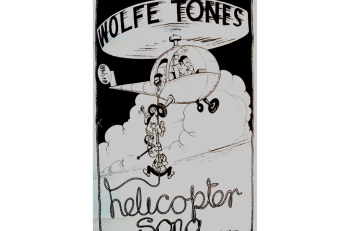
    ‘A founder of the East Tyrone Brigade, Hughes was the key planner of the two most successful prison escapes staged by the IRA of the 1970s’ ‘The springing of three IRA men from the rooftop of Mountjoy prison by helicopter caused a sensation, as well as inspiring a hit ballad by the Wolfe Tones’   This is one of most edifying works produced by a senior member of the IRA. During his period of active service, Hughes survived both British and friendly fire before leaving the IRA or, as he delicately puts it, the IRA leaving him, in 1975. This book is an account of his experiences, recounting daring plans and prolonged bouts in prison. A great many of the colleagues mentioned are dead and those who have survived are either household names or have their identities disguised.  Co-written with Kerry-based journalist Douglas Dalby, the book also includes photographs from the late P Michael O’Sullivan, who was given exclusive access to document IRA operations – including some that Hughes himself was involved in. Hughes is laudatory of the photographer, stating that “he never hid when the firing started”.  The views expressed are balanced, and while a few of his pet-hate individual IRA members and jailers get singled out for special mention, Hughes says of prison officers and gardaí in general: “A few gave me a hard time, but the vast majority were decent people doing a job”.  A founder of the East Tyrone Brigade, Hughes was the key planner of the two most successful prison escapes staged by the IRA of the 1970s – much to the embarrassment of the  Cosgrave Fine Gael government of the time. The springing of three IRA men from the rooftop of Mountjoy prison by helicopter caused a sensation, as well as inspiring a number-one hit ballad by the Wolfe Tones. Less than a year later he engineered the mass escape of himself and 18 colleagues, this time from inside Portlaoise prison.  Skilled at more than organised prison escapes, Hughes’ meticulously planned bank robberies in the Republic and made enough of a splash to get his own hand-picked IRA unit, to raise  funds for the movement. His initial decision to move from his job as a plasterer to full-time active IRA membership was caused by the discrimination he felt as a Catholicgrowing up near Coalisland, Co Tyrone. In the late 1960s, he had thrown himself into the agitation of the Northern Ireland Civil Rights Association. He seized a home for himself and his family by squatting there.   “We tried politics and the state beat us off the streets. I don’t recall any fear or doubt. I hated them. I couldn’t wait to get going”.  Hughes suspected the British were using the 1975 ceasefire to harvest intelligence on the IRA. He offered to perform a few “deniable” operations against them but senior leadership turned him down. That was when he began to realise that he was being dropped. He was offered a small sum to take a break with his wife and family. “I felt it was disrespectful after all the years of work and money I had brought in. I suppose that, stupidly, I had developed a sense of entitlement”. He went rogue, starting his own for-profit bank raids which made him both a pariah and a threat to the organisation. “I had let myself, and most of all my family and close friends down. I make no excuses for my behaviour, but it seemed the best option at the time”. Thanks to the peace process, there are now a number of seminal accounts of life within the IRA – from those with no regrets, like Hughes; those who changed sides, like Eamon Collins; and those who infiltrated the Republican movement on behalf of the British, like Willie Carlin. It was the graphic but apparently untrue narrative by the informant Sean O’Callaghan that prompted Hughes to pick up the pen and set the record straight. It is to be hoped, as the years pass, we will gain more reliable reports of what exactly happened in the North. This was a squalid conflict. History,more than sectarian struggle, needs to be recorded – so that the people can move on.  Hughes didn’t leave prison until 1999 and his career in the IRA ended before the peace process started Now splitting his time between the Republic and the North, he firmly sees the era of armed struggle as over. He has little insight to offer about modern Sinn Féin, only the rather sanguine advice that people should try them in office and see if they succeed – if not, they can always just throw them out again.  Hughes himself said it best: “I never felt more alive than I did back then. But don’t listen to any of that shit about living fast and dying young. I may have treated it like a game at times, but it wasn’t like that”.

    Loading

    Read more

  • Posted in:

    JAMES MOLYNEAUX AND THE  KINCORA  SCANDAL

      UPDATE: Sir Jeffrey Donaldson is the new leader of the DUP. One of his mentors was James Molyneaux MP. Donaldson succeeded him as MP for Lagan Valley after Molyneaux retired in 1997. On 19 December 2019 Village exposed Molyneaux’s involvement with the Anglo-Irish Vice Ring. On his website Donaldson has stated that: “My involvement with the Ulster Unionist Party grew as I worked alongside two of the greatest names in Unionism in the 20th century. Between 1982 and 1984 [Enoch Powell and James Molyneaux]. .. In 1985 I was elected aged 22 to the Northern Ireland Assembly, with the distinction of being the youngest person to win a seat at Stormont with the majority of some 15,000 votes. Throughout this period I also served as the Personal Assistant to the then leader of the UUP, the Rt. Honourable James Molyneux MP. In 1988 I was elected Honorary Secretary of the Ulster Unionist Council and in 2000 I was elected Vice President of the Council. My responsibilities included overseeing the UUP Bureau in Washington DC. A regular visitor to the United States, I often accompanying leaders James Molyneaux and his successor David Trimble on delegations that included several meetings with former President Clinton and Vice President Al Gore and subsequently with President Bush.” The December 2019 profile of Molyneaux commences here:  James Molyneaux MP was one of the most significant figures in Unionist politics during the Troubles. He was first elected as a Westminster MP in 1970 for the then dominant Ulster Unionist Party (UUP) and served as its leader 1979-1995. He was also an Orangeman and a member of the Monday Club, a right-wing pressure group which was associated with the Tory Party. According to Robin Bryans, the well-informed Kincora Boy’s Home whistle-blower, Molyneaux was part of the paedophile gang which preyed on vulnerable boys in care in Northern Ireland. MI5 did not hand over its files on Molyneaux to the Hart Inquiry which reported in 2017. Equally disappointing is the fact that the Independent Inquiry into Child Sexual Abuse (IICSA) in London is not looking for MI5’s files on Molyneaux. It has shown no interest in him nor in other MPs and VIPs who abused boys as part of an Anglo-Irish Vice Ring. Richard Kerr, a resident at Kincora, was trafficked from Belfast to London in the 1970s aged 16 to be abused by an MP who was a friend of Molyneaux.  1.  ‘KINCORA AND PORTORA BOYS’ SCHOOLS WERE USED AS HOMOSEXUAL BROTHELS BY MANY PROMINENT FIGURES, INCLUDING LORD MOUNTBATTEN [AND] JAMES MOLYNEAUX.’ Robin Bryans tried to expose Molyneaux’s links to Kincora while he was still Leader of the UUP but without success. Bryans, however, did manage to expose Sir Anthony Blunt, the Surveyor of the Queen’s Pictures, who had been a KGB mole while he served inside MI5. Byrans knew Blunt well from his frequent visits to Ulster where Blunt seized opportunities to abuse underage boys. Bryans tried to expose Molyneaux in a letter he wrote on 3 November, 1989, which also made reference to Blunt’s treachery. This was six years before Molyneaux would step down as Leader of the UUP. The relevant extract reads as follows: “Although Margaret Thatcher showed loyalty to those who had eased her path, by fair means or foul, to office, her forthrightness and inexperience enraged many. While (Sir Anthony) Blunt had a cosy relationship with the security services (based on his knowledge of incriminating political and sexual leanings among the Royal family), Thatcher showed herself to be unsympathetic to this delicate quid pro quo. She unbalanced the status quo by admitting that Blunt had been a Soviet agent [in the House of Commons in 1979]. This betrayal (as Blunt saw it) risked letting all sorts of other skeletons out of the cupboard. Not the least of these was the long-standing arrangement whereby Kincora and Portora Boys’ Schools were used as homosexual brothels by many prominent figures, including Lord Mountbatten, James Molyneaux, Leslie Mackie and Blunt’s coterie of highly placed friends. Blunt, however, kept his mouth shut, and Thatcher learned her lesson well. The establishment knows best”. 2. MOLYNEAUX’S MENTOR WAS SIR KNOX CUNNINGHAM WHO DESCRIBED HIM A ‘PRETTY LITTLE THING’ Molyneaux was the political protégé of the child rapist, Sir Knox Cunningham QC, MP. Cunningham was a senior Unionist MP at Westminster who rose to become Prime Minister Harold MacMillan’s Parliamentary Private Secretary, 1959-63, and as such was present at the deliberations of Macmillan’s cabinet. Macmillan recalled Cunningham fondly in his memoirs and awarded him a baronetcy in his resignation honours. Molyneaux acted as Cunningham’s election agent and succeeded to his seat in 1970 when the older man retired. According to Robin Bryans, Cunningham once described the young Molyneux as ‘a pretty little thing’. Cunningham was also a senior member of the Anglo-Irish Vice Ring of which the infamous Kincora Boys’ Home was a part. Richard Kerr, a former resident at Kincora has revealed that Cunningham was an abuser of Kincora boys. A memorandum prepared by Colin Wallace a PSYOPS officer at British Army HQ Lisburn in the 1970s stated that Cunningham was ‘closely associated’ with William McGrath, the brutal child rapist and Housefather at Kincora and was ‘aware of his activities’. Cunningham became involved in the World Alliance of Young Men’s Christian Association (YMCA) in 1947 and became Chairman of its National Council two years later, something which put him in charge of the YMCA in Ireland, Wales and England. Cunningham took boys from Kincora to the YMCA in England. His Wikipedia entry suggests that he became involved with the YMCA because of his “religious faith” but it is more likely he wanted to gain access to young men. Much of his interaction with the YMCA boys involved the sport of boxing. According to Bryans, he took Kincora boys to the YMCA in England. According to Bryans, Cunningham ‘always liked to appear as the great Queen’s Counsel who knew more than anybody about everybody, especially those in my books

    Loading

    Read more

  • Posted in:

    Brigadier Kitson’s motive for murdering unarmed civilians in Ballymurphy.

    By David Burke. Brigadier (later General) Frank Edward Kitson is alive and well and living in Devon. He is the individual responsible for the Ballymurphy massacre. He was the Brigadier of 39 Brigade – that is to say he was the officer in charge of all British soldiers in Belfast during the Ballymurphy massacre. His accomplice was Colonel Derek Wilford, the former commander of 1 Para who is alive, alert and living in Belgium. Kitson  joined the Rifle Brigade in January 1945. He would rise to become General Sir Frank Kitson, GBE, KCB, MC & Bar, DL and serve as Commander-in-Chief UK Land Forces from 1982 to 1985, and as aide-de-camp to Elizabeth II from 1983 to 1985. Along the way, he fought the Mau-Mau in Kenya for which he was awarded the Military Cross. He then took on communist rebels in Malaya and helped suppress a revolt in Oman. While fighting in the colonies, he formulated a horrifying counterinsurgency policy which he outlined in his notorious book ‘Low Intensity Operations’. In attempting to counter subversion it is necessary to take account of three separate elements. The first two constitute the target proper, that is to say the Party or Front and its cells and committees on the one hand, and the armed groups who are supporting them and being supported by them on the other. They may be said to constitute the head and body of a fish. The third element is the population and this represents the water in which the fish swims. Fish vary from place to place in accordance with the sort of water in which they are designed to live, and the same can be said of subversive organisations. If a fish has got to be destroyed it can be attacked directly by rod or net, providing it is in the sort of position which gives these methods a chance of success. But if rod and net cannot succeed by themselves it may be necessary to do something to the water which will force the fish into a position where it can be caught. Conceivably it might be necessary to kill the fish by polluting the water, but this is unlikely to be a desirable course of action. (page 49.) The Ballymurphy atrocity makes perfect sense in the context of this tactic. The IRA were the ‘fish’ he sought to eradicate. The streets and estates of Belfast were the ‘water’ in which they swam. The now confirmed FACT that the Ballymurphy murder victims were not in the IRA, had no connection to the IRA and were not any sort of a threat to the British Army mattered not a jot to Kitson or Derek Wilford, the commander of 1 Para. The Ballymurphy massacre makes perfect sense if it was part of a plan by Kitson to unleash his brutes in the hope of terrorising Ballymurphy generally so the locals would turn against the Official and Provisional IRA. Why else would separate groups of soldiers have targeted unarmed and peaceful civilians and murdered them in cold blood? One of them was a mother out looking for her children. Why else would separate groups of soldiers have targeted unarmed and peaceful civilians and murdered them in cold blood? One of them was a mother out looking for her children. Wilford’s defence is that he never became aware of the deaths. Kitson failed to recall the events either, when he appeared at the Saville Inquiry into Bloody Sunday. Both men are liars. They cannot dare tell the truth for it would destroy their reputations and that of other luminaries in the Ministry of Defence and British Army. Wilford went on to perpetrate the Bloody Sunday massacre the following January. Kitson’s dark role in that affair has yet to come to light. Kitson should now be stripped of his many awards as should Wilford. They should then face a rigorous interrogation about their activities on the days during which the murder spree took place. Mike Jackson, a captain with 1 Para, should also be stripped of his honours for vilifying the Ballymurphy murder victims as gunmen and terrorists. He also rose to become Commander-in-Chief UK Land Forces.   David Burke is the author of ‘Kitson’s Irish War’. It can be purchased here:  https://www.mercierpress.ie/irish-books/kitson-s-irish-war/ OTHER STORIES ABOUT BLOODY SUNDAY, THE BALLYMURPHY MASSACRE, BRIGADIER FRANK KITSON AND COLONEL DEREK WILFORD ON THIS WEBSITE:   The covert plan to smash the IRA in Derry on Bloody Sunday by David Burke Soldier F’s Bloody Sunday secrets. David Cleary knows enough to blackmail the British government. Learning to kill Colin Wallace: Bloody Sunday, a very personal perspective Lying like a trooper. Internment, murder and vilification. Did Brigadier Kitson instigate the Ballymurphy massacre smear campaign? Where was Soldier F and his ‘gallant’ death squad during it? Another bloody mess. Frank Kitson’s contribution to the wars in Afghanistan and Iraq. 300,000 have died in Afghanistan since 1979. Lying like a trooper. Internment, murder and vilification. Did Brigadier Kitson instigate the Ballymurphy massacre smear campaign? Where was Soldier F and his ‘gallant’ death squad during it? A Foul Unfinished Business. The shortcomings of, and plots against, Saville’s Bloody Sunday Inquiry. Kitson’s Private Army: the thugs, killers and racists who terrorised Belfast and Derry. Soldier F was one of their number. Soldier F and Brigadier Kitson’s elite ‘EFGH’ death squad: a murderous dirty-tricks pattern is emerging which links Ballymurphy with Bloody Sunday. A second soldier involved in both events was ‘mentioned in despatches’ at the behest of Kitson for his alleged bravery in the face of the enemy. Mentioned in Despatches. Brigadier Kitson and Soldier F were honoured in the London Gazette for their gallantry in the face of the enemy during the internment swoops of August 1971. Soldier F, the heartless Bloody Sunday killer, is named. Mission accomplished. The unscrupulous judge who covered-up the Bloody Sunday murders. Soldier F and other paratroopers have been protected by the British State for five decades. None of them now face prosecution. This perversion of justice began with the connivance of

    Loading

    Read more

  • Posted in:

    Counterinsurgency war criminals, liars and cowards: Kitson and Wilford, the brigadier and colonel who led the soldiers who perpetrated the Ballymurphy Massacre.

    By David Burke. The denial of justice for political gain. Next week will see the release of the long-awaited inquest report into the Ballymurphy massacre during which British soldiers killed and wounded a large number of unarmed civilians in Belfast. The atrocity took place after the introduction of internment in August of 1971. Adding insult to inqury, the victims were vilified as gunmen and terrorists. A documentary entitled ‘The Ballymurphy Precedent’ will be broadcast on Channel 4 on Wednesday 12 May. It contains detailed re-enactments of the actions of Kitson’s and Wilford’s troops. RTE will also be showing it at a date yet to be determined. Meanwhile, the British Government led by Boris Johnson proposes to grant all British soldiers implicated in murder in Northern Ireland immunity from prosecution, contrary to the Stormont House Agreement. Incredible as this may seem in Ireland and across the globe, it has enhanced Boris Johnson’s standing in the eyes of large numbers of the British electorate. Johnson has also set himself on a collision course with the Irish Government. Taoiseach Micheál Martin has stated that: “There is an agreement in place with the British government, with the parties in Northern Ireland and indeed with victims’ groups and that is the Stormont House Agreement of 2014 and that any move from it would amount to ‘a unilateral breach of trust”’. He added: “For us the victims are the priority and the victims remain the priority. There has to be adherence to that agreement. If people have new ideas to present they have to involve all of the parties, and above all the concerns of victims irrespective of who committed the atrocities. People must be held accountable”. Johnson’s Minister for Veterans, John Mercer MP, resigned last month in protest at what then looked like the British Government’s reluctance to change the law to prevent the prosecution of British soldiers accused of murder in Northern Ireland. In his resignation statement, he said he was stepping down to “try and shift UK Government position towards looking after these people and preventing the repeated and vexatious nature of litigation against those who served is a huge task”. There have been further developments and insights into the free rein afforded to British soldiers in Northern Ireland to shoot at human targets. Last week the trial of two paratroopers accused of shooting Official IRA volunteer Joe McCann while he ran away from them collapsed. Judge James O’Hara pointed out that: “At that time, in fact until late 1973, an understanding was in place between the RUC and the Army whereby the RUC did not arrest and question, or even take witness statements from, soldiers involved in shootings such as this one. This appalling practice was designed, at least in part, to protect soldiers from being prosecuted and in very large measure it succeeded.“ Her Majesty’s Killers. The Ballymurphy Inquest report may not address the roles played in the massacre by two of the most notorious British soldiers to set foot in Northern Ireland during the Troubles, Brigadier Frank Kitson and Colonel Derek Wilford. Kitson is a counterinsurgency expert who had served in Malaya, Kenya, Cyprus and the Oman before he was sent to Northern Ireland as the brigadier in charge of the 39 Brigade area which included Belfast, 1970-72. He set up the Mobile Reaction Force (MRF) which carried out the murder of a series of unarmed civilians in Belfast in the early 1970s. Kitson’s own pen has long since exposed him as a racist and anti-Catholic bigot. He committed perjury at the Saville Inquiry into Bloody Sunday (January 1972) on an industrial scale. Wilford assumed command of 1 Para on 21 July 1971. 1 Para formed part of 39 Brigade. Wilford believes that virtually all Catholics in Northern Ireland are IRA supporters, and has said as much in public. He had served with the SAS for two years and trained with American paratroopers at Fort Bragg, the US Army Special Forces School before coming to Ireland. He was also a veteran of Malaya and Aden. He joined the Parachute Regiment as a company commander in 1969. Perceived as a bit of a loner, he was given to reading the classics, in their original Latin. The number of unarmed Catholic civilians murdered by 1 Para reached unprecedented levels after Wilford’s arrival. Many were shot in the back or while lying on the ground. He reported directly to Kitson. The number of unarmed Catholic civilians murdered by 1 Para reached unprecedented levels after Wilford’s arrival. Many were shot in the back or while lying on the ground. He reported directly to Kitson. Both men are still alive and unrepentant at the multiple deaths caused by their troops including those who died during the Ballymurphy massacre. Wilford took 1 Para to Derry early the following year, an event that resulted in Bloody Sunday. Wilford committed perjury at the Widgery and Saville inquiries into Bloody Sunday. He has also admitted lying to the press. He is the keeper of many secrets about that massacre. While Wilford presents himself as an officer who has always been loyal to the paratroopers who served under him on Bloody Sunday, the truth is that he has thrown them to the wolves to save his own skin. One of them is facing murder charges for his actions on Bloody Sunday. Meanwhile, Wilford cowers in Belgium. While Wilford presents himself as an officer who has always been loyal to the paratroopers who served under him on Bloody Sunday, the truth is that he has thrown them to the wolves to save his own skin. One of them is facing murder charges for his actions on Bloody Sunday. Meanwhile, Wilford cowers in Belgium. Operation Demetrius was the code name ascribed to internment which commenced on 9 August 191. 342 people were swept up on that day and taken to to makeshift camps in a series of dawn swoops by the British Army. 105 were released after two days. Instead of

    Loading

    Read more

  • Posted in:

    Documents prove the RUC were told about Kincora. What does the former PSNI-MI5 liaison officer Drew Harris, now Garda Commissioner, have to say?

    By Joseph de Burca. 1. Moloney and Kinchin-White When the Kincora Boys’ Home child abuse scandal first broke, Ed Moloney was one of a number of journalists who reported details about it in the press. Now, Moloney and James Kinchin-White have teamed up to shine a light on the role of the RUC in the scandal. Details and copies of a number of RUC documents which expose their knowledge of the scandal can be found in an article on Moloney’s blog via this link: Moloney and Kinchin-White prove beyond a shadow of a doubt that the RUC were told about Kincora in the 1970s, long before the scandal broke in January 1980 in the Irish Independent in the Republic. Moloney and Kinchin-White prove beyond a shadow of a doubt that the RUC were told about Kincora in the 1970s, long before he scandal broke in January 1980 in the Irish Independent in the Republic. 2. The RUC and Roy Garland The RUC documents highlighted by Moloney and Kinchin-White include a summary of a report submitted by Roy Garland to the force. Garland was a former associate of William McGrath, one of the Kincora offenders. Garland was horrified at what he discovered McGrath was doing at Kincora and elsewhere. He wanted to end the abuse at the home and quite literally risked his life to help the abuse victims. One of the Kincora abusers, William McGrath, asked Davey Payne of the UDA to assassinate him. McGrath was the leader of a Loyalist paramilitary group called Tara, and knew many of the key players in the UDA including Payne. Ed Moloney is all too familiar with the name Davey Payne. In 1982 the Official IRA tried to get Payne to murder Moloney. Their motive was to conceal building site protection rackets they were running in the North from the public. The Official IRA and the UDA had entered into a secret pact to exploit building sites in different parts of Belfast. Payne was one of the links between the two organisations. His role was to ensure the arrangement ran smoothly. Moloney had written an expose about the rackets for the Irish Times. Someone working for the Irish Times spiked the article and then delivered it to the Official IRA who were alarmed and enraged. See The Official IRA planned the murders of journalists Ed Moloney and Vincent Browne. 3. Drew Harris It will be fascinating to see if Garda Commissioner Drew Harris comments on the RUC documents (posted on Moloney’s blog). Harris worked closely with MI5 while he was in the RUC. The vice ring which preyed on the unfortunate residents at Kincora was monitored by MI5. Harris had nothing to do with any of this – it happened long before his time – but he may have heard something about what is in the files especially as the Hart Inquiry interviewed former RUC officers and looked at the RUC files on the Kincora scandal. The issue must have been of intense interest to the force and those concerned about its reputation. Hart published his report in 2017. Incredibly, despite possession of these files, the Hart Inquiry concluded that the only people involved in the scandal were the three staff members who were convicted of child abuse in 1981: William McGrath, Joe Mains and Raymond Semple. It has been rumoured for decades that RUC officers with knowledge of the vice ring which swirled around Kincora kept a file on it lest MI5, the Northern Ireland Office and/or anyone in Whitehall or Westminster ever attempt to throw them to the wolves for colluding with Loyalist terrorists or any of the other crimes committed by the RUC. Aside from monitoring the members of the vice ring – such as James Molyneaux, the Leader of the Official Unionist Party – top civil servants such as Peter England at the NIO abused boys trapped in the vice ring. The scandal is a scab that London is still deeply fearful of scratching. Many reputations will be destroyed when the full facts about it finally emerge. They will include (a) those involved in the abuse of the children (b) those who monitored and blackmailed the perpetrators and (c) the police, politicians and civil servants who have covered it up for decades. The latter group includes an array of senior NIO and MI5 officials, many of whom are still alive. 4. Crimes Committed in the Republic All of this is of interest to the Republic because Kincora boys were brought across the border in the 1960s and 1970s to Sligo, Birr Castle and Glenveagh in County Donegal for abuse. The 1984 Hughes Inquiry into Kincora also reported on the case of a boy trafficked to a cinema in Dublin. See also: The Anglo-Irish Vice Ring. Chapters 1 – 3. The issue of RUC files has become a running sore between Dublin, London and Belfast. The most septic wound relates to RUC agents in the UDA who were involved in the – still unsolved – murder of 33 people during the Dublin and Monaghan bombings in May of 1974. After he was appointed as Garda Commissioner, Harris denied having information that could shed new light on the bombings, stating that he would be ‘duty-bound’ to report it if he did. ‘The general point is, if we had information which suggested wrongdoing, that would have been required by the [North’s] Police Ombudsman,’ he told Miriam O’Callaghan on RTÉ Radio 1. He added: ‘The overarching duty to prevent and detect crime also remained. If we had information which pertained to atrocities or crimes here in the rest of Ireland, then we are also bound to share that.’ No doubt Commissioner Harris, who worked closely with MI5 while he was serving with the RUC and later, PSNI, would denounce and castigate any of his former colleagues with knowledge of a cover-up of the Kincora scandal, not to mention collusion with the UDA; especially, the RUC agents involved in the Dublin and Monaghan

    Loading

    Read more