General

Random entry RSS

  • Posted in:

    Laddington Road

    21THe journey from “Croke Park” to “Haddington road” has been bumpy for public-sector management or public-sec-tor unions. Pay and working hours have been the main focus. Issues of gender equality have not received much attention.This is shameful given that the public sector is a major employer of women. In 2010 the edu-cation and health sectors employed 35% of all women employees in Ireland. 81.9% of those working in the health sector and 73.3% of those working in the education sector, were women.The public sector is dramatically gender une-qual. 77.4% of clerical ofcers in the civil service were women in 2010, whereas only some 16% of those at the level of secretary General and assistant secretary were women. only 10% of women assistant secretaries are married. women in the health sector accounted for 91.9% of nurses, but only 35.7% of consultants.one factor that makes the public sector attrac-tive to women is the extensive availability of working arrangements that enable employees to balance work and family responsibilities. eu data highlight the importance of this. The labour-mar-ket participation of mothers is 12.1 percentage points lower than for women without children. The reverse is true for men. The labour-market participation of fathers is 8.7 percentage points higher than for men without children. Irish research in 2008 highlighted that women spend substantially more time on car-ing and household work than men. women are more likely to work fewer hours per week in paid employment than men. women represented 75.3% of those working less than 29 hours a week in paid employment in 2011. Flexible working arrangements are key to women remaining in the labour market.The rejected Croke Park Two proposals included provisions that undermined work-sharing and fex-ible working arrangements in the public sector. The INMo commis-sioned a gender impact assessment of the draft proposals by this author. It found that the proposals would disproportionately and negatively impact on women and would tend to push women with caring respon-sibilities to leave employment.The ‘Haddington road agreement’ also includes sections on “work-sharing” and “Flexible working arrangements (Flexitime)”. It is hard to understand why these feature so prominently, and unhelp-fully, in an agreement committed to “pay and productivity measures”. National and international research has found that produc-tivity is enhanced by the use of fexible working arrangements. Male dominated management would appear to disagree. The agreement states that work-sharing has created “a signifcant management challenge and overhead”. research, however, points to the need for such arrangements to be managed diferently from traditional working patterns. a focus on trust over control, and on outcomes rather than inputs is required. It is not inconceivable that issues of limited management capacity are at play in the perspective on fexible working evident in the agreement.The agreement does not provide much detail but it appears to presage a diminution in work-sharing and in fexible working arrangements. There is repetitive reference to management’s “discretion to alter or change an individual’s work-sharing arrangements”. The only criteria identifed are the business needs of the organi-sation. There is no reference to any reasonable accommodation of those with caring responsi-bilities. Individual work-sharing arrangements are to be formally reviewed annually.The agreement states that “it is now necessary to update the [fexible working arrangements] to better refect the current needs of organi-sations” and that such arrangements are only possible “so long as they support and enhance the efcient operation of departments/ofces”. The core time-bands may be amended and staf at assistant Principal level and equivalent will not be able to avail of the arrangements unless they already do so.several unions have secured some protection for their members. The “current work sharing arrangements as set out in various departmental Circulars will continue to apply” to IMPaCT grades in the local authority sector. “Management do not propose to review” fexibility in attend-ance arrangements for nursing and midwifery personnel in the health sector. These exceptions are a positive indicator of concern for gender equality. what remains unexplained is the apparent hostility of man-agement to gender equality. The need for gender impact assessments of all such agreements is conspicuous. Niall Crowley is a former Ceo of the equality authority who works as a consultant about equality.Haddington Road cultureniall crowleynewssexist Haddington road agreement undermines work-sharingLaddington Road“77.4% of clerical offcers in the civil service were women in 2010 whereas only some 16% of those at secretary general and assistant secretary level were women

    Loading

    Read more

  • Posted in:

    Abuse and austerity

    25oNe in fve women in Ireland is abused by a current or former husband, partner or boyfriend, at some stage in their lifetime. since 1996 there have been 190 women murdered in the republic of Ireland, of whom 74 were murdered by a partner or ex-partner. In all of the resolved cases, 99% of perpetrators were male and 1% was female. women’s aid launches its annual report next week. since the start of the recession, we have seen a 16% increase in contacts to our support services, while our statutory fund-ing has been cut by 19%. The maths only hints at the misery and stress. Many women who are victims of domestic violence are fnding that the eco-nomic downturn means that they and their children are trapped in violent situations with ever-dwindling options to escape.recession does not cause domestic violence. There is noth-ing that suggests that current economic circumstances are causing men, who once treated their partner with respect and love, to suddenly become abusive. For many women afected by domestic violence, however, the economic downturn is leading to more frequent and more dangerous abuse and the reces-sion is being used by abusive men to excuse their behaviour. redundancies and unemployment may give abusive men the opportunity to increase the levels of abuse they infict on their partners as they may be around the house more. Increased fnancial pressure may increase stress and potentially lead to greater use of alcohol and drugs, both recognised dis-inhibiters that may lead to more severe abuse. The ability of the women to escape domes-tic violence is being hampered by the recession. women fear increased impoverishment, losing their home and the efect of poverty on their chil-dren. women who do try to leave often fnd that vital supports such as housing, refuge, welfare and legal representation are harder or impos-sible to access.almost 20 years ago a women’s aid study found that having nowhere to go was the main reason women gave for not leaving an abusive relationship. This barrier has been worsened by the recession. restrictions on social hous-ing and rent allowance are problematic. often, women cannot sell their home due to the reces-sion and as joint owners they have no access to social housing. The lack of housing stock means that even women who are eligible for social housing have nowhere to move. refuges report that they are unable to meet demand. viva House in dublin, for example, has had to turn away four out of fve women seeking emergency accommodation. at the same time, Teach Tearmain in Kildare has a refuge built but which remains closed because of lack of funding.These barriers to women leaving abusive relationships are exacerbated by fnancial abuse by a controlling boyfriend, husband or partner. This includes women’s belongings sold without their consent; women forced to pay their abuser’s debt or debt being arranged in their name only; women denied access to the family fnances for food, medication and the payment of household bills; women forced to put all social-welfare entitlements in their abuser’s name; women’s signatures forged on cheques; and women forced to put the abuser’s name on the deeds of the house.last year we highlighted concerns about the number of disclosures of child abuse to women’s aid. It looks likely that our 2012 fgures for this abuse will show a further increase. women report that their children are being hit, smacked, constantly shouted at, and in some cases, sexually abused. Many children witness their mother being shouted at, threatened, physically assaulted and at times have seen their mother being raped. where children do not directly see the abuse occurring they may overhear abusive incidents, or will see the aftermath of it such as bruises, broken bones, dam-aged furniture and belongings.Given the links between child abuse and domestic violence, it is impor-tant to protect the child through protecting the non-abusive parent, usually the mother, who should be seen as the most natural person to help in child-protection situations. This should be refected in any changes to family law or domestic violence legislation, as well as in any child protection structures. Margaret Martin is director of women’s aid – National Freephone Helpline 1800 341 900, 10am to 10pm, 7 days a week, www.womensaid.iemargaret martinnewsAbuse and austerityThe recession is hampering excape for victims of domestic violenceWomen’s aid has seen a 16% increase in contacts while statutory funding has been cut by 19%“

    Loading

    Read more

  • Posted in:

    Lairdie, Lairdie

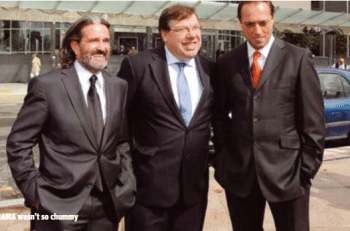
    26 — villageJune – July 2013THe political demise of ulster unionist, lord laird, who has lost the party whip after being stung by the Daily Telegraph/BBC Panorama in the latest ‘cash for access’ scandal, may not be as shocking to those who have observed, and been at the receiving end, of his political antics over the years. The good lord is a public-relations man who has always been alive to opportunities to improve his own fnances through his vital political work in the British upper house as these latest revelations appear to confrm. Previously, he had been prominent through his role as chairman of the ulster scots agency which he vigorously promoted as a counterpunch to what he perceived as the ‘Fenian’-inspired Irish-language movement in the North. His eforts to politicise the language issue did not go down well with the scottish language-enthusiasts, or the Irish ones. He also worked as an advisor to the loyalist Commission, an assortment of unionists and former loyalist paramilitaries as they sought to challenge the republican and nationalist narrative during the early years of the peace process.His elevation to the House of lords in 1999 provided him with a unique platform from which to ply his particular brand of polit-ically-loaded propaganda which also happened to coincide with the interests of some of his clients. In early 2005, he launched a vitriolic attack on former Taoiseach, Bertie ahern, over the latter’s alleged links to former trade-union ofcial, Phil Flynn, then under investigation in relation to the Northern Bank rob-bery. later in the year he abused his parliamentary privilege when entering into the controversy surrounding the newly-established Centre for Public Inquiry, and in particular this writer, when he accused it of being an “intelligence gathering operation” for sinn Féin. In a remarkable coincidence, both stories had been a matter of considerable interest to the Sunday Independentwhich then ran lengthy and “exclusive” extracts from lord laird’s “priv-ileged” speeches. Coincidental too, that lord laird acted as a paid Pr consultant to the news-paper. In 2002, he provoked the ire of the late Inez McCormack (the frst female president of ICTu) who complained to the uN over laird’s “misuse” of parliamentary privilege to attack the Belfast-based human-rights group, Committee for the administration of Justice, which had a strong record of revealing abuses by the British security forces in the North.In 2005, laird went on to claim in the lords that there were 200 Ira “sleepers” in high places in the republic, a claim that also resonated with the more hysterical outbursts from the Sindo. during the same year he found himself in hot water when it emerged that while chairman of the ulster-scots agency, laird had spent in excess of £2500 of public money on taxis between Belfast and dublin.His penchant for highlighting, under lords privilege, issues that appealed to the muck-raking tendencies of the Sindo, and the vibrant reciproc-ity of Ireland’s best-selling sunday, must have seemed like a marriage made in heaven at the time but lord laird’s habit of digging ever deeper holes for himself has prejudiced the relationship more recently.There was scarcely a peep out of the newspaper in March when laird defended his cli-ent, us businessman Christopher Knight, against allegations of child sexual abuse. Knight did not contest charges in Florida that he had sexually assaulted a victim, then 12 to 15 years old, in 2003. laird described the allegations as a “minor misdemeanour”, although he later apologised for his remarks after being rebuked by uuP leader, Mike Nesbitt. He said the ill-advised comments arose from his “professional association” with Knight who was seeking to invest in the Belfast Giants hockey team.It will be interesting to note the response of the Sindoto the televised disclosure that its favourite peer is accused of seeking £2000 per month in exchange for getting questions raised in the lords that could be helpful to the authori-ties in Fiji. “I’ll deny having said this, but it’s a bribe….the sort of thing I can say to these guys…you put that question down now, I thought you were inter-ested in Fiji, would you like to come down to it, you know, I believe it’s quite nice… I can whisper that”, laird was recorded as saying to undercover journalists posing as representatives of the Fiji government. on this occasion, Nesbitt decided an apology was not enough and, pending the outcome of a review by westminster authorities, asked laird to resign the party whip. frank connolly newsLairdie, Lairdieresigned lord laird’s symbiotic relationsip with the Sindoover the years promoted some regressive causesLaird laid barei’ll deny having said this, but it’s a bribe….’“ 27

    Loading

    Read more

  • Posted in:

    Impacful

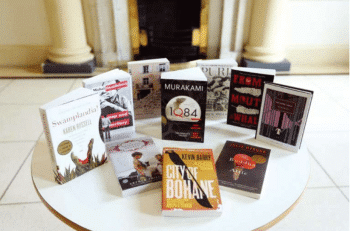
    Dublin’s cosmopolitan literary award has an effervescent, lofty, democratic and acrobatic integrity – by comparison to some other well-known prizes

    Loading

    Read more