General

Random entry RSS

  • Posted in:

    Difficulties challenging the Bono hegemony By Harry Browne

    Could I write something, the Village editor asked, “about the difficulty of getting The Frontman considered in Irish (and other?) media?” And already I can hear the dry laughter of other writers, who can only dream of such “difficulty”. I was interviewed about my critical book on Bono twice in one day on TV3; I had outings on Today FM, NewsTalk, 2FM, US public radio and Cape Town drivetime; there were full-page reviews and stories on news pages to boot; two heavy-hitters of the left, George Monbiot and Terry Eagleton, praised the book in the Guardian. I don’t start from any sense of entitlement to publicity — my previous book, a labour of love about the Pitstop Ploughshares, got almost no coverage at all and sold, modestly, through activist networks. So you’d think I’d be happy with what I got for The Frontman. I am. Yet there was “difficulty”, and some of it was interesting. While no one in the media is prepared to say that Bono personally should be considered above reproach, I suspect there is élite defensiveness about what he represents, which is the self-evident, unquestioned virtue of the “good cause”. This summer, Warren Buffett’s son Peter turned whistleblower against his own class of super-rich donors with a great piece in the New York Times about “the Charitable-Industrial Complex”. He wrote: “Inside any important philanthropy meeting, you witness heads of state meeting with investment managers and corporate leaders. All are searching for answers with their right hand to problems that others in the room have created with their left”. Bono is, in my portrait, the global mascot, the cred-conferring frontman, for this class of alleged do-gooders who are actually responsible for much of the world’s exploitation, violence and inequality. If your newspaper is owned, or your radio show is presented, by someone famed for his ‘great work for charity’, this may be a hard message to take lying down. Publishers Verso had good, professional PR people working to promote the book in London, New York and Dublin. All of them kept telling the same repetitive story about their efforts, a story they said was unusual: enthusiasm from reporters and researchers, then red lights higher up, from editors, producers and presenters. Even getting a launch venue in London proved difficult.  (London was just unlucky too: both the interviews I managed to do there saw the journalists’ audio equipment break down.) Verso thought it had two different newspaper-extract deals in place: both of them failed to result in published extracts once the decision reached the most senior level. When a somewhat garbled account of the no-extract decision at the Irish edition of the Sunday Times hit the Phoenix, it probably cost me my previous good working relationship as an occasional writer for that newspaper, though in fairness the ST did later publish a smart and balanced news story about the book. Is all publicity really good publicity? Bill Clinton, Gaybo, Adi Roche and Gavin Friday were quoted attacking the book sight unseen and the reviewers at the Sunday Independent and Irish Times weighed in with usual and unusual bile, respectively. The Evening Herald ran a gloating, almost-accurate piece about the book’s rather poor Irish-bookshop sales, figures that were not surprising given that most shops seemed to hide it away as something shameful. But who was I to complain? I am a sometime critic who has written a book that is not without its vicious moments, but who is now, briefly, at the receiving end. When I have a sleepless night, I find myself wondering: how many of them have I caused for other people over the years? Like Springsteen sings: “My faith’s been torn asunder / Tell me, is that rollin’ thunder / Or just the sinking sound / Of something righteous going under?” But if my righteousness is sunk, I’ve still got something left, thanks to the people who come up to shake my hand or tweet or email me to say that the book helped them to think a little differently about power and how it is wielded. And I’ve still got, heaven help me, Spanish and Italian editions of The Frontman to look forward to in the coming months. You know, I hear Bono is really loved in Italy, Spain and Latin America…  

    Loading

    Read more

  • Posted in:

    New Improved Pat (Village, 2009)

    New Improved Pat Frontline’s bloodsport  is the ideal formula for steady Kenny; and he for it   “It is important to acknowledge that Kenny is a master of eliciting the core information “   “We’ve been rescuing the banks for a year.  But are they grateful?” Dee dee dee. Opening credits. The set looks like the Krypton Factor and the theme music by Boxpop is Kraftwerk meets Prime Time. But it’s not Prime Time.  And it’s not Questions and Answers. And it’s not the Late Late Show, though it could be the Late Late Show for that little serious bit in the middle when  Ant and Dec have gone back to the Green Room. And here is our host. No-nonsense Pat Kenny looks like he has just got off a horse or perhaps is on unseen wheels, and delves straight into the audience – not like a current-affairs presenter, not like John stay-in-one-place Bowman but like Late Late Pat in a business suit and sober tie. And now he’s striding across the set. Soon the microphone’s in a wound-up bank victim’s face and solicitous Pat is asking competent and relaxed,  emotion-free questions. Where Tubridy springs, bounds, hops into the audience.  Kenny looms and hovers, finds a footing, and probes.  The mic judders and bobs on the end of his wrist, as Pat Moondances a little distractingly. He gets back to his desk and fiddles with his pen while being autocued. On one of the programmes he even exited stage left at the end of the programme, in inept full view of the camera. The body’s a bit jerky but crucially the brain is good.     Kenny has now done five Frontlines and the formula is clear. The show deliberately plays to his considerable strengths.  It’s an intoxicating mix of emotion and dry analysis with Kenny the crucial conductor, perched awkwardly below the front row. Although Kenny is uncomfortable with the emotional side this is more than counterbalanced by his professionalism and the incandescent rage that the formula systematically evokes from the audience. He should (and I suspect will) have Colm McCarthy on frequently. He works so well with the foaming audience. His public persona is without emotion  and this provides   morsels of delight when Kenny sets him up to be even more arid than he is himself.  McCarthy actually said “Don’t be emotional” to an emotional questioner and then having looked at him querulously for many seconds on screen while he let the hysteria overtake him, McCarthy said, deadpan, “ok, be emotional”.  McCarthy is sharp.  When a questioner asked how long we could stave off NAMA if we made property developers pay the full price, McCarthy’s face lengthened and he muttered, “about an hour and a half  – most of them are bust”. McCarthy is beguiling but the quality of the panellists is generally outstanding: Eamon Dunphy, Fintan O’Toole, Shane Ross. “Sometimes we get glimpses of the humourless self-obsessed, pushy Pat, as when it is suggested he may earn millions he reacts at gratuitous privilege-abusing length:”it’s a hell of a lot more than I’ll make this week , this month, this year”.  He seems also to be uncontrollably rightist, at least at the margins.  It is evident he is no fan of the (bloated?) public sector, he is unimpressed by some of the (eccentric?) long-termist policies of the Greens. In the programme on the public sector he produced a Pie Chart showing how government spends money (health, education and social welfare mostly). Pat sets up Colm to repeat that we’re spending 400 million Euro weekly more than we earn.  Pat is an intelligent man and he is driven to frustration with some of these people: “What’s that [the pie chart) telling you?” he demands, before he finally notes definitively – as a man of the world – that there’ll be cuts “one way or t’other”.  It’s so obvious  that he need not go beyond the colloquial, you see. “t’other”.  On the other hand in the entire programme – indeed in the whole series so far – Kenny never said anything   that could possibly irritate the private sector.   It is important to acknowledge that Kenny is a master of eliciting the core information: the reason banks can say 80% of applications are improved is because they don’t let dubious applications get into the system in the first place; the reason the Greens will get 500 new teachers is because demographics will require it anyway; someone should take a test-case against banks that lent to unsuitable people. There is no escaping roving Pat.  There is nothing in it for the culpable bureaucrat when Pat announces, “let’s hear from Joe” and shimmies up the aisle.  There is no escape, least of all from the audience anger that Kenny foments. Any weakness attracts low-hovering vultures. God Peter McLoone is boring: point after point unmade.  Before he could answer Pat’s question as to whether his moral responsibility as a trades union leader had been diminished by his chairing Fás during its extravagant period , the herd intervened to declare that yes it was. McLoone looked devastated.   Most dramatic was the public versus private sector debate where internecine and spitting contempt between people who seemed indistinguishable, at least in their selfishness, brought about  a Duffyesque vista that was bad-natured, selfish and tribal.  One speaker said it was bloodsport. Emma O’Brien from Inchicore – you win the prize for most emotional performance in your own advancement (public sector). One man from central casting in a pin stripe with a red fop said he’d taken a fifty per-cent cut in pay  but the public sector were at his throat suggesting he was well-heeled and asking how much he was actually paid.  He said it was below 100,000 but this did not impress them. Before he opened his mouth the next time, someone yelled “what does he know?”.  There was no justice. Even Bertie Ahern got a viciously hard time in footage of past complacency over the housing boom – it almost makes up for Kenny’s fetish for property and the propertied

    Loading

    Read more

  • Posted in:

    Corrections and clarifications

    The profile of Catherine Day in the April-May edition should have acknowledged the work of ENDS in establishing that she was blocking some environmental measures. The interview with Bunker Roy should have acknowledged that Sam McManus and Marcelo Biglia travelled to India with support from the Simon Cumbers Media Fund. The leader of North Korea is Kim Jong-un, not his predecessor, Kim Jong-il, as stated by Villager. The article on Sensible Money was wrong.

    Loading

    Read more

  • Posted in:

    Lairdie Lairdie by Frank Connolly

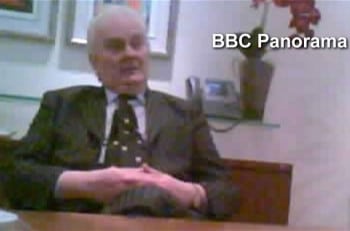
    Resigned Lord Laird’s symbiotic relationsip with the Sindo over the years promoted some regressive causes THE political demise of Ulster Unionist, Lord Laird, who has lost the party whip after being stung by the Daily Telegraph/ BBC Panorama in the latest ‘cash foraccess’ scandal, may not be as shocking to those who have observed, and been at the receiving end, of his political antics over the years. The good Lord is a public-relations man who has always been alive to opportunities to improve his own finances through his vital political work in the British upper house as these latest revelations appear to confirm. Previously, he had been prominent through his role as chairman of the Ulster Scots Agency which he vigorously promoted as a counterpunch to what he perceived as the ‘Fenian’-inspired Irish-language movement in the North. His efforts to politicise the language issue did not go down well with the Scottish language-enthusiasts, or the Irish ones. He also worked as an advisor to the Loyalist Commission, an assortment of unionists and former loyalist paramilitaries as they sought to challenge the republican and nationalist narrative during the early years of the peace process. His elevation to the House of Lords in 1999 provided him with a unique platform from which to ply his particular brand of politically-loaded propaganda which also happened to coincide with the interests of some of his clients. In early !&&’, he launched a vitriolic attack on former Taoiseach, Bertie Ahern, over the latter’s alleged links to former trade-union official, Phil Flynn, then under investigation in relation to the Northern Bank robbery. Later in the year he abused his parliamentary privilege when entering into the controversy surrounding the newly-established Centre for Public Inquiry, and in particular this writer, when he accused it of being an “intelligence gathering operation” for Sinn Féin. In a remarkable coincidence, both stories had been a matter of considerable interest to the Sunday Independent which then ran lengthy and “exclusive” extracts from Lord Laird’s “privileged” speeches. Coincidental too, that Lord Laird acted as a paid PR consultant to the newspaper. In 2002, he provoked the ire of the late Inez McCormack (the first female president of ICTU) who complained to the UN over Laird’s “misuse” of parliamentary privilege to attack the Belfast-based human-rights group, Committee for the Administration of Justice, which had a strong record of revealing abuses by the British security forces in the North. In 1995, Laird went on to claim in the Lords that there were 200 IRA “sleepers” in high places in the Republic, a claim that also resonated with the more hysterical outbursts from the Sindo. During the same year he found himself in hot water when it emerged that while chairman of the Ulster-Scots agency, Laird had spent in excess of £2500 of public money on taxis between Belfast and Dublin. His penchant for highlighting, under Lords privilege, issues that appealed to the muck-raking tendencies of the Sindo, and the vibrant reciprocity of Ireland’s best-selling Sunday, must have seemed like a marriage made in heaven at the time but Lord Laird’s habit of digging ever deeper holes for himself has prejudiced the relationship more recently. There was scarcely a peep out of the newspaper in March when Laird defended his client, US businessman Christopher Knight, against allegations of child sexual abuse. Knight did not contest charges in Florida that he had sexually assaulted a victim, then 12 to 15 years old, in 2003. Laird described the allegations as a “minor misdemeanour”, although he later apologised for his remarks after being rebuked by UUP leader, Mike Nesbitt. He said the ill-advised comments arose from his “professional association” with Knight who was seeking to invest in the Belfast Giants hockey team. It will be interesting to note the response of the Sindo to the televised disclosure that its favourite peer is accused of seeking £2000 per month in exchange for getting questions raised in the Lords that could be helpful to the authorities in Fiji. “I’ll deny having said this, but it’s a bribe….the sort of thing I can say to these guys…you put that question down now, I thought you were interested in Fiji, would you like to come down to it, you know, I believe it’s quite nice… I can whisper that”, Laird was recorded as saying to undercover journalists posing as representatives of the Fiji government. On this occasion, Nesbitt decided an apology was not enough and, pending the outcome of a review by Westminster authorities, asked Laird to resign the party whip.

    Loading

    Read more

  • Posted in:

    Seanad 2.0

    33real reform of our system of govern-ment will not be achieved by abolishing the seanad. senator Feargal Quinn and I, along with colleagues from the seanad reform Group*, believe that the public should be presented with an alternative to the government’s near-sighted approach of ‘abolition or retention’. The focus of public debate has now shifted to the question of ‘reform or abolition’. we achieved this change by publishing a consul-tation document that engaged civil society with the possibilities for real reform. we have used that consultation and our own research to develop a radical piece of legisla-tion that would transform the seanad in the way that it is elected, who is elected, what powers it holds and how it does its business. a reformed seanad has the potential to ensure that politics in Ireland is not a closed shop. It has the possibility to empower ordinary people and to give them a voice and a real opportunity to afect the imple-mentation of policy and legislation. The focus of the seanad Bill, put forward by senator Quinn and myself, is on the transforma-tion of the seanad. It is not an attempt to save the House in its current form. The efectiveness of the old seanad was diminished, because it was under-rep-resentative of the people and did not serve the best inter-ests of the people – both the majority and minorities. our Bill puts forward a number of innovative proposals. The current limited and elitist elector-ate would be dispensed with in favour of universal sufrage. Those in Northern Ireland who wish to vote in seanad elections would have the opportu-nity to do so, as would Irish citizens living aboard. The new seanad would achieve a gender balance of 50 per cent women and 50 per cent men. The candidate nomination process would be opened up by dispensing with the special role for oireachtas members. Nomination by popular support and by local authorities would be pro-vided for. an increase in the number and range of nominating bodies would provide candidates that are representative of a broader sample of Irish society. These new voices and expertise could con-structively and positively hold the policies and ideas of the Cabinet, the dáil, the political par-ties, and the regulators to greater account. The bill outlines new powers for the seanad across a range of areas. These include the power to scrutinise draft eu regulations and directives, statutory instruments and ministerial appoint-ments to public bodies, to name a few. The new Bill ofers a way to radically open up the seanad without the need for a referendum. The government is scrambling for any cogent argument against seanad reform. No rationale was given for the exclusion of the issue from the Constitutional Convention other than the govern-ment’s resolve to hold an abolition referendum. Paradoxically our reform bill was accepted by the government when it was presented in the seanad. This is a welcome development in the debate and reinforces the fact that closing the seanad is not justifed. The cost argument does not hold. The seanad currently costs less than 110 million annually. It provides a vital system of checks and balances on the power of the executive and the dáil major-ity. seanad eireann is an integral arm of the governance of this country as laid down in our Constitution. Now is not the time to reduce the scrutiny of our laws.The question of seanad abolition will be put to the electorate shortly. an ad hoc group of peo-ple from diverse backgrounds and ideologies who share a common commitment to political reform has now formed a campaign for seanad reform called ‘democracy Matters: open It, don’t Close It’. a small group of concerned individuals is organically evolving into an expanding pub-lic campaign directed by people from across all political, demographic and ideological hues with one thing in common: to promote a robust Irish democracy through a reformed seanad. *The seanad reform Group was established in early 2012 by senator Feargal Quinn, senator Katherine Zappone, Michael Mcdowell, Joe o’Toole, and Noel whelan.katherine zapponepoliticsSeanad 2.0elected by all from representative panels to hold authorities to accountreformableNow is not the time to reduce the scrutiny of our laws“

    Loading

    Read more