• Posted in:

    Information maestro (June 2011)

    Journalists should FoI and Cross-reference. Miriam Cotton interviews Gavin Sheridan of TheStory.ie Miriam Cotton (MC): What did you do before you started The Story? Gavin Sheridan (GS): In 2002 I started Gavinsblog.com. That’s in semi-retirement though it is still up there. I was just 21 then and at the time there were only about a dozen blogs in Ireland. The Iraq war was imminent, 9/11 had happened and the blog was a place where you could start writing about whatever you wanted. MC: When and how did the idea for TheStory.ie come to you? GS: I started to become involved in local government stuff after I graduated in 2008 from UCC. My New Year resolution in January 2009 was to build an Irish version of ‘TheyWorkForYou.com’ which was a British parliamentary transparency website. After I graduated I started working on this in my spare time. I found out that a man called John Handlaar was already trying to build something similar in Ireland. By April 2009 we had the first version of KildareStreet.com which is the Irish version of ‘They Work For You’. From my involvement in all of this I had become very interested in open government. I went to some conferences in London in summer 2009 and again I met some very interesting people. Heather Brooke did the original Freedon of Information request (FOI) for MP’s expenses. This was all very interesting to me – there was no FOI culture in Ireland. A few people had done some FOIs – Damien Mulley had done some on broadband and the Department of Communications. Journalists were using them but relatively infrequently. I realised that the culture that existed in the UK where citizens were putting in FOIs about, for example, why a building down the road had been sold for one pound, just didn’t exist here. So the first thinking I did when I got back to Ireland was to look at what FOIs were being done and the most interesting one I found was Ken Foxe’s one about John O’Donoghue. I FOI’d his FOI – not because I wanted to steal his story but because I wanted to see the receipts. It was a really good story that was going into The Sunday Tribune every weekend. But it wasn’t being talked about in the dailies or on the radio. The Department of Culture, Sport and Tourism sent them to me and I put them on-line through my scanner and started publishing the details of each trip. That gave the story an extra push. TheStory.ie hadn’t started at this stage so I put them on my own blog [GavinsBlog]. I also went to the Politics.ie website and gave them the details. I had met Mark Coughlan (Co-founder of TheStory.ie) at a Fianna Fáil Árd Fheis earlier that year and we’d been talking a good bit about this concept. We started ‘The Story’ in August 2009, just when the story about the expenses of John O’Donoghue, Ceann Comhairle, was taking off. Instead of submitting FOIs for individual things, we thought why not FOI for everything! What is fundamental to getting everything under an FOI is to submit requests for databases. If the government has gone to the trouble of more efficiently holding information then we can write more efficient FOIs to more efficiently get that efficiently-held information! The process of exporting a database is quite easy and a large amount of information can be got. We were thinking that if they’ve got an expenses database, we don’t just want to know about John O’Donoghue we want to know everything – within reason. How do one set of expenses relate to others? We were about transparency and advocacy – transparency first, journalism second. Most journalists would not know how to control a big spreadsheet of data and that was something we had to teach ourselves. A friend of mine who was working on the BBC’s Panorama taught me a lot of basic computer-assisted reporting like what you do with a spreadsheet once you get it, how you analyse it and graphically represent it. We learned about all the tools that are freely available for mapping information – the basics of Excel and Google Fusion Table. Cleaning spreadsheets is very important for instance. We then set out a policy whereby we began to look for precedent. We decided that if we were refused a database we wouldn’t just say ‘well, that’s that then’. We decided to appeal any decision which we believed was worth the €225 to appeal it – things that would have the effect of broadening the scope of the FOI Act as much as we could. Ken Foxe’s FOIs were an example of how documents are important because within them was information relating to the database that was used to record the information. We saw that they were using a thing called Oracle. The whole exercise took three months. There was an initial request testing to see how they would reply, then a second request asking for the entire database. That was refused under three FOI Act exemptions so we appealed that and finally we appealed to the Information Commissioner in January 2010. We eventually got the database. It named the civil servants, how much they claimed and more or less what it was for, but with some redactions applied because you have to work around S.10 of the FOI Act which is to do with volume. If you’re asking for a lot of information they can argue that it’s too voluminous. There is a certain amount of bartering. I was being as reasonable as possible and it was possible to have some negotiation. The day after we had reached an agreement with the Information Commissioner and with the Department of Arts, Sports & Tourism and we had published it, we went to other departments saying there was no reason why these other requests should be refused. Ultimately the databases that we have now published account for nearly half

    Loading

    Read more

  • Posted in:

    Ask the Experts

    Village’s technology team answer all your questions and make up a lot of stuff too What does it all mean? Answer: Mutualisation We live in the post-media age. Writing is on life-support; the media are dead. Nobody reads, they only blog. In ten years, there will be no newspapers: all news will be transmitted by iPad tablets. We just don’t know how they’re going to make money from these websites. But it is interesting to note that Rupert Murdoch has introduced a paywall on his newspapers and speculation is that hits are down something between ten and ninety per cent. Mobile phones mean that the message is the medium and you can never leave home. Facebook means that there is no need to say hello to anyone. Steve Jobs, who recently recovered from cancer, announces at the monthly iConferences where he addresses the industry, that having a Face is no longer enough. Search Engine Optimisation means only fools think. There is no such thing as an audience now, we all participate in and make the news. Shops have all been replaced and we only have Amazon. But Amazon has been bought by eBay because the book is dead. Reality has gone: only Youtube really is. The only – above all how will it affect advertisers – beauty now is technology. Apple is the new Warhol. You can train an iPhone 4 mG to have sex with you and then real-time text about it, a total game-changer. Android is Google’s smartphone platform. Above all, there may not be as many newspapers, but there will be plenty of journalism. It will have assumed a new form in which, to use Jay Rosen’s unmatchable phrase, “the people formerly known as the audience” will play a key role in the gathering and transmission of news events. They will surely do this on a local or hyperlocal, basis. Their work will appear largely online, on sites that are unlikely to be connected to the major publishing chains that have ruled the news roost in the US and Britain for so long. Call it the new news hierarchy. And only a teenager PC or Mac (?) can do it from his attic. 400 apps a second or we all die. The Irish Times diversified into jobs.ie and its New Media section app is now cyber-hacking but lost ten million Euro last year. So: where will the Smartphone end and what difference does it make to you? Nokia’s new Blackberry is actually smaller than a piece of fruit and ten mega pixels. Is your business registered on Foursquare? If not, it really should be now. Investigative journalism will always cost money; and opinion versus solid old-fashioned news values. You, the consumer, choose. The Wall Street Journal’s is the way to go. Journalism is long live so long live dead. Or whatever. A similar change will be wrought at the national level. – Microsoft, Apple, Google, Yahoo and Amazon, Mark Little will never go back to Prime Time for Tweet. There will be fewer print titles, though online audiences previously attracted by the strength of a brand name will ensure its survival. But there will be many fewer journalists in full-time employment. It does not mean the elimination of professional journalism, i.e. people paid to carry out daily journalistic work in order to hold truth to power to speak account, which is the prime task of our trade. Simple economic reality will ensure that news outlets – whether they are publishing brands that exist today or small start-ups – will not host large staffs on the old newspaper model. So What Are the Implications for the Print Media? Professional news “hubs” will work in concert with, for want of a better term, amateur journalists. Call it participation (iPhone) or collaboration or, to borrow a term coined by Alan Rusbridger, the editor of the Guardian , mutualisation. It is how news gathering is already developing and, in 10 years that will have become the norm. Time years twenty in around be still all will we if knows who. We must all have a website – defensively. And it won’t matter that much, since journalists have already been replaced by machines that write inane articles about the implications of technology for the written word.

    Loading

    Read more

  • Posted in:

    Religious advertising and broadcasting are mishandled and illegal

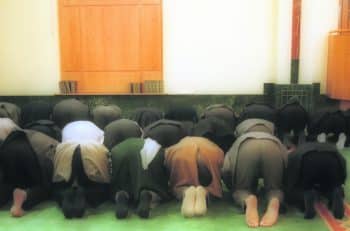
    In March 2003, the Minister for Communications, Mr Dermot Ahern, invited expressions of interest in the cause of religious advertising on RTE. Many of the submissions had the appearance of being orchestrated, and shared the same view: if advertising tarot cards is OK, why not religion? The outcome of the consultation process was that the Minister decided to leave well enough alone. The context of Minister Ahern’s review of religious advertising – the Broadcasting Authority Act, 1960 and the Radio and Television Act, 1988 – was too narrow. The Constitution is paramount. In 1972, the people removed the recognition by the State of several denominations and the special position of the Roman Catholic Church. Consequently, the State is, in theory, essentially neutral as and between all belief systems. Of course we know this is not the case, but it is a reasonable goal. Statute law relating to equality between gender, religion, etc, is another constraint. Civilised standards of decency and social policy oblige the state to be even-handed or better in the treatment of law-abiding minorities. This requirement was taken to the extreme in the Supreme Court judgement in the McKenna case which assured equal radio and TV representation of antigovernment view in referenda. Neutrality and equality would have been better guides than the legislation for the review. The present position At present broadcasters cannot take paid advertising from any religion or group of religious interests, even if it only to create awareness of innocuous and inoffensive matter such as newspapers, magazines, events or campaigns. An example of this absurdity is the rejection of a harmless advertisement for Veritas, the Catholic publisher, this Christmas. However, the paid religious- advertising impediment is regularly circumvented through the editorial control of unpaid ads and propaganda about religious themes, which are a charge against broadcasters’ revenues. The most controversial is the Angelus which was introduced at the behest of the Episcopal bully, John Charles McQuaid, some 50 years ago. It is broadcast at peak time at considerable opportunity cost to the broadcaster and those who pay it. There’s also Newsround’s TV coverage of religious processions, the merits of Padre Pio, Opus Dei, etc. Like all advertisements, nothing is challenged; they are all of the ‘soft sell’ kind. Editorial discretion comes from persons ranging from those broadly supportive of religion, through to closet zealots. Because of its Constitutional obligation to respect religion, the State cannot easily facilitate unfettered criticism of religion. There is tension between this and other Constitutional imperatives not to endow religion, not to discriminate or make any disabilities on grounds of religious belief or unbelief, or the religious status of a person, and the right to freedom of expression. Conundrums which must be faced. In facilitating or supporting organised religion in any way, it is time the Irish State faced several conundrums which it and the mainstream media have not faced to date. They are all the more pressing now: Have institutional religions, which enjoy charitable tax status, the right to subvert the civil law, for example, by secretly marrying persons under the lawful age or acquiescing in the genital mutilation of infants? Have religious institutions the right to subvert public norms, such as the equality of the genders? Have religious institutions the right to undermine personal self-assuredness, contrary to the best interests of individuals and society, through fatalism and dependence on miraculous intercessions or cures? The Campaign to separate Church and State would prefer if religions did not have these rights, nevertheless we respect the right of others to differ, but only on condition that none of them is allowed to dip their hands into the State purse to benefit their institution. This is merely another expression of the Constitutional prohibition of the endowment of religion by the State. If the State believes that taxes should be used in support of religious endeavour, there is the German remedy: levy a discretionary religious income tax for these purposes. At present RTE – unlike commercial broadcasters – provides religious services, usually weekly. These facilitate the needs of house- or hospital-bound members of a few denominations, enabling them to join in a communion of worship. The facility does not extend to the growing number of immigrants – many with a foreign tongue – who are geographically scattered and who follow Islam, Hinduism, or Christian ‘hot gospel’ or ‘bible-hall’ sects. The Irish Times (8th December) claims that there are now over 360 migrant-led churches. The current, free-broadcast, religious programming restricted to a few favoured Christian religions is discriminatory and seems to be contrary to the Constitution and The Equal Status Act, 2000. Uncritically presented religious editorial material advocating religious beliefs can constitute endowment of religion by the State where the broadcaster receives mandatory licence fees. It is inappropriate and should not be permitted. It is also objectionable if broadcast from any station taking commercial advertising; in a liberal society it is unfair to require the general public to subsidise religious propaganda through such revenue. Suggested Reform The present system of free, religious broadcasting must be reformed so that it is subject to critical and balanced editorial control and conforms to Constitutional and Statute law. The absolute prohibition on religious advertising is contrary to the Constitutional entitlement to freedom of expression by religious and by humanist groups. The obvious solution is to regulate it in an open fashion. All religious advertising should be vetted by a body beyond reproach and accountable, to ensure that no element of public policy or law is breached. Religious advertising should be carried at commercial rates. Religious advertising of an editorial kind needs to carry a rubric identifying it. This has been done, to some extent by RTE TV. Within this framework, broadcasting stations wholly financed by churches and established primarily for the promotion of denominational purposes, would, if subject to public order and morality, be lawful. Free broadcasting of religious ceremonies generally aimed at the sick, or infirm, or scattered minority denominations and humanist groups, if done in moderation

    Loading

    Read more